你天天用的Claude和Codex,Meta内部不让随便用了

marsbitPublished on 2026-06-30Last updated on 2026-06-30

Abstract

今年5月,Meta为其应用AI工程部门的工程师划定了红线:限制内部使用Claude Code和Codex这两款流行的AI编程工具,相关限制至今仍在生效。作为这些工具的主要客户之一,Meta此举并非因其不好用,而是恰恰相反——担心其过于强大和好用。 Meta正在自研名为MetaCode的AI编程助手,旨在替代外部模型以节省成本并掌握核心技术。限制使用外部模型的核心原因,是防止“蒸馏陷阱”:即担忧员工在构建MetaCode的训练数据、编程题库和评测标准时,过度依赖或掺入Claude/Codex的输出。这会导致自研模型在不知不觉中学习对手的“本事”和判断标准,使能力来源模糊,并可能违反与OpenAI、Anthropic等竞争对手的服务条款,引发法律风险。 内部指南明确禁止了可能让外部AI模型“定义能力”的三类任务:不能用其输出来生成测试题目、不能用其分析代码或设计测试点、其生成内容不得进入被测模型的访问环境。仅允许AI处理搭建工作流、整理文件等“打下手”的辅助性任务,且所有AI产出必须经过人工审核。 这一事件揭示了AI行业的一个普遍困境:在利用强大外部工具加速自身研发的同时,如何清晰界定并守护自身模型能力的原创性,避免陷入知识产权与合同风险。随着AI参与创造AI的循环加深,“本事究竟是谁的”这条界线正变得越来越模糊。

今年5月,Meta给自家工程师划了一道红线。

应用AI工程部门的人,不能再随便用Claude Code和Codex了。
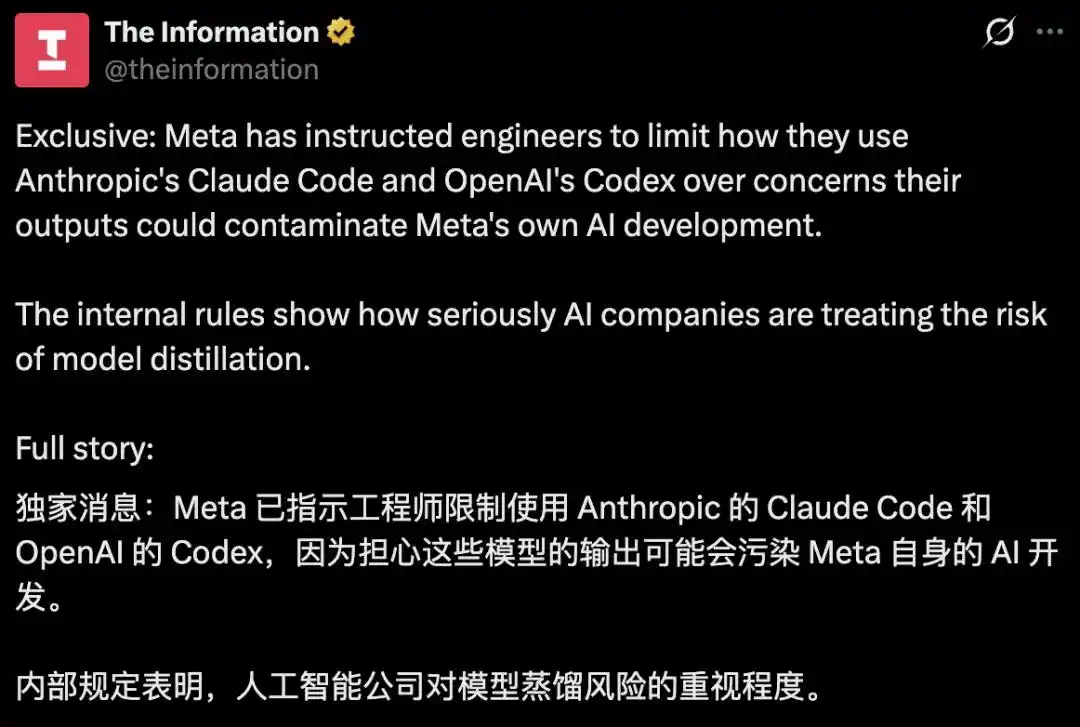
据The Information拿到的内部指南,一份备忘录甚至直接要求,暂停某些用到这两个模型的任务。文件措辞很重,说这可能触发「与合作方的严重升级」。

然而,反常也就反常在这儿。

Meta是Claude Code在全球最大的客户之一。它今年内部用AI的总账单,正奔着数十亿美元去。

天天离不开的工具,公司花大钱买来,现在却在内部限制使用。而限制的理由,你大概也想不到。

不是它们不好用。恰恰相反,是太好用了。

这条红线现在仍在生效

据The Information报道,这套限制5月就定下,至今仍在生效。

Meta为何如此紧张,这要从它内部一个AI编程助手项目说起。

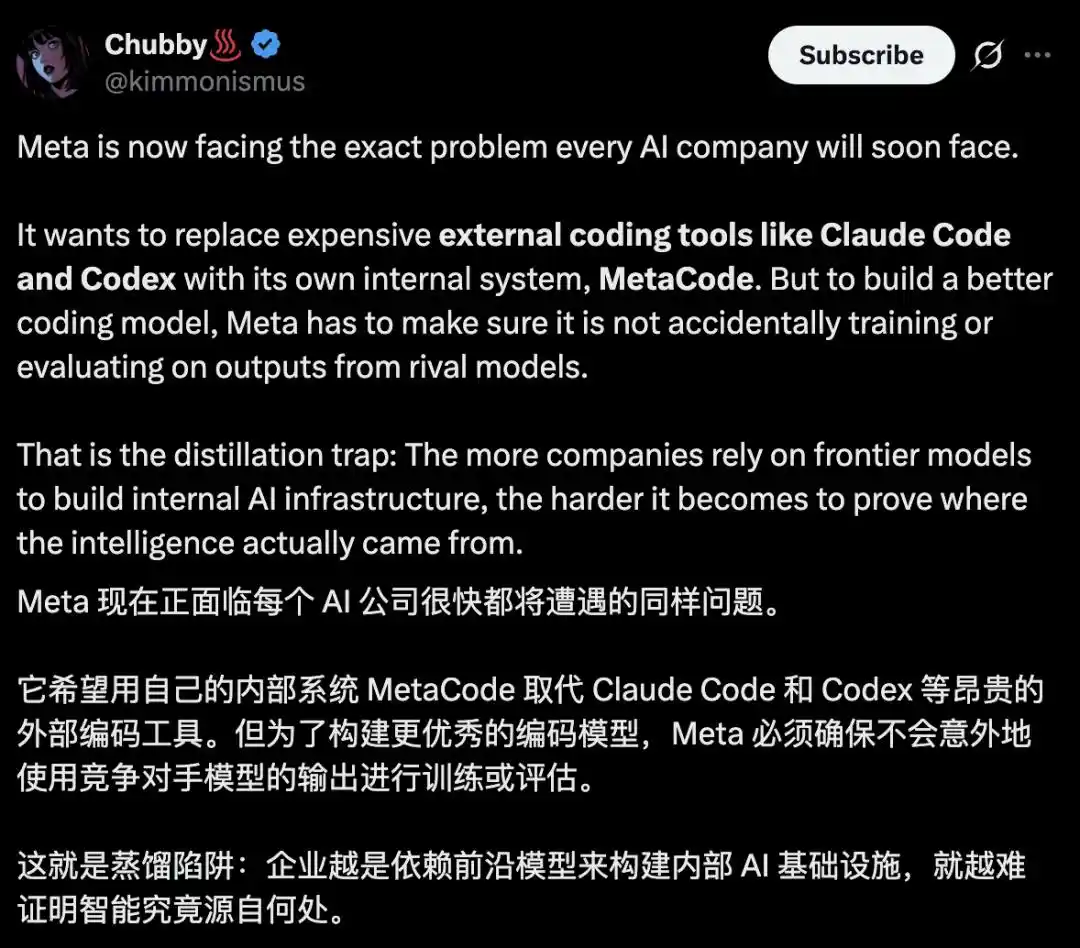
今年,它组建了一个应用AI工程团队,主攻自研的AI编程助手MetaCode(原名DevMate)。

目标就是别再让Meta花大价钱继续使用别人的AI编程模型,自己也要训一个出来。
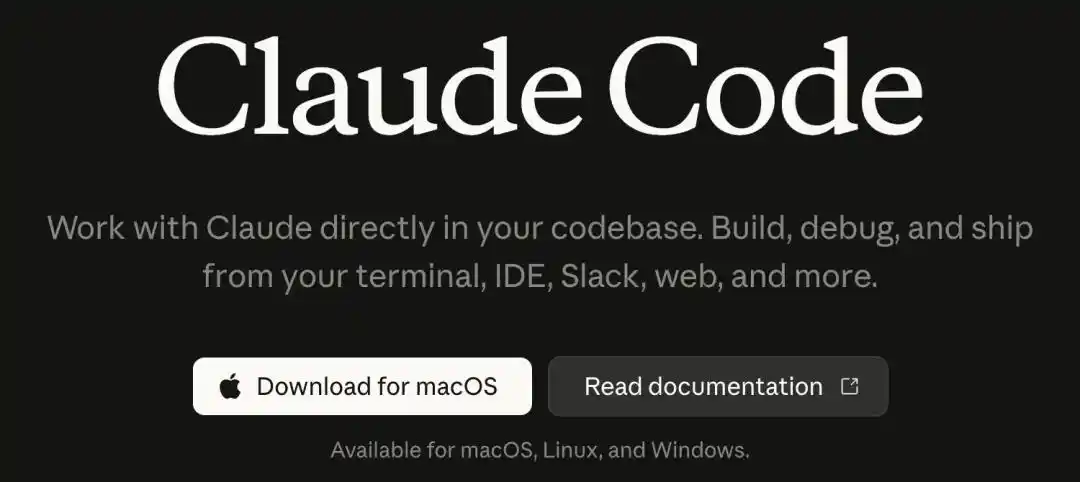
Claude Code官方界面。它与OpenAI的Codex,已是职业开发者做智能体编程的事实标准。

可要练出一个会写代码的模型,没那么简单。

你得喂给它海量高质量数据,还得出足够多、足够刁钻的编程题,让它练手、给它判分。这套题库和评测,几乎决定了一个编程模型最终有多强。

但问题恰恰出在这儿。

Meta遇到的难题,是怎样才能不让员工太过依赖这些外部工具,去打造内部的替代品。

它所担心的,是这些外部模型的输出渗进训练数据,让自己造的模型,偷偷学了对手的本事。

要看懂这层担心,得先知道一个模型是怎么「学」的:你喂给它什么样的数据,它就长成什么样子。

MetaCode想变强,靠的就是工程师攒的那套训练数据和编程题库。

可一旦这些题目、答案、甚至判分标准出自Claude或Codex,MetaCode学到的,就不再是「人类工程师训练出来的本事」,而是「Claude的本事」。

它照着对手的卷子抄答案,越练越像对手。

更隐蔽的,是评测这一环。

模型每答一道题,得有个东西告诉它答得好不好,它才知道往哪儿改。

如果出题和判分都交给Codex,那MetaCode就是在朝着「Codex觉得对」的方向进化,等于把对手的判断标准,一点点复刻进了自己脑子里。

这就是为什么,Meta的这份指南不让AI当出题人、判卷人,连「AI生成的材料能不能进被测模型读得到的环境」都要管。

只要对手的输出有一丝渗进训练或评测的链条,这条「谁教会了谁」的界线,就糊了。

说到底,Meta暂停部分任务,是在给训练数据做隔离。

怕的是AI写得太好,分不清哪些本事是自己训练出来的,哪些是从Claude和Codex那儿学习来的。

而后面这层能力,是租来的,并不是自己的。

细到让人意外的限制

要先说清楚,Meta的内部文件里,并没有任何员工真违规的记录。

Meta发言人也回应,公司有「明确的政策」规范怎么用AI工具。所以这份文件,更像是在内部提前拉响警报。

哪些活不能让AI碰?主要是以下三类:

第一,不能拿Claude或Codex的输出,去给自家模型出测试题。指南的原话是,这「明确属于工程师不在驾驶位的范畴」,「我们不要源自模型的任务」。

第二,不能让AI在源码里找bug,也不能让它基于代码分析帮你想「该测什么」。

第三,AI生成的任何东西,都不能放进被测模型能访问到的地方。

说白了,只要AI参与了「该测什么、答得对不对」的判断,对手的本事就可能混进来。三条堵的都是这个口子。

哪些活还能让AI干?

搭工作流、整理代码和文件、给内部工具搭测试的架子,这些日常杂活可以。指南把这类工作称作「测试脚手架(test scaffolding)」和「方案校准(solution calibration)」,说白了就是打下手、搭框架。

哪怕是这些活,也有一条铁律:AI的每一行产出,人都得先过一遍眼。

在Meta看来,一旦让对手的模型来出题、判卷,这场考试就说不清是谁考出来的了。

它真正想守住的,就是那条「谁教会了谁」的界线。

绕不开的「蒸馏陷阱」

Meta担心的这件事,业内有个专门名词:蒸馏(distillation)。

意思不难懂:拿一个更强的模型,让它不停答题,再用这些答案去训练一个较弱的模型。

有点像让学霸把卷子从头做一遍,学渣照着抄,几个月就追上人家好几年的功力。

别人在数据、算力、研究上砸的天价投入,你近乎免费蹭走。

从零训一个前沿模型,烧的钱和时间是天文数字。而蒸馏,可能只要对方一批输出,成本和工期都砍到零头。

蒸馏本身是业界常规操作,大厂也常拿自家大模型蒸馏出更小、更便宜的版本给用户用。

麻烦只在于:一旦你抄的是别人家的模型,你训出来的能力,到底是自己练的,还是顺来的?说不清。

有人把这叫「蒸馏陷阱」:你越是靠最强的模型去搭自己的地基,就越难证明,你的聪明到底打哪来。
在美国,法律并未明文禁止蒸馏,AI生成的内容也不受版权保护。你拿对方的输出去练自己的模型,法律这一关基本拦不住。

唯一的关卡是合同。

OpenAI、Anthropic的服务条款都写了类似的限制:不许拿模型的输出,去造一个跟自己竞争的东西。

而且这道关卡,执法权全在竞争对手手里。

去年,Anthropic就直接掐断了OpenAI对Claude的接口(API)访问,哪怕OpenAI说自己只是拿来评测能力和安全性,是「行业标准」做法。

就连马斯克,也在今年4月的一场庭审上被迫承认,他的xAI「部分」蒸馏过OpenAI的模型。

2026年4月30日,在加州联邦法院的证人席上,马斯克被问到xAI是否对OpenAI模型用了蒸馏技术来训练Grok,他先称这是AI公司的普遍做法。

当被追问这是否等于「是」时,他回答是「部分」。

规则模糊,「执法权」都攥在竞争对手手里。谁敢拿自己几十亿的投入,去赌对手不翻脸。

从这个角度看,Meta的紧张,一点都不多余。

这里,还有一个算盘就是省钱。

按内部备忘录,Meta今年光内部用AI这一项,就要烧掉数十亿美元。它甚至开始给员工的token用量设上限。财大气粗如Meta,也开始嫌AI太贵、要精打细算了。

如果能把开发工作从昂贵的外部工具转到自家MetaCode上,既省了钱,又躲开了蒸馏的雷,可谓一举两得。

一张走钢丝的地图

关于Meta这套内部文件,科技法学者、法律顾问Mark Leiser有一句话很形象:这「几乎就是一张走钢丝的地图」。

一边要获得外部模型的好处,一边又得防着它的本事溜进自家系统。

像这样走钢丝的,当然不止Meta一家公司,它戳中的是整个行业的命门。

当你用一个足够聪明的AI,去造另一个同样聪明的AI,到最后,你可能很难说清:这份聪明,究竟是你自己练出来的,还是从别人的AI那儿悄悄学来的。

而且这事,离普通人也没那么远。

你用AI写的代码、改的方案、攒的资料,喂回去又会变成下一代模型的养料。

在这个循环中,谁站在谁的肩膀上,那条界线已经变得越来越糊。

当AI开始帮我们造AI,我们还分得清,本事到底是谁的吗?

参考资料:

https://x.com/kimmonismus/status/2071591755351224344

https://www.theinformation.com/articles/internal-docs-show-meta-putting-limits-claude-codex-fearing-distillation

本文来自微信公众号“新智元”,作者:ASI启示录

Trending Cryptos

Related Questions

QMeta为何要限制内部员工使用Claude Code和Codex?

AMeta限制内部使用Claude Code和Codex,主要是为了防止在自研AI编程助手MetaCode的训练数据和评测过程中,混入这些外部模型的输出和判断标准。这可能导致MetaCode通过‘蒸馏’方式学习了对手的能力,而非自身练就的本领,同时也可能违反与模型提供方的服务条款,并有助于Meta降低对外部昂贵AI工具的依赖以节省成本。

Q文章中提到的‘蒸馏陷阱’具体指什么?

A‘蒸馏陷阱’指的是利用一个更强模型(如Claude或Codex)的输出,来训练另一个较弱模型(如Meta的MetaCode)的做法。这种做法能让后发者快速获得接近先进模型的能力,成本极低,但也导致难以分清新模型的能力究竟是自身训练所得,还是从对手那里‘顺来’的。这造成了能力归属的模糊,并可能引发法律和合同风险。

QMeta的内部指南具体禁止了哪三类与AI相关的工作?

AMeta的内部指南明确禁止了三类工作:1)使用Claude或Codex的输出为自家模型生成测试题;2)让AI在源码中查找bug或基于代码分析建议测试内容;3)将AI生成的任何内容放入被测模型能访问的环境。这些限制旨在确保训练和评测数据的纯净,防止外部模型的能力和判断标准渗入自家系统。

QMeta采取这些限制措施背后,除了技术原因,还有哪些商业考量?

A除了防止技术上的‘蒸馏’和确保能力自主性,Meta的商业考量主要包括:1)控制成本,其内部AI使用年支出高达数十亿美元,转向自研工具可大幅节省开支;2)规避法律与合同风险,遵守与OpenAI、Anthropic等服务提供方的条款,避免因违规使用引发纠纷或API访问被掐断;3)扶持自研产品MetaCode,减少对外部工具的依赖,建立自主的AI能力体系。

Q文章最后提到的‘走钢丝的地图’比喻有何深意?

A‘走钢丝的地图’这个比喻形象地描绘了Meta(乃至整个行业)在利用外部强大AI工具获益与防止其能力渗透到自研系统之间所面临的微妙平衡和巨大风险。它意味着企业必须小心翼翼地制定和执行使用策略,稍有不慎就可能导致能力归属不清、侵犯知识产权或违反合同。这反映了当前AI发展中,创新协作与自主竞争之间的普遍矛盾。

Related Reads

You Use Claude and Codex Every Day, but Meta Has Restricted Internal Use

In May, Meta imposed internal restrictions on its engineers regarding the use of Claude Code and Codex, two widely used AI programming tools. Despite being a major client, Meta's guidelines, still in effect, prohibit these external models from being used for specific tasks to prevent potential "escalations with partners." The core concern is "distillation"—the risk that outputs from Claude or Codex could inadvertently contaminate the training data and evaluation processes for Meta's in-house AI coding assistant, MetaCode. If MetaCode is trained or evaluated using data generated by these external models, it risks learning their capabilities rather than developing its own, blurring the line of intellectual origin. The restrictions are precise: engineers cannot use the external models to generate test questions, debug source code, or suggest test cases. AI-generated content is also barred from environments accessible to MetaCode. However, AI can still assist with peripheral tasks like workflow setup and code organization, provided all outputs are manually reviewed. This caution reflects a broader industry dilemma. While distillation is a common technique, using a competitor's model output for training raises legal and ethical questions about the ownership of derived capabilities. Contractual terms from companies like OpenAI and Anthropic explicitly forbid using their outputs to build competing products, putting enforcement power in the hands of rivals. The move is also financially motivated, as Meta seeks to reduce its hefty internal AI spending, estimated in the billions this year. Meta's policy illustrates the delicate balance companies must strike: leveraging powerful external AI tools while safeguarding the integrity and independence of their own AI development. As AI systems increasingly help build other AIs, distinguishing the origin of capabilities becomes a fundamental challenge for the entire industry.

marsbit1h ago

You Use Claude and Codex Every Day, but Meta Has Restricted Internal Use

marsbit1h ago

Why Do We Need an AI Content Perspective Today?

The article "Why Do We Need an AI Content Perspective Today?" explores the complex and often contentious integration of AI into the cultural and creative industries, particularly film and television. It begins with the cancellation of Amazon's AI-generated animation "Punky Duck," highlighting the ethical debates surrounding AI content. AI's rapid advancement is transforming video production, enabling cost-effective, full-length AI films (e.g., "RAPHAEL," "Dreams of Violets") while sparking industry resistance over issues like "synthetic actors." The core debate has shifted from whether to use AI to how to use it responsibly. The article analyzes why AI's entry into film is uniquely unsettling. It distinguishes between "cultural fast food" (short-form, fast-paced content like micro-dramas) and "cultural main courses" (traditional, long-form film/TV). AI currently excels at the former, matching its fragmented narratives, shallow emotional needs, and free-to-consumer models. However, venturing into the latter challenges the human-centric essence of storytelling—creativity, emotional depth, and the unique value of human labor and experience. While AI can generate massive volumes of content and lower costs, it risks devaluing human creativity, leading to homogenized output, and creating unfair competition through potential intellectual property infringement. Its efficiency also amplifies content safety risks, making preemptive governance crucial. To counter these risks, the article proposes establishing clear boundaries guided by a human-centered AI content perspective. It outlines four principles: 1) Amplify, rather than displace, human creative space; 2) Respect and protect human creative output; 3) Ensure human creative control and responsibility remain paramount; and 4) Guarantee transparency and traceability in AI creation. The conclusion emphasizes that humans must act as the "helmsmen" of technology, steering AI development to enhance, not replace, the core human values at the heart of cultural expression.

marsbit2h ago

Why Do We Need an AI Content Perspective Today?

marsbit2h ago

Trading

Spot

Hot Articles

How to Buy PEOPLE

Welcome to HTX.com! We've made purchasing ConstitutionDAO (PEOPLE) simple and convenient. Follow our step-by-step guide to embark on your crypto journey.Step 1: Create Your HTX AccountUse your email or phone number to sign up for a free account on HTX. Experience a hassle-free registration journey and unlock all features.Get My AccountStep 2: Go to Buy Crypto and Choose Your Payment MethodCredit/Debit Card: Use your Visa or Mastercard to buy ConstitutionDAO (PEOPLE) instantly.Balance: Use funds from your HTX account balance to trade seamlessly.Third Parties: We've added popular payment methods such as Google Pay and Apple Pay to enhance convenience.P2P: Trade directly with other users on HTX.Over-the-Counter (OTC): We offer tailor-made services and competitive exchange rates for traders.Step 3: Store Your ConstitutionDAO (PEOPLE)After purchasing your ConstitutionDAO (PEOPLE), store it in your HTX account. Alternatively, you can send it elsewhere via blockchain transfer or use it to trade other cryptocurrencies.Step 4: Trade ConstitutionDAO (PEOPLE)Easily trade ConstitutionDAO (PEOPLE) on HTX's spot market. Simply access your account, select your trading pair, execute your trades, and monitor in real-time. We offer a user-friendly experience for both beginners and seasoned traders.

7.3k Total ViewsPublished 2024.03.29Updated 2026.06.02

How to Buy PEOPLE

Discussions

Welcome to the HTX Community. Here, you can stay informed about the latest platform developments and gain access to professional market insights. Users' opinions on the price of PEOPLE (PEOPLE) are presented below.

活动图片