在ETF资金流出406亿美元后,BTC巨鲸能否拯救比特币?

ambcryptoPublished on 2026-06-28Last updated on 2026-06-28

Abstract

美国比特币和以太坊现货ETF连续七日出现净流出,昨日比特币流出4.45亿美元,以太坊流出1285万美元。月度比特币ETF净流出约40.6亿美元,使总资产降至728.2亿美元,机构需求呈现减弱迹象。 不过,当比特币价格短暂跌破6万美元时,大额持有者(巨鲸)活动增加,网络出现大量高额交易,显示他们可能将价格回调视为积累机会,这有助于缓解短期抛售压力。 与此同时,长期持有者的行为出现分化。长期持有者SOPR指标进一步跌入负值区间,表明部分资深投资者开始承受亏损,月度平均已从1.03降至0.8,意味着最近一个月投资损失约13%。这种长期持有者的投降可能逐渐耗尽盈利性抛压,为市场复苏奠定基础。 总体而言,持续的ETF资金外流削弱了机构买盘支撑,但巨鲸的积累行为提供了一定缓冲。比特币的持续复苏最终仍需更广泛的现货市场需求走强。

对比特币的机构需求正显示出新的疲软迹象,这消除了市场结构性现货购买最强劲的来源之一。

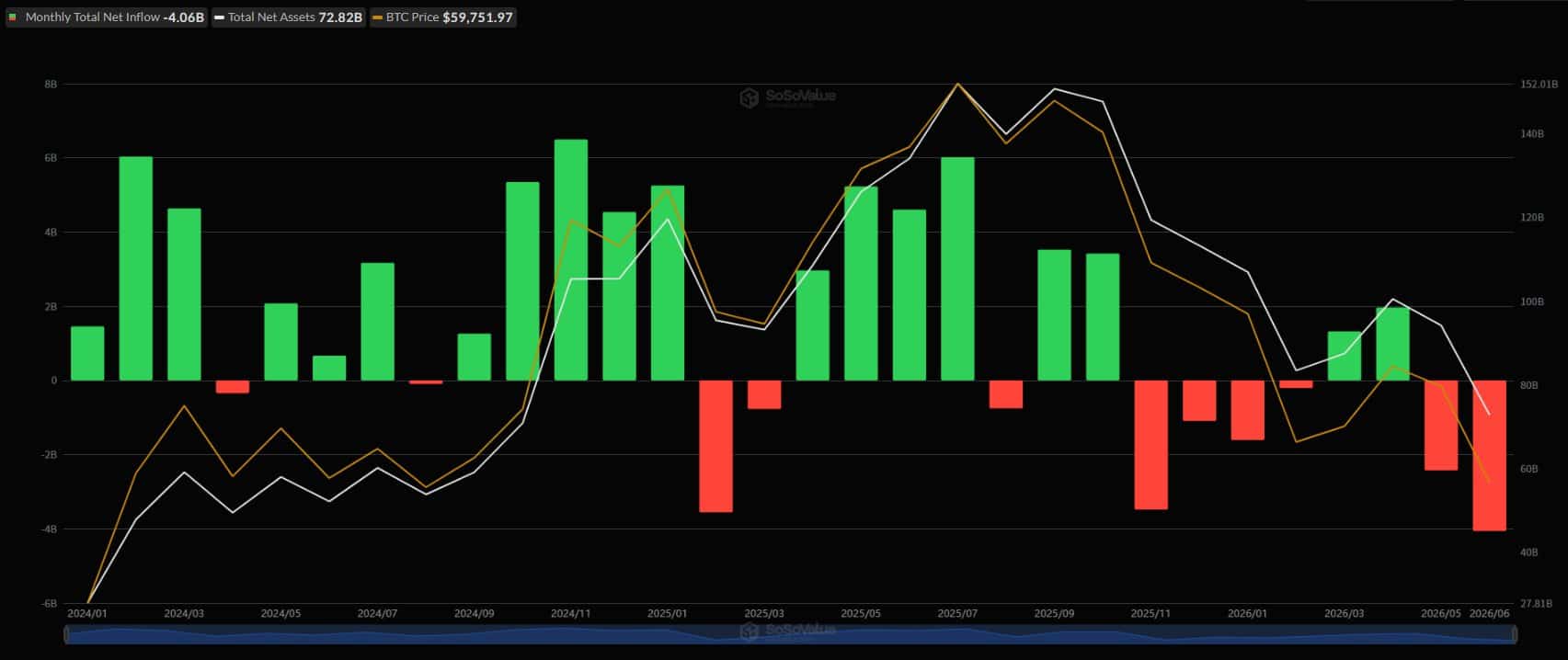
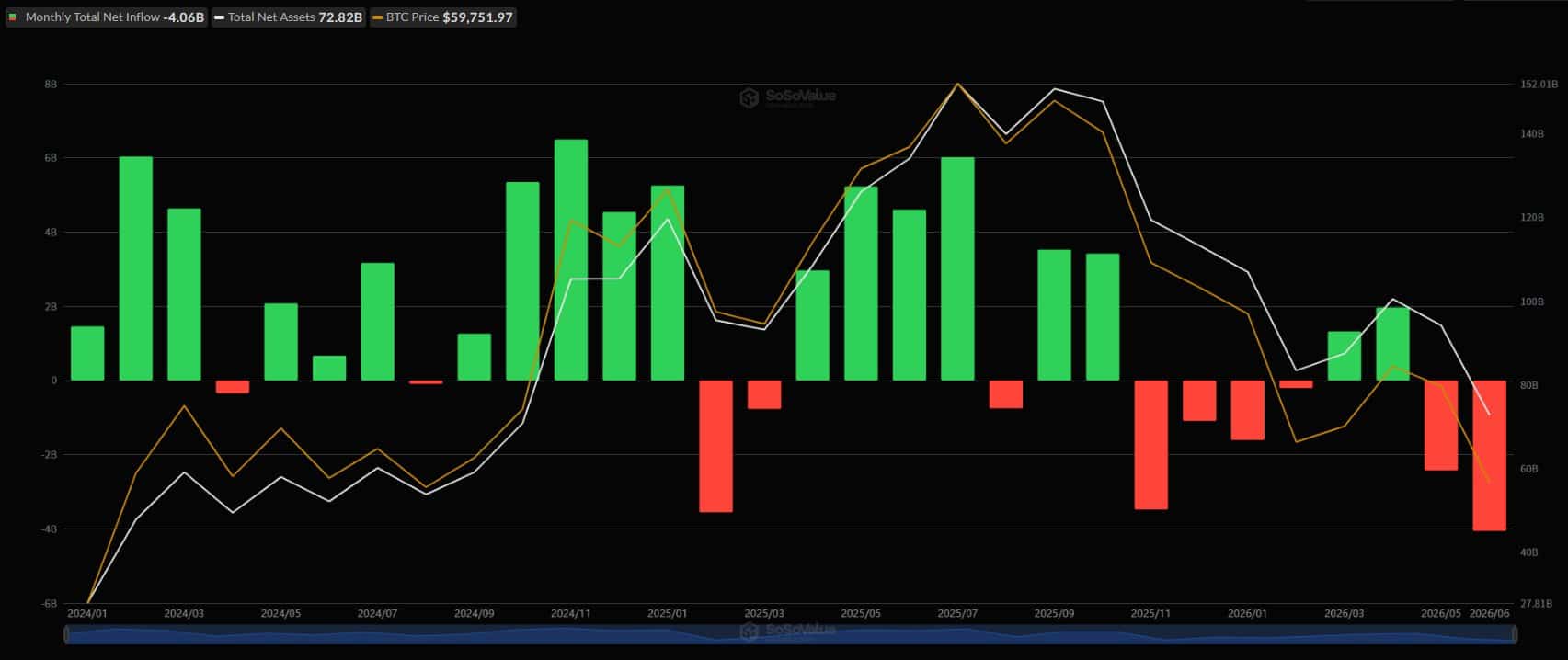
美国现货比特币和以太坊ETF连续第七天出现净流出,昨日比特币流出4.45亿美元,以太坊流出1285万美元。

来源:SoSoValue

随着赎回持续,月度比特币ETF资金流转为负值,约流出406亿美元,使得ETF总资产降至728.2亿美元。这一趋势很重要,因为持续的流出减少了机构买盘,而此前在市场回调时,这些买盘吸收了市场供应。

除非巨鲸或长期投资者能取代这种需求,否则比特币可能难以构建持续的复苏。否则,机构资金的重新流入可能会恢复更强的价格支撑。

巨鲸活动显示出新的信心

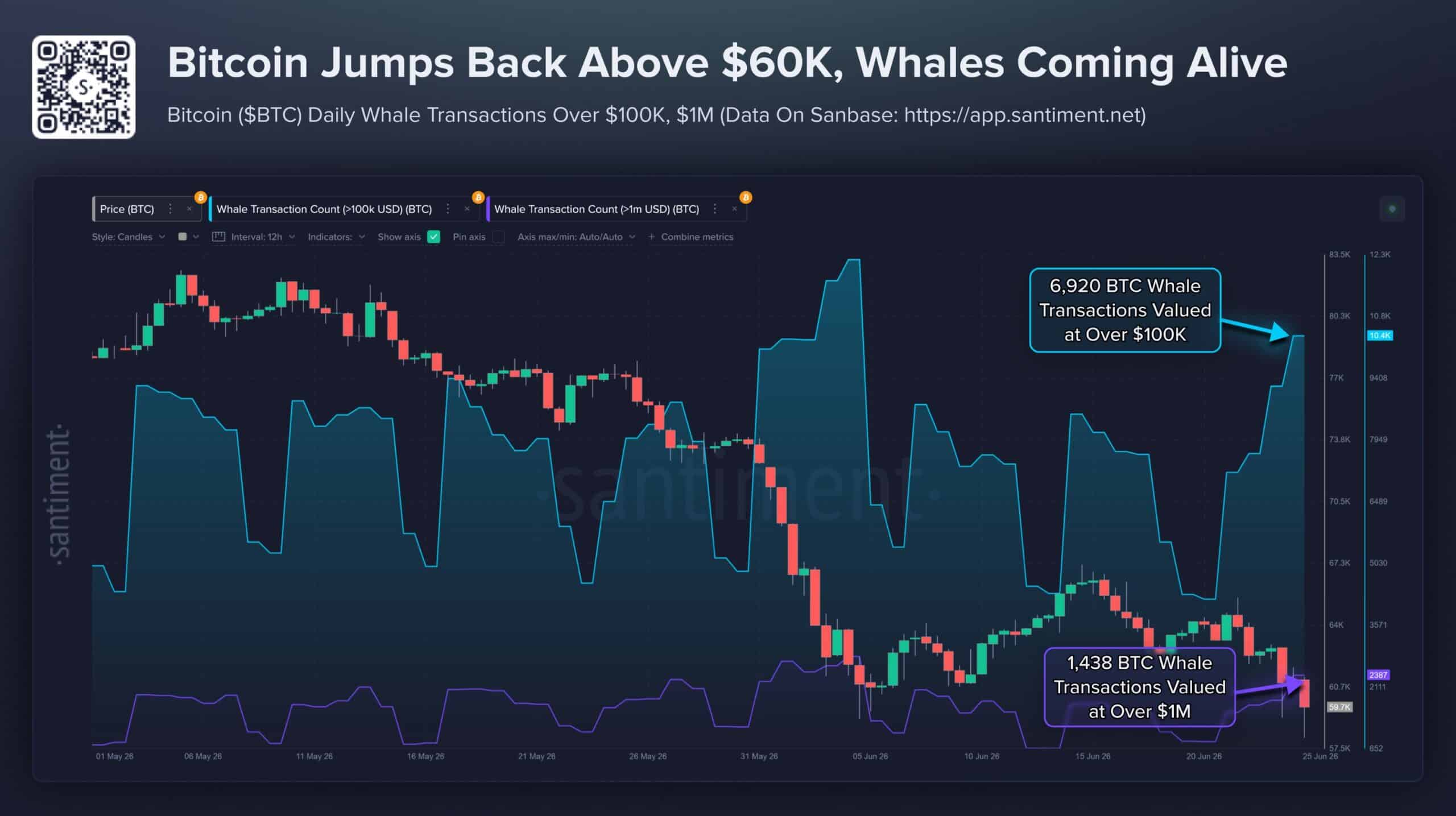
尽管ETF持续流出,但大型比特币持有者在价格重新触及关键支撑位时做出了不同的反应。在比特币短暂跌破60,000美元后又回到该区域后,巨鲸交易量迅速增加。

网络记录了6,920笔超过10万美元的交易和1,438笔超过100万美元的交易,这是两个月内的第二大峰值。这一反应表明,较大的投资者将此次回调视为一个积累窗口,而非减少敞口的信号。

来源:Santiment

如果巨鲸继续吸收供应,而交易所余额仍然受限,下行压力可能会逐渐缓解。尽管如此,在比特币能够将积累转化为持续复苏之前,更广泛的现货参与必须加强。

比特币长期持有者进入投降阶段

巨鲸的积累反映了较大投资者信心的增强。然而,长期持有者(LTH)对近期市场疲软的反应并不一致。

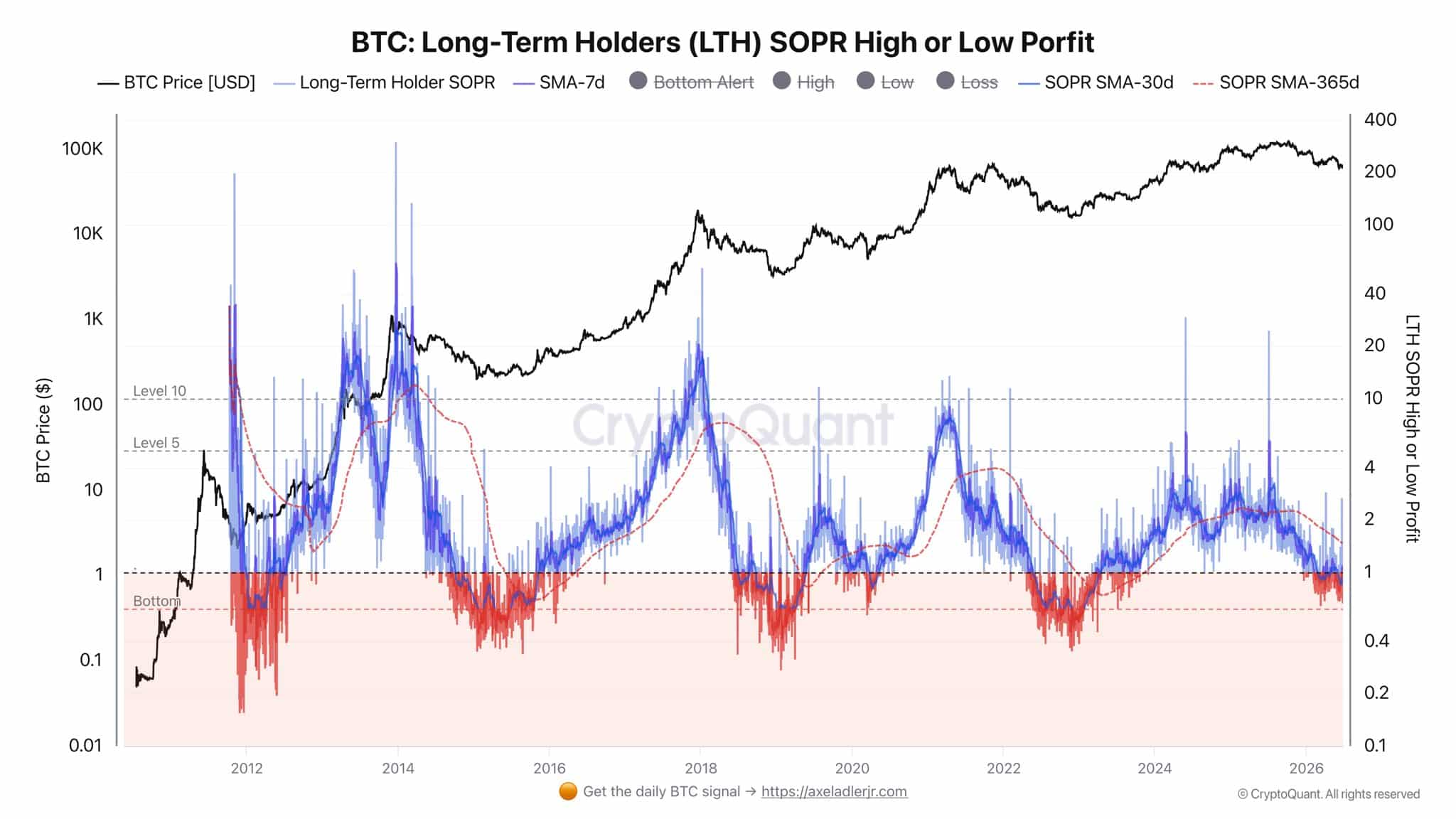
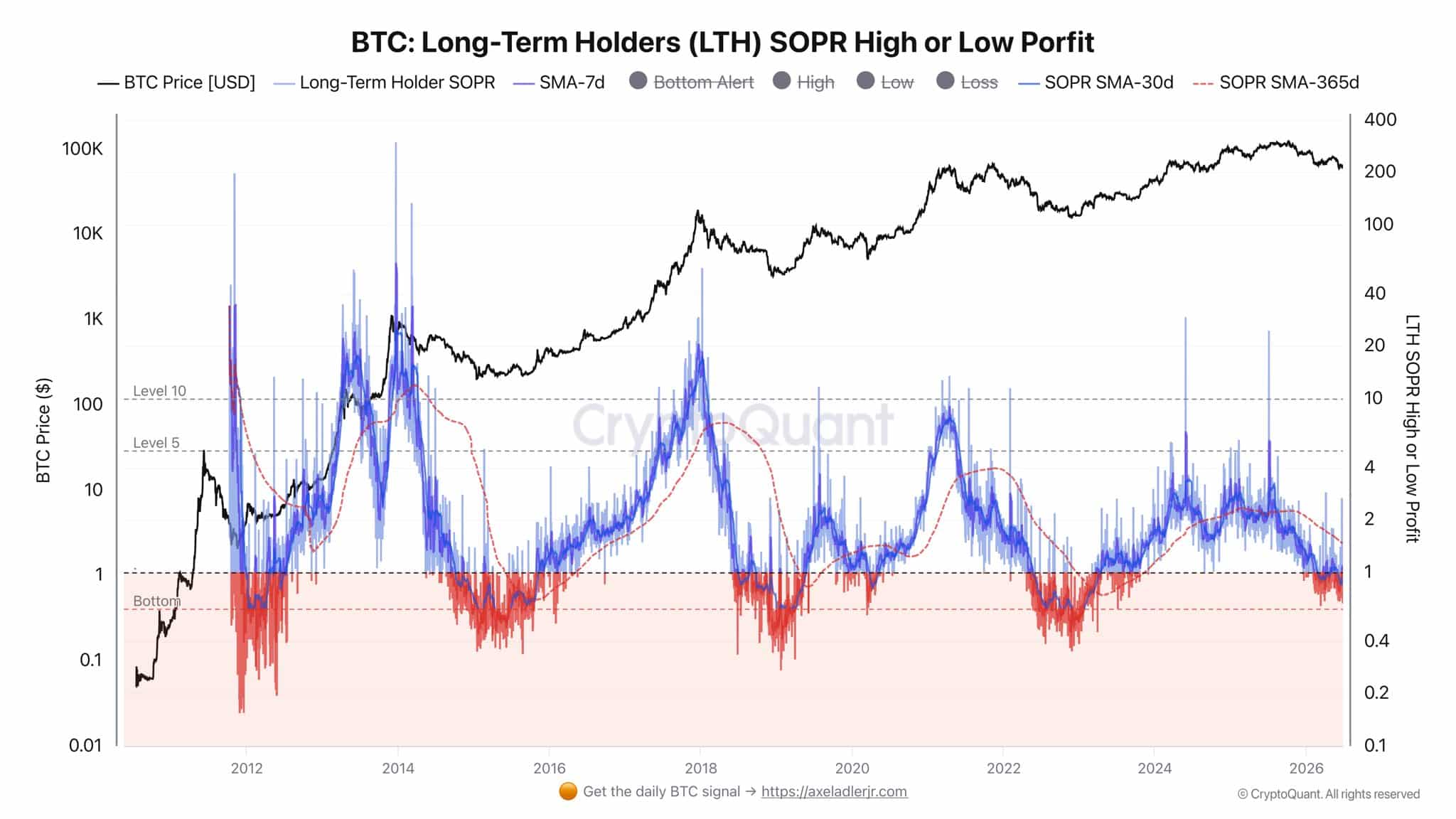
长期持有者SOPR已进一步跌入负值区域,表明一些资深的投资者在比特币多次跌破60,000美元后正在实现亏损。其月度平均值已从1.03降至0.8。

这表明长期持有者过去一个月的投资亏损了约13%。

来源:CryptoQuant

与此同时,年度平均值从2.06降至1.46,证实已实现利润持续萎缩。在这一点上,老持有者的信念似乎正在消退。

然而,随着盈利供应耗尽,抛售压力通常会减弱,这为逐步复苏而非立即逆转奠定了基础。


最终总结

  • 比特币 [BTC] ETF持续流出削弱机构需求,而巨鲸的积累有助于缓解短期抛售压力。
  • 比特币长期持有者的投降可能会减少未来的抛售,但更广泛的现货需求仍是复苏的关键。

Trending Cryptos

Related Questions

Q美国现货比特币和以太坊ETF经历了多少天的连续净流出?

A根据文章内容,美国现货比特币和以太坊ETF正在经历连续第七天的净流出。

Q持续的ETF流出导致比特币月度ETF资金流变为负值,大约是多少?

A持续的赎回导致比特币月度ETF资金流变为负值,大约为40.6亿美元。

Q比特币跌破6万美元时,大额持有者(鲸鱼)的交易活动有何变化?

A当比特币价格短暂跌破6万美元并回到该区域后,鲸鱼的交易量迅速增加。网络记录了6920笔超过10万美元的交易和1438笔超过100万美元的交易,这是两个月内的第二大峰值。

Q长期持有者的已花费产出利润率(SOPR)转为负值,这通常意味着什么?

A长期持有者SOPR(已花费产出利润率)进入负值区域,表明一些资深的长期投资者在当前价格下正在实现亏损。最近一个月平均值从1.03降至0.8,意味着过去一个月他们的投资大约亏损了13%。

Q文章认为,什么因素是比特币能否实现持续复苏的关键?

A文章认为,更广泛的现货需求(spot demand)是比特币能否将积累阶段转化为持续复苏的关键。虽然鲸鱼的积累有助于缓解短期抛压,但最终的恢复需要更广泛的市场参与和需求支撑。

Related Reads

77 Bloody Codes: When the '$5 Wrench' Shatters the Privacy Myth of France's Crypto Elite

**Summary** In the first half of 2026, France recorded 77 violent crimes—including kidnappings, illegal confinement, and extortion—targeting cryptocurrency holders, a 71% increase over the 45 cases in all of 2025. This equates to an attack every 2.3 days, making France a global hotspot for so-called "wrench attacks," where criminals use physical violence to coerce victims into surrendering crypto assets. High-profile cases include the 2025 kidnapping of Ledger co-founder David Balland, who was shown with a severed finger in a ransom video, and an attempted kidnapping of the family of Paymium's CEO in Paris. Prosecutors note these are not isolated incidents but part of structured criminal networks, sometimes involving minors. Several factors contribute to France's vulnerability: a large holder base (approx. 7.3 million people), the presence of major crypto firms and executives, a culture of public disclosure among enthusiasts, and potential data leaks. The trend is spreading across Europe, which now accounts for over 40% of such global attacks. Research indicates a correlation between Bitcoin price surges and increased wrench attacks. In response, French Interior Minister Laurent Nuñez announced a three-pillar action plan focusing on enhanced intelligence sharing, deeper cooperation with the industry association Adan, and improved operational and cross-border coordination. Authorities have made over 200 arrests in the past year. Security experts warn that digital asset safety now extends to the physical world. They advise holders to use hardware wallets, avoid disclosing holdings on social media, enable multi-factor authentication, and report suspicious activity. The situation underscores the urgent need for the crypto community to shift from a "show-off" culture to one of discretion as physical security becomes paramount.

marsbit52m ago

77 Bloody Codes: When the '$5 Wrench' Shatters the Privacy Myth of France's Crypto Elite

marsbit52m ago

Both OpenAI and Anthropic are 'Developing Their Own Chips' — Beyond Cost, the Control Over Computing Power is Paramount

OpenAI and Anthropic are both advancing plans to develop custom AI chips, driven by the need to control computing power and reduce costs. According to reports, Anthropic is in early-stage development of its own chips and in talks with Samsung for manufacturing, while OpenAI is collaborating with Broadcom and TSMC, aiming to deploy its first inference chip by late 2026. The primary motivation extends beyond just lowering expenses. For these large model companies, chips are core production assets. By designing specialized hardware (ASICs) tailored to their specific model architectures—OpenAI's being more sparse and Anthropic's more dense—they aim to achieve deeper software-hardware co-design. This synergy can significantly improve inference speed, energy efficiency, and overall unit economics, offering advantages that off-the-shelf GPUs cannot. This move does not signify an immediate replacement for suppliers like Nvidia. The process from design to deployment takes 18-24 months, and Nvidia's GPU ecosystem remains deeply entrenched. Instead, custom chips provide a strategic alternative and negotiating leverage, allowing companies to use them for specific, high-volume workloads like inference while still relying on external GPUs and TPUs for other tasks. The trend reflects a broader industry shift where AI competition is evolving from pure algorithmic prowess to integrated control over the entire software-hardware stack. Companies like Google, Amazon, Meta, and Microsoft are already on this path. For foundries like Samsung, securing orders from AI leaders like Anthropic represents a significant opportunity to expand its footprint in the advanced semiconductor market for AI. Ultimately, the race for "computing sovereignty" is now a central battleground for major AI players.

marsbit58m ago

Both OpenAI and Anthropic are 'Developing Their Own Chips' — Beyond Cost, the Control Over Computing Power is Paramount

marsbit58m ago

Trading

Spot

Hot Articles

What is $BITCOIN

DIGITAL GOLD ($BITCOIN): A Comprehensive Analysis Introduction to DIGITAL GOLD ($BITCOIN) DIGITAL GOLD ($BITCOIN) is a blockchain-based project operating on the Solana network, which aims to combine the characteristics of traditional precious metals with the innovation of decentralized technologies. While it shares a name with Bitcoin, often referred to as “digital gold” due to its perception as a store of value, DIGITAL GOLD is a separate token designed to create a unique ecosystem within the Web3 landscape. Its goal is to position itself as a viable alternative digital asset, although specifics regarding its applications and functionalities are still developing. What is DIGITAL GOLD ($BITCOIN)? DIGITAL GOLD ($BITCOIN) is a cryptocurrency token explicitly designed for use on the Solana blockchain. In contrast to Bitcoin, which provides a widely recognized value storage role, this token appears to focus on broader applications and characteristics. Notable aspects include: Blockchain Infrastructure: The token is built on the Solana blockchain, known for its capacity to handle high-speed and low-cost transactions. Supply Dynamics: DIGITAL GOLD has a maximum supply capped at 100 quadrillion tokens (100P $BITCOIN), although details regarding its circulating supply are currently undisclosed. Utility: While precise functionalities are not explicitly outlined, there are indications that the token could be utilized for various applications, potentially involving decentralized applications (dApps) or asset tokenization strategies. Who is the Creator of DIGITAL GOLD ($BITCOIN)? At present, the identity of the creators and development team behind DIGITAL GOLD ($BITCOIN) remains unknown. This situation is typical among many innovative projects within the blockchain space, particularly those aligning with decentralized finance and meme coin phenomena. While such anonymity may foster a community-driven culture, it intensifies concerns about governance and accountability. Who are the Investors of DIGITAL GOLD ($BITCOIN)? The available information indicates that DIGITAL GOLD ($BITCOIN) does not have any known institutional backers or prominent venture capital investments. The project seems to operate on a peer-to-peer model focused on community support and adoption rather than traditional funding routes. Its activity and liquidity are primarily situated on decentralized exchanges (DEXs), such as PumpSwap, rather than established centralized trading platforms, further highlighting its grassroots approach. How DIGITAL GOLD ($BITCOIN) Works The operational mechanics of DIGITAL GOLD ($BITCOIN) can be elaborated on based on its blockchain design and network attributes: Consensus Mechanism: By leveraging Solana’s unique proof-of-history (PoH) combined with a proof-of-stake (PoS) model, the project ensures efficient transaction validation contributing to the network's high performance. Tokenomics: While specific deflationary mechanisms have not been extensively detailed, the vast maximum token supply implies that it may cater to microtransactions or niche use cases that are still to be defined. Interoperability: There exists the potential for integration with Solana’s broader ecosystem, including various decentralized finance (DeFi) platforms. However, the details regarding specific integrations remain unspecified. Timeline of Key Events Here is a timeline that highlights significant milestones concerning DIGITAL GOLD ($BITCOIN): 2023: The initial deployment of the token occurs on the Solana blockchain, marked by its contract address. 2024: DIGITAL GOLD gains visibility as it becomes available for trading on decentralized exchanges like PumpSwap, allowing users to trade it against SOL. 2025: The project witnesses sporadic trading activity and potential interest in community-led engagements, although no noteworthy partnerships or technical advancements have been documented as of yet. Critical Analysis Strengths Scalability: The underlying Solana infrastructure supports high transaction volumes, which could enhance the utility of $BITCOIN in various transaction scenarios. Accessibility: The potential low trading price per token could attract retail investors, facilitating wider participation due to fractional ownership opportunities. Risks Lack of Transparency: The absence of publicly known backers, developers, or an audit process may yield skepticism regarding the project's sustainability and trustworthiness. Market Volatility: The trading activity is heavily reliant on speculative behavior, which can result in significant price volatility and uncertainty for investors. Conclusion DIGITAL GOLD ($BITCOIN) emerges as an intriguing yet ambiguous project within the rapidly evolving Solana ecosystem. While it attempts to leverage the “digital gold” narrative, its departure from Bitcoin's established role as a store of value underscores the need for a clearer differentiation of its intended utility and governance structure. Future acceptance and adoption will likely depend on addressing the current opacity and defining its operational and economic strategies more explicitly. Note: This report encompasses synthesised information available as of October 2023, and developments may have transpired beyond the research period.

574 Total ViewsPublished 2025.05.13Updated 2025.05.13
What is $BITCOIN

Discussions

Welcome to the HTX Community. Here, you can stay informed about the latest platform developments and gain access to professional market insights. Users' opinions on the price of BTC (BTC) are presented below.

活动图片