Ethereum Next Stop Glamsterdam: Poin Inti Peningkatan yang Harus Anda Ketahui

Foresight NewsPublished on 2026-06-23Last updated on 2026-06-23

Abstract

**Glamsterdam: Peningkatan Inti Ethereum Berikutnya yang Perlu Anda Ketahui** Upgrade Glamsterdam Ethereum, dijadwalkan pada paruh kedua 2026, bukan sekadar peningkatan throughput. Ini merombak alur pembuatan blok, verifikasi, dan penentuan harga sumber daya untuk mempersiapkan peningkatan kapasitas di masa depan. Dua perubahan utama adalah: 1. **ePBS (EIP-7732):** Memisahkan peran "pengusul" blok (proposer) dan "pembangun" konten blok (builder) ke dalam protokol, mengurangi ketergantungan pada infrastruktur pihak ketiga seperti relay. Ini memperpanjang waktu validasi, memungkinkan peningkatan kapasitas blok yang lebih aman. 2. **BAL (EIP-7928):** Memperkenalkan daftar akses tingkat blok yang mencatat semua akun dan slot penyimpanan yang diakses selama eksekusi blok. Ini membuka pintu bagi pemrosesan paralel, membuat klien dapat memverifikasi transaksi dan memperbarui status dengan lebih efisien. Upgrade ini juga menangani inflasi database dengan **EIP-8037**, yang meningkatkan biaya pembuatan status baru untuk membebani operasi yang menyimpan data secara permanen, mencegah ledakan ukuran status. Secara total, sekitar 10 EIP direncanakan masuk Glamsterdam, mencakup kategori: alur pembuatan/verifikasi blok, penyesuaian harga gas (seperti penghapusan refund gas - EIP-7778), dan peningkatan pengalaman pengembang (seperti operasi stack EVM baru - EIP-8024). Upgrade ini bertepatan dengan perubahan kepemimpinan di Ethereum Foundation, yang menekankan bahwa realisasi visi Eth...


Penulis: KarenZ, Foresight News


Peningkatan Glamsterdam Ethereum, paling mudah disalahartikan sebagai sekadar iterasi teknis lain untuk meningkatkan throughput. Penjelasan yang lebih akurat adalah: ia mengatur ulang alur pembuatan blok, proses validasi, dan cara penetapan harga sumber daya di Ethereum, untuk membuka jalan bagi batas Gas yang lebih tinggi, kapasitas blob yang lebih besar, dan eksekusi paralel di masa depan.


Hingga 23 Juni 2026, ethereum.org mencatat Glamsterdam sebagai peningkatan yang direncanakan pada paruh kedua 2026. Nama Glamsterdam berasal dari kombinasi peningkatan lapisan eksekusi Amsterdam dan peningkatan lapisan konsensus Gloas. Roadmap resmi menempatkannya setelah Fusaka Desember 2025 dan sebelum Hegotá, dan secara jelas mencantumkan dua fungsi utama: pemisah pengusul-pembangun yang terenkripsi dalam protokol, atau ePBS, serta daftar akses tingkat blok, atau BAL.


Siapa Mengusulkan, Siapa Membangun: ePBS Menuliskan Pembagian Tugas Pembuatan Blok ke dalam Protokol


Pembuatan blok Ethereum hari ini seperti serah terima kerja dengan waktu yang ketat: seseorang bertanggung jawab mengusulkan blok, seseorang bertanggung jawab menyusun konten transaksi, di antaranya juga bergantung pada infrastruktur di luar protokol seperti MEV-Boost, relai (relay) pihak ketiga, dll.


Sistem ini telah berjalan selama bertahun-tahun, tetapi ia menempatkan sebagian hubungan kepercayaan di luar protokol, dan juga memaksa validator untuk menangani konsensus, eksekusi, ketersediaan data, dan tugas lainnya dalam jendela waktu yang sangat singkat.


Salah satu perubahan utama Glamsterdam EIP-7732, yaitu ePBS (Enshrined Proposer-Builder Separation), adalah menuliskan pembagian tugas antara pengusul dan pembangun ke dalam protokol.


Sederhananya, pengusul bertanggung jawab memilih blok konsensus, pembangun bertanggung jawab menyiapkan konten transaksi di dalamnya. Pembangun tidak bisa hanya berjanji lisan, ia harus 'menyerahkan jaminan' dalam protokol terlebih dahulu: menuliskan dengan jelas blok eksekusi mana yang akan ia serahkan, berapa banyak yang bersedia dibayarkan kepada pengusul; kemudian, Komite Ketepatan Waktu Muatan (Payload Timeliness Committee, PTC) akan memeriksa apakah ia menyerahkan tepat waktu.


Perubahan kunci ini bukan hanya mengurangi ketergantungan pada relay pihak ketiga, tetapi juga untuk mendapatkan waktu bagi penyebaran dan validasi blok.


Saat ini, validator perlu menangani konsensus dan eksekusi secara bersamaan dalam jendela kritis yang sangat singkat; ePBS memisahkan kedua hal ini, memungkinkan muatan eksekusi diungkap dan divalidasi sedikit kemudian. Sesuai desain EIP-7732, jendela penyebaran muatan eksekusi, yaitu waktu yang tersedia bagi data untuk menyebar di jaringan dan diterima oleh node, dapat diperpanjang dari sekitar 2 detik menjadi sekitar 9 detik. Dengan jendela yang lebih panjang, saat meningkatkan kapasitas blok, Ethereum lebih kecil kemungkinannya meningkatkan risiko kehilangan suara (drop) atau reorganisasi karena node tidak sempat mengunduh, memvalidasi, dan memberikan suara.


Hal ini mungkin tidak langsung dirasakan oleh pengguna biasa, tetapi sangat penting untuk penskalaan Ethereum. Jendela penyebaran dan validasi yang lebih lama berarti jaringan dapat menangani beban yang lebih besar dengan lebih aman. CoinDesk dalam laporan 16 Juni 2026 mengutip pernyataan insinyur DevOps Yayasan Ethereum Parithosh Jayanthi, bahwa Glamsterdam mungkin merupakan salah satu fork terbesar sejak Merge, yang akan mengubah banyak asumsi tentang Ethereum, dan mempersiapkan penskalaan yang lebih besar di masa depan.


BAL dan Penetapan Harga Ulang: Penskalaan Bukan Hanya Injak Gas, Tapi Juga Kelola Basis Data


Perubahan inti lainnya di Glamsterdam adalah EIP-7928, Daftar Akses Tingkat Blok (Block-Level Access Lists).


Ini dapat dipahami sebagai melengkapi setiap blok dengan 'catatan akses': akun mana, lokasi penyimpanan mana yang disentuh saat blok ini dieksekusi, status terkait apa yang berubah setelah eksekusi, semua harus dicatat. Dengan demikian, saat memproses blok, node tidak lagi sepenuhnya seperti membuka kado kejutan, dapat lebih awal mengetahui data mana yang perlu dibaca, komputasi mana yang dapat dilanjutkan secara paralel.


EIP-2930 sebelumnya telah memperkenalkan daftar akses tingkat transaksi, tetapi bersifat opsional, dan penggunaan praktisnya terbatas. Perubahan EIP-7928 adalah meningkatkan daftar akses ke tingkat blok: 'sidik jari' (catatan hash) daftar ini ditinggalkan di header blok, daftar lengkap disimpan dalam muatan eksekusi. Saat mengeksekusi blok, node akan memeriksa apakah catatan akses yang tertulis dalam daftar benar-benar konsisten dengan proses eksekusi blok; jika tidak cocok, blok tidak valid.


Mengapa ini penting? Saat ini, saat Ethereum mengeksekusi transaksi, banyak akses data baru diketahui saat benar-benar mencapai langkah tersebut. Node tidak tahu apakah sekumpulan transaksi akan membaca dan menulis akun atau slot penyimpanan yang sama secara bersamaan, sehingga sulit untuk memprosesnya secara paralel dengan percaya diri. BAL pada dasarnya secara eksplisit menuliskan jejak akses selama eksekusi blok, memungkinkan klien melakukan pembacaan disk paralel, validasi transaksi paralel, komputasi akar status paralel, dan juga dapat memperbarui status dalam beberapa skenario tanpa memutar ulang transaksi secara lengkap. Ini bukan tombol yang langsung menurunkan biaya transaksi pengguna, tetapi membuka ruang paralelisasi untuk rekayasa klien.


Tapi logika penskalaan Glamsterdam tidak hanya 'memperlebar jalan'. Ia juga harus mengendalikan inflasi basis data Ethereum dalam jangka panjang. EIP-8037 meningkatkan biaya pembuatan status, dan memperkenalkan biaya per byte status CPSB. Status dapat dipahami sebagai konten basis data yang harus disimpan secara permanen oleh Ethereum, seperti akun baru, kontrak baru, slot penyimpanan baru. Transaksi berakhir setelah dieksekusi, tetapi status akan tetap berada di buku besar yang harus dipelihara oleh semua node; jika pertumbuhan status terlalu cepat, menjalankan node akan semakin mahal, dan desentralisasi perlahan-lahan akan terdesak.


EIP-8037 memberikan angka latar belakang yang intuitif: Hingga Januari 2026, basis data node Geth yang dikhususkan untuk status sekitar 390 GiB; setelah batas Gas mainnet dinaikkan dari 30 juta menjadi 60 juta, penambahan status harian naik dari sekitar 105 MiB menjadi sekitar 326 MiB, dikonversi menjadi pertumbuhan tahunan sekitar 116 GiB. Jika diekstrapolasi secara proporsional pada batas Gas 200 juta, pertumbuhan status tahunan mungkin mencapai sekitar 387 GiB, dan dalam waktu kurang dari satu tahun melampaui ambang batas degradasi kinerja 650 GiB.


Jadi, yang ingin dilakukan EIP-8037 adalah memisahkan penetapan harga antara 'komputasi sementara' dan 'menggunakan basis data secara permanen'. Membuat status baru akan lebih mahal, karena membebani jaringan bukan dengan biaya komputasi satu kali, tetapi beban penyimpanan jangka panjang.


Vitalik Buterin juga menyebutkan saat menjelaskan rute penskalaan Glamsterdam, bahwa Glamsterdam akan memisahkan biaya pembuatan status dari biaya eksekusi dan calldata: tujuannya adalah agar kapasitas eksekusi dapat diperluas lebih banyak, sementara skala status tidak membengkak dengan kecepatan yang sama.


Jika dilihat bersama, BAL memudahkan node memproses blok secara paralel, menyelesaikan masalah 'berjalan lebih cepat'; penetapan harga ulang pembuatan status membuat operasi yang menggunakan basis data dalam jangka panjang membayar biaya lebih tinggi, menyelesaikan masalah 'jangan membuat buku besar semakin gemuk'. Penskalaan Glamsterdam bukan sekadar meningkatkan batas Gas, tetapi menanyakan pertanyaan yang lebih realistis: dapatkah Ethereum menampung lebih banyak transaksi, sekaligus menghindari tekanan penyebaran blok, validasi transaksi, dan penyimpanan status yang tidak terkendali.


Daftar EIP Glamsterdam Mulai Terbentuk: Mana yang Sudah Tetap, Mana yang Masih Menunggu?


Hingga 23 Juni 2026, berdasarkan konten pelacakan terkait peningkatan Ethereum di Forkcast, pengembang Ethereum saat ini sedang menguji lingkungan devnets untuk peningkatan Glamsterdam,akan diluncurkan di Sepolia pada 3 Agustus, dan di mainnet pada 16 September (waktu peluncuran spesifik mungkin berubah).
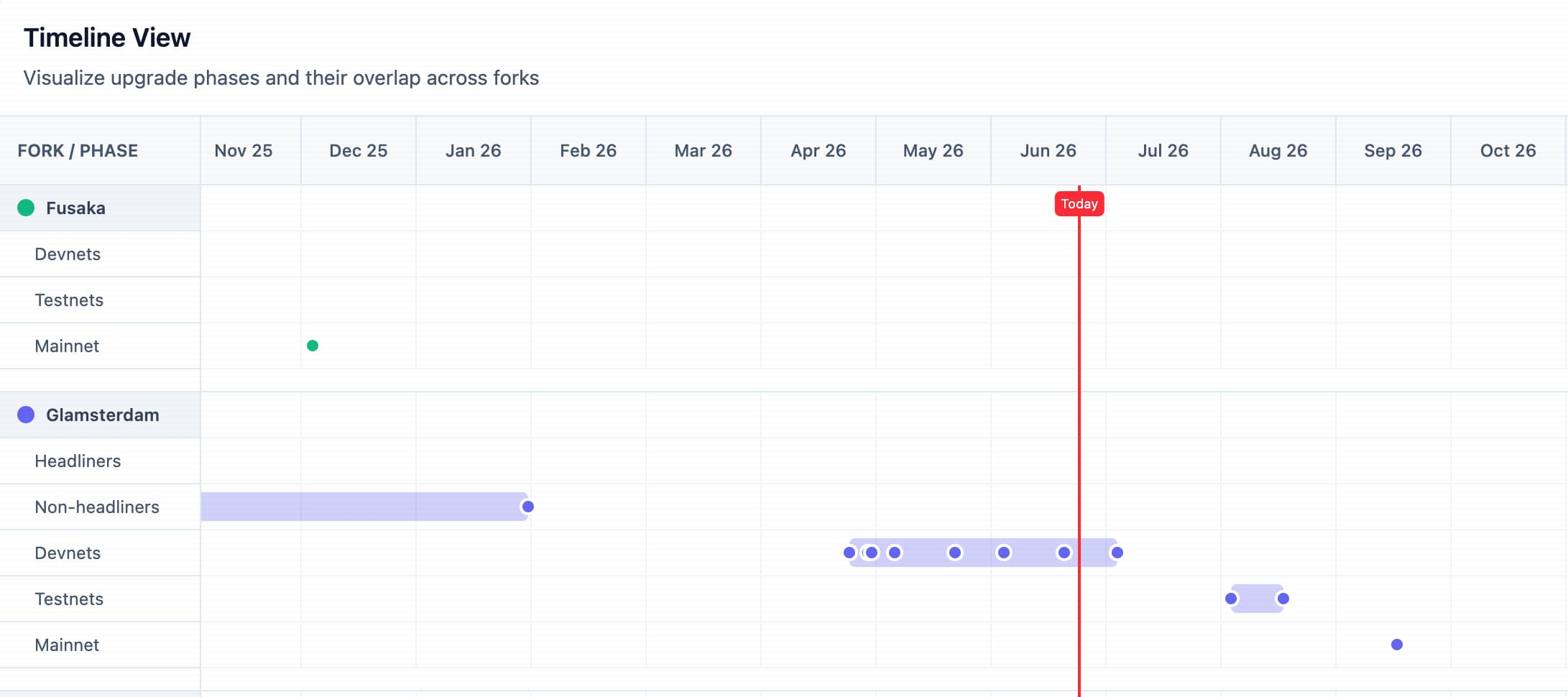


Saat ini rencananya ada 10 EIP yang akan dimasukkan dalam daftar Glamsterdam:


  • EIP-7708 (Transfer ETH juga memicu log, memudahkan pengindeksan dan pelacakan transfer ETH asli)
  • EIP-7732 (ePBS, menuliskan pembagian tugas pengusul dan pembangun ke dalam protokol, mengurangi ketergantungan pada relay di luar protokol)
  • EIP-7778 (Menghapus pembukuan Gas blok terkait pengembalian dana Gas (Gas refund), membuat perhitungan Gas blok lebih sederhana)
  • EIP-7843 (Menambahkan opcode SLOTNUM, memungkinkan kontrak membaca nomor slot saat ini)
  • EIP-7928 (Daftar Akses Tingkat Blok BAL, mencatat akun dan lokasi penyimpanan yang diakses selama eksekusi blok, membuka jalan untuk validasi paralel)
  • EIP-7954 (Meningkatkan batas ukuran kontrak maksimum, mengizinkan bytecode kontrak yang lebih besar)
  • EIP-7976 (Meningkatkan biaya dasar calldata (calldata floor cost), menyesuaikan biaya minimum calldata)
  • EIP-7981 (Meningkatkan biaya daftar akses, mengkalibrasi ulang penetapan harga Gas untuk access list)
  • EIP-8024 (Opcode SWAPN, DUPN, EXCHANGE yang kompatibel ke belakang, meningkatkan kemampuan operasi tumpukan EVM)
  • EIP-8037 (Meningkatkan biaya Gas pembuatan status, menekan inflasi basis data status yang terlalu cepat)


EIP-EIP ini secara garis besar dapat dikelompokkan menjadi beberapa kategori: pertama adalah rekonstruksi alur pembuatan blok dan validasi, dengan EIP-7732 dan EIP-7928 sebagai inti; kedua adalah penyesuaian penetapan harga sumber daya, termasuk EIP-7778, EIP-7976, EIP-7981, dan EIP-8037; ketiga adalah perubahan EVM dan pengalaman pengembang, termasuk EIP-7708, EIP-7843, EIP-7954, EIP-8024.


Dengan kata lain, Glamsterdam bukan hanya mengubah satu titik fungsionalitas, tetapi secara bersamaan meningkatkan pembagian kerja pembuatan blok, validasi paralel, penetapan harga Gas, dan kegunaan EVM.


Ada juga sejumlah EIP yang masih berada dalam daftar 'Pertimbangan untuk Dimasukkan':


  • EIP-2780 (Memisahkan Gas intrinsik transaksi berdasarkan sumber daya)
  • EIP-7610 (Rollback saat pembuatan kontrak dengan akun penyimpanan yang tidak kosong)
  • EIP-7688 (Struktur data lapisan konsensus yang kompatibel dengan masa depan)
  • EIP-7904 (Analisis biaya Gas komputasi, mungkin akan dikeluarkan dari Glamsterdam)
  • EIP-7975 (eth/70, daftar tanda terima blok parsial)
  • EIP-7997 (Kontrak pabrik deterministik)
  • EIP-8038 (Pembaruan biaya Gas akses status)
  • EIP-8045 (Mengecualikan validator yang telah di-slash untuk terus mengusulkan blok)
  • EIP-8061 (Meningkatkan churn keluar dan penggabungan)
  • EIP-8070 (eth/72, Sparse Blobpool)
  • EIP-8080 (Membuat keluar menggunakan antrian konsolidasi)
  • EIP-8136 (Deltas tingkat sel untuk siaran kolom data)
  • EIP-8159 (eth/71, pertukaran daftar akses blok)
  • EIP-8246 (Menghapus pembakaran SELFDESTRUCT)
  • EIP-8282 (Permintaan Eksekusi Pembangun, memberikan permintaan registrasi dan keluar khusus untuk pembangun ePBS)


Selain itu, Forkcast saat ini juga mencantumkan EIP-8254 (Membatasi jumlah deposit requests dalam setiap blok lapisan eksekusi menjadi 8192) sebagai daftar 'Disarankan untuk Dimasukkan'.


Dari perspektif staker, EIP-8061 dan EIP-8080 dalam daftar pertimbangan sangat perlu diperhatikan. Bagi staker, ini berarti likuiditas keluar mungkin membaik. Figment dalam artikel 5 Mei 2026 menyatakan, staker institusional paling perlu memperhatikan ePBS, EIP-8061, dan EIP-8080, dan memperkirakan bahwa dengan skala staking sekitar 38,9 juta ETH hingga April 2026, EIP-8061 dapat meningkatkan batas churn keluar dari 256 ETH/epoch menjadi sekitar 1187 ETH/epoch, sementara EIP-8080 memungkinkan keluar biasa memanfaatkan kapasitas kosong antrian penggabungan. Figment juga mengingatkan, semua angka sebelum peluncuran mainnet harus dianggap sebagai perkiraan.
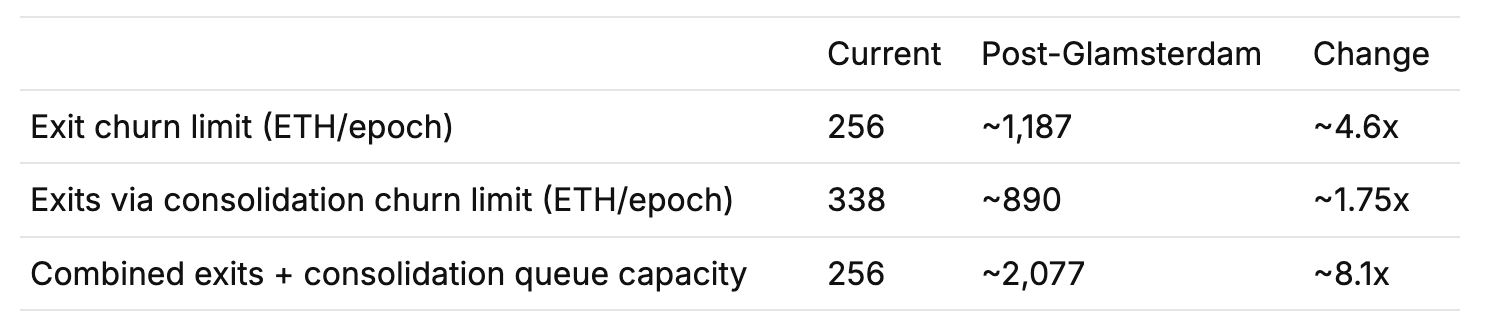

Sumber: Figment


Protokol Diupgrade, Anggota Yayasan Juga Berubah


Persiapan teknis Glamsterdam, hampir bersamaan dengan penyesuaian personel di kluster protokol (Protocol cluster) Yayasan Ethereum. Blog Yayasan Ethereum 11 Mei 2026 menyatakan, Glamsterdam telah mencapai beberapa pencapaian: batas bawah (floor) Gas limit 200 juta telah ditetapkan sebagai target post-Glamsterdam yang kredibel, ePBS berjalan stabil di devnet Glamsterdam multi-klien, EIP-8037 telah diselesaikan.


Artikel yang sama mengumumkan pergantian kepemimpinan Protocol cluster: Will Corcoran, Kev Wedderburn, Fredrik akan menjadi koordinator kluster protokol baru. Koordinator asli Barnabé Monnot, Tim Beiko meninggalkan Yayasan Ethereum, Alex Stokes cuti.


Deskripsi yayasan tentang pembagian tugas ketiga koordinator baru adalah: Will Corcoran memiliki pengalaman koordinasi lintas tim; Kev Wedderburn memimpin tim zkEVM; Fredrik memimpin Proyek Keamanan Protokol (Protocol Security) dan Trillion Dollar Security.


Perubahan ini tidak berhenti pada tim protokol. 18 Juni 2026, Hsiao-Wei Wang menulis bahwa setelah cuti, memutuskan untuk mengundurkan diri dari posisi Direktur Eksekutif Bersama dan Anggota Dewan Yayasan Ethereum.


Mantan peneliti Yayasan Ethereum Dankrad Feist pada 19 Juni 2026 menyatakan, orang-orang yang meninggalkan EF adalah penganut CROPS (Anti-sensor dan Anti-capture, Sumber Terbuka, Privasi, Keamanan), masalahnya bukan pada strategi, tetapi pada manajemen, dan menyebut gelombang arus keluar talenta ini agak bearish untuk Ethereum. Pendiri bersama Miden, Azeem, menafsirkannya dari arah sebaliknya, berpikir bahwa EF sulit berubah, setelah talenta keluar mungkin membentuk organisasi baru yang lebih mampu mengeksekusi roadmap Ethereum, yang justru secara jangka panjang merupakan keuntungan bersih bagi ekosistem.


Narasi internal Yayasan Ethereum lebih mirip penetapan batasan. Direktur Eksekutif Bersama Sementara Yayasan Ethereum Bastian Aue (Aerugo) merespons, alasan anggota EF keluar termasuk perbedaan strategis, kecocokan posisi, perubahan institusional normal atau pilihan pribadi, EF tidak akan membahas masalah personalia di media sosial, tetapi menyatakan bahwa mereka yang keluar harus memiliki cara keluar yang terhormat.


Yayasan Ethereum kemudian menggunakan thread Twitter resmi untuk memberikan narasi organisasi yang lebih jelas: mewujudkan potensi Ethereum memerlukan beberapa organisasi membentuk aliansi, tahun lalu sudah ada beberapa organisasi bersama-sama meningkatkan ketahanan dan kemampuan ekosistem. Contoh yang disebutkan EF termasuk: ethlabs (laboratorium riset dan pengembangan nirlaba yang fokus pada adopsi tahap berikutnya Ethereum dan ETH) yang diumumkan 23 Juni, Eth Apps Guild (berorientasi pada adopsi nyata aplikasi native Ethereum, terutama fokus pada pasar berkembang) yang diluncurkan April 2026, Ethereum Economic Zone (bertujuan mengurangi fragmentasi ekosistem melalui komposabilitas sinkron dan bukti waktu nyata pengetahuan nol (zero-knowledge)) yang dimulai tahun 2026, serta Argot (kolektif otonom insinyur dan peneliti yang memelihara Solidity dan alat kompiler sumber terbuka) yang didirikan tahun 2025.


Thread resmi ini membuat perubahan terbaru Yayasan Ethereum lebih mudah dipahami: yayasan bukan hanya mendorong orang dan proyek keluar, juga bukan melepaskan koordinasi pusat, tetapi mungkin membagi roadmap Ethereum untuk ditanggung bersama oleh lebih banyak organisasi.


Kesimpulan


Jadi, Glamsterdam tidak boleh hanya dilihat sebagai sekumpulan EIP. Ini adalah penyusunan ulang rekayasa yang dilakukan Ethereum sebelum throughput yang lebih tinggi: siapa yang membangun blok, siapa yang mengusulkan, siapa yang memvalidasi, data mana yang harus disimpan jangka panjang, sumber daya mana yang harus lebih mahal, semuanya diletakkan kembali di atas meja.


Kata kunci rute teknis adalah ePBS, BAL, dan awal dari Gas multidimensi; kata kunci rute organisasi lebih realistis: dapatkah Yayasan Ethereum mempertahankan kekuatan koordinasi, dan apakah organisasi baru di luar yayasan dapat mengubah kekuatan koordinasi ini menjadi pengiriman berkelanjutan.


Referensi:
https://forkcast.org/upgrade/glamsterdam/
https://ethereum.org/roadmap/glamsterdam/
https://blog.ethereum.org/2026/05/11/protocol-update-may-26
https://x.com/VitalikButerin/status/2027403360484430122


Trending Cryptos

Related Questions

QApa itu Glamsterdam dalam konteks Ethereum, dan mengapa upgrade ini penting?

AGlamsterdam adalah peningkatan besar jaringan Ethereum yang dijadwalkan pada paruh kedua 2026. Ini bukan sekadar peningkatan throughput, tetapi merestrukturisasi proses pembuatan blok, verifikasi, dan cara penetapan harga sumber daya. Tujuannya adalah mempersiapkan jaringan untuk batas Gas yang lebih tinggi, kapasitas blob yang lebih besar, dan eksekusi paralel di masa depan, sehingga merupakan langkah penting sebelum ekspansi skala besar.

QApa itu ePBS (Enshrined Proposer-Builder Separation) dan manfaat apa yang dibawanya?

AePBS (EIP-7732) adalah pemisahan peran proposer (pengusul) dan builder (pembangun) blok yang dienkripsi ke dalam protokol. Proposer memilih blok konsensus, sedangkan builder menyiapkan isi transaksi. Manfaatnya termasuk mengurangi ketergantungan pada infrastruktur pihak ketiga seperti relay, memperpanjang waktu penyebaran dan verifikasi muatan eksekusi (dari ~2 detik menjadi ~9 detik), sehingga memungkinkan peningkatan kapasitas blok yang lebih aman dan mengurangi risiko reorganisasi.

QApa itu BAL (Block-Level Access Lists) dan bagaimana fungsinya mendukung penskalaan?

ABAL (EIP-7928) adalah daftar akses tingkat blok yang mencatat semua akun dan lokasi penyimpanan yang diakses selama eksekusi blok. Daftar ini membuat pola akses data menjadi eksplisit, sehingga memungkinkan klien untuk melakukan pembacaan disk paralel, verifikasi transaksi paralel, dan komputasi akar status paralel. Ini membuka ruang bagi paralelisasi, yang merupakan fondasi untuk memproses lebih banyak transaksi dengan efisien.

QBagaimana EIP-8037 mengatasi masalah pertumbuhan basis data status Ethereum?

AEIP-8037 meningkatkan biaya Gas untuk membuat status baru (seperti akun, kontrak, atau slot penyimpanan) dan memperkenalkan biaya per byte status (CPSB). Tujuannya adalah memisahkan harga antara 'komputasi sementara' dan 'penyimpanan permanen' di basis data. Dengan membuat pembuatan status lebih mahal, pertumbuhan basis data jangka panjang dapat dikendalikan, melindungi desentralisasi dengan menjaga agar biaya menjalankan node tidak melonjak.

QPerubahan organisasi apa yang terjadi di Ethereum Foundation terkait persiapan Glamsterdam?

AEthereum Foundation mengalami perubahan kepemimpinan di kluster Protokol. Will Corcoran, Kev Wedderburn, dan Fredrik menjadi koordinator baru, menggantikan Barnabé Monnot dan Tim Beiko yang keluar, sementara Alex Stokes cuti. Foundation juga menyoroti kemunculan organisasi baru dalam ekosistem seperti ethlabs, Eth Apps Guild, Ethereum Economic Zone, dan Argot. Hal ini menunjukkan pergeseran menuju model aliansi multi-organisasi untuk melaksanakan roadmap Ethereum secara lebih tangguh.

Related Reads

Trading

Spot

Hot Articles

What is SONIC

Sonic: Pioneering the Future of Gaming in Web3 Introduction to Sonic In the ever-evolving landscape of Web3, the gaming industry stands out as one of the most dynamic and promising sectors. At the forefront of this revolution is Sonic, a project designed to amplify the gaming ecosystem on the Solana blockchain. Leveraging cutting-edge technology, Sonic aims to deliver an unparalleled gaming experience by efficiently processing millions of requests per second, ensuring that players enjoy seamless gameplay while maintaining low transaction costs. This article delves into the intricate details of Sonic, exploring its creators, funding sources, operational mechanics, and the timeline of significant events that have shaped its journey. What is Sonic? Sonic is an innovative layer-2 network that operates atop the Solana blockchain, specifically tailored to enhance the existing Solana gaming ecosystem. It accomplishes this through a customised, VM-agnostic game engine paired with a HyperGrid interpreter, facilitating sovereign game economies that roll up back to the Solana platform. The primary goals of Sonic include: Enhanced Gaming Experiences: Sonic is committed to offering lightning-fast on-chain gameplay, allowing players and developers to engage with games at previously unattainable speeds. Atomic Interoperability: This feature enables transactions to be executed within Sonic without the need to redeploy Solana programmes and accounts. This makes the process more efficient and directly benefits from Solana Layer1 services and liquidity. Seamless Deployment: Sonic allows developers to write for Ethereum Virtual Machine (EVM) based systems and execute them on Solana’s SVM infrastructure. This interoperability is crucial for attracting a broader range of dApps and decentralised applications to the platform. Support for Developers: By offering native composable gaming primitives and extensible data types - dining within the Entity-Component-System (ECS) framework - game creators can craft intricate business logic with ease. Overall, Sonic's unique approach not only caters to players but also provides an accessible and low-cost environment for developers to innovate and thrive. Creator of Sonic The information regarding the creator of Sonic is somewhat ambiguous. However, it is known that Sonic's SVM is owned by the company Mirror World. The absence of detailed information about the individuals behind Sonic reflects a common trend in several Web3 projects, where collective efforts and partnerships often overshadow individual contributions. Investors of Sonic Sonic has garnered considerable attention and support from various investors within the crypto and gaming sectors. Notably, the project raised an impressive $12 million during its Series A funding round. The round was led by BITKRAFT Ventures, with other notable investors including Galaxy, Okx Ventures, Interactive, Big Brain Holdings, and Mirana. This financial backing signifies the confidence that investment foundations have in Sonic’s potential to revolutionise the Web3 gaming landscape, further validating its innovative approaches and technologies. How Does Sonic Work? Sonic utilises the HyperGrid framework, a sophisticated parallel processing mechanism that enhances its scalability and customisability. Here are the core features that set Sonic apart: Lightning Speed at Low Costs: Sonic offers one of the fastest on-chain gaming experiences compared to other Layer-1 solutions, powered by the scalability of Solana’s virtual machine (SVM). Atomic Interoperability: Sonic enables transaction execution without redeployment of Solana programmes and accounts, effectively streamlining the interaction between users and the blockchain. EVM Compatibility: Developers can effortlessly migrate decentralised applications from EVM chains to the Solana environment using Sonic’s HyperGrid interpreter, increasing the accessibility and integration of various dApps. Ecosystem Support for Developers: By exposing native composable gaming primitives, Sonic facilitates a sandbox-like environment where developers can experiment and implement business logic, greatly enhancing the overall development experience. Monetisation Infrastructure: Sonic natively supports growth and monetisation efforts, providing frameworks for traffic generation, payments, and settlements, thereby ensuring that gaming projects are not only viable but also sustainable financially. Timeline of Sonic The evolution of Sonic has been marked by several key milestones. Below is a brief timeline highlighting critical events in the project's history: 2022: The Sonic cryptocurrency was officially launched, marking the beginning of its journey in the Web3 gaming arena. 2024: June: Sonic SVM successfully raised $12 million in a Series A funding round. This investment allowed Sonic to further develop its platform and expand its offerings. August: The launch of the Sonic Odyssey testnet provided users with the first opportunity to engage with the platform, offering interactive activities such as collecting rings—a nod to gaming nostalgia. October: SonicX, an innovative crypto game integrated with Solana, made its debut on TikTok, capturing the attention of over 120,000 users within a short span. This integration illustrated Sonic’s commitment to reaching a broader, global audience and showcased the potential of blockchain gaming. Key Points Sonic SVM is a revolutionary layer-2 network on Solana explicitly designed to enhance the GameFi landscape, demonstrating great potential for future development. HyperGrid Framework empowers Sonic by introducing horizontal scaling capabilities, ensuring that the network can handle the demands of Web3 gaming. Integration with Social Platforms: The successful launch of SonicX on TikTok displays Sonic’s strategy to leverage social media platforms to engage users, exponentially increasing the exposure and reach of its projects. Investment Confidence: The substantial funding from BITKRAFT Ventures, among others, emphasizes the robust backing Sonic has, paving the way for its ambitious future. In conclusion, Sonic encapsulates the essence of Web3 gaming innovation, striking a balance between cutting-edge technology, developer-centric tools, and community engagement. As the project continues to evolve, it is poised to redefine the gaming landscape, making it a notable entity for gamers and developers alike. As Sonic moves forward, it will undoubtedly attract greater interest and participation, solidifying its place within the broader narrative of blockchain gaming.

1.7k Total ViewsPublished 2024.04.04Updated 2024.12.03

What is SONIC

What is $S$

Understanding SPERO: A Comprehensive Overview Introduction to SPERO As the landscape of innovation continues to evolve, the emergence of web3 technologies and cryptocurrency projects plays a pivotal role in shaping the digital future. One project that has garnered attention in this dynamic field is SPERO, denoted as SPERO,$$s$. This article aims to gather and present detailed information about SPERO, to help enthusiasts and investors understand its foundations, objectives, and innovations within the web3 and crypto domains. What is SPERO,$$s$? SPERO,$$s$ is a unique project within the crypto space that seeks to leverage the principles of decentralisation and blockchain technology to create an ecosystem that promotes engagement, utility, and financial inclusion. The project is tailored to facilitate peer-to-peer interactions in new ways, providing users with innovative financial solutions and services. At its core, SPERO,$$s$ aims to empower individuals by providing tools and platforms that enhance user experience in the cryptocurrency space. This includes enabling more flexible transaction methods, fostering community-driven initiatives, and creating pathways for financial opportunities through decentralised applications (dApps). The underlying vision of SPERO,$$s$ revolves around inclusiveness, aiming to bridge gaps within traditional finance while harnessing the benefits of blockchain technology. Who is the Creator of SPERO,$$s$? The identity of the creator of SPERO,$$s$ remains somewhat obscure, as there are limited publicly available resources providing detailed background information on its founder(s). This lack of transparency can stem from the project's commitment to decentralisation—an ethos that many web3 projects share, prioritising collective contributions over individual recognition. By centring discussions around the community and its collective goals, SPERO,$$s$ embodies the essence of empowerment without singling out specific individuals. As such, understanding the ethos and mission of SPERO remains more important than identifying a singular creator. Who are the Investors of SPERO,$$s$? SPERO,$$s$ is supported by a diverse array of investors ranging from venture capitalists to angel investors dedicated to fostering innovation in the crypto sector. The focus of these investors generally aligns with SPERO's mission—prioritising projects that promise societal technological advancement, financial inclusivity, and decentralised governance. These investor foundations are typically interested in projects that not only offer innovative products but also contribute positively to the blockchain community and its ecosystems. The backing from these investors reinforces SPERO,$$s$ as a noteworthy contender in the rapidly evolving domain of crypto projects. How Does SPERO,$$s$ Work? SPERO,$$s$ employs a multi-faceted framework that distinguishes it from conventional cryptocurrency projects. Here are some of the key features that underline its uniqueness and innovation: Decentralised Governance: SPERO,$$s$ integrates decentralised governance models, empowering users to participate actively in decision-making processes regarding the project’s future. This approach fosters a sense of ownership and accountability among community members. Token Utility: SPERO,$$s$ utilises its own cryptocurrency token, designed to serve various functions within the ecosystem. These tokens enable transactions, rewards, and the facilitation of services offered on the platform, enhancing overall engagement and utility. Layered Architecture: The technical architecture of SPERO,$$s$ supports modularity and scalability, allowing for seamless integration of additional features and applications as the project evolves. This adaptability is paramount for sustaining relevance in the ever-changing crypto landscape. Community Engagement: The project emphasises community-driven initiatives, employing mechanisms that incentivise collaboration and feedback. By nurturing a strong community, SPERO,$$s$ can better address user needs and adapt to market trends. Focus on Inclusion: By offering low transaction fees and user-friendly interfaces, SPERO,$$s$ aims to attract a diverse user base, including individuals who may not previously have engaged in the crypto space. This commitment to inclusion aligns with its overarching mission of empowerment through accessibility. Timeline of SPERO,$$s$ Understanding a project's history provides crucial insights into its development trajectory and milestones. Below is a suggested timeline mapping significant events in the evolution of SPERO,$$s$: Conceptualisation and Ideation Phase: The initial ideas forming the basis of SPERO,$$s$ were conceived, aligning closely with the principles of decentralisation and community focus within the blockchain industry. Launch of Project Whitepaper: Following the conceptual phase, a comprehensive whitepaper detailing the vision, goals, and technological infrastructure of SPERO,$$s$ was released to garner community interest and feedback. Community Building and Early Engagements: Active outreach efforts were made to build a community of early adopters and potential investors, facilitating discussions around the project’s goals and garnering support. Token Generation Event: SPERO,$$s$ conducted a token generation event (TGE) to distribute its native tokens to early supporters and establish initial liquidity within the ecosystem. Launch of Initial dApp: The first decentralised application (dApp) associated with SPERO,$$s$ went live, allowing users to engage with the platform's core functionalities. Ongoing Development and Partnerships: Continuous updates and enhancements to the project's offerings, including strategic partnerships with other players in the blockchain space, have shaped SPERO,$$s$ into a competitive and evolving player in the crypto market. Conclusion SPERO,$$s$ stands as a testament to the potential of web3 and cryptocurrency to revolutionise financial systems and empower individuals. With a commitment to decentralised governance, community engagement, and innovatively designed functionalities, it paves the way toward a more inclusive financial landscape. As with any investment in the rapidly evolving crypto space, potential investors and users are encouraged to research thoroughly and engage thoughtfully with the ongoing developments within SPERO,$$s$. The project showcases the innovative spirit of the crypto industry, inviting further exploration into its myriad possibilities. While the journey of SPERO,$$s$ is still unfolding, its foundational principles may indeed influence the future of how we interact with technology, finance, and each other in interconnected digital ecosystems.

75 Total ViewsPublished 2024.12.17Updated 2024.12.17

What is $S$

What is AGENT S

Agent S: The Future of Autonomous Interaction in Web3 Introduction In the ever-evolving landscape of Web3 and cryptocurrency, innovations are constantly redefining how individuals interact with digital platforms. One such pioneering project, Agent S, promises to revolutionise human-computer interaction through its open agentic framework. By paving the way for autonomous interactions, Agent S aims to simplify complex tasks, offering transformative applications in artificial intelligence (AI). This detailed exploration will delve into the project's intricacies, its unique features, and the implications for the cryptocurrency domain. What is Agent S? Agent S stands as a groundbreaking open agentic framework, specifically designed to tackle three fundamental challenges in the automation of computer tasks: Acquiring Domain-Specific Knowledge: The framework intelligently learns from various external knowledge sources and internal experiences. This dual approach empowers it to build a rich repository of domain-specific knowledge, enhancing its performance in task execution. Planning Over Long Task Horizons: Agent S employs experience-augmented hierarchical planning, a strategic approach that facilitates efficient breakdown and execution of intricate tasks. This feature significantly enhances its ability to manage multiple subtasks efficiently and effectively. Handling Dynamic, Non-Uniform Interfaces: The project introduces the Agent-Computer Interface (ACI), an innovative solution that enhances the interaction between agents and users. Utilizing Multimodal Large Language Models (MLLMs), Agent S can navigate and manipulate diverse graphical user interfaces seamlessly. Through these pioneering features, Agent S provides a robust framework that addresses the complexities involved in automating human interaction with machines, setting the stage for myriad applications in AI and beyond. Who is the Creator of Agent S? While the concept of Agent S is fundamentally innovative, specific information about its creator remains elusive. The creator is currently unknown, which highlights either the nascent stage of the project or the strategic choice to keep founding members under wraps. Regardless of anonymity, the focus remains on the framework's capabilities and potential. Who are the Investors of Agent S? As Agent S is relatively new in the cryptographic ecosystem, detailed information regarding its investors and financial backers is not explicitly documented. The lack of publicly available insights into the investment foundations or organisations supporting the project raises questions about its funding structure and development roadmap. Understanding the backing is crucial for gauging the project's sustainability and potential market impact. How Does Agent S Work? At the core of Agent S lies cutting-edge technology that enables it to function effectively in diverse settings. Its operational model is built around several key features: Human-like Computer Interaction: The framework offers advanced AI planning, striving to make interactions with computers more intuitive. By mimicking human behaviour in tasks execution, it promises to elevate user experiences. Narrative Memory: Employed to leverage high-level experiences, Agent S utilises narrative memory to keep track of task histories, thereby enhancing its decision-making processes. Episodic Memory: This feature provides users with step-by-step guidance, allowing the framework to offer contextual support as tasks unfold. Support for OpenACI: With the ability to run locally, Agent S allows users to maintain control over their interactions and workflows, aligning with the decentralised ethos of Web3. Easy Integration with External APIs: Its versatility and compatibility with various AI platforms ensure that Agent S can fit seamlessly into existing technological ecosystems, making it an appealing choice for developers and organisations. These functionalities collectively contribute to Agent S's unique position within the crypto space, as it automates complex, multi-step tasks with minimal human intervention. As the project evolves, its potential applications in Web3 could redefine how digital interactions unfold. Timeline of Agent S The development and milestones of Agent S can be encapsulated in a timeline that highlights its significant events: September 27, 2024: The concept of Agent S was launched in a comprehensive research paper titled “An Open Agentic Framework that Uses Computers Like a Human,” showcasing the groundwork for the project. October 10, 2024: The research paper was made publicly available on arXiv, offering an in-depth exploration of the framework and its performance evaluation based on the OSWorld benchmark. October 12, 2024: A video presentation was released, providing a visual insight into the capabilities and features of Agent S, further engaging potential users and investors. These markers in the timeline not only illustrate the progress of Agent S but also indicate its commitment to transparency and community engagement. Key Points About Agent S As the Agent S framework continues to evolve, several key attributes stand out, underscoring its innovative nature and potential: Innovative Framework: Designed to provide an intuitive use of computers akin to human interaction, Agent S brings a novel approach to task automation. Autonomous Interaction: The ability to interact autonomously with computers through GUI signifies a leap towards more intelligent and efficient computing solutions. Complex Task Automation: With its robust methodology, it can automate complex, multi-step tasks, making processes faster and less error-prone. Continuous Improvement: The learning mechanisms enable Agent S to improve from past experiences, continually enhancing its performance and efficacy. Versatility: Its adaptability across different operating environments like OSWorld and WindowsAgentArena ensures that it can serve a broad range of applications. As Agent S positions itself in the Web3 and crypto landscape, its potential to enhance interaction capabilities and automate processes signifies a significant advancement in AI technologies. Through its innovative framework, Agent S exemplifies the future of digital interactions, promising a more seamless and efficient experience for users across various industries. Conclusion Agent S represents a bold leap forward in the marriage of AI and Web3, with the capacity to redefine how we interact with technology. While still in its early stages, the possibilities for its application are vast and compelling. Through its comprehensive framework addressing critical challenges, Agent S aims to bring autonomous interactions to the forefront of the digital experience. As we move deeper into the realms of cryptocurrency and decentralisation, projects like Agent S will undoubtedly play a crucial role in shaping the future of technology and human-computer collaboration.

753 Total ViewsPublished 2025.01.14Updated 2025.01.14

What is AGENT S

Discussions

Welcome to the HTX Community. Here, you can stay informed about the latest platform developments and gain access to professional market insights. Users' opinions on the price of S (S) are presented below.

活动图片