Tài Sản Thực Trên Solana Gây Sức Ép Với Sự Tăng Đột Biến Đáng Kể Trong Hoạt Động Chuyển Giao

bitcoinistPublished on 2026-06-11Last updated on 2026-06-11

Abstract

Solana đang cho thấy sự phân kỳ thú vị: trong khi giá SOL giảm và phá vỡ các mức hỗ trợ quan trọng, mạng lưới lại ghi nhận đà tăng trưởng mạnh mẽ. Đặc biệt, lĩnh vực tài sản thế giới thực (RWA) trên Solana đã có bước tiến lớn với khối lượng chuyển giao trong ngày tăng hơn gấp đôi, đạt mức kỷ lục 1,49 tỷ USD, trong đó preSPAX chiếm hơn 1 tỷ USD. Điều này cho thấy nhu cầu ngày càng tăng đối với tài sản được mã hóa trên nền tảng này. Song song đó, Solana tiếp tục được các chuyên gia như Zensei đánh giá là nền tảng giao dịch spot tốt nhất hiện nay, với cặp SOL/USDC có khối lượng giao dịch gấp hơn 6 lần tổng của 9 thị trường SOL lớn khác. Về mặt giá cả, SOL hiện đang giao dịch trong vùng Fibonacci quan trọng (0.5-0.618), tương tự giai đoạn trước khi nó tăng trưởng hơn 2,200%. Một số nhà phân tích kỳ vọng rằng, nếu được kích hoạt bởi một mùa Altcoin, giá SOL có thể nhắm tới mốc 1.000 USD.

Biến động giá của Solana và hiệu suất mạng lưới của nó đang thể hiện những đặc điểm riêng biệt và di chuyển theo các quỹ đạo khác nhau. Trong tuần qua, SOL đã có xu hướng giảm, phá vỡ dưới các mức hỗ trợ chính. Trong khi đó, mạng lưới hàng đầu này tiếp tục chứng kiến sự gia tăng đều đặn về động lượng và hoạt động.

Hoạt Động Chuyển Giao Cho RWA Trên Solana Tăng Mạnh

Mặc dù giá của nó có thể bị ảnh hưởng bởi áp lực giảm, nhưng điều này không đúng với mạng lưới Solana, nơi dường như đang trải qua sự tăng trưởng ổn định trên toàn hệ sinh thái của mình. Giữa sự phát triển của blockchain, mạng SOL đang có được động lực nghiêm túc, đặc biệt là trong lĩnh vực tài sản token hóa đang mở rộng.

Điều này có nghĩa là hệ sinh thái Tài Sản Thực (RWA) của Solana đã trải qua một sự gia tăng đáng kể về khối lượng chuyển giao. Một chuyên gia DeFi và nhà nghiên cứu tiền điện tử, Zensei, tiết lộ trên X rằng tài sản thực của mạng lưới vừa ghi nhận ngày có khối lượng chuyển giao lớn nhất trong lịch sử của nó, một lần nữa đưa nó vào tầm ngắm của các nhà phát triển.

Sự gia tăng đáng chú ý này cho thấy hoạt động giữa người dùng và các tổ chức tận dụng công nghệ blockchain để chuyển đổi và xử lý các biểu diễn được token hóa của tài sản truyền thống đang chứng kiến sự tăng trưởng lớn nhất từ trước đến nay. Khi các blockchain tiền điện tử chứng kiến sự tăng trưởng mạnh mẽ trong lĩnh vực này, nó thường được coi là dấu hiệu của việc mở rộng sự chấp nhận và sự tham gia của thị trường.
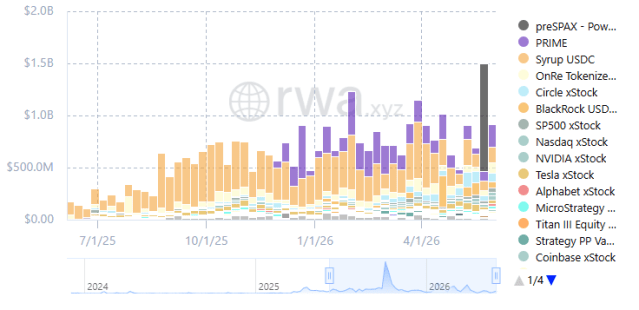
Nguồn: Biểu đồ từ Zensei trên X

Sự phát triển này khá quan trọng đối với Solana vì lĩnh vực RWA đang nổi lên như một trong những trường hợp sử dụng hứa hẹn nhất cho công nghệ blockchain trong thời đại hiện nay. Như được hiển thị trong biểu đồ, khối lượng chuyển giao hàng ngày đã tăng vọt vượt quá 1,49 tỷ đô la, đại diện cho mức tăng trưởng hơn 2 lần so với ngày hôm trước.

Giữa sự gia tăng này, preSPAX đã nổi lên như một lực lượng thống trị, chiếm hơn 1 tỷ đô la hoạt động một mình. Hơn nữa, sự bùng nổ hoạt động này chỉ làm rõ nhu cầu ngày càng tăng đối với các tài sản được token hóa trên blockchain Solana.

Các Nhà Giao Dịch Đang Chọn SOL Cho Hoạt Động Của Họ

Zensei tiếp tục đánh dấu SOL là nền tảng tốt nhất cho giao dịch giao ngay, bởi vì theo quan điểm của ông, altcoin này luôn chứng minh điều đó. Sau khi thấy các tài sản nước ngoài như Hyperliquid (HYPE) giao dịch hiệu quả hơn trên Solana, chuyên gia này tuyên bố rằng đây là một dấu hiệu cho thấy nơi các nhà giao dịch đang chọn để hoạt động.

Vào thời điểm bài viết này, cặp SOL/USDC đã ghi nhận hơn 4,9 tỷ đô la khối lượng giao dịch trong 24 giờ. Con số này nhiều hơn 6 lần tổng khối lượng của 9 thị trường SOL hàng đầu khác trên các sàn giao dịch tiền điện tử lớn. Với loại tăng trưởng này, Zensei tin rằng việc thách thức vị thế của nó với tư cách là nơi tốt nhất để giao dịch ngay bây giờ đang trở nên cực kỳ khó khăn.

Crypto Patel chia sẻ rằng biến động giá của SOL đang phản chiếu các xu hướng trong quá khứ đã đưa altcoin này lên cao. Cụ thể, SOL hiện đang giao dịch bên trong Vùng Fibonacci Retracement quan trọng giữa 0.5 và 0.618. Lần cuối cùng tài sản này giao dịch trong vùng này, nó đã kích hoạt một đợt tăng giá mạnh mẽ hơn 2.200%, làm tăng tiềm năng cho một sự phục hồi mạnh mẽ.

Hiện tại, vùng tích lũy được định vị trong khoảng từ 40 đến 60 đô la, nhưng một Mùa Altcoin là cần thiết để kích hoạt sự di chuyển tăng giá dự kiến có thể đẩy giá của nó đến mốc 1.000 đô la. Mặc dù có vẻ quá tham vọng, Crypto Patel tự tin vào dự đoán của mình, lưu ý rằng điều quan trọng là các nhà đầu tư sẽ được định vị tốt như thế nào cho nó.

SOL giao dịch ở mức 64 đô la trên biểu đồ 1D | Nguồn: SOLUSDT trên Tradingview.com

Related Questions

QHiện tượng nào đối lập với biến động giá của SOL đang được bàn luận trong bài viết?

AHiện tượng đối lập là hoạt động mạng lưới Solana, đặc biệt là trong lĩnh vực Tài sản Thực tế (RWA), vẫn tiếp tục tăng trưởng mạnh mẽ bất chấp giá SOL đang trong xu hướng giảm.

QLĩnh vực Tài sản Thực tế (RWA) trên Solana đã đạt được cột mốc quan trọng nào gần đây?

ALĩnh vực RWA trên Solana vừa ghi nhận ngày có khối lượng chuyển giao lớn nhất trong lịch sử, vượt quá 1,49 tỷ đô la, tăng hơn gấp đôi so với ngày hôm trước, với preSPAX chiếm hơn 1 tỷ đô la trong số đó.

QTại sao chuyên gia Zensei cho rằng Solana là nền tảng tốt nhất cho giao dịch spot?

AZensei cho rằng Solana là nền tảng giao dịch spot tốt nhất vì cặp SOL/USDC ghi nhận khối lượng giao dịch 24h hơn 4,9 tỷ đô la, gấp hơn 6 lần tổng khối lượng của 9 thị trường SOL lớn khác cộng lại, chứng tỏ đây là nơi mà các nhà giao dịch đang lựa chọn.

QTheo phân tích kỹ thuật của Crypto Patel, SOL hiện đang ở trong vùng giá nào và điều đó có ý nghĩa gì?

ATheo Crypto Patel, SOL hiện đang giao dịch trong vùng Fibonacci Retracement quan trọng giữa mức 0.5 và 0.618. Lần cuối cùng nó nằm trong vùng này, giá đã tăng mạnh hơn 2,200%, cho thấy tiềm năng cho một đợt phục hồi mạnh mẽ.

QĐiều kiện nào được cho là cần thiết để SOL có thể đạt được mốc giá 1,000 đô la theo dự đoán trong bài?

ATheo bài viết, một 'Altcoin Season' (Mùa Altcoin) là điều kiện cần thiết để kích hoạt đợt tăng giá mạnh mẽ, có thể đẩy giá SOL lên mốc 1,000 đô la, với vùng tích lũy hiện tại nằm trong khoảng từ 40 đến 60 đô la.

Related Reads

Wintermute Market Weekly: Iran War Ends, Inflation Meets Expectations, BTC Rebounds to Lower 60ks But Don’t Rush to Buy the Dip

**Wintermute Market Weekly: BTC Rebounds to $60K Lows, But Caution Advised** This week saw a broad market rebound, primarily driven by two converging factors: a US CPI inflation reading that met expectations (4.2% YoY) and former President Trump's announcement of a deal to end the Iran conflict. The latter triggered a sharp drop in oil prices, reducing geopolitical risk premiums and easing inflation fears. Consequently, risk assets like equities and cryptocurrencies rallied, with Bitcoin recovering from lows around $60,000 to close the week up 1.9%, while altcoins gained 3.1%. Despite the price bounce, the underlying liquidity picture for crypto remains weak. Key funding channels—stablecoin flows, ETF inflows, and Digital Asset Treasury (DAT) activity—show no signs of structural improvement. ETF outflows recently hit a record streak, and DAT assets have declined significantly. The rally from $60K to $83K earlier is now viewed as a bear-market rally that has failed. The current environment is characterized by low directional conviction and choppy, range-bound trading, likely persisting into summer. The report advises caution against aggressively buying the dip. While the $60K area offers attractive long-term risk/reward, a sustained bull run requires a visible turnaround in capital inflows, which hasn't materialized. The upcoming FOMC meeting and Powell's commentary, alongside the formal Iran deal signing, are noted as near-term catalysts. The core takeaway is to watch fund flows rather than price action and avoid being whipsawed by volatility before clear signs of institutional or retail capital returning emerge.

marsbit8m ago

Wintermute Market Weekly: Iran War Ends, Inflation Meets Expectations, BTC Rebounds to Lower 60ks But Don’t Rush to Buy the Dip

marsbit8m ago

Cursor, Why Boarded Musk's Starship?

SpaceX announced its acquisition of AI programming startup Cursor's parent company, Anysphere, for $60 billion in an all-stock deal, just days after its record-breaking IPO. The move sent SpaceX's stock soaring, briefly making it the most valuable U.S. company. Cursor, founded in 2022 by MIT graduate Michael Truell and his classmates, is a popular AI coding assistant that allows developers to switch between models from OpenAI, Anthropic, and others. It saw explosive revenue growth, reaching a $4 billion annualized run rate in early 2026. However, its market share was eroded by the launch of competitor Claude Code from its key AI supplier, Anthropic. This dependence prompted Cursor to develop its own AI model, Composer, in early 2026. To scale Composer, Cursor needed immense computing power. In April 2026, it struck a deal with SpaceX, granting the latter an option to acquire it post-IPO. SpaceX exercised this option, offering Cursor access to its Colossus supercomputer, powered by hundreds of thousands of top-tier Nvidia AI chips. For SpaceX, the acquisition is a strategic move to bolster its AI capabilities, particularly for its xAI division, and advance its broader ambition of building orbital, solar-powered data centers. While the deal surprised some employees and investors given Truell's earlier stance on independence, it represents a high-stakes partnership. SpaceX CEO Elon Musk has projected the company could reach $1 trillion in revenue by 2030. For Truell, joining forces with SpaceX is a monumental gamble on an unprecedented scale in the race for AI dominance.

链捕手10m ago

Cursor, Why Boarded Musk's Starship?

链捕手10m ago

The More It Rises, the More Dangerous? The Systemic Risks Behind SpaceX's Soaring Valuation

Summary: The article raises concerns about the systemic risks posed by SpaceX's skyrocketing valuation, arguing that modern market mechanics, rather than fundamentals, are driving its price discovery. Following SpaceX's market capitalization surpassing $3 trillion in after-hours trading, the author contends that the market is no longer functioning properly. The core issue is not SpaceX's business prospects but the unhealthy market structure surrounding it. With limited float and the imminent launch of options trading, the stage is set for a potential "gamma squeeze"—a feedback loop where market makers hedging call options are forced to buy shares, pushing the price higher and attracting more speculative momentum traders. This mechanism, seen previously with Tesla and meme stocks, can decouple valuation from financial reality. The danger escalates as extreme valuations force passive funds, ETFs, pensions, and major indices to hold the stock. If SpaceX grows large enough—hypothetically reaching $5 or even $10 trillion—its performance would increasingly dictate broader market indices, embedding systemic risk. The author warns that when price appreciation itself becomes the primary bullish thesis, the market transforms from a capital allocation mechanism into a self-reinforcing speculative machine, endangering the retirement savings of ordinary investors tied to passive strategies. The piece questions whether such a system can still perform its fundamental role of price discovery.

marsbit15m ago

The More It Rises, the More Dangerous? The Systemic Risks Behind SpaceX's Soaring Valuation

marsbit15m ago

OpenAI's Hyperliquid Pre-IPO Pricing Venture: Why Did It Last Only Half a Year?

The article discusses the rise and fall of Pre-IPO pricing markets on the Hyperliquid blockchain. Trade.xyz, an anonymous team, successfully built the largest pre-market for SpaceX (SPCX) by launching a contract with a clear anchor: the eventual Nasdaq listing price. This provided inherent price stability and validation. In contrast, Ventuals, a team backed by Paradigm, failed despite holding exclusive contracts for highly sought-after companies like OpenAI and Anthropic. Its key mistake was its pricing mechanism. For companies with no near-term IPO date, Ventuals' oracle relied partly on opaque private market transactions and, critically, partly on its own contract's moving average price. This created a self-referential feedback loop where prices were artificially propped up and detached from genuine supply and demand, leading to illiquid markets. Ventuals shut down after nine months, settling positions at final prices of $1,341.80 for OpenAI and $1,618.90 for Anthropic. Ironically, some employees and late-stage investors of these very companies reportedly used these flawed Ventuals prices for valuation reference, highlighting the acute demand for any price signal in illiquid private markets. The article concludes that while demand for pre-IPO trading is real and growing, with players like Coinbase now entering the space, the fundamental challenge remains: without a public listing to provide a definitive price anchor, these markets struggle to establish truly accurate and liquid pricing. The need for a transparent, self-correcting market is the critical lesson from Ventuals' failure.

marsbit41m ago

OpenAI's Hyperliquid Pre-IPO Pricing Venture: Why Did It Last Only Half a Year?

marsbit41m ago

Trading

Spot
Futures

Hot Articles

Discussions

Welcome to the HTX Community. Here, you can stay informed about the latest platform developments and gain access to professional market insights. Users' opinions on the price of SOL (SOL) are presented below.

活动图片