Los 43 minutos de Trump: la narrativa del hombre fuerte se descontrola y la guerra mediática se intensifica

marsbitPublished on 2026-06-07Last updated on 2026-06-07

Abstract

**Resumen del artículo en español:** Tras más de una semana sin aparecer en público, el presidente Donald Trump celebró una conferencia de prensa de 43 minutos que se alejó de los temas centrales (su salud, la acción militar en Irán, las fracturas en su partido) y derivó en un espectáculo político errático y lleno de quejas. La intervención comenzó hablando extensamente sobre la renovación de un estanque reflejante, comparó el tamaño de sus mítines con los de Martin Luther King, atacó a ciudades estadounidenses y a sus adversarios políticos, y culminó con un ataque personal a una periodista de CNN, a quien criticó por "nunca sonreír" y tener "odio en los ojos". El artículo subraya dos dimensiones clave. Primero, revela un estado presidencial que parece fuera de control, defensivo y volátil, evidenciado por el abrupto final del acto y el rápido desalojo del lugar por su equipo. Segundo, analiza cambios institucionales: Trump firmó una orden ejecutiva que elimina protecciones laborales para miles de altos funcionarios federales, priorizando la lealtad política sobre la experiencia y la independencia. El texto amplía el análisis al panorama mediático, señalando cómo la presión política y los intereses comerciales están erosionando la independencia periodística, citando el caso de la destitución de un veterano periodista en la CBS. Argumenta que, ante la captura de los grandes medios, el periodismo independiente se vuelve crucial para mantener los hechos. El autor hace un llam...

Nota del editor: Este artículo documenta el regreso público de Trump tras más de una semana de ausencia. Enfrentando las dudas sobre su salud, las acciones militares en Irán y las grietas dentro de su partido, necesitaba utilizar esta aparición para reafirmar su control. Sin embargo, su discurso se desvió constantemente de los temas centrales: desde la remodelación del Reflecting Pool en el National Mall hasta comparaciones con el tamaño de las multitudes en el acto de Martin Luther King Jr., pasando por ataques a periodistas, demócratas y varias ciudades estadounidenses. Los 43 minutos de la rueda de prensa se convirtieron gradualmente en un espectáculo político cargado de resentimiento e inquietud.

El artículo se centra en dos niveles. El primero es la exposición concentrada del estado personal y el estilo de poder de Trump. A través de su humillación a periodistas, sus ataques a ciudades y oponentes políticos, y los detalles de cómo interrumpió abruptamente el acto y su personal despejó rápidamente la sala, el autor presenta la imagen de un presidente descontrolado, ansioso y altamente defensivo. El segundo son los cambios institucionales que giran en torno a Trump. Se menciona que una orden ejecutiva que firmó debilitará las protecciones laborales de los empleados federales de alto nivel, haciendo que más funcionarios experimentados puedan ser reemplazados por motivos políticos o de desobediencia. Esto significa que el juicio profesional y las restricciones institucionales dentro del gobierno están siendo desplazados por una lógica de mayor lealtad personal.

La segunda parte del artículo extiende la discusión a los medios. El autor argumenta que el ataque de Trump a una periodista de CNN, y la crisis de independencia editorial dentro de medios como CBS, muestran que las organizaciones de noticias estadounidenses están bajo una doble presión del poder político y los intereses comerciales. Cuando los medios mainstream comienzan a ceder ante el poder, los periodistas y creadores independientes se convierten en una fuerza vital para mantener los hechos públicos. Esta es también la razón por la que el autor hace un llamado repetido a apoyar a los medios independientes.

El tono de este artículo es fuerte, con una postura política y un color de movilización evidentes, pero las preguntas que plantea tienen relevancia real: cuando el poder ataca constantemente a los periodistas, debilita el sistema de funcionarios públicos, recompensa la lealtad y castiga la disidencia, ¿puede el público aún obtener información suficientemente confiable? Cuando los intereses comerciales de las instituciones mediáticas se entrelazan con la presión política, ¿cuánto tiempo podrá mantenerse la independencia periodística? La aparición de Trump esta vez proporciona una ventana de observación, que refleja tensiones institucionales que se profundizan en la política estadounidense: la expansión del poder personal, la erosión de la confianza en los medios, la presión sobre el sistema de funcionarios públicos y la continua contracción del espacio para los hechos públicos.

A continuación, el texto original:

Hoy a las 3:50 p.m., el presidente de los Estados Unidos reapareció de repente después de más de una semana desaparecido de la vista pública. Desde que fue al Centro Médico Walter Reed, no había asistido a ningún acto público. Ahora, con las malas noticias acumulándose y las dudas sobre el deterioro de su salud aumentando, Donald Trump tuvo que salir. En 43 minutos, Trump y sus seguidores intentaron mostrar la imagen de un líder fuerte y en control. Pero lo que el mundo vio fue un hombre paranoico: elogiando a un líder autoritario como "mi amigo, un buen hombre"; atacando a una periodista como "una mujer joven y bonita que nunca sonríe", diciendo que sus ojos "están llenos de odio"; mientras luchaba desesperadamente por mantener la ilusión de que todo seguía bajo control.
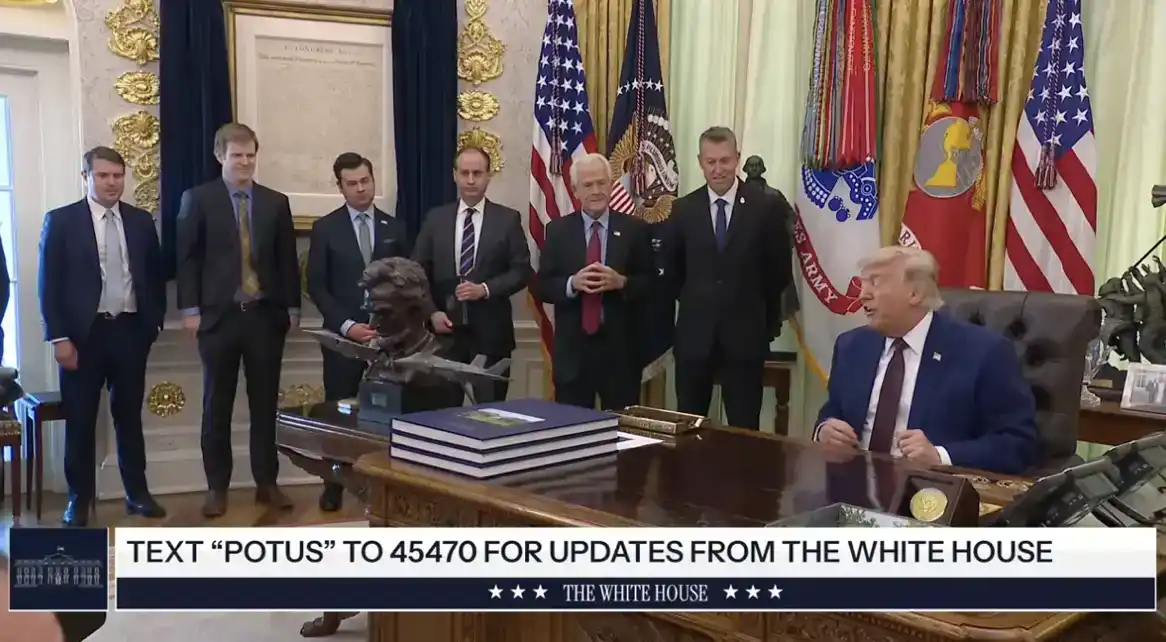
Todo comenzó con el proyecto favorito actual de Trump: las fotos del Reflecting Pool. Antes de firmar cualquier documento o responder cualquier pregunta, el presidente dedicó varios minutos a hablar sobre el estanque reflectante del National Mall. Describió su longitud, pidió a sus asistentes que trajeran imágenes, lo comparó con algunos de los edificios más altos del mundo. Habló del Empire State, del World Trade Center y de la Sears Tower, como si una extensión plana de agua pudiera levantarse como un rascacielos. Le dijo a las cámaras que el estanque se volvería "azul bandera americana" y se jactó de cuántos camiones de basura ya habían limpiado de él. Este hombre, desaparecido del ojo público durante más de una semana, eligió al reaparecer hablar primero no de su ausencia, no de su salud, no de las crisis que enfrenta el país, sino de un estanque.

Luego, sus divagaciones giraron hacia lo realmente repugnante y más revelador. Comenzó a describir el lugar donde Martin Luther King Jr. pronunció uno de los discursos más importantes de la historia moderna estadounidense, y lo usó para afirmar que sus mítines habían atraído a más gente que los de King. "Dicen que él tenía un millón de personas, y yo solo tenía 25,000", dijo, para luego insistir en que, si se ponían las dos fotos una al lado de la otra, "mi gente es más numerosa. Están más densamente agrupadas. Mi gente está más densamente agrupada".

Para Trump, todo es una competencia, porque todo surge de la inseguridad. Frente a ese estanque reflectante -donde el Dr. King habló de justicia, igualdad y las promesas aún no cumplidas de la democracia estadounidense-, lo primero que vino a la mente de Trump fue el tamaño de la multitud. No el discurso, no el movimiento, no el coraje que se necesitó para estar allí en 1963 exigiendo que Estados Unidos cumpliera sus ideales. Lo único en lo que pensó fue en si él parecía más grande. Y las personas a su lado solo asentían, sonreían, adulaban.

Los asuntos realmente serios quedaron enterrados bajo este absurdo. Firmó dos órdenes ejecutivas. Una remodela el sistema de aplicación de aduanas, la otra elimina las protecciones laborales de las que gozaban desde hace tiempo unos 8,000 empleados federales de alto nivel, permitiendo que sean despedidos a voluntad. Estas protecciones existen para garantizar que los funcionarios gubernamentales obedezcan la ley, la Constitución y el interés público, no las órdenes personales del presidente. Al eliminar estas protecciones, la obediencia será más importante que la competencia; la disidencia se convertirá en motivo de despido; y aquellos que deberían decir la verdad dentro del gobierno pronto comprenderán que su sustento depende de decirle al líder lo que quiere oír.

Después, todo volvió a su resentimiento personal. Atacó al juez que falló en contra de su "fondo anti-arme", llamando al fallo de un "juez de izquierda radical". Una y otra vez se retrató a sí mismo como víctima, especialmente al hablar de la redada en su residencia, buscando simpatía. Cuando un periodista preguntó sobre la "caja chica" de 1.776 mil millones de dólares, simplemente dijo: "Me gusta. Creo que es muy importante".

Luego, comenzó a reempaquetar su guerra en Irán. Después de ordenar ataques contra Irán sin la aprobación del Congreso, quería que la gente creyera que esto no era realmente una guerra. "Esto no es gran cosa para nosotros", dijo, "tenemos un ejército fuerte. No es gran cosa para nosotros". Al mismo tiempo, garantizó que el mercado bursátil estaba subiendo, las cuentas de jubilación creciendo, los costos bajando. La guerra no vale la pena mencionarla, la economía es perfecta. Si tu factura de alimentos dice lo contrario, obviamente deberías dudar de tus ojos.

Luego, su mente divagó hacia el comunismo. Había publicado sobre esto antes en Truth Social y claramente estaba orgulloso. El primer mensaje decía: "¿Alguien ha visto a un comunista feliz?". El segundo era más largo: "¡Los comunistas siempre son populares entre los votantes al principio, o como ellos dicen, entre 'el pueblo'! ¡Pero eventualmente, el país, estado o ciudad va al infierno!". Cuando un periodista le leyó sus propias palabras, se animó de inmediato. "Eso lo acabo de escribir", dijo, "¿Te gusta? ¿Crees que está bien escrito?". Ansiaba elogios. Para un presidente, fue un momento embarazoso visible para todo el mundo.

Luego vinieron las tácticas habituales. Llamó comunistas a partes de Nueva York, Los Ángeles y California. Actuó en primera persona al agitador comunista que imaginaba: "Ya no tendrán que pagar renta". "Terminaré con su hipoteca". "Les daré comida gratis". "Síganme, tendrán la vida más grandiosa". Actuó como el villano en una obra unipersonal. Llamó al gobernador de Illinois "holgazán", a la alcaldesa de Chicago "persona de baja inteligencia". Fue degradando una ciudad tras otra del país que lidera, enumerando los lugares que afirmaba estaban fracasando, para finalmente presentarse a sí mismo nuevamente como el único que podía salvarlos.

Luego, en medio de todo esto, se detuvo abruptamente. Sin conclusión, sin un cierre natural. Seguía hablando, divagando de un rencor a otro, y de repente dijo: "Muchas gracias a todos". Casi de inmediato, su personal entró en acción. "Gracias a los medios. Gracias a los medios". Los periodistas fueron escoltados fuera de la habitación, la sala fue despejada. Trump permaneció sentado detrás del escritorio, expresión en blanco, hombros caídos, hundiéndose aparentemente en su silla.

Hemos visto este proceso antes. Algo cambia, el acto termina de repente. La sala se despeja, el personal actúa rápidamente, se repiten frases idénticas, casi como una señal ensayada. No sabemos cuál es el desencadenante. Podría ser un problema físico, o cognitivo. Pero sabemos que esta no es la forma normal en que termina un evento informativo, ni la forma en que un presidente suele terminar una aparición pública. Y esto ocurre con suficiente frecuencia como para que las personas a su alrededor parezcan saber exactamente qué hacer una vez que sucede.

Durante ese largo discurso, la periodista de CNN Kaitlan Collins estaba allí haciendo su trabajo, y él la señaló. Llamó a CNN "tramposa", "una organización muy corrupta", dijo que la cadena era basura. La miró y dijo que ella "nunca sonríe", que era "una mujer joven y bonita" parada allí con "ojos llenos de odio". Cuando ella intentó hablar, la interrumpió: "Espera, silencio". Le dijo: "Deberías sentirte avergonzada". Siguió llamando a los demócratas "Stupid Party" (Partido Estúpido). Luego dijo algo que no puedo olvidar. Hablando de los demócratas, y de ella, dijo: "Ellos tienen problemas. Tú también tienes problemas".

Mientras decía que otros tenían problemas, estaba sentado allí, agarrando su mano derecha con la izquierda, sujetándola. Su rostro estaba hinchado, su ojo derecho a veces tan inflamado al caminar que apenas podía abrirlo. Su habla era constantemente confusa, luego se aclaraba de repente. Estallaba, luego se volvía plano, monótono, y luego estallaba de nuevo. Como ser humano, es difícil no sentir vergüenza ajena al ver esto. Pero como estadounidense, es aún más doloroso: pensar en todos los que han luchado por este país, y darse cuenta de que, después de casi 250 años de autogobierno democrático, el líder que mostramos al mundo es este.

Debemos preguntarnos por qué. Con malas noticias acumulándose, miembros de su propio partido distanciándose públicamente de él, y las preguntas sobre su salud aumentando cada hora, ¿por qué en su primera aparición en más de una semana dedicó tiempo a atacar a una periodista por no sonreír? La respuesta es bastante simple. Está intentando desacreditar a aquellos cuyo trabajo es decirnos la verdad, porque lo que está sucediendo es muy perjudicial para él. Si puede hacernos desconfiar de los medios, entonces ya no importará lo que estos informen. Ese es todo el juego.

Debemos entender este juego, porque va mucho más allá de un periodista y una mala tarde. Cuando un autoritario ya no puede producir su propaganda de manera estable, cuando la persona misma comienza a hablar confusamente, a divagar, a ser sacada a prisa de una sala, la maquinaria que lo rodea no deja de necesitar propaganda. Solo necesita que otros la produzcan por él. Entonces, extiende la mano para apoderarse de las instituciones que alguna vez pertenecieron a todos. Se apodera de los medios.

Vimos esto esta semana en CBS. Scott Pelley, que trabajó para la cadena durante 37 años, fue despedido. Justo el día anterior, en una reunión de personal, había acusado a la nueva dirección de estar "asesinando el programa" - refiriéndose al conocido programa de periodismo de investigación "60 Minutes". Luego, emitió una declaración por escrito confirmando nuestros peores temores. Dijo que la nueva dirección le había pedido que incluyera contenido falso y sesgo en un reportaje políticamente sensible. Dijo que le habían pedido incluir afirmaciones no verificadas, y que hasta ahora se había negado. Dijo que a los políticos se les estaba permitiendo elegir qué periodistas los entrevistaban. También dijo que los nuevos dueños de la cadena estaban descartando el programa, en sus palabras, para "complacer los caprichos momentáneos de la administración Trump".

CBS ya no existe. Su independencia y credibilidad también han desaparecido. Es probable que también perdamos a CNN. No se detendrán. Seguiremos perdiendo estos medios mainstream uno tras otro, porque quienes los poseen han hecho sus cálculos. Es más rentable decirle a la gente lo que el hombre fuerte quiere que oiga que decirles la verdad. Detrás de la verdad no hay oligarcas, pero las mentiras tienen bolsillos sin fondo. Estos ejecutivos han visto cómo este presidente recompensa la lealtad y castiga a los demás, y han decidido tomar todo lo que puedan mientras puedan, incluso si no creen que vaya a durar. No les importa si dura, solo les importa el ahora.

Por lo tanto, este trabajo recaerá cada vez más en quienes no tienen bolsillos profundos. Periodistas independientes, investigadores, escritores y creadores, especialmente en tiempos oscuros, que aún aparecen cada día, a menudo pagando un precio real por ello. Nuestro país no puede sobrevivir después de que estas voces callen, porque un país donde la gente no sabe lo que le está pasando no es un país libre. Ya puedes ver lo que la falta de conocimiento causa. Hay muchas personas a nuestro alrededor que no tienen una idea real de lo que realmente está sucediendo. Y quienes buscan activamente la verdad encuentran cada vez más solo la versión que otros pagan para darles.

Cuando comencé a escribir estos artículos, hice una promesa: cada vez que este gobierno ataque a los medios, a la Primera Enmienda, al derecho del pueblo estadounidense a decir la verdad al poder, lo señalaré. Hoy, Trump hizo exactamente eso. Y lo estoy señalando. Es un ataque a nuestro derecho a saber, a nuestro derecho a entender cómo este gobierno está destruyendo el país. Envía un mensaje directo a todos los periodistas y miembros de los medios: yo también vendré por ustedes. Al público, está diciendo: no pueden confiar en nada de lo que los medios les digan. Nuestra respuesta debe ser que no retrocederemos, que apoyaremos a quienes aún hablan, a quienes aún informan la verdad.

La forma de atravesar esta historia es hacer que nuestro dinero siga a nuestra voz. Cada vez que este gobierno ataque la Primera Enmienda, respondamos financiando a quienes la defienden. Esta es la forma de resistencia más directa que podemos tomar ahora. Los medios independientes son la forma de mantener viva la verdad cuando todos los demás sistemas han sido capturados. He estado escribiendo todas las noches durante un año seguido, sin apoyo corporativo ni fondos de patrocinio. Nadie puede meter la mano en mis artículos y cambiar una sola palabra. Cada artículo que escribo es gratuito para todos, porque la verdad no debería estar tras un muro de pago. Pero todo esto es posible porque algunas personas eligen apoyar este trabajo siendo miembros de pago, porque entienden lo que está sucediendo y eligen respaldarlo. Gracias por estar conmigo en la resistencia.

Esta noche, les pido nuevamente que no piensen solo en mi voz. Piensen en cada escritor, periodista, presentador de podcast, medio independiente al que acuden cuando necesitan la verdad. Piensen en quienes sufren interminables ataques en sus bandejas de entrada de correo mientras soportan una presión aún mayor del gobierno federal. Piensen en quienes continúan hablando incluso cuando hacerlo conlleva un gran costo. Porque lo que este gobierno intenta construir necesita nuestro silencio. Y nuestra acción más poderosa en este momento es asegurar que quienes se niegan a callar puedan seguir haciéndolo. Cada suscripción de pago a una voz independiente es un voto en contra de las palabras y acciones de Trump y sus partidarios.

Y la razón por la que Trump está cada vez más desesperado es porque, el mismo día en que el presidente de los Estados Unidos atacó a una periodista y a su cadena, la Cámara de Representantes aprobó una resolución de poderes de guerra que le exige poner fin a la guerra en Irán. El resultado de la votación fue 215 a 208. Cuatro republicanos se rebelaron para apoyar la resolución.

Aún debe pasar por el Senado. En términos de procedimiento, es en gran medida simbólica. Pero ese no es el punto. El punto es que miembros de su propio partido finalmente rompieron filas públicamente y votaron en su contra. Este es el mayor miedo de Trump: la deslealtad. Alguien dijo que no. Alguien se dio cuenta de que, más que temerle a él, deberían temer a sus propios votantes. Esta es precisamente la razón por la que esta persona estaba tan agitada durante el acto de hoy.

Porque eso es exactamente lo que está haciendo ahora. Está empujando a la gente más allá del punto de quiebre. La crueldad, la paranoia de este hombre y su estado de creciente intolerancia ante cualquier señal de deslealtad, por mínima que sea, lo están haciendo perder a quienes una vez lo protegieron. Lo ven hablar confuso, divagar, atacar por todos lados, y también comienzan a calcular costos y beneficios. Así, uno tras otro, comienzan a retroceder. Esta es la razón por la que todavía tengo esperanza en Estados Unidos. Tú también deberías tenerla.

Related Questions

Q¿Qué elementos de la personalidad y el estilo de poder de Donald Trump se destacan en el artículo?

AEl artículo destaca un estilo de poder autocrático, marcado por inseguridad, agresividad verbal, victimización constante y necesidad de demostrar superioridad, incluso en temas irrelevantes. También resalta su estado de ánimo volátil, ataques personales a periodistas y figuras políticas, y una postura defensiva y paranoica que refleja una percepción de pérdida de control.

Q¿Cómo afectaron las órdenes ejecutivas mencionadas en el artículo al funcionamiento del gobierno federal?

AUna de las órdenes ejecutivas eliminó protecciones laborales para aproximadamente 8000 funcionarios federales de alto nivel, permitiendo su despido arbitrario. Esto sustituye la meritocracia y la lealtad al interés público por una lógica de lealtad personal al presidente, debilitando los controles institucionales y facilitando una administración basada en la obediencia política.

Q¿Cuál es la crisis de independencia periodística que señala el artículo en relación con los medios de comunicación?

AEl artículo señala una crisis de independencia donde la presión política y los intereses comerciales comprometen la integridad editorial. Ejemplifica con la expulsión de Scott Pelley de CBS por negarse a incluir contenido falso o sesgado para complacer al gobierno de Trump, sugiriendo una tendencia de los medios a autocensurarse y priorizar beneficios antes que la verdad.

QSegún el artículo, ¿por qué es crucial el apoyo al periodismo independiente en el contexto político actual?

AEl periodismo independiente es crucial porque, ante la cooptación de grandes medios por presiones políticas y comerciales, representa un bastión para mantener la verdad y la rendición de cuentas. Financiarlo es una forma de resistencia directa para proteger el derecho a la información, evitar el silenciamiento y contrarrestar narrativas oficiales sin verificación.

Q¿Qué evento político citado en el artículo sugiere un posible quiebre en el apoyo republicano a Trump?

AEl artículo menciona la aprobación en la Cámara de Representantes de una resolución de poderes de guerra para finalizar el conflicto en Irán, con un voto de 215 a 208, donde cuatro republicanos apoyaron la medida en contra de la posición de Trump. Esto señala una fisura en la lealtad partidaria y refleja el temor del presidente a la deslealtad.

Related Reads

Google TPU Shipments Revised Up by 50%

Recent industry research indicates a significant upward revision in the shipments of Google's TPU (Tensor Processing Unit) chips. Previous expectations for 2027 were set at around 10 million units, but new estimates now point to 15 million units, a 50% increase. This substantial boost directly translates to higher demand across the entire supporting supply chain. Google's TPU clusters utilize a standardized all-optical interconnect architecture. Consequently, key hardware components are deeply integrated and scaled in fixed ratios with the chips. The 15 million TPU target will drive corresponding demand increases for NPO optical engines (roughly a 1:1 match), 1.6T optical modules, OCS optical switches, high-end server power supplies, fiber optics & MPO connectors, and liquid cooling solutions. Among these, liquid cooling is highlighted as the sector experiencing the most significant transformation and offering the most stable potential for excess returns. As next-generation TPU chips reach power levels where traditional air cooling is insufficient, liquid cooling becomes essential. 2026 is forecasted as the first year of substantial adoption for Google's liquid cooling solutions. This shift, coupled with delivery and capacity bottlenecks faced by incumbent overseas manufacturers, is creating a prime window for domestic Chinese suppliers to enter and secure Google's core supply chain. The market size for Google-specific liquid cooling is projected to potentially triple from a baseline of hundreds of billions to around 300 billion units by 2028. The logic for the fiber optic sector is also being rewritten. Once considered a cyclical commodity tied to telecom operator procurement, fiber is now a strategic and scarce resource for AI Data Centers (AIDC). A severe supply-demand imbalance, driven by the long lead time for preform production (18-24 months) and surging demand from cloud giants, is supporting strong performance. Chinese fiber manufacturers are well-positioned to capture a significant share of global AIDC demand, with exports potentially reaching 200-300 million core kilometers in 2026. Overall, the investment focus within the AI computing industry is shifting from pure "chip performance speculation" towards the more certain incremental growth in computing infrastructure and its supporting ecosystem. The upward revision in Google TPU shipments, along with the potential for further doubling by 2028, is seen as solidifying performance visibility for the entire supporting supply chain over the next two years.

marsbit3m ago

Google TPU Shipments Revised Up by 50%

marsbit3m ago

What Wall Street Really Wants After the Crypto Story Recedes

The tide of speculative crypto narratives has receded, revealing Wall Street's true objective: building a controlled, yield-generating, and compliant financial pipeline on distributed ledgers. They are migrating core functions onto blockchains, not for decentralization, but for efficiency and new revenue streams. Key developments include BlackRock's BUIDL fund, a tokenized treasury fund acting as a foundational reserve asset, and the rise of Securitize, which is going public and partnering with the NYSE to build a 24/7 digital securities trading and settlement system. This signals a major shift of securities clearing to blockchain technology. To make volatile assets like Bitcoin palatable for institutional investors, firms like BlackRock and Goldman Sachs are creating "covered call" ETFs (e.g., BITA). These products systematically sell options on Bitcoin holdings, transforming price volatility into stable monthly income, effectively repackaging crypto as a yield-bearing asset. Stablecoins are being positioned not as speculative tools but as efficient payment rails. Companies like Stripe and Mastercard are integrating them for instant, low-cost merchant settlements and cross-border card payments, respectively. Critically, new legislation like the GENIUS Act shapes them as non-interest-bearing, heavily regulated extensions of the US dollar system. In summary, Wall Street is quietly constructing a parallel, blockchain-based financial infrastructure featuring tokenized traditional assets, structured crypto yields, and programmable dollar pipelines—all under its control and fully integrated with existing regulatory and credit frameworks.

marsbit20m ago

What Wall Street Really Wants After the Crypto Story Recedes

marsbit20m ago

Tying Itself to SpaceX: Cursor's $60 Billion Rise

This article recounts the rapid rise of AI-powered coding startup Cursor and its 25-year-old MIT graduate CEO, Michael Truell. Launched in 2023, Cursor achieved explosive growth, reaching over 10 billion USD in revenue by late 2025. However, its journey highlights a central dilemma for AI application companies: dependence on foundational model providers. Cursor initially relied heavily on Anthropic's models but faced an existential threat when Anthropic launched its own competing coding tool, Claude Code. In response, Cursor declared an internal emergency in early 2026 and accelerated development of its own model, Composer. To secure the immense computing power needed, Truell struck a pivotal deal with Elon Musk's SpaceX in April 2026. The collaboration grants Cursor access to SpaceX's supercomputing resources for Composer, while SpaceX's Grok model benefits from Cursor's programming data. The agreement includes a potential 600 billion USD acquisition of Cursor by SpaceX later in the year, though a substantial termination fee is in place if the deal falls through. The story explores Cursor's intense, sometimes controversial hiring practices involving lengthy unpaid "work trials," its complex partnership-turned-rivalry with Anthropic, and its high-stakes gamble to ensure independence through the SpaceX alliance. The core question remains: will Cursor evolve into a defining, independent "generational" software company, or become a key piece in a tech giant's AI arsenal?

marsbit25m ago

Tying Itself to SpaceX: Cursor's $60 Billion Rise

marsbit25m ago

Warsh's Debut: Will the FED Chair Who Knows Crypto Best Bring Surprises or Shocks to the Market?

Kevin Warsh, the new Federal Reserve Chairman, prepares for his inaugural press conference amidst a challenging macroeconomic landscape: resurgent inflation, a bond market sell-off, and political pressure from President Trump for rate cuts. Uniquely, Warsh holds indirect investments in over 20 crypto and Web3 entities (e.g., Solana, dYdX), making him the first Fed Chair with disclosed crypto exposure. His stance may combine a hawkish, inflation-focused monetary policy with a crypto-friendly regulatory philosophy that shifts from Powell’s “same risk, same rule” approach toward a framework acknowledging blockchain’s productivity value. Warsh’s leadership could impact crypto markets across three dimensions: a paradigm shift in regulation (potentially accelerating pro-innovation legislation and stable币 rules), a re-pricing of risk premiums based on clearer communication and his view of AI as a structural disinflationary force, and a long-term reallocation of global institutional capital driven by increased legitimacy. Two potential scenarios for the press conference are outlined. A “positive surprise” would involve a dovish-leaning tone on rates coupled with signals of regulatory openness, potentially boosting crypto asset valuations. Conversely, a “negative shock” would see a more hawkish-than-expected stance on inflation and rates, triggering a broad risk-asset selloff that crypto markets would not escape. While ethics rules required Warsh to divest his crypto holdings upon confirmation, his deep understanding of the technology may fundamentally lower policy uncertainty and build a more receptive long-term foundation for digital assets’ integration into the mainstream financial system.

marsbit10h ago

Warsh's Debut: Will the FED Chair Who Knows Crypto Best Bring Surprises or Shocks to the Market?

marsbit10h ago

Trading

Spot
Futures

Hot Articles

What is LINON

Linde plc Tokenized Stock (Ondo): Revolutionizing Traditional Equity Access Through Blockchain Innovation The emergence of Linde plc Tokenized Stock (Ondo), represented by the ticker $LINON, signifies a monumental shift in the fusion of traditional financial structures and decentralized finance (DeFi). This innovative financial instrument showcases the tremendous potential of blockchain technology to democratize access to traditional equity markets while ensuring the security and regulatory compliance necessary for institutional-grade financial products. Through Ondo Finance's pioneering tokenization platform, $LINON provides a seamless pathway for global investors to engage with one of the world's leading industrial gas companies, Linde plc, creating a blockchain-native representation of the underlying equity. Introduction to Linde plc Tokenized Stock The landscape of financial markets is witnessing a groundbreaking transformation through the tokenization of real-world assets. Linde plc Tokenized Stock (Ondo) epitomizes this revolutionary approach by bridging the gap between conventional stock ownership and blockchain-enabled financial infrastructure. The $LINON token allows investors to gain exposure to one of the prominent industrial companies worldwide through decentralized technology. Operating within Ondo Finance's comprehensive ecosystem, $LINON symbolizes a practical application of tokenization technology that enhances accessibility, efficiency, and global connectivity in traditional financial markets. By leveraging blockchain infrastructure, this tokenized stock enables international investors to participate in U.S. equity markets, overcoming traditional barriers associated with cross-border investing. The significance of $LINON goes beyond technological innovation; it represents a fundamental shift in asset structuring, distribution, and trading in the digital age. This tokenized stock maintains all the economic benefits associated with traditional Linde plc shares while offering improved liquidity, programmable compliance features, and seamless integration with decentralized finance protocols. The development of $LINON indicates a growing acceptance of blockchain technology as a viable means for traditional finance, exemplifying how even well-established assets like Linde plc can integrate into blockchain systems. This approach preserves the core attributes that appeal to investors while introducing advanced capabilities that enhance the overall investment proposition. Project Overview and Objectives Linde plc Tokenized Stock (Ondo) encapsulates a strategic effort to democratize access to traditional equity markets through advanced blockchain technologies. The primary objective of $LINON is to provide approved global investors seamless access to the economic exposure associated with Linde plc shares, furthering an effort to create a more inclusive financial ecosystem. Beyond the digital representation of traditional assets, $LINON endeavors to eliminate barriers of geography and time zones that limit investor participation. Its design ensures that blockchain technology can elevate traditional investment vehicles without undermining the security or compliance requirements expected by investors. Key goals of the project include enhanced liquidity provision, programmable compliance mechanisms, and interoperability with other blockchain networks. Each $LINON token is fortified by actual Linde plc securities housed at U.S.-registered broker-dealers, allowing holders to reap economic advantages akin to traditional stockholders, such as dividend reinvestment. Furthermore, $LINON aims to establish new industry standards for institutional-grade tokenized securities, paving the way for traditional assets to embrace blockchain technology while remaining compliant with regulatory frameworks. By associating itself with a company as reputable as Linde plc, the project opens avenues for exploring tokenized equities catering to both conservative institutional players and daring retail investors. Project Creator and Development Team The vision for Linde plc Tokenized Stock (Ondo) comes from Nathan Allman, founder and CEO of Ondo Finance. His background in traditional finance coupled with expertise in blockchain technology positions him uniquely to navigate the complexities of asset tokenization. Allman's academic journey began at Brown University, focusing on Economics and Biology, equipping him with valuable analytical skills. His time at Goldman Sachs in the Digital Assets division strengthened his understanding of the interplay between financial institutions and emerging technologies, laying the groundwork for his later endeavors in alternative investment strategies. Under Allman's guidance, Ondo Finance has emerged as a leader in asset tokenization, launching $LINON as a flagship example of the company's larger mission towards revolutionizing traditional financial systems using blockchain technology. His commitment to leveraging blockchain for creating institutional-grade financial products has shaped the landscape of real-world asset tokenization. Investment and Funding Structure The growth of Ondo Finance, the platform powering Linde plc Tokenized Stock (Ondo), is bolstered by robust financial backing from prestigious venture capital firms and strategic investors. This strong investment foundation underpins the development of the key infrastructure essential for compliant tokenized securities like $LINON. In August 2021, Ondo Finance secured $4 million in seed funding led by a major venture capital firm, which enabled the company to commence platform development and establish the necessary regulatory processes for tokenizing real-world assets. This early investment cemented Ondo Finance's credibility within the industry. The Series A funding round followed, garnering $20 million with participation from renowned firms committed to transformative technology companies. This backing demonstrated substantial institutional confidence in Ondo Finance's vision, allowing it to hone its approach to asset tokenization through mechanisms that ensure compliance and accessibility. Noteworthy contributors, including institutional investors and experienced partners, have added significant value to Ondo Finance’s development efforts. Their involvement underscores the confidence across sectors in Ondo Finance's approach to bridging traditional finance with blockchain innovations. Technical Infrastructure and Innovation The technical architecture that underpins Linde plc Tokenized Stock (Ondo) represents a sophisticated melding of traditional finance systems and cutting-edge blockchain technology. The architecture's foundation is built on the Ethereum network, renowned for its security and programmability—both critical for intricate financial instruments. The $LINON tokenization process comprises creating a blockchain-native representation of Linde plc shares that preserves economic benefits while augmenting investor capabilities. Each token corresponds to actual shares held at U.S.-registered broker-dealers, creating a compliant custody structure that legitimizes the asset's existence and value. Automated compliance systems are integrated into the tokenization process, managing critical components such as know-your-customer (KYC) verification and anti-money laundering (AML) protocols. This incorporation of programmable compliance empowers $LINON to uphold regulatory standards essential for institutional proliferation. Cross-chain interoperability characterizes the advanced technical features of $LINON. While initially deployed on Ethereum, the framework is designed for expansion to other networks such as Solana and BNB Chain. This adaptability enhances liquidity and accessibility, allowing investors to select their preferred blockchain ecosystems. Historical Timeline and Development Crafting the history of Linde plc Tokenized Stock (Ondo) unfolds in parallel with the evolution of Ondo Finance's tokenization platform. The timeline's inception dates back to March 2021 when Nathan Allman laid the foundations for creating institutional-grade financial products on blockchain infrastructure. The initial funding round in August 2021 provided crucial resources for developing the platform and establishing partnerships necessary for effective tokenization. By January 2023, Ondo Finance launched its tokenized treasury products, establishing mechanisms that would facilitate future tokenized equities such as $LINON. A pivotal milestone arose in February 2025 when Ondo Chain—a Layer 1 blockchain designed specifically for asset tokenization—was introduced. This infrastructure enhances capabilities vital for institutional markets, demonstrating Ondo Finance's long-term commitment to tokenization. Subsequently, the launch of Ondo Global Markets in September 2025 marked the official debut of $LINON. This milestone showcased the successful transition from development to active trading, enabling investors around the world to access American financial markets seamlessly. Ongoing development plans include a targeted expansion of available tokenized assets to over 1,000 by the end of 2025, pointing to a bright future for Ondo Finance's ecosystem and its mission to broaden tokenized equity accessibility. Regulatory Compliance and Legal Framework The legal architecture governing Linde plc Tokenized Stock (Ondo) emphasizes a sophisticated approach to regulatory compliance, allowing tokenized securities to be implemented within a blockchain-based framework. The legal structure governing $LINON spans multiple jurisdictions while maintaining a robust legal footing. Compliance systems ensure that only eligible investors can access the token, enforced through automated verification that aligns with international regulations. This innovative regulatory technology promises real-time enforcement of complex requirements, considerably enhancing efficiency in operating within the regulatory landscape. The custody framework undergirding $LINON ensures that the underlying shares are securely held at U.S.-registered broker-dealers, complying with necessary regulations while delivering blockchain-driven access to investors. The token maintains its economic equivalency and security through this carefully structured custody arrangement. KYC and AML compliance systems are embedded within the smart contract architecture, ensuring integrity and adherence to regulatory practices while fostering transparency for investors. The jurisdictional restrictions mark a commitment to navigating the evolving landscape of international securities laws. Market Impact and Industry Significance The advent of Linde plc Tokenized Stock (Ondo) holds profound implications for the broader financial landscape, symbolizing a clear shift towards blockchain-enabled markets. $LINON serves as a proof-of-concept for integrating traditional companies into blockchain ecosystems, showcasing the potential benefits such as broader accessibility and improved efficiency. The market's response to $LINON indicates a growing acceptance of tokenization among institutional investors, contributing to the emergence of an expanding sector wherein traditional assets can be interconnected with blockchain innovations. The success of $LINON further solidifies market confidence, indicating an overarching shift towards recognizing asset tokenization as a transformative force in finance. Future Development and Expansion Plans The future trajectory for Linde plc Tokenized Stock (Ondo) centers around the expansion of the tokenization ecosystem and enhanced infrastructure supporting blockchain-enabled financial services. Plans for cross-chain integration usher in new opportunities for liquidity and flexibility within the investment framework, with existing capabilities poised for continuous enhancement. With the introduction of Ondo Chain, Ondo Finance aims to transition $LINON to an optimized blockchain environment specifically designed for asset tokenization. This new infrastructure heralds exciting prospects for the development of institutional-grade financial products, ensuring ongoing compatibility with contemporary investment strategies. Further integration with decentralized finance protocols signifies a commitment to empowering $LINON holders through advanced financial strategies. The anticipated expansion of available tokenized assets promises to broaden investor access, enhancing the utility and appeal of the platform. In alignment with ambitions for regulatory expansion, ongoing efforts to secure approvals for new jurisdictions will enhance investor access, further positioning $LINON at the forefront of the burgeoning tokenization market. Conclusion Linde plc Tokenized Stock (Ondo), as represented by the $LINON token, stands at the intersection of traditional finance and blockchain innovation. It embodies a transformative milestone in how financial assets are structured, distributed, and engaged within modern investment ecosystems. The technical sophistication behind $LINON, combined with its regulatory compliance framework, illustrates that asset tokenization can improve financial infrastructure rather than simply digitizing existing products. This pioneering effort not only enhances investor access to U.S. equity markets but also signifies an evolution of how traditional financial services can integrate blockchain technology. As the asset tokenization market grows exponentially, with prospects suggesting significant valuation increases, $LINON paves the way for a future where tokenized securities become standard fixtures in the financial landscape. The trajectory of $LINON will undoubtedly influence how traditional finance adapts to a transformed, blockchain-powered world.

3.2k Total ViewsPublished 2025.12.05Updated 2025.12.05

What is LINON

What is CRMON

Salesforce Tokenized Stock (Ondo): Revolutionising Traditional Equity Access Through Blockchain Innovation The emergence of Salesforce Tokenized Stock (CRMON) marks a pivotal advancement in integrating traditional financial markets with blockchain technology. This innovative approach offers investors unprecedented access to equity exposure through tokenisation. Developed by Ondo Finance, CRMON provides tokenholders with economic exposure equivalent to holding Salesforce stock (CRM) while automatically reinvesting dividends. This effectively bridges the gap between conventional equity markets and decentralised finance (DeFi). Introduction and Comprehensive Overview of Salesforce Tokenized Stock In recent years, the financial landscape has dramatically transformed due to blockchain technology, fundamentally altering how investors access and interact with traditional assets. The development of Salesforce Tokenized Stock (CRMON) is a prime example of this evolution, representing a sophisticated fusion of conventional equity markets with cutting-edge distributed ledger technology. CRMON is a tokenised version of Salesforce stock, emerging from the innovative work of Ondo Finance, a leading platform in the real-world asset tokenisation sector that positions itself as a bridge between traditional finance and decentralised systems. Designed to provide tokenholders with economic exposure that mirrors the performance of the underlying Salesforce stock, CRMON incorporates automatic dividend reinvestment mechanisms. This eliminates many traditional barriers associated with international equity investment, such as complex brokerage relationships, currency conversion challenges, and restricted trading hours. The tokenisation process reimagines stock ownership as a blockchain-native asset while maintaining its economic equivalence with the underlying security, offering enhanced portability and integration capabilities within decentralised finance ecosystems. CRMON transcends its individual utility as an investment instrument to represent a fundamental shift in how financial markets can operate in an increasingly digital world. By maintaining full backing through U.S.-registered broker-dealers and implementing robust compliance frameworks, CRMON demonstrates that tokenised securities can achieve the regulatory standards necessary for institutional adoption while delivering the technological advantages of blockchain infrastructure. Understanding Tokenized Real-World Assets and CRMON's Strategic Position Tokenised real-world assets signify one of the most significant innovations in modern finance, fundamentally reimagining how traditional securities are represented, traded, and utilised within digital ecosystems. CRMON operates as a tokenised equity instrument correlating directly with Salesforce stock while optimising accessibility and efficiency. This aligns with Ondo Finance's broader mission to democratise access to institutional-grade financial products through innovative tokenisation strategies. The tokenisation process guarantees complete economic equivalence with the underlying Salesforce equity. Each CRMON token represents a proportional claim on Salesforce stock held by qualified custodians, with dividend payments automatically reinvested to maintain continuous exposure to total return performance. This structure simplifies dividend management and ensures that tokenholders receive the full economic benefit of their equity exposure, encompassing both capital appreciation and income generation. Ondo Finance's strategy in tokenising Salesforce stock demonstrates its expertise in creating compliant, institutional-grade products that meet traditional financial markets' stringent requirements. The platform’s focus on merging regulatory compliance with blockchain benefits positions it at the forefront of decentralised finance, captivating both institutional and retail investors seeking blockchain-native solutions. The Technology and Innovation Framework Behind CRMON The technological infrastructure supporting CRMON integrates blockchain technology with traditional financial mechanisms, delivering institutional-grade security and compliance while maintaining the operational advantages of decentralised systems. Built on the Ethereum blockchain, CRMON utilises robust smart contract capabilities to ensure transparent, secure operations. The smart contract architecture incorporates layered security and compliance mechanisms, enabling automated compliance checks and real-time asset backing verification. Integration with oracle services maintains accurate pricing and dividend information, ensuring CRMON reflects the underlying Salesforce stock's accurate performance. This architecture delivers automated dividend reinvestments and other corporate actions, eliminating manual processing requirements and directly enhancing tokenholder benefits. Ondo Finance ensures CRMON's security structure includes daily third-party verification of holdings, independent collateral agents, and a multiple-layer custody system through partnerships with established financial institutions. This framework safeguards tokenholder interests against operational risks while providing robust asset backing. The user interface enhances integration capabilities, allowing seamless interaction between CRMON and various decentralised finance protocols, as well as cryptocurrency exchanges. This interoperability enables users to leverage their tokenised equity across multiple platforms, creating sophisticated investment strategies that marry traditional equity characteristics with blockchain-native innovation. Leadership and Corporate Structure of Ondo Finance The leadership team behind CRMON and Ondo Finance blends expertise from traditional finance and blockchain technology, presenting a robust combination of skills essential for successfully bridging conventional markets with decentralised finance. Nathan Allman, the founder and CEO, emerged from a distinguished financial background before establishing Ondo Finance in 2021. Allman's experience includes notable roles at major financial institutions, including significant contributions to developing cryptocurrency market services. His insights into regulatory compliance were paramount in developing products like CRMON that successfully unify traditional securities with blockchain technology. With a team of professionals boasting substantial experience in both conventional finance and blockchain sectors, Ondo Finance's leadership comprises diverse expertise that covers every aspect of tokenised asset development. Justin Schmidt serves as President and COO, contributing unique operational expertise, while Chris Tyrell brings essential compliance knowledge. Investment Landscape and Funding History The investment landscape surrounding Ondo Finance reflects significant institutional confidence in its mission to tokenise real-world assets. The company has raised substantial funds through various investment rounds, attracting leading venture capital firms and strategic investors that recognise the transformative potential of tokenised securities like CRMON. Notably, Ondo Finance completed a successful Series A funding round in 2022, led by well-known venture capital firms. This funding success validates Ondo Finance's innovative approach to creating compliant, institutional-grade tokenised products. In total, Ondo Finance has successfully secured substantial funding, raising significant capital for product development and market expansion, including a noteworthy token sale that reinforced its governance structure through the establishment of the ONDO token. The diverse composition of investors reflects broad market confidence in Ondo Finance's business model, demonstrating support from both traditional and blockchain-native organisations. Operational Mechanics and Technical Implementation The operational framework supporting CRMON exemplifies sophisticated integration of traditional financial mechanisms with blockchain technology. The technical implementation introduces multiple layers of security, compliance, and operational efficiency to meet institutional standards while enhancing accessibility. The tokenisation process begins by acquiring actual Salesforce stock through U.S.-registered broker-dealers, ensuring each CRMON token maintains direct correlation with the underlying equity performance. Smart contracts automate operational processes, including dividend reinvestment and corporate action processing, facilitating a streamlined user experience. The Minting and redemption processes allow authorised participants to manage CRMON tokens effectively. During U.S. trading hours, institutions can mint new tokens by depositing stablecoins that are used to purchase corresponding Salesforce equity. This structure maintains a tight correlation with underlying assets, enhancing liquidity and price discovery. Additionally, the infrastructure supports twenty-four-hour token transfer capabilities, providing CRMON holders with operations outside traditional market hours. This represents a significant advantage over conventional securities ownership, thus promoting integration with decentralised finance applications. Plans for cross-chain compatibility through partnerships signal further ambitions for CRMON's market reach. By expanding to other blockchain networks, Ondo Finance aims to enhance accessibility and user engagement with tokenised equity products. Timeline and Historical Development of Tokenized Equity Innovation The timeline of CRMON's development and Ondo Finance's broader tokenised capabilities demonstrates a systematic innovation process beginning with the company's founding in 2021. 2021: Ondo Finance is founded by Nathan Allman and co-founders, launching initial products focused on structured vault offerings on the Ethereum blockchain. 2022: The company completes substantial funding rounds—both equity and token sales—totaling significant capital and launching initial tokenised U.S. Treasury products. 2023-2024: Ondo Finance experiences substantial growth, establishing partnerships with major financial institutions while expanding its product offerings beyond fixed-income securities. February 2025: Ondo Global Markets is announced, marking the transition into equity tokenisation with plans for accessing over one hundred U.S. stocks and ETFs. September 2025: The official launch of Ondo Global Markets includes CRMON alongside other tokenised equity offerings, marking a significant evolution in Ondo Finance's product ecosystem. This timeline highlights the organisation's rapid growth and its capability to adapt its technological and compliance frameworks to accommodate different asset classes effectively while maintaining security and regulatory integrity. Regulatory Framework and Compliance Approach Ondo Finance's regulatory framework showcases a sophisticated compliance strategy, essential for achieving institutional adoption in the tokenised securities market. The company's strong partnerships with U.S.-registered broker-dealers promote adherence to Securities and Exchange Commission regulations and apply robust investor protections. Acquisitions, such as Oasis Pro—a registered broker-dealer—significantly enhance Ondo Finance's compliance capabilities, ensuring thorough alignment with existing regulatory structures. The company employs independent verification procedures that foster transparency, aiming for a solid performance standards reputation. Furthermore, Ondo Finance's commitment extends to international regulatory compliance, ensuring token access remains restricted to eligible investors while adhering to pertinent cross-border securities regulations. Comprehensive attention to tax implications and reporting requirements fortifies the security and compliance landscape of CRMON, ensuring that investor obligations remain manageable. Future Prospects and Market Positioning The forward-looking landscape for CRMON and Ondo Finance illustrates substantial growth opportunities driven by institutional adoption of blockchain technology and escalating demand for efficient alternatives to conventional securities ownership. Market projections indicate the tokenised asset sector could value multiple trillion dollars by 2030. With plans to scale CRMON offerings significantly and integrate it with a dedicated blockchain infrastructure—Ondo Chain—Ondo Finance aims to elevate its institutional-grade tokenised asset operations. Additionally, the development of strategic partnerships enhances distribution capabilities while establishing the company's credibility in the financial market. Furthermore, the integration of tokenised equity with decentralised finance protocols offers new potential for innovative financial products and strategies previously impossible with traditional securities. These factors underscore CRMON's positioning to effectively capture increased market share and deliver innovative solutions for international investment exposure. Conclusion Salesforce Tokenized Stock (CRMON) symbolises a transformative development within financial markets, successfully bridging traditional equity ownership with blockchain technology to create unprecedented accessibility for global investors. Through Ondo Finance's sophisticated tokenisation framework, CRMON provides complete economic exposure to Salesforce equity performance while enhancing operational advantages that exceed traditional ownership. The launch of CRMON reflects the broader evolution of financial markets towards blockchain infrastructures that maintain regulatory compliance while delivering increased efficiency. Ondo Finance's extensive approach to regulatory adherence, institutional-grade security, and technological innovation solidifies CRMON as a model for future tokenised securities, delivering access previously unattainable in conventional brokerage structures. As the tokenised asset sector continues to develop, CRMON is well-positioned to address historical inefficiencies in capital markets while providing investors with innovative solutions for accessing traditional securities. The outlook for CRMON looks exceptionally promising, supported by ambitious expansion plans, technological innovations, and strategic partnerships, thereby representing a pioneering model of modern financial infrastructure evolving through blockchain integration.

3.3k Total ViewsPublished 2025.12.05Updated 2025.12.05

What is CRMON

What is SHOPON

Shopify Tokenized Stock (Ondo): A Comprehensive Analysis of Real-World Asset Tokenization in Web3 This article delves into the Shopify Tokenized Stock (Ondo), recognised by its ticker symbol $SHOPON, exploring its implications at the intersection of traditional finance and blockchain technology. As a part of Ondo Finance's tokenized securities platform, Shopify’s tokenized stock exemplifies advancements in democratizing access to global capital markets through innovative digital assets. Introduction and Overview of Shopify Tokenized Stock (Ondo) Shopify Tokenized Stock (Ondo), or $SHOPON, portrays a pivotal innovation in the realm of tokenized securities, allowing investors to gain economic exposure akin to directly owning shares of Shopify Inc. This token, developed under the umbrella of Ondo Finance, not only provides investors with the ability to hold digital representations of the company’s stock but also integrates features such as automatic reinvestment of dividends. This advancement represents a substantial shift in the landscape of decentralized finance (DeFi), linking conventional equity markets with blockchain solutions designed to enhance accessibility, transparency, and liquidity. By eliminating geographical barriers and enabling 24/7 trading capabilities, $SHOPON is positioned as a bridge connecting traditional financial instruments and the emerging Web3 ecosystem. What is Shopify Tokenized Stock (Ondo), $SHOPON? The $SHOPON token serves as a digital manifestation of Shopify Inc.'s shares, engineered to provide a direct correlation to the underlying asset's performance. Through the utilization of blockchain technology, the token gives holders a mechanism to participate in the economic benefits associated with equity ownership, including capital appreciation and dividend distribution. The unique aspect of $SHOPON lies in its automatic dividend reinvestment mechanism, which allows returns to compound without necessitating active management by the investor. This feature inherently enhances its attractiveness as an investment vehicle, particularly for individuals seeking passive income growth alongside exposure to high-performing equities. The tokenization process is facilitated by the custody of actual Shopify shares through regulated intermediaries, ensuring that every $SHOPON token is verifiably backed by real equity. This structure empowers investors with the dual advantages of both traditional financial characteristics and the innovative benefits tied to blockchain technology. Who is the Creator of Shopify Tokenized Stock (Ondo)? The creator of Shopify Tokenized Stock (Ondo), Nathan Allman, is an experienced figure in the finance sector, formerly associated with Goldman Sachs. His rich background includes significant expertise in digital asset development, bridging the gap between traditional finance and cryptocurrencies. Allman’s educational journey, marked by studies at Brown University, provided him with a deep understanding of economics and biology, equipping him with analytical skills that inform his strategic vision. In 2021, he founded Ondo Finance, committing to developing tokenized securities that meet institutional-grade standards while leveraging blockchain's transformative capabilities. Under Allman's leadership, Ondo Finance has focused on creating compliant and innovative financial products that empower a diverse investor base. Who are the Investors of Shopify Tokenized Stock (Ondo)? The investment landscape surrounding Shopify Tokenized Stock (Ondo) is notably robust, underpinned by significant institutional support. Primarily, Pantera Capital stands out as a strategic partner through the Ondo Catalyst initiative, a $250 million commitment aimed at accelerating the development of on-chain capital markets. This partnership not only signifies institutional confidence in the potential of tokenized assets but also reinforces Ondo Finance's operational capabilities and market positioning. The funding pathways have included earlier rounds that amassed millions in seed funding and further structural investments, solidifying relationships with both venture capital firms and private investors. Moreover, the financial framework is complemented by strategic partnerships with established financial institutions and technology companies, enhancing Ondo’s infrastructure and operational expertise. How Does Shopify Tokenized Stock (Ondo), $SHOPON Work? At the core of $SHOPON's operational framework is a sophisticated system integrating traditional finance mechanisms with blockchain technology. The custody of actual Shopify shares ensures that token holders retain authentic economic exposure, safeguarding their investments in line with recognized legal structures. The smart contracts employed in managing $SHOPON handle various functions, including automatic dividend reinvestment and ownership transfer, offering instant settlement and increased liquidity, marking a significant departure from conventional trading systems plagued by multi-day settlement delays. By providing interoperability with other decentralized finance applications, $SHOPON empowers holders with potentially lucrative opportunities for advanced investment strategies, including lending and automated market making. This complex integration presents a unique value proposition, catering to both traditional and crypto-native investors. The innovative structure of $SHOPON also allows for real-time settlements and transactions documented on the blockchain, delivering unparalleled transparency and security—a major advancement over standard equity trading practices. Timeline of Shopify Tokenized Stock (Ondo) March 2021: Nathan Allman establishes Ondo Finance, initially focusing on decentralized finance yield optimization. August 2021: Completion of a $4 million seed funding round led by Pantera Capital. January 2023: Launch of initial tokenized treasury security products, laying the groundwork for future equity tokenization. July 2025: Announcement of the Ondo Catalyst initiative, a strategic investment program valued at $250 million, aimed at propelling the development of tokenization in capital markets. September 3, 2025: Launch of Ondo Global Markets featuring over 100 tokenized U.S. stocks and ETFs, including $SHOPON. Technical Implementation and Blockchain Infrastructure Shopify Tokenized Stock (Ondo) operates on a technical architectural framework that marries blockchain protocols with traditional financial custody arrangements. The ecosystem leverages Ethereum's smart contract capabilities, providing seamless transaction management while ensuring compliance with regulatory standards through established financial custodians. Central to this architecture are security measures and transparent transaction records that affirm the legitimacy of each tokenholder's economic stake. With automated features managed by intricate smart contracts, $SHOPON not only streamlines ownership transfers but also allows for the tactical reinvestment of dividends—a hallmark of modern investment strategies. Moreover, the incorporation of LayerZero technology facilitates cross-chain interoperability, making $SHOPON accessible across multiple blockchain environments while preserving its functional robustness. This forward-thinking technical design positions $SHOPON as an adaptable asset within the larger DeFi milieu. Regulatory Framework and Compliance Architecture $SHOPON's regulatory framework is built upon the meticulous navigation of existing financial regulations that govern securities. The custody arrangements for the underlying Shopify shares are managed by U.S.-regulated broker-dealers, ensuring compliance and protection for investors. By maintaining a separation between the blockchain tokenization process and traditional custody, $SHOPON adheres to legal requirements while offering innovative functionalities that challenge conventional constraints. This dual-layered compliance approach enhances investor confidence and underscores Ondo Finance's commitment to regulatory integrity. Notably, the availability of $SHOPON is tailored to international investors from regions such as Asia-Pacific, Europe, and Africa, as regulatory parameters in the U.S. and U.K. present challenges in accessing tokenized securities. Market Access and Global Distribution Strategy The distribution strategy of $SHOPON is keenly designed to optimize global access while conforming to regulatory standards. The platform aims to establish comprehensive coverage for eligible investors across multiple regions, effectively dismantling traditional barriers through the implementation of blockchain technology. Integration with various cryptocurrency wallets and exchanges also promotes user-friendliness and accessibility, establishing a streamlined experience for investors to manage their holdings. Moreover, the 24/7 trading capabilities afforded by the tokenized model allow participants to react promptly to market shifts, fundamentally transforming how global equities are accessed and traded. Technology Integration and Cross-Chain Functionality The remarkable technological underpinnings of $SHOPON propagate its multi-chain functionality, set to expand its reach beyond Ethereum to networks such as Solana and BNB Chain. Such cross-chain capabilities allow users flexibility when navigating between blockchains, concurrently leveraging distinct network attributes to optimize their trading experience. LayerZero serves as the backbone for ensuring decentralized transfers between networks while providing the requisite security and speed, quintessential for maintaining investor trust. This comprehensive interoperability illustrates $SHOPON's commitment to being a versatile, user-centric asset in the evolving investment landscape. Ecosystem Integration and DeFi Compatibility Incorporating $SHOPON into broader DeFi protocols signifies its potential beyond traditional stock ownership. Token holders can leverage their holdings for various sophisticated strategies and applications, enhancing investment returns and liquidity management. By establishing a presence in lending protocols and automated trading systems, $SHOPON effectively democratizes access to advanced financial strategies previously limited to institutional investors. Such integration contributes to a more competitive and dynamic financial landscape, where individual investors can capitalize on tools typically reserved for larger entities. Risk Management and Security Framework Security remains paramount in the operational infrastructure of $SHOPON. The tokenization framework employs multiple layers of protection—beginning with regulated custody of the underlying Shopify shares. The operational protocols establish rigorous auditing, key management, and transaction monitoring standards, thus safeguarding against potential vulnerabilities. Moreover, meticulous adherence to evolving regulatory requirements provides an extra layer of security, fortifying investor protections and institutional compliance. Market Impact and Industry Implications The introduction of Shopify Tokenized Stock (Ondo) heralds a transformative shift in how financial markets operate, emphasizing the potential of tokenized securities to reshape traditional investment paradigms. The successful integration of $SHOPON encapsulates the efficiencies inherent in blockchain technology and opens avenues for new user demographics previously barred from extensive market participation. The impact extends beyond the immediate benefits to token holders, indicating broader trends that may challenge the status quo of investment services, particularly in addressing geographic restrictions and operational costs typically associated with traditional brokerage platforms. Undeniably, $SHOPON encapsulates the potential for traditional institutions to innovate further, leveraging the increasing demand for seamless blockchain access to complement existing financial infrastructure. Future Development Roadmap and Strategic Vision As Ondo Finance looks forward, the trajectory of $SHOPON rests on ambitious goals aimed at broadening the spectrum of available tokenized assets significantly. Over the next few years, plans are in place to expand to more than 1,000 tokenized securities, further enhancing market participation and investment options for individuals worldwide. Continued integration with traditional financial actors, development of specialized institutional products, and enhancements in automated trading capabilities will ensure that $SHOPON maintains its position at the forefront of financial innovation. Regulatory collaboration will also remain a focal point, establishing a framework that not only supports the compliance requirements but also promotes a healthy environment for tokenized asset proliferation. Conclusion and Market Significance In summary, Shopify Tokenized Stock (Ondo), represented by the ticker $SHOPON, is more than merely a tokenized equity offering; it embodies the innovation possible when traditional finance collides with modern blockchain applications. With a robust technical architecture, a commitment to compliance, and a clear strategic vision, $SHOPON exemplifies the potential for tokenized assets to enhance liquidity, accessibility, and functionality in capital markets. As the global investment landscape evolves, the transformative implications of $SHOPON extend beyond individual investors to revolutionize how financial instruments are perceived, traded, and utilized within both traditional and decentralized frameworks.

3.2k Total ViewsPublished 2025.12.05Updated 2025.12.05

What is SHOPON

Discussions

Welcome to the HTX Community. Here, you can stay informed about the latest platform developments and gain access to professional market insights. Users' opinions on the price of WAR (WAR) are presented below.

活动图片