Coinbase与Better合作推出支持比特币和USDC担保的抵押贷款

bitcoinistPublished on 2026-06-06Last updated on 2026-06-06

Abstract

抵押贷款机构Better与加密货币交易所Coinbase合作,推出了一款创新的住房贷款产品,接受比特币和USDC作为抵押品。该产品已开放候补名单,预计今年夏季在全美推出,根据目前的注册情况,预计贷款总额将达到2.5亿美元。 产品运作的核心是,拥有大量比特币的借款人通过Coinbase的产品界面连接至Better,完成申请和审批后,可一键授权将其比特币转入托管钱包。首笔贷款已发放给密歇根州安娜堡的一对夫妇。 此产品的关键突破在于获得了房利美(Fannie Mae)的支持。这家政府赞助企业提供了符合标准的担保,使该贷款成为标准金融工具。Better的创始人兼CEO认为,这等同于美国政府赞助企业接受数字资产作为抵押品,取代了银行账户中的现金。 与标准的保证金贷款不同,该产品的抵押品不会被清算。在现有结构下,质押的比特币和USDC在整个贷款期限内都将被托管,即使其价值下跌也不会被出售。Coinbase已在社交媒体上宣布了首笔贷款的发放,称其为美国首笔由房利美承保、比特币支持的抵押贷款。全面推广预计将在夏末前完成,Better负责贷款服务,Coinbase则管理底层数字资产基础设施。

Better Mortgage 已开放新住房贷款产品的等候名单,该产品接受比特币和USDC作为抵押品,计划今年夏季在全国范围内推出,根据目前的注册情况,预计贷款额度将达到2.5亿美元。

产品运作方式

该抵押贷款机构正在与加密货币交易所Coinbase合作,为其后台交易提供技术支持。

据Coinbase产品总监Roy Zhang介绍,持有大量比特币的借款人通过Coinbase的产品界面与Better连接,他们在该界面完成申请流程、获得批准,然后一键授权将比特币转移到托管钱包中。

根据该安排,首笔贷款发放给了密歇根州安娜堡市的一对夫妇,仅透露其名为Joe和Amy。Joe表示,这种安排给了他信心,因为他们的比特币一直安全地存放在托管账户中,而不是被出售来支付首付。

来源:房利美

房利美的支持增加分量

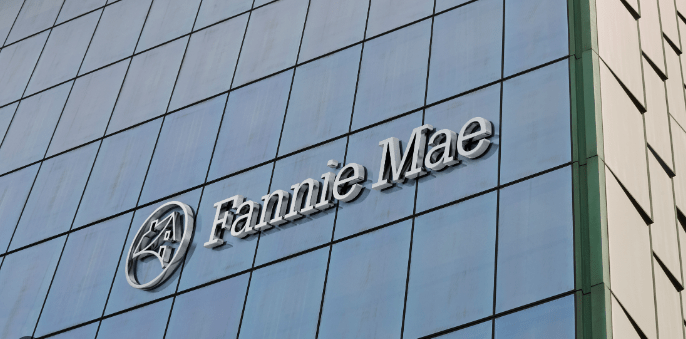
这款产品区别于早期加密货币抵押贷款实验的关键在于房利美的参与。这家政府赞助企业(GSE)在今年三月宣布将开始接受加密货币作为抵押贷款首付,它提供了合规担保,使该贷款成为一种标准的金融工具。

BTCUSD目前交易价格为61,986美元。图表:TradingView

Better创始人兼首席执行官Vishal Garg称这一支持意义重大,表示这相当于一家美国政府赞助的企业接受数字资产作为抵押品,以替代存放在银行账户中的现金。他还补充说,预计该产品将随着时间的推移,扩展到比特币和USDC之外的其他数字资产,包括代币化股票。

借款人无需面临强制平仓

该产品区别于标准保证金贷款的一个细节是抵押品不会面临强制平仓。在当前结构下,质押的比特币和USDC在贷款期限内一直处于托管状态,即使其价值下跌也不会被出售。

Coinbase在X上宣布了首笔获得资金的贷款,称其为美国首笔由房利美承保的、以比特币为担保的抵押贷款。全面推广预计将在夏末之前完成,由Better负责贷款服务,Coinbase管理底层数字资产基础设施。

特色图片来自Unsplash,图表来自TradingView

Related Questions

QBetter Mortgage与Coinbase合作推出的新产品是什么,预计何时全面推出?

ABetter Mortgage与Coinbase合作推出的新产品是接受比特币和USDC作为抵押物的住房贷款产品。计划于2026年夏季在美国全国范围内推出。

Q此次新产品与传统加密货币抵押贷款的一个关键区别是什么?

A一个关键区别是获得了房利美(Fannie Mae)的支持。房利美提供了符合规定的担保,使该贷款成为标准的金融工具,并且这是首次有美国政府赞助的企业接受数字资产替代银行现金作为抵押物。

Q在Better和Coinbase的这项新产品中,借款人抵押的比特币或USDC是否会因为市值下跌而被清算?

A不会。该产品的一个特点是,抵押的比特币和USDC在贷款期间存放在托管账户中,即使其价值下跌,也不会被强制出售清算。

Q根据文章,这项新产品未来计划扩展到哪些其他类型的资产?

ABetter的创始人兼CEO表示,该产品预计未来将扩展到比特币和USDC以外的其他数字资产,包括代币化的股票。

Q文章中提到,第一笔此类贷款发放给了谁?他们对此产品的评价如何?

A第一笔贷款发放给了密歇根州安娜堡市一对名叫Joe和Amy的夫妇。Joe表示,这种设置给了他信心,因为他们的比特币安全地存放在托管账户中,而不是被出售来支付首付款。

Related Reads

Wintermute Market Weekly: Iran War Ends, Inflation Meets Expectations, BTC Rebounds to Lower 60ks But Don’t Rush to Buy the Dip

**Wintermute Market Weekly: BTC Rebounds to $60K Lows, But Caution Advised** This week saw a broad market rebound, primarily driven by two converging factors: a US CPI inflation reading that met expectations (4.2% YoY) and former President Trump's announcement of a deal to end the Iran conflict. The latter triggered a sharp drop in oil prices, reducing geopolitical risk premiums and easing inflation fears. Consequently, risk assets like equities and cryptocurrencies rallied, with Bitcoin recovering from lows around $60,000 to close the week up 1.9%, while altcoins gained 3.1%. Despite the price bounce, the underlying liquidity picture for crypto remains weak. Key funding channels—stablecoin flows, ETF inflows, and Digital Asset Treasury (DAT) activity—show no signs of structural improvement. ETF outflows recently hit a record streak, and DAT assets have declined significantly. The rally from $60K to $83K earlier is now viewed as a bear-market rally that has failed. The current environment is characterized by low directional conviction and choppy, range-bound trading, likely persisting into summer. The report advises caution against aggressively buying the dip. While the $60K area offers attractive long-term risk/reward, a sustained bull run requires a visible turnaround in capital inflows, which hasn't materialized. The upcoming FOMC meeting and Powell's commentary, alongside the formal Iran deal signing, are noted as near-term catalysts. The core takeaway is to watch fund flows rather than price action and avoid being whipsawed by volatility before clear signs of institutional or retail capital returning emerge.

marsbit6m ago

Wintermute Market Weekly: Iran War Ends, Inflation Meets Expectations, BTC Rebounds to Lower 60ks But Don’t Rush to Buy the Dip

marsbit6m ago

Cursor, Why Boarded Musk's Starship?

SpaceX announced its acquisition of AI programming startup Cursor's parent company, Anysphere, for $60 billion in an all-stock deal, just days after its record-breaking IPO. The move sent SpaceX's stock soaring, briefly making it the most valuable U.S. company. Cursor, founded in 2022 by MIT graduate Michael Truell and his classmates, is a popular AI coding assistant that allows developers to switch between models from OpenAI, Anthropic, and others. It saw explosive revenue growth, reaching a $4 billion annualized run rate in early 2026. However, its market share was eroded by the launch of competitor Claude Code from its key AI supplier, Anthropic. This dependence prompted Cursor to develop its own AI model, Composer, in early 2026. To scale Composer, Cursor needed immense computing power. In April 2026, it struck a deal with SpaceX, granting the latter an option to acquire it post-IPO. SpaceX exercised this option, offering Cursor access to its Colossus supercomputer, powered by hundreds of thousands of top-tier Nvidia AI chips. For SpaceX, the acquisition is a strategic move to bolster its AI capabilities, particularly for its xAI division, and advance its broader ambition of building orbital, solar-powered data centers. While the deal surprised some employees and investors given Truell's earlier stance on independence, it represents a high-stakes partnership. SpaceX CEO Elon Musk has projected the company could reach $1 trillion in revenue by 2030. For Truell, joining forces with SpaceX is a monumental gamble on an unprecedented scale in the race for AI dominance.

链捕手8m ago

Cursor, Why Boarded Musk's Starship?

链捕手8m ago

The More It Rises, the More Dangerous? The Systemic Risks Behind SpaceX's Soaring Valuation

Summary: The article raises concerns about the systemic risks posed by SpaceX's skyrocketing valuation, arguing that modern market mechanics, rather than fundamentals, are driving its price discovery. Following SpaceX's market capitalization surpassing $3 trillion in after-hours trading, the author contends that the market is no longer functioning properly. The core issue is not SpaceX's business prospects but the unhealthy market structure surrounding it. With limited float and the imminent launch of options trading, the stage is set for a potential "gamma squeeze"—a feedback loop where market makers hedging call options are forced to buy shares, pushing the price higher and attracting more speculative momentum traders. This mechanism, seen previously with Tesla and meme stocks, can decouple valuation from financial reality. The danger escalates as extreme valuations force passive funds, ETFs, pensions, and major indices to hold the stock. If SpaceX grows large enough—hypothetically reaching $5 or even $10 trillion—its performance would increasingly dictate broader market indices, embedding systemic risk. The author warns that when price appreciation itself becomes the primary bullish thesis, the market transforms from a capital allocation mechanism into a self-reinforcing speculative machine, endangering the retirement savings of ordinary investors tied to passive strategies. The piece questions whether such a system can still perform its fundamental role of price discovery.

marsbit13m ago

The More It Rises, the More Dangerous? The Systemic Risks Behind SpaceX's Soaring Valuation

marsbit13m ago

OpenAI's Hyperliquid Pre-IPO Pricing Venture: Why Did It Last Only Half a Year?

The article discusses the rise and fall of Pre-IPO pricing markets on the Hyperliquid blockchain. Trade.xyz, an anonymous team, successfully built the largest pre-market for SpaceX (SPCX) by launching a contract with a clear anchor: the eventual Nasdaq listing price. This provided inherent price stability and validation. In contrast, Ventuals, a team backed by Paradigm, failed despite holding exclusive contracts for highly sought-after companies like OpenAI and Anthropic. Its key mistake was its pricing mechanism. For companies with no near-term IPO date, Ventuals' oracle relied partly on opaque private market transactions and, critically, partly on its own contract's moving average price. This created a self-referential feedback loop where prices were artificially propped up and detached from genuine supply and demand, leading to illiquid markets. Ventuals shut down after nine months, settling positions at final prices of $1,341.80 for OpenAI and $1,618.90 for Anthropic. Ironically, some employees and late-stage investors of these very companies reportedly used these flawed Ventuals prices for valuation reference, highlighting the acute demand for any price signal in illiquid private markets. The article concludes that while demand for pre-IPO trading is real and growing, with players like Coinbase now entering the space, the fundamental challenge remains: without a public listing to provide a definitive price anchor, these markets struggle to establish truly accurate and liquid pricing. The need for a transparent, self-correcting market is the critical lesson from Ventuals' failure.

marsbit39m ago

OpenAI's Hyperliquid Pre-IPO Pricing Venture: Why Did It Last Only Half a Year?

marsbit39m ago

Trading

Spot
Futures

Hot Articles

What is $BITCOIN

DIGITAL GOLD ($BITCOIN): A Comprehensive Analysis Introduction to DIGITAL GOLD ($BITCOIN) DIGITAL GOLD ($BITCOIN) is a blockchain-based project operating on the Solana network, which aims to combine the characteristics of traditional precious metals with the innovation of decentralized technologies. While it shares a name with Bitcoin, often referred to as “digital gold” due to its perception as a store of value, DIGITAL GOLD is a separate token designed to create a unique ecosystem within the Web3 landscape. Its goal is to position itself as a viable alternative digital asset, although specifics regarding its applications and functionalities are still developing. What is DIGITAL GOLD ($BITCOIN)? DIGITAL GOLD ($BITCOIN) is a cryptocurrency token explicitly designed for use on the Solana blockchain. In contrast to Bitcoin, which provides a widely recognized value storage role, this token appears to focus on broader applications and characteristics. Notable aspects include: Blockchain Infrastructure: The token is built on the Solana blockchain, known for its capacity to handle high-speed and low-cost transactions. Supply Dynamics: DIGITAL GOLD has a maximum supply capped at 100 quadrillion tokens (100P $BITCOIN), although details regarding its circulating supply are currently undisclosed. Utility: While precise functionalities are not explicitly outlined, there are indications that the token could be utilized for various applications, potentially involving decentralized applications (dApps) or asset tokenization strategies. Who is the Creator of DIGITAL GOLD ($BITCOIN)? At present, the identity of the creators and development team behind DIGITAL GOLD ($BITCOIN) remains unknown. This situation is typical among many innovative projects within the blockchain space, particularly those aligning with decentralized finance and meme coin phenomena. While such anonymity may foster a community-driven culture, it intensifies concerns about governance and accountability. Who are the Investors of DIGITAL GOLD ($BITCOIN)? The available information indicates that DIGITAL GOLD ($BITCOIN) does not have any known institutional backers or prominent venture capital investments. The project seems to operate on a peer-to-peer model focused on community support and adoption rather than traditional funding routes. Its activity and liquidity are primarily situated on decentralized exchanges (DEXs), such as PumpSwap, rather than established centralized trading platforms, further highlighting its grassroots approach. How DIGITAL GOLD ($BITCOIN) Works The operational mechanics of DIGITAL GOLD ($BITCOIN) can be elaborated on based on its blockchain design and network attributes: Consensus Mechanism: By leveraging Solana’s unique proof-of-history (PoH) combined with a proof-of-stake (PoS) model, the project ensures efficient transaction validation contributing to the network's high performance. Tokenomics: While specific deflationary mechanisms have not been extensively detailed, the vast maximum token supply implies that it may cater to microtransactions or niche use cases that are still to be defined. Interoperability: There exists the potential for integration with Solana’s broader ecosystem, including various decentralized finance (DeFi) platforms. However, the details regarding specific integrations remain unspecified. Timeline of Key Events Here is a timeline that highlights significant milestones concerning DIGITAL GOLD ($BITCOIN): 2023: The initial deployment of the token occurs on the Solana blockchain, marked by its contract address. 2024: DIGITAL GOLD gains visibility as it becomes available for trading on decentralized exchanges like PumpSwap, allowing users to trade it against SOL. 2025: The project witnesses sporadic trading activity and potential interest in community-led engagements, although no noteworthy partnerships or technical advancements have been documented as of yet. Critical Analysis Strengths Scalability: The underlying Solana infrastructure supports high transaction volumes, which could enhance the utility of $BITCOIN in various transaction scenarios. Accessibility: The potential low trading price per token could attract retail investors, facilitating wider participation due to fractional ownership opportunities. Risks Lack of Transparency: The absence of publicly known backers, developers, or an audit process may yield skepticism regarding the project's sustainability and trustworthiness. Market Volatility: The trading activity is heavily reliant on speculative behavior, which can result in significant price volatility and uncertainty for investors. Conclusion DIGITAL GOLD ($BITCOIN) emerges as an intriguing yet ambiguous project within the rapidly evolving Solana ecosystem. While it attempts to leverage the “digital gold” narrative, its departure from Bitcoin's established role as a store of value underscores the need for a clearer differentiation of its intended utility and governance structure. Future acceptance and adoption will likely depend on addressing the current opacity and defining its operational and economic strategies more explicitly. Note: This report encompasses synthesised information available as of October 2023, and developments may have transpired beyond the research period.

380 Total ViewsPublished 2025.05.13Updated 2025.05.13
What is $BITCOIN

Discussions

Welcome to the HTX Community. Here, you can stay informed about the latest platform developments and gain access to professional market insights. Users' opinions on the price of BTC (BTC) are presented below.

活动图片