Lightspark CEO:十年后比特币像 TCP/IP 一样隐形,却支撑着数万亿美元日常交易

foresightnews_apiPublished on 2026-06-05Last updated on 2026-06-05

Abstract

Lightspark CEO David Marcus展望,到2036年比特币将像TCP/IP协议一样成为隐形的基础设施,支撑全球每天数万亿美元的日常交易。用户通过一个非托管钱包即可无缝使用美元、本地货币和比特币进行支付与储蓄,无需感知底层技术。比特币因其固定供应和持续需求,逐渐成为数十亿用户的默认储蓄资产,企业也纷纷跟随。 当前趋势显示,人们开始直接用比特币进行交易,特别是在高价值B2B结算和自由职业者付款等场景。同时,人工智能代理在代表人类进行商业活动时,出于对速度、成本和最终性的优化,也自然选择比特币作为结算媒介。全球货币体系正被重构:比特币成为开放的底层结算网络,稳定币作为应用层界面,而自托管成为默认方式。最终,大多数用户在转账时将无需关心技术细节,正如今天人们使用互联网而不知晓TCP/IP一样。


撰文:David Marcus(Lightspark CEO)

编译:AididiaoJP,Foresight News


拉各斯的一家咖啡店几秒钟内就收到了付款。圣保罗的一家制造商用比特币结算了对胡志明市供应商的发票。班加罗尔的一名自由职业者从奥斯汀的初创公司收到了周薪。所有这些交易都运行在比特币之上,但当事人谁也没在想比特币。


这就是 2036 年。而关于当今货币体系,最重要的事实是:几乎没人明白它到底是怎么运作的。


十年前,我曾写道,比特币将成为货币领域的 TCP/IP——一个开放的结算层,所有东西都在它之上运行,对使用者完全透明。这个比喻后来被证明几乎字面意义上正确。


如今,每天有数万亿美元在比特币网络上流动。其中大部分以美元、欧元、雷亚尔、奈拉、比索、卢比等计价——这些是锚定本地货币或储备货币的稳定币,通过比特币的结算基础设施路由。交易双方的企业和个人大多并不知情。他们只看到自己的银行、钱包或支付 App。底层的协议对他们来说,就像查邮件的人完全意识不到 TCP/IP 一样隐形。


这一切并非一夜之间发生。它遵循所有协议采用的经典路径:先在现有系统失效的地方被需求驱动,然后当工具成熟、经济性显现时,突然全面爆发。


结构性转变从钱包开始


Spark 让用户能在同一个非托管地址同时持有美元、本地货币和比特币,这消除了三者之间最后的实质性摩擦。一个钱包、一个地址:花钱用美元,存钱用比特币,需要本地货币时随时切换。没有单独的 App,没有桥接交易,没有对手方短期持有你的资金。


这一设计彻底改变了全球托管的逻辑。今天,全球存款中已有两位数百分比存放在用户自己掌握私钥的基础设施上。这不是因为人们被迫在便利性和所有权之间二选一,而是因为钱包本身就很好用。托管模式被内置在协议里,而不是后期附加的功能。


过去银行持有你的钱,是因为没有更好的选择。现在更好的选择出现了——更快、更便宜,而且你真正拥有账户里的资产。这场转变与其说是意识形态革命,不如说是产品革命,更好用的钱包将获得成功。


正因为这一切都运行在比特币的结算网络上,发生了一件大多数人没预料到的事:比特币成了数十亿原本只想用美元的人默认的储蓄层。


逻辑很简单。你有一个钱包,它同时持有稳定币和比特币。你花稳定币,比特币就静静躺在那里。过去十年,任何把钱留在比特币里的人,都看到自己的储蓄跑赢了任何本地货币和大部分投资产品。不是因为投机,而是因为比特币是唯一固定供应、在全球货币网格底层运行协议层的货币资产,持续需求推动了它的价值。


于是人们开始用比特币储蓄。先是几亿人,然后是十几亿人。不是因为他们读过白皮书或参加过会议,而是因为他们的钱包里有两个余额,其中一个相对于其他一切都在持续升值。用比特币储蓄变得和用美元转账一样稀松平常——同一个钱包,同一套轨道。


企业也走上了相同路径。公司财务部门开始在运营稳定币之外持有比特币。先是新兴市场的小公司(当地货币贬值让需求变得紧迫),然后是大公司,再到跨国巨头。采用曲线和上世纪 90 年代末企业采用互联网的路径几乎一模一样。一旦基础设施被证明可靠,问题就只剩下「持仓多少」,而不是「要不要持」。


最新趋势:人们开始直接用比特币交易


现在最新的发展是,人们开始直接用比特币本身进行交易。目前还处于早期,但趋势在今年已经清晰可见,方向确定无疑。


当你的储蓄在比特币里,而收款方也持有比特币时,用比特币计价交易就变得最简单——无需转换,无需中介货币,支付直接留在双方都持有资金的网络上。


它从一些小众场景开始:高价值 B2B 结算、自由职业者付款、财富主要以比特币形式持有的人之间商业活动展开。目前只占总交易量的一小部分。但当基础设施让发送比特币和稳定币同样方便时,选择哪种货币就只取决于你更信任哪种钱,而不再是技术限制。


在比特币前二十五年里,极致主义者的愿景更多是理想。现在基础设施已经就位,采用却来自一个完全出乎意料的方向。人们不是从比特币意识形态出发走向可用性,而是从一个运行在比特币之上的优秀钱包开始,发现用比特币储蓄表现更好,然后自然而然地选择用它交易——因为他们的钱本来就在那里。


轨道创造了储蓄者,储蓄者正在成为支付者。


另一个加速力量:AI 代理


还有一股力量在加速这一进程,它与人类偏好完全无关。


2036 年的大部分商业活动都由代表个人和企业的 AI 代理完成。你的代理帮你订机票、谈判供应商合同、支付发票、管理订阅。数百万个这样的代理持续相互交易,它们不约而同地选择了比特币作为首选结算资产。不是因为有人编程让它们这么做,而是因为当代理们要跨司法管辖区优化速度、最终性和最小对手方风险时,它们自然得出了比特币这个答案。


从代理视角看,数学非常简单。当两个代理代表各自主体结算价值时,通过法币轨道转换会增加成本、延迟和信任依赖。而比特币能在全球网络上几分钟内完成最终结算,没有中介。代理们用几百万次交易验证了人类花十年才接受的事:如果双方都已经持有比特币,就没理由再绕道其他东西。


代理之间的净额结算如今已占比特币每日交易量的越来越大份额。处理德国汽车制造商采购的代理,和管理韩国电池供应商应收账款的代理,不需要用美元、欧元或韩元作为中介。他们直接净额冲抵义务,然后用比特币结算差额。更快、更便宜、最终性确定。


结果就是:比特币正在成为机器商业的原生货币,正如它已成为人类的原生储蓄资产一样。两者都是出于结构性原因,而非意识形态。协议是中性的、可编程的、全球可及的。对每天要优化数百万笔交易的代理来说,这就够了。


全球货币体系正从协议层开始被重新构建:开放的基础设施,默认自托管,比特币作为底层结算一切,稳定币作为界面层。而越来越多理解趋势的人,正把比特币作为首选货币。


大多数人在转账时,仍然不会去想这些,他们也不需要去想。

Trending Cryptos

Related Questions

QLightspark CEO 对未来比特币发展的核心比喻是什么?这个比喻具体指什么?

A核心比喻是:比特币将成为货币领域的 TCP/IP。这指的是,比特币将像一个开放的、基础的结算层协议,在它之上可以构建各种应用和服务,如同互联网建立在 TCP/IP 协议之上一样。对大多数使用者而言,这个底层协议将是隐形的、无需了解的,但它会支撑起全球大量的日常交易。

Q文章中提到的“钱包革命”如何改变了人们使用和储蓄比特币的方式?

A“钱包革命”通过设计一个多功能钱包(如Spark)实现。这个钱包让用户可以在同一个非托管地址同时持有美元稳定币、本地货币和比特币,消除了三者之间的转换摩擦。用户可以方便地使用稳定币消费,而比特币则作为储蓄资产静静地存储在同一个钱包里。由于比特币的稀缺性和需求增长带来的升值,使得用户“被动地”将比特币作为储蓄工具,让储蓄行为变得像日常支付一样简单。

Q文章描述了比特币应用发展遵循的经典路径是什么?

A文章指出比特币的应用发展遵循所有协议采用的经典路径:首先在现有系统(如传统金融结算系统)失效或效率低下的领域,被实际需求驱动而采用;然后,随着相关工具变得成熟、经济性(如成本、速度优势)变得明显,最终迎来全面的、爆发式的普及。

QAI代理在未来比特币生态中将扮演什么角色?它们为何会选择比特币作为结算资产?

AAI代理将扮演自动执行大量商业交易(如采购、支付、结算)的角色。它们选择比特币作为首选结算资产并非出于编程指令或意识形态,而是基于纯粹的数学和效率优化。当需要跨司法管辖区进行交易时,比特币网络能提供更快的速度、确定的最终性、更低成本以及更小的对手方风险。对于需要优化数百万笔交易的AI代理来说,比特币是一个中立、可编程、全球可访问的最佳解决方案。

Q根据文章,未来全球货币体系的重构将呈现怎样的分层结构?

A文章描述的未来全球货币体系将是一个从协议层开始重构的开放架构:最底层是比特币,作为基础的、开放的结算层,支撑一切交易;中间层是默认自托管的用户资产所有权和控制层;最上层是各种锚定法定货币的稳定币,作为用户交互和使用的界面层。这个体系让大多数人无需了解底层技术即可方便使用,而比特币则作为底层结算资产和价值储存工具,被越来越多人采纳和使用。

Related Reads

Gate Research Institute: Analysis of Chart Patterns and Breakout Trading Strategies

Gate Research Institute: Chart Pattern Analysis and Breakout Trading Strategies Chart patterns are crucial tools in technical analysis for observing market supply and demand shifts, trend continuations, and reversals. This analysis involves a comprehensive evaluation of trend, volume, support/resistance, time cycles, and breakout validity, not just rote pattern recognition. Patterns are broadly categorized into reversal patterns (e.g., Double Tops/Bottoms, Head and Shoulders) and continuation patterns (e.g., Flags, Triangles, Rectangles). An effective breakout, key for trading, requires clear support/resistance, prolonged consolidation, a prevailing trend backdrop, and volume confirmation. However, breakouts are not guaranteed, as false breakouts are common. Risk must be managed through position sizing, stop-loss orders, pullback confirmations, and profit-taking in stages. Key pattern types discussed include: * **Rectangle Patterns:** Indicate market indecision within parallel support and resistance, with breakouts projecting a move equal to the pattern's width. * **Flag & Pennant Patterns:** Short-term continuation patterns following sharp price moves ("flagpoles"). * **Triangle Patterns:** Symmetrical, Ascending (bullish bias), and Descending (bearish bias) triangles, representing consolidation before a directional move. * **Head and Shoulders Patterns:** Major reversal patterns signaling trend exhaustion. The article details breakout trading strategies, defining valid breakouts by price closing beyond a key level with increased volume and minimal immediate re-entry into the prior range. It contrasts range trading with breakout trading and outlines entry methods (immediate entry, pullback entry, scaling in), stop-loss placement (based on pattern failure), and profit-taking techniques (target-based, structure-based, trend-following). It further classifies breakout outcomes: 1. **Valid Breakouts:** Strong, sustained moves in the breakout direction. 2. **Pullback Breakouts:** Price breaks out, retests the breakout level as support/resistance, then resumes the trend—offering a lower-risk entry. 3. **False Breakouts:** Price briefly breaches a level but quickly reverses back into the prior range, a common risk managed by strict stop-losses. Key validation tools for breakouts include volume analysis, the principle of support/resistance role reversal, and momentum indicators like ATR, Moving Averages, Bollinger Bands, and RSI. In conclusion, while chart patterns and breakout analysis provide a structured framework, their effectiveness relies on multiple confirming factors—trend context, volume, and proper risk management. They should be integrated into a broader trading system rather than used as standalone signals.

marsbit22m ago

Gate Research Institute: Analysis of Chart Patterns and Breakout Trading Strategies

marsbit22m ago

Joseph Chalom: Ethereum is Becoming the "Settlement Layer of Trust" for Global Finance

In a speech titled "The Industrialization of Trust," Sharplink CEO Joseph Chalom (former BlackRock digital assets head) discussed the future transformation of global finance. Drawing from 20 years at BlackRock, where he led the launch of Bitcoin/ETH ETFs and tokenized funds, Chalom highlighted the immense hidden costs of establishing trust in traditional finance—estimated at over $9.3 trillion annually in the US alone due to fragmented systems, multi-day settlements, and countless reconciliations. He argued that Ethereum is emerging as the global financial "settlement layer for trust," with its robust, decentralized infrastructure securing over $300 billion in on-chain assets and most stablecoins and tokenized assets. The future, he stated, will be driven by three accelerating pillars: stablecoins (evolving beyond crypto gateways to become efficient cross-border payment rails), tokenized assets (enabling 24/7 trading and reshaping capital markets), and DeFi (providing automated, accessible financial services). A potential game-changer, Chalom added, is the fourth pillar: "Agentic Finance," where AI agents autonomously execute programmable financial transactions via smart contracts and stablecoins. He envisions individuals soon having AI-powered "CFOs in their pockets" to optimize idle capital and manage tokenized portfolios. This shift, facilitated by Ethereum's trustless settlement, could multiply on-chain transaction volume 1000x within a year, moving finance toward a seamless, digitized future.

marsbit22m ago

Joseph Chalom: Ethereum is Becoming the "Settlement Layer of Trust" for Global Finance

marsbit22m ago

STRC Severely Unpegged, What Risks Is the Market Pricing In?

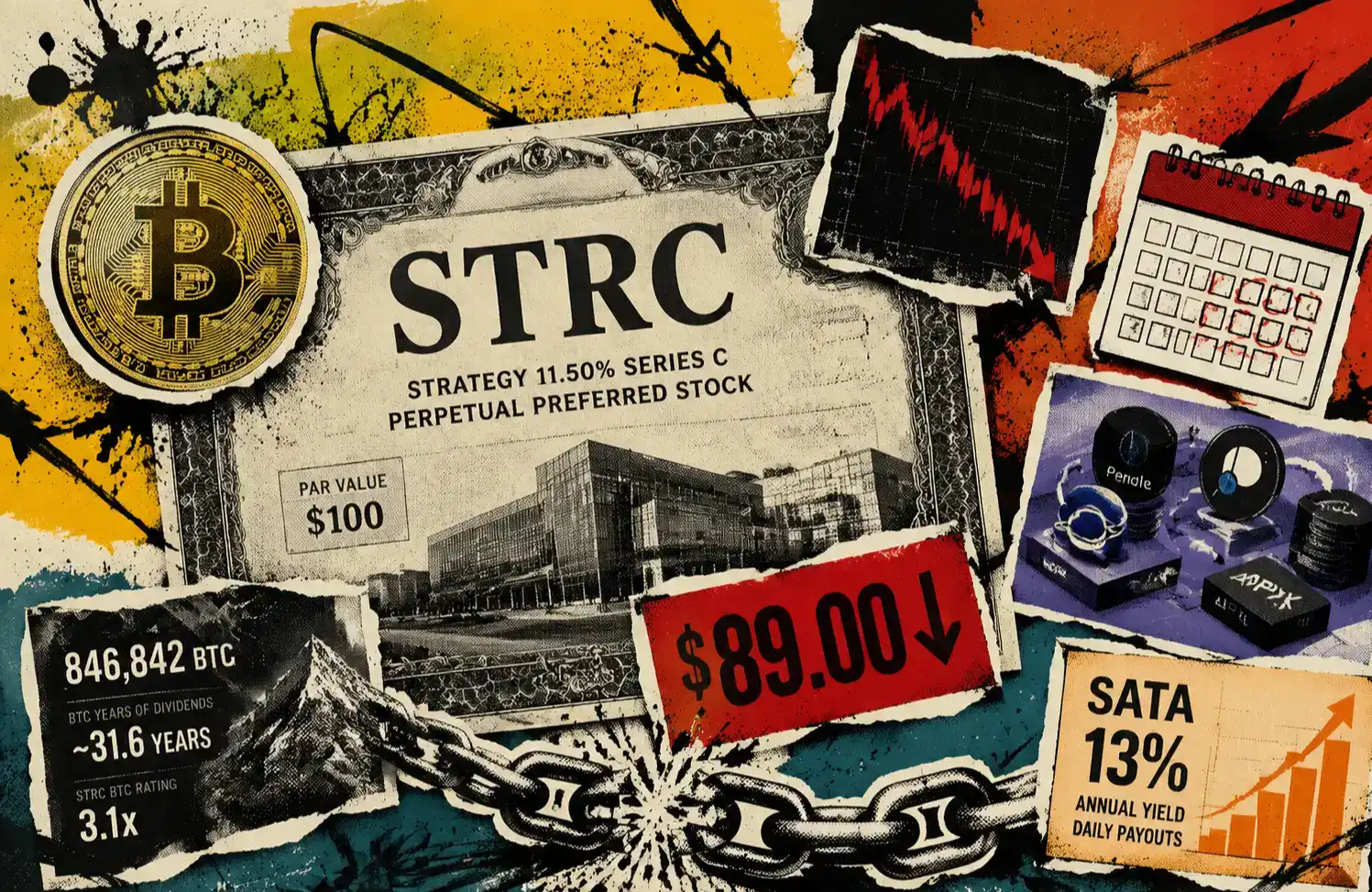
The article analyzes the recent significant de-pegging of Strategy's perpetual preferred stock, STRC, whose price fell to approximately $89, far below its $100 face value. This discount has pushed its simple yield to around 12.9%, creating a paradox. The stock was designed as a high-yield instrument trading near par, and Strategy maintains an 11.5% annual dividend, even recently switching to semi-monthly payments to support the price. The author explores several reasons why the high yield hasn't attracted enough buying pressure to restore the par value. A key factor is potential reverse deleveraging from carry trades, where leveraged investors may be forced to sell due to margin calls as the price falls, creating a self-reinforcing downward spiral. Additionally, the tokenization and integration of STRC into DeFi protocols (like Apyx, Saturn, Pendle) have introduced faster, more transparent, and potentially more volatile price adjustment mechanisms through leverage and yield-splitting products. The emergence of a competing product, Strive's SATA, offering a 13% yield with daily dividends, has also changed the yield benchmark, challenging STRC's unique high-yield narrative. Furthermore, the market is questioning the distinction between Strategy's substantial Bitcoin reserves, which provide long-term balance sheet coverage, and the certainty of stable near-term cash flow for dividends. Ultimately, the price dip represents a stress test for this type of BTC-backed, high-yield financing tool. The future path of STRC depends on whether Strategy acts to reinforce the $100 peg (e.g., by adjusting dividends), whether DeFi-related leverage unwinds further, and how investors ultimately price the risks of leverage, competition, and cash flow uncertainty against the offered yield.

marsbit33m ago

STRC Severely Unpegged, What Risks Is the Market Pricing In?

marsbit33m ago

LIT Token Hits Six-Month High: How Long Can the Buyback Flywheel Keep Burning Fuel?

The LIT token of decentralized perpetual exchange Lighter surged to a six-month high above $1.90 on June 18th, with a market cap of $425 million. After a price correction earlier this year, the recent rebound is attributed to its core "buyback flywheel" mechanism. All protocol fee revenue is used for programmatic, hourly market buybacks of LIT. Since its TGE in December 2025, approximately 15 million LIT (6% of circulating supply) has been repurchased for around $21 million. Additional price support comes from the LLP (Lighter Liquidity Pool), where providers must stake LIT worth 10% of their deposited USDC, locking significant token supply. However, challenges persist. Trading volume has declined amidst a sluggish market, with total volume at $1.68 trillion, significantly lower than leading competitor Hyperliquid's $4.37 trillion. While Lighter focuses on perpetual contracts, RWA, and Pre-IPO markets, Hyperliquid has expanded into prediction markets and boasts a U.S. spot ETF, attracting institutional investment and influencer endorsements like from Arthur Hayes. In contrast, LIT currently lacks similar high-profile backing. With 75% of LIT's total 1 billion supply still locked (team and investor tokens begin a 3-year linear unlock in December 2026), there is no immediate unlock selling pressure. The token's future performance hinges on sustaining trading volume growth, successful product iteration, and executing its transparent buyback strategy against a dominant competitor.

Foresight News53m ago

LIT Token Hits Six-Month High: How Long Can the Buyback Flywheel Keep Burning Fuel?

Foresight News53m ago

Trading

Spot
Futures

Hot Articles

What is STORY

Understanding Story Protocol: Pioneering a New Era in Intellectual Property Management Introduction to Story Protocol In the rapidly evolving world of blockchain technology, Story Protocol emerges as an innovative solution aimed at transforming the landscape of intellectual property (IP) management. Designed to empower creators, Story Protocol is paving the way for a digital ecosystem that promotes transparency, creativity, and legal empowerment. The protocol operates on the principles of web3, introducing a decentralized framework that allows creators to not only protect but also monetize their works efficiently. In an age where content can easily be reproduced and shared, Story Protocol aims to establish a mechanism that respects creators’ rights and fosters a culture of collaboration. What is Story Protocol? At its core, Story Protocol is an advanced blockchain-based IP management tool that strives to revolutionize how intellectual property is created, managed, and licensed. The aim of the project is to disrupt traditional methods by leveraging the decentralized nature of blockchain technology. This offers a global and scalable library of intellectual property assets, allowing creators to engage with their audience in a more direct manner. Creators can easily register their works using the platform, setting customizable guidelines for how their content may be used. This process not only protects their legal rights but also facilitates the monetization of their creations in a manner that is both transparent and efficient. As a result, Story Protocol caters to a diverse range of creators—from writers and artists to musicians and programmers—by fostering an inclusive and accessible environment. Who is the Creator of Story Protocol? The vision for Story Protocol is brought to life by Seung Yoon Lee, known as SY Lee, and Jason Zhao. SY Lee serves as the CEO and co-founder, bringing with him a wealth of experience from his background in journalism and entrepreneurship. His previous ventures, including Byline and Radish Fiction—subsequently sold to Kakao—have positioned him as a pioneering figure in digital content platforms. Co-founder Jason Zhao complements SY Lee's vision with his robust technical expertise. A graduate in Computer Science from Stanford University and a former employee of DeepMind, Jason's experience in advanced technologies empowers Story Protocol's capabilities in the digital ecosystem. Who are the Investors of Story Protocol? Story Protocol has garnered substantial financial backing from a range of reputable investors known for their keen eye for transformative technologies. This vital support reflects confidence in the project’s potential to reshape the IP market. Among the notable investors is A16z Crypto, which led both the seed round and Series B financing, further demonstrating its commitment to the future of digital economies. Other significant investors contributing to the project include: Polychain Capital: A recognized leader in blockchain investment that participated in the Series B round. Hashed Endeavor Samsung Next Foresight Ventures Dao5 Insignia Venture Partners Alliance DAO Mirana Ventures The breadth of this investment network not only provides funding but also adds credibility and strategic insight to the platform, positioning Story Protocol as a leader in its field. How Does Story Protocol Work? Story Protocol offers a comprehensive framework that allows creators to manage their intellectual property seamlessly. The platform is underpinned by several unique and innovative features that distinguish it from traditional IP management systems. Key Features: Programmable IP: This feature allows creators to define the terms of how their IP can be utilized, including guidelines for remixing and collaboration. By establishing clear and programmable parameters, creators can ensure their works are used in ways that align with their vision. Decentralized Ecosystem: The protocol enables creators to operate independently, without the need for intermediaries often found in traditional licensing arrangements. This decentralized approach not only empowers creators but also reduces the friction typically associated with IP management. Transparent Licensing: By simplifying the licensing process, Story Protocol makes it easier for creators to track how their works are being used. This manual transparency is essential for establishing trust and fostering collaboration in a digital landscape where IP rights are often contested. Together, these features create a robust environment that encourages innovation, cooperation, and respect for creators’ rights while simplifying the complexities of intellectual property law in the digital age. Timeline of Story Protocol Understanding the developmental milestones of Story Protocol can provide insights into its strategic growth and vision for the future. Below is a timeline highlighting significant events in the project's history: 2021: Foundation laid for the concept of Story Protocol while formulating its objectives. 2023: The project successfully raised $29.3 million in a seed funding round led by A16z Crypto, marking its official entry into the competitive landscape of blockchain innovations. 2024: Following the success of its initial funding, Story Protocol announced an $80 million Series B financing round at a substantial $2.25 billion valuation, further solidifying its position in the market. This timeline illustrates not only the rapid growth of Story Protocol but also the increasing interest and investment it has attracted from prominent players in the industry. The Future of Story Protocol As the digital content landscape continues to evolve, Story Protocol stands at the forefront of a revolution in IP management. By leveraging blockchain technology for creator empowerment and transparency, the protocol offers a compelling vision for a sustainable intellectual property ecosystem. In a world that demands creativity and innovation, Story Protocol enables creators to maintain ownership and control over their assets, ultimately fostering an environment where creativity can flourish. The extensive backing from seasoned investors further underscores the potential for this platform to redefine how intellectual property operates in the rapidly changing digital economy. In conclusion, Story Protocol is not just a project; it is a movement towards a more equitable and accessible IP landscape. As the digital world expands, Story Protocol promises to lead the charge, ensuring that creators are acknowledged and compensated fairly for their contributions to culture and society. The journey has just begun, and the implications of such an initiative are profound—not only for creators but for the future of digital content itself.

466 Total ViewsPublished 2024.04.04Updated 2024.12.03

What is STORY

Discussions

Welcome to the HTX Community. Here, you can stay informed about the latest platform developments and gain access to professional market insights. Users' opinions on the price of IP (IP) are presented below.

活动图片