Setelah Ini, ChatGPT Mungkin Akan Hilang

marsbitPublished on 2026-06-03Last updated on 2026-06-03

Abstract

OpenAI secara resmi mengumumkan akan menggabungkan Codex ke dalam ChatGPT dalam beberapa minggu ke depan, menandai langkah pertama menuju aplikasi super yang menggabungkan percakapan dan eksekusi. Meski masih memakai nama ChatGPT, esensinya berubah dari alat chat menjadi platform agen yang bertindak. Penggabungan ini didorong oleh kesuksesan Codex yang mencapai 500 juta pengguna aktif mingguan, dengan 20% di antaranya bukan programmer. Codex juga menyumbang 40% pendapatan OpenAI. OpenAI memperkenalkan tiga pembaruan utama: plugin Agen untuk enam peran profesional, fitur Annotations untuk modifikasi langsung, dan Sites untuk mengubah hasil kerja menjadi aplikasi web. Langkah ini merupakan respons terhadap pesaing utama, Anthropic Claude Code, yang memimpin dalam kualitas kode, tetapi Codex unggul dalam aksesibilitas dan efisiensi biaya dengan model GPT-5.5 yang menghemat token. OpenAI berfokus pada peralihan dari era "chat" ke era "agen", di mana ChatGPT berfungsi sebagai basis pengguna, sementara Codex menjadi mesin pertumbuhan. Di masa depan, integrasi dengan browser Atlas diharapkan dapat menciptakan aplikasi super tunggal untuk semua tugas. Di China, perusahaan-perusahaan besar juga berlomba mengembangkan platform agen serupa untuk merebut pintu masuk utama di era AI ini. Intinya, ChatGPT akan tetap menjadi merek, tetapi fungsinya berkembang menjadi platform agen yang lebih otomatis dan eksekutif.

Aplikasi super OpenAI akhirnya “berwujud”.

Namanya masih ChatGPT, tetapi di dalamnya akan segera memiliki anggota baru: Codex.

Dan pada dasarnya ChatGPT hanyalah cangkangnya saja.

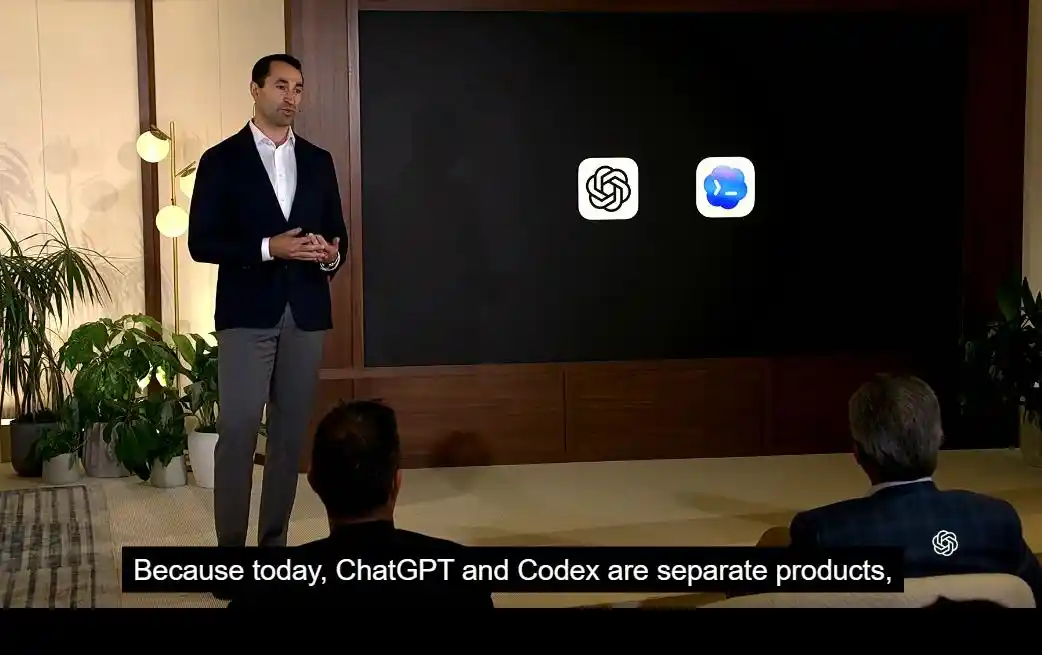
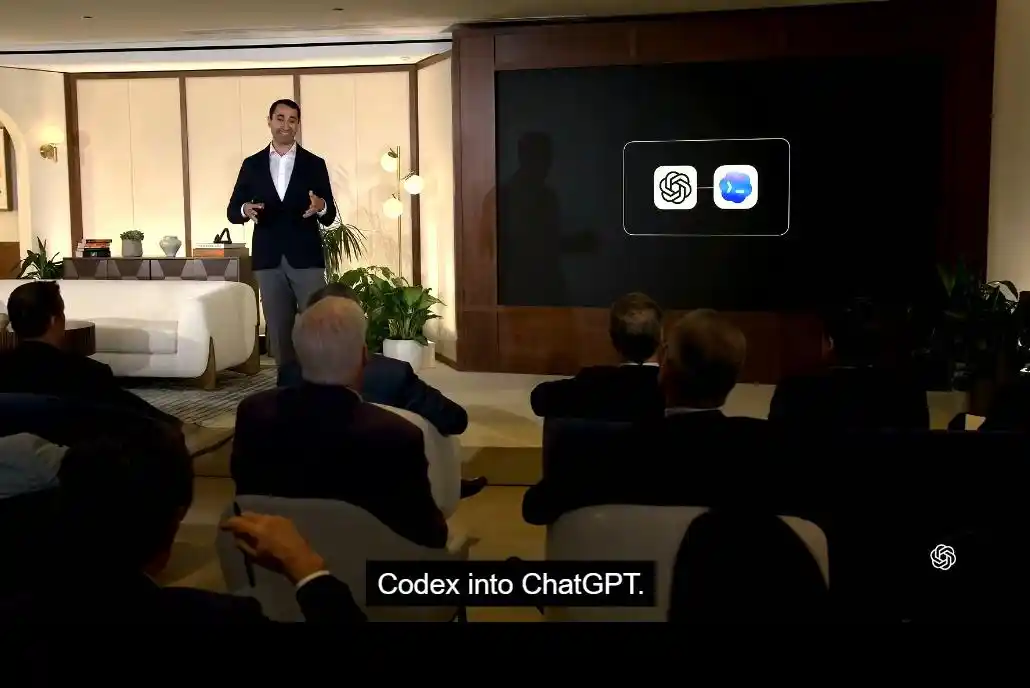
Dalam acara peluncuran Intelligence at Work yang baru saja digelar OpenAI, resmi diumumkan bahwa Codex akan digabungkan ke dalam ChatGPT dalam beberapa minggu ke depan.

Awalnya melihat berita ini agak bingung? Bukankah di ChatGPT sudah ada opsi Codex?

Hari ini baru saya coba klik, ternyata itu “palsu”, hanya mengarahkan untuk mengunduh aplikasi Codex, tidak bisa langsung digunakan di dalam ChatGPT.

Jadi, setelah digabungkan nanti, obrolan dan pekerjaan dapat dilakukan dalam satu aplikasi, tidak perlu berganti aplikasi lagi.
Tetapi, apakah Anda pikir ini sudah selesai?

Setidaknya dari perspektif OpenAI, Codex mungkin baru permulaan.

Dan semua visi tentang aplikasi super, melalui acara peluncuran ini, akhirnya kami pahami sekaligus.

Ternyata Codex Hanya Langkah Pertama

Acara peluncuran berlangsung selama 1 jam, padat informasi, tetapi intinya hanya tiga hal.

1. ChatGPT akan menggabungkan Codex, karena zaman telah berubah.

2. Codex akan terus ditingkatkan, jadi dikeluarkanlah tiga pembaruan besar.

3. Codex sedang mengejar Claude Code, dan “efisiensi” GPT-5.5 adalah faktor kunci.

Di sini saya akan jelaskan dengan cepat:

Pertama adalah peristiwa penggabungan yang cukup mengejutkan banyak orang, mengapa ChatGPT memilih menggabungkan Codex sekarang?

Satu alasannya, Codex awalnya diluncurkan untuk mengejar Claude Code, dan sekarang sudah bisa menunjukkan hasil.

Pengguna aktif mingguan Codex melampaui 5 juta, meningkat 6 kali lipat sejak versi desktop diluncurkan bulan Februari.

Yang lebih penting, 20% di antaranya bukan programmer, melainkan pekerja pengetahuan seperti analis, desainer, pekerja perbankan investasi, dan pertumbuhan kelompok ini 3 kali lebih cepat daripada pengembang.

Ini menunjukkan Codex sedang membentuk momentum penetrasi yang kuat.

Dan dalam hal pendapatan yang sangat diperhatikan OpenAI (saat itu iri dengan kemampuan Claude Code menghasilkan uang), mereka mengungkapkan bahwa pendapatan dari perusahaan saat ini sudah mencapai 40% dari total pendapatan OpenAI, dan pada akhir tahun ini proporsinya akan mencapai 50%.
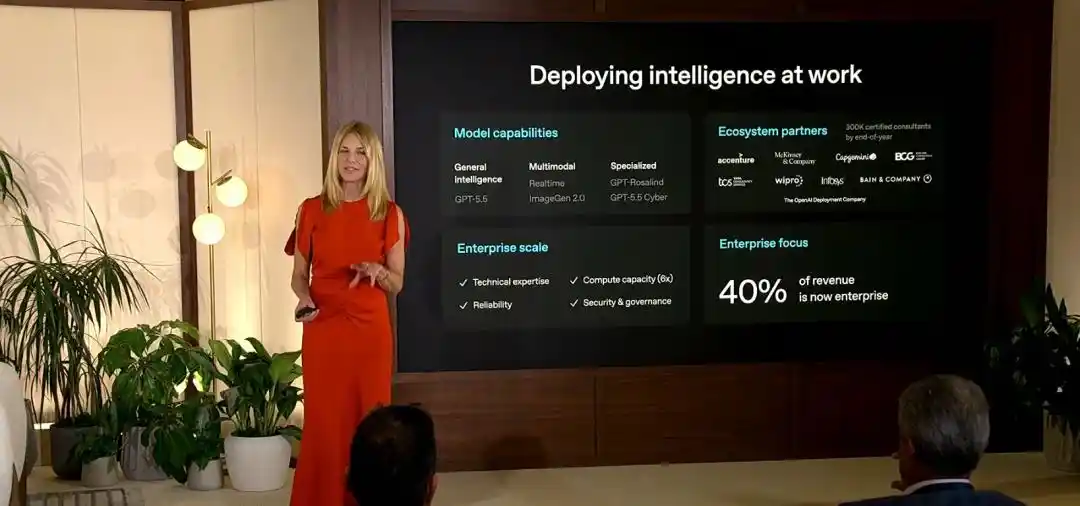
Singkatnya, sekarang pengguna Codex tumbuh cepat, menjangkau banyak kalangan, dan benar-benar menghasilkan uang bagi OpenAI.

Sepertinya semuanya memberi tahu OpenAI, saatnya mempertimbangkan langkah selanjutnya.

Dan arah langkah selanjutnya, setidaknya saat ini sangat jelas — dari Chat ke Agent, dari obrolan ke eksekusi.

Kepala Produk OpenAI Alexander Embiricos dalam acara peluncuran mengatakan ini:

Anda mungkin tidak bekerja 7×24 jam, tetapi Agent Anda di cloud akan.

Satu baris kata singkat ini menggambarkan daya tarik ultimat sebuah aplikasi super. Di masa depan, pengguna benar-benar tidak perlu berganti aplikasi, Anda hanya perlu memberi satu perintah, ChatGPT akan membantu Anda memahami, lalu Codex akan memanggil berbagai Agent untuk membantu Anda mengeksekusi.

Jadi integrasi ini sebenarnya adalah langkah pertama OpenAI menuju aplikasi super.

Anda bertanya apa langkah selanjutnya? Jawabannya mungkin sudah bisa ditebak — Browser.

Browser adalah bagian terakhir dari integrasi ini, melengkapi pintu masuk AI ke dunia web, memungkinkan pengguna hanya perlu berbicara di ChatGPT, kemudian melalui Codex di browser dapat secara otomatis menyelesaikan pencarian, mengoperasikan backend, menangani pekerjaan, dan semua tugas yang sebelumnya memerlukan klik manual.

Dengan demikian, ChatGPT+Codex+Browser Atlas, OpenAI akhirnya berharap dapat mencapai eksekusi dari obrolan ke semua skenario melalui satu aplikasi.

Tetapi kembali ke hari ini, kita hanya bicara tentang Codex.

Agar Codex memiliki lebih banyak “tentara” untuk bekerja, OpenAI sekaligus meluncurkan tiga pembaruan:

Enam Plugin Agent untuk Posisi Pekerjaan, mencakup analisis data, penjualan, pembuatan kreatif, desain produk, investasi ekuitas, dan perbankan investasi, langsung mengintegrasikan 62 aplikasi perusahaan seperti Snowflake, Figma, Salesforce, dengan 110 keterampilan otomatisasi bawaan.

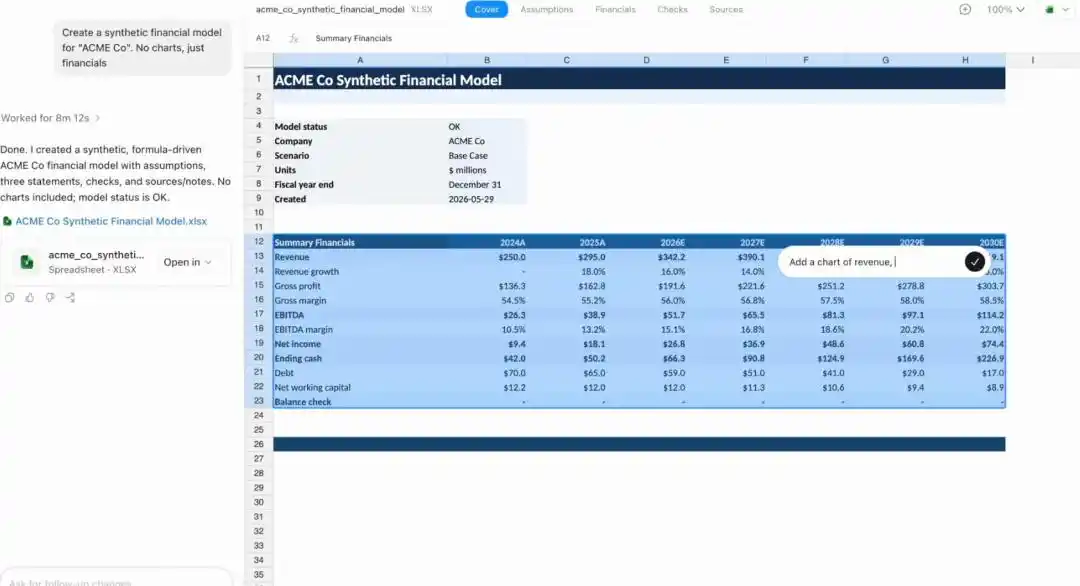
Fungsi Annotations, langsung menandai dan mengubah pada dokumen asli, tidak perlu menghasilkan ulang seluruh dokumen. Kemampuan ini sudah digunakan pengembang untuk mengubah kode, file Markdown, dan situs web yang dihasilkan Codex.

Sekarang, diperluas ke dokumen, spreadsheet, PPT, dan skenario pembuatan konten lainnya.
Fungsi Sites, memungkinkan Codex mengubah hasil kerja Anda menjadi aplikasi web yang dapat diinteraksikan dengan satu klik, menghasilkan URL yang dapat langsung dibagikan ke tim.

Fungsi ini terasa cukup praktis, sebelumnya saat mengembangkan proyek, orang yang tidak paham teknologi hanya bisa mendeskripsikan kebutuhan secara samar, sekarang semua orang dapat menghasilkan demo visual yang jelas dan mudah dipahami, biaya komunikasi tim jelas akan berkurang drastis.

Saat ini fungsi ini terbuka untuk preview bagi pelanggan Business dan Enterprise.
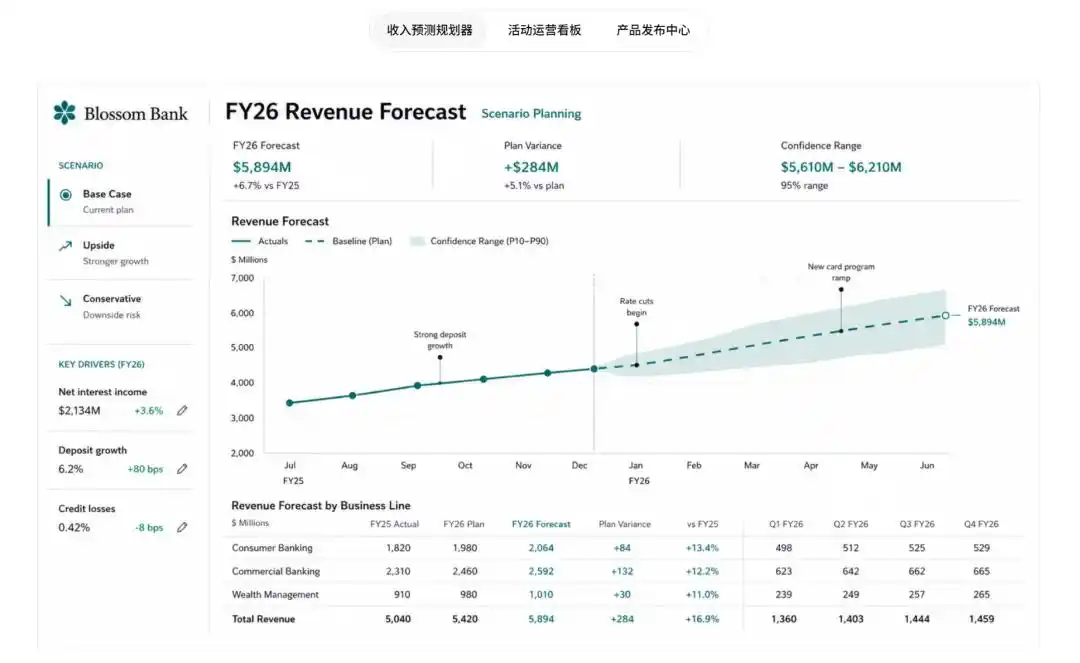
Lihatlah, OpenAI bertaruh bahwa di masa depan akan semakin banyak orang biasa beralih dari dialog ke eksekusi.

Mungkin ada yang bertanya, mengapa bukan Codex yang menelan ChatGPT?

Hanya bisa dikatakan, secara permukaan ini adalah cerita ChatGPT menelan Codex, tetapi beberapa detail digabungkan, arahnya mungkin justru sebaliknya.

Dalam penyesuaian struktur organisasi bulan Mei, Thibault Sottiaux yang membesarkan Codex dipromosikan menjadi Kepala Produk Inti dan Platform, bertanggung jawab atas tiga jalur: konsumen, perusahaan, dan pengembang. Sedangkan Nick Turley yang membawa ChatGPT ke 900 juta pengguna aktif mingguan, dipindahkan ke jalur produk perusahaan.

Jadi sekarang orang Codex yang mengelola ChatGPT, bukan sebaliknya.

Selain itu, redaksi memo internal Brockman juga layak dipertimbangkan —

Dia menulis bukan “meningkatkan ChatGPT”, melainkan “berinvestasi dalam platform agentic yang terpadu”.

Jadi penggabungan ini, lebih dari sekadar integrasi produk, adalah perubahan arah: dari dialog ke eksekusi, dari obrolan ke Agent.

ChatGPT menyediakan dasar lalu lintas 1 miliar pengguna, Codex menyediakan mesin pertumbuhan dan narasi masa depan.

Cangkangnya milik ChatGPT, tetapi jiwanya milik Codex.

Namun, kehidupan Codex pada dasarnya dipicu oleh pesaing Anthropic.

Bahkan GPT-5.5 yang disebutkan dalam acara peluncuran, hampir bisa dianggap sebagai produk dari tekanan ini.

Codex Dipicu oleh Anthropic

Melihat kembali, jika bukan karena Anthropic, Codex mungkin hingga hari ini hanya menjadi fungsi tambahan kecil di ChatGPT.

Mari kita tarik garis waktu ke saat pratinjau Claude Code diluncurkan tahun lalu.

Claude Code begitu diluncurkan langsung sukses besar, pendapatan tahunannya mencapai $25 miliar pada Februari tahun ini, dari peluncuran hingga $10 miliar hanya butuh 6 bulan, menjadi salah satu produk dalam sejarah perangkat lunak komersial yang paling cepat berkembang.

Sekitar 4% dari commit publik global GitHub berasal darinya, pengguna rata-rata menghabiskan 20 jam per minggu.

Ledakan Claude Code inilah yang membuat OpenAI internal menyadari: mereka sudah tertinggal di bidang coding ini.

Tertinggal bagaimana? Mengejar.

Sebelumnya narasi default industri AI selalu Anthropic mengekor OpenAI — GPT keluar duluan, Claude menyusul, ChatGPT populer duluan, Claude mengejar.

Tapi di jalur Code, skenario ini benar-benar berubah.

Claude Code diluncurkan Februari tahun lalu, dua bulan kemudian OpenAI baru meluncurkan Codex sebagai tandingan; Anthropic membuat versi desktop duluan, OpenAI mengejar; Anthropic meluncurkan Cowork untuk pekerja pengetahuan, OpenAI kemudian mengejar dengan Plugins.

Kali ini OpenAI yang mengekor Anthropic.

Tapi kecepatan pengejarannya memang cepat. Tarik garis waktu, 14 bulan, dari nol hingga 5 juta pengguna aktif mingguan.

April tahun lalu Codex Cloud pratinjau diluncurkan;

Februari tahun ini meluncurkan App desktop dan model khusus GPT-5.3-Codex;

Maret mengumumkan penggabungan App super dan mengakuisisi penyedia alat Python Astral;

April meluncurkan ChatGPT Pro $100/bulan untuk merebut pengembang;

Mei meluncurkan versi mobile;

Juni secara resmi disematkan ke ChatGPT.

Bisa dikatakan, hampir setiap langkah di sini ada bayangan Claude Code.

Tapi sejujurnya, Codex bangkit bukan dengan mengandalkan kualitas kode secara langsung.

Lagi pula data uji buta ada di sana, Claude Code masih menang 67%, sebagian besar programmer juga mengakui hasilnya lebih solid.

Tapi sayangnya kuota Claude Code terlalu ketat, harganya juga lebih mahal daripada Codex.

Diskusi di Reddit dengan partisipasi lebih dari 500 pengembang menyimpulkan satu konsensus:

Claude Code lebih pintar, tetapi kuota terlalu ketat tidak bisa digunakan sehari-hari; Codex sedikit lebih buruk tetapi benar-benar bisa berjalan.
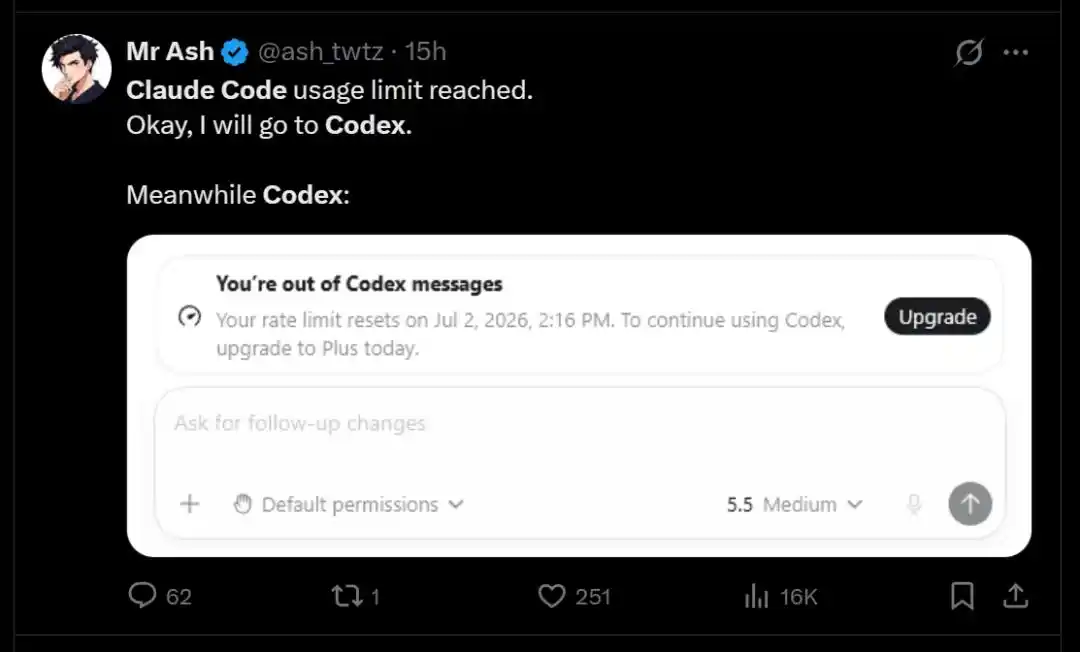
Satu model lebih pintar, tetapi seringkali tugas terhenti di tengah jalan dan harganya lebih mahal, dengan model yang sedikit kurang pintar tetapi harganya lebih terjangkau.

Anda, pilih yang mana? (doge)

Menariknya, dalam acara peluncuran, Kepala Produk OpenAI Alexander juga mengatakan kalimat emas ini:

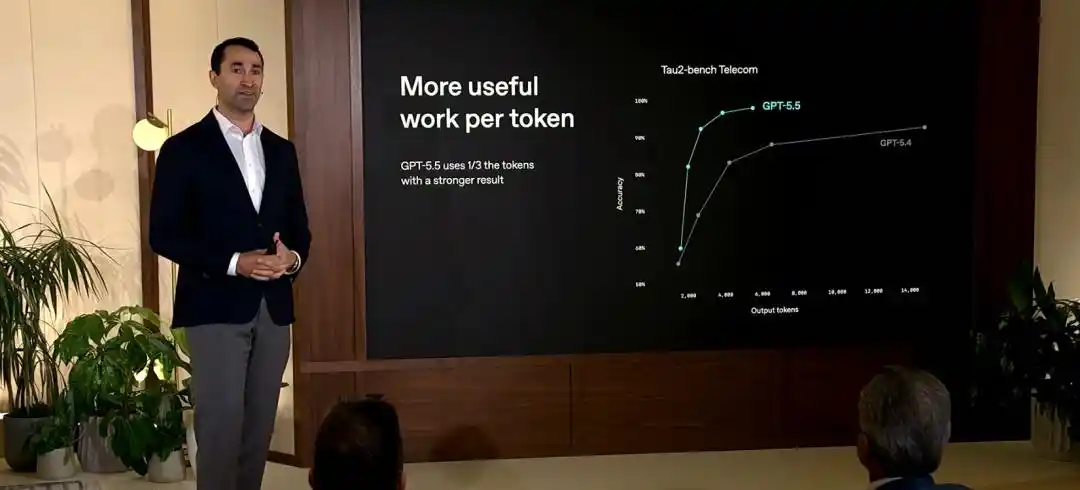
Hal yang paling dibenci GPT-5.5 adalah membuang-buang token.

Menggunakan Codex dengan GPT-5.5, mendapatkan produk dengan kualitas yang sama, token hanya menggunakan 1/3.

Singkatnya, dalam perjalanan mengejar Claude Code, Codex sedang menjadikan “sedikit token, banyak kecerdasan” sebagai prinsip baru.
Tidak dapat disangkal, bidang AI programming sekarang memang menjadi persaingan dua raksasa.

Satu mewakili kemampuan kode terkuat, satu mewakili kemampuan produk terkuat.

Tapi jika ditarik waktu lebih panjang akan ditemukan, yang diperebutkan Claude Code dan Codex sebenarnya sudah bukan lagi pasar alat pemrograman.

Ketika semakin banyak orang biasa mulai menjadikan Agent sebagai rekan kerja sehari-hari, pintu masuk, sebenarnya adalah hal yang paling penting.

Dan ini justru memberi peluang baru bagi pemain Tiongkok — karena di era Agent, penentu kemenangan belum tentu hanya kemampuan model, tetapi juga skenario, ekosistem, kemampuan koneksi aplikasi, serta pemahaman terhadap alur kerja perusahaan lokal.

Faktanya, perusahaan besar Tiongkok sudah mulai turun tangan.

Di antara mereka, ada yang memilih masuk melalui pintu pengembang, ada yang masuk melalui pintu kerja internal perusahaan, ada yang masuk melalui platform Agent cerdas alur lengkap.

Tapi apa pun jalurnya, tujuannya pada dasarnya sama — merebut pintu masuk inti di era Agent.

Semua sangat jelas, bagaimana memanfaatkan jendela waktu skenario lokal, membangun hambatan kompetisi nyata di tingkat infrastruktur Agent, ini adalah prioritas mendesak yang sebenarnya.

Jadi, selanjutnya lihat siapa yang pertama kali lolos, menciptakan Claude Code dan Codex versi Tiongkok?

Dan yang lebih krusial, siapa yang akan menjadi pintu masuk super baru di Tiongkok di era Agent?

One More Thing

Kembali ke peristiwa penggabungan ini.

Melihat perkembangan Codex saat ini dan lingkungan industri yang besar, saya sangat ingin berani mengatakan:

Daripada aplikasi setelah penggabungan tetap disebut ChatGPT, lebih baik langsung disebut Codex.

Coba pikirkan, ChatGPT, terdengar seperti produk lama dari era “Chat”, tetapi arah yang dipertaruhkan OpenAI sekarang justru bukan lagi Chat.

Yang mengelola produk adalah orang Codex, memo internal menulis platform agentic, yang tumbuh paling cepat adalah skenario eksekusi, tidak ada satu pun fungsi baru yang berhubungan dengan obrolan.

ChatGPT bisa digunakan? Bisa. Tetapi akurat? Tidak akurat.

Tentu, OpenAI kemungkinan besar tidak akan mengganti nama. Lagipula tiga huruf ChatGPT sudah menjadi sinonim AI, aset merek yang nilainya tidak bisa diukur dengan mudah.

Tapi nama tidak diganti, tidak berarti esensinya tidak berubah.

Mungkin tidak lama lagi, ketika Anda membuka ChatGPT, yang menyambut Anda bukan lagi kotak dialog yang menunggu pertanyaan, melainkan Agent yang sudah menyelesaikan pekerjaan untuk Anda.

Saat itu, Chat atau tidak, sudah tidak penting lagi.

Dengan kata lain, ChatGPT mungkin nantinya hanya menjadi simbol semata...

Referensi:

[1]https://www.techmeme.com/260602/p14#a260602p14

[2]https://openai.com/index/codex-for-every-role-tool-workflow/

[3]https://www.theinformation.com/articles/inside-openais-decision-combine-codex-chatgpt

Artikel ini berasal dari akun WeChat publik “量子位”, penulis: Fokus Teknologi Terdepan

Trending Cryptos

Related Questions

QMengapa OpenAI memutuskan untuk menggabungkan Codex ke dalam ChatGPT dalam waktu dekat?

AOpenAI menggabungkan Codex ke ChatGPT untuk menciptakan aplikasi 'super' yang memungkinkan pengguna melakukan percakapan dan tugas eksekusi dalam satu aplikasi tanpa perlu beralih. Codex telah menunjukkan pertumbuhan pengguna yang pesat, menjangkau banyak pekerja non-pemrogram, dan berkontribusi signifikan terhadap pendapatan perusahaan.

QApa tiga pembaruan utama yang diumumkan OpenAI untuk Codex?

ATiga pembaruan utama adalah: 1) Plugin Agen untuk enam peran pekerjaan (analis data, penjualan, dll.) yang terintegrasi dengan 62 aplikasi perusahaan, 2) Fitur Annotations untuk mengedit dokumen secara langsung, dan 3) Fitur Sites untuk mengubah hasil kerja menjadi aplikasi web yang dapat dibagikan.

QMenurut artikel, bagaimana peran Claude Code (Anthropic) dalam pengembangan Codex oleh OpenAI?

AClaude Code dari Anthropic menjadi pendorong utama (katalis) bagi OpenAI untuk mengembangkan Codex. Kesuksesan Claude Code di bidang pemrograman AI membuat OpenAI menyadari ketertinggalan mereka, sehingga mereka secara agresif mengembangkan dan merilis Codex serta fitur-fitur lainnya untuk mengejar ketertinggalan.

QApa perbedaan utama antara Claude Code dan Codex menurut diskusi para pengembang di Reddit?

AMenurut diskusi di Reddit, Claude Code dianggap lebih pintar dan menghasilkan kode yang lebih solid, namun memiliki batasan (limit) yang ketat dan harga yang lebih mahal. Sementara Codex mungkin sedikit kurang pintar, tetapi lebih terjangkau, memiliki limit yang lebih longgar, dan lebih dapat diandalkan untuk penggunaan sehari-hari.

QMengapa penulis menyarankan bahwa nama 'ChatGPT' mungkin tidak lagi akurat menggambarkan aplikasi gabungan di masa depan?

APenulis berargumen bahwa fokus OpenAI telah bergeser dari sekadar 'chat' (percakapan) ke platform 'agentic' yang menekankan eksekusi tugas. Dengan manajer produk dari tim Codex, fitur-fitur baru yang berfokus pada eksekusi, dan visi platform terpadu, esensi aplikasi tersebut akan lebih tentang agen yang bekerja daripada sekadar mengobrol, sehingga nama 'ChatGPT' menjadi kurang mencerminkan fungsinya.

Related Reads

Gate Research Institute: Analysis of Chart Patterns and Breakout Trading Strategies

Gate Research Institute: Chart Pattern Analysis and Breakout Trading Strategies Chart patterns are crucial tools in technical analysis for observing market supply and demand shifts, trend continuations, and reversals. This analysis involves a comprehensive evaluation of trend, volume, support/resistance, time cycles, and breakout validity, not just rote pattern recognition. Patterns are broadly categorized into reversal patterns (e.g., Double Tops/Bottoms, Head and Shoulders) and continuation patterns (e.g., Flags, Triangles, Rectangles). An effective breakout, key for trading, requires clear support/resistance, prolonged consolidation, a prevailing trend backdrop, and volume confirmation. However, breakouts are not guaranteed, as false breakouts are common. Risk must be managed through position sizing, stop-loss orders, pullback confirmations, and profit-taking in stages. Key pattern types discussed include: * **Rectangle Patterns:** Indicate market indecision within parallel support and resistance, with breakouts projecting a move equal to the pattern's width. * **Flag & Pennant Patterns:** Short-term continuation patterns following sharp price moves ("flagpoles"). * **Triangle Patterns:** Symmetrical, Ascending (bullish bias), and Descending (bearish bias) triangles, representing consolidation before a directional move. * **Head and Shoulders Patterns:** Major reversal patterns signaling trend exhaustion. The article details breakout trading strategies, defining valid breakouts by price closing beyond a key level with increased volume and minimal immediate re-entry into the prior range. It contrasts range trading with breakout trading and outlines entry methods (immediate entry, pullback entry, scaling in), stop-loss placement (based on pattern failure), and profit-taking techniques (target-based, structure-based, trend-following). It further classifies breakout outcomes: 1. **Valid Breakouts:** Strong, sustained moves in the breakout direction. 2. **Pullback Breakouts:** Price breaks out, retests the breakout level as support/resistance, then resumes the trend—offering a lower-risk entry. 3. **False Breakouts:** Price briefly breaches a level but quickly reverses back into the prior range, a common risk managed by strict stop-losses. Key validation tools for breakouts include volume analysis, the principle of support/resistance role reversal, and momentum indicators like ATR, Moving Averages, Bollinger Bands, and RSI. In conclusion, while chart patterns and breakout analysis provide a structured framework, their effectiveness relies on multiple confirming factors—trend context, volume, and proper risk management. They should be integrated into a broader trading system rather than used as standalone signals.

marsbit10m ago

Gate Research Institute: Analysis of Chart Patterns and Breakout Trading Strategies

marsbit10m ago

Joseph Chalom: Ethereum is Becoming the "Settlement Layer of Trust" for Global Finance

In a speech titled "The Industrialization of Trust," Sharplink CEO Joseph Chalom (former BlackRock digital assets head) discussed the future transformation of global finance. Drawing from 20 years at BlackRock, where he led the launch of Bitcoin/ETH ETFs and tokenized funds, Chalom highlighted the immense hidden costs of establishing trust in traditional finance—estimated at over $9.3 trillion annually in the US alone due to fragmented systems, multi-day settlements, and countless reconciliations. He argued that Ethereum is emerging as the global financial "settlement layer for trust," with its robust, decentralized infrastructure securing over $300 billion in on-chain assets and most stablecoins and tokenized assets. The future, he stated, will be driven by three accelerating pillars: stablecoins (evolving beyond crypto gateways to become efficient cross-border payment rails), tokenized assets (enabling 24/7 trading and reshaping capital markets), and DeFi (providing automated, accessible financial services). A potential game-changer, Chalom added, is the fourth pillar: "Agentic Finance," where AI agents autonomously execute programmable financial transactions via smart contracts and stablecoins. He envisions individuals soon having AI-powered "CFOs in their pockets" to optimize idle capital and manage tokenized portfolios. This shift, facilitated by Ethereum's trustless settlement, could multiply on-chain transaction volume 1000x within a year, moving finance toward a seamless, digitized future.

marsbit10m ago

Joseph Chalom: Ethereum is Becoming the "Settlement Layer of Trust" for Global Finance

marsbit10m ago

STRC Severely Unpegged, What Risks Is the Market Pricing In?

The article analyzes the recent significant de-pegging of Strategy's perpetual preferred stock, STRC, whose price fell to approximately $89, far below its $100 face value. This discount has pushed its simple yield to around 12.9%, creating a paradox. The stock was designed as a high-yield instrument trading near par, and Strategy maintains an 11.5% annual dividend, even recently switching to semi-monthly payments to support the price. The author explores several reasons why the high yield hasn't attracted enough buying pressure to restore the par value. A key factor is potential reverse deleveraging from carry trades, where leveraged investors may be forced to sell due to margin calls as the price falls, creating a self-reinforcing downward spiral. Additionally, the tokenization and integration of STRC into DeFi protocols (like Apyx, Saturn, Pendle) have introduced faster, more transparent, and potentially more volatile price adjustment mechanisms through leverage and yield-splitting products. The emergence of a competing product, Strive's SATA, offering a 13% yield with daily dividends, has also changed the yield benchmark, challenging STRC's unique high-yield narrative. Furthermore, the market is questioning the distinction between Strategy's substantial Bitcoin reserves, which provide long-term balance sheet coverage, and the certainty of stable near-term cash flow for dividends. Ultimately, the price dip represents a stress test for this type of BTC-backed, high-yield financing tool. The future path of STRC depends on whether Strategy acts to reinforce the $100 peg (e.g., by adjusting dividends), whether DeFi-related leverage unwinds further, and how investors ultimately price the risks of leverage, competition, and cash flow uncertainty against the offered yield.

marsbit21m ago

STRC Severely Unpegged, What Risks Is the Market Pricing In?

marsbit21m ago

LIT Token Hits Six-Month High: How Long Can the Buyback Flywheel Keep Burning Fuel?

The LIT token of decentralized perpetual exchange Lighter surged to a six-month high above $1.90 on June 18th, with a market cap of $425 million. After a price correction earlier this year, the recent rebound is attributed to its core "buyback flywheel" mechanism. All protocol fee revenue is used for programmatic, hourly market buybacks of LIT. Since its TGE in December 2025, approximately 15 million LIT (6% of circulating supply) has been repurchased for around $21 million. Additional price support comes from the LLP (Lighter Liquidity Pool), where providers must stake LIT worth 10% of their deposited USDC, locking significant token supply. However, challenges persist. Trading volume has declined amidst a sluggish market, with total volume at $1.68 trillion, significantly lower than leading competitor Hyperliquid's $4.37 trillion. While Lighter focuses on perpetual contracts, RWA, and Pre-IPO markets, Hyperliquid has expanded into prediction markets and boasts a U.S. spot ETF, attracting institutional investment and influencer endorsements like from Arthur Hayes. In contrast, LIT currently lacks similar high-profile backing. With 75% of LIT's total 1 billion supply still locked (team and investor tokens begin a 3-year linear unlock in December 2026), there is no immediate unlock selling pressure. The token's future performance hinges on sustaining trading volume growth, successful product iteration, and executing its transparent buyback strategy against a dominant competitor.

Foresight News41m ago

LIT Token Hits Six-Month High: How Long Can the Buyback Flywheel Keep Burning Fuel?

Foresight News41m ago

Trading

Spot
Futures

Hot Articles

What is SONIC

Sonic: Pioneering the Future of Gaming in Web3 Introduction to Sonic In the ever-evolving landscape of Web3, the gaming industry stands out as one of the most dynamic and promising sectors. At the forefront of this revolution is Sonic, a project designed to amplify the gaming ecosystem on the Solana blockchain. Leveraging cutting-edge technology, Sonic aims to deliver an unparalleled gaming experience by efficiently processing millions of requests per second, ensuring that players enjoy seamless gameplay while maintaining low transaction costs. This article delves into the intricate details of Sonic, exploring its creators, funding sources, operational mechanics, and the timeline of significant events that have shaped its journey. What is Sonic? Sonic is an innovative layer-2 network that operates atop the Solana blockchain, specifically tailored to enhance the existing Solana gaming ecosystem. It accomplishes this through a customised, VM-agnostic game engine paired with a HyperGrid interpreter, facilitating sovereign game economies that roll up back to the Solana platform. The primary goals of Sonic include: Enhanced Gaming Experiences: Sonic is committed to offering lightning-fast on-chain gameplay, allowing players and developers to engage with games at previously unattainable speeds. Atomic Interoperability: This feature enables transactions to be executed within Sonic without the need to redeploy Solana programmes and accounts. This makes the process more efficient and directly benefits from Solana Layer1 services and liquidity. Seamless Deployment: Sonic allows developers to write for Ethereum Virtual Machine (EVM) based systems and execute them on Solana’s SVM infrastructure. This interoperability is crucial for attracting a broader range of dApps and decentralised applications to the platform. Support for Developers: By offering native composable gaming primitives and extensible data types - dining within the Entity-Component-System (ECS) framework - game creators can craft intricate business logic with ease. Overall, Sonic's unique approach not only caters to players but also provides an accessible and low-cost environment for developers to innovate and thrive. Creator of Sonic The information regarding the creator of Sonic is somewhat ambiguous. However, it is known that Sonic's SVM is owned by the company Mirror World. The absence of detailed information about the individuals behind Sonic reflects a common trend in several Web3 projects, where collective efforts and partnerships often overshadow individual contributions. Investors of Sonic Sonic has garnered considerable attention and support from various investors within the crypto and gaming sectors. Notably, the project raised an impressive $12 million during its Series A funding round. The round was led by BITKRAFT Ventures, with other notable investors including Galaxy, Okx Ventures, Interactive, Big Brain Holdings, and Mirana. This financial backing signifies the confidence that investment foundations have in Sonic’s potential to revolutionise the Web3 gaming landscape, further validating its innovative approaches and technologies. How Does Sonic Work? Sonic utilises the HyperGrid framework, a sophisticated parallel processing mechanism that enhances its scalability and customisability. Here are the core features that set Sonic apart: Lightning Speed at Low Costs: Sonic offers one of the fastest on-chain gaming experiences compared to other Layer-1 solutions, powered by the scalability of Solana’s virtual machine (SVM). Atomic Interoperability: Sonic enables transaction execution without redeployment of Solana programmes and accounts, effectively streamlining the interaction between users and the blockchain. EVM Compatibility: Developers can effortlessly migrate decentralised applications from EVM chains to the Solana environment using Sonic’s HyperGrid interpreter, increasing the accessibility and integration of various dApps. Ecosystem Support for Developers: By exposing native composable gaming primitives, Sonic facilitates a sandbox-like environment where developers can experiment and implement business logic, greatly enhancing the overall development experience. Monetisation Infrastructure: Sonic natively supports growth and monetisation efforts, providing frameworks for traffic generation, payments, and settlements, thereby ensuring that gaming projects are not only viable but also sustainable financially. Timeline of Sonic The evolution of Sonic has been marked by several key milestones. Below is a brief timeline highlighting critical events in the project's history: 2022: The Sonic cryptocurrency was officially launched, marking the beginning of its journey in the Web3 gaming arena. 2024: June: Sonic SVM successfully raised $12 million in a Series A funding round. This investment allowed Sonic to further develop its platform and expand its offerings. August: The launch of the Sonic Odyssey testnet provided users with the first opportunity to engage with the platform, offering interactive activities such as collecting rings—a nod to gaming nostalgia. October: SonicX, an innovative crypto game integrated with Solana, made its debut on TikTok, capturing the attention of over 120,000 users within a short span. This integration illustrated Sonic’s commitment to reaching a broader, global audience and showcased the potential of blockchain gaming. Key Points Sonic SVM is a revolutionary layer-2 network on Solana explicitly designed to enhance the GameFi landscape, demonstrating great potential for future development. HyperGrid Framework empowers Sonic by introducing horizontal scaling capabilities, ensuring that the network can handle the demands of Web3 gaming. Integration with Social Platforms: The successful launch of SonicX on TikTok displays Sonic’s strategy to leverage social media platforms to engage users, exponentially increasing the exposure and reach of its projects. Investment Confidence: The substantial funding from BITKRAFT Ventures, among others, emphasizes the robust backing Sonic has, paving the way for its ambitious future. In conclusion, Sonic encapsulates the essence of Web3 gaming innovation, striking a balance between cutting-edge technology, developer-centric tools, and community engagement. As the project continues to evolve, it is poised to redefine the gaming landscape, making it a notable entity for gamers and developers alike. As Sonic moves forward, it will undoubtedly attract greater interest and participation, solidifying its place within the broader narrative of blockchain gaming.

1.7k Total ViewsPublished 2024.04.04Updated 2024.12.03

What is SONIC

What is $S$

Understanding SPERO: A Comprehensive Overview Introduction to SPERO As the landscape of innovation continues to evolve, the emergence of web3 technologies and cryptocurrency projects plays a pivotal role in shaping the digital future. One project that has garnered attention in this dynamic field is SPERO, denoted as SPERO,$$s$. This article aims to gather and present detailed information about SPERO, to help enthusiasts and investors understand its foundations, objectives, and innovations within the web3 and crypto domains. What is SPERO,$$s$? SPERO,$$s$ is a unique project within the crypto space that seeks to leverage the principles of decentralisation and blockchain technology to create an ecosystem that promotes engagement, utility, and financial inclusion. The project is tailored to facilitate peer-to-peer interactions in new ways, providing users with innovative financial solutions and services. At its core, SPERO,$$s$ aims to empower individuals by providing tools and platforms that enhance user experience in the cryptocurrency space. This includes enabling more flexible transaction methods, fostering community-driven initiatives, and creating pathways for financial opportunities through decentralised applications (dApps). The underlying vision of SPERO,$$s$ revolves around inclusiveness, aiming to bridge gaps within traditional finance while harnessing the benefits of blockchain technology. Who is the Creator of SPERO,$$s$? The identity of the creator of SPERO,$$s$ remains somewhat obscure, as there are limited publicly available resources providing detailed background information on its founder(s). This lack of transparency can stem from the project's commitment to decentralisation—an ethos that many web3 projects share, prioritising collective contributions over individual recognition. By centring discussions around the community and its collective goals, SPERO,$$s$ embodies the essence of empowerment without singling out specific individuals. As such, understanding the ethos and mission of SPERO remains more important than identifying a singular creator. Who are the Investors of SPERO,$$s$? SPERO,$$s$ is supported by a diverse array of investors ranging from venture capitalists to angel investors dedicated to fostering innovation in the crypto sector. The focus of these investors generally aligns with SPERO's mission—prioritising projects that promise societal technological advancement, financial inclusivity, and decentralised governance. These investor foundations are typically interested in projects that not only offer innovative products but also contribute positively to the blockchain community and its ecosystems. The backing from these investors reinforces SPERO,$$s$ as a noteworthy contender in the rapidly evolving domain of crypto projects. How Does SPERO,$$s$ Work? SPERO,$$s$ employs a multi-faceted framework that distinguishes it from conventional cryptocurrency projects. Here are some of the key features that underline its uniqueness and innovation: Decentralised Governance: SPERO,$$s$ integrates decentralised governance models, empowering users to participate actively in decision-making processes regarding the project’s future. This approach fosters a sense of ownership and accountability among community members. Token Utility: SPERO,$$s$ utilises its own cryptocurrency token, designed to serve various functions within the ecosystem. These tokens enable transactions, rewards, and the facilitation of services offered on the platform, enhancing overall engagement and utility. Layered Architecture: The technical architecture of SPERO,$$s$ supports modularity and scalability, allowing for seamless integration of additional features and applications as the project evolves. This adaptability is paramount for sustaining relevance in the ever-changing crypto landscape. Community Engagement: The project emphasises community-driven initiatives, employing mechanisms that incentivise collaboration and feedback. By nurturing a strong community, SPERO,$$s$ can better address user needs and adapt to market trends. Focus on Inclusion: By offering low transaction fees and user-friendly interfaces, SPERO,$$s$ aims to attract a diverse user base, including individuals who may not previously have engaged in the crypto space. This commitment to inclusion aligns with its overarching mission of empowerment through accessibility. Timeline of SPERO,$$s$ Understanding a project's history provides crucial insights into its development trajectory and milestones. Below is a suggested timeline mapping significant events in the evolution of SPERO,$$s$: Conceptualisation and Ideation Phase: The initial ideas forming the basis of SPERO,$$s$ were conceived, aligning closely with the principles of decentralisation and community focus within the blockchain industry. Launch of Project Whitepaper: Following the conceptual phase, a comprehensive whitepaper detailing the vision, goals, and technological infrastructure of SPERO,$$s$ was released to garner community interest and feedback. Community Building and Early Engagements: Active outreach efforts were made to build a community of early adopters and potential investors, facilitating discussions around the project’s goals and garnering support. Token Generation Event: SPERO,$$s$ conducted a token generation event (TGE) to distribute its native tokens to early supporters and establish initial liquidity within the ecosystem. Launch of Initial dApp: The first decentralised application (dApp) associated with SPERO,$$s$ went live, allowing users to engage with the platform's core functionalities. Ongoing Development and Partnerships: Continuous updates and enhancements to the project's offerings, including strategic partnerships with other players in the blockchain space, have shaped SPERO,$$s$ into a competitive and evolving player in the crypto market. Conclusion SPERO,$$s$ stands as a testament to the potential of web3 and cryptocurrency to revolutionise financial systems and empower individuals. With a commitment to decentralised governance, community engagement, and innovatively designed functionalities, it paves the way toward a more inclusive financial landscape. As with any investment in the rapidly evolving crypto space, potential investors and users are encouraged to research thoroughly and engage thoughtfully with the ongoing developments within SPERO,$$s$. The project showcases the innovative spirit of the crypto industry, inviting further exploration into its myriad possibilities. While the journey of SPERO,$$s$ is still unfolding, its foundational principles may indeed influence the future of how we interact with technology, finance, and each other in interconnected digital ecosystems.

59 Total ViewsPublished 2024.12.17Updated 2024.12.17

What is $S$

What is AGENT S

Agent S: The Future of Autonomous Interaction in Web3 Introduction In the ever-evolving landscape of Web3 and cryptocurrency, innovations are constantly redefining how individuals interact with digital platforms. One such pioneering project, Agent S, promises to revolutionise human-computer interaction through its open agentic framework. By paving the way for autonomous interactions, Agent S aims to simplify complex tasks, offering transformative applications in artificial intelligence (AI). This detailed exploration will delve into the project's intricacies, its unique features, and the implications for the cryptocurrency domain. What is Agent S? Agent S stands as a groundbreaking open agentic framework, specifically designed to tackle three fundamental challenges in the automation of computer tasks: Acquiring Domain-Specific Knowledge: The framework intelligently learns from various external knowledge sources and internal experiences. This dual approach empowers it to build a rich repository of domain-specific knowledge, enhancing its performance in task execution. Planning Over Long Task Horizons: Agent S employs experience-augmented hierarchical planning, a strategic approach that facilitates efficient breakdown and execution of intricate tasks. This feature significantly enhances its ability to manage multiple subtasks efficiently and effectively. Handling Dynamic, Non-Uniform Interfaces: The project introduces the Agent-Computer Interface (ACI), an innovative solution that enhances the interaction between agents and users. Utilizing Multimodal Large Language Models (MLLMs), Agent S can navigate and manipulate diverse graphical user interfaces seamlessly. Through these pioneering features, Agent S provides a robust framework that addresses the complexities involved in automating human interaction with machines, setting the stage for myriad applications in AI and beyond. Who is the Creator of Agent S? While the concept of Agent S is fundamentally innovative, specific information about its creator remains elusive. The creator is currently unknown, which highlights either the nascent stage of the project or the strategic choice to keep founding members under wraps. Regardless of anonymity, the focus remains on the framework's capabilities and potential. Who are the Investors of Agent S? As Agent S is relatively new in the cryptographic ecosystem, detailed information regarding its investors and financial backers is not explicitly documented. The lack of publicly available insights into the investment foundations or organisations supporting the project raises questions about its funding structure and development roadmap. Understanding the backing is crucial for gauging the project's sustainability and potential market impact. How Does Agent S Work? At the core of Agent S lies cutting-edge technology that enables it to function effectively in diverse settings. Its operational model is built around several key features: Human-like Computer Interaction: The framework offers advanced AI planning, striving to make interactions with computers more intuitive. By mimicking human behaviour in tasks execution, it promises to elevate user experiences. Narrative Memory: Employed to leverage high-level experiences, Agent S utilises narrative memory to keep track of task histories, thereby enhancing its decision-making processes. Episodic Memory: This feature provides users with step-by-step guidance, allowing the framework to offer contextual support as tasks unfold. Support for OpenACI: With the ability to run locally, Agent S allows users to maintain control over their interactions and workflows, aligning with the decentralised ethos of Web3. Easy Integration with External APIs: Its versatility and compatibility with various AI platforms ensure that Agent S can fit seamlessly into existing technological ecosystems, making it an appealing choice for developers and organisations. These functionalities collectively contribute to Agent S's unique position within the crypto space, as it automates complex, multi-step tasks with minimal human intervention. As the project evolves, its potential applications in Web3 could redefine how digital interactions unfold. Timeline of Agent S The development and milestones of Agent S can be encapsulated in a timeline that highlights its significant events: September 27, 2024: The concept of Agent S was launched in a comprehensive research paper titled “An Open Agentic Framework that Uses Computers Like a Human,” showcasing the groundwork for the project. October 10, 2024: The research paper was made publicly available on arXiv, offering an in-depth exploration of the framework and its performance evaluation based on the OSWorld benchmark. October 12, 2024: A video presentation was released, providing a visual insight into the capabilities and features of Agent S, further engaging potential users and investors. These markers in the timeline not only illustrate the progress of Agent S but also indicate its commitment to transparency and community engagement. Key Points About Agent S As the Agent S framework continues to evolve, several key attributes stand out, underscoring its innovative nature and potential: Innovative Framework: Designed to provide an intuitive use of computers akin to human interaction, Agent S brings a novel approach to task automation. Autonomous Interaction: The ability to interact autonomously with computers through GUI signifies a leap towards more intelligent and efficient computing solutions. Complex Task Automation: With its robust methodology, it can automate complex, multi-step tasks, making processes faster and less error-prone. Continuous Improvement: The learning mechanisms enable Agent S to improve from past experiences, continually enhancing its performance and efficacy. Versatility: Its adaptability across different operating environments like OSWorld and WindowsAgentArena ensures that it can serve a broad range of applications. As Agent S positions itself in the Web3 and crypto landscape, its potential to enhance interaction capabilities and automate processes signifies a significant advancement in AI technologies. Through its innovative framework, Agent S exemplifies the future of digital interactions, promising a more seamless and efficient experience for users across various industries. Conclusion Agent S represents a bold leap forward in the marriage of AI and Web3, with the capacity to redefine how we interact with technology. While still in its early stages, the possibilities for its application are vast and compelling. Through its comprehensive framework addressing critical challenges, Agent S aims to bring autonomous interactions to the forefront of the digital experience. As we move deeper into the realms of cryptocurrency and decentralisation, projects like Agent S will undoubtedly play a crucial role in shaping the future of technology and human-computer collaboration.

733 Total ViewsPublished 2025.01.14Updated 2025.01.14

What is AGENT S

Discussions

Welcome to the HTX Community. Here, you can stay informed about the latest platform developments and gain access to professional market insights. Users' opinions on the price of S (S) are presented below.

活动图片













