Le XRP recule face à son rival XLM : Pourquoi les traders de détail abandonnent l'un pour l'autre

bitcoinistPublished on 2026-06-03Last updated on 2026-06-03

Abstract

La rivalité entre XRP et Stellar (XLM) s'intensifie, notamment en Corée du Sud où les traders de détail abandonnent massivement le XRP au profit du XLM. Sur la plus grande plateforme locale, Upbit, le volume d'échange du XLM (252,3 millions de dollars) a largement dépassé celui du XRP (125,7 millions de dollars) sur 24 heures, une première. Cet engouement est alimenté par l'intérêt croissant pour le rôle de Stellar dans la finance tokenisée, renforcé par des projets récents liés au DTCC. Conséquence : le XLM a grimpé de plus de 55% en une semaine, tandis que le XRP est en difficulté, tombant sous les 1,3 dollar malgré sa popularité historique en Asie. Parallèlement, certains analystes anticipent un possible rallye bull pour le XRP, arguant qu'il pourrait suivre la trajectoire haussière du XLM, avec des objectifs de prix très ambitieux à long terme.

La rivalité entre XRP et Stellar (XLM) dure depuis des années, les investisseurs comparant souvent ces deux cryptomonnaies axées sur les paiements en raison de leurs origines communes et de leurs cas d'utilisation similaires. Bien que XRP ait longtemps maintenu une plus grande présence sur le marché, XLM semble prendre le dessus dans certaines régions. Un nouveau rapport montre que les traders de détail en Corée du Sud abandonnent désormais le XRP au profit du XLM, alimentant une flambée de la valeur de marché de Stellar tandis que le prix du XRP continue de baisser.

Le XLM dépasse le XRP en volume d'échange en Corée du Sud

Le token natif de Stellar, XLM, a devancé XRP lors d'un changement majeur sur la plus grande plateforme d'échange de crypto de Corée du Sud, Upbit. Ce développement intervient alors que les traders de détail affluent vers le XLM, poussant son activité de négociation au-dessus de celle de l'un des actifs numériques les plus populaires du pays.

Les données partagées par l'analyste de marché Xaif Crypto montrent que le XLM a enregistré environ 252,3 millions de dollars de volume d'échange sur 24 heures sur Upbit. En comparaison, le XRP a affiché environ 125,7 millions de dollars sur la même période, soit moins de la moitié du volume observé pour le XLM. Cet écart stupéfiant marque la première fois que le XLM dépasse le XRP en volume d'échange, se plaçant désormais en tête sur Upbit.
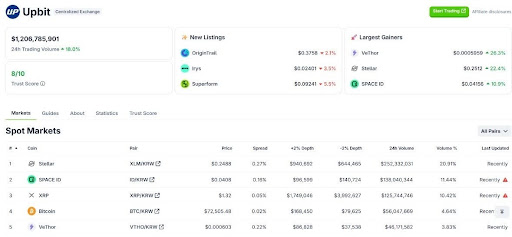
Source : CoinCodex

Cette dernière flambée survient après un regain d'intérêt pour le rôle de Stellar dans la finance tokenisée en Corée du Sud. Les traders ont réagi positivement aux récents plans reliant le réseau blockchain à des efforts de tokenisation impliquant le Depository Trust & Clearing Corporation (DTCC) américain, l'une des plus grandes entreprises d'infrastructure de marché financier au monde.

Les nouvelles du DTCC ont alimenté une nouvelle demande pour le XLM parmi les investisseurs sud-coréens, qui préféraient habituellement échanger du XRP. Il est à noter que le XLM a également enregistré de fortes hausses de prix parallèlement à l'augmentation de l'activité de négociation. Les rapports montrent que le token a grimpé de plus de 55% pour atteindre 11 dollars au cours de la semaine dernière, alors que l'élan continuait de se construire sur le marché. Le XRP, quant à lui, a eu du mal à suivre la hausse, tombant même en dessous de 1,3 dollar, malgré sa popularité de longue date parmi les traders sud-coréens.

Ce changement d'intérêt et de demande est notable car le XRP a historiquement été l'une des cryptomonnaies les plus échangées sur les marchés asiatiques comme la Corée du Sud, le Japon et la Thaïlande. Il y a seulement quelques semaines, le XRP menait le volume d'échange sur Upbit en Corée du Sud, devant le Bitcoin et l'Ethereum. Cependant, les derniers chiffres suggèrent que l'attention des traders de détail s'est désormais tournée vers le XLM alors que ces derniers cherchent à suivre l'élan le plus fort du marché.

Un analyste prévoit un rallye haussier pour le XRP après celui du XLM

Dans une analyse séparée, l'analyste crypto CW estime que le XRP pourrait être le prochain grand gagnant après la récente percée de Stellar. Dans un message partagé sur X, l'analyste a déclaré que le rallye haussier pour le XLM a déjà commencé et a suggéré que le XRP se trouve maintenant dans une position similaire avant son propre mouvement à la hausse.

Selon CW, le XRP attend un "signal de départ" et se négocie actuellement autour du même niveau où se trouvait le XLM avant son récent rallye de prix de 57%. L'analyste a soutenu que le XRP pourrait suivre la trajectoire haussière du XLM si l'élan continue de se renforcer.
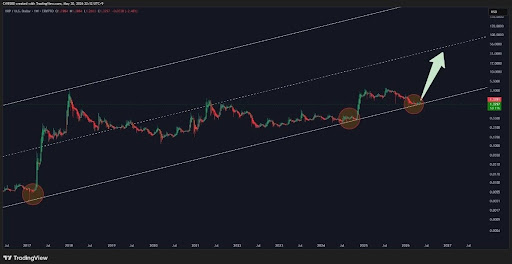
Source : X

Cependant, le graphique de CW projette un mouvement beaucoup plus important pour le XRP, visant de potentiels nouveaux sommets historiques près de 56 dollars. Bien que cette prédiction reste très spéculative et ambitieuse compte tenu du prix actuellement bas de la cryptomonnaie, elle reflète un optimisme croissant parmi certains participants du marché qui pensent que le XRP n'a pas encore réalisé son plus grand mouvement dans le cycle actuel.

Le prix suit la trajectoire baissière du marché | Source : XRPUSDT sur Tradingview.com

Related Questions

QPourquoi les traders de détail en Corée du Sud abandonnent-ils le XRP au profit du XLM ?

ALes traders réagissent positivement à l'annonce récente reliant le réseau Stellar aux efforts de tokenisation impliquant la DTCC (Depository Trust & Clearing Corporation), l'une des plus grandes entreprises d'infrastructure des marchés financiers au monde. Cette nouvelle a stimulé la demande pour le XLM, tandis que le XRP a du mal à suivre la hausse.

QQuelle est la différence de volume de négociation entre le XLM et le XRP sur Upbit en Corée du Sud ?

ASur Upbit, le plus grand échange de crypto-monnaies en Corée du Sud, le XLM a enregistré un volume de négociation sur 24 heures d'environ 252,3 millions de dollars, tandis que le XRP n'a affiché qu'environ 125,7 millions de dollars pour la même période. C'est la première fois que le XLM dépasse le XRP en volume sur cette plateforme.

QSelon l'analyste CW, quelle pourrait être la prochaine étape pour le XRP après la forte hausse du XLM ?

AL'analyste CW estime que le XRP pourrait être le prochain grand gagnant. Il suggère que le XRP se trouve dans une position similaire à celle du XLM avant sa récente hausse de 57%. Sur la base de son analyse graphique, il cible des sommets historiques potentiels près de 56 dollars pour le XRP, bien que cette prédiction soit très spéculative.

QQuel facteur a historiquement fait du XRP une crypto-monnaie très négociée sur les marchés asiatiques ?

ALe XRP a historiquement été l'une des crypto-monnaies les plus négociées sur les marchés asiatiques comme la Corée du Sud, le Japon et la Thaïlande en raison de sa popularité de longue date et de son cas d'utilisation axé sur les paiements. Il y a quelques semaines à peine, il dépassait même le Bitcoin et l'Ethereum en volume sur Upbit.

QComment le prix du XLM a-t-il évolué récemment par rapport au XRP ?

AAu cours de la semaine écoulée, le XLM a connu de fortes hausses de prix, grimpant de plus de 55% pour atteindre environ 11 dollars, alimenté par l'intérêt croissant pour la finance tokenisée et l'annonce de la DTCC. Pendant ce temps, le XRP a eu du mal à suivre cette dynamique et a même chuté en dessous de 1,3 dollar, malgré sa popularité traditionnelle.

Related Reads

Behind HYPE's Repeated Record Highs, the 'Minions' in the Ecosystem Can't Keep Up

While HYPE, the native token of the Hyperliquid ecosystem, surges to new all-time highs above $76 and attracts significant institutional ETF inflows, a starkly different reality unfolds within its HyperEVM application layer. Multiple core DeFi protocols across lending, NFTs, stablecoins, and DEXs have announced shutdowns between May and June. The article argues HYPE functions more like an "application stock" than a traditional ecosystem token. Its value is anchored to the trading fees from Hyperliquid's core perpetual contracts platform (HyperCore), which boasts a diversified revenue stream from crypto, commodities, and indices. Approximately 97% of protocol fees fund buybacks and burns of HYPE. This means HYPE's price is largely decoupled from the health of projects built on HyperEVM. The closures of significant projects like lending protocol HypurrFi (peak TVL >$300M) and NFT marketplace Drip.Trade highlight a structural tension. Hyperliquid's minimalist philosophy offers infrastructure without official grants, liquidity support, or marketing coordination for HyperEVM projects. This forces protocols into a fiercely competitive environment from day one. Furthermore, the success of HyperCore creates a liquidity vacuum, and mechanisms like HIP-3 (allowing direct perpetual market deployment) divert user attention and capital away from application-layer projects. The stronger the core perpetual trading business becomes, the more difficult it is for peripheral "DeFi lego" projects to survive and capture value, despite the flagship token's rising price.

Foresight News13m ago

Behind HYPE's Repeated Record Highs, the 'Minions' in the Ecosystem Can't Keep Up

Foresight News13m ago

Conversation with Arthur Hayes: AI Has Drained Market Liquidity, BTC Will Be Below 100k by Year-End

In this June 2026 podcast interview, BitMEX co-founder Arthur Hayes explains his decision to sell his major crypto holdings (HYPE, NEAR, Worldcoin, Zcash). His rationale is based on a macro view linking oil prices, the Iran conflict, US politics, and an impending AI bubble burst. Hayes argues that high oil prices, driven by the ongoing war, will pressure domestic US inflation. To salvage the Republican Party's chances in the midterm elections, he believes Donald Trump may pivot to a populist, anti-AI stance—advocating for taxes and regulation—which would deflate the AI investment narrative. He sees the AI sector, particularly massive capital expenditure on data centers, as having absorbed nearly all excess market liquidity (around $1.5 trillion in debt issuance since 2025), starving other assets like Bitcoin. He highlights the upcoming SpaceX IPO at a ~$1.8 trillion valuation and 100x price-to-sales ratio as a potential tipping point. If these hyped IPOs underperform, it could shatter market confidence in AI. In such a scenario, all risk assets, including crypto, would fall together as correlations converge to 1 during a broad correction. Hayes has moved his portfolio into Treasuries and energy stocks (like ExxonMobil), predicting Bitcoin will be below $100k by year-end. He sees a potential crypto bull market only after the AI frenzy cools, liquidity stops flowing exclusively into AI, and possibly after a significant market downturn prompts new monetary stimulus.

marsbit24m ago

Conversation with Arthur Hayes: AI Has Drained Market Liquidity, BTC Will Be Below 100k by Year-End

marsbit24m ago

Fed's Internal Doves Flock to Hawkish Stance, Warsh's Debut "Between a Rock and a Hard Place"

U.S. Federal Reserve officials who previously advocated for rate cuts, including Governor Christopher Waller, have recently shifted their stance, with many now not ruling out the possibility of future rate hikes. This sets a challenging stage for new Fed Chair Kevin Warsh's first policy meeting. Appointed by President Trump based on his dovish views, Warsh now faces a committee where the debate has pivoted from "when to cut" to "whether to hike," driven by persistent inflation above 3%, a strong labor market, and supply-side pressures from AI infrastructure demands and geopolitical tensions. Key figures illustrate the shift. Governor Waller, once concerned about employment, now says data has pushed him toward considering rate increases. Even moderate voices like Governor Lisa Cook, while expecting inflation to ease, have indicated readiness to hike if it fails to do so. Long-time hawks such as regional Fed presidents Beth Hammack, Lorie Logan, and Neel Kashkari have grown more vocal, arguing that the real policy rate is effectively falling and that action may soon be needed. The upcoming Fed meeting is expected to keep rates steady but will likely remove the "easing bias" from its statement, signaling a neutral stance between cuts and hikes. The quarterly "dot plot" is anticipated to show most officials projecting no cuts this year, with some potentially indicating hikes. Chair Warsh, a critic of the Fed's reliance on forward guidance like the dot plot, must navigate communicating this pivot using tools he has questioned, all while steering policy in a direction counter to the preferences of the president who appointed him. The consensus suggests the Fed's next move could well be a rate increase.

marsbit1h ago

Fed's Internal Doves Flock to Hawkish Stance, Warsh's Debut "Between a Rock and a Hard Place"

marsbit1h ago

The Trillion-Yuan Market Cap 'Yi Zhong Tian': Who is the True Value King?

The article analyzes the three leading Chinese optical module companies, collectively nicknamed "Yi Zhong Tian": Xinyisheng, Zhongji Innolight, and TFC Optical Communication. It evaluates their "cost-performance" not by current stock price, but through three lenses: PEG ratio (growth vs. valuation), earnings quality, and premium/discount for certainty. Xinyisheng shows the most attractive PEG ratio and high profitability, but its valuation reflects discounts for risks like high customer concentration and reliance on overseas markets. Zhongji Innolight, the most expensive, commands a premium for its market leadership, dominant share in key products like 800G/1.6T modules, and higher earnings certainty, though it faces geopolitical risks. TFC Optical, as an upstream component supplier ("water seller"), has the highest gross margin and bets on the long-term CPO/NPO architecture trend, but trades at a high valuation with more stable, less explosive growth. The core argument is that while these companies dominate module assembly, the true profit pool and technological moat lie upstream in laser and switch chips, currently controlled by U.S. firms like Lumentum and Coherent. The long-term "cost-performance" for these Chinese leaders hinges on whether the domestic industry, exemplified by companies like Yuanjie Technology, can successfully move up the value chain into high-power laser chips. Otherwise, their high growth may remain confined to the lower-margin assembly segment.

marsbit1h ago

The Trillion-Yuan Market Cap 'Yi Zhong Tian': Who is the True Value King?

marsbit1h ago

Trading

Spot
Futures

Hot Articles

What is XRP 2.0

XRP 2.0: A New Frontier in the Cryptocurrency Landscape Introduction to XRP 2.0 In the ever-evolving realm of cryptocurrency, new projects continuously emerge, vying for attention and adoption. One such promising initiative is XRP 2.0, a novel cryptocurrency project designed to leverage advanced blockchain technology and robust encryption methodologies. While the name draws parallels with Ripple’s XRP, it’s crucial to note that XRP 2.0 operates independently, focusing on enhancing transaction security, privacy, and scalability. As the digital financial landscape increasingly embraces decentralized solutions, XRP 2.0 aims to contribute meaningfully to web3 and the overall expansion of crypto projects. What is XRP 2.0? At its core, XRP 2.0 is a cryptocurrency project that aims to create a secure and decentralized digital currency ecosystem. Its foundational technology integrates sophisticated blockchain principles with cutting-edge encryption techniques. The overarching goal of XRP 2.0 is to establish itself as a reliable and efficient platform enabling swift transaction execution while prioritizing enhanced privacy protections for its users. The project is promoted as a solution to many limitations faced by existing cryptocurrencies, proposing a system that can handle a higher volume of transactions with improved speed and privacy. This versatility positions XRP 2.0 as a significant contender in a marketplace riddled with various digital currencies. Who is the Creator of XRP 2.0? The identity of the creator behind XRP 2.0 has been flagged as ‘Wilbur.’ However, comprehensive details regarding Wilbur or their associated entity remain elusive. The anonymity of many cryptocurrency creators is not an uncommon phenomenon in the industry, often designed to maintain a degree of privacy and security. Who are the Investors of XRP 2.0? As of now, specific information related to the investment foundations or organizations supporting XRP 2.0 is not publicly available. In the cryptocurrency sector, the backing by reputed investors can significantly influence a project's credibility and success, yet the transparency regarding the financial supporters of XRP 2.0 has not been established. How Does XRP 2.0 Work? XRP 2.0 stands out by employing a combination of blockchain technology and advanced encryption algorithms that ensures secure and decentralized transactions. Its innovative structure includes unique features designed to foster user engagement and broaden functionalities beyond conventional cryptocurrency transactions. Among these features, XRP 2.0 incorporates AI-powered capabilities, such as text-to-image and text-to-speech functionalities. These additions are designed to enhance the interactive experience for users, promoting broader applicability across various sectors. By bridging technological advancements with user-centered design, XRP 2.0 aims to capture the attention of a diverse range of individuals and enterprises looking to integrate cryptocurrency solutions into their operational frameworks. Timeline of XRP 2.0 Understanding XRP 2.0 requires examining the milestones that have defined its journey thus far: July 23, 2023: XRP 2.0 is introduced as a novel cryptocurrency project, aiming to revolutionize secure and decentralized transaction capabilities in the blockchain domain. September 8, 2023: The launching of another project, XRP20, occurs, marking the emergence of an ERC-20 token on the Ethereum blockchain that remains unrelated to XRP 2.0. November 13, 2023: The XRP Ledger undergoes a significant update with the release of rippled server software version 2.0.0. It is essential to note that this development is disconnected from the XRP 2.0 cryptocurrency project. Key Points About XRP 2.0 To distill the essence of XRP 2.0, several critical factors emerge: Unique Features: The inclusion of features like AI-powered text-to-image and text-to-speech further diversifies the potential applications of XRP 2.0. Blockchain Technology: The framework utilizes advanced blockchain mechanisms and encryption protocols, ensuring a secure and decentralized environment for transactions. Scalability and Privacy: XRP 2.0 prioritizes enhanced privacy protections in transaction processes and the scalability necessary to accommodate a growing user base. No Affiliation with Ripple: Importantly, despite its name, XRP 2.0 does not have any allegiance or collaboration with Ripple’s XRP, distinguishing its operational framework and objectives within the cryptocurrency ecosystem. Conclusion XRP 2.0 represents an ambitious venture into the cryptocurrency sphere, aiming to offer a combination of security, privacy, and efficiency in digital transactions. By integrating sophisticated technologies and user-friendly features, the project sets out to broaden the horizons of what cryptocurrency can achieve in today's digital economy. While the anonymity of its creator and lack of disclosed investors might raise questions for some, XRP 2.0's focus on advanced functionalities and decentralisation enhances its appeal amidst an increasingly crowded crypto market. As the cryptocurrency landscape continues to evolve, XRP 2.0 may yet emerge as a pivotal player in the expansion of secure and scalable blockchain solutions.

955 Total ViewsPublished 2024.04.01Updated 2024.12.03

What is XRP 2.0

Discussions

Welcome to the HTX Community. Here, you can stay informed about the latest platform developments and gain access to professional market insights. Users' opinions on the price of XRP (XRP) are presented below.

活动图片















