Aave的GHO稳定币能否帮助该协议超越MakerDAO和DAI?

老雅痞Published on 2022-08-25Last updated on 2022-08-25

Abstract

在本文中,我们将在考虑Aave DAO和其团队如何将其推向市场并将其转变为与DAI一样重要的稳定币之前对其设计进行研究。

几周前,GHO稳定币的概念在Aave治理论坛上被提出,这在整个DeFi领域引发了一阵兴奋浪潮。事实上,作为协议的下一步,一个去中心化、有抵押品支持、与美元挂钩并原生于Aave DAO的稳定币的想法有很大的意义。

在本文中,我们将在考虑Aave DAO和其团队如何将其推向市场并将其转变为与DAI一样重要的稳定币之前对其设计进行研究。当然,这方面的信息仍然很少,所以本文的第二部分将主要根据我的DeFi经验进行推断。

Aave原生稳定币GHO的简介

自成立之初,Aave的主要挑战之一就是吸引足够的稳定币存款,因为它是大多数借款人的首选。因此,创建DAO原生的稳定币是自然而然的下一步,这同时也应该可以降低借款人的成本。由于该稳定币是铸造出来的,因此无需支付另一方储户的APR。

因此,让我们深入研究一下治理论坛上介绍的GHO的主要特征。

与美元挂钩的过度抵押稳定币

GHO将是一种使用aTokens作为抵押品铸造的过度抵押的稳定币。因此,在某种意义上它类似于MakerDAO,但更有效率,因为所有的抵押品都将是产生一些利息的生产性资产——这取决于它们的借款需求。

关于命名,有趣的是Aave在其名称中没有包含“USD”。考虑到美国监管机构的强硬程度,从法律角度来看,这可能是一种净收益。不过,这似乎并不是做出这一决定的唯一原因,正如Aave的创始人Stani暗示的那样,它未来可能会进行挂钩互换:

对货币的参考在长期内具有局限性,你可能想要将挂钩从一种基础资产换成另一种(出于各种原因),或者跟踪其他资产,而在股票交易中与美元绑定将是一个限制因素。

利息模型和stkAAVE折扣

GHO的利率模型目前是其最令人印象深刻的组成部分,因为就像Maker一样,最初的帖子中设想的利率直接由Aave DAO决定。然而,这将是低效的,并且会给治理增加不必要的臃肿。

社区的反馈将决定它的发展方向。尽管如此,我真诚地希望Aave的最终决定能够建立在利率由市场条件算法决定的模型上,就像Aave的其他代币一样,资金池中的供求关系决定了利率。

如果Aave社区认为有必要让DAO参与决定利率——在我看来这是一种荒谬的做法,因为DAO绝对不适合管理一个系统的运行参数——那么可以设想一种混合模式,由DAO投票决定一个固定的基础利率,并根据市场条件在一定范围内进行调整。

事实上,就像Liquity上的baseRate如何保护LUSD不向下脱钩一样,让利率动态变化有助于通过阻止大规模铸币事件来保护GHO的挂钩。最初费用为0.5%,当需求激增时,费用会上升,随着需求稳定,费用会逐步下降到0.5%。

这篇文章还提到了对GHO借款人质押AAVE代币的折扣,这创造了进一步的协同效应。最后,储户支付的利率将100%归属Aave DAO(而大多数其他代币的储备系数在10%左右),这意味着如果GHO增长到一个相当大的市值,它可能会变成DAO的金矿。如果AaveDAO的市值与DAI相似,平均利率为3.5%,AaveDAO将从GHO的利率中每天获得近15万美元的资金。

以下是不同GHO市值和利率假设下的一些快速计算:
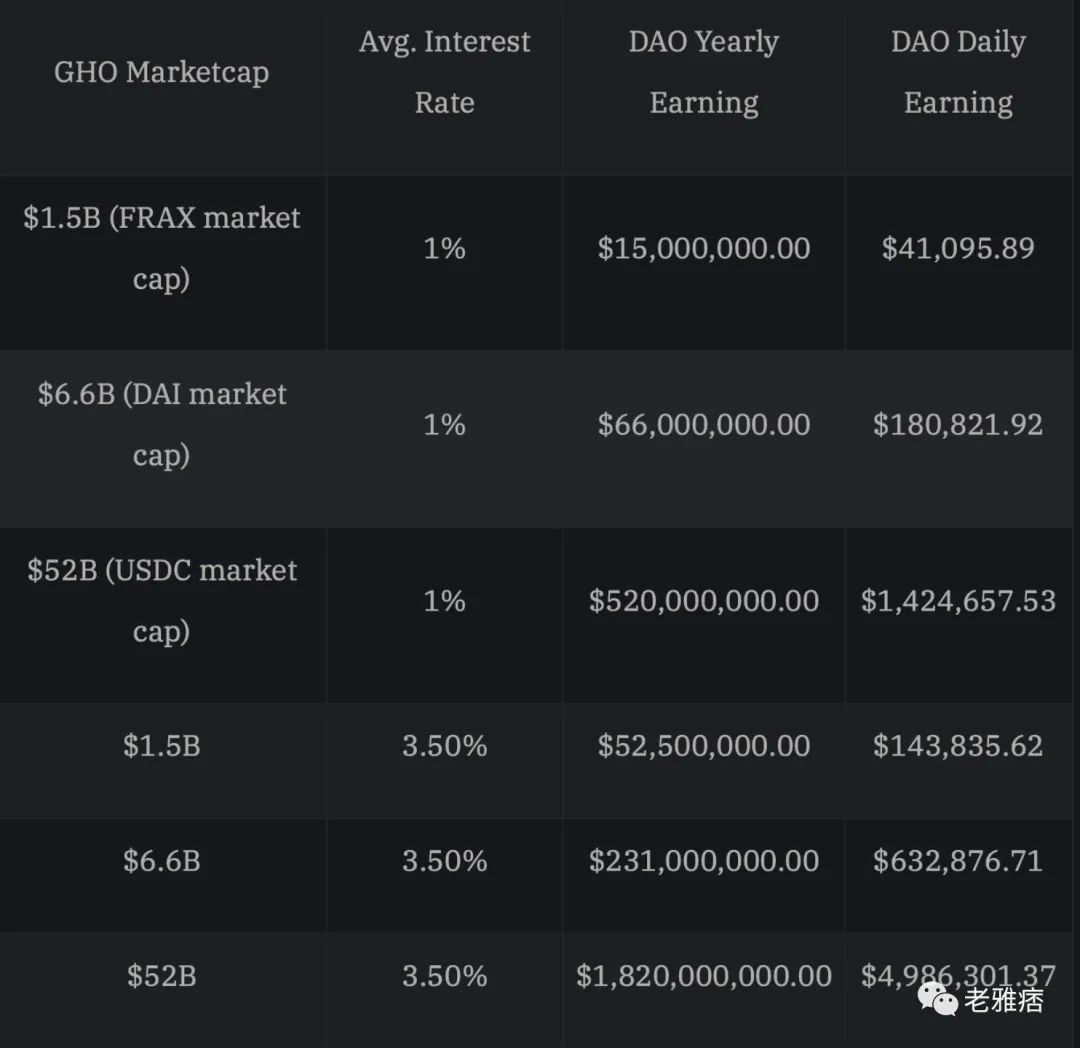
参考:

GHO市值: FRAX目前的供应量为15亿,DAI的供应量66亿,USDC 520亿

GHO平均利率:1%将极具竞争力,3.5%处于通常利率的高端水平

推动者和RWA

GHO的设计设想了由Aave治理的“推动者”,它将能够铸造GHO。第一个推动者将是Aave协议本身,但无论是协议还是实体的其他人也将会进行效仿。这一部分令人兴奋,因为它广泛地打开了GHO的设计空间。在发布之后,我们可以看到其他协议会申请成为推动者,并在Aave和GHO之上进行构建。
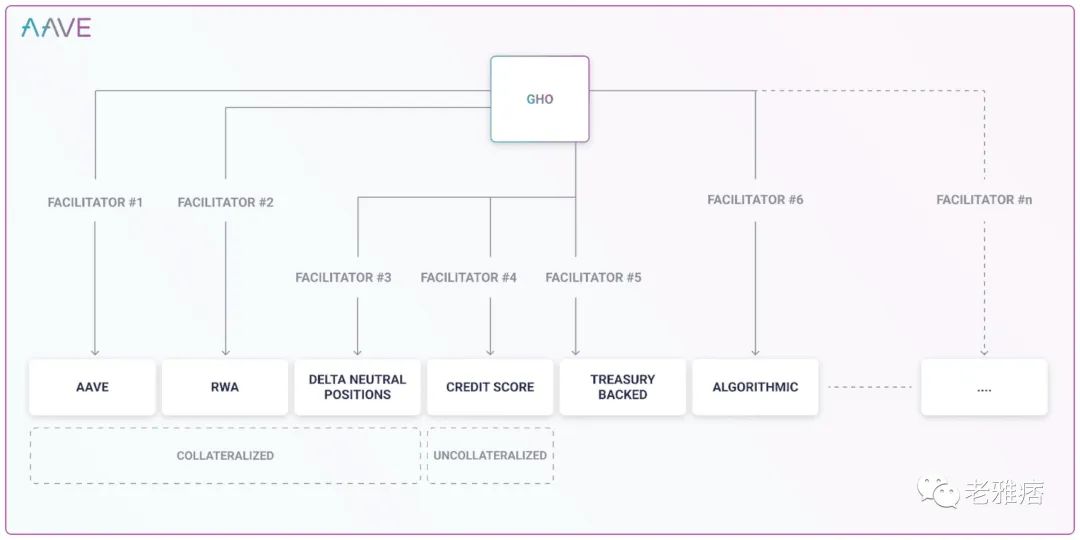
其中还明确提到了基于信用评分等凭证的抵押不足的头寸。每个推动者都将拥有由DAO确定的最大GHO铸造能力。

“去中心化”与缺乏审查阻力

Aave团队将GHO描述为一种去中心化的稳定币,甚至还提到了一些抵制审查制度的内容。然而,它并没有与GHO直接相关:

随着加密资产与非加密原生用户的进一步整合,稳定币的使用量只会继续增长。去中心化稳定币在区块链上提供了抗审查的以法币计价的货币。介绍一下,GHO是一种得到充分支持的去中心化的多抵押稳定币,它原生于Aave协议。

除非我误解了它的设计,否则GHO会像DAI一样“去中心化”,而且由于其抵押品的构成,它具有较弱的审查阻力。事实上,假设目前可以作为抵押品在Aave上借入的所有aTokens也将被用于借入GHO,GHO的抵押品构成将主要由USDC等可审查代币构成:
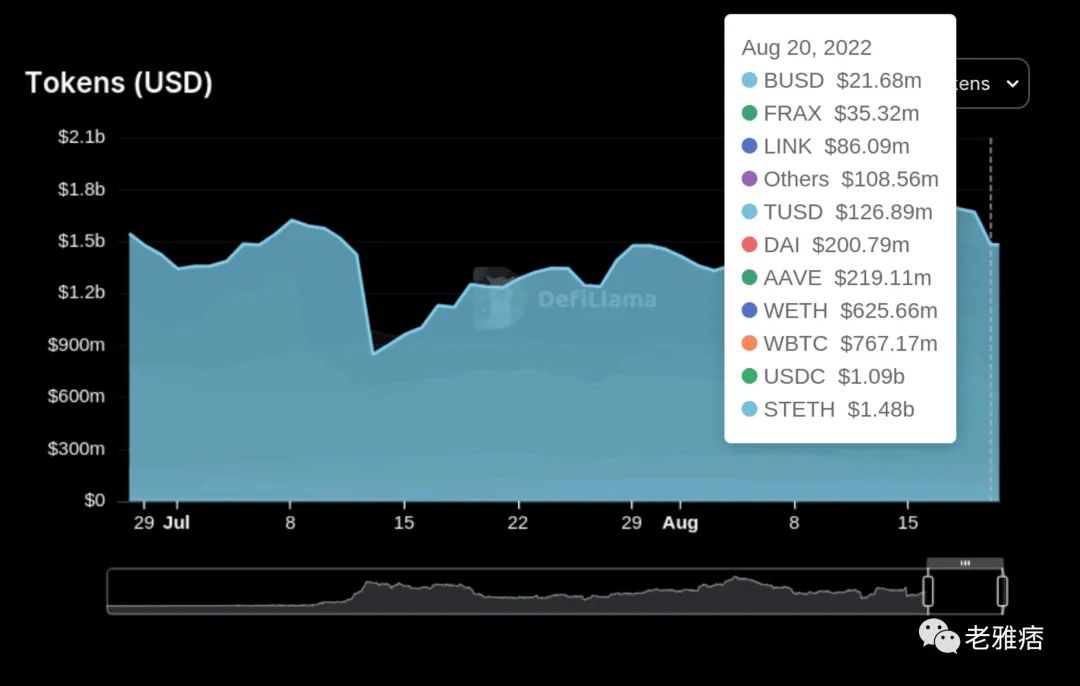
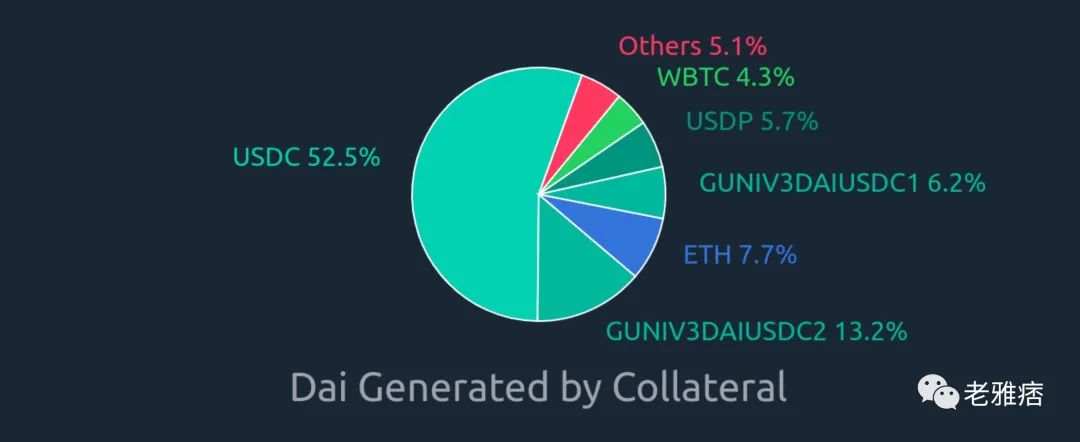
事实上,除去用作抵押品以杠杆化ETH抵押收益的stETH,USDC是Aave上使用最多的顶级抵押品,紧随其后的是另一个受信任的代币wBTC。不过,其抵押品构成仍要比DAI好得多,DAI由超过50%的USDC支持。
GHO进入市场:有了GHO的Aave会是什么样子?

既然已经对GHO进行了解释,我们可以进入一个更具猜测性的领域,并考虑GHO的发行将在实践中如何展开。

事实上,Aave协议和GHO之间的交互是非常令人兴奋的:虽然最初的帖子提到了Aave x GHO,以及在GHO上启用eMode(对USDC/DAI等选定货币对上启用显著杠杆),但有关它的细节非常少,所以让我来分享一下我的设想。

aGHO对Aave来说是一个很有吸引力的抵押品,但如果允许借用GHO,它也可能产生重大的自反风险。因此,我希望aGHO被阻止铸造GHO,以防止我们目前在DAI上看到的反身性支持。

不过,这将带来令人兴奋的稳定币套利循环,如aUSDC > Mint GHO > aGHO >借用另一个稳定币。通过eMode,这将使Aave & GHO成为一个非常有效的稳定币套利协议。此外,GHO利率将成为一种“基础稳定币利率”,这可能有助于控制USDC等其他稳定币的利率。

GHO的流动性策略

任何稳定币设计的另一个关键且必要的部分是其流动性策略。由于CRV、CVX和BAL在Aave上被接受为抵押品,由于储备系数,国库积累的CRV、CVX和BAL可能会带来令人兴奋的事情。将它们锁定在其本地协议中将使Aave DAO能够将激励导向GHO相关的资金池中。
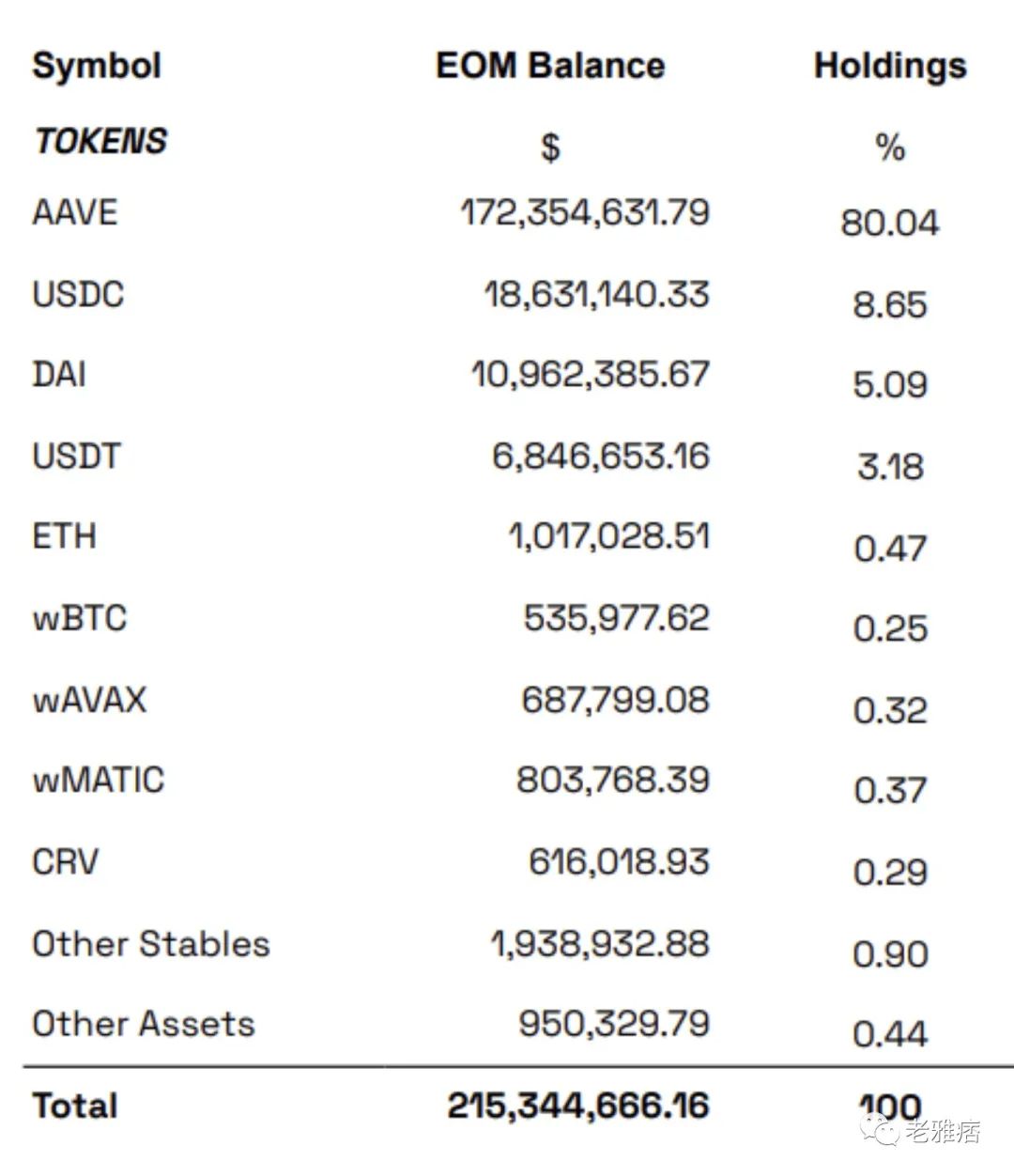
就像Frax目前正在脱离USDT和DAI,并试图建立Frax Basepool (Frax /USDC)作为Curve上其他稳定币的配对货币一样,我们可以预见Aave的类似举动。此外,许多目前与USDC和DAI相关联的项目正在寻求分散其流动性。GHO的到来可能是一个完美的时机,使DeFi能够减少对USDC的依赖。

然而,虽然Frax在曲线战争中控制了相当大的治理和表决权,但Aave DAO并非如此。目前的国库CRV/CVX余额显然不足以激励资金池增长到10亿美元的规模,因此它可能会推动AaveDAO寻求获得更多流动性激励驱动型代币。由于DAO将从GHO的利率中获得可观的收入,无论GHO的市值如何,DAO都应有足够的手段支持适当的流动性。

最后,Aave在历史上一直接近于Balancer,自从过渡到AAVE代币以来,在安全模块中使用了80% Aave / 20% wETH Balancer Pool。国库目前拥有20万BAL,并计划进行另一项收购。因此我们可以期待GHO在Balancer上的精彩表现。然而,在稳定币方面,Curve仍然是王者:我不认为Aave能够在不以某种方式卷入CRV战争的情况下充分增加GHO的流动性。

在基本协议激励机制(如动态或DAO管理的借款利率)和清算机制之外,流动性策略可能是稳定币最关键的元素之一,因为它也影响到挂钩的保持程度。

结语

我希望这篇文章能帮助你更好地理解稳定币战争中的利害关系。今年年底将会很有趣,随着GHO发行的临近,Curve的稳定币也被过度抵押,有消息称GHO将在今年年底前发布。对于DeFi来说,稳定币的倍增是自然而然的下一步,因为大多数已经建立的协议都看到了它们的设计趋于一致:

Frax一开始只是一个稳定币,现在有了FraxSwap,很快还会有FraxLend。

Aave最初是一个货币市场,它很快就有了自己的稳定币。

Curve一开始是DEX,但添加自己的稳定币后,很快就可以为流动性提供者提供有效的借贷。

总而言之,正如我前面的快速计算所显示的那样,一个协议创建其稳定币的主要原因非常明显:这是可以赚到最多钱的地方,而且有大量的需求和产品/市场契合度。

Trending Cryptos

Related Reads

Jensen Huang: Prompts are Becoming Obsolete, Loops are the New Paradigm

Jensen Huang, alongside AI leaders like Peter Norvig, Boris Cherny, and Andrew Ng, is advocating for a shift from "prompt engineering" to "loop engineering" as the new paradigm for AI development. Instead of manually crafting individual prompts, the focus is now on designing autonomous loops—systems where AI agents execute tasks, self-validate results, and iterate until completion without constant human oversight. A loop is a management framework that enables agents to operate independently. Key implementations are seen in Claude Code (with features like /loop, /goal, and /schedule) and OpenAI Codex, which employ multiple agents working in parallel within isolated environments. A core principle is the separation of roles: one agent (or model) performs the task, while an independent agent (or a smaller, separate model) validates the output to ensure objectivity. The article outlines a practical roadmap for implementing loops, starting with a "four-condition test" to assess suitability, building a minimal viable loop, and emphasizing critical pitfalls to avoid, such as lacking hard stop conditions or allowing loops to handle tasks requiring human judgment. This evolution is framed as the fourth major shift in AI interaction: from Prompt Engineering (crafting instructions) to Context Engineering (providing background information), then to Harness Engineering (building tool-enabled environments), and finally to Loop Engineering (creating self-sustaining systems). This progression reflects a consistent trend of increasing abstraction, moving human involvement from direct instruction to system design and rule-setting. The concept has academic roots in frameworks like ReAct, which formalized the "reason-act-observe" cycle. While loop engineering promises greater automation, experts caution about managing token costs and warn against outsourcing understanding—AI can assist, but deep problem comprehension remains essential.

marsbit1h ago

Jensen Huang: Prompts are Becoming Obsolete, Loops are the New Paradigm

marsbit1h ago

GPT Designs GPT

OpenAI has unveiled its first custom AI chip, Jalapeño, a move signaling a strategic shift beyond being a mere model company. While many see it as a challenge to NVIDIA, its core aim is to control the entire intelligent production pipeline—from models and chips to data centers and energy. The key driver is the evolving competitive landscape: model advantages are shrinking, while the computational gap in areas like cost-per-token, system throughput, and energy efficiency is becoming the true long-term barrier. Jalapeño is primarily an inference chip, targeting the massive and growing "inference tax"—the daily operational cost of generating tokens for services like ChatGPT and APIs. By designing its own hardware optimized for its specific workloads and future product roadmaps (even using AI to aid the chip design process), OpenAI aims to drastically reduce token generation costs and improve system efficiency. This creates a potential flywheel: better models help design better chips, which lower costs for running next-generation models, supporting more users and products, which in turn provides more data to refine future chips. The strategy mirrors Apple’s integrated approach, building a closed loop where hardware, software, and applications are co-optimized. In the long term, OpenAI is not trying to become the next NVIDIA (a supplier of "shovels" to all AI companies) but to own and operate the entire "mine"—selling the end product of intelligence itself. This move marks OpenAI's ambition to evolve from creating the smartest models to controlling the foundational infrastructure of AI production.

marsbit1h ago

GPT Designs GPT

marsbit1h ago

Trading

Spot
Futures

Hot Articles

How to Buy AAVE

Welcome to HTX.com! We've made purchasing Aave Protocol (AAVE) simple and convenient. Follow our step-by-step guide to embark on your crypto journey.Step 1: Create Your HTX AccountUse your email or phone number to sign up for a free account on HTX. Experience a hassle-free registration journey and unlock all features.Get My AccountStep 2: Go to Buy Crypto and Choose Your Payment MethodCredit/Debit Card: Use your Visa or Mastercard to buy Aave Protocol (AAVE) instantly.Balance: Use funds from your HTX account balance to trade seamlessly.Third Parties: We've added popular payment methods such as Google Pay and Apple Pay to enhance convenience.P2P: Trade directly with other users on HTX.Over-the-Counter (OTC): We offer tailor-made services and competitive exchange rates for traders.Step 3: Store Your Aave Protocol (AAVE)After purchasing your Aave Protocol (AAVE), store it in your HTX account. Alternatively, you can send it elsewhere via blockchain transfer or use it to trade other cryptocurrencies.Step 4: Trade Aave Protocol (AAVE)Easily trade Aave Protocol (AAVE) on HTX's spot market. Simply access your account, select your trading pair, execute your trades, and monitor in real-time. We offer a user-friendly experience for both beginners and seasoned traders.

5.5k Total ViewsPublished 2024.03.29Updated 2026.06.02

How to Buy AAVE

Discussions

Welcome to the HTX Community. Here, you can stay informed about the latest platform developments and gain access to professional market insights. Users' opinions on the price of AAVE (AAVE) are presented below.

活动图片