ETH 价格猛涨超 9%,多项指标指向 2800 美元,上涨空间能否打开?

ambcryptoPublished on 2026-03-18Last updated on 2026-03-18

Abstract

对称三角形突破和未解决的供应过剩正增强以太币在三月份可能升至2800美元的预期。

以太币(ETH)看涨方正关注三月份价格重返2800美元,至少有三项指标显示ETH价格有望继续走高。

要点:

以太币价格周一上涨逾9%,接近2280美元。

包括对称三角形在内的多项指标暗示价格有望持续上扬,逼近2800美元。

以太币打破看跌图形

周日,以太币价格走势否定了日线图上最初显现出的看跌三角旗形态。

ETH/USD价格对突破了三角旗上沿趋势线(2100美元),周一飙升9.8%,创下六周以来新高2287美元。此次突破伴随着成交量放大,显示出本轮反弹的信心更为强劲。
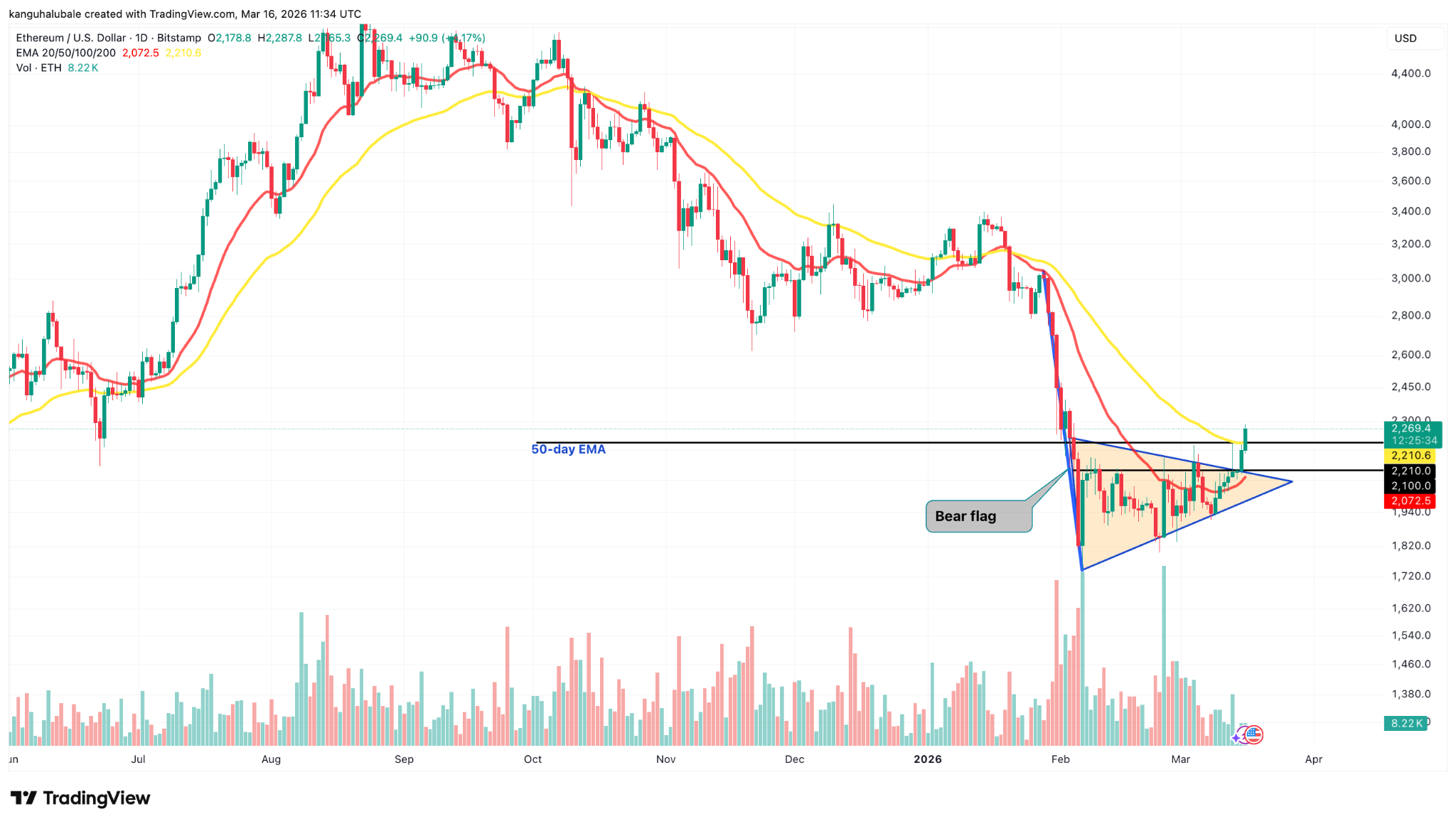
价格还重新站上了两条重要支撑线,分别是20日指数移动平均线(EMA,红线)和50日EMA(黄线),对应位置分别为2072美元和2210美元。

同时,这也提升了对称三角形看涨反转的概率。

对称三角形是指价格形成更低高点与更高低点,区间逐渐收敛。当价格突破任意一条趋势线后,通常会按该形态最大高度出现相应幅度的突破。
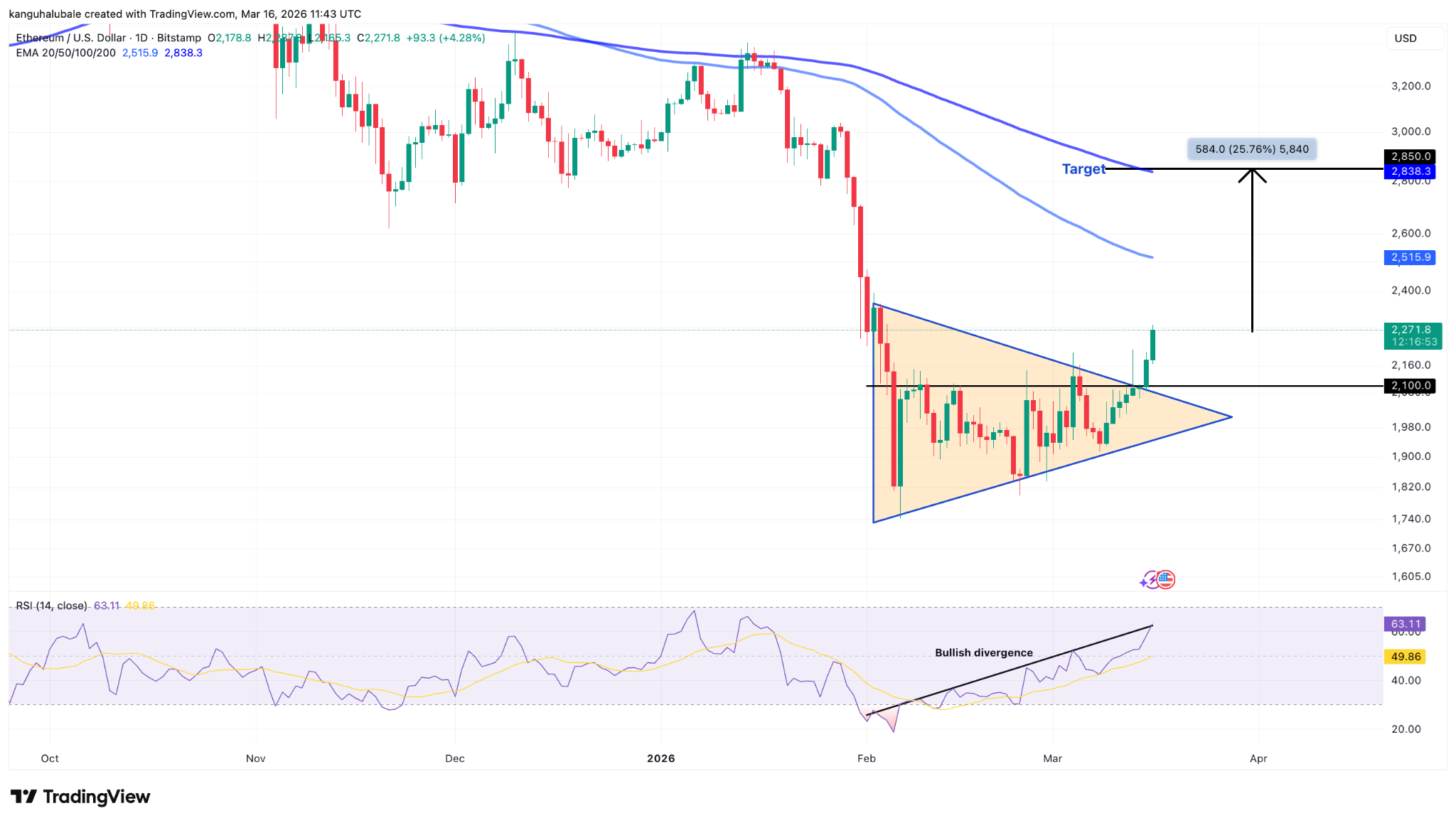
以太币本轮突破上沿趋势线后的目标测算在2850美元,较当前价位高出26%。该水平与图中紫色线所示的200日EMA相吻合。

以太币接下来的阻力位在100日EMA(蓝色)附近,即2500美元。

正如Cointelegraph报道,若在此处遭遇回调,突破行情将减弱,并提升回调的概率。

链上数据限制以太坊上涨空间至2800美元

ETH始终在由2350美元实现价格上限与1650美元MVRV最低区间形成的宽幅区间内震荡。

下图显示,ETH最近一轮从MVRV最低区间的反弹,与2022年第二季度市场结构颇为相似,当时价格突破实现价格后,被第一个MVRV区间(实现价格之上)压制。
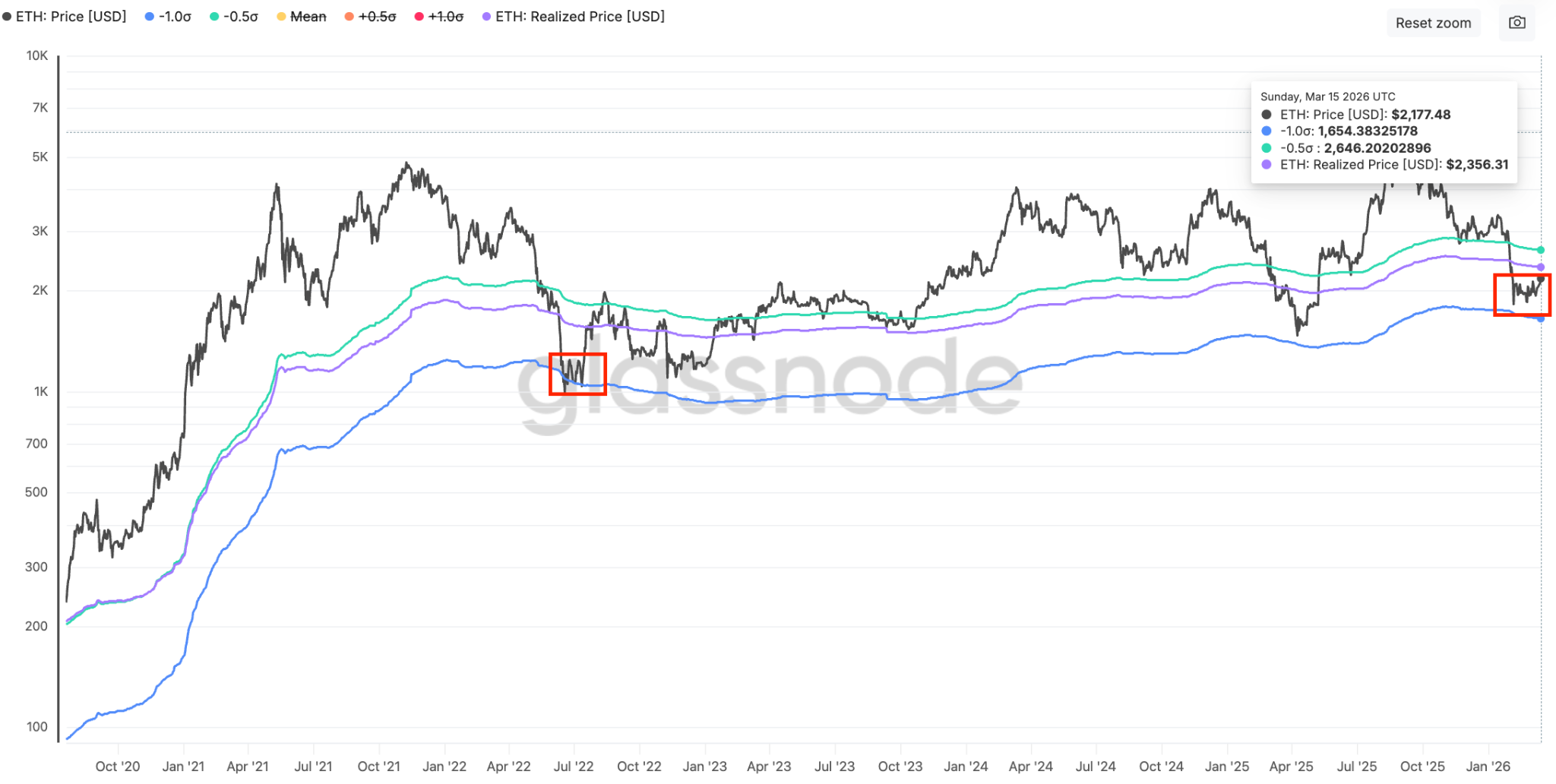
这一相似性强化了当前反弹或将在2650美元附近戛然而止的判断,该处正是实现价格上方的首个MVRV区间。

Glassnode的经实体调整的UTXO实现价格分布(URPD)显示,当前ETH UTXO在2770-2880美元形成了大量供应,是长期持有者逐步累积的区间。投资者在此买入了超790万枚以太坊。

该未消化的供应堆积依然构成持续抛压,极有可能限制价格在2800美元附近的进一步冲高。
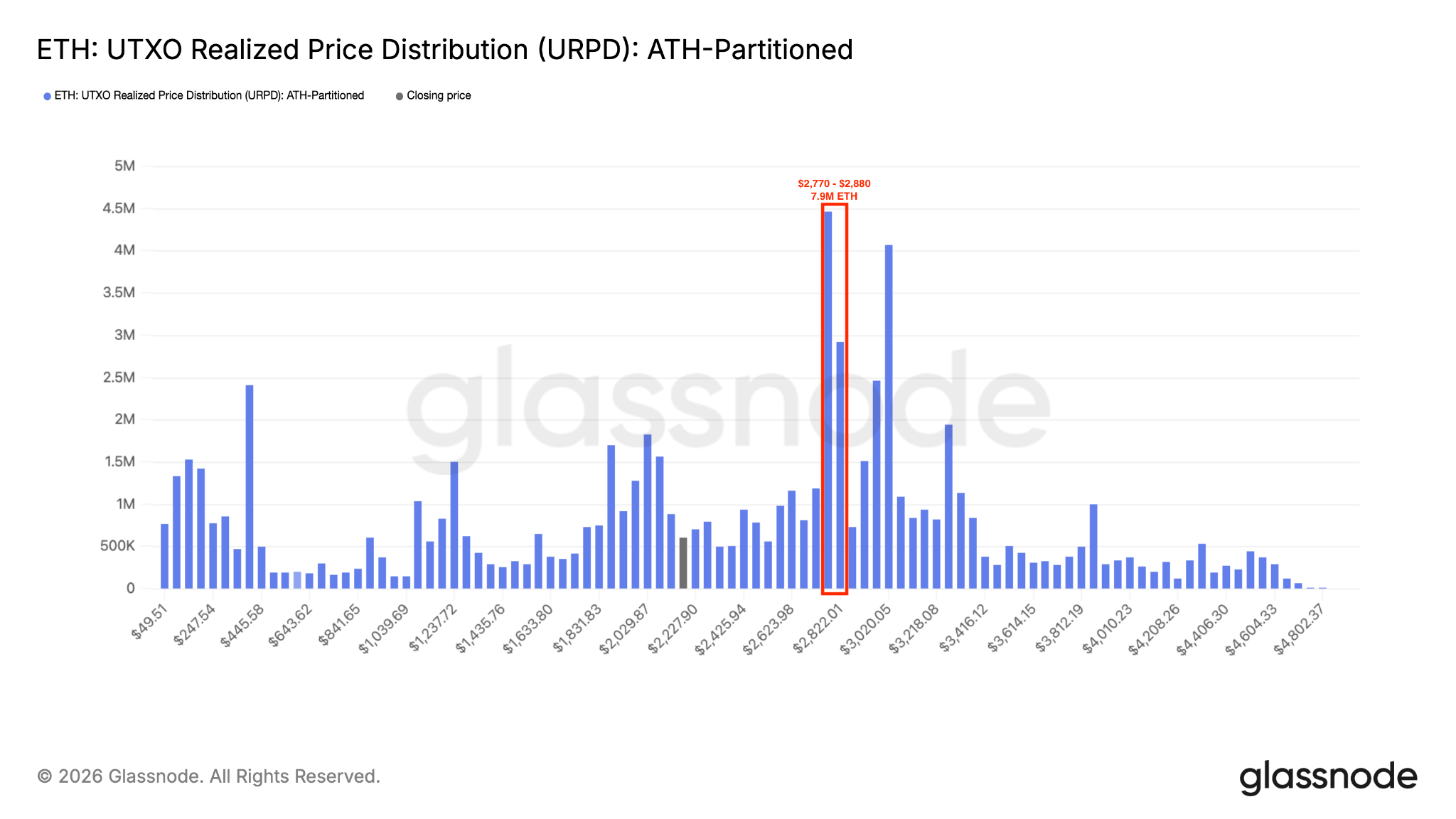
与此同时,ETH的成本分布热力图显示,2800美元附近有大量累积,此前超300万枚ETH在此区间买入,暗示短期内有望向该水平靠近。

Polymarket平台三月ETH触及2800美元概率提升

基于加密货币的预测市场Polymarket显示,以太坊三月份看涨氛围明显提升,用户可交易与现实结果相关的合约。

交易者目前给予ETH在三月触及2800美元概率为13%,较过去24小时上升10个百分点。2600美元和2400美元目标位的看涨信心更强,分别为32%和69%。
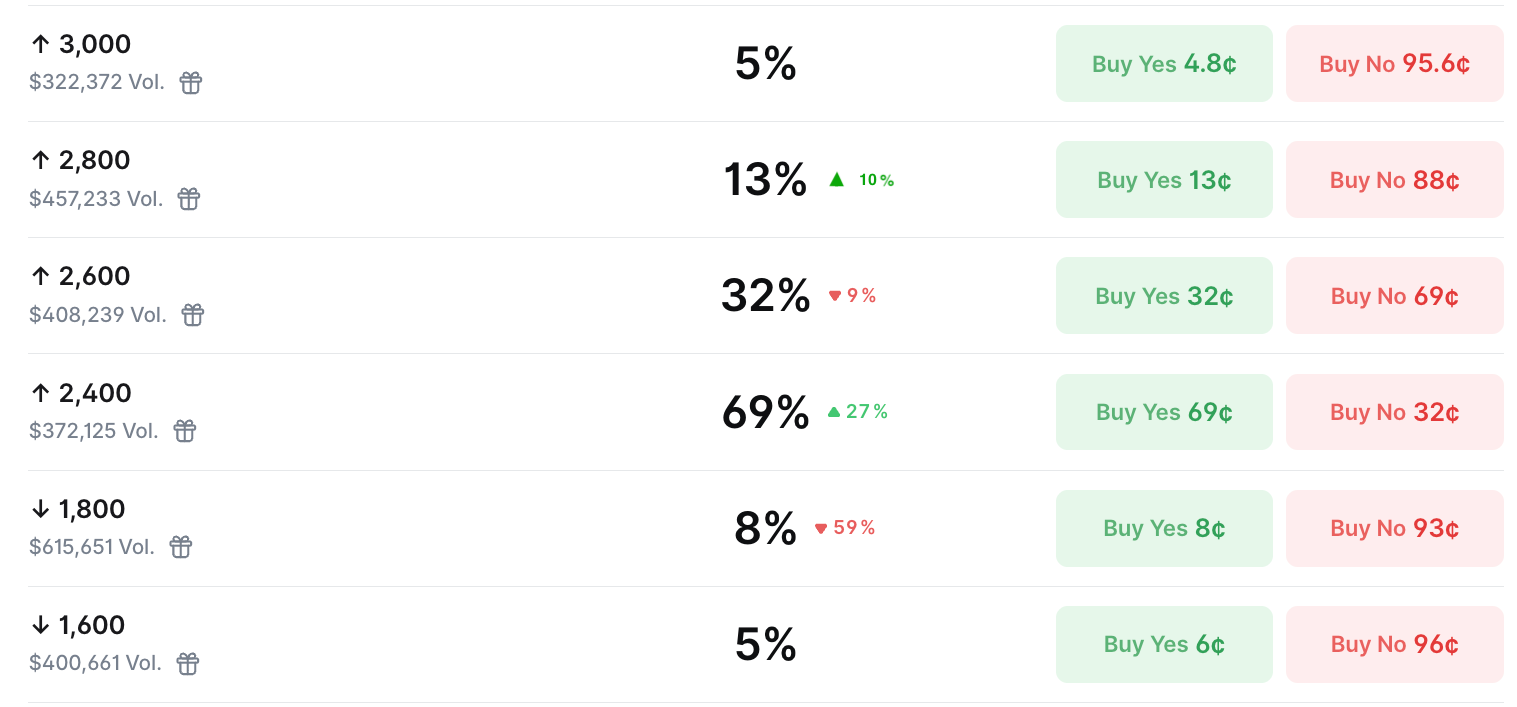
与此同时,ETH三月跌至1800美元和1600美元的概率较此前下降,显示市场正下调对下行风险的预期。


Related Reads

The Value Distribution of Stablecoins

**Summary: The Value Distribution of Stablecoins** The article argues that stablecoins are evolving from mere trading tools into broader channels for dollar access. It divides the stablecoin ecosystem into four layers to analyze how value is distributed: 1. **Issuance Layer:** Mints stablecoins, holds reserve assets, and captures the spread between reserve yield and user costs (e.g., Tether, Circle). This layer currently earns the largest profit margin. 2. **Infrastructure Layer:** Connects stablecoins to the traditional financial system, handling fiat on/off-ramps, banking integration, compliance (KYC/AML), and asset management (e.g., Bridge, BVNK). This is the "unglamorous" but critical work, building the essential bridges between crypto and real-world finance. 3. **Acquiring/Distribution Layer:** Integrates stablecoins into merchant systems, manages payment flows, and provides enterprise financial software (e.g., Stripe, Coinbase). They act as the access point for businesses. 4. **Application Layer:** The end-users and businesses that ultimately use stablecoins for payments, settlements, or as a store of value. They benefit from convenience but have little pricing power. The core thesis is that while the issuance layer currently dominates profits, the often-overlooked **infrastructure layer holds significant long-term potential**. The real challenge and barrier to mass adoption is not the on-chain transfer of stablecoins (which is simple), but the complex "last mile" integration into existing business workflows, banking systems, and regulatory frameworks across different countries. Companies in this layer are currently in a "land grab" phase, investing heavily to build networks, secure bank partnerships, and establish compliance pathways. While their position is currently pressured by the profitable issuers above and distribution platforms below, the article suggests that if stablecoins become a default financial rail for businesses, the infrastructure providers who have done the hard work of integration will ultimately gain strong pricing power and become entrenched, essential players.

marsbit18m ago

The Value Distribution of Stablecoins

marsbit18m ago

The Value Distribution of Stablecoins

The Value Distribution of Stablecoins The article argues that stablecoins are evolving from a mere trading tool into a broad "dollar channel." It analyzes the industry's value chain through four layers: 1. **Issuance Layer (e.g., Tether, Circle):** The top layer that mints stablecoins, holds reserve assets, and captures the thickest interest rate spread. 2. **Infrastructure Layer (e.g., Bridge, BVNK):** Connects stablecoins to the traditional financial system, handling critical but complex "dirty work" like fiat on/off-ramps, banking integration, compliance (KYC/AML), and cross-border settlement. 3. **Acquiring/Distribution Layer (e.g., Stripe, Coinbase):** Embeds stablecoins into merchant systems, manages payment flows, and integrates with enterprise software. 4. **Application Layer:** End-users and businesses that ultimately use stablecoins for payments, settlement, or storing value. The author posits that while the issuance layer currently captures the most profit, the most overlooked and potentially critical layer is infrastructure. The core challenge for stablecoin adoption isn't the on-chain transfer (which is simple), but bridging the gap between blockchain and the real-world financial system. This involves solving practical problems for businesses: fiat conversion, reconciliation, tax handling, and user onboarding. Infrastructure companies are currently in a difficult "land-grab" phase—building networks, securing banking relationships, and achieving compliance country-by-country. They face pressure from both the profitable issuance layer above and distribution platforms below. However, the author suggests this layer is building a crucial moat. Once stablecoins become a default business rail, the infrastructure players who have done the hard work of integration may gain significant, durable value and pricing power.

链捕手22m ago

The Value Distribution of Stablecoins

链捕手22m ago

How to Do Research Well: Deliberately Practice the Real Skills That Matter

No one truly teaches you how to do research. You're often given a desk, a pre-selected problem, and vague instructions to "create something new." Consequently, many people reverse-engineer the job based on visible outputs—papers, posts, announcements—learning only how to *appear* like a researcher rather than how to *become* one. True research capability is built from stacking small, trainable skills, nearly all of which can be developed through deliberate practice. **Pick Your Own Problem:** Most researchers absorb problems from advisors or trends, lacking the underlying reasoning. Choosing a problem you genuinely care about, as John Schulman advises, leads to original work. Develop "taste" like a muscle: predict experiment outcomes, guess paper results from methods, and track which findings remain important over time. **Upgrade Your Inputs:** Relying on shared reading lists (arXiv hot lists, filtered group chats) leads to unoriginal conclusions. Undervalued old literature often holds crucial insights (e.g., MoE, LSTM, backpropagation). Richard Sutton's "The Bitter Lesson" or Claude Shannon's 1952 talk on creative thinking are more predictive than lengthy modern surveys. Breadth matters as much as depth: draw from neuroscience, mechanism design, hardware knowledge, and honest statistics. Read papers directly, especially appendices and limitations sections. **Write Everything Down:** As Paul Graham noted, writing exposes flaws in seemingly mature ideas. Writing is the cheapest defense against self-deception. Following Feynman's principle, Darwin programmatically wrote down facts contradicting his theory to combat memory bias. Maintain a detailed log of hypotheses, setups, predictions, results, and updated understandings. Reviewing past logs fosters essential humility.

marsbit2h ago

How to Do Research Well: Deliberately Practice the Real Skills That Matter

marsbit2h ago

Trading

Spot
Futures

Hot Articles

Discussions

Welcome to the HTX Community. Here, you can stay informed about the latest platform developments and gain access to professional market insights. Users' opinions on the price of ETH (ETH) are presented below.

活动图片