全球资产大踩踏:BTC横盘、黄金急跌、KOSPI暴跌7.24%

区块律动Published on 2026-03-04Last updated on 2026-08-21

Abstract

黄金、白银、股市全崩,美元逆势飙升。

2 月 28 日,美以联军对伊朗发动"史诗烈怒"行动,空袭超过 2000 个目标,最高领袖哈梅内伊在袭击中身亡。

这是过去几十年里中东地区发生的最大地缘政治事件。

全球资本等了整整一个周末,等着验证一个问题:那些押了两年的叙事,是不是真的。黄金是乱世硬资产吗?比特币是数字黄金吗?debasement trade 是真命题还是叙事泡沫?

结果出来了。

黄金先涨到 5400 美元,然后和股票一起跌超 4%。白银单日暴跌 8%。比特币先跌后震荡,最终回到原地。美元指数涨了 1.1%。

叙事压力测试

过去两年,加密和宏观圈流行一套几乎无懈可击的叙事:美国债务失控、美元长期贬值、黄金和 BTC 是对冲货币稀释的硬资产,两者合称"debasement trade"。2025 年,这套叙事的数据支撑看起来无比坚实——黄金全年涨超 50%,BTC 最高触及 12.6 万美元,美元指数跌了将近 11%,创下 50 年来最差上半年表现。Citadel 的 Ken Griffin 在公开场合反复提这个词,BlackRock 的 BTC ETF 资产管理规模逼近千亿美元。

这套叙事最核心的隐含假设是:当真正的危机到来,人们会离开美元,奔向硬资产。

上周末,这个假设第一次迎来了真实烈度的压力测试。

周一开盘,黄金确实先涨了——伦敦金盘中最高摸到 5418 美元,几乎追平 1 月底的历史高点。但随后,随着油价持续飙升、通胀预期重燃、市场开始重新定价美联储降息路径,一切反转。黄金当天收跌,周二进一步下砸超 4%,回到 2 月 20 日以来的低点。

白银更惨。周一冲破 96 美元,周二单日跌幅一度逼近 8%。

原因并不复杂。油价暴涨意味着通胀预期上升,通胀预期上升意味着美联储降息空间收窄,降息预期收窄意味着美元走强,美元走强是黄金和白银的直接对手盘。加上全场风险资产同步抛售触发的强制平仓,黄金和白银在"最应该涨的时候"成了流动性最好、最容易砸的仓位。

这不是第一次了。2022 年俄乌战争开打,BTC 没有避险,跟着纳斯达克一路跌;黄金初期上涨,随后被获利盘砸下来——同样的剧本,更大的烈度。

BTC 的处境更尴尬。战争打响那个周末,crypto 市场是唯一还在交易的市场。BTC 从 6.6 万美元附近先跌破 6.4 万,随后快速反弹,在周一传统市场开盘前已经基本填坑。表面上看,这是"韧性"。但真相是:机构资金还没进场,靠的是散户和套利盘在震荡中寻找方向。周二随着全场继续下跌,BTC 再度承压,在 6.8 万美元附近横盘,既没有展现"数字黄金"该有的上涨,也没有"风险资产"该有的大幅下跌——它只是……在那里晃。
霍尔木兹,芯片,和一个韩国假期

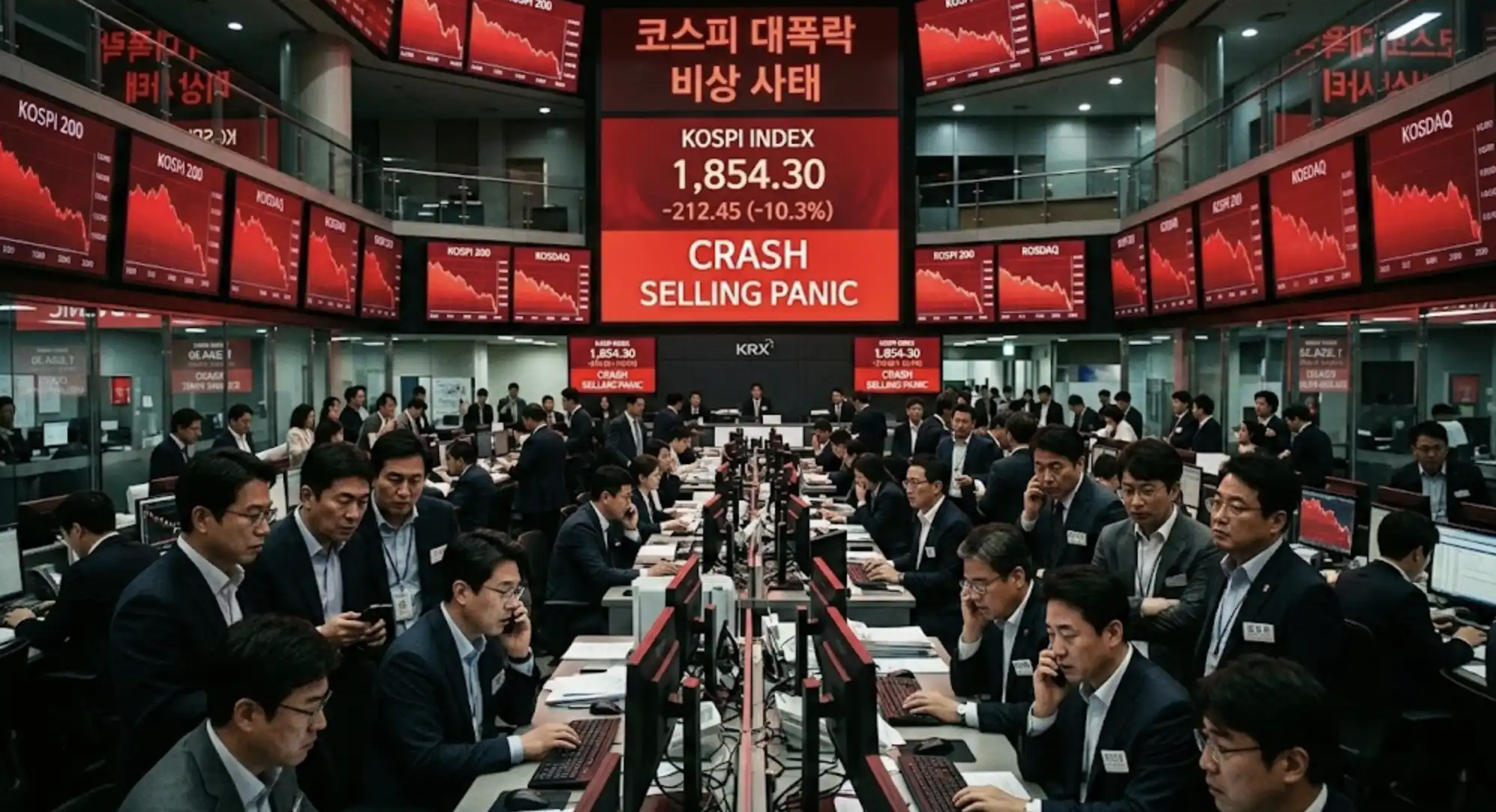
首尔的踩踏来得格外猛烈,有一个结构性原因:周一是三一节,韩国全国放假,交易所没开门。

恐慌在周末积累,找不到出口。周二早上 9 点钟,三天假期里所有没能执行的抛售,在同一秒砸了下来。KOSPI 开盘直接触发熔断预警,最终收跌 7.24%,单日蒸发约 3770 亿韩元市值,折合约 2570 亿美元。

这是 2024 年 8 月日元 carry trade 危机以来最大的单日跌幅。那一次,KOSPI 单日暴跌 8.77%,触发机制是美国非农数据崩了+日本央行意外加息,属于金融杠杆层面的系统性解绑。这一次,直接导火索是地缘政治——但背后同样有一根绷紧的弦,只是材质不同。

过去一年半,韩国散户经历了一轮史诗级 FOMO。KOSPI 从 2024 年底的 2400 点,一路涨到今年 2 月底突破 6000 点,14 个月涨幅接近 150%。有券商把目标价调到了 7000、甚至 8000。开户数量在今年 1 月突破了 1 亿——一个 5000 万人口的国家,有 1 亿个股票账户。韩国政府甚至把"KOSPI 5000"写进了施政纲领,作为一项国家政策目标。

与此同时,融资余额也在同步膨胀。截至事发前,韩国场内融资贷款余额超过 32 万亿韩元,约合 224 亿美元,是 2021 年以来的最高水平。股票质押贷款余额另有 26 万亿韩元,两者合计接近 370 亿美元。市场恐慌指数 VKOSPI 早在 2 月底就已经飙到 54,是"正常"水平的两倍以上——整个市场在创出新高的同时,fear gauge 已经进入了极端恐惧区间。

这种结构,遇到急性冲击,就会发生教科书式的流动性挤压。

股价下跌触发保证金警告,券商启动强制平仓,平仓进一步压低股价,压低的股价触发更多保证金警告——一个自我强化的反馈循环。外资在这一天净卖出超过 5.17 万亿韩元,约合 35 亿美元,是今年最大单日净卖出。散户则做了相反的事:在踩踏中抄底,继续加仓杠杆 ETF,押注反弹。

亚洲其他市场同步受压。日经 225 当天跌 3%,其中丰田跌 5.5%、索尼跌 4.3%。香港恒生跌 2.1%,在亚太区领跌。泰国证交所宣布对大部分证券暂停卖空。整个亚太 MSCI 指数下跌约 2%。

但最核心的结构性脆弱,还是在首尔。

这场跌的不只是股票。跌的是 KOSPI 这个被反复叙事为"AI 超级周期最佳代理标的"的市场。三星电子跌近 10%,跌破 20 万韩元的关键心理支撑位。SK Hynix 跌 11.5%。这两家公司合计贡献了 KOSPI 约 40% 的市值,也是全球 AI 芯片供应链最关键的两个节点——三星是全球最大 DRAM 和 NAND 闪存制造商,SK Hynix 是 HBM 高带宽内存的核心供应商,英伟达 AI GPU 里用的内存,大部分从这里出来。

这些工厂都在韩国。韩国每天要进口 276 万桶石油,大部分来自波斯湾,走霍尔木兹海峡。

伊朗宣布过关闭霍尔木兹,又撤回了这个声明。但保险公司已经单方面投票:战争险暂停承保,船运公司停止调度。一个没有正式宣布的封锁,正在实际运转。

就在市场踩踏的同时,另一个消息悄悄浮出水面:三星位于德克萨斯州泰勒市的美国晶圆厂,量产时间表再度推迟,从 2026 年延到了 2027 年。这家被视为美国"芯片回流"战略核心资产的工厂,建在德克萨斯的沙漠里——但它需要的油,还是从波斯湾过来的。

美元赢了,所有人都输了

现在来说那个最让人不舒服的结论。

整个周期里,"去美元化"是最主流的宏观叙事之一。美元的全球储备货币份额已经跌破 47%,各国央行用创纪录的速度增持黄金,BRICS 搭建 mBridge 跨境结算平台,链上稳定币规模从 2050 亿美元扩张到 3000 亿美元以上。圈内几乎所有人都在以某种方式押注:美元的黄金时代结束了,下一个时代属于多极化、硬资产、去中心化。

然后战争打响,美元指数涨了 1.1%,创下去年 5 月以来最大单日涨幅。

这一天,全场同步抛售:股票跌、债券跌、黄金跌、白银跌、大宗商品跌。流向只有一个方向:美元。

这就是流动性挤压的本质。不是因为美元变好了,是因为美元是全球金融体系里流动性最深的资产。急性危机里,当所有人同时需要出门,美元是最宽的那扇门。杠杆平仓需要美元,保证金补充需要美元,跨境资产出逃的第一步也是美元。没有别的选项有这个体量。

伊朗给了这套逻辑一个最清晰的注脚。

伊朗里亚尔从年初至今已贬值超 30%。Nobitex 是伊朗最大的加密交易所,处理着伊朗超过 87% 的链上加密活动。空袭开始后数分钟内,Nobitex 的提币量飙升 700%(Elliptic 数据)。Chainalysis 追踪了资金去向:大量流出资金,最终落地于历史上接受伊朗流入的境外交易所,继续兑换成 USDT 和 USDC。

在真正的货币危机现场,人们用加密网络做的事,是逃进美元。

这不是说 debasement trade 是假命题。美国的债务问题、通胀问题、美元购买力的长期侵蚀,这些结构性压力是真实存在的。黄金长期跑赢的逻辑,没有被这一次压力测试推翻。

但这次告诉了我们一件事:debasement trade 是一个慢变量的叙事,它需要时间的刻度才能成立。而地缘政治冲击是急变量,它只有一个刻度——今天。

两套时间框架放在同一个时刻,慢变量让位。

美元赢了。下一次危机,大概率还是美元赢。直到某一天,它不赢了——但那一天,大概率不是今天这种戏剧性的开场。

Trending Cryptos

Related Reads

Treasury Secretary's Move to Suppress Treasury Yields Ignites 'Currency Debasement Trade'! Gold Hits Three-Month High, Bitcoin Surges Over 25% in a Single Week

US Treasury Secretary Besant's efforts to lower long-term Treasury yields by announcing expanded buybacks had only a brief market impact. However, this move fueled a "currency devaluation trade," weakening the US dollar while boosting both gold (to a three-month high) and Bitcoin (up over 25% for the week). Analysts attribute this reaction to deepening market concerns over the massive US fiscal deficit and structural pressures keeping long-term rates elevated, including fierce competition for capital from global government borrowing and massive AI sector financing. Despite the Treasury's actions, fundamental forces like growth, inflation, and capital demand are seen as limiting its ability to sustainably suppress yields. Bitcoin's strong positive correlation with gold has reinforced its narrative as a hedge against devaluation. While equity markets have shown resilience, some strategists warn that Treasury yields nearing 5% increase pressure on the dollar and high-leverage assets. Figures like Ray Dalio have advised reducing bond exposure in favor of gold and some Bitcoin, citing US debt risks. Market opinions are divided on the sustainability of the devaluation trade, with some noting the lack of a near-term catalyst for its next leg higher. The underlying tension between the Treasury's desire for lower borrowing costs and the Federal Reserve's focus on inflation and reducing market intervention remains a key theme. Upcoming events like Nvidia's earnings and the Jackson Hole symposium will test whether AI profits can continue supporting stocks and if the Fed aligns more with Washington's preference for easier financial conditions.

华尔街日报51m ago

Treasury Secretary's Move to Suppress Treasury Yields Ignites 'Currency Debasement Trade'! Gold Hits Three-Month High, Bitcoin Surges Over 25% in a Single Week

华尔街日报51m ago

Alexander Shokhin: Business Needs an Interest Rate Below 10% and the Dollar at 90-95 Rubles

Alexander Shokhin, head of the Russian Union of Industrialists and Entrepreneurs (RSPP), has advocated for potentially using "non-market" tools to keep the ruble within a target exchange rate corridor. This, he argues on August 21, would help avoid excessive volatility, though he called the topic a separate discussion. Shokhin had previously raised the idea of a currency corridor in late May, noting the ruble's current exchange rate is not fully market-driven due to a limited currency segment and reduced foreign currency demand. He stated that many business community colleagues propose fixing a corridor, even through non-market methods, to ensure predictability. The business community's key targets, as outlined by Shokhin in late December 2025, are a Central Bank key rate of 12%, inflation of 4–5%, and a US dollar exchange rate of 90–95 rubles by the end of 2026. A turning point for investment, he said, would be lowering the rate to 12% with 6% inflation, though truly comfortable business conditions would require a rate below 10%. He stressed the critical importance of currency predictability for corporate investment decisions. From a data analysis perspective, the idea of a ruble corridor is not new. A similar mechanism was used in Russia from 1995 to 1998, where the central bank held the dollar within fixed boundaries through regular interventions. This regime lasted three years before ending abruptly during the 1998 default, illustrating the fragility of rigid targets under external shocks. The macro-economic link is clear: stricter corridors require more reserves to defend against currency pressure. The key unresolved technical aspect is the specific sources and volume of such interventions given the current market's limited liquidity. Whether this discussion remains theoretical or leads to concrete corridor parameters will be seen in the coming months.

cryptonews.ru2h ago

Alexander Shokhin: Business Needs an Interest Rate Below 10% and the Dollar at 90-95 Rubles

cryptonews.ru2h ago

Trading

Spot

Hot Articles

What is $BITCOIN

DIGITAL GOLD ($BITCOIN): A Comprehensive Analysis Introduction to DIGITAL GOLD ($BITCOIN) DIGITAL GOLD ($BITCOIN) is a blockchain-based project operating on the Solana network, which aims to combine the characteristics of traditional precious metals with the innovation of decentralized technologies. While it shares a name with Bitcoin, often referred to as “digital gold” due to its perception as a store of value, DIGITAL GOLD is a separate token designed to create a unique ecosystem within the Web3 landscape. Its goal is to position itself as a viable alternative digital asset, although specifics regarding its applications and functionalities are still developing. What is DIGITAL GOLD ($BITCOIN)? DIGITAL GOLD ($BITCOIN) is a cryptocurrency token explicitly designed for use on the Solana blockchain. In contrast to Bitcoin, which provides a widely recognized value storage role, this token appears to focus on broader applications and characteristics. Notable aspects include: Blockchain Infrastructure: The token is built on the Solana blockchain, known for its capacity to handle high-speed and low-cost transactions. Supply Dynamics: DIGITAL GOLD has a maximum supply capped at 100 quadrillion tokens (100P $BITCOIN), although details regarding its circulating supply are currently undisclosed. Utility: While precise functionalities are not explicitly outlined, there are indications that the token could be utilized for various applications, potentially involving decentralized applications (dApps) or asset tokenization strategies. Who is the Creator of DIGITAL GOLD ($BITCOIN)? At present, the identity of the creators and development team behind DIGITAL GOLD ($BITCOIN) remains unknown. This situation is typical among many innovative projects within the blockchain space, particularly those aligning with decentralized finance and meme coin phenomena. While such anonymity may foster a community-driven culture, it intensifies concerns about governance and accountability. Who are the Investors of DIGITAL GOLD ($BITCOIN)? The available information indicates that DIGITAL GOLD ($BITCOIN) does not have any known institutional backers or prominent venture capital investments. The project seems to operate on a peer-to-peer model focused on community support and adoption rather than traditional funding routes. Its activity and liquidity are primarily situated on decentralized exchanges (DEXs), such as PumpSwap, rather than established centralized trading platforms, further highlighting its grassroots approach. How DIGITAL GOLD ($BITCOIN) Works The operational mechanics of DIGITAL GOLD ($BITCOIN) can be elaborated on based on its blockchain design and network attributes: Consensus Mechanism: By leveraging Solana’s unique proof-of-history (PoH) combined with a proof-of-stake (PoS) model, the project ensures efficient transaction validation contributing to the network's high performance. Tokenomics: While specific deflationary mechanisms have not been extensively detailed, the vast maximum token supply implies that it may cater to microtransactions or niche use cases that are still to be defined. Interoperability: There exists the potential for integration with Solana’s broader ecosystem, including various decentralized finance (DeFi) platforms. However, the details regarding specific integrations remain unspecified. Timeline of Key Events Here is a timeline that highlights significant milestones concerning DIGITAL GOLD ($BITCOIN): 2023: The initial deployment of the token occurs on the Solana blockchain, marked by its contract address. 2024: DIGITAL GOLD gains visibility as it becomes available for trading on decentralized exchanges like PumpSwap, allowing users to trade it against SOL. 2025: The project witnesses sporadic trading activity and potential interest in community-led engagements, although no noteworthy partnerships or technical advancements have been documented as of yet. Critical Analysis Strengths Scalability: The underlying Solana infrastructure supports high transaction volumes, which could enhance the utility of $BITCOIN in various transaction scenarios. Accessibility: The potential low trading price per token could attract retail investors, facilitating wider participation due to fractional ownership opportunities. Risks Lack of Transparency: The absence of publicly known backers, developers, or an audit process may yield skepticism regarding the project's sustainability and trustworthiness. Market Volatility: The trading activity is heavily reliant on speculative behavior, which can result in significant price volatility and uncertainty for investors. Conclusion DIGITAL GOLD ($BITCOIN) emerges as an intriguing yet ambiguous project within the rapidly evolving Solana ecosystem. While it attempts to leverage the “digital gold” narrative, its departure from Bitcoin's established role as a store of value underscores the need for a clearer differentiation of its intended utility and governance structure. Future acceptance and adoption will likely depend on addressing the current opacity and defining its operational and economic strategies more explicitly. Note: This report encompasses synthesised information available as of October 2023, and developments may have transpired beyond the research period.

2.0k Total ViewsPublished 2025.05.13Updated 2025.05.13

What is $BITCOIN

Discussions

Welcome to the HTX Community. Here, you can stay informed about the latest platform developments and gain access to professional market insights. Users' opinions on the price of BTC (BTC) are presented below.

活动图片














