Ganadores y perdedores semanales del mercado cripto – PIPPIN, ZEC, MYX, APT

ambcryptoPublished on 2026-02-15Last updated on 2026-02-15

Abstract

Tras semanas de fuertes pérdidas, el mercado de criptomonedas mostró signos de recuperación. Aunque Bitcoin (BTC) y Ethereum (ETH) se mantuvieron estables, el sentimiento general mejoró gracias a un informe de inflación estadounidense que mostró un aumento de precios más lento (2,4%) y un mercado laboral sólido, lo que generó esperanzas de posibles recortes de tasas de interés por parte de la Fed. **Ganadores semanales:** - **PIPPIN** subió un 280%, rompiendo la zona de acumulación de $0,16-$0,20 y superando los $0,72. - **ZCash (ZEC)** ganó un 33% tras los comentarios del CEO de Digital Currency Group sobre el potencial de las monedas de privacidad. - **Humanity Protocol (H)** alcanzó nuevos máximos, con una subida del 90% tras su integración con Fireblocks. - Otros ganadores incluyeron Dogecoin (DOGE) con un 18%, Shiba Inu (SHIB) con un 12% y Pi (PI) con un 30%. **Perdedores semanales:** - **MYX Finance (MYX)** cayó casi un 70%, con presión de venta y RSI en territorio de sobreventa. - **Memecore (M)** bajó más de un 10%, perdiendo el impulso de sus máximos de febrero. - **Aptos (APT)** retrocedió, cayendo por debajo de $1,00 y mostrando una recuperación frágil. - Otros perdedores incluyeron Story (IP) con un 6%, Bitget Token (BGB) con un 7% y DoubleZero (2Z) con un 13%. En resumen, el mercado mostró movimientos significativos más allá de las principales monedas, pero la volatilidad sigue alta. Se recomienda cautela e investigar antes de invertir.

Después de semanas de fuertes pérdidas, el mercado cripto finalmente vio algo de luz.

Bitcoin [BTC] y Ethereum [ETH] tuvieron un desempeño débil, pero el estado de ánimo general mejoró enormemente. Esto ocurrió después de que un informe de inflación de EE. UU. mostró que los precios subían más lentamente, con la inflación cayendo al 2,4%.

El mercado laboral también se mantuvo fuerte, lo que aumentó las esperanzas de que la Fed pueda recortar las tasas de interés pronto. Eso suele ayudar a las criptomonedas.

Mientras que las monedas más grandes se mantuvieron tranquilas, varios tokens más pequeños experimentaron ganancias importantes... y pérdidas. ¡Así que, tomen sus cafés y tés! Aquí tienen un vistazo rápido a los mayores movimientos de esta semana.

Ganadores semanales

Una fuerte compra impulsa a pippin [PIPPIN] hacia una ruptura masiva

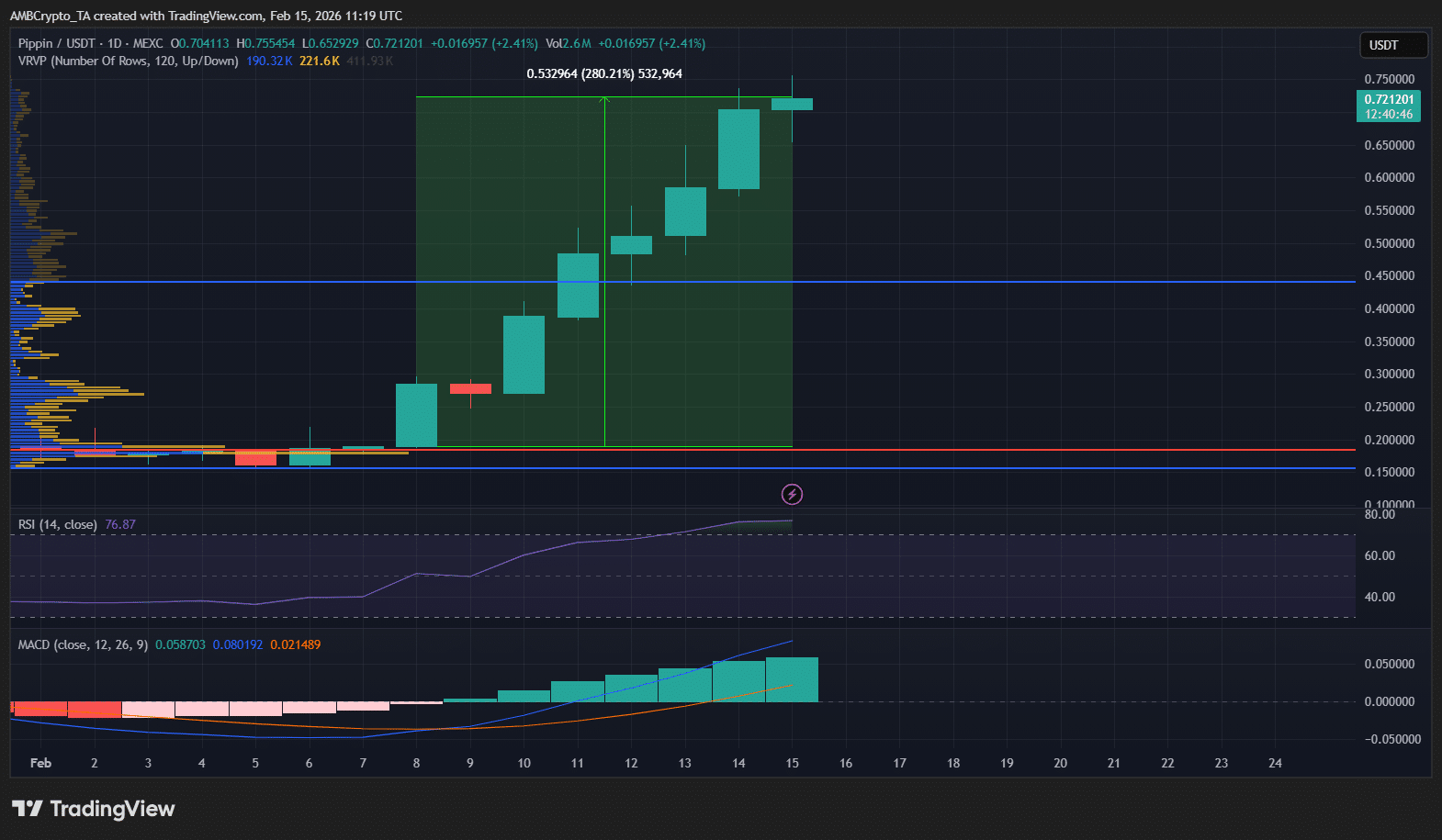
¡pippin [PIPPIN] se ha disparado desde la zona de acumulación de $0,16-$0,20 a más de $0,72, una ganancia de más del 280% en poco más de una semana!

La mayor parte de la actividad comercial se concentró cerca del rango inferior, lo que significó que los compradores construyeron posiciones sólidas antes de la ruptura.

Una vez que el precio se movió por encima de esta área de alto volumen, la resistencia se redujo y el movimiento alcista ocurrió más rápido.

El RSI mostró demanda pero no mostró signos de reversión. El MACD también fue alcista.
Fuente: TradingView

Con un número creciente de carteras e incentivos activos, el rally de PIPPIN fue impulsado por una compra gradual. La tendencia aún puede tener espacio para continuar.

ZCash [ZEC] energizado por declaraciones del CEO de DCG

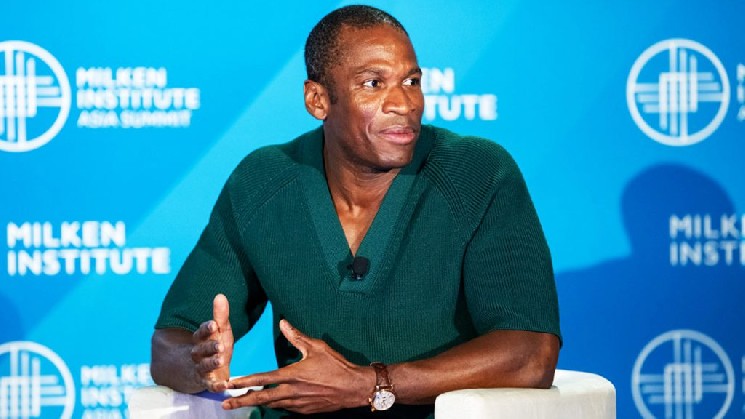
Zcash [ZEC] subió un 33% esta semana después de que Barry Silbert, CEO de Digital Currency Group, dijera que entre el 5% y el 10% de las inversiones en Bitcoin [BTC] podrían dirigirse a monedas de privacidad en los próximos años.

¡También calificó a Zcash como un proyecto capaz de generar rendimientos de 500x!

ZEC se disparó desde alrededor de $230 a más de $330 antes de estabilizarse en $307. Esto ocurrió después de días de consolidación, por lo que los inversores estaban comprando antes del movimiento. El RSI estaba en 51, recuperándose de niveles débiles.

Humanity Protocol [H] alcanza nuevos máximos

Humanity Protocol [H] cotizaba cerca de $0,23 después de ganar casi un 90% desde su base reciente alrededor de $0,12. La constante serie de máximos más altos y mínimos más altos demuestra que el pico estuvo respaldado por compras.

El RSI se mantuvo por encima de 70, mientras que el MACD se mantuvo alcista.

Este crecimiento se produjo junto con la integración de Humanity Protocol con Fireblocks. Este desarrollo abre el acceso a más de 2.000 instituciones financieras, permitiendo a los inversores profesionales custodiar e interactuar con H.

Al mismo tiempo, su mainnet centrado en la privacidad y su infraestructura de identidad descentralizada están atrayendo interés.

Otros ganadores notables

¡Dogecoin [DOGE] subió un 18% al momento de escribir. Shiba Inu [SHIB] le siguió con un aumento del 12%, respaldado por la actividad minorista. Mientras tanto, Pi [PI] lideró el grupo con un rally del 30%!

Perdedores semanales

MYX Finance [MYX] cae con presión de venta

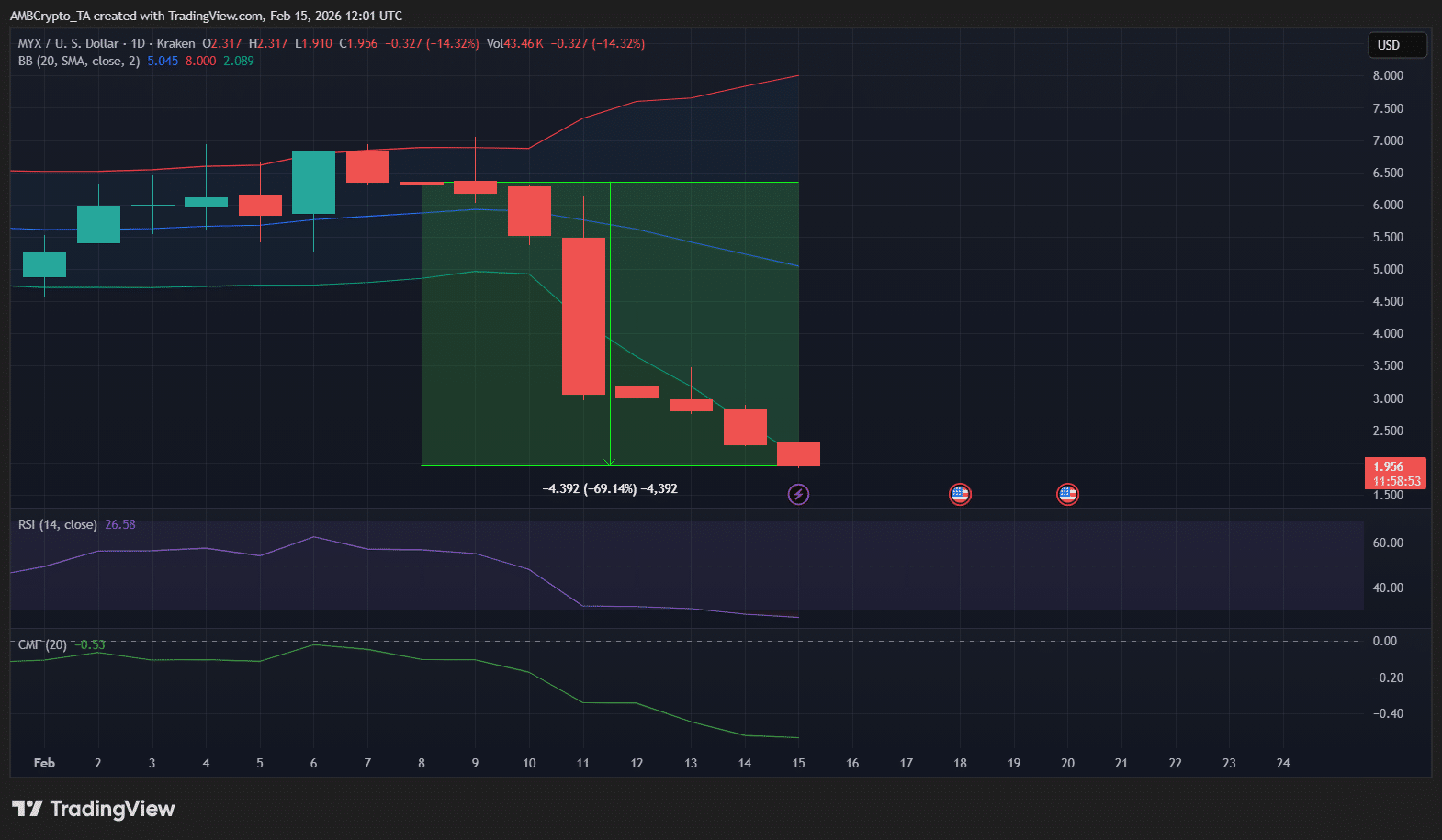
MYX Finance [MYX] cayó casi un 70% desde alrededor de $6,30 a menos de $2,00, según el gráfico diario.

La disminución siguió a un período de consolidación cerca de la Banda de Bollinger superior, después de lo cual el precio se rompió y continuó formando mínimos más bajos.
Fuente: TradingView

El RSI cayó a 26, poniendo a MYX profundamente en territorio de sobreventa. Al mismo tiempo, el CMF fue negativo, por lo que el capital ha estado saliendo.

A menos que los compradores intervengan para defender los niveles actuales, MYX puede continuar enfrentando presión a la baja en el corto plazo.

Memecore [M] se debilita con un ritmo que se desvanece

Memecore [M] ha estado bajo presión después de no poder mantener sus máximos de principios de febrero cerca de $1,85. Hubo un rechazo seguido de una disminución constante, con el precio en alrededor de $1,27 al cierre de esta edición.

Eso es una caída de más del 10% en las sesiones recientes.

El token intentó estabilizarse entre $1,30 y $1,45, pero los repetidos máximos más bajos demostraron la falta de confianza de los compradores. El RSI cayó a 41.

El rally anterior se encontró con una fuerte venta en niveles más altos, forzando a M a una fase de consolidación.

Aptos [APT] pierde su estabilidad

Aptos [APT] cayó desde alrededor de $1,10 a menos de $1,00, una tendencia a la baja constante antes de encontrar un soporte débil cerca de $0,90. Si bien ha habido un pequeño rebote desde entonces, la recuperación no ha sido lo suficientemente fuerte como para cambiar el tablero.

El RSI estaba cerca del territorio de sobreventa en 29. Mientras tanto, el OBV estaba bajo, por lo que los compradores no habían regresado con toda su fuerza.

APT está tratando de estabilizarse, pero la confianza aún parece débil. A menos que pueda recuperar el rango de $1,00-$1,10 de manera convincente, el token puede quedar atrapado en una fase de recuperación frágil.

Otros perdedores notables

Story [IP] cayó un 6%, mientras que Bitget Token [BGB] cayó un 7% con un ritmo que se desvanece. Mientras tanto, DoubleZero [2Z] vio la peor caída del grupo, deslizándose un 13% mientras los vendedores tomaban el control.

¡Y esa es la semana en cripto!

Si siempre hay una conclusión, es esta. Las cosas pueden cambiar rápidamente; el principal ganador de hoy puede fácilmente convertirse en el mayor perdedor de la próxima semana. Así que, manténganse curiosos, manténganse cautelosos y siempre hagan su propia investigación (DYOR) antes de perseguir la hype.

¡Estaremos observando los gráficos, y nos vemos la próxima semana!


Resumen Final

  • PIPPIN saltó un 280%, Humanity Protocol subió un 90% y Zcash ganó un 33%.
  • El impulso del mercado va mucho más allá de las monedas principales.
Siguiente: BONK salta un 11% después de la ruptura del canal: ¿Preparación para una reversión o un squeeze corto?
Compartir
  • Compartir
  • Tuitear

Related Reads

The Trillion-Yuan Market Cap 'Yi Zhong Tian': Who is the True Value King?

The article analyzes the three leading Chinese optical module companies, collectively nicknamed "Yi Zhong Tian": Xinyisheng, Zhongji Innolight, and TFC Optical Communication. It evaluates their "cost-performance" not by current stock price, but through three lenses: PEG ratio (growth vs. valuation), earnings quality, and premium/discount for certainty. Xinyisheng shows the most attractive PEG ratio and high profitability, but its valuation reflects discounts for risks like high customer concentration and reliance on overseas markets. Zhongji Innolight, the most expensive, commands a premium for its market leadership, dominant share in key products like 800G/1.6T modules, and higher earnings certainty, though it faces geopolitical risks. TFC Optical, as an upstream component supplier ("water seller"), has the highest gross margin and bets on the long-term CPO/NPO architecture trend, but trades at a high valuation with more stable, less explosive growth. The core argument is that while these companies dominate module assembly, the true profit pool and technological moat lie upstream in laser and switch chips, currently controlled by U.S. firms like Lumentum and Coherent. The long-term "cost-performance" for these Chinese leaders hinges on whether the domestic industry, exemplified by companies like Yuanjie Technology, can successfully move up the value chain into high-power laser chips. Otherwise, their high growth may remain confined to the lower-margin assembly segment.

marsbit6m ago

The Trillion-Yuan Market Cap 'Yi Zhong Tian': Who is the True Value King?

marsbit6m ago

Has the Crypto Market Bottomed? Here's What Institutions Think

The crypto market is in a period of significant debate, with leading institutions offering differing views on whether a bottom has been reached. Three prominent firms have published detailed analyses: * **Galaxy Digital** argues Bitcoin has **not yet bottomed**. Their analysis of 13 historical indicators across six dimensions (valuation, profit-taking, miner pressure, etc.) shows only four are fully met. They project a potential bottom range between $30k and $54k. * **NYDIG** states a bottom is **possible but not likely**. While metrics are close to historic bear market extremes, they note the absence of a classic panic-selling event. They also suggest increased institutional adoption may have structurally altered the market cycle, potentially leading to a shallower downturn. * **Standard Chartered Bank** asserts the **bottom has already occurred** at around $59k. They cite two key factors: potential US-Iran diplomatic progress and the anticipated SpaceX IPO, which they believe absorbed capital and caused ETF selling pressure that is now subsiding. They forecast a year-end price target of $100k. Despite the surface-level disagreement, the reports share critical common ground more valuable for long-term investors: 1. All three believe the market bottom will form **within this year**. 2. All agree the current price is **closer to the bottom than to previous highs**. 3. All maintain a **bullish long-term outlook** for Bitcoin and a new cycle. The core takeaway is that while the exact bottom price ($40k, $50k, or $60k) is debated, the consensus is that a bottom is imminent. For long-term holders, the primary focus should not be pinpointing the absolute low, but on the future potential for prices to reach $100k, $200k, or higher. The fundamental thesis for Bitcoin—sovereign debt accumulation, inflation, declining trust in centralized institutions, global digitization, and improved accessibility—remains intact and is arguably strengthening. The overall landscape is viewed as more favorable than in previous crypto winters.

marsbit17m ago

Has the Crypto Market Bottomed? Here's What Institutions Think

marsbit17m ago

The 'Chip' Challenge and Breakthroughs in China's Optical Industry Chain

China's Photonics Industry: Bottlenecks and Breakthroughs In the global AI race, computing chips dominate the narrative, but the underlying bottleneck increasingly defining the scale of AI clusters is light—or more specifically, optical connectivity. Optical modules, which translate electrical signals to light and vice versa, are crucial for connecting thousands of GPUs in AI data centers, preventing data congestion and ensuring efficient model training. High-speed modules (800G, 1.6T) are now standard, with performance hinging on advanced DSP (Digital Signal Processor) chips. This is where a critical dependency lies. Two US giants—Marvell and Broadcom—collectively dominate over 90% of the high-end DSP chip market. Chinese optical module leaders like Zhongji Innolight and Eoptolink rely on these chips to manufacture modules for overseas AI customers, primarily in North America. While this creates a supply chain vulnerability, complete decoupling is difficult. Marvell derives over half its revenue from Greater China, and the US firms depend on Chinese partners for chip packaging and optical components. The risk from laser chips (e.g., from Lumentum), another key component, is considered more manageable due to multiple global suppliers and faster progress in domestic alternatives from companies like YOFC and Accelink. To mitigate risks, China's industry is pursuing a multi-pronged strategy: diversifying supply chains and locking in long-term orders; fostering a domestic market ecosystem to adopt homegrown DSPs from firms like Huawei HiSilicon and CETC; accelerating R&D in high-speed DSPs and advanced packaging; and investing in next-gen technologies like silicon photonics and Co-Packaged Optics (CPO) to reduce reliance on discrete DSPs. The ultimate solution lies not in short-term博弈 but in persistent advancement of domestic high-end chip R&D and manufacturing. While challenges remain in performance, certification, and ecosystem building, China's vast domestic market and manufacturing base provide a crucial buffer, buying time for the industry to achieve greater technological independence.

marsbit30m ago

The 'Chip' Challenge and Breakthroughs in China's Optical Industry Chain

marsbit30m ago

Behind SpaceX's $2 Trillion Market Cap: Why Does Musk Always Have the Next Move Planned?

On June 12th, SpaceX debuted on the Nasdaq, reaching a valuation that briefly touched $2 trillion. This marked the culmination of a 24-year journey from its founding in 2002, driven by Elon Musk's frustration at the high cost of buying rockets. The company's path was defined by early failures, with its first three Falcon 1 launches ending in explosions before a successful 2008 flight opened the era of commercial spaceflight. Key to its model was a fixed-price NASA contract, incentivizing cost reduction. SpaceX mastered rocket reusability, first achieving a Falcon 9 landing in 2015, which drastically cut launch costs. This enabled its profitable Starlink satellite internet constellation, envisioned years before reusability was proven, to create an internal market for frequent launches. Similarly, the next-generation Starship rocket was in development long before its first flight, with its business case evolving from Mars colonization to supporting the emerging concept of in-orbit data centers for AI—a story now central to its valuation. The company's recent IPO, a reversal of its long-standing "no IPO" stance, is funding this ambitious "space-based compute" vision. While major tech players like Google, Blue Origin, and others are investing heavily, significant technical and cost hurdles remain. Ultimately, SpaceX's history is one of creating its own demand: first with Starlink and now with space-based AI compute, betting that its next rocket will enable its next giant market.

marsbit33m ago

Behind SpaceX's $2 Trillion Market Cap: Why Does Musk Always Have the Next Move Planned?

marsbit33m ago

Trading

Spot
Futures

Hot Articles

How to Buy ZEC

Welcome to HTX.com! We've made purchasing Zcash (ZEC) simple and convenient. Follow our step-by-step guide to embark on your crypto journey.Step 1: Create Your HTX AccountUse your email or phone number to sign up for a free account on HTX. Experience a hassle-free registration journey and unlock all features.Get My AccountStep 2: Go to Buy Crypto and Choose Your Payment MethodCredit/Debit Card: Use your Visa or Mastercard to buy Zcash (ZEC) instantly.Balance: Use funds from your HTX account balance to trade seamlessly.Third Parties: We've added popular payment methods such as Google Pay and Apple Pay to enhance convenience.P2P: Trade directly with other users on HTX.Over-the-Counter (OTC): We offer tailor-made services and competitive exchange rates for traders.Step 3: Store Your Zcash (ZEC)After purchasing your Zcash (ZEC), store it in your HTX account. Alternatively, you can send it elsewhere via blockchain transfer or use it to trade other cryptocurrencies.Step 4: Trade Zcash (ZEC)Easily trade Zcash (ZEC) on HTX's spot market. Simply access your account, select your trading pair, execute your trades, and monitor in real-time. We offer a user-friendly experience for both beginners and seasoned traders.

3.4k Total ViewsPublished 2024.03.29Updated 2026.06.02

How to Buy ZEC

Discussions

Welcome to the HTX Community. Here, you can stay informed about the latest platform developments and gain access to professional market insights. Users' opinions on the price of ZEC (ZEC) are presented below.

活动图片