金银「史诗级巨震」之后,可以抄底了吗?

Foresight NewsPublished on 2026-02-03Last updated on 2026-02-03

Abstract

虽长期牛市逻辑未变,但短期抛压未尽、波动巨大。

撰文:叶慧雯

来源:华尔街见闻

周一的贵金属市场延续周五下跌趋势,现货白银单日暴跌 7%,现货黄金暴跌 4.7%,一度跌破 4500 美元关口。
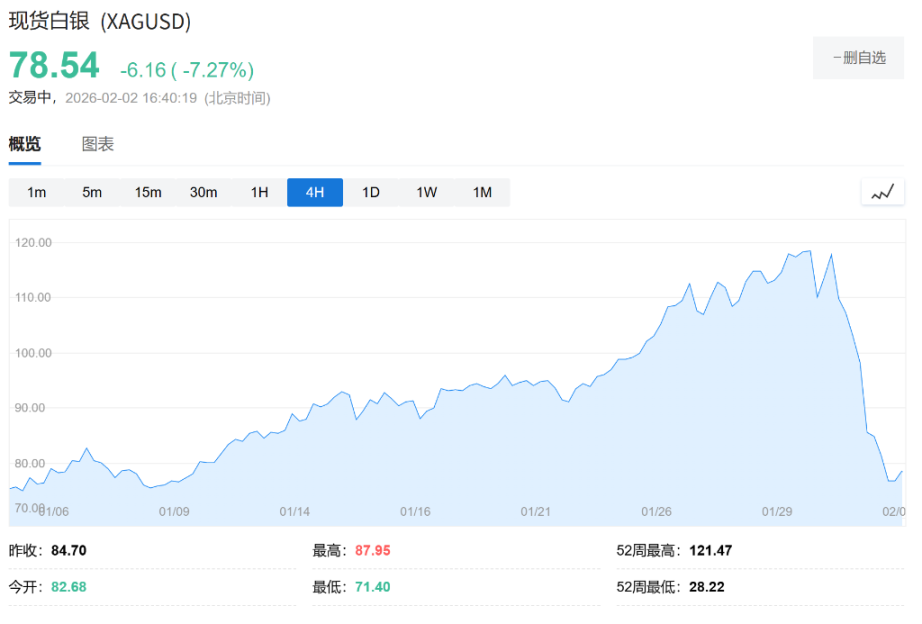
现在的局面非常清晰:资金获利了结,杠杆资金正在被强制出清。多家研究机构认为,尽管长期的地缘博弈和债务逻辑未变,但短期内,不要试图在雪崩时伸手去接「带血的筹码」。此时的下跌是市场在测试新任美联储主席的底线,也是对前期疯狂投机情绪的暴力修正。

金银暴跌:不仅是沃什,更是去杠杆的连锁反应

本次暴跌并非单一因素所致,而是政策预期、交易拥挤度与交易所干预的共振。

1. 导火索:沃什获提名,鹰派预期升温。华泰证券与天风证券均指出,特朗普提名凯文·沃什(Kevin Warsh)为新任美联储主席是直接触发剂。沃什被视为「鹰派」,其核心主张包括「降息 + 缩表」。天风证券补充,沃什曾在 2006-2011 年任职期间以「通胀鹰派」著称,市场担忧其上任后美联储独立性危机降温,导致美元反弹,流动性收紧预期压制了贵金属。

2. 机制性杀跌:交易所联手「降温」。华泰证券与财通证券强调了交易所干预的影响。CME(芝商所)和上期所几乎同时提高保证金比例。CME 在 1 月底连续两次上调黄金和白银保证金,其中白银从 11% 上调至 15%;上期所亦跟进上调。

财通证券补充了逼仓与期权 Gamma 挤压的因素。截至 1 月 29 日,沪银主力合约虚实盘比高达 8.75,显著高于历史同期;同时,大量散户买入看涨期权,迫使做市商买入期货对冲,推高价格。一旦交易所强化干预(如 CME 针对金银保证金已上调 6 次),资金流出,这种正反馈循环瞬间逆转为崩塌。此外,白银 ETF 持仓量大幅下滑也是重要的调整信号。
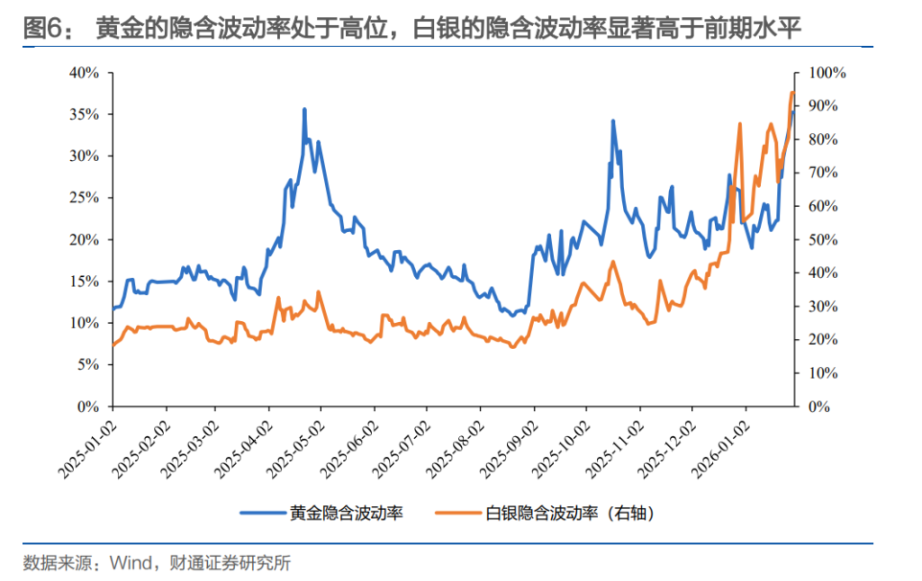
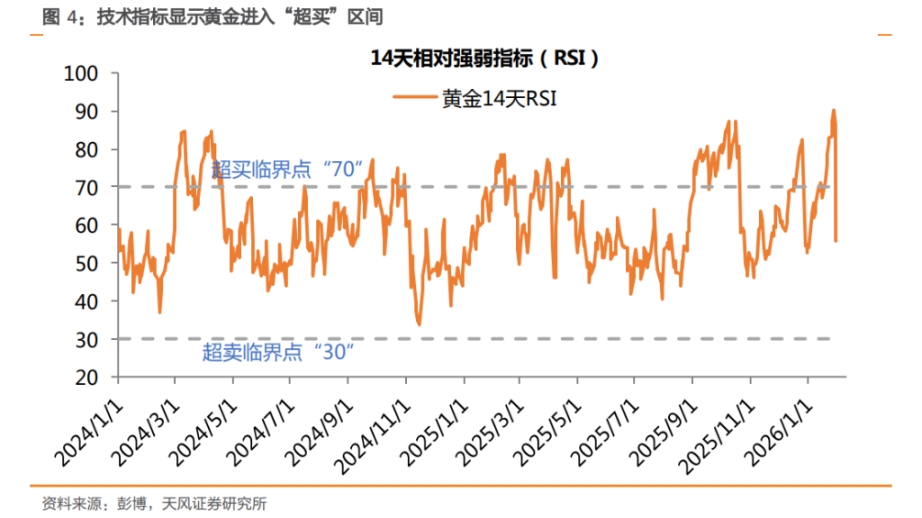
3. 根本原因:极致拥挤的投机仓位与获利了结。华泰证券指出,暴跌前有色(尤其是白银)是全球做多最拥挤的品种。天风证券数据显示,黄金 14 天 RSI 指标在 1 月 28 日突破 90,为本世纪以来首次,显示极度「超买」。

方正证券监测到,1 月 29 日白银波动率指数升至 111,刷新历史新高。财通证券认为,前期价格极速上涨是由逼仓叠加期权伽马挤压效应助推的,一旦情绪反转,去杠杆过程异常惨烈。
4. 宏观扰动:AI 科技股盈利担忧。华泰证券还提到,微软、特斯拉等科技巨头财报引发市场对 AI 投资回报的担忧,导致美股 risk off(避险)情绪升温,部分资金为补救股市流动性而抛售贵金属。

后市行情:长期逻辑未改,短期震荡难免

尽管短期遭受重创,但各家机构普遍认为贵金属的长期牛市逻辑尚未根本逆转。

1. 长期逻辑未变,短期进入震荡。天风证券认为,短期内黄金将进入宽幅震荡期,买入情绪偏谨慎。但处于世界竞争格局关键节点,全球央行对黄金的长线配置需求将继续充当价格的根本支撑,「黄金的故事」不会就此结束。 财通证券亦表示,长期逻辑尚未反转。国际市场对美国债务可持续性及美联储独立性的担忧,依然会推动各国央行及私人部门增持黄金储备。

2. 政策不确定性仍存。华泰证券维持长期看多观点,认为有色仍是全球制造业周期、地缘秩序重构、AI 科技等驱动因素共振最明显的品种。

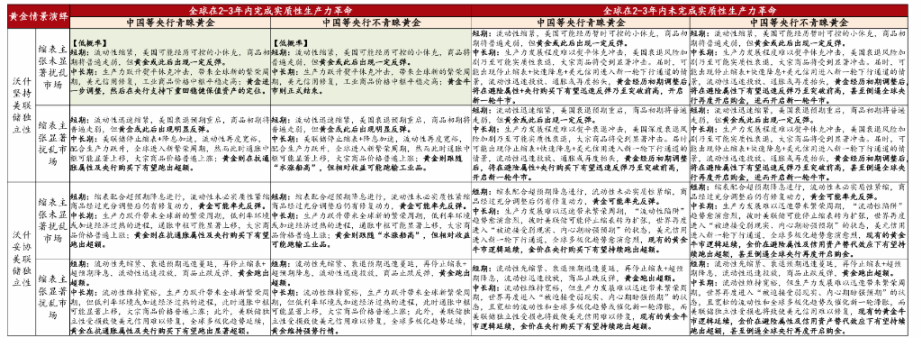
方正证券分析认为,后续市场走势取决于多重因子的情景演绎。关键变量在于:一是大国博弈的长期性与可能的短期缓和窗口;二是 AI 技术推动全要素生产率跃升的实际进程;三是美联储新主席沃什在内部政治阻力(如反对提名、内部分歧、前政府施压)下,能否坚守其政策主张(如独立性、缩表)

方正证券综合推演后认为,若要贵金属牛市逻辑彻底逆转,需同时满足多项严苛条件(如全球生产力迅速革命、沃什强力推行紧缩且未扰乱市场、央行购金需求消退等),这一情景发生概率极低。因此,贵金属在经历充分调整释放风险后,其长期配置价值依然突出,建议关注业绩稳健、质地优秀、成长潜力明确且估值合理的核心公司。
抄底时机:切勿急于接飞刀,等待波动率回归

对于投资者最关心的「何时入场」,各机构普遍建议保持耐心,等待波动率回归。

1. 关注波动率回落。华泰证券明确警告,短期「抄底」需要谨慎。由于市场波动率维持高位,去杠杆和挤泡沫仍在持续。 财通证券给出了具体的量化指标:建议等待隐含波动率回调至 20% 以下,这可能是再次做多的时间点。

2. 参考历史回调周期。财通证券复盘历史数据指出,近年来黄金阶段性见顶后,平均回调时间约 18 天,回调幅度约 8%。这为投资者提供了时间窗口的参考。华泰证券建议等待市场波动率从极端高位(如黄金 IV>35%)显著回落,并观察关键支撑位(如黄金 4700 美元 / 盎司) 的企稳信号,避免在「雪崩」中伸手接刀。

3. 警惕现货与期货价差风险。华泰证券特别提示国内投资者,沪银存在补跌空间。暴跌发生时,沪银 1 月 30 日夜盘封盘价对应 111 美元 / 盎司,而伦敦银已跌至 85 美元 / 盎司,这意味着沪银较外盘仍有约 30% 的溢价空间,需警惕沪银补跌风险。

4. 关注交割月逼仓风险。华泰证券提到,3 月是白银主要交割月,目前 CME 期货总持仓量远高于可交割库存,需关注交割月是否会出现逼仓行情,这既是风险也是潜在的博弈点。

Trending Cryptos

Related Reads

Without It, There Would Be No ImageNet... Now It's Gone

Amazon is shutting down its crowdsourcing platform, Mechanical Turk (MTurk), on September 30th, ending a 21-year run. Launched in 2005, MTurk connected businesses with a global online workforce to perform small, repetitive tasks—known as Human Intelligence Tasks (HITs)—that were easy for humans but difficult for computers at the time. At its peak, it hosted over 500,000 workers worldwide. MTurk played a pivotal, though often unseen, role in the rise of modern AI. Its most famous contribution was to the creation of the ImageNet dataset. In the late 2000s, researcher Fei-Fei Li and her team faced the monumental challenge of manually sorting and labeling millions of internet images to build a large-scale visual database for training AI. They turned to MTurk, distributing the work to nearly 50,000 workers from 167 countries. This "human-in-the-loop" effort made the massive ImageNet project feasible. ImageNet, in turn, became the foundational benchmark for the 2012 ImageNet Large Scale Visual Recognition Challenge. The victory of Geoffrey Hinton and his students' deep convolutional neural network, AlexNet, on this dataset dramatically demonstrated the power of deep learning, catalyzing the AI revolution that followed. Now, MTurk is closing. The platform has declined as the very AI it helped build has become capable of automating the simple tasks it once provided. Furthermore, the AI industry's data needs have evolved, shifting towards more specialized expertise for model tuning and evaluation, served by newer platforms. Ironically, some studies suggest MTurk workers themselves began using AI tools like ChatGPT to complete tasks, adding a layer of automation to the "artificial artificial intelligence" service. The shutdown marks the end of an era where human effort, distributed globally via the internet, laid the crucial groundwork for the intelligent machines of today.

marsbit13m ago

Without It, There Would Be No ImageNet... Now It's Gone

marsbit13m ago

Bill Gates' Latest Long-Form Article: The Real Trouble with AI is That We Aren't Ready

Bill Gates' latest essay, "The turbulent AI era is here. The choices we make now are critical," warns that society is unprepared for the profound social and economic transition AI will bring. While optimistic about AI's long-term potential in healthcare, education, and other fields, Gates focuses on the "transition period" over the next 10-20 years. He argues this transition differs from past technological shifts like the Industrial Revolution because AI automates cognitive labor itself, potentially reducing the total number of future jobs. Risks like enhanced cyber-attacks and social disruption are already emerging, not distant future threats. A key concern is "low-cost intelligence substitution," where AI performs defined tasks cheaper than humans, gradually thinning workforces. Gates introduces the concept of "Human Reserved" jobs—roles like nursing or delivering serious medical news—where human judgment and empathy should remain central, even if AI is technically capable. To manage the transition, he calls for new governance, stronger social safety nets, retraining, and international cooperation, especially between the US and China. Crucially, he proposes taxing AI usage and robots to slow displacement and fund social programs. The core dilemma Gates presents is that AI could become humanity's "greatest equalizer" or its "worst source of injustice," depending on whether its immense productivity gains are broadly shared or concentrate wealth and power. The fundamental challenge is not just advancing the technology, but adapting our social and economic systems to it.

marsbit28m ago

Bill Gates' Latest Long-Form Article: The Real Trouble with AI is That We Aren't Ready

marsbit28m ago

Just Now, Anthropic Unveils Physical MCP: Claude Begins Controlling the Real World

Anthropic has announced the Model Hardware Standard (MHS), a new standard enabling AI agents like Claude to safely control physical devices. Building on the Model Context Protocol (MCP), MHS standardizes communication between AI agents and hardware such as microscopes, robotic arms, and lasers, marking a significant step for AI from the digital into the physical world. Developed in collaboration with HHMI Janelia Research Campus, MHS uses standardized drivers to translate basic commands (e.g., read, write) into a format any programmable device can understand. This drastically reduces integration time from weeks to hours or minutes and allows agents to discover and operate new devices using natural language tags that describe machine properties and safety limits. Agents can control devices via MCP, command-line interfaces, or APIs. They can sequence operations, monitor results, adjust parameters in real-time, and generate deterministic scripts for long-running tasks. Early tests show Claude interacting with hardware exploratively, like a scientist, learning to calibrate a laser and scripting the process. Early adopters and partners include AWS, Automata, Danaher, Doosan Robotics, and Tecan, who are integrating MHS support into their platforms. While promising, challenges remain: Claude's physical reasoning is limited, requiring expert oversight, and MHS currently only works with programmable hardware. Anthropic plans further refinements and broader device support before open-sourcing the standard.

marsbit1h ago

Just Now, Anthropic Unveils Physical MCP: Claude Begins Controlling the Real World

marsbit1h ago

History's Only Asset with a 100% Win Rate After 4 Years of Holding

**Title: The Only Asset with a 100% Win Rate Over Any 4-Year Holding Period** This article analyzes which major, freely-tradable assets have historically never produced a nominal loss over any rolling 4-year holding window. It concludes that only two distinct categories achieve this: ultra-low-risk contractual assets and Bitcoin. Among traditional risk assets, none maintain a perfect 4-year record. The S&P 500 had negative 4-year periods (e.g., 1929-1932: -64.8%). The Nasdaq 100 fell roughly 60% from 2000-2003. Gold saw a ~47.7% loss from 1981-1984. US real estate declined about 23.3% from 2007-2010. Even long-term US Treasury bonds (e.g., 2021-2024: -19.8%) and corporate bonds can produce 4-year losses due to interest rate and market price risks. In contrast, the first category achieving 100% nominal success includes assets like rolling 3-month US Treasury Bills, 4-year certificates of deposit (CDs), and US Treasuries held to maturity within 4 years. Their "guarantee" stems from contractual obligations and credit backing (e.g., FDIC insurance, US sovereign promise), not price appreciation. The sole exception in the high-risk category is Bitcoin. Analysis of daily data from 2010-2026 across 4,419 rolling 4-year windows shows a 100% positive return rate. The worst 4-year period (April 2021 to April 2025) still yielded a +32.6% total return (~7.3% CAGR). This record is unique because Bitcoin has no issuer, promises no cash flows, and has endured severe drawdowns (70-90%), yet its market price has always recovered within a 4-year span. The key distinction is the source of the "100%": contractual assets offer known, low nominal returns, while Bitcoin's record stems purely from historical price appreciation despite extreme volatility. The article suggests that for Bitcoin, the ability to hold for 4+ years is more critical than active trading strategies.

marsbit1h ago

History's Only Asset with a 100% Win Rate After 4 Years of Holding

marsbit1h ago

How One Article Moved 45 Billion: The Collapse of a 25-Year-Old 'AI Stock Guru'

This article details the dramatic rise and near-collapse of a hedge fund built by Leopold Aschenbrenner, a 24-year-old former OpenAI researcher. The fund, named Situational Awareness, amassed $45 billion in assets within two years. Its explosive growth stemmed from Aschenbrenner's influential 165-page manifesto predicting AGI's arrival by 2027 and his high-profile Silicon Valley connections. The fund employed an extremely aggressive strategy: high concentration and 400% leverage to bet long on AI infrastructure stocks while shorting legacy software firms. In July, this structure backfired when both sides of the trade reversed simultaneously—AI stocks plunged while shorted stocks rallied—triggering massive losses that nearly wiped out all equity. Major player Jane Street reportedly lost billions. The fund's leveraged public portfolio was ultimately sold at a discount to Citadel. The SEC is now investigating banks like Goldman Sachs for their role in facilitating the fund's high-leverage trades. The article compares this to past blow-ups like Archegos, highlighting systemic failures in risk management where the pursuit of short-term profits overrode due diligence. It questions whether such risky leverage concentrated in the AI sector, currently at record highs, poses a broader systemic threat. Ironically, Aschenbrenner, who studied AI safety at OpenAI, designed a fund structure prone to uncontrolled failure. Days after the crisis, he reportedly raised another $400 million for new investments.

marsbit1h ago

How One Article Moved 45 Billion: The Collapse of a 25-Year-Old 'AI Stock Guru'

marsbit1h ago

Trading

Spot

Hot Articles

What is $BITCOIN

DIGITAL GOLD ($BITCOIN): A Comprehensive Analysis Introduction to DIGITAL GOLD ($BITCOIN) DIGITAL GOLD ($BITCOIN) is a blockchain-based project operating on the Solana network, which aims to combine the characteristics of traditional precious metals with the innovation of decentralized technologies. While it shares a name with Bitcoin, often referred to as “digital gold” due to its perception as a store of value, DIGITAL GOLD is a separate token designed to create a unique ecosystem within the Web3 landscape. Its goal is to position itself as a viable alternative digital asset, although specifics regarding its applications and functionalities are still developing. What is DIGITAL GOLD ($BITCOIN)? DIGITAL GOLD ($BITCOIN) is a cryptocurrency token explicitly designed for use on the Solana blockchain. In contrast to Bitcoin, which provides a widely recognized value storage role, this token appears to focus on broader applications and characteristics. Notable aspects include: Blockchain Infrastructure: The token is built on the Solana blockchain, known for its capacity to handle high-speed and low-cost transactions. Supply Dynamics: DIGITAL GOLD has a maximum supply capped at 100 quadrillion tokens (100P $BITCOIN), although details regarding its circulating supply are currently undisclosed. Utility: While precise functionalities are not explicitly outlined, there are indications that the token could be utilized for various applications, potentially involving decentralized applications (dApps) or asset tokenization strategies. Who is the Creator of DIGITAL GOLD ($BITCOIN)? At present, the identity of the creators and development team behind DIGITAL GOLD ($BITCOIN) remains unknown. This situation is typical among many innovative projects within the blockchain space, particularly those aligning with decentralized finance and meme coin phenomena. While such anonymity may foster a community-driven culture, it intensifies concerns about governance and accountability. Who are the Investors of DIGITAL GOLD ($BITCOIN)? The available information indicates that DIGITAL GOLD ($BITCOIN) does not have any known institutional backers or prominent venture capital investments. The project seems to operate on a peer-to-peer model focused on community support and adoption rather than traditional funding routes. Its activity and liquidity are primarily situated on decentralized exchanges (DEXs), such as PumpSwap, rather than established centralized trading platforms, further highlighting its grassroots approach. How DIGITAL GOLD ($BITCOIN) Works The operational mechanics of DIGITAL GOLD ($BITCOIN) can be elaborated on based on its blockchain design and network attributes: Consensus Mechanism: By leveraging Solana’s unique proof-of-history (PoH) combined with a proof-of-stake (PoS) model, the project ensures efficient transaction validation contributing to the network's high performance. Tokenomics: While specific deflationary mechanisms have not been extensively detailed, the vast maximum token supply implies that it may cater to microtransactions or niche use cases that are still to be defined. Interoperability: There exists the potential for integration with Solana’s broader ecosystem, including various decentralized finance (DeFi) platforms. However, the details regarding specific integrations remain unspecified. Timeline of Key Events Here is a timeline that highlights significant milestones concerning DIGITAL GOLD ($BITCOIN): 2023: The initial deployment of the token occurs on the Solana blockchain, marked by its contract address. 2024: DIGITAL GOLD gains visibility as it becomes available for trading on decentralized exchanges like PumpSwap, allowing users to trade it against SOL. 2025: The project witnesses sporadic trading activity and potential interest in community-led engagements, although no noteworthy partnerships or technical advancements have been documented as of yet. Critical Analysis Strengths Scalability: The underlying Solana infrastructure supports high transaction volumes, which could enhance the utility of $BITCOIN in various transaction scenarios. Accessibility: The potential low trading price per token could attract retail investors, facilitating wider participation due to fractional ownership opportunities. Risks Lack of Transparency: The absence of publicly known backers, developers, or an audit process may yield skepticism regarding the project's sustainability and trustworthiness. Market Volatility: The trading activity is heavily reliant on speculative behavior, which can result in significant price volatility and uncertainty for investors. Conclusion DIGITAL GOLD ($BITCOIN) emerges as an intriguing yet ambiguous project within the rapidly evolving Solana ecosystem. While it attempts to leverage the “digital gold” narrative, its departure from Bitcoin's established role as a store of value underscores the need for a clearer differentiation of its intended utility and governance structure. Future acceptance and adoption will likely depend on addressing the current opacity and defining its operational and economic strategies more explicitly. Note: This report encompasses synthesised information available as of October 2023, and developments may have transpired beyond the research period.

2.4k Total ViewsPublished 2025.05.13Updated 2025.05.13

What is $BITCOIN

Discussions

Welcome to the HTX Community. Here, you can stay informed about the latest platform developments and gain access to professional market insights. Users' opinions on the price of BTC (BTC) are presented below.

活动图片