Informe Cripto Matutino: Bitcoin cae por debajo de los 80,000 dólares, tokens como HYPE, BERA y XDC enfrentan grandes desbloqueos esta semana

marsbitPublished on 2026-02-02Last updated on 2026-02-02

Abstract

Resumen Cripto: Bitcoin cayó por debajo de los 80.000 dólares en un contexto de alta volatilidad. El informe de Binance sobre la caída del 10/11 atribuyó el evento a factores macro, mecanismos de riesgo de los market makers y congestión en Ethereum, negando que fallos de su plataforma fueran la causa. En contraste, el CEO de OKX, Star, culpó directamente a las actividades de promoción de USDe de Binance por crear un apalancamiento excesivo. Mientras tanto, Wintermute y Dragonfly argumentaron que fue una combinación de factores, incluido el impacto macro por las amenazas arancelarias de Trump. Esta semana, tokens como HYPE, BERA y XDC tendrán desbloqueos masivos por un valor total superior a 300 millones de dólares, lo que podría ejercer presión de venta adicional sobre el mercado.

Autor: TechFlow Deep Tide

Dinámica del mercado de ayer

El gobierno de EE.UU. inicia oficialmente un cierre parcial

Según reportes de Jin10 Data, en la madrugada del día 31, hora local, el gobierno de EE.UU. comenzó oficialmente un cierre parcial. Anteriormente, el Senado de EE.UU. había aprobado un proyecto de ley de gastos para financiar la mayoría de los departamentos del gobierno federal y lo envió a la Cámara de Representantes para su consideración. Sin embargo, debido a que los miembros de la Cámara no estaban en Washington y no regresarán hasta el lunes (2 de febrero), la votación del Senado no pudo evitar el cierre parcial del gobierno.

El nominado a presidente de la Fed, Warsh, involucrado en el caso Epstein

Según reportes de Yahoo Finance, Kevin Warsh, nominado por el presidente Trump para dirigir la Reserva Federal, apareció en los documentos del caso Epstein publicados el viernes por el gobierno de EE.UU. Los documentos muestran que el nombre de Warsh apareció en la lista de invitados por correo electrónico para el "Evento Navideño en la Isla de San Bartolomé 2010", donde también estuvieron presentes el oligarca ruso Roman Abramovich y otros; además, también asistió a una cena organizada por el noble británico William Astor. Este hecho salió a la luz el mismo día en que Warsh fue nominado como presidente de la Fed. Anteriormente, su principal controversia era su relación con el donante republicano Ronald Lauder, a quien se le acusó de influir en el interés de Trump por Groenlandia durante su primer mandato y de tener intereses comerciales en la zona. Actualmente, Warsh podría tener que responder sobre su relación con Epstein y su itinerario navideño de 2010, y también se presta atención a si la nominación de Trump está relacionada con que pertenezcan al mismo círculo social.

Binance publica un informe detallado sobre el flash crash del mercado cripto del 11 de octubre: los problemas particulares de la plataforma de Binance no fueron la causa del flash crash

Binance publicó un informe detallado sobre el flash crash del mercado cripto del 11 de octubre, los puntos clave son los siguientes:

  1. Los principales factores impulsores de la turbulencia del mercado del 11 de octubre de 2025 incluyen impactos macroeconómicos, mecanismos de control de riesgo de los market makers y la congestión de la red Ethereum.
  2. Durante la turbulencia del mercado, los sistemas centrales de Binance mantuvieron un funcionamiento normal en todo momento, sin interrupciones generales de la plataforma, todas las funciones centrales de matching, verificación de riesgo y liquidación se ejecutaron de manera estable y continua sin interrupciones.
  3. Binance siempre se ha comprometido a mantener la transparencia y proteger los intereses de los usuarios, y ha tomado activamente múltiples medidas para brindar apoyo a los usuarios afectados por la extrema volatilidad del mercado.

Binance indicó que es necesario aclarar especialmente que los problemas particulares de la plataforma de Binance no fueron la causa del flash crash. Los tres despegues de tokens ampliamente mencionados (USDe, BNSOL, WBETH) ocurrieron a las 05:36 (hora de Beijing), después de la ventana de tiempo de mayor volatilidad del mercado (05:10–05:20 hora de Beijing), y aproximadamente el 75% de las liquidaciones de ese día ya habían ocurrido antes del despegue de estos tres tokens. Esta secuencia temporal indica que la mayor parte de la desapalancamiento ocurrió al inicio del impacto macroeconómico a las 04:50 (hora de Beijing), cuando la liquidez del libro de órdenes se volvió rápidamente escasa y las liquidaciones forzadas aceleraron la caída de los precios.

Esto confirma aún más que los principales factores impulsores del evento fueron el sentimiento generalizado de aversión al riesgo en el mercado y la reacción en cadena del mercado provocada por las liquidaciones, y no anomalías particulares de la plataforma. Durante todo el proceso, el motor central de matching de Binance, los sistemas de verificación de riesgo y liquidación mantuvieron un funcionamiento estable sin interrupciones.

A continuación se presentan los resultados de la investigación de dos incidentes específicos:

Incidente 1: Disminución del rendimiento del subsistema de transferencia de activos (05:18–05:51 hora de Beijing)

Durante el pico de ventas, nuestro subsistema interno de transferencia de activos experimentó una ralentización en su funcionamiento durante aproximadamente 33 minutos, afectando las transferencias de fondos entre cuentas spot, cuentas de wealth management y cuentas de contratos para algunos usuarios. Durante este período, las funciones centrales de matching, verificación de riesgo y liquidación mantuvieron un funcionamiento normal en todo momento; este impacto se limitó a la ruta de transferencia de fondos y sus servicios dependientes relacionados. Muy pocos usuarios vieron brevemente su saldo mostrado como "0" en la interfaz cuando falló una llamada al backend; esta situación fue un problema de visualización y no una pérdida real de activos.

Incidente 2: Desviación del índice de USDe, WBETH y BNSOL (05:36–06:15 hora de Beijing)

En un contexto de disminución general de la profundidad del libro de órdenes del mercado y obstrucción del arbitraje entre plataformas debido a la congestión en la cadena, el índice de USDe mostró primero una desviación anómala, seguido de casos similares con WBETH y BNSOL. La liquidez local insuficiente, las liquidaciones aceleradas y la ralentización de los flujos de fondos entre mercados amplificaron la volatilidad de precios a corto plazo en esta plataforma en el cálculo del índice.

OKX Star: El flash crash cripto del 11 de octubre fue causado por la irresponsable actividad de wealth management de USDe de Binance

El CEO de OKX, Star, publicó en la plataforma X: "El evento del 10 de octubre fue causado por las actividades de marketing irresponsables de ciertas empresas. Se liquidaron cientos de miles de millones de dólares. Muchos participantes de la industria creen que este daño fue más grave que el colapso de FTX. La causa raíz no es difícil de identificar.

Lo que realmente sucedió

  1. Binance lanzó una actividad temporal de rendimiento para usuarios, ofreciendo un APY del 12% para USDe, permitiendo simultáneamente que USDe se use como garantía, con el mismo tratamiento que USDT y USDC, y sin restricciones efectivas.
  2. Se alentó a los usuarios de Binance a convertir USDT y USDC en USDe para obtener rendimientos considerables, pero con insuficiente énfasis en los riesgos potenciales. Desde la perspectiva del usuario, operar con USDe no era diferente de usar stablecoins tradicionales, mientras que el perfil de riesgo real era significativamente mayor.
  3. El riesgo se intensificó aún más cuando los usuarios realizaron las siguientes operaciones: • Convertir USDT/USDC en USDe • Usar USDe como garantía para pedir prestado USDT • Convertir el USDT prestado nuevamente en USDe • Y repetir este ciclo
  4. Este ciclo de apalancamiento generó APY artificiales del 24%, 36% e incluso más del 70%, ampliamente considerados de "bajo riesgo" simplemente porque eran ofrecidos por una plataforma principal. El riesgo sistémico se acumuló rápidamente en el mercado cripto global.
  5. En ese momento, incluso un pequeño impacto en el mercado era suficiente para desencadenar un colapso. Cuando llegó la volatilidad, USDe se despegó rápidamente. Le siguieron liquidaciones en cadena, y las debilidades en la gestión de riesgos en torno a activos como WETH y BNSOL amplificaron aún más el colapso. Algunos tokens llegaron a cotizar cerca de cero. Las pérdidas para usuarios y empresas globales (incluidos clientes de OKX) fueron graves, y la recuperación llevará tiempo."

Fundador de Wintermute: El flash crash cripto del 11 de octubre claramente no fue una 'falla de software', no es racional culpar completamente a un exchange

El fundador y CEO de Wintermute, Evgeny Gaevoy, publicó en redes sociales que desea que las figuras públicas elijan sus palabras con más cuidado. La caída del 10/10 claramente no fue una "falla de software", sino un flash crash en un mercado altamente apalancado con liquidez insuficiente un viernes por la noche, influenciado por noticias macroeconómicas.

Dicho esto, entiendo que a nadie le gusta estar en un mercado bajista, viendo cómo todas las clases de activos excepto las criptomonedas están subiendo. Encontrar un chivo expiatorio es cómodo, pero culpar completamente a un exchange es deshonesto lógicamente.

Socio de Dragonfly: No es razonable atribuir completamente el colapso del 11.10 a la actividad de rendimiento de USDe de Binance

El socio gerente de Dragonfly, Haseeb Qureshi, presentó su propio análisis del colapso del mercado cripto del 11 de octubre. Considera que la atribución del CEO de OKX, Star, que culpa a la actividad de rendimiento de Ethena de Binance por un apalancamiento excesivo de USDe que llevó al colapso, no es razonable.

Qureshi señaló que el precio de Bitcoin ya había tocado fondo 30 minutos antes de que el precio de USDe se viera afectado, y la desviación del precio de USDe solo ocurrió en la plataforma de Binance, mientras que la tormenta de liquidaciones arrasó todos los exchanges. Qureshi cree que las verdaderas causas del colapso del 11.10 fueron: la amenaza de aranceles de Trump que provocó pánico en el mercado, la interrupción de la API de la aplicación de Binance que causó desalineación de precios y liquidaciones masivas, la incapacidad de los market makers para equilibrar inventarios entre exchanges, y la falta de autoestabilidad en los mecanismos de liquidación de criptomonedas, entre otros factores que actuaron conjuntamente.

Tom Lee: El mercado bajista actual fue desencadenado por una vulnerabilidad de precios en un CEX en octubre del año pasado que provocó liquidaciones en cadena

Tom Lee, en el programa de podcast 'The Compound' este viernes, declaró que el mercado bajista actual fue desencadenado por el mayor evento de desapalancamiento en la historia de las cripto (mayor que el colapso de FTX) ocurrido en octubre del año pasado: una vulnerabilidad de precios en una plataforma de trading desencadenó liquidaciones automáticas en cadena, más de 2 millones de cuentas fueron liquidadas globalmente, 1/3 de los market makers fueron destruidos, los balances de los exchanges fueron gravemente dañados, lo que llevó a todo el ecosistema a "cojear".

Además, mantuvo su postura alcista, pronosticando que la tendencia del mercado en 2026 será similar a la de 2025: fuerte crecimiento en el primer semestre, una posible corrección de alrededor del 20% a mediados de año, seguida de un rebote de al menos el 10%.

Trend Research deposita otros 30,000 ETH en Binance para pagar préstamos, equivalentes a aproximadamente 70.18 millones de dólares

Según el monitoreo de Onchain Lens(@OnchainLens), Trend Research depositó adicionalmente 30,000 ETH (aprox. 70.18 millones de dólares) en Binance, luego los vendió y pagó los préstamos. En las últimas 18 horas, Trend Research depositó un total de 40,000 ETH (aprox. 94.53 millones de dólares) en Binance.

Noticia de mercado: Miembro de la familia real de Emiratos Árabes Unidos adquiere en secreto el 49% de las acciones de World Liberty Financial por 500 millones de dólares

Según noticias de mercado, un alto miembro de la familia real de los EAU compró en secreto el 49% de las acciones del proyecto cripto de Trump, World Liberty Financial, por 500 millones de dólares.

Michael Saylor publica nuevamente información del Bitcoin Tracker, la próxima semana podría revelar datos de acumulación

El fundador de MicroStrategy, Michael Saylor, publicó nuevamente información relacionada con el Bitcoin Tracker, escribió: "More Orange".

Según el patrón anterior, MicroStrategy siempre revela información sobre la acumulación de Bitcoin al día siguiente de la publicación de mensajes relacionados.

Esta semana, tokens como HYPE, BERA y XDC enfrentarán grandes desbloqueos, con un valor total superior a 300 millones de dólares

Los datos de Token Unlocks muestran que esta semana múltiples proyectos de criptomonedas enfrentarán desbloqueos de tokens, con un valor total superior a 300 millones de dólares.

  • HYPE desbloqueará 9.92 millones de tokens el 6 de febrero, valor aproximado 296.91 millones de dólares, 2.79% de la oferta circulante;
  • BERA desbloqueará 63.75 millones de tokens el 6 de febrero, valor aproximado 29.47 millones de dólares, 41.70% de la oferta circulante;
  • XDC desbloqueará 841.18 millones de tokens el 5 de febrero, valor aproximado 29 millones de dólares, 5.00% de la oferta circulante;
  • ENA desbloqueará 40.63 millones de tokens el 2 de febrero, valor aproximado 5.55 millones de dólares, 0.55% de la oferta circulante;
  • KMNO desbloqueará 100 millones de tokens el 8 de febrero, valor aproximado 3.34 millones de dólares, 1.55% de la oferta circulante.
  • W desbloqueará 50.41 millones de tokens el 6 de febrero, valor aproximado 1.15 millones de dólares, 0.95% de la oferta circulante;
  • RED desbloqueará 5.54 millones de tokens el 6 de febrero, valor aproximado 1.15 millones de dólares, 2.24% de la oferta circulante;
  • AXS desbloqueará 0.6525 millones de tokens el 6 de febrero, valor aproximado 1.12 millones de dólares, 0.24% de la oferta circulante;
  • BB desbloqueará 29.93 millones de tokens el 7 de febrero, valor aproximado 1.07 millones de dólares, 2.97% de la oferta circulante;

Dinámica de precios
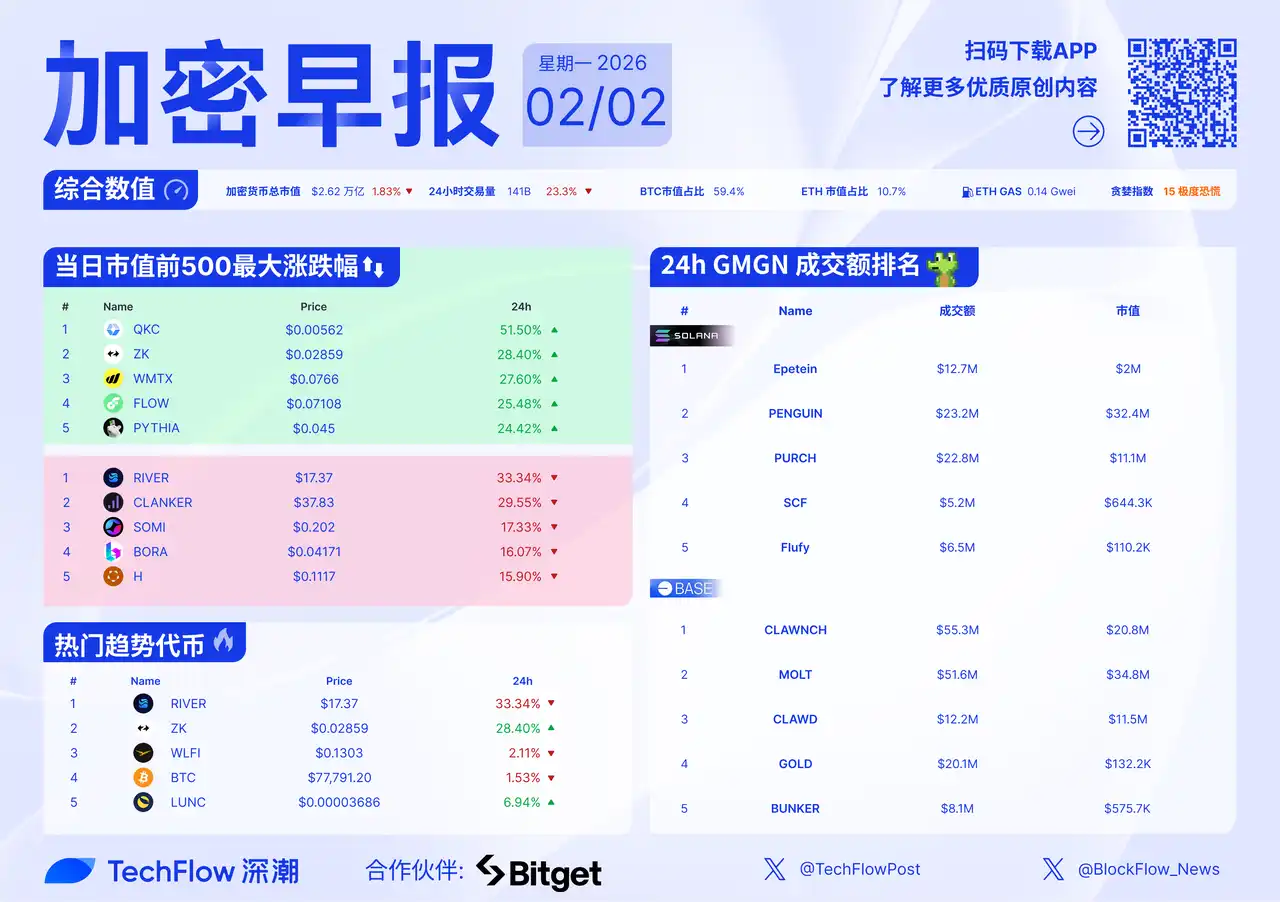
Lecturas recomendadas

¿Traspaso de fondos? Develando el ciclo de apalancamiento financiero detrás del boom de la IA y la apuesta final de Wall Street

Este artículo explora la actual ola de inversión en la industria de la inteligencia artificial (IA) y sus riesgos potenciales. Señala que el rápido desarrollo de la IA, aunque trae un gran potencial económico, también viene acompañado de problemas como la inversión circular, dificultades de rentabilidad y presión en la construcción de infraestructura. Simultáneamente, el artículo compara el actual boom de la IA con la burbuja de Internet del 2000, analizando los posibles riesgos y perspectivas futuras.

Comprender la tasa de prima, te hace más rápido que los datos de ETF por 24 horas

Este artículo discute principalmente el concepto de la tasa de prima de los ETF y su aplicación en el mercado de criptomonedas, explora la relación entre la tasa de prima y los flujos de capital, y cómo predecir las tendencias del mercado a través de la tasa de prima, además de proponer recomendaciones para analizar combinando múltiples indicadores.

Resumen del mercado del 30 de enero: Oro y plata se hunden profundamente en la noche, Trump agita el personal de la Fed

Este artículo analiza la reciente turbulencia del mercado, incluyendo la volatilidad severa de los precios de los metales preciosos, el impacto de los cambios de personal de la Fed en el mercado, el desempeño de los reportes financieros de Microsoft y la controversia sobre la inversión en IA, y la continua caída del mercado de criptomonedas. El artículo señala que el mercado carece de certeza, y esta incertidumbre proviene principalmente del riesgo geopolítico, la dirección de la política de la Fed y la naturaleza especulativa del mercado de criptomonedas.

¡Caída épica del oro y la plata! ¿Qué pasó?

Este artículo relata que el mercado de metales preciosos experimentó una caída histórica, los precios del oro y la plata cayeron abruptamente, registrando las mayores caídas intradiarias en décadas. El mercado generalmente considera que la nominación del presidente Trump del halcón Kevin Warsh como presidente de la Fed fue el detonante de esta caída, mientras que factores técnicos y el exceso de apalancamiento del mercado también exacerbó la caída. A pesar de esto, los analistas creen que esta corrección podría ser beneficiosa para la salud del mercado.

3 cambios clave, analizando el impacto del nuevo presidente de la Fed, Kevin Warsh, en el mercado cripto

Este artículo analiza en profundidad los antecedentes profesionales del nuevo presidente de la Fed, Kevin Warsh, sus posturas políticas, su compleja relación con Trump y el impacto potencial de sus políticas en el mercado cripto. El artículo explora el marco político de Warsh de "recortes de tasas y reducción de balance simultáneos", analiza el impacto de esta política en la liquidez del mercado cripto, el entorno regulatorio y los flujos de capital, y ofrece una perspectiva sobre el panorama futuro del mercado cripto en la era de Warsh.

Related Questions

Q¿Por qué Bitcoin cayó por debajo de los 80,000 dólares según el artículo?

AEl artículo menciona que la caída de Bitcoin fue impulsada por una combinación de factores, incluyendo un shock macroeconómico, mecanismos de control de riesgo de los creadores de mercado y la congestión de la red Ethereum, lo que provocó liquidaciones en cadena.

Q¿Qué evento importante de desbloqueo de tokens ocurrirá esta semana según el informe?

AEsta semana, varios proyectos tendrán desbloqueos masivos de tokens. Los más significativos son: HYPE (992 millones de tokens, ~296.91M USD), BERA (63.75 millones de tokens, ~29.47M USD) y XDC (841.18 millones de tokens, ~29M USD).

Q¿Cuál fue la explicación de Binance sobre la caída repentina del mercado el 11 de octubre?

ABinance publicó un informe afirmando que la caída fue causada principalmente por factores macroeconómicos, mecanismos de control de riesgo de los market makers y la congestión de la red Ethereum. Negó que problemas específicos de su plataforma fueran la causa, destacando que sus sistemas centrales funcionaron correctamente.

Q¿Qué acusación hizo el CEO de OKX, Star, contra Binance respecto a la caída del mercado?

AEl CEO de OKX, Star, acusó a Binance de realizar una campaña irresponsable de marketing para USDe, que ofrecía un 12% de APY y permitía usarlo como colateral sin restricciones efectivas. Esto incentivó a los usuarios a apalancarse en exceso, creando un riesgo sistémico que llevó a liquidaciones masivas cuando el mercado se volvió volátil.

Q¿Qué opinión tiene Wintermute sobre la causa de la caída del mercado el 11 de octubre?

AEl fundador de Wintermute, Evgeny Gaevoy, argumentó que la caída no fue una 'falla de software', sino un colapso en un mercado muy apalancado con baja liquidez, exacerbado por noticias macroeconómicas. Advirtió contra buscar un chivo expiatorio y culpar únicamente a un exchange, considerándolo deshonesto.

Related Reads

Futu's Fine Turns into a Boon for Hyperliquid?

The article explores the interconnected narratives of a regulatory crackdown on Chinese fintech brokers and the rise of the decentralized exchange Hyperliquid. It begins with China's May 2026 proposal for severe penalties against brokers like Futu and Tiger for illegal cross-border operations, suggesting this may redirect capital toward platforms like Hyperliquid. This is evidenced by HYPE token's price surge coinciding with the news. The core of the article analyzes Hyperliquid's disruptive potential and the regulatory pressure it faces. Traditional giants like CME and ICE are lobbying the CFTC to crack down on Hyperliquid, citing its lack of KYC, position limits, and market surveillance—particularly for its weekend crude oil contracts, which challenge traditional market hours. Despite this, Hyperliquid demonstrates remarkable efficiency, with a small team generating high revenue, largely funneled into HYPE buybacks. Its innovation lies in synthetic perpetual contracts for pre-IPO companies (e.g., Cerebras, SpaceX), enabling price discovery outside traditional channels. Unlike tokenized equity platforms (PreStocks, Ondo) tied to physical assets or entities, Hyperliquid's "asset-less" synthetic contracts are argued to be more resilient to legal targeting, as they are simply code on a decentralized network. However, the article notes this is not absolute, citing the network's limited validators and past interventions. The piece concludes that Hyperliquid's fundamental advantage is offering continuous, permissionless trading—effectively competing on *time*—which established players cannot easily replicate, even as significant regulatory risks loom.

marsbit7m ago

Futu's Fine Turns into a Boon for Hyperliquid?

marsbit7m ago

Mythos Report Released: Billions of Devices Worldwide Exposed, 10,000 Critical Vulnerabilities Uncovered in 30 Days

The first report from Anthropic's "Project Glasswing" reveals staggering results from its secret initiative using the next-generation AI model, Claude Mythos Preview. In just 30 days, collaborating with roughly 50 global tech giants and critical infrastructure developers, Mythos identified over 10,000 high or critical-severity software vulnerabilities. It demonstrated an extremely low false-positive rate, even outperforming human experts, and successfully intercepted a $1.5 million bank fraud in progress. Key findings include uncovering 2,000 bugs in Cloudflare's core systems, fixing 271 critical vulnerabilities in Firefox 150 (ten times more than previous methods), and discovering a 27-year-old hidden bug in OpenBSD's codebase. The AI even autonomously constructed full attack chains for some exploits. Mythos also scanned over 1,000 essential open-source projects, identifying 23,019 total vulnerabilities, with 6,202 rated high/critical by the AI. Independent verification confirmed a 90.6% true-positive rate, validating 1,094 severe vulnerabilities. A critical case involved wolfSSL, a cryptography library used by billions of devices, where Mythos found a flaw allowing perfect digital certificate forgery. This unprecedented discovery speed has created a new crisis: human developers are overwhelmed and cannot patch vulnerabilities fast enough. In response, Anthropic is rolling out defensive tools like "Claude Security" to auto-generate patches and releasing frameworks to help security teams automate code review and threat modeling. Due to its immense power and potential for weaponization if misused, Anthropic is delaying Mythos's public release until robust safety measures are established. The company urges the industry to shorten patch cycles, enforce updates, and strengthen security fundamentals. The project signals a paradigm shift where AI could eventually make critical code vastly more secure, though the transition period poses significant challenges for human defenders.

marsbit1h ago

Mythos Report Released: Billions of Devices Worldwide Exposed, 10,000 Critical Vulnerabilities Uncovered in 30 Days

marsbit1h ago

AlphaGo's Creator Puts AI into a 23-Year-Old Artificial Society: All Three Toughest Challenges for AI Agents Are Here

Demis Hassabis, CEO of DeepMind, has embarked on a new AI research venture by partnering with the long-running space MMO, EVE Online. This collaboration, announced in early May, aims to use the game's 23-year-old, player-driven persistent universe as a testbed for tackling three core challenges in AI agent research: long-horizon planning, memory, and continual learning. Unlike previous DeepMind environments like AlphaGo (Go) or AlphaStar (StarCraft II), EVE Online features no fixed end state. Its single-shard universe has fostered complex, emergent player societies with real economies, political alliances, and wars that can span months or years. These conditions naturally demand the very skills—long-term strategic planning, maintaining memories over extended periods, and adapting to constant change—that are hardest for current AI agents to master. The research will initially use an offline version of EVE, providing a controlled, complex sandbox without interfering with the live player server. This move continues DeepMind's trajectory of using increasingly complex and open-ended virtual worlds for AI training, from Atari games and Go to StarCraft II and the SIMA project. The EVE environment represents a significant step towards testing AI in a persistent, socially complex, and continuously evolving world shaped by human behavior over decades.

marsbit1h ago

AlphaGo's Creator Puts AI into a 23-Year-Old Artificial Society: All Three Toughest Challenges for AI Agents Are Here

marsbit1h ago

Trading

Spot
Futures

Hot Articles

What is LINON

Linde plc Tokenized Stock (Ondo): Revolutionizing Traditional Equity Access Through Blockchain Innovation The emergence of Linde plc Tokenized Stock (Ondo), represented by the ticker $LINON, signifies a monumental shift in the fusion of traditional financial structures and decentralized finance (DeFi). This innovative financial instrument showcases the tremendous potential of blockchain technology to democratize access to traditional equity markets while ensuring the security and regulatory compliance necessary for institutional-grade financial products. Through Ondo Finance's pioneering tokenization platform, $LINON provides a seamless pathway for global investors to engage with one of the world's leading industrial gas companies, Linde plc, creating a blockchain-native representation of the underlying equity. Introduction to Linde plc Tokenized Stock The landscape of financial markets is witnessing a groundbreaking transformation through the tokenization of real-world assets. Linde plc Tokenized Stock (Ondo) epitomizes this revolutionary approach by bridging the gap between conventional stock ownership and blockchain-enabled financial infrastructure. The $LINON token allows investors to gain exposure to one of the prominent industrial companies worldwide through decentralized technology. Operating within Ondo Finance's comprehensive ecosystem, $LINON symbolizes a practical application of tokenization technology that enhances accessibility, efficiency, and global connectivity in traditional financial markets. By leveraging blockchain infrastructure, this tokenized stock enables international investors to participate in U.S. equity markets, overcoming traditional barriers associated with cross-border investing. The significance of $LINON goes beyond technological innovation; it represents a fundamental shift in asset structuring, distribution, and trading in the digital age. This tokenized stock maintains all the economic benefits associated with traditional Linde plc shares while offering improved liquidity, programmable compliance features, and seamless integration with decentralized finance protocols. The development of $LINON indicates a growing acceptance of blockchain technology as a viable means for traditional finance, exemplifying how even well-established assets like Linde plc can integrate into blockchain systems. This approach preserves the core attributes that appeal to investors while introducing advanced capabilities that enhance the overall investment proposition. Project Overview and Objectives Linde plc Tokenized Stock (Ondo) encapsulates a strategic effort to democratize access to traditional equity markets through advanced blockchain technologies. The primary objective of $LINON is to provide approved global investors seamless access to the economic exposure associated with Linde plc shares, furthering an effort to create a more inclusive financial ecosystem. Beyond the digital representation of traditional assets, $LINON endeavors to eliminate barriers of geography and time zones that limit investor participation. Its design ensures that blockchain technology can elevate traditional investment vehicles without undermining the security or compliance requirements expected by investors. Key goals of the project include enhanced liquidity provision, programmable compliance mechanisms, and interoperability with other blockchain networks. Each $LINON token is fortified by actual Linde plc securities housed at U.S.-registered broker-dealers, allowing holders to reap economic advantages akin to traditional stockholders, such as dividend reinvestment. Furthermore, $LINON aims to establish new industry standards for institutional-grade tokenized securities, paving the way for traditional assets to embrace blockchain technology while remaining compliant with regulatory frameworks. By associating itself with a company as reputable as Linde plc, the project opens avenues for exploring tokenized equities catering to both conservative institutional players and daring retail investors. Project Creator and Development Team The vision for Linde plc Tokenized Stock (Ondo) comes from Nathan Allman, founder and CEO of Ondo Finance. His background in traditional finance coupled with expertise in blockchain technology positions him uniquely to navigate the complexities of asset tokenization. Allman's academic journey began at Brown University, focusing on Economics and Biology, equipping him with valuable analytical skills. His time at Goldman Sachs in the Digital Assets division strengthened his understanding of the interplay between financial institutions and emerging technologies, laying the groundwork for his later endeavors in alternative investment strategies. Under Allman's guidance, Ondo Finance has emerged as a leader in asset tokenization, launching $LINON as a flagship example of the company's larger mission towards revolutionizing traditional financial systems using blockchain technology. His commitment to leveraging blockchain for creating institutional-grade financial products has shaped the landscape of real-world asset tokenization. Investment and Funding Structure The growth of Ondo Finance, the platform powering Linde plc Tokenized Stock (Ondo), is bolstered by robust financial backing from prestigious venture capital firms and strategic investors. This strong investment foundation underpins the development of the key infrastructure essential for compliant tokenized securities like $LINON. In August 2021, Ondo Finance secured $4 million in seed funding led by a major venture capital firm, which enabled the company to commence platform development and establish the necessary regulatory processes for tokenizing real-world assets. This early investment cemented Ondo Finance's credibility within the industry. The Series A funding round followed, garnering $20 million with participation from renowned firms committed to transformative technology companies. This backing demonstrated substantial institutional confidence in Ondo Finance's vision, allowing it to hone its approach to asset tokenization through mechanisms that ensure compliance and accessibility. Noteworthy contributors, including institutional investors and experienced partners, have added significant value to Ondo Finance’s development efforts. Their involvement underscores the confidence across sectors in Ondo Finance's approach to bridging traditional finance with blockchain innovations. Technical Infrastructure and Innovation The technical architecture that underpins Linde plc Tokenized Stock (Ondo) represents a sophisticated melding of traditional finance systems and cutting-edge blockchain technology. The architecture's foundation is built on the Ethereum network, renowned for its security and programmability—both critical for intricate financial instruments. The $LINON tokenization process comprises creating a blockchain-native representation of Linde plc shares that preserves economic benefits while augmenting investor capabilities. Each token corresponds to actual shares held at U.S.-registered broker-dealers, creating a compliant custody structure that legitimizes the asset's existence and value. Automated compliance systems are integrated into the tokenization process, managing critical components such as know-your-customer (KYC) verification and anti-money laundering (AML) protocols. This incorporation of programmable compliance empowers $LINON to uphold regulatory standards essential for institutional proliferation. Cross-chain interoperability characterizes the advanced technical features of $LINON. While initially deployed on Ethereum, the framework is designed for expansion to other networks such as Solana and BNB Chain. This adaptability enhances liquidity and accessibility, allowing investors to select their preferred blockchain ecosystems. Historical Timeline and Development Crafting the history of Linde plc Tokenized Stock (Ondo) unfolds in parallel with the evolution of Ondo Finance's tokenization platform. The timeline's inception dates back to March 2021 when Nathan Allman laid the foundations for creating institutional-grade financial products on blockchain infrastructure. The initial funding round in August 2021 provided crucial resources for developing the platform and establishing partnerships necessary for effective tokenization. By January 2023, Ondo Finance launched its tokenized treasury products, establishing mechanisms that would facilitate future tokenized equities such as $LINON. A pivotal milestone arose in February 2025 when Ondo Chain—a Layer 1 blockchain designed specifically for asset tokenization—was introduced. This infrastructure enhances capabilities vital for institutional markets, demonstrating Ondo Finance's long-term commitment to tokenization. Subsequently, the launch of Ondo Global Markets in September 2025 marked the official debut of $LINON. This milestone showcased the successful transition from development to active trading, enabling investors around the world to access American financial markets seamlessly. Ongoing development plans include a targeted expansion of available tokenized assets to over 1,000 by the end of 2025, pointing to a bright future for Ondo Finance's ecosystem and its mission to broaden tokenized equity accessibility. Regulatory Compliance and Legal Framework The legal architecture governing Linde plc Tokenized Stock (Ondo) emphasizes a sophisticated approach to regulatory compliance, allowing tokenized securities to be implemented within a blockchain-based framework. The legal structure governing $LINON spans multiple jurisdictions while maintaining a robust legal footing. Compliance systems ensure that only eligible investors can access the token, enforced through automated verification that aligns with international regulations. This innovative regulatory technology promises real-time enforcement of complex requirements, considerably enhancing efficiency in operating within the regulatory landscape. The custody framework undergirding $LINON ensures that the underlying shares are securely held at U.S.-registered broker-dealers, complying with necessary regulations while delivering blockchain-driven access to investors. The token maintains its economic equivalency and security through this carefully structured custody arrangement. KYC and AML compliance systems are embedded within the smart contract architecture, ensuring integrity and adherence to regulatory practices while fostering transparency for investors. The jurisdictional restrictions mark a commitment to navigating the evolving landscape of international securities laws. Market Impact and Industry Significance The advent of Linde plc Tokenized Stock (Ondo) holds profound implications for the broader financial landscape, symbolizing a clear shift towards blockchain-enabled markets. $LINON serves as a proof-of-concept for integrating traditional companies into blockchain ecosystems, showcasing the potential benefits such as broader accessibility and improved efficiency. The market's response to $LINON indicates a growing acceptance of tokenization among institutional investors, contributing to the emergence of an expanding sector wherein traditional assets can be interconnected with blockchain innovations. The success of $LINON further solidifies market confidence, indicating an overarching shift towards recognizing asset tokenization as a transformative force in finance. Future Development and Expansion Plans The future trajectory for Linde plc Tokenized Stock (Ondo) centers around the expansion of the tokenization ecosystem and enhanced infrastructure supporting blockchain-enabled financial services. Plans for cross-chain integration usher in new opportunities for liquidity and flexibility within the investment framework, with existing capabilities poised for continuous enhancement. With the introduction of Ondo Chain, Ondo Finance aims to transition $LINON to an optimized blockchain environment specifically designed for asset tokenization. This new infrastructure heralds exciting prospects for the development of institutional-grade financial products, ensuring ongoing compatibility with contemporary investment strategies. Further integration with decentralized finance protocols signifies a commitment to empowering $LINON holders through advanced financial strategies. The anticipated expansion of available tokenized assets promises to broaden investor access, enhancing the utility and appeal of the platform. In alignment with ambitions for regulatory expansion, ongoing efforts to secure approvals for new jurisdictions will enhance investor access, further positioning $LINON at the forefront of the burgeoning tokenization market. Conclusion Linde plc Tokenized Stock (Ondo), as represented by the $LINON token, stands at the intersection of traditional finance and blockchain innovation. It embodies a transformative milestone in how financial assets are structured, distributed, and engaged within modern investment ecosystems. The technical sophistication behind $LINON, combined with its regulatory compliance framework, illustrates that asset tokenization can improve financial infrastructure rather than simply digitizing existing products. This pioneering effort not only enhances investor access to U.S. equity markets but also signifies an evolution of how traditional financial services can integrate blockchain technology. As the asset tokenization market grows exponentially, with prospects suggesting significant valuation increases, $LINON paves the way for a future where tokenized securities become standard fixtures in the financial landscape. The trajectory of $LINON will undoubtedly influence how traditional finance adapts to a transformed, blockchain-powered world.

2.8k Total ViewsPublished 2025.12.05Updated 2025.12.05

What is LINON

What is CRMON

Salesforce Tokenized Stock (Ondo): Revolutionising Traditional Equity Access Through Blockchain Innovation The emergence of Salesforce Tokenized Stock (CRMON) marks a pivotal advancement in integrating traditional financial markets with blockchain technology. This innovative approach offers investors unprecedented access to equity exposure through tokenisation. Developed by Ondo Finance, CRMON provides tokenholders with economic exposure equivalent to holding Salesforce stock (CRM) while automatically reinvesting dividends. This effectively bridges the gap between conventional equity markets and decentralised finance (DeFi). Introduction and Comprehensive Overview of Salesforce Tokenized Stock In recent years, the financial landscape has dramatically transformed due to blockchain technology, fundamentally altering how investors access and interact with traditional assets. The development of Salesforce Tokenized Stock (CRMON) is a prime example of this evolution, representing a sophisticated fusion of conventional equity markets with cutting-edge distributed ledger technology. CRMON is a tokenised version of Salesforce stock, emerging from the innovative work of Ondo Finance, a leading platform in the real-world asset tokenisation sector that positions itself as a bridge between traditional finance and decentralised systems. Designed to provide tokenholders with economic exposure that mirrors the performance of the underlying Salesforce stock, CRMON incorporates automatic dividend reinvestment mechanisms. This eliminates many traditional barriers associated with international equity investment, such as complex brokerage relationships, currency conversion challenges, and restricted trading hours. The tokenisation process reimagines stock ownership as a blockchain-native asset while maintaining its economic equivalence with the underlying security, offering enhanced portability and integration capabilities within decentralised finance ecosystems. CRMON transcends its individual utility as an investment instrument to represent a fundamental shift in how financial markets can operate in an increasingly digital world. By maintaining full backing through U.S.-registered broker-dealers and implementing robust compliance frameworks, CRMON demonstrates that tokenised securities can achieve the regulatory standards necessary for institutional adoption while delivering the technological advantages of blockchain infrastructure. Understanding Tokenized Real-World Assets and CRMON's Strategic Position Tokenised real-world assets signify one of the most significant innovations in modern finance, fundamentally reimagining how traditional securities are represented, traded, and utilised within digital ecosystems. CRMON operates as a tokenised equity instrument correlating directly with Salesforce stock while optimising accessibility and efficiency. This aligns with Ondo Finance's broader mission to democratise access to institutional-grade financial products through innovative tokenisation strategies. The tokenisation process guarantees complete economic equivalence with the underlying Salesforce equity. Each CRMON token represents a proportional claim on Salesforce stock held by qualified custodians, with dividend payments automatically reinvested to maintain continuous exposure to total return performance. This structure simplifies dividend management and ensures that tokenholders receive the full economic benefit of their equity exposure, encompassing both capital appreciation and income generation. Ondo Finance's strategy in tokenising Salesforce stock demonstrates its expertise in creating compliant, institutional-grade products that meet traditional financial markets' stringent requirements. The platform’s focus on merging regulatory compliance with blockchain benefits positions it at the forefront of decentralised finance, captivating both institutional and retail investors seeking blockchain-native solutions. The Technology and Innovation Framework Behind CRMON The technological infrastructure supporting CRMON integrates blockchain technology with traditional financial mechanisms, delivering institutional-grade security and compliance while maintaining the operational advantages of decentralised systems. Built on the Ethereum blockchain, CRMON utilises robust smart contract capabilities to ensure transparent, secure operations. The smart contract architecture incorporates layered security and compliance mechanisms, enabling automated compliance checks and real-time asset backing verification. Integration with oracle services maintains accurate pricing and dividend information, ensuring CRMON reflects the underlying Salesforce stock's accurate performance. This architecture delivers automated dividend reinvestments and other corporate actions, eliminating manual processing requirements and directly enhancing tokenholder benefits. Ondo Finance ensures CRMON's security structure includes daily third-party verification of holdings, independent collateral agents, and a multiple-layer custody system through partnerships with established financial institutions. This framework safeguards tokenholder interests against operational risks while providing robust asset backing. The user interface enhances integration capabilities, allowing seamless interaction between CRMON and various decentralised finance protocols, as well as cryptocurrency exchanges. This interoperability enables users to leverage their tokenised equity across multiple platforms, creating sophisticated investment strategies that marry traditional equity characteristics with blockchain-native innovation. Leadership and Corporate Structure of Ondo Finance The leadership team behind CRMON and Ondo Finance blends expertise from traditional finance and blockchain technology, presenting a robust combination of skills essential for successfully bridging conventional markets with decentralised finance. Nathan Allman, the founder and CEO, emerged from a distinguished financial background before establishing Ondo Finance in 2021. Allman's experience includes notable roles at major financial institutions, including significant contributions to developing cryptocurrency market services. His insights into regulatory compliance were paramount in developing products like CRMON that successfully unify traditional securities with blockchain technology. With a team of professionals boasting substantial experience in both conventional finance and blockchain sectors, Ondo Finance's leadership comprises diverse expertise that covers every aspect of tokenised asset development. Justin Schmidt serves as President and COO, contributing unique operational expertise, while Chris Tyrell brings essential compliance knowledge. Investment Landscape and Funding History The investment landscape surrounding Ondo Finance reflects significant institutional confidence in its mission to tokenise real-world assets. The company has raised substantial funds through various investment rounds, attracting leading venture capital firms and strategic investors that recognise the transformative potential of tokenised securities like CRMON. Notably, Ondo Finance completed a successful Series A funding round in 2022, led by well-known venture capital firms. This funding success validates Ondo Finance's innovative approach to creating compliant, institutional-grade tokenised products. In total, Ondo Finance has successfully secured substantial funding, raising significant capital for product development and market expansion, including a noteworthy token sale that reinforced its governance structure through the establishment of the ONDO token. The diverse composition of investors reflects broad market confidence in Ondo Finance's business model, demonstrating support from both traditional and blockchain-native organisations. Operational Mechanics and Technical Implementation The operational framework supporting CRMON exemplifies sophisticated integration of traditional financial mechanisms with blockchain technology. The technical implementation introduces multiple layers of security, compliance, and operational efficiency to meet institutional standards while enhancing accessibility. The tokenisation process begins by acquiring actual Salesforce stock through U.S.-registered broker-dealers, ensuring each CRMON token maintains direct correlation with the underlying equity performance. Smart contracts automate operational processes, including dividend reinvestment and corporate action processing, facilitating a streamlined user experience. The Minting and redemption processes allow authorised participants to manage CRMON tokens effectively. During U.S. trading hours, institutions can mint new tokens by depositing stablecoins that are used to purchase corresponding Salesforce equity. This structure maintains a tight correlation with underlying assets, enhancing liquidity and price discovery. Additionally, the infrastructure supports twenty-four-hour token transfer capabilities, providing CRMON holders with operations outside traditional market hours. This represents a significant advantage over conventional securities ownership, thus promoting integration with decentralised finance applications. Plans for cross-chain compatibility through partnerships signal further ambitions for CRMON's market reach. By expanding to other blockchain networks, Ondo Finance aims to enhance accessibility and user engagement with tokenised equity products. Timeline and Historical Development of Tokenized Equity Innovation The timeline of CRMON's development and Ondo Finance's broader tokenised capabilities demonstrates a systematic innovation process beginning with the company's founding in 2021. 2021: Ondo Finance is founded by Nathan Allman and co-founders, launching initial products focused on structured vault offerings on the Ethereum blockchain. 2022: The company completes substantial funding rounds—both equity and token sales—totaling significant capital and launching initial tokenised U.S. Treasury products. 2023-2024: Ondo Finance experiences substantial growth, establishing partnerships with major financial institutions while expanding its product offerings beyond fixed-income securities. February 2025: Ondo Global Markets is announced, marking the transition into equity tokenisation with plans for accessing over one hundred U.S. stocks and ETFs. September 2025: The official launch of Ondo Global Markets includes CRMON alongside other tokenised equity offerings, marking a significant evolution in Ondo Finance's product ecosystem. This timeline highlights the organisation's rapid growth and its capability to adapt its technological and compliance frameworks to accommodate different asset classes effectively while maintaining security and regulatory integrity. Regulatory Framework and Compliance Approach Ondo Finance's regulatory framework showcases a sophisticated compliance strategy, essential for achieving institutional adoption in the tokenised securities market. The company's strong partnerships with U.S.-registered broker-dealers promote adherence to Securities and Exchange Commission regulations and apply robust investor protections. Acquisitions, such as Oasis Pro—a registered broker-dealer—significantly enhance Ondo Finance's compliance capabilities, ensuring thorough alignment with existing regulatory structures. The company employs independent verification procedures that foster transparency, aiming for a solid performance standards reputation. Furthermore, Ondo Finance's commitment extends to international regulatory compliance, ensuring token access remains restricted to eligible investors while adhering to pertinent cross-border securities regulations. Comprehensive attention to tax implications and reporting requirements fortifies the security and compliance landscape of CRMON, ensuring that investor obligations remain manageable. Future Prospects and Market Positioning The forward-looking landscape for CRMON and Ondo Finance illustrates substantial growth opportunities driven by institutional adoption of blockchain technology and escalating demand for efficient alternatives to conventional securities ownership. Market projections indicate the tokenised asset sector could value multiple trillion dollars by 2030. With plans to scale CRMON offerings significantly and integrate it with a dedicated blockchain infrastructure—Ondo Chain—Ondo Finance aims to elevate its institutional-grade tokenised asset operations. Additionally, the development of strategic partnerships enhances distribution capabilities while establishing the company's credibility in the financial market. Furthermore, the integration of tokenised equity with decentralised finance protocols offers new potential for innovative financial products and strategies previously impossible with traditional securities. These factors underscore CRMON's positioning to effectively capture increased market share and deliver innovative solutions for international investment exposure. Conclusion Salesforce Tokenized Stock (CRMON) symbolises a transformative development within financial markets, successfully bridging traditional equity ownership with blockchain technology to create unprecedented accessibility for global investors. Through Ondo Finance's sophisticated tokenisation framework, CRMON provides complete economic exposure to Salesforce equity performance while enhancing operational advantages that exceed traditional ownership. The launch of CRMON reflects the broader evolution of financial markets towards blockchain infrastructures that maintain regulatory compliance while delivering increased efficiency. Ondo Finance's extensive approach to regulatory adherence, institutional-grade security, and technological innovation solidifies CRMON as a model for future tokenised securities, delivering access previously unattainable in conventional brokerage structures. As the tokenised asset sector continues to develop, CRMON is well-positioned to address historical inefficiencies in capital markets while providing investors with innovative solutions for accessing traditional securities. The outlook for CRMON looks exceptionally promising, supported by ambitious expansion plans, technological innovations, and strategic partnerships, thereby representing a pioneering model of modern financial infrastructure evolving through blockchain integration.

2.9k Total ViewsPublished 2025.12.05Updated 2025.12.05

What is CRMON

What is SHOPON

Shopify Tokenized Stock (Ondo): A Comprehensive Analysis of Real-World Asset Tokenization in Web3 This article delves into the Shopify Tokenized Stock (Ondo), recognised by its ticker symbol $SHOPON, exploring its implications at the intersection of traditional finance and blockchain technology. As a part of Ondo Finance's tokenized securities platform, Shopify’s tokenized stock exemplifies advancements in democratizing access to global capital markets through innovative digital assets. Introduction and Overview of Shopify Tokenized Stock (Ondo) Shopify Tokenized Stock (Ondo), or $SHOPON, portrays a pivotal innovation in the realm of tokenized securities, allowing investors to gain economic exposure akin to directly owning shares of Shopify Inc. This token, developed under the umbrella of Ondo Finance, not only provides investors with the ability to hold digital representations of the company’s stock but also integrates features such as automatic reinvestment of dividends. This advancement represents a substantial shift in the landscape of decentralized finance (DeFi), linking conventional equity markets with blockchain solutions designed to enhance accessibility, transparency, and liquidity. By eliminating geographical barriers and enabling 24/7 trading capabilities, $SHOPON is positioned as a bridge connecting traditional financial instruments and the emerging Web3 ecosystem. What is Shopify Tokenized Stock (Ondo), $SHOPON? The $SHOPON token serves as a digital manifestation of Shopify Inc.'s shares, engineered to provide a direct correlation to the underlying asset's performance. Through the utilization of blockchain technology, the token gives holders a mechanism to participate in the economic benefits associated with equity ownership, including capital appreciation and dividend distribution. The unique aspect of $SHOPON lies in its automatic dividend reinvestment mechanism, which allows returns to compound without necessitating active management by the investor. This feature inherently enhances its attractiveness as an investment vehicle, particularly for individuals seeking passive income growth alongside exposure to high-performing equities. The tokenization process is facilitated by the custody of actual Shopify shares through regulated intermediaries, ensuring that every $SHOPON token is verifiably backed by real equity. This structure empowers investors with the dual advantages of both traditional financial characteristics and the innovative benefits tied to blockchain technology. Who is the Creator of Shopify Tokenized Stock (Ondo)? The creator of Shopify Tokenized Stock (Ondo), Nathan Allman, is an experienced figure in the finance sector, formerly associated with Goldman Sachs. His rich background includes significant expertise in digital asset development, bridging the gap between traditional finance and cryptocurrencies. Allman’s educational journey, marked by studies at Brown University, provided him with a deep understanding of economics and biology, equipping him with analytical skills that inform his strategic vision. In 2021, he founded Ondo Finance, committing to developing tokenized securities that meet institutional-grade standards while leveraging blockchain's transformative capabilities. Under Allman's leadership, Ondo Finance has focused on creating compliant and innovative financial products that empower a diverse investor base. Who are the Investors of Shopify Tokenized Stock (Ondo)? The investment landscape surrounding Shopify Tokenized Stock (Ondo) is notably robust, underpinned by significant institutional support. Primarily, Pantera Capital stands out as a strategic partner through the Ondo Catalyst initiative, a $250 million commitment aimed at accelerating the development of on-chain capital markets. This partnership not only signifies institutional confidence in the potential of tokenized assets but also reinforces Ondo Finance's operational capabilities and market positioning. The funding pathways have included earlier rounds that amassed millions in seed funding and further structural investments, solidifying relationships with both venture capital firms and private investors. Moreover, the financial framework is complemented by strategic partnerships with established financial institutions and technology companies, enhancing Ondo’s infrastructure and operational expertise. How Does Shopify Tokenized Stock (Ondo), $SHOPON Work? At the core of $SHOPON's operational framework is a sophisticated system integrating traditional finance mechanisms with blockchain technology. The custody of actual Shopify shares ensures that token holders retain authentic economic exposure, safeguarding their investments in line with recognized legal structures. The smart contracts employed in managing $SHOPON handle various functions, including automatic dividend reinvestment and ownership transfer, offering instant settlement and increased liquidity, marking a significant departure from conventional trading systems plagued by multi-day settlement delays. By providing interoperability with other decentralized finance applications, $SHOPON empowers holders with potentially lucrative opportunities for advanced investment strategies, including lending and automated market making. This complex integration presents a unique value proposition, catering to both traditional and crypto-native investors. The innovative structure of $SHOPON also allows for real-time settlements and transactions documented on the blockchain, delivering unparalleled transparency and security—a major advancement over standard equity trading practices. Timeline of Shopify Tokenized Stock (Ondo) March 2021: Nathan Allman establishes Ondo Finance, initially focusing on decentralized finance yield optimization. August 2021: Completion of a $4 million seed funding round led by Pantera Capital. January 2023: Launch of initial tokenized treasury security products, laying the groundwork for future equity tokenization. July 2025: Announcement of the Ondo Catalyst initiative, a strategic investment program valued at $250 million, aimed at propelling the development of tokenization in capital markets. September 3, 2025: Launch of Ondo Global Markets featuring over 100 tokenized U.S. stocks and ETFs, including $SHOPON. Technical Implementation and Blockchain Infrastructure Shopify Tokenized Stock (Ondo) operates on a technical architectural framework that marries blockchain protocols with traditional financial custody arrangements. The ecosystem leverages Ethereum's smart contract capabilities, providing seamless transaction management while ensuring compliance with regulatory standards through established financial custodians. Central to this architecture are security measures and transparent transaction records that affirm the legitimacy of each tokenholder's economic stake. With automated features managed by intricate smart contracts, $SHOPON not only streamlines ownership transfers but also allows for the tactical reinvestment of dividends—a hallmark of modern investment strategies. Moreover, the incorporation of LayerZero technology facilitates cross-chain interoperability, making $SHOPON accessible across multiple blockchain environments while preserving its functional robustness. This forward-thinking technical design positions $SHOPON as an adaptable asset within the larger DeFi milieu. Regulatory Framework and Compliance Architecture $SHOPON's regulatory framework is built upon the meticulous navigation of existing financial regulations that govern securities. The custody arrangements for the underlying Shopify shares are managed by U.S.-regulated broker-dealers, ensuring compliance and protection for investors. By maintaining a separation between the blockchain tokenization process and traditional custody, $SHOPON adheres to legal requirements while offering innovative functionalities that challenge conventional constraints. This dual-layered compliance approach enhances investor confidence and underscores Ondo Finance's commitment to regulatory integrity. Notably, the availability of $SHOPON is tailored to international investors from regions such as Asia-Pacific, Europe, and Africa, as regulatory parameters in the U.S. and U.K. present challenges in accessing tokenized securities. Market Access and Global Distribution Strategy The distribution strategy of $SHOPON is keenly designed to optimize global access while conforming to regulatory standards. The platform aims to establish comprehensive coverage for eligible investors across multiple regions, effectively dismantling traditional barriers through the implementation of blockchain technology. Integration with various cryptocurrency wallets and exchanges also promotes user-friendliness and accessibility, establishing a streamlined experience for investors to manage their holdings. Moreover, the 24/7 trading capabilities afforded by the tokenized model allow participants to react promptly to market shifts, fundamentally transforming how global equities are accessed and traded. Technology Integration and Cross-Chain Functionality The remarkable technological underpinnings of $SHOPON propagate its multi-chain functionality, set to expand its reach beyond Ethereum to networks such as Solana and BNB Chain. Such cross-chain capabilities allow users flexibility when navigating between blockchains, concurrently leveraging distinct network attributes to optimize their trading experience. LayerZero serves as the backbone for ensuring decentralized transfers between networks while providing the requisite security and speed, quintessential for maintaining investor trust. This comprehensive interoperability illustrates $SHOPON's commitment to being a versatile, user-centric asset in the evolving investment landscape. Ecosystem Integration and DeFi Compatibility Incorporating $SHOPON into broader DeFi protocols signifies its potential beyond traditional stock ownership. Token holders can leverage their holdings for various sophisticated strategies and applications, enhancing investment returns and liquidity management. By establishing a presence in lending protocols and automated trading systems, $SHOPON effectively democratizes access to advanced financial strategies previously limited to institutional investors. Such integration contributes to a more competitive and dynamic financial landscape, where individual investors can capitalize on tools typically reserved for larger entities. Risk Management and Security Framework Security remains paramount in the operational infrastructure of $SHOPON. The tokenization framework employs multiple layers of protection—beginning with regulated custody of the underlying Shopify shares. The operational protocols establish rigorous auditing, key management, and transaction monitoring standards, thus safeguarding against potential vulnerabilities. Moreover, meticulous adherence to evolving regulatory requirements provides an extra layer of security, fortifying investor protections and institutional compliance. Market Impact and Industry Implications The introduction of Shopify Tokenized Stock (Ondo) heralds a transformative shift in how financial markets operate, emphasizing the potential of tokenized securities to reshape traditional investment paradigms. The successful integration of $SHOPON encapsulates the efficiencies inherent in blockchain technology and opens avenues for new user demographics previously barred from extensive market participation. The impact extends beyond the immediate benefits to token holders, indicating broader trends that may challenge the status quo of investment services, particularly in addressing geographic restrictions and operational costs typically associated with traditional brokerage platforms. Undeniably, $SHOPON encapsulates the potential for traditional institutions to innovate further, leveraging the increasing demand for seamless blockchain access to complement existing financial infrastructure. Future Development Roadmap and Strategic Vision As Ondo Finance looks forward, the trajectory of $SHOPON rests on ambitious goals aimed at broadening the spectrum of available tokenized assets significantly. Over the next few years, plans are in place to expand to more than 1,000 tokenized securities, further enhancing market participation and investment options for individuals worldwide. Continued integration with traditional financial actors, development of specialized institutional products, and enhancements in automated trading capabilities will ensure that $SHOPON maintains its position at the forefront of financial innovation. Regulatory collaboration will also remain a focal point, establishing a framework that not only supports the compliance requirements but also promotes a healthy environment for tokenized asset proliferation. Conclusion and Market Significance In summary, Shopify Tokenized Stock (Ondo), represented by the ticker $SHOPON, is more than merely a tokenized equity offering; it embodies the innovation possible when traditional finance collides with modern blockchain applications. With a robust technical architecture, a commitment to compliance, and a clear strategic vision, $SHOPON exemplifies the potential for tokenized assets to enhance liquidity, accessibility, and functionality in capital markets. As the global investment landscape evolves, the transformative implications of $SHOPON extend beyond individual investors to revolutionize how financial instruments are perceived, traded, and utilized within both traditional and decentralized frameworks.

2.9k Total ViewsPublished 2025.12.05Updated 2025.12.05

What is SHOPON

Discussions

Welcome to the HTX Community. Here, you can stay informed about the latest platform developments and gain access to professional market insights. Users' opinions on the price of BERA (BERA) are presented below.

活动图片