
一次精心设计的“自爆”:PGNLZ攻击事件分析

marsbitPublished on 2026-01-28Last updated on 2026-01-28

Abstract

2026年1月27日,BNB Smart Chain上发生针对PGNLZ项目的攻击事件,造成约10万美元损失。攻击者首先通过Moolah Protocol闪电贷借入1059枚BTCB,并在Venus Protocol抵押后借出3000万USDT。随后在PancakeSwap用2333万USDT兑换982,506枚PGNLZ并转入销毁地址,人为造成流动性池中PGNLZ数量急剧减少,使代币价格从0.1 USDT飙升至5528 USDT。 攻击者随后调用支持手续费代币交易的函数,触发PGNLZ合约的_handleSellTax机制。该机制通过_executeBurnFromLP函数销毁巨额数量的PGNLZ(达4.24*10^18枚),导致流动性池中仅剩0.00000001枚PGNLZ,价格被拉高至234万亿USDT的天文数字。最终攻击者掏空流动性池,还清闪电贷后获利离场。 根本原因在于项目通缩经济模型存在缺陷,在扣费和销毁LP池代币时未进行有效验证。建议项目方在设计经济模型时加强多维度验证,并采用多家审计公司交叉审计。

背景介绍

2026年1月27日,我们监控到BNB Smart Chain上针对PGNLZ 项目的攻击事件:

https://bscscan.com/tx/0xa7488ff4d6a85bf19994748837713c710650378383530ae709aec628023cd7cc

经过详细分析,攻击者在 2026 年 1 月 27 日,持续对PGNLZ项目发起攻击,攻击共造成约100k USD的损失。

攻击及事件分析

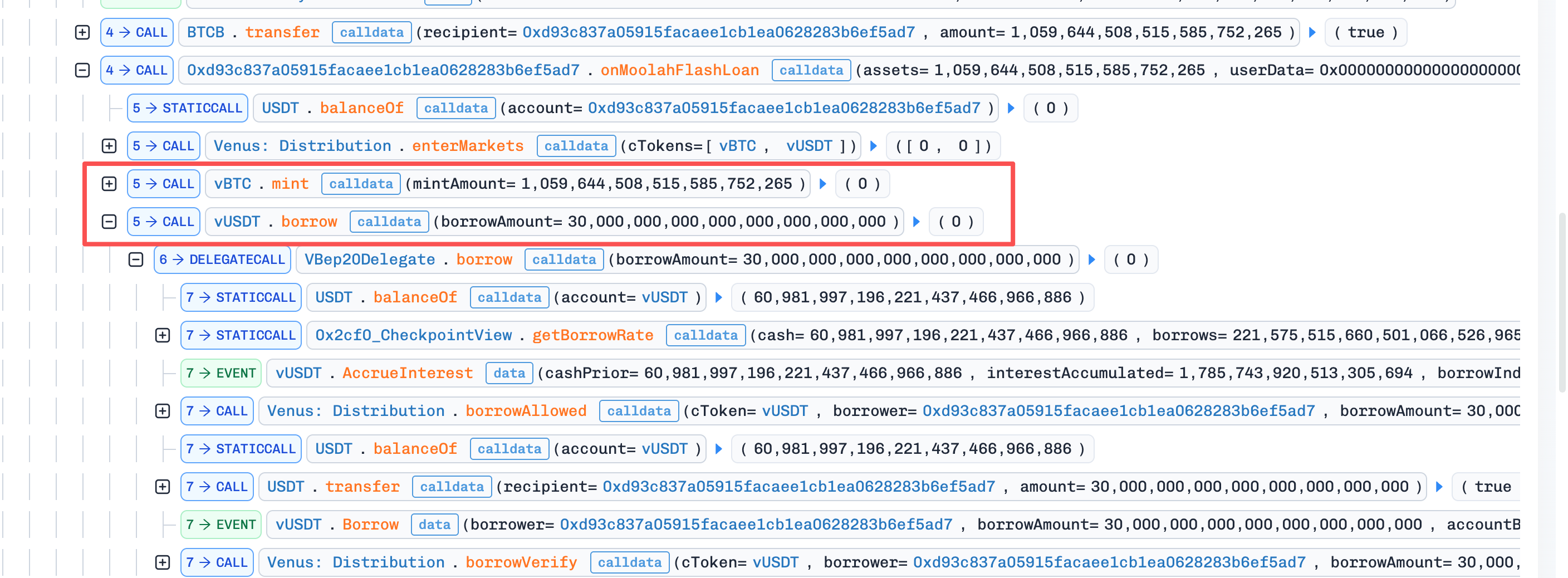
攻击者首先从Moolah Protocol利用闪电贷贷了1,059 BTCB,

随后,在 Venus Protocol 中抵押了 1,059 BTCB ,从而 borrow 了 30,000,000 USDT。
接着,攻击者在 PancakeSwap 调用函数 swapTokensForExactTokens ,利用 23,337,952 USDT 兑换了 982,506 PGNLZ ,但是却把这些 PGNLZ 销毁了(兑换给了 0xdead )。
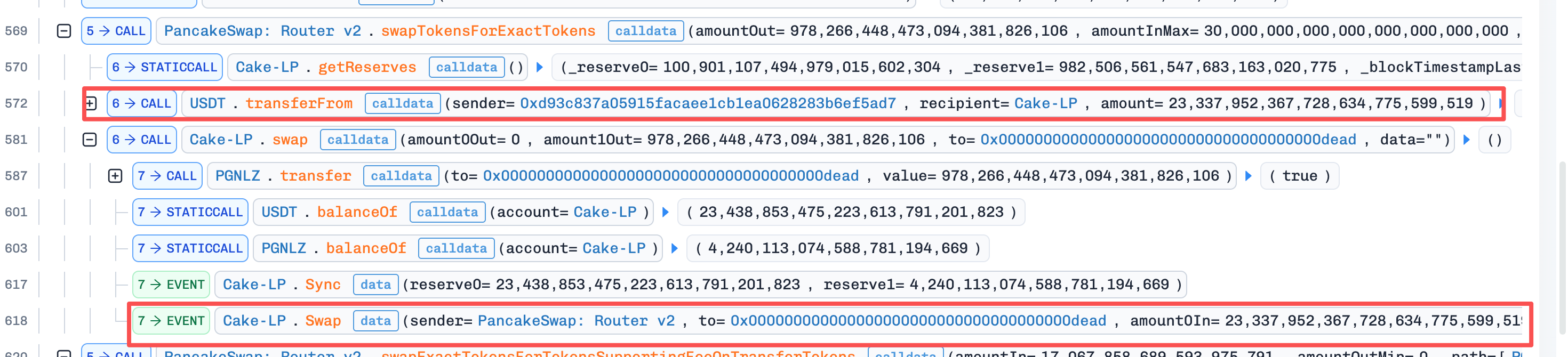
兑换前,PancakeSwap Pool中有100,901 USDT和982,506 PGNLZ,此时PGNLZ的价格为1 PGNLZ = 0.1 USDT。兑换完成后,PancakeSwap Pool剩余23,438,853 USDT和4,240 PGNLZ,此时,PGNLZ的价格为1 PGNLZ = 5,528 USDT。

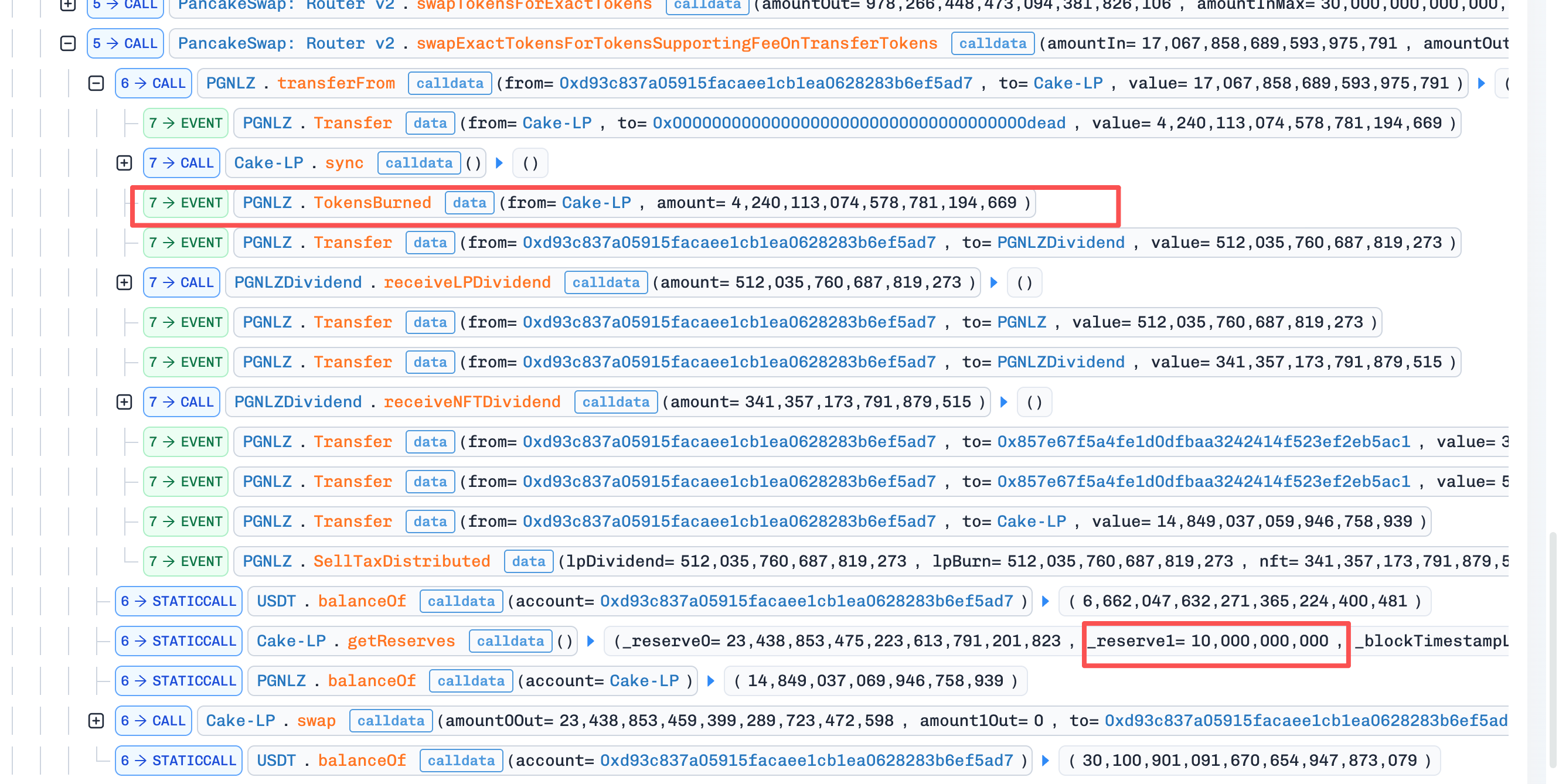
随后,攻击者调用函数swapExactTokensForTokensSupportingFeeOnTransferTokens,这个函数主要是支持Fee-On TransferToken也就是买卖带手续费的Token。PGNLZ通过_update来处理交易的fee,具体的调用链为:transferFrom -> _spendAllowance -> _transfer -> _update

因为本次是 sell ,所以会调用到 _handleSellTax 。
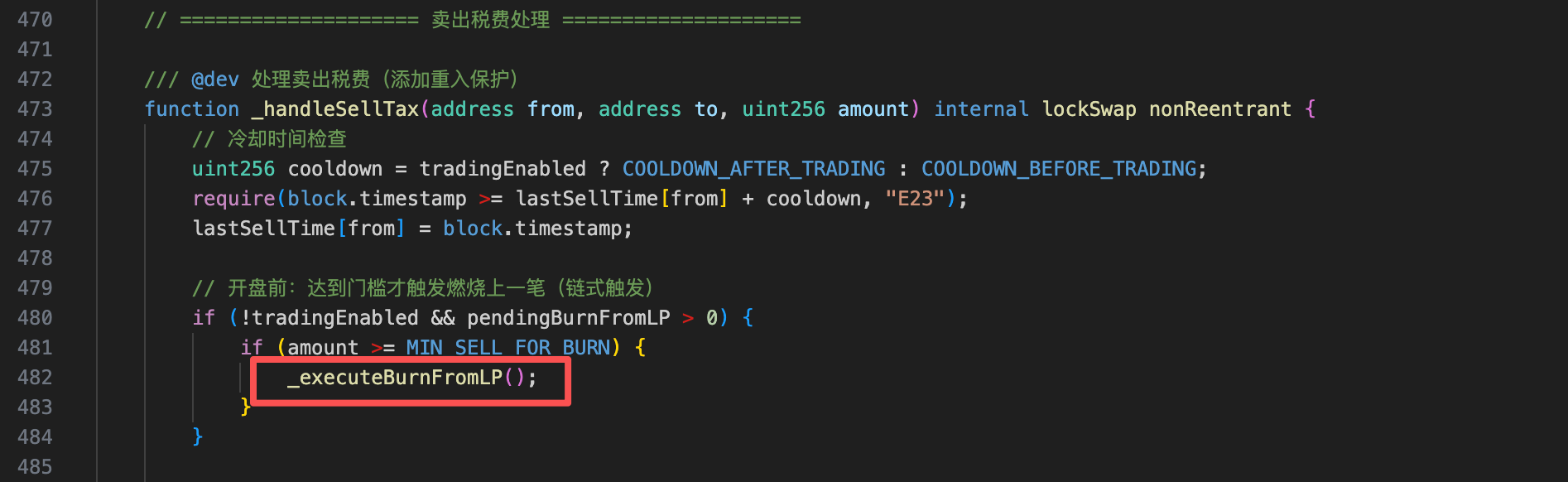
我们在看 _executeBurnFromLP 是如何实现的,
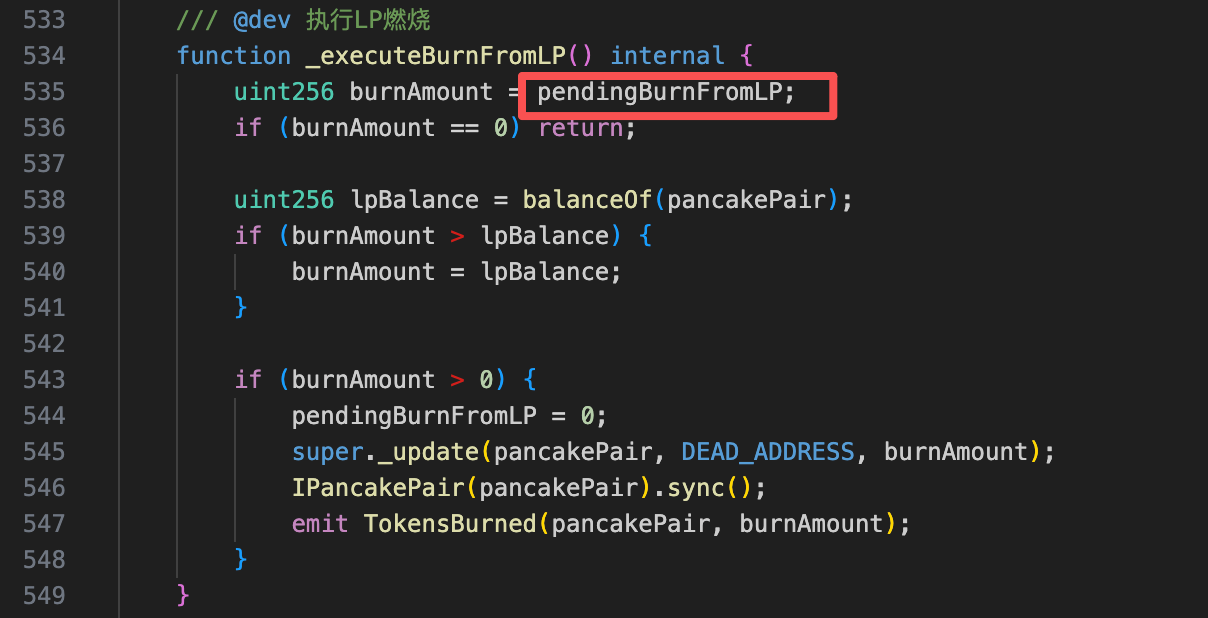
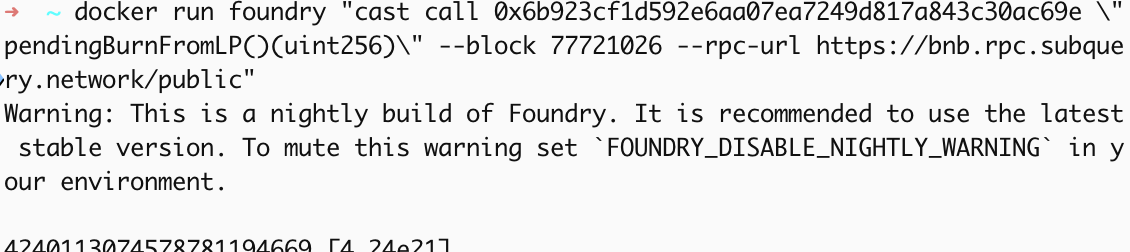
可以看到,_executeBurnFromLP会使用_update来burn掉pendingBurnFromLP数量的PGNLZ。在前一个区块查询到pendingBurnFromLP为4,240,113,074,578,781,194,669。
经过 burn 之后,LP Pool 中的只剩下的 0.00000001 PGNLZ ,此时 1 PGNLZ = 234,385,300,000,000 USDT ,拉升了 40 Billion 倍。
最后,攻击者将LP Pool掏空,还清了闪电贷后,获利100 k USDT。

总结

本次漏洞的成因是通缩的经济模型,在扣费或者 Burn LP Pool 时没有进行验证。导致攻击者利用通缩特性操控了 Token 的价格。建议项目方在设计经济模型和代码运行逻辑时要多方验证,合约上线前审计时尽量选择多个审计公司交叉审计。


Related Questions

QPGNLZ攻击事件发生在哪个区块链网络上?

APGNLZ攻击事件发生在BNB Smart Chain(BSC)上。

Q攻击者通过什么方式获得了初始资金来发起攻击?

A攻击者首先从Moolah Protocol利用闪电贷贷了1,059 BTCB作为初始资金。

Q攻击者是如何操纵PGNLZ代币价格的?

A攻击者通过销毁大量PGNLZ代币,利用其通缩经济模型的漏洞,使得流动性池中代币数量急剧减少,从而将价格拉高了约400亿倍。

Q本次攻击造成的经济损失大约是多少?

A本次攻击共造成约10万美元(100k USD)的损失。

Q导致本次漏洞的根本原因是什么?

A漏洞的根本原因是PGNLZ项目的通缩经济模型在扣费或销毁流动性池代币时缺乏必要的验证,导致攻击者能够利用通缩特性操控代币价格。

Related Reads

Has BTC's 'Digital Gold' Narrative Failed?

The article discusses Bitcoin's "digital gold" narrative, its recent price drop, and long-term outlook through the perspective of "Jason". It argues the narrative is not a failure but that Bitcoin represents a superior, new asset class due to its fixed supply (21 million), portability, and auditability. The piece compares its current ~3-4% global adoption rate to early internet/e-commerce, suggesting significant growth potential. Regarding the 2025-2026 price decline (from ~$126k to briefly under $61k), the author views it as a predictable, consensus-driven sell-off within Bitcoin's ~4-year cycle post-halving, exacerbated by a major "handover" from early, low-cost holders to new institutional buyers via ETFs. A key observation is that historical peak-to-trough drawdowns have lessened over time (e.g., 93% in 2011 to ~50% in 2026), indicating maturing volatility as holder structure changes. For the long term, the author uses a simple framework: Bitcoin's total market cap (~$1.4T at $70k) is only about 7% of gold's (~$20T). Even capturing 30-50% of gold's value would imply substantial upside. However, the article strongly cautions against viewing this as investment advice, emphasizing extreme volatility and the critical importance of risk management, position sizing, and deep fundamental understanding to survive severe drawdowns. It concludes by drawing a parallel to Amazon's 95% crash in 2000 and subsequent 42x recovery, stressing that the key is surviving market cycles to realize long-term potential.

链捕手3m ago

Has BTC's 'Digital Gold' Narrative Failed?

链捕手3m ago

From Code to Cognition: A Ten-Thousand-Word Guide to the Evolution of the Robot Brain

"From Code to Cognition: The Evolution of Robot Brains" The journey of robotic intelligence has shifted dramatically from manually coded systems to AI-driven brains. For decades, robots relied on layered software stacks—perception, state estimation, planning, control—each handcrafted. While predictable, they lacked adaptability. The 2010s saw deep learning revolutionize perception (e.g., object detection) and control (via reinforcement learning), but learned skills remained narrow. The arrival of Large Language Models (LLMs) marked a turning point. LLMs acted as high-level planners, interpreting natural language instructions and generating sequences of actions for traditional robotic systems to execute. However, true integration came with Visual-Language-Action (VLA) models, which fused vision, language, and motion prediction into a single network. Pioneered by models like RT-2 and open-source projects like OpenVLA, VLAs enable robots to reason and act directly from visual input and commands. The most advanced humanoid robots now employ a "dual-brain" architecture: a slow-thinking, large VLA (System 2) for reasoning and planning, and a fast-reacting, small network (System 1) for high-frequency motion control, sometimes with an even lower-level System 0 for balance. This split balances cognition with the physics of real-time movement. Computation is split between onboard hardware (e.g., NVIDIA Jetson) for safety-critical control loops and cloud/edge servers for non-critical tasks like learning and interfaces. A crucial driver is the open-source ecosystem—models like GR00T and OpenVLA allow startups to build upon pre-trained brains and fine-tune them with their own data, accelerating development. Despite progress, current systems struggle with recovery from errors, sample inefficiency, and long-horizon tasks. This has spurred the rise of **World Models**—neural networks that predict the consequences of actions. By simulating possible futures before acting (like NVIDIA Cosmos or Meta V-JEPA), robots can plan, recover, and generalize better. This represents the next frontier: shifting intelligence from learned reactions to an internal model of physics and cause-and-effect. The field is rapidly evolving. While not yet at its "ChatGPT moment," the convergence of cheaper hardware, scalable simulation, and world models points toward robots that are increasingly capable, adaptive, and useful. The question is shifting from "what can robots do?" to "what *should* they do?"

marsbit33m ago

From Code to Cognition: A Ten-Thousand-Word Guide to the Evolution of the Robot Brain

marsbit33m ago

AI Bubble Is Bursting

The AI Bubble is Bursting: A Necessary Purge on the Path to Ubiquitous Intelligence Market volatility has reignited debates about an AI bubble, with figures like Ray Dalio pointing to high valuations. However, this parallels the dot-com bubble, which, despite its crash, laid the physical infrastructure for today's internet era. The current AI investment frenzy, with tech giants planning trillions in infrastructure spending far outstripping current AI application revenues, appears similarly imbalanced. This 'bubble' is seen as an inevitable phase for a disruptive technology, paying the "innovation tax." Critically, AI inference costs have plummeted over 99.7% since 2023, making intelligence nearly free at the margin. This hasn't reduced spending but has instead unlocked massive new demand, as seen in enterprise AI cloud expenditure tripling. This follows the Jevons Paradox: efficiency gains lead to greater total consumption. The market is now entering a cleansing phase, weeding out speculative ventures lacking real moats. The deeper shift is a move from capital expenditure (CapEx) on hardware to value creation in operational expenditure (OpEx) through AI applications that solve real industry problems. While infrastructure valuations are high, rapid earnings growth from widespread AI adoption across sectors—from manufacturing and finance to law and healthcare—may digest these valuations over time. Ultimately, this creative destruction will leave behind robust infrastructure and optimized models, cheaply powering an AI-augmented future for all industries, much as the internet became indispensable after its own bubble burst. The core productive potential remains undiminished.

链捕手43m ago

AI Bubble Is Bursting

链捕手43m ago

Trading

Spot
Futures

Hot Articles

How to Buy WELL

Welcome to HTX.com! We've made purchasing Moonwell Artemis (WELL) simple and convenient. Follow our step-by-step guide to embark on your crypto journey.Step 1: Create Your HTX AccountUse your email or phone number to sign up for a free account on HTX. Experience a hassle-free registration journey and unlock all features.Get My AccountStep 2: Go to Buy Crypto and Choose Your Payment MethodCredit/Debit Card: Use your Visa or Mastercard to buy Moonwell Artemis (WELL) instantly.Balance: Use funds from your HTX account balance to trade seamlessly.Third Parties: We've added popular payment methods such as Google Pay and Apple Pay to enhance convenience.P2P: Trade directly with other users on HTX.Over-the-Counter (OTC): We offer tailor-made services and competitive exchange rates for traders.Step 3: Store Your Moonwell Artemis (WELL)After purchasing your Moonwell Artemis (WELL), store it in your HTX account. Alternatively, you can send it elsewhere via blockchain transfer or use it to trade other cryptocurrencies.Step 4: Trade Moonwell Artemis (WELL)Easily trade Moonwell Artemis (WELL) on HTX's spot market. Simply access your account, select your trading pair, execute your trades, and monitor in real-time. We offer a user-friendly experience for both beginners and seasoned traders.

2.3k Total ViewsPublished 2024.03.29Updated 2026.06.02

How to Buy WELL

What is $WELL

WELL3, $$WELL: Revolutionizing Health and Wellness with DePIN and AI Introduction In the rapidly evolving landscape of digital technology, the health and wellness sector stands at the forefront of innovation, striving to enhance patient care and promote healthier lifestyles. A groundbreaking player in this domain is WELL3, a pioneering Web3 project that seeks to revolutionize how individuals engage with their health. By leveraging technologies such as Decentralized Physical Infrastructure Network (DePIN), Decentralized Identity (DID), and Artificial Intelligence (AI), WELL3 aims to foster secure, data-empowered health journeys. This comprehensive article delves deep into the core aspects of WELL3, $$WELL, exploring its functionalities, creators, investors, and unique features. What is WELL3, $$WELL? WELL3 serves as an innovative platform set to redefine the approach towards health and wellness. Focused on integrating DePIN and DID alongside AI systems, the project is designed to create personalized user experiences while ensuring the safety and privacy of individuals' health data. With an impressive figure of over one million pre-registered users, the primary mission of WELL3 revolves around enhancing well-being through secure, data-driven health journeys. At its core, WELL3 employs advanced blockchain technologies to ensure that users have complete control over their personal information. This project not only addresses the challenges of data security and accessibility but also aspires to create a vibrant community connected by a shared commitment to better health. Key Features of WELL3: DePIN and DID: These technologies enable secure ownership and authentication of data, giving users full control over their information. AI Integration: Utilizing AI analytics, WELL3 offers personalized insights and solutions tailored to individual health needs. Community Engagement: Facilitates a supportive environment where users can connect, share experiences, and motivate each other toward healthier living. Creator of WELL3, $$WELL The identity of the creator of WELL3 remains unspecified in the available information. As the project progresses, further details may emerge, shedding light on the visionary minds behind this transformative initiative. Investors of WELL3, $$WELL WELL3 has garnered support from a myriad of influential investment entities, highlighting its credibility and potential in the health and wellness space. Notable investors include: Animoca Brands AWS Samsung The Spartan Group Blocore Fenbushi Capital Newman Group Soul Capital XY Finance Lumoz The backing from these established organizations demonstrates a strong belief in WELL3's mission, providing it with the necessary resources to innovate and expand its offerings. How Does WELL3, $$WELL Work? WELL3 operates by melding cutting-edge technologies in a multichain framework, ensuring a seamless and innovative user experience. Below are some factors that uniquely position WELL3 in the wellness market: 1. Secure Data Ownership With the integration of DePIN and DID, users can maintain complete control over their personal health information. This layer of security is paramount in today's digital age, where data breaches and unauthorized access are rampant. Through WELL3, data ownership is decentralised, enabling users to manage their information proactively. 2. Personalization through AI WELL3 implements AI-driven analytics to provide users with tailored health insights. By harnessing the power of AI, the platform can offer individualised recommendations and solutions, encouraging users to achieve their health goals more effectively. 3. Multichain Framework The WELL3 project is designed to work across multiple blockchain platforms, including Bitcoin, Ethereum, Polygon, Solana, Blast, and TON. This multichain capability ensures that users can interact with the platform seamlessly across different networks, enhancing accessibility and usability. 4. WELL Token Central to the WELL3 ecosystem is the WELL Token, which serves multiple functions including utility, governance, and rewards. The token allows for ecosystem participation, supports health data sharing, and incentivizes users based on their engagement with the platform. Timeline of WELL3, $$WELL The trajectory of WELL3 showcases significant milestones in its development, each contributing to the project's overall success. Here is a brief timeline of critical events in the history of WELL3: February 10, 2024: WELL3 launched its NFT project, quickly rising to prominence as the largest NFT collection on the opBNB chain with over 324,000 owners and reaching 8 million NFTs created by April 27, 2024. Public Sale: The project achieved a remarkable total value locked (TVL) of approximately 15,237.2 ETH within just seven days, indicating robust market interest and backing. WELL ID Launch: The platform saw over 900,000 users sign up for the WELL ID and its corresponding NFT Ring whitelist, marking a significant adoption phase within the ecosystem. Partnership Development: WELL3 established partnerships with leading entities including Animoca Brands, AWS, Samsung, and others to enhance its ecosystem and expand its reach. Transaction Volume: WELL3 has facilitated over $17 million in transactions, reflecting its growing utility and engagement within the health and wellness community. Key Points About WELL3, $$WELL As a progressive initiative shifting towards the wellness market, WELL3 has identified several vital elements that will contribute to its ongoing success. Here are some key takeaways to note: Tokenomics The $$WELL token has a maximum supply of 42 billion, with a significant 71% earmarked for community initiatives. This distribution strategy emphasises the project's commitment to its user base and long-term sustainability. Lock-Up Period To ensure stability within the ecosystem, tokens are released in batches over a 24-month lock-up period, promoting trust and confidence among users. Ecosystem Development WELL3's vision extends toward creating a comprehensive and sustainable ecosystem to encourage thriving community engagement, health-enhancing behaviors, and digital solutions that address the pressing needs of the wellness domain. Market Fit The wellness industry, valued at $5.6 trillion, presents a lucrative opportunity that WELL3 aims to tap into. With an anticipated annual growth rate of 5-10%, the project is ideally positioned amid a rising trend towards health-conscious living. Wearables Introducing the WELL3 Ring, a crypto-incentivized wearable, aligns with the growing demand for personalized health data. This device not only enhances user experience but also redefines what it means to be engaged with one’s health in the context of Web3. Conclusion WELL3 represents a significant advancement in the integration of blockchain technology within the health and wellness sector. By addressing crucial issues around data ownership, personalization, and community engagement, this innovative platform offers a forward-thinking solution to enhance individual well-being. With robust backing from notable investors and a commitment to pioneering technologies, WELL3 stands poised to make a lasting impact in the wellness landscape. For those seeking to navigate the complexities of health in the digital age, WELL3 is certainly one to watch as it continues to evolve and grow.

548 Total ViewsPublished 2024.07.14Updated 2024.12.03

What is $WELL

Discussions

Welcome to the HTX Community. Here, you can stay informed about the latest platform developments and gain access to professional market insights. Users' opinions on the price of WELL (WELL) are presented below.

活动图片













