Crypto and AI Need Female Executives

marsbitPublished on 2026-01-21Last updated on 2026-01-21

Abstract

Recent growing prominence in the AI industry is the rise of female executives in key operational and commercial roles. Recent examples include CZ Chen, COO of Manus (acquired by Meta for $2 billion), and MiniMax’s 31-year-old COO Yun Yeyi, now worth HK$4.8 billion. Similar trends were observed during crypto’s heyday with leaders like He Yi (Binance), Lisa Loud (BitMEX), and Cynthia Wu (Matrixport). Both AI and crypto share a dual nature: technically cutting-edge yet often led by technical founders who lack strong commercial, narrative, or public-facing skills. Female COOs and CMOs excel as bridges—translating complex technology into market-ready products and building trust through communication and empathy. Figures like Daniela Amodei (Anthropic) and Yun Yeyi have been instrumental in driving commercialization and mass adoption. The migration of such talent signals a sector’s maturation and commercial viability. As AI enters its productization phase, crypto’s failure to attract or retain similar talent may hinder its transition beyond niche technical circles toward mainstream relevance. Where skilled female leaders go, value follows; where they leave, stagnation often remains.

Author: Alice, Shenchao TechFlow

Recently, an interesting phenomenon has been observed in the AI circle: more and more female executives are stepping into the spotlight.

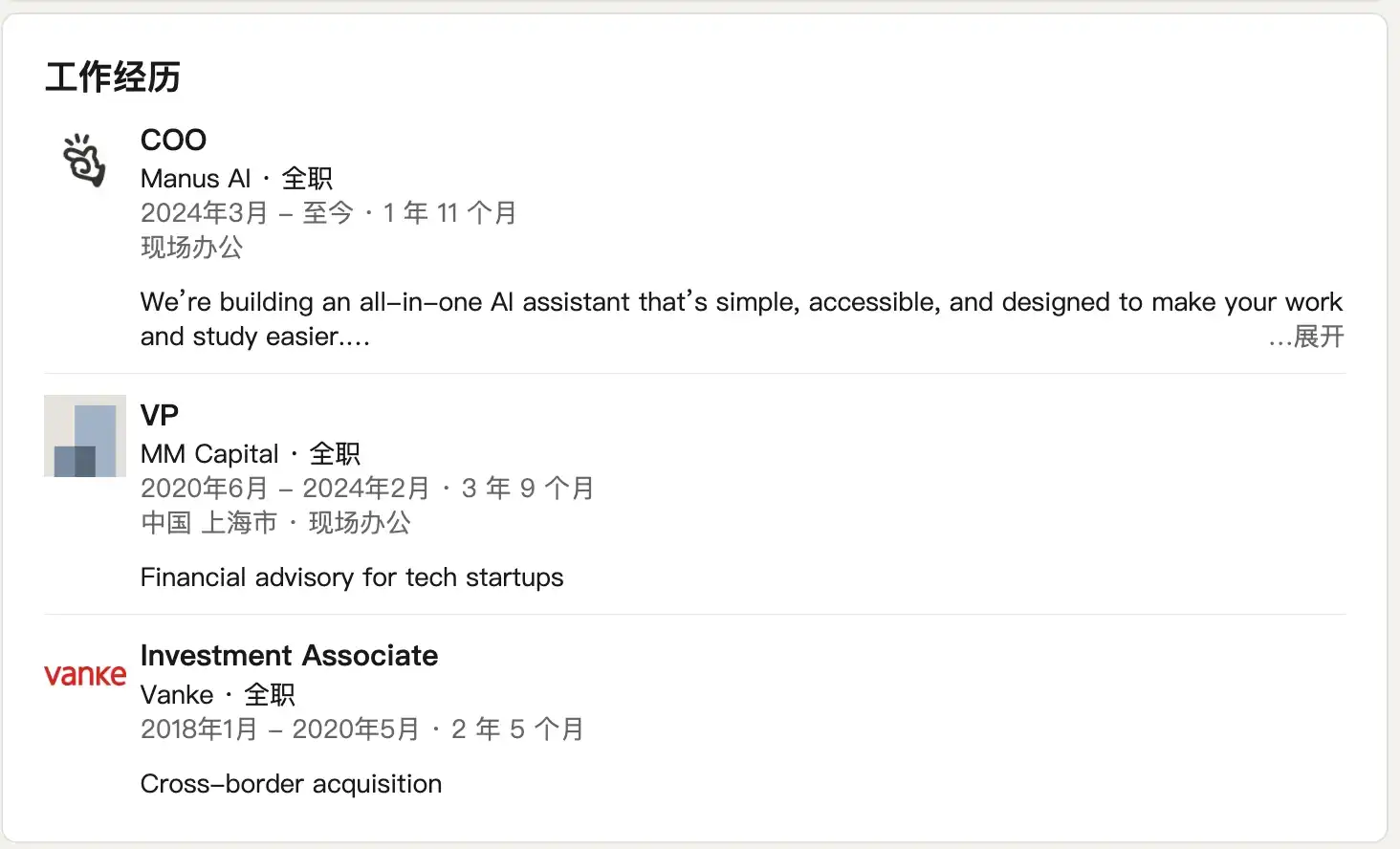
On December 30th, Meta announced it would acquire Manus for $2 billion, bringing 90s-born COO CZ Chen into the public eye. With an undergraduate degree from Shanghai University of Finance and Economics and a master's from Columbia, she started working in 2018, first at Vanke, then at an FA agency, and made her final career move to Manus in 2024, achieving financial freedom directly.
On January 9th, at MiniMax's bell-ringing ceremony, standing alongside the 36-year-old founder Yan Junjie was a woman born in 1994, Yun Yeyi.
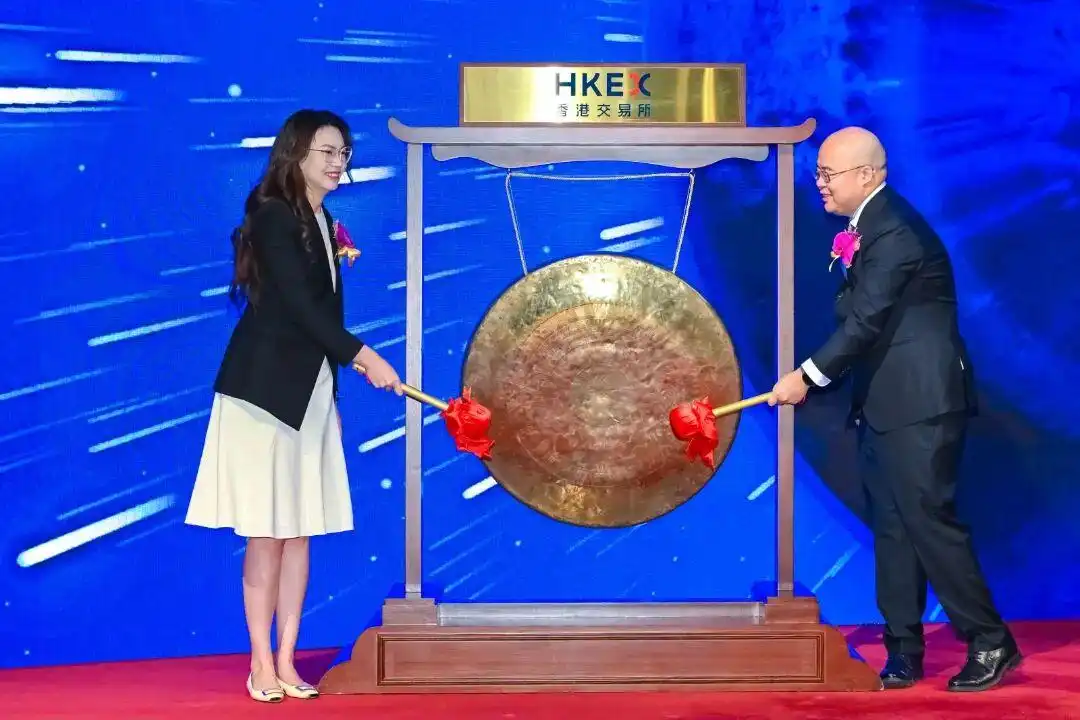
This 31-year-old COO now has a net worth of HKD 4.8 billion.

What is Yun Yeyi's background?

She studied electronic engineering at Johns Hopkins University, with minors in economics and mathematics. After graduating in 2017, she joined SenseTime, rising from financing manager to assistant to CEO Xu Li, and then to director of the innovation business department, experiencing SenseTime's journey from unicorn to listing on the Hong Kong stock exchange.

In 2022, when Yan Junjie decided to leave SenseTime to found MiniMax, Yun Yeyi followed almost without hesitation.

Her value goes beyond just following.

MiniMax's prospectus shows that Yun Yeyi handles almost everything outside of technical R&D: product, commercialization, board matters, operations, management... Her annual salary is $1.479 million, more than all other executive directors combined, a figure that speaks volumes.

It's not just in China; globally, the influence of women in the AI circle is undeniable.

Daniela Amodei, with a background in English literature, after working at Stripe and OpenAI, co-founded Anthropic with her brother Dario in 2021, serving as president, focusing on daily operations and commercialization, driving the marketization of Claude products.

Lila Ibrahim, former Intel executive, joined DeepMind in 2018 as its first COO, responsible for daily operations, partnerships, social impact, external affairs, and government relations.

Mira Murati, the Albanian-born former CTO of OpenAI, came to the U.S. on a scholarship at 16, moved from the Model X team at Tesla to OpenAI, and eventually left to found Thinking Machines Lab, valued at $9 billion...

This scene feels familiar.

From 2017 to 2021, during the golden age of crypto, a dazzling array of stars emerged, including a prominent presence of female CMOs and COOs.

The most well-known is undoubtedly Binance co-founder and CMO He Yi (now co-CEO). From Shanghai to Tokyo, then from Malta to Paris and Dubai, she was present at every strategic shift, helping the company become the world's largest cryptocurrency exchange.

Lisa Loud, from Apple engineer to PayPal's Canadian market head, jumped to BitMEX as CMO in 2017. Subsequently, BitMEX once became the world's largest crypto trading platform for derivatives.

Cynthia Wu, COO of Matrixport, former vice president of product development at HKEX, brought traditional finance experience to crypto financial services, helping the company become one of Asia's largest digital asset service platforms.

......

Back then, crypto was the world's asset focus, and the spotlight naturally fell on these female executives at the center of the stage.

But the tide receded, and the protagonists changed.

Now, AI is the focus of the spotlight, so we see Daniela Amodei on the Forbes rich list, and Yun Yeyi radiant at MiniMax's listing ceremony.

Fundamentally, Crypto and AI are strikingly similar: "both cutting-edge and rudimentary."

Cutting-edge is reflected in the technology itself: blockchain reconstructs trust mechanisms, AI reconstructs productivity—both are underlying technologies that can change the world.

Rudimentary is reflected in the founder profile: mostly technical backgrounds, fluent in code, but unfamiliar with marketing, especially government and public relations.

This is the value of female COOs/CMOs. They are the bridge between technical geniuses and the external world, capable of deep dialogue with technical teams and telling compelling stories to investors and users.

Daniela Amodei translated AI safety philosophy into executable business strategies, allowing Claude to break through in the shadow of ChatGPT; Yun Yeyi brought MiniMax from the lab to the C-end market; He Yi long served as the chief customer officer, personally answering user questions and building trust.

When a product moves beyond the pure technical stage and increasingly needs to face the C-end, the advantages of female executives become more apparent.

After all, PR and product require not a confrontational mindset, but empathy.

From another perspective, capable female executives vote with their feet. They go where they can utilize their talents and create value. If they start leaving an industry, it indicates the disappearance of commercial certainty in that industry.

The problem in the crypto industry is obvious now: a lack of talent who can translate technology into products accepted by the masses. Mass adoption and positive externalities remain empty talk. Observing any emerging industry reveals this pattern: when female executives with technical understanding, business acumen, and narrative skills begin to rise, the industry truly shifts from technology-driven to commercialization and mass adoption.

Their emergence marks the true maturity of an industry.

The AI circle has already undergone this transition. Female executives like Daniela Amodei and Yun Yeyi are driving productization, moving AI from lab algorithms into daily life and the business world.

As for the crypto industry, if it can't retain "elites who can speak human language," then it deserves to remain stuck in the mud of PVP.

The flow of talent is the风向标 (wind vane) of the industry.

Where they go, value is created; where they leave, bubbles often burst.

Trending Cryptos

Related Questions

QWhat is the trend observed in the AI industry regarding female executives, as mentioned in the article?

AThe article notes that more female executives are stepping into the spotlight in the AI industry, taking on key roles such as COO and CMO, and driving commercialization and productization of AI technologies.

QWho is Yun Yeyi, and what is her role and significance at MiniMax?

AYun Yeyi is the 31-year-old COO of MiniMax, with a background from Johns Hopkins University and experience at SenseTime. She handles almost all non-R&D aspects of the company, including product, commercialization, and operations, with an annual salary of $1.479 million, reflecting her critical role in the company's success.

QHow does the article compare the roles of female executives in Crypto and AI industries?

AThe article highlights that both Crypto and AI industries have seen prominent female COOs and CMOs who act as bridges between technical teams and the external world. They excel in marketing, government relations, and storytelling, which are essential for turning complex technologies into widely accepted products.

QWhat common characteristics do Crypto and AI share, according to the article?

ACrypto and AI are both described as 'cutting-edge yet rustic.' They are cutting-edge in terms of technology (blockchain redefining trust mechanisms and AI redefining productivity), but rustic in that founders are often technical experts who lack skills in marketing and external relations.

QWhat does the article suggest about the importance of female executives for industry maturity?

AThe article suggests that the rise of female executives with technical understanding, business acumen, and narrative ability marks an industry's transition from technology-driven to commercialization and mass adoption. Their presence indicates true industry maturity, while their departure may signal a decline in commercial certainty.

Related Reads

Alliance's Co-Founder's Letter to Entrepreneurs: Written on the Occasion of Cursor's $60 Billion Sale

In this letter to entrepreneurs, Alliance reflects on the success of Cursor's $60 billion sale to Elon Musk, using it as a case study to counter the misconception that opportunities in crowded fields like AI or crypto are exhausted. The piece argues that great companies like Cursor, Stripe, Figma, and Shopify are not built by geniuses with perfect ideas, but by founders who start with a non-consensus belief about the future and build for years before that future becomes obvious to everyone. They identify long-term shifts, find overlooked entry points, and execute relentlessly. The framework for success involves: 1. **Identifying your place in the technology cycle**: Early-stage opportunities focus on making new tech usable for power users (e.g., Coinbase, Cursor). Later-stage opportunities involve finding the "yin" to an existing "yang"—the blind spots of first-generation players (e.g., Stripe vs. PayPal, Figma vs. Adobe). 2. **Cultivating unique insights**: Immerse yourself deeply in the market. Use every product, talk to users, and build an audience. Insights will emerge naturally from deep engagement. 3. **Finding a "hair-on-fire" problem**: Look for a 10x improvement or a severe, urgent pain point. The strongest signal is people already building clumsy workarounds. 4. **Building a focused MVP**: Don't just add features because you can. Ask why users would abandon their current tool for yours. The best startups rarely force new behaviors; they improve familiar workflows with drastically lower friction. 5. **Winning a distribution channel**: Distribution is often the moat. Before product-market fit, achieve channel-market fit. Find where your customers are and build an engine to reach them, even through unscalable, manual efforts initially. 6. **Persistence**: The final, unteachable ingredient is resilience. Success stories like Cursor, Airbnb, and Nvidia involved years of grinding, rejection, and perseverance when the path forward seemed unclear. The conclusion is that there is no secret. Most people fail to consistently execute these steps over the long term. The few who do build the companies that define the next era. The world is yours to create.

链捕手3m ago

Alliance's Co-Founder's Letter to Entrepreneurs: Written on the Occasion of Cursor's $60 Billion Sale

链捕手3m ago

Crypto Miners' Big AI Gamble: Valuations Enter Differentiation Stage, Comeback Fight Proves Tough

Crypto Mining Firms' AI Bet: Valuation Divergence and a Challenging Transformation Facing declining profitability in crypto mining, mining companies are pivoting to AI infrastructure, capitalizing on their existing power resources, land, and data center expertise to offer GPU compute power. This transition narrative has boosted their stock prices significantly, with firms like Hut 8 and Bitfarms seeing gains over 100% year-to-date, far outpacing Bitcoin. This has led to a market valuation split, with pioneers like CoreWeave reaching a $62.8B market cap, while others remain below $5B. The market currently prioritizes growth potential over short-term profits, which remain under pressure due to heavy capital expenditures for AI build-outs and crypto asset volatility. However, the transformation is a high-stakes gamble. Bitcoin mining profitability is shrinking, with the average production cost around $63,707 and miner margins contracting. While AI offers a more lucrative long-term path, it requires massive investment—estimated at a $500B near-term funding gap. Success now hinges on execution: delivering on contracted power capacity, securing quality tenants like major cloud providers, and managing the immense financial burden. The valuation focus is shifting from mere power capacity to project delivery, future cash flows, and tenant quality, making this a difficult but critical turnaround attempt.

链捕手12m ago

Crypto Miners' Big AI Gamble: Valuations Enter Differentiation Stage, Comeback Fight Proves Tough

链捕手12m ago

Analysis of the Latest Portfolio Adjustment by the "Top Player" in the U.S. Stock Market: $9 Billion Short on NVIDIA, Shifting Focus to Power and Memory Sectors

AI investor Leopold Aschenbrenner has made a significant portfolio shift, taking a $9 billion nominal short position against top AI infrastructure stocks like NVIDIA, ASML, and Oracle. Simultaneously, he is redirecting capital towards what he sees as the next critical bottlenecks in the AI boom: power, memory, and data center networking, alongside private investments in AI model companies like Anthropic. This move is interpreted not as a call that the AI bubble has burst, but as a rotation within the infrastructure stack. The analysis highlights NVIDIA's recent $25 billion bond issuance as a potential signal, questioning why a cash-rich company would seek external debt despite high profits and increased dividends/buybacks. The core investment thesis is that the initial, crowded "picks and shovels" trade in semiconductors is maturing. The next wave of capital is expected to flow into the physical and logistical constraints of AI expansion: electricity supply, memory chip capacity, data center construction, and enabling technologies like optical networking (fiber) for high-bandwidth communication, where copper remains crucial for short distances. Aschenbrenner's substantial (approx. 20% of fund) private stake in Anthropic is noted as a key part of his strategy—investing directly in the "mine" (AI models) rather than just the "shovels." The discussion concludes that while certain segments may be overvalued, the overarching AI infrastructure demand driven by real product usage remains robust. The most promising long-term investments are seen in essential, non-sexy infrastructure—particularly energy and power companies—whose demand is viewed as a global constant irrespective of AI's cyclicality.

marsbit33m ago

Analysis of the Latest Portfolio Adjustment by the "Top Player" in the U.S. Stock Market: $9 Billion Short on NVIDIA, Shifting Focus to Power and Memory Sectors

marsbit33m ago

BIT Research: Liquidity is Disappearing, Will Bitcoin Replay the Bottoming Pattern of 2022?

The crypto market is currently in an adjustment phase driven by policy expectations and liquidity shifts. Despite a brief rebound fueled by geopolitical easing and SpaceX's strong IPO performance, unexpectedly hawkish signals from new Fed Chair Kevin Warsh have removed anticipated easing support. Concurrently, stablecoin liquidity is shrinking, with insufficient new capital inflows, pushing the market into a typically quiet summer period. Pricing lacks catalysts for a sustained rally. Daily trading volume has significantly contracted, stablecoin growth has slowed markedly, and the supportive effect of Strategy's (formerly MicroStrategy) STRC preferred stock-financed Bitcoin purchases is fading. Amid policy uncertainty, seasonal weakness, and liquidity contraction, Bitcoin faces near-term downward pressure. Warsh's hawkish pivot and refusal to provide a clear policy outlook have increased risk premiums, historically unfavorable for Bitcoin. Technically, the trend remains bearish below $73,700, with $62,446 as critical support. A break below could accelerate declines, though a prolonged consolidation phase, similar to 2022's bottoming process, is possible. Liquidity is a core constraint. Current daily volume is around $500 billion, roughly 25% of the peak during the July-Oct 2025 rally. The 12-month growth rates for USDT and USDC have fallen to ~20%, with 6-month growth near zero, indicating weak new inflows. Bitcoin ETF and Strategy-driven inflows have also weakened, with a 30-day rolling net outflow. With inflation at 4.2% above the Fed's target, combined hawkish policy, seasonal factors, and liquidity shortages challenge Bitcoin's ability to hold above $60,000. However, this adjustment phase may be forming a cyclical low this summer, potentially setting the stage for the next bull cycle.

marsbit1h ago

BIT Research: Liquidity is Disappearing, Will Bitcoin Replay the Bottoming Pattern of 2022?

marsbit1h ago

Trading

Spot
Futures

Hot Articles

How to Buy ALICE

Welcome to HTX.com! We've made purchasing My Neighbor Alice (ALICE) simple and convenient. Follow our step-by-step guide to embark on your crypto journey.Step 1: Create Your HTX AccountUse your email or phone number to sign up for a free account on HTX. Experience a hassle-free registration journey and unlock all features.Get My AccountStep 2: Go to Buy Crypto and Choose Your Payment MethodCredit/Debit Card: Use your Visa or Mastercard to buy My Neighbor Alice (ALICE) instantly.Balance: Use funds from your HTX account balance to trade seamlessly.Third Parties: We've added popular payment methods such as Google Pay and Apple Pay to enhance convenience.P2P: Trade directly with other users on HTX.Over-the-Counter (OTC): We offer tailor-made services and competitive exchange rates for traders.Step 3: Store Your My Neighbor Alice (ALICE)After purchasing your My Neighbor Alice (ALICE), store it in your HTX account. Alternatively, you can send it elsewhere via blockchain transfer or use it to trade other cryptocurrencies.Step 4: Trade My Neighbor Alice (ALICE)Easily trade My Neighbor Alice (ALICE) on HTX's spot market. Simply access your account, select your trading pair, execute your trades, and monitor in real-time. We offer a user-friendly experience for both beginners and seasoned traders.

3.3k Total ViewsPublished 2024.03.29Updated 2026.06.02

How to Buy ALICE

Discussions

Welcome to the HTX Community. Here, you can stay informed about the latest platform developments and gain access to professional market insights. Users' opinions on the price of ALICE (ALICE) are presented below.

活动图片