买盘全面主导!以太坊3200美元成突破关键

ambcryptoPublished on 2026-01-13Last updated on 2026-06-15

Abstract

各项技术指标与市场数据均对以太坊的看涨突破形成支撑。

以太坊(ETH)正凭借机构投资者的持续涌入成为市场核心焦点。

专注于以太坊生态的机构Bitmine Immersion 近期再度加码质押布局,新增86,400枚ETH至其质押资产组合,按当前市价计算价值约2.663亿美元。截至目前,该公司的以太坊质押总量已攀升至108万枚,对应总价值高达33.3亿美元,彰显机构对以太坊长期价值的坚定认可。
来源:X上的牛市理论

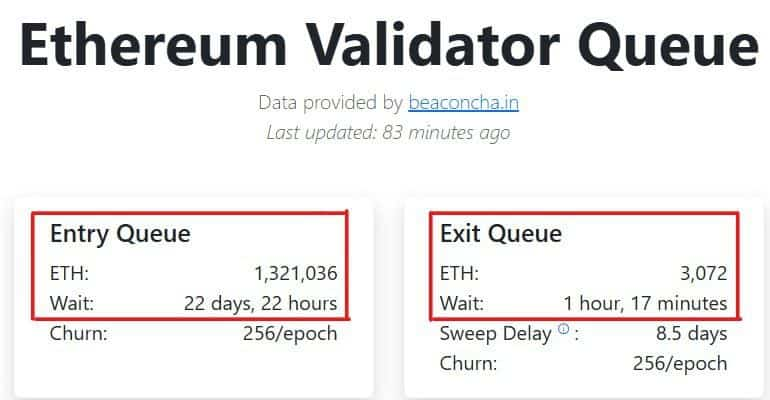
X平台用户Bull Theory 披露的关键数据进一步印证市场热度:当前以太坊质押队列规模显著超过解除质押队列,约132万枚ETH正排队等待进入质押状态,平均等待时长达到23天。如此规模的质押热潮,直观反映出全球投资者对这一头部山寨币的长期信心,也为以太坊网络的安全性与稳定性提供了坚实支撑。

从市场表现来看,以太坊的价格走势与净交易量指标已形成共振,暗示其具备突破3200美元局部供应区的潜力,上涨动能正逐步积聚。

评估以太坊的上涨潜力
来源:CryptoQuant

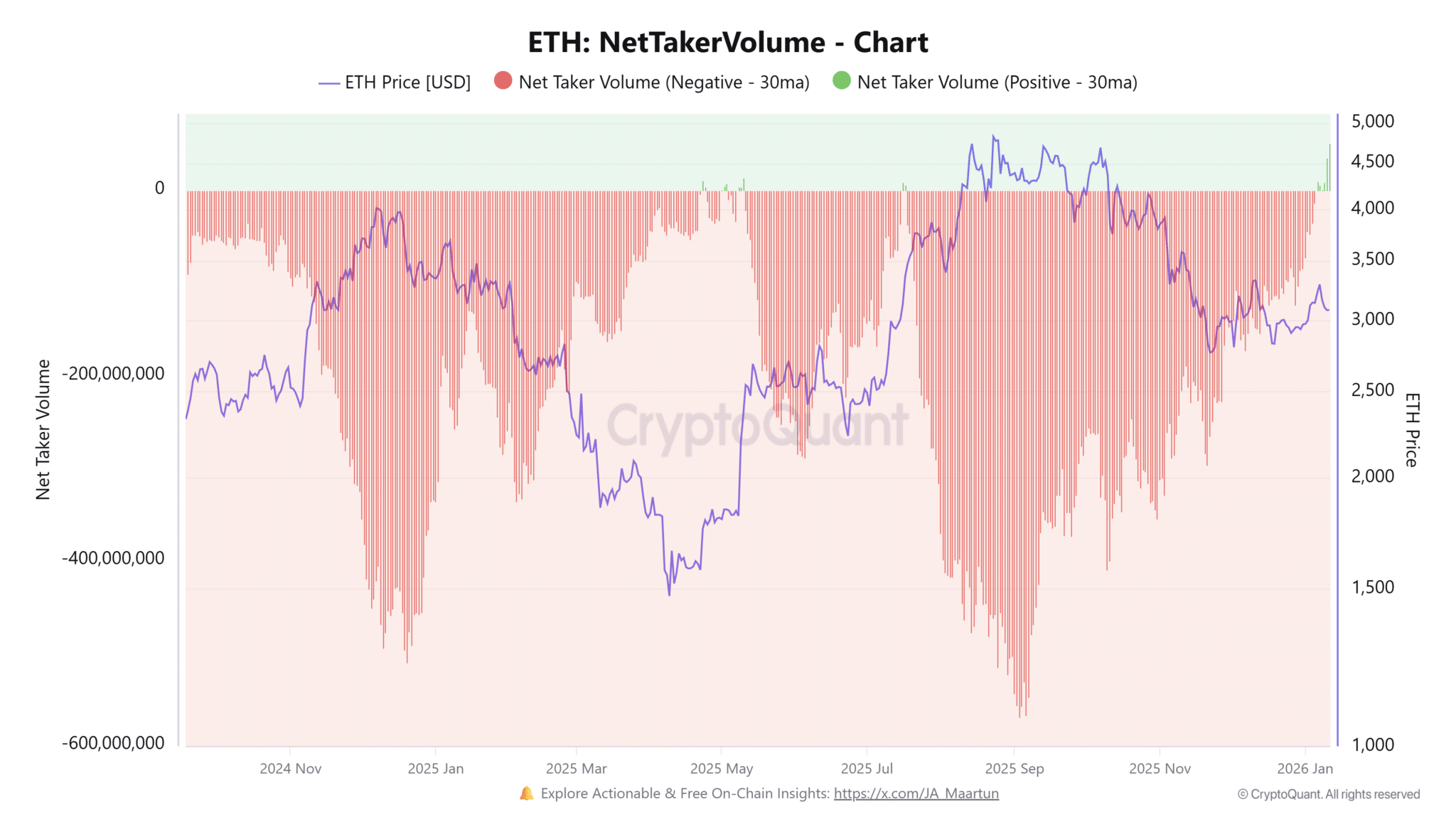
加密货币分析师Maartunn 提出的净交易量指标,核心是利用永续衍生品数据精准识别市场中的激进交易参与者——这类参与者通常采用市价单(即吃单)进场,是驱动价格波动的核心力量。

最新数据显示,以太坊衍生品市场已完成关键转向:从此前的高卖出方主导格局,切换为买方主导的交易态势。尽管当前买方交易量规模尚未达到2025年9月卖出方交易量的峰值水平,但这一转变已为后续上涨奠定良好基础。

与此同时,现货市场的交易对价差(CVD)自本月初以来,也持续呈现买方主导特征。现货与衍生品市场的同步转暖,综合印证了卖方力量或已消耗殆尽,市场供需格局正发生根本性逆转。
来源:TradingView 上的 ETH/USD

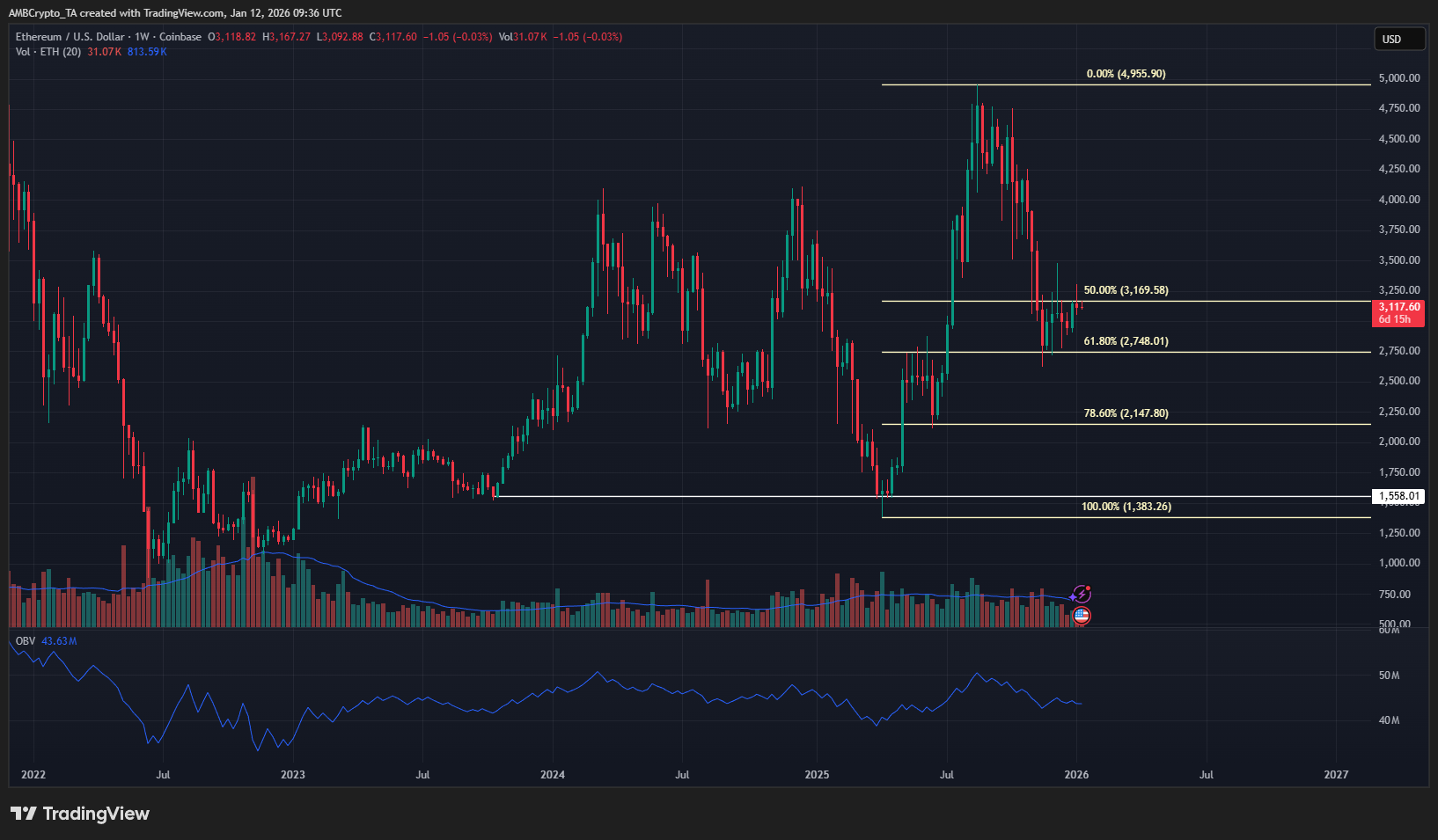
技术面层面,周线图明确标注2748美元为关键回调支撑位。该价位在近几周内多次经受市场考验并成功守住,成为多头稳固的防守阵地。目前,以太坊多头正全力向3169美元关口发起冲击,而3150-3250美元区间自去年11月中旬以来,始终是压制价格上行的核心供应阻力区。

值得注意的是,过去两个月以太坊周交易量持续处于萎缩状态,这一现象在突破关键阻力位前较为常见。若后续能成功突破3200美元关口,市场交易量大概率将同步放大,形成量价齐升的良性走势。此外,能量潮指标(OBV)当前与ETH价格同步处于回调整理阶段,指标与价格走势的共振,进一步夯实了看涨突破的技术基础。

综合来看,各项技术指标与市场数据均对以太坊的看涨突破形成支撑。不过,其后续能否顺利突破阻力区间、开启新一轮上涨行情,仍需结合宏观经济环境与整体市场情绪的变化综合判断。

最后想说的话

以太坊质押队列规模远超解除质押队列,直观反映出市场对其长期发展的坚定信心;自1月初以来,ETH现货与衍生品市场持续由买盘主导,供需格局的优化为后续上涨提供了强劲动力。

Related Reads

Three Months, 35 Billion Yuan: Investors Rush to Grab the OpenAI of the Physical World

Investors flock to a physical AI startup as the race for the "OpenAI of the physical world" heats up. Ji Jia Shi Jie (GigaWorld), a company dedicated to developing Artificial General Intelligence (AGI) for the physical world, has raised 3.5 billion RMB (approximately $490 million) in just three months, according to a report from investment media outlet Touzijie. The latest B2 funding round of 1 billion RMB attracted a wide range of top-tier investors, including sovereign wealth funds, industrial capital, and financial institutions. This brings the total funding for the young company, now valued over 10 billion RMB, to 3.5 billion RMB across three recent rounds. The company is led by Huang Guan, a post-90s Tsinghua University PhD with extensive experience in AI, autonomous driving, and entrepreneurship. Its core innovation is a "dual-pyramid" system comprising a five-layer data pyramid (from internet videos to real-world robot data) and a three-layer algorithm pyramid focused on world simulation, action alignment, and reinforcement learning. This system underpins its key models: the "World Action Model" (e.g., GigaBrain series for robot control) and the "World Generation Model" (e.g., GigaWorld series for simulating and understanding the physical world). Its models have reportedly achieved top rankings in global robotics benchmarks. Ji Jia Shi Jie argues that while current digital AGI excels in information processing, the next frontier is physical AGI—systems that can understand and interact with the real world. The company believes the field is approaching its "GPT-3 moment," a key inflection point in capability scaling. To achieve this, the company is pursuing a dual-market strategy. For the consumer (C) market, it launched the "SeeLight" brand and its S1 general-purpose humanoid robot, which has secured initial orders for deployment in real homes. For the business (B) market, it focuses on industrial automation with its Maker series robots, having signed agreements for large-scale deployment in factories, and its DriveDreamer world model for autonomous driving, which is already in use with over 30 automakers and tech companies. The report concludes that by bridging the gap between digital intelligence and physical action, Ji Jia Shi Jie aims to unlock a new wave of productivity, ultimately bringing physical AGI into everyday life.

marsbit23m ago

Three Months, 35 Billion Yuan: Investors Rush to Grab the OpenAI of the Physical World

marsbit23m ago

What's the Connection Between Pinduoduo's Huang Zheng and Blockchain?

This text explores the unexpected connection between Pinduoduo founder Colin Huang and blockchain, as suggested in his article *Turning Capitalism Upside Down*. Huang argues Pinduoduo's core business is about managing "uncertainty." He posits that wealth flows to the rich because they absorb life's uncertainties (e.g., illness, job loss) that devastate the poor, who pay a premium for certainty through insurance or stable prices. Pinduoduo's model attempts a "reverse insurance": by aggregating consumer demand via group-buying and flash sales, it creates a large, predictable order for manufacturers. This certainty allows factories to remove risk premiums, passing savings back as lower prices, thus partially reversing the wealth flow. The key obstacle, Huang notes, is that an individual's buying intent is an unreliable promise. He then asks if blockchain is the natural solution for this "reverse insurance." The text elaborates that blockchain, through smart contracts with binding deposits, could transform casual intent into a costly-to-break, enforceable commitment. This replaces interpersonal trust with coded rules, making promises credible, pricable, and resistant to fraud. Finally, the author draws a parallel to Bitcoin, framing two paths to creating certainty: the "Pinduoduo path" of aggregating decentralized will into scale, and the "Bitcoin path" of locking rules into immutable code. Both sacrifice something—personal freedom or system flexibility—to manufacture trust and predictability.

链捕手1h ago

What's the Connection Between Pinduoduo's Huang Zheng and Blockchain?

链捕手1h ago

The Storage Magnate Who Conquered a Trillion-Dollar Kingdom, Yet Ultimately Could Not Become the Richest

**Summary:** "The Memory Magnate Who Built a Trillion-Dollar Empire, Yet Never Became the Richest" explores the journey of Zhu Yiming, founder of GigaDevice (603986) and co-founder of the soon-to-IPO ChangXin Memory Technologies (CXMT). The article positions GigaDevice, a fabless chip designer now valued at ~¥340 billion, as a prequel to the massive IDM (Integrated Device Manufacturer) venture, CXMT. Starting in 2005 with minimal capital, Zhu strategically "picked up the pieces" by focusing on niche markets like NOR Flash and microcontrollers (MCUs), areas major players were exiting. This allowed GigaDevice to grow into a diversified semiconductor company, maintaining robust profitability even during industry downturns by controlling costs. However, the piece argues that in the highly cyclical and capital-intensive memory chip industry, the fabless model has limits. True resilience and scale require the ability for "counter-cyclical expansion" – investing heavily during downturns – a tactic only possible for IDMs like Samsung or SK Hynix. This insight led Zhu to partner with the Hefei city government in 2016 to establish CXMT, an IDM focused on DRAM. Zhu's symbolic moves, like forfeiting salary and diluting his equity, were crucial in securing the massive state and bank funding needed. CXMT's equipment base is now valued even higher than that of BYD's vast auto manufacturing empire. Despite the potential for CXMT to reach a market cap of ¥1-2 trillion upon its IPO, Zhu's indirect stake in both companies is estimated below 3%, placing his personal wealth far below that of China's top billionaires. The article concludes that his strategic vision built a trillion-yuan memory landscape, but the capital structure necessary to achieve it precluded a personal fortune of similar scale.

marsbit1h ago

The Storage Magnate Who Conquered a Trillion-Dollar Kingdom, Yet Ultimately Could Not Become the Richest

marsbit1h ago

XRP Ledger Daily Fees Drop Below $400 As Network Activity Question Returns

The XRP Ledger is drawing attention as daily network fees have fallen below $400. While low fees align with XRPL's design for affordable transactions and are often seen as a strength, the metric can also serve as an indicator of network demand and paid transaction volume. This data point of around $3,100 in weekly fee burn highlights the stark contrast with higher-fee chains like Ethereum and Bitcoin. The development fuels an ongoing debate. Proponents view low fees as a sign of efficiency and accessibility, while critics may question if the network is generating sufficient high-value activity relative to its market cap and payments-focused narrative. The article cautions against overstating the finding, noting a single low-fee day does not signify network failure. It instead adds context to discussions about XRPL's usage, especially alongside Ripple's broader initiatives in stablecoins (RLUSD), AI payments, and enterprise infrastructure. The report recommends monitoring for a fee rebound, checking transaction counts for a fuller picture, and confirming the trend via native explorers like Bithomp. It frames the story within a larger market shift where on-chain data, protocol updates, and infrastructure developments are becoming crucial alongside price action. The editorial stance is to present the verified data, explain its significance for assessing network activity, and avoid hype, positioning it as part of the daily crypto conversation.

bitcoinist6h ago

XRP Ledger Daily Fees Drop Below $400 As Network Activity Question Returns

bitcoinist6h ago

Trading

Spot
Futures

Hot Articles

Discussions

Welcome to the HTX Community. Here, you can stay informed about the latest platform developments and gain access to professional market insights. Users' opinions on the price of ETH (ETH) are presented below.

活动图片