Wi-Fi Công cộng và Một Cuộc Gọi: Làm Thế Nào Chúng Trở Thành Cái Bẫy Hoàn Hảo Đánh Cắp 5000 Đô La Tài Sản Mã Hóa?

比推Published on 2026-01-09Last updated on 2026-01-09

Abstract

Tác giả mất 5.000 USD từ ví tiền mã hóa sau khi kết nối Wi-Fi công cộng tại khách sạn trong kỳ nghỉ. Kẻ tấn công nghe lén cuộc điện thoại của nạn nhân về chủ đề tiền mã hóa, từ đó xác định mục tiêu sử dụng ví Phantom. Thông qua mạng Wi-Fi không an toàn, hacker đã tiêm mã độc vào trang web, thay thế yêu cầu giao dịch hợp lệ trên Jupiter Exchange bằng một yêu cầu ủy quyền độc hại. Nạn nhân vô tình ký phê duyệt, cho phép địa chỉ lạ truy cập ví. Sau khi rời khách sạn, hacker chuyển toàn bộ SOL, token và NFT sang ví khác. Bài học rút ra: tránh dùng Wi-Fi công cộng, không thảo luận tài sản mã hóa nơi đông người, luôn kiểm tra kỹ yêu cầu ví và sử dụng hotspot cá nhân khi cần.

Tác giả: The Smart Ape

Biên dịch: Deep Tide TechFlow

Tiêu đề gốc: Kết nối Wi-Fi khách sạn ba ngày, ví tiền mã hóa bị đánh cắp 5000 USD


Vài ngày trước, tôi và gia đình đã đến một khách sạn khá tốt để nghỉ lễ cuối năm. Một ngày sau khi rời khách sạn, ví của tôi đã bị rút sạch. Tôi không thể hiểu nổi, vì tôi không nhấp vào bất kỳ liên kết lừa đảo nào, cũng không ký bất kỳ giao dịch độc hại nào.

Sau nhiều giờ điều tra và nhờ sự giúp đỡ của các chuyên gia, cuối cùng tôi đã hiểu ra sự thật. Tất cả là do mạng Wi-Fi của khách sạn, một cuộc điện thoại ngắn và một chuỗi sai lầm ngu ngốc.
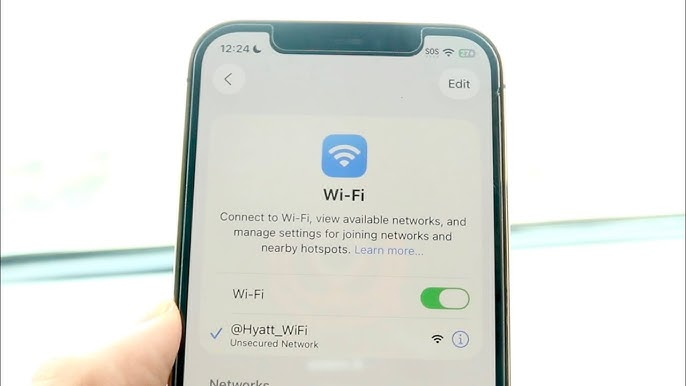
Giống như hầu hết những người đam mê tiền mã hóa, tôi mang theo máy tính xách tay, nghĩ rằng có thể tranh thủ làm việc trong khi đi nghỉ cùng gia đình. Vợ tôi đã nhiều lần khuyên tôi trong ba ngày này không nên làm việc, lẽ ra tôi nên nghe lời cô ấy.

Giống như những vị khách khác, tôi đã kết nối với mạng Wi-Fi của khách sạn. Mạng này không cần mật khẩu, chỉ cần đăng nhập thông qua một trang xác thực (captive portal).
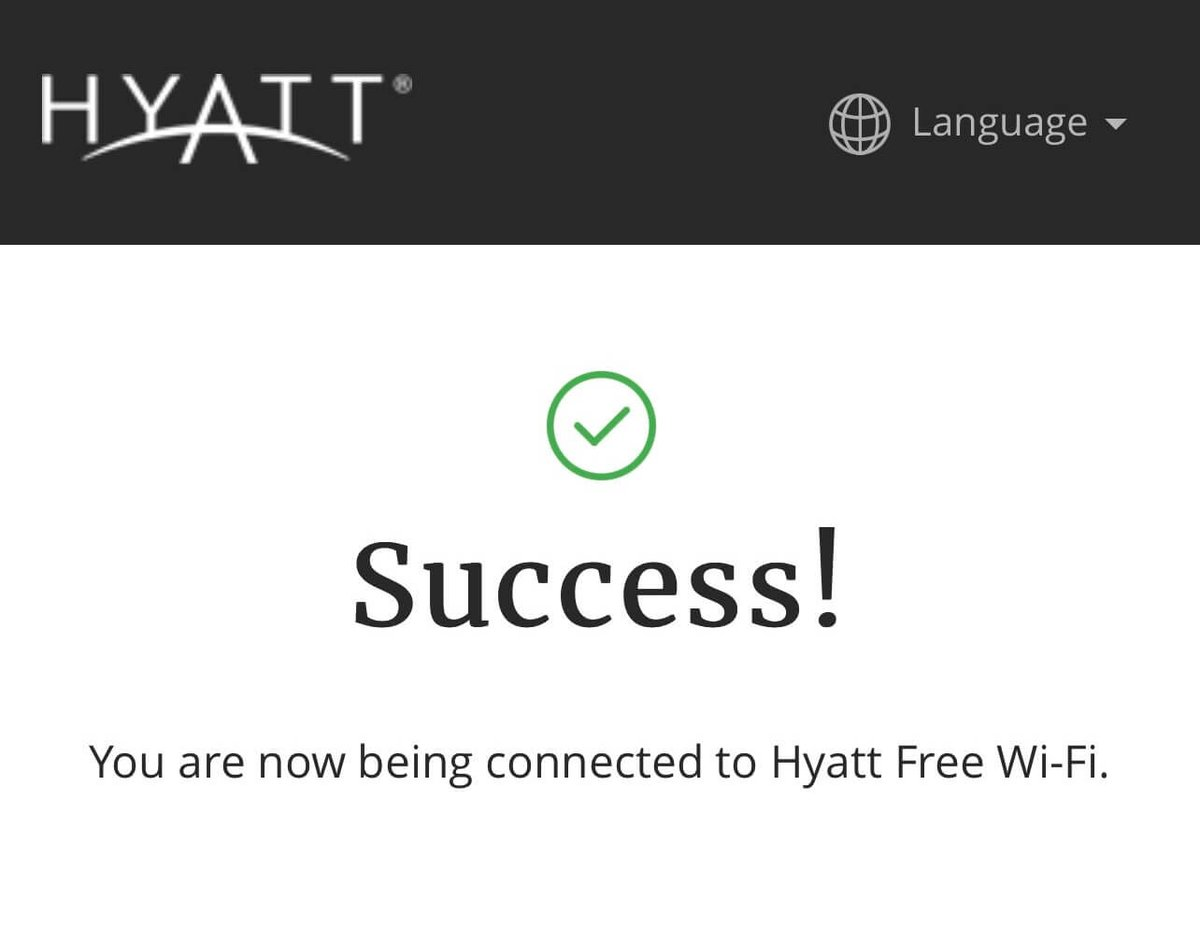
Tôi làm việc trong khách sạn như bình thường, không thực hiện bất kỳ thao tác mạo hiểm nào: không tạo ví mới, không nhấp vào các liên kết lạ, cũng không truy cập các ứng dụng phi tập trung (dApps) đáng ngờ. Tôi chỉ kiểm tra X (Twitter), số dư, Discord và Telegram, v.v.

Vào một lúc nào đó, tôi nhận được cuộc gọi từ một người bạn trong giới tiền mã hóa, chúng tôi nói chuyện về tình hình thị trường, Bitcoin và các chủ đề liên quan đến tiền mã hóa. Nhưng tôi không biết rằng, có người ở gần đó đang nghe lén cuộc trò chuyện của chúng tôi và nhận ra tôi đang làm những việc liên quan đến tiền mã hóa. Đây là sai lầm đầu tiên của tôi. Đối phương thông qua cuộc trò chuyện biết được tôi đang sử dụng ví Phantom và tôi là một người dùng nắm giữ lượng tiền không nhỏ.

Điều này khiến hắn nhắm mục tiêu vào tôi.

Trong mạng Wi-Fi công cộng, tất cả các thiết bị đều chia sẻ cùng một mạng, trên thực tế, khả năng hiển thị giữa các thiết bị còn cao hơn bạn tưởng. Hầu như không có biện pháp bảo vệ thực sự nào giữa người dùng, điều này tạo cơ hội cho "Tấn công trung gian" (Man-in-the-Middle Attack). Kẻ tấn công giống như một người trung gian, lặng lẽ chèn vào giữa bạn và Internet, giống như ai đó lén đọc và làm giả nội dung thư của bạn trước khi nó được gửi đến.
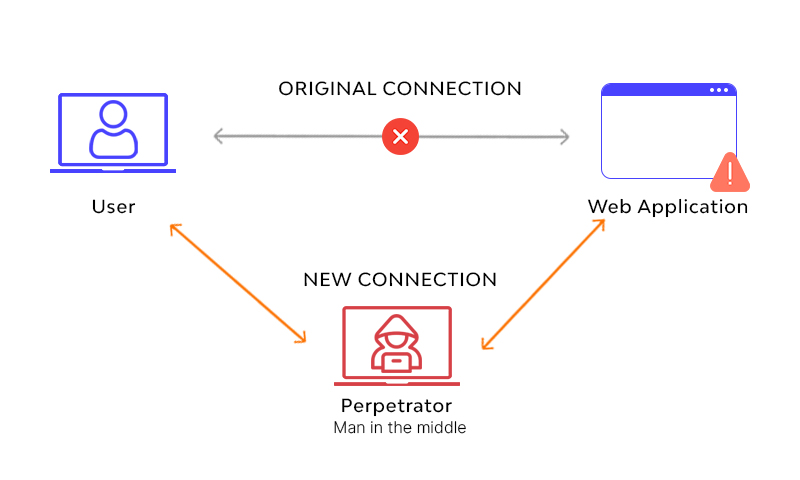
Khi tôi duyệt web trên Wi-Fi của khách sạn, có một trang web trông có vẻ tải bình thường, nhưng thực tế, đằng sau trang đã bị tiêm nhiễm mã độc bổ sung. Lúc đó tôi không để ý thấy bất kỳ điều gì bất thường. Nếu tôi đã cài đặt một số công cụ bảo mật, vốn có thể phát hiện ra những vấn đề này, nhưng thật tiếc, tôi đã không làm vậy.

Thông thường, trang web có thể yêu cầu ví của bạn ký một số thao tác. Ví Phantom sẽ bật lên một cửa sổ, bạn có thể chọn phê duyệt hoặc từ chối. Nói chung, bạn sẽ yên tâm ký vì tin tưởng trang web và trình duyệt này. Tuy nhiên, hôm đó tôi không nên làm vậy.

Ngay khi tôi đang thực hiện thao tác hoán đổi token trên nền tảng @JupiterExchange, mã độc đã kích hoạt một yêu cầu ví, thay thế cho thao tác hoán đổi bình thường của tôi. Vốn dĩ tôi có thể phát hiện ra đây là một yêu cầu độc hại bằng cách kiểm tra kỹ chi tiết giao dịch, nhưng vì tôi đã đang thực hiện thao tác hoán đổi trên nền tảng Jupiter rồi, nên hoàn toàn không nghi ngờ gì.
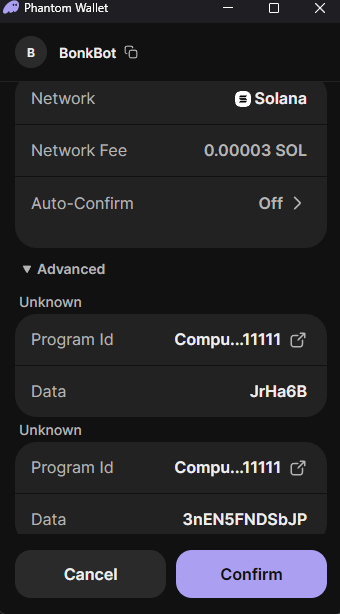
Hôm đó tôi đã không ký bất kỳ giao dịch chuyển tiền nào, mà là ký một sự cho phép ủy quyền. Đây chính là lý do vài ngày sau tài sản bị đánh cắp.

Mã độc không trực tiếp yêu cầu tôi gửi SOL (Solana), vì như vậy sẽ quá lộ liễu. Thay vào đó, nó yêu cầu tôi "ủy quyền truy cập", "phê duyệt tài khoản" hoặc "xác nhận phiên". Nói một cách đơn giản, tôi thực sự đã cho một địa chỉ khác quyền hoạt động thay mặt tôi.

Lý do tôi phê duyệt là vì tôi nhầm tưởng rằng nó liên quan đến thao tác của tôi trên Jupiter. Thông tin hiện lên trên ví Phantom lúc đó trông có vẻ kỹ thuật, không hiển thị bất kỳ số tiền nào và cũng không nhắc chuyển tiền ngay lập tức.

Và đó là tất cả những gì kẻ tấn công cần. Hắn kiên nhẫn chờ đợi, cho đến khi tôi rời khách sạn, mới bắt đầu hành động. Hắn chuyển số SOL của tôi đi, rút các token của tôi và chuyển NFT của tôi sang một địa chỉ khác.
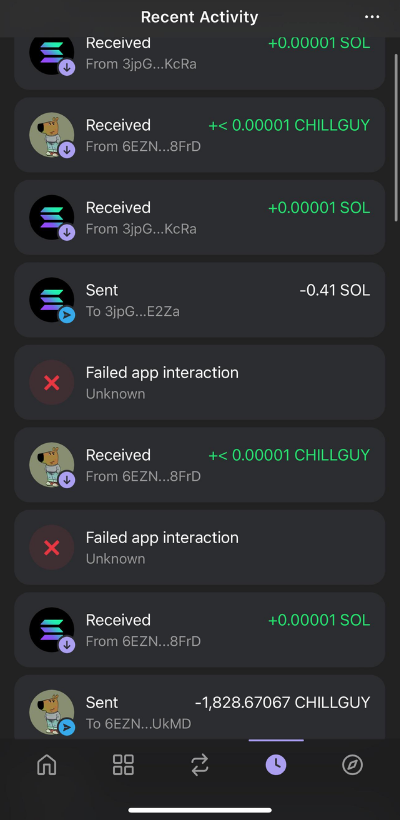
Tôi chưa bao giờ nghĩ điều như vậy có thể xảy ra với mình. May mắn thay, đây không phải là ví chính của tôi, mà là một ví nóng dùng cho các thao tác cụ thể, không phải để nắm giữ tài sản lâu dài. Nhưng ngay cả như vậy, tôi đã mắc rất nhiều sai lầm và tôi nghĩ mình phải chịu trách nhiệm chính.

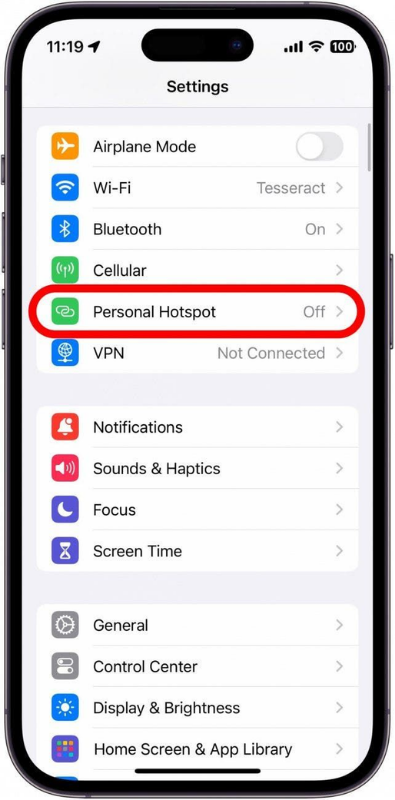
Trước hết, tôi không bao giờ nên kết nối với Wi-Fi công cộng của khách sạn. Lẽ ra tôi nên dùng điểm phát sóng (hotspot) trên điện thoại để lên mạng.
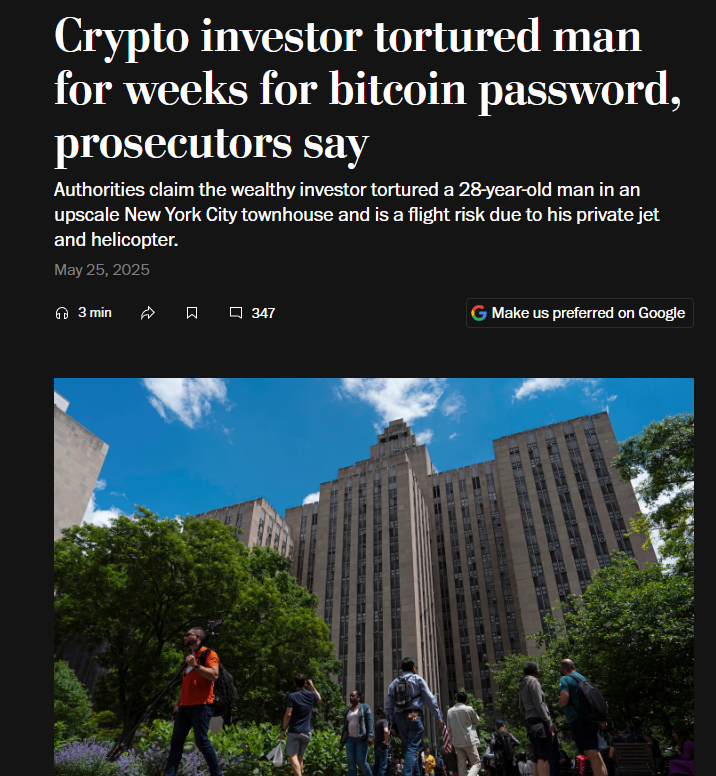
Sai lầm thứ hai của tôi là, nói chuyện về tiền mã hóa ở khu vực công cộng của khách sạn, khiến nhiều người có thể đã nghe thấy cuộc trò chuyện của chúng tôi. Cha tôi từng khuyên tôi, đừng bao giờ để người khác biết bạn làm những việc liên quan đến tiền mã hóa. Lần này vẫn còn may mắn, có những người vì tài sản mã hóa thậm chí còn bị bắt cóc hoặc những chuyện tồi tệ hơn.
Một sai lầm khác là, tôi đã phê duyệt yêu cầu ví mà không hoàn toàn chú ý. Bởi vì tôi chắc chắn yêu cầu này đến từ Jupiter, tôi đã không phân tích kỹ nó. Trên thực tế, mỗi yêu cầu từ ví đều nên được xem xét cẩn thận, ngay cả trên ứng dụng bạn tin tưởng. Yêu cầu có thể bị chặn và thực tế không đến từ ứng dụng bạn tưởng.

Cuối cùng, tôi đã mất khoảng 5000 đô la từ một chiếc ví phụ. Mặc dù đây không phải là trường hợp nghiêm trọng nhất, nhưng nó vẫn khiến người ta cảm thấy vô cùng bực bội.


Twitter:https://twitter.com/BitpushNewsCN

Nhóm trao đổi Telegram của Bitpush:https://t.me/BitPushCommunity

Kênh Telegram của Bitpush: https://t.me/bitpush

Liên kết bài gốc:https://www.bitpush.news/articles/7601380

Trending Cryptos

Related Questions

QMạng Wi-Fi công cộng và một cuộc điện thoại đã trở thành cái bẫy hoàn hảo như thế nào để đánh cắp tài sản mã hóa trị giá 5000 USD?

AKẻ tấn công nghe lén cuộc trò chuyện về tiền mã hóa của nạn nhân qua điện thoại, xác định ví Phantom và mục tiêu tiềm năng. Sau đó, họ sử dụng mạng Wi-Fi công cộng không an toàn của khách sạn để thực hiện tấn công trung gian (Man-in-the-Middle), chèn mã độc vào trang web nạn nhân truy cập. Mã độc này tạo ra yêu cầu ủy quyền gian lận thay vì giao dịch trao đổi thông thường trên JupiterExchange, khiến nạn nhân ký mà không nhận ra. Kẻ tấn công sau đó sử dụng quyền ủy quyền này để chuyển toàn bộ tài sản sau khi nạn nhân rời khách sạn.

QNạn nhân đã mắc phải những sai lầm nào dẫn đến việc bị mất tiền?

ANạn nhân mắc ba sai lầm chính: 1) Kết nối và sử dụng mạng Wi-Fi công cộng không an toàn của khách sạn thay vì dùng điểm phát sóng (hotspot) từ điện thoại cá nhân. 2) Nói chuyện về tiền mã hóa ở nơi công cộng, để lộ thông tin rằng mình sở hữu ví và có khối tài sản đáng kể. 3) Phê duyệt yêu cầu từ ví Phantom mà không kiểm tra kỹ lưỡng, nhầm tưởng đó là yêu cầu hợp lệ từ ứng dụng JupiterExchange.

QTấn công trung gian (Man-in-the-Middle) trong sự kiện này hoạt động như thế nào?

ATrong mạng Wi-Fi công cộng, các thiết bị kết nối có thể nhìn thấy lẫn nhau và không được bảo vệ đầy đủ. Kẻ tấn công đã chèn mình vào giữa kết nối của nạn nhân và internet. Họ chặn và thay đổi lưu lượng truy cập web, cụ thể là tiêm mã độc vào trang web mà nạn nhân đang truy cập. Mã độc này sau đó tạo ra một yêu cầu ủy quyền gian lận thay vì hành động trao đổi dự định, đánh lừa nạn nhân ký phê duyệt.

QTại sao kẻ tấn công không yêu cầu chuyển tiền ngay lập tức mà lại yêu cầu 'ủy quyền'?

AKẻ tấn công yêu cầu 'ủy quyền' hoặc 'phê duyệt quyền truy cập' thay vì chuyển tiền ngay lập tức vì điều này ít gây chú ý hơn. Một yêu cầu chuyển tiền trực tiếp với số lượng cụ thể sẽ dễ dàng bị nghi ngờ và từ chối. Trong khi đó, một yêu cầu ủy quyền trông có vẻ kỹ thuật và thường được người dùng chấp thuận, đặc biệt khi họ nghĩ rằng nó đến từ một ứng dụng đáng tin cậy. Quyền ủy quyền này cho phép kẻ tấn công toàn quyền kiểm soát tài sản trong ví sau này, và họ đã chờ đợi cho đến khi nạn nhân rời khỏi mạng Wi-Fi của khách sạn mới thực hiện hành vi trộm cắp.

QNgười dùng có thể làm gì để bảo vệ mình khỏi những kiểu tấn công như thế này?

AĐể bảo vệ bản thân, người dùng nên: 1) Luôn sử dụng Mạng Riêng Ảo (VPN) hoặc điểm phát sóng di động cá nhân (mobile hotspot) thay vì kết nối vào mạng Wi-Fi công cộng không an toàn. 2) Tránh thảo luận về các khoản nắm giữ tiền mã hóa hoặc hoạt động giao dịch ở nơi công cộng. 3) Luôn luôn kiểm tra kỹ lưỡng từng yêu cầu ký phê duyệt từ ví, ngay cả trên các ứng dụng/dApp đáng tin cậy, để đảm bảo đó không phải là yêu cầu độc hại. 4) Sử dụng ví phần cứng cho việc lưu trữ lâu dài và chỉ giữ một số tiền nhỏ trong ví nóng (hot wallet) để giao dịch thường xuyên.

Related Reads

Why Is the World Nervous About Japan Raising Interest Rates?

In June 2026, the Bank of Japan raised its policy rate to 1%, marking its first hike to this level since 1995. While this rate remains low compared to global peers like the US and Europe, the move signals a profound shift for a nation that has been a global source of ultra-cheap funding for decades. Japan's long-standing near-zero or negative interest rates had facilitated massive "yen carry trades," where international investors borrowed low-cost yen to invest in higher-yielding assets worldwide, such as US tech stocks and emerging market bonds. This made Japan a critical, often overlooked, source of global liquidity. Japan's ultra-loose policy stemmed from structural challenges post-1990s asset bubble: aging demographics, chronic low inflation/deflation, and high public debt. Recent shifts, including sustained wage growth (exceeding 5% in recent years) and inflation consistently above the 2% target, have created a "wage-price spiral" possibility, prompting the policy normalization. The global market's concern lies not in the absolute rate but in the potential unwinding of the yen carry trade. As Japanese borrowing costs rise, the economics of these leveraged global investments change, potentially triggering deleveraging and capital outflows from risk assets. Market anxiety focuses on the end of a thirty-year consensus that Japan would perpetually provide cheap funding. Ultimately, the global impact will depend on the interplay with US monetary policy. While Japan is tightening, the significant interest rate differential with the US remains. The key future dynamic is whether simultaneous Japanese hikes and eventual US rate cuts will narrow this gap, forcing a major recalibration of global capital flows and asset pricing built on an era of abundant, cheap yen liquidity.

marsbit1h ago

Why Is the World Nervous About Japan Raising Interest Rates?

marsbit1h ago

Research Report Analysis: MRVL's Optical AI Booming, Why High Valuation Keeps Morgan Stanley's Star Analyst Sidelined?

Report Recap: MRVL Optical AI Boom - Why High Valuation Led Morgan Stanley's Star Analyst to Stay Neutral? Morgan Stanley analyst Joseph Moore maintained an "Equal-weight" (Neutral) rating on Marvell Technology (MRVL) on May 28, raising the price target from $172 to $195, below the trading price. This stance comes despite Marvell reporting a record quarter and significantly raising its full-year outlook (FY27 revenue ~$11.5B, up ~40%). Moore's neutral view is based on valuation. The $195 target implies ~40x CY2027 P/E. He contrasts MRVL with NVDA: both trade near ~$200, but Nvidia's forward EPS is more than double Marvell's. For MRVL's valuation to hold, it needs consistent earnings upgrades, proof of networking market share gains, or certainty on large-scale custom AI chip shipments—none of which are confirmed yet. Growth is driven by two pillars: **1) Optical Interconnect** (the faster runner): Moore raised FY27 growth expectations to >70%, with the optical module product line nearing a $1B annualized run rate. **2) Custom AI Chips** (the climber): Confidence in FY28 is growing, but a major new customer project only ramps in FY28, with no current revenue visibility. Key risks are the underperforming Storage, Enterprise, and legacy Networking segments. Moore acknowledges the real AI opportunity but believes the current price already reflects it. For the stock to work from here, investors need to see the optical business hit its targets, custom chips ramp as planned, and a recovery in the weaker business units.

marsbit2h ago

Research Report Analysis: MRVL's Optical AI Booming, Why High Valuation Keeps Morgan Stanley's Star Analyst Sidelined?

marsbit2h ago

qinbaFrank: Review and Outlook of the AI Computing Power Wave — From the Three Debates on NVIDIA to Optical Interconnect and SpaceX IPO, How is Capital Rotating?

**Summary: Retrospective and Outlook on the AI Computing Wave - A Framework for Capital Rotation** Based on a presentation by investor qinbaFrank, this analysis reviews the AI computing market trajectory since 2023 and outlines a forward-looking framework. **Key Phases and Market Debates:** The AI bull market progressed through three major debates: 1) The necessity of massive capital expenditure (late 2023). 2) The sustainability of tech giants' spending (early 2024-early 2025). 3) Potential overestimation of compute needs (early 2025). Consensus solidified in late 2025 as model capabilities and utility demonstrably improved. **Core Thesis: Penetration Rate Drives Commercialization.** Unlike the 2000 dot-com bubble, the current AI wave benefits from mature digital infrastructure, enabling faster adoption. The critical threshold is 10% penetration; surpassing it (with recent enterprise intent surveys showing ~18%) indicates entry into a rapid growth "golden period" where user scale and willingness to pay increase simultaneously. **AI vs. Internet: A Fundamental Difference.** While the internet enhanced connection efficiency, AI directly substitutes human cognition and labor. Once AI performance exceeds the "societal average" human level, its commercial value scales exponentially as payment shifts from human labor costs to AI service fees. **Investment Logic Evolution in the Compute Chain.** The focus has expanded from GPUs to a systemic re-rating of the entire hardware stack: storage/HBM, CPUs, interconnects, power, and advanced packaging. The framework is: **short-term "scarcity pricing," mid-term "upgrade pricing" (e.g., optical interconnects, power networks), and long-term "Physical AI" pricing** (edge computing, robotics). **Market Focus Shift and Adjustment Framework.** The market is transitioning from "hardware scarcity" to "commercialization validation." The ultimate anchor for the narrative is sustained high growth in model providers' Annual Recurring Revenue (ARR) and cloud business revenue, which justifies continued capital expenditure. Adjustments are categorized into three levels: * **L1 (Minor):** Driven by valuation compression or macro noise (e.g., single CPI print). Fundamentals intact. * **L2 (Moderate):** Triggered by significant macro events requiring risk repricing. Requires new data for confidence restoration. * **L3 (Major):** Involves a reset of the core industrial narrative or macro regime (e.g., AI commercialization growth stalling). The **crucial dividing line** is whether AI commercialization growth slows. Without a slowdown, pullbacks are likely L1/L2 "repricing" events. A genuine growth deceleration would signal an L2/L3 narrative reset. **Conclusion: A Foundational Civilizational Leap.** AI represents a foundational upgrade to "intelligence" itself—akin to humanity mastering fire—rather than a single-point industrial revolution. This底层能力跃迁 (underlying capability leap) will spawn successive waves of innovation (Agent, robotics, industry workflow重构). The journey will be波浪式的 (wavelike), driven by cycles of scarcity, technological upgrades, and远期兑现 (long-term realization).

marsbit2h ago

qinbaFrank: Review and Outlook of the AI Computing Power Wave — From the Three Debates on NVIDIA to Optical Interconnect and SpaceX IPO, How is Capital Rotating?

marsbit2h ago

Trading

Spot
Futures

Hot Articles

How to Buy APE

Welcome to HTX.com! We've made purchasing ApeCoin (APE) simple and convenient. Follow our step-by-step guide to embark on your crypto journey.Step 1: Create Your HTX AccountUse your email or phone number to sign up for a free account on HTX. Experience a hassle-free registration journey and unlock all features.Get My AccountStep 2: Go to Buy Crypto and Choose Your Payment MethodCredit/Debit Card: Use your Visa or Mastercard to buy ApeCoin (APE) instantly.Balance: Use funds from your HTX account balance to trade seamlessly.Third Parties: We've added popular payment methods such as Google Pay and Apple Pay to enhance convenience.P2P: Trade directly with other users on HTX.Over-the-Counter (OTC): We offer tailor-made services and competitive exchange rates for traders.Step 3: Store Your ApeCoin (APE)After purchasing your ApeCoin (APE), store it in your HTX account. Alternatively, you can send it elsewhere via blockchain transfer or use it to trade other cryptocurrencies.Step 4: Trade ApeCoin (APE)Easily trade ApeCoin (APE) on HTX's spot market. Simply access your account, select your trading pair, execute your trades, and monitor in real-time. We offer a user-friendly experience for both beginners and seasoned traders.

3.9k Total ViewsPublished 2024.03.29Updated 2026.06.02

How to Buy APE

What is APECOIN

Understanding Asia Pacific Electronic Coin ($APECoin) In an era where the intersection of technology and environmentalism is becoming increasingly critical, cryptocurrencies are making their mark as potential catalysts for change. Among these innovations, Asia Pacific Electronic Coin ($APECoin) stands out as a distinct project designed to support environmental initiatives across the Asia Pacific region. This article delves into the foundation, unique features, and impact of $APECoin within the broader blockchain landscape. What is Asia Pacific Electronic Coin ($APECoin)? Asia Pacific Electronic Coin ($APECoin) is an ERC20 and TRC20 token, brought to fruition in April 2020 after its conceptualization in December 2019. This innovation was born out of a desire to foster eco-friendly practices and support a suite of environmental projects aimed at sustainability and green initiatives. Aims and Objectives $APECoin is not merely a digital currency; it is envisioned as a medium of exchange that enables users to engage in transactions that directly benefit environmental causes. Its ecosystem is designed to facilitate various financial activities while promoting the adoption of eco-friendly practices. The currency aims primarily to: Support Environmental Initiatives: Through every transaction, a portion is allocated to funding sustainable projects aimed at conservation and renewable energy. Promote Eco-Friendly Innovations: Encouraging startups and projects that align with environmental sustainability through the use of its token as a means of value. Create a Sustainable Marketplace: The platform includes an e-marketplace where financial transactions can occur within a framework dedicated to promoting green practices. Creator of Asia Pacific Electronic Coin ($APECoin) While the details regarding the individual creator of $APECoin are not publicly disclosed, the project is significantly backed by the APEC Group, a consortium focused on advocating for environmental initiatives. This backing adds credibility and significance to the project, connecting it to a broader network committed to sustainability and eco-friendly practices. Investors of Asia Pacific Electronic Coin ($APECoin) The investment landscape surrounding $APECoin remains largely undisclosed. Specific names of investment foundations or organizations supporting this cryptocurrency have yet to be revealed. However, what is evident is a growing interest among investors keen on supporting sustainable projects that demonstrate potential for impact in the crypto space. How does Asia Pacific Electronic Coin ($APECoin) work? $APECoin stands out due to its innovative operational model, which leverages blockchain technology and smart contracts. This combination not only ensures transactional efficiency but also enforces adherence to regulatory frameworks, enhancing the security and transparency of transactions. Unique Features of $APECoin Blockchain-Based Operations: By establishing its operations on a blockchain platform, $APECoin ensures that all transactions are immutable and secured through advanced cryptographic techniques. This decentralization underscores the integrity of the token within its ecosystem. Smart Contracts: $APECoin employs smart contracts that facilitate seamless transactions while ensuring compliance with applicable regulations. These automated agreements minimize the possibility of disputes, streamline processes, and contribute to a reliable transaction framework. E-Marketplace: One of the hallmark features of $APECoin is its dedicated e-marketplace. This digital environment serves as a hub for services that endorse eco-friendly practices, providing a platform for exchanges that further the project's green vision. Through these attributes, $APECoin carves a niche for itself within the vast expanse of the cryptocurrency market, effectively marrying the principles of blockchain with environmental stewardship. Timeline of Asia Pacific Electronic Coin ($APECoin) Understanding the trajectory of $APECoin provides insight into its developmental milestones and future aspirations. Here’s a timeline highlighting significant events in the project’s history: December 2019: Conceptualization of Asia Pacific Electronic Coin, initiated with an ambition to drive sustainability through cryptocurrency. April 2020: Official launch of $APECoin, marking its entry into the marketplace as a dedicated token for environmental projects. 2020-2021: Conducting of the Initial Exchange Offering (IEO), enabling users to purchase $APECoin, alongside the registration with various electronic exchange platforms to enhance accessibility. In its relatively short journey, $APECoin has made significant strides in laying the groundwork for a secure and impactful cryptocurrency driven by environmental goals. Conclusion Asia Pacific Electronic Coin ($APECoin) embodies the marriage of technology and environmental responsibility, fostering growth in the crypto ecosystem while championing sustainability. With its unique structure, backing by reputable entities, and vision for a greener future, $APECoin is more than just a cryptocurrency; it is a pioneering project aimed at nurturing responsible innovation in the Asia Pacific region. Through its commitment to financial inclusion and its support of environmental initiatives, it stands as a formidable example of how digital currencies can be leveraged for positive societal impact. As the project continues to evolve, stakeholders within the crypto community and beyond will be eagerly watching how $APECoin shapes the conversation around sustainable practices in the burgeoning world of cryptocurrency.

892 Total ViewsPublished 2024.12.03Updated 2024.12.03

What is APECOIN

Discussions

Welcome to the HTX Community. Here, you can stay informed about the latest platform developments and gain access to professional market insights. Users' opinions on the price of APE (APE) are presented below.

活动图片