ICP se dispara un 22%, luego cae un 8% – ¿Qué viene después de esta volatilidad?

ambcryptoPublished on 2025-12-22Last updated on 2025-12-22

Abstract

El Vicepresidente de Dfinity Foundation, Lomesh Dutta, destacó que las herramientas de no-code impulsadas por IA podrían garantizar una infraestructura segura y resistente, lo que explicaría la reciente subida del 22.6% de ICP desde los mínimos del viernes. Sin embargo, el token ha retrocedido un 8.46% en menos de 12 horas, eliminando por completo los avances de noviembre. Los gráficos muestran una estructura bajista en temporalidades superiores, con soportes clave en $5 y $4.3 siendo superados a la baja. Para revertir la tendencia, ICP debe superar la resistencia de $3.78. Hasta entonces, se recomienda cautela ante posibles ventas de toma de beneficios. Los operadores de corto plazo pueden considerar compras con stop-loss por debajo de $2.9, pero el sentimiento general del mercado sigue siendo bajista.

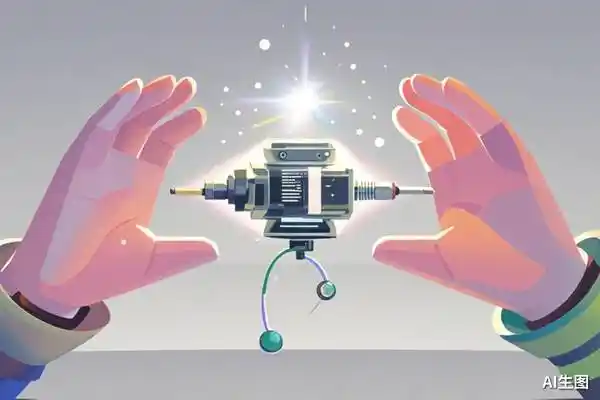
El Vicepresidente de la Fundación Dfinity, Lomesh Dutta, declaró que el auge de las herramientas de no-code impulsadas por IA para la generación y evolución de aplicaciones permitirá una infraestructura segura, estable y resistente a la manipulación.

Esto podría ayudar a prevenir el tipo de interrupción que muchas empresas de criptomonedas y aplicaciones Web3 enfrentaron tras la caída de AWS en octubre.

La Fundación Dfinity es una organización sin fines de lucro que guía el desarrollo de la blockchain Internet Computer [ICP].

Estas declaraciones podrían haber devuelto a ICP al ojo público, ayudando a explicar el reciente repunte. ICP ganó un 22.6% desde el mínimo del viernes, pero ha enfrentado un pequeño retroceso en las últimas horas de negociación.

La toma de ganancias borra el repunte de ICP de noviembre

El gráfico de 3 días mostró una estructura interna bajista y un retroceso completo del repunte de noviembre desde $2.79 hasta $9.85. Se esperaba que los soportes de $5 y $4.3 se defendieran, pero estas expectativas resultaron erróneas.

El DMI no mostró una tendencia fuerte en progreso, pero sus señales confusas sirvieron para capturar la velocidad del reciente movimiento impulsivo y el posterior retroceso. El OBV se desangraba lentamente a la baja, y el MACD también mostró un impulso bajista.

Para cambiar la estructura a alcista, ICP tiene que volver a moverse por encima de $3.78.

El gráfico de 4 horas mostró un desequilibrio en la zona de $3.2, resaltado en blanco. Este desequilibrio se produjo tras una ruptura de estructura alcista en este marco temporal. Al momento de escribir, ICP enfrentaba una pequeña caída de precio, habiendo perdido un 8.46% en menos de 12 horas.

Los indicadores técnicos estaban a favor de los alcistas, pero los traders deben recordar que la estructura del marco temporal superior sigue siendo bajista. Hasta que no se produzca un movimiento por encima de $3.78, los operadores deben tener cuidado al tomar posiciones alcistas.

Evaluando el próximo movimiento de ICP

El sentimiento general del mercado, especialmente para Bitcoin [BTC], se mantuvo mayormente bajista. Hasta que esto cambie a alcista, es probable que las altcoins que obtengan ganancias fuertes se topen con una fuerte presión de venta por actividades de toma de ganancias.

Los traders de marcos temporales más bajos pueden considerar comprar ICP ahora, con un stop-loss por debajo del soporte local en $2.9.

Llamado a la acción para traders: manténganse bajistas

Hasta que el nivel de $3.78 sea superado con un cierre de vela en el marco temporal de 3 días, los swing traders pueden mantenerse bajistas. El marco temporal de 1 día también destaca la misma resistencia local como un punto clave de swing.


Reflexiones Finales

  • El auge de las herramientas de no-code impulsadas por IA que se dieron a conocer recientemente podría haber ayudado a Internet Computer a registrar algunas de sus ganancias recientes.
  • La acción del precio se mantuvo a favor de los bajistas durante el último mes, y los traders deberían ser cautelosos al ir en largo hasta que la estructura cambie a alcista.

Descargo de responsabilidad: La información presentada no constituye asesoramiento financiero, de inversión, comercial ni de ningún otro tipo y es únicamente la opinión del escritor


Trending Cryptos

Related Questions

Q¿Qué declaraciones de Lomesh Dutta, Vicepresidente de Dfinity Foundation, podrían haber influido en el reciente repunte de ICP?

ALomesh Dutta declaró que el auge de las herramientas de no-code impulsadas por IA para la generación y evolución de aplicaciones permitirá una infraestructura segura, estable y resistente a la manipulación, lo que podría haber devuelto a ICP a la vista del público.

Q¿Qué nivel de precio debe superar ICP para cambiar su estructura alcista en el gráfico de 3 días?

AICP debe moverse por encima de $3.78 para cambiar su estructura a alcista en el gráfico de 3 días.

Q¿Qué mostró el gráfico de 4 horas en el área de $3.2 para ICP?

AEl gráfico de 4 horas mostró un desequilibrio en el área de $3.2, que se produjo después de una ruptura de estructura alcista en este marco de tiempo.

Q¿Cuál es la recomendación para los operadores de swing en cuanto a la tendencia de ICP?

AHasta que el nivel de $3.78 sea superado con el cierre de una vela en el marco de tiempo de 3 días, se recomienda a los operadores de swing mantenerse en una postura bajista.

QSegún el artículo, ¿qué debe cambiar en el sentimiento general del mercado para que las altcoins no enfrenten presión de venta?

AEl sentimiento general del mercado, especialmente para Bitcoin [BTC], debe cambiar a alcista para que sea menos probable que las altcoins con fuertes ganancias se enfrenten a una fuerte presión de venta por actividades de toma de ganancias.

Related Reads

"Ontology Faction" vs. "Supplier Faction": In-depth Observation of Dexterous Hand Track Financing in 2026

The article analyzes the robotics "dexterous hand" sector in 2026, revealing intense investment activity. Key insights include: The sector is divided into two camps: "Body Manufacturers" (15 companies like Zhuji Power, Xingdong Era, Xingchen Intelligence) that integrate self-developed dexterous hands into their humanoid robots, and "Third-Party Suppliers" (32 companies) that independently sell complete dexterous hands or core components like tactile sensors and micro-motors. Body Manufacturers secured significantly larger average funding rounds (over ¥8B vs. under ¥2B for suppliers), reflecting bets on the broader humanoid robot market. While body makers now view in-house hand R&D as essential for differentiation, they still heavily rely on external suppliers for key underlying components like sensors and actuators. The supplier landscape is further segmented. "Complete Hand" suppliers (e.g., Critical Point AGILINK, Lingxin Qiaoshou, Xynova) face fierce consolidation as scale becomes critical. "Tactile Perception" specialists (e.g., Paxini, Daimeng, Qianjue) possess high technical barriers and early-mover advantages. "Core Component" makers (e.g., Wuji Tech, Zhijian Zhiqing, Nuoshi Robotics) are "hidden champions" with deep expertise in motors and drive systems, benefiting from import substitution. The analysis concludes the industry is structurally diverging. A hybrid model of body-maker integration plus specialist outsourcing will likely dominate. Suppliers will undergo significant consolidation, particularly among complete hand makers, while component specialists with deep technical moats are poised for sustained growth.

marsbit2m ago

"Ontology Faction" vs. "Supplier Faction": In-depth Observation of Dexterous Hand Track Financing in 2026

marsbit2m ago

Is 'Light In, Memory Out' Becoming the New Trading Narrative in the U.S. Stock Market?

Is "Light in, Memory out" Becoming the New Narrative in U.S. Stock Trading? Following the growing market consensus that AI chip valuations may have peaked, capital is seeking the next AI-related theme. In this context, the "Light in, Memory out" narrative is emerging – signaling a shift where optical communication stocks are taking the baton from memory. Optical communication, utilizing light signals (primarily via fiber optics) for data transmission, is critical for AI. AI model training and inference rely on massive GPU clusters that require frequent exchange of vast data, generating immense east-west traffic. Traditional copper interconnects face physical limits at high speeds (short distances, high power, interference). Optical interconnects solve this with higher bandwidth density, longer reach, and better energy efficiency, becoming crucial for scaling AI clusters. The narrative is validated by diverging stock performance. While memory stocks (like Micron, SK Hynix) have corrected amid crowded positioning and growth concerns, optical communication stocks (AAOI, COHR, LITE) have surged roughly 40-50% since August, driven by strong earnings and accelerating demand from AI cluster expansion and the transition to 800G/1.6T technology. LITE’s recent earnings solidified the story, beating estimates with impressive margins (gross margin above 50%, operating margin 36.4%). Its guidance projected an operating margin near 40% next quarter, faster than expected. Management noted laser capacity remains insufficient to meet strong demand and confirmed its key CPO (Co-Packaged Optics) client is accelerating plans. COHR's upcoming earnings are highly anticipated for further confirmation. However, risks are evident after the sector's sharp rally. The current dilemma is believing the narrative while avoiding buying at a peak. In a thematic rotation market, survival is key – prepare your tools before deciding how to position. Disclaimer: This summary is for informational purposes only and does not constitute investment advice.

marsbit2m ago

Is 'Light In, Memory Out' Becoming the New Trading Narrative in the U.S. Stock Market?

marsbit2m ago

OpenClaw Founder Peter Steinberg's Latest Speech: The Life and Death Revelation of an Open Source Project, How OpenClaw Emerged from the Eye of the Storm

Peter Steinberg, founder of the wildly popular open-source AI agent project OpenClaw, reflects on its turbulent journey from creation to near-collapse and resurgence. It began in late 2024 from his personal frustration with sending prompts from phone to computer. He built a WhatsApp relay that felt "magical," but initial excitement was limited to friends. After adding Discord support and launching a public server, the project exploded virally overnight, attracting massive attention, rebranding requests (from "Claudis" to OpenClaw), and even praise from NVIDIA's CEO. The intense scrutiny and pressure nearly broke Steinberg. The biggest technical crisis came from over-optimizing for a specific AI model provider, which suddenly canceled subscriptions, forcing a rushed shift to open-weight models. OpenClaw's weekly downloads plummeted before surging to a record high after being "declared dead." Steinberg realized he had stopped enjoying the build process and using his own product, making it a duty rather than a passion. His key lesson: "Fun is speed." Recovery came by refocusing on building for himself, forming a non-profit, and receiving crucial support (e.g., from NVIDIA for security). The team is now using OpenClaw to build OpenClaw itself, emphasizing its core value: a private, open alternative where "your agent, your machine, your life." He shares insights: the first user should be yourself; balance bug fixes with new features to maintain interest; the current bottleneck is reliable toolchains, especially for Mac testing. His story underscores that creation thrives on personal need, endures through storms when the joy of building returns, and persists by "living in the future and building what's missing."

marsbit41m ago

OpenClaw Founder Peter Steinberg's Latest Speech: The Life and Death Revelation of an Open Source Project, How OpenClaw Emerged from the Eye of the Storm

marsbit41m ago

Trading

Spot

Hot Articles

How to Buy ICP

Welcome to HTX.com! We've made purchasing Internet Computer (ICP) simple and convenient. Follow our step-by-step guide to embark on your crypto journey.Step 1: Create Your HTX AccountUse your email or phone number to sign up for a free account on HTX. Experience a hassle-free registration journey and unlock all features.Get My AccountStep 2: Go to Buy Crypto and Choose Your Payment MethodCredit/Debit Card: Use your Visa or Mastercard to buy Internet Computer (ICP) instantly.Balance: Use funds from your HTX account balance to trade seamlessly.Third Parties: We've added popular payment methods such as Google Pay and Apple Pay to enhance convenience.P2P: Trade directly with other users on HTX.Over-the-Counter (OTC): We offer tailor-made services and competitive exchange rates for traders.Step 3: Store Your Internet Computer (ICP)After purchasing your Internet Computer (ICP), store it in your HTX account. Alternatively, you can send it elsewhere via blockchain transfer or use it to trade other cryptocurrencies.Step 4: Trade Internet Computer (ICP)Easily trade Internet Computer (ICP) on HTX's spot market. Simply access your account, select your trading pair, execute your trades, and monitor in real-time. We offer a user-friendly experience for both beginners and seasoned traders.

3.9k Total ViewsPublished 2024.03.29Updated 2026.06.02

How to Buy ICP

Discussions

Welcome to the HTX Community. Here, you can stay informed about the latest platform developments and gain access to professional market insights. Users' opinions on the price of ICP (ICP) are presented below.

活动图片