12.10 Hôm nay: Tại sao tăng? Phân tích kỹ thuật BTC\SOL\ETH\BNB\AAVE\DASH\SYRUP\Mubarakah

金色财经Published on 2025-12-10Last updated on 2025-12-10

Abstract

Phân tích thị trường ngày 12.10: Tổng số tiền bị thanh lý trong 24 giờ qua là 432 triệu USD. Thị trường đang chờ các quyết định lãi suất từ Fed và Ngân hàng Nhật Bản, khiến biến động tăng. Tỷ lệ luân chuyển giảm cho thấy tâm lý nhà đầu tư ổn định hơn. BTC: Hỗ trợ ngắn hạn tại 91,400 - 90,300, nếu vượt đỉnh 94,200 có thể lên 96,200. SOL: Hỗ trợ tại 133.4, áp lực tại 141.7. ETH: Áp lực tại 3,375, hỗ trợ tại 3,150. BNB: Điểm then chốt tại 887, nếu vượt có thể phục hồi. Nhấn mạnh đầu tư dài hạn vào tài sản giá trị như BTC, ETH, BNB thay vì theo biểu đồ ngắn hạn. SYRUP có dòng tiền mạnh, TVL đạt 2.2B USD, nhưng đang điều chỉnh bù. ZEC tăng hơn 20%, khuyến nghị chốt lời dần. Sự kiện hack Twitter của Hé Yī khiến Mubarakah tăng mạnh. DASH có tín hiệu kỹ thuật tích cực, AAVE duy trì TVL trên 100 tỷ USD. Tháng 12 dự báo nhiều biến động do sự kiện kinh tế quan trọng.

❌ Trong 24 giờ qua, toàn cầu có 115.623 người bị thanh lý, tổng số tiền thanh lý là 432 triệu USD. Lệnh thanh lý đơn lẻ lớn nhất xảy ra trên HTX - BTC-USDT trị giá 23,9894 triệu USD.
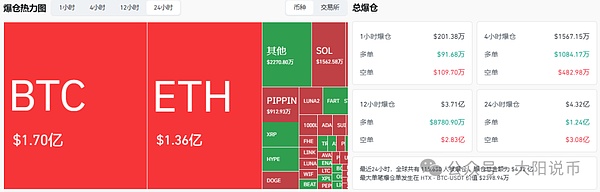
Tháng 12 quyết chiến sắp tới, tăng hay giảm?

Về mặt dữ liệu, tỷ lệ luân chuyển đã giảm, có lẽ là đang chờ Fed, tỷ lệ luân chuyển thấp là điều tốt, cho thấy tâm lý nhà đầu tư bắt đầu ổn định, còn nếu tỷ lệ luân chuyển luôn ở mức cao mới chứng tỏ nhà đầu tư ngắn hạn chiếm ưu thế, tâm lý thị trường không lý tưởng.

Cấu trúc chip hiện tại cũng rất ổn định, không thấy dấu hiệu sụp đổ, việc tăng giảm sắp tới có lẽ là điều đau lòng nhất trong tháng 12, sau cuộc họp chính sách tiền tệ của Mỹ còn có cuộc họp của Nhật, rồi còn rất nhiều dữ liệu sắp công bố, tháng 12 này chưa chắc đã trôi qua yên ổn.

✅ Phân tích thị trường hôm nay:

BTC

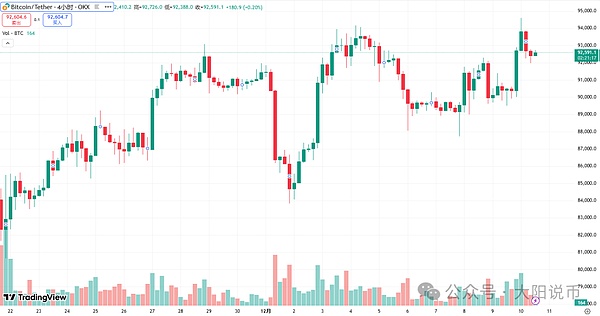
Hỗ trợ ngắn hạn của Bitcoin nằm ở khoảng 91400 - 90300. Nếu phá vỡ, buổi tối hoặc kết hợp với tin tức quyết định lãi suất có thể tạo ra biểu đồ giá châm ngòi lên xuống, chú ý các vị trí châm ngòi 88700, 86800. Nếu không phá vỡ xuống dưới, hãy quan sát xem có thể đứng vững ở 94200 không, sau khi đứng vững có thể lên 95000 - 96200.
SOL

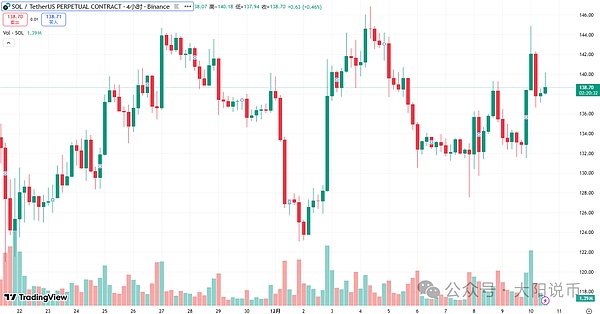
Solana đã điều chỉnh ở 144.7, hỗ trợ ngắn hạn hiện tại 133.4 nếu không phá vỡ vẫn có cơ hội phục hồi. Vị trí châm ngòi chú ý 129.7, 125.3. Áp lực ngắn hạn nằm ở 141.7, sau khi đứng vững có thể lên 146 - 148.
ETH

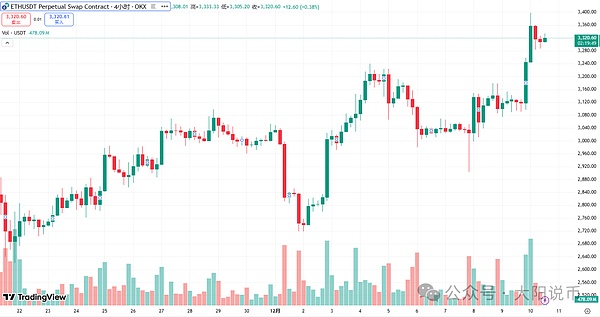
Áp lực ngắn hạn Ethereum 3375, sau khi đứng vững có thể hướng đến 3444. Hỗ trợ ngắn hạn phía dưới 3150, nếu xuất hiện giảm mạnh, vị trí châm ngòi có thể chú ý 3010 và 2960.
BNB

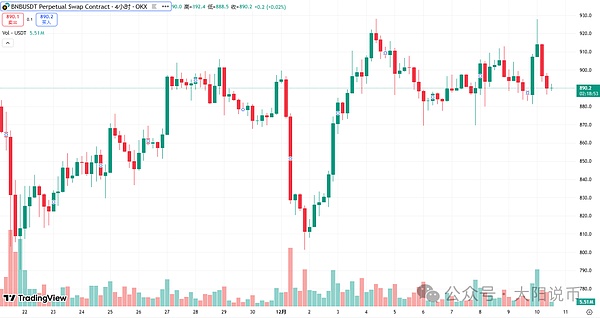
Hôm nay trọng điểm chú ý vị trí 887, sau khi đứng vững cấp độ 2-4 giờ có hy vọng mở ra phục hồi, áp lực phía trên chú ý gần 905, 913, 926. Nếu cấp độ 2-4 giờ không thể đóng cửa trên 898, thị trường có thể tiếp tục giảm sâu, hỗ trợ tham khảo 887 (hỗ trợ nhỏ), 878, 870, 857.
❌ Xu hướng theo dõi dài hạn thực sự có thể kiếm tiền lớn, không phải là đuổi theo giao chéo trung bình, mà là đầu tư giá trị!

Bạn hiểu AI, hiểu blockchain, thì sớm nặng túi đầu tư vào những mã cơ bản có thể chạy mười năm như NVIDIA, BTC, ETH, BNB. Chúng tăng không phải vì biểu đồ đẹp, mà là giá trị được thực hiện, đường trung bình dài hạn tự nhiên đi lên. Hầu hết mọi người thua lỗ vì chỉ theo biểu đồ, không theo tài sản, đuổi đỉnh cao, cắt lỗ đáy, lên xuống thang máy liên tục nâng kiệu cho nhà trang.

Cách dùng duy nhất đáng tin cậy của kỹ thuật mặt là "hồi quy giá trị", tài sản tốt tăng quá điên cuồng, xa đường trung bình dài hạn thì giảm túi, giảm về gần đường trung bình thì mua lại, vừa nắm giữ xu hướng lớn, vừa ăn theo sóng. Nói đến cùng, biểu đồ hoa mỹ đến đâu, kiếm tiền vẫn là giá trị thế giới thực. Chỉ nhìn chằm chằm vào biểu đồ không nghiên cứu tài sản, mãi mãi đang đưa tiền cho người khác.

❌ $SYRUP dựa vào đâu mỗi ngày hút 48 triệu!

Giao thức SYRUP cơ bản rất mạnh mẽ, tài sản USD cốt lõi của nó (syrup USDC, syrup USDT), tổng tiền gửi đã vượt 2.2B, đạt mức cao lịch sử, hiện là một trong năm tài sản cùng loại hàng đầu.

Tuần qua, giao thức này mỗi ngày trung bình dòng tiền ròng chảy vào hơn 48 triệu USD, trong khi đó đối thủ cạnh tranh chính lại có dòng tiền ròng chảy ra, cho thấy sức hút thị trường mạnh mẽ. syrup USDC và syrup USDT đã lọt vào top năm, top sáu về AUM tài sản USD có lợi nhuận, và quy mô tiếp tục tăng nhanh, Maple đang tiến vững chắc đến tiêu chuẩn quản lý tài sản trên chuỗi.
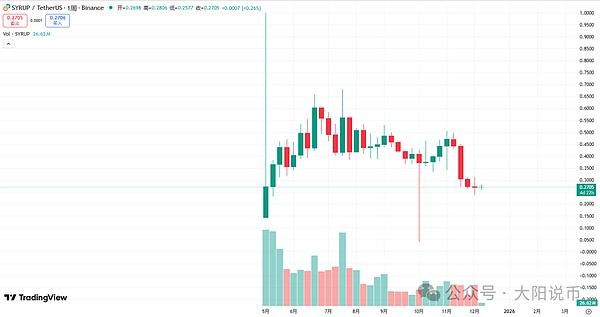
Về mặt kỹ thuật, SYRUP chỉ đang bù giảm bình thường, không có gì phải hoảng. Ngày 10/11 giảm mạnh nó hầu như không giảm, nhanh chóng trở lại trên 0.4, trong khi các altcoin khác phần lớn giảm một nửa, nên bây giờ bù một chút là bình thường, $MORPHO cũng vậy.
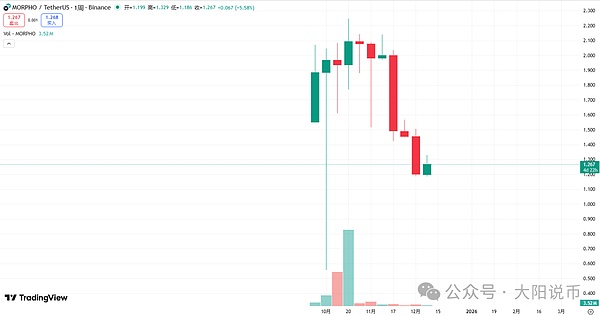
Cơ bản hoàn toàn không có vấn đề, ngược lại ngày càng mạnh, chỉ là môi trường đại cục kém, tăng độc lập là không thực tế. Gần 0.2 chính là điểm khởi đầu của bull run trước, có thể phục kích thích hợp.

$ZEC

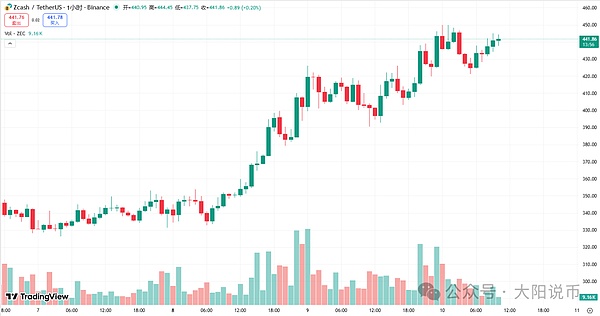
ZEC hơi khó giữ rồi, đã tăng hơn 20%, mục tiêu 500 USD sắp đạt tới! Bạn nào nặng túi nhất định phải bán ra nhiều lần từng đợt để chốt lời, phòng ngừa đột ngột giảm mạnh châm ngòi. Chúc mừng các anh chị em đi theo kiếm được bộn tiền!
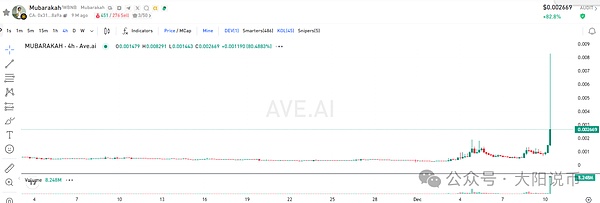
$Mubarakah

WeChat của He Yi bị đánh cắp, hacker dùng tài khoản của cô ấy đăng朋友圈狂喊 một đồng tiền meme Mubarakah, kết quả giá coin trực tiếp tăng mạnh vài lần. Đợt操作 này dễ dàng套了几百萬美金, Web3 ẩn danh quá牛, căn bản không tra ra là ai làm, hoàn hảo收割!
$DASH

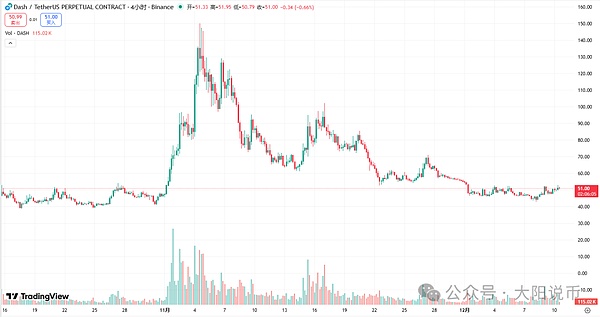
Đồng Dash nhận được hỗ trợ tại kênh Vegas trên biểu đồ ngày, và hình thành mô hình đáy đầu vai. Nếu phá vỡ vị trí "hoán đổi dừng lỗ" gần 53.86, thì có thể tăng thêm đến gần 64. Áp lực bán phía trên hiện tại đã được tiêu hóa nhiều lần, khả năng phá vỡ đang tăng lên.
$AAVE


Xem qua lĩnh vực Defi hiện tại, ngoại trừ giao thức LST/LRT, AAVE là giao thức DeFi duy nhất được điều chỉnh có TVL trên 100 tỷ USD. Đội ngũ dự án đã mất nhiều năm tích lũy thanh khoản và hồ sơ thành tích, đây đều là những hào rào khó sao chép.

Trending Cryptos

Related Questions

QTại sao tỷ lệ thanh khoản thấp lại được coi là một tín hiệu tốt trên thị trường tiền điện tử?

ATỷ lệ thanh khoản thấp cho thấy tâm lý nhà đầu tư bắt đầu ổn định, không còn tình trạng các nhà đầu tư ngắn hạn chiếm ưu thế, điều này giúp thị trường ít biến động hơn và là dấu hiệu tích cực.

QCác mức hỗ trợ ngắn hạn quan trọng cho Bitcoin (BTC) là gì theo phân tích?

AHỗ trợ ngắn hạn cho Bitcoin nằm trong khoảng 91.400 - 90.300. Nếu vượt qua, có thể kiểm tra các mức 88.700 và 86.800. Nếu giữ vững, việc vượt qua 94.200 có thể hướng tới 95.000 - 96.200.

QSolana (SOL) cần vượt qua mức nào để có cơ hội tăng giá tiếp theo?

ASolana cần giữ vững hỗ trợ tại 133.4 và vượt qua áp lực ngắn hạn ở 141.7 để nhắm mục tiêu 146 - 148. Các mức kiểm tra quan trọng khác là 129.7 và 125.3.

QTại sao SYRUP được đánh giá là một tài sản mạnh mẽ dù đang trong giai đoạn điều chỉnh?

ASYRUP có cơ bản mạnh với tổng tiền gửi tài sản USD đạt 2,2 tỷ, lọt top 5 tài sản cùng loại và thu hút dòng tiền ròng trung bình 48 triệu USD mỗi ngày, trong khi các đối thủ chảy máu tiền. Điều chỉnh hiện tại chỉ là bù đắp cho đợt giảm trước đó.

QSự kiện nào gần đây đã gây ra biến động giá mạnh cho đồng tiền Mubarakah?

ATài khoản WeChat của He Yi (đồng sáng lập Binance) bị hack, kẻ tấn công đã sử dụng tài khoản này để đăng bài quảng bá đồng tiền Mubarakah, dẫn đến giá tăng mạnh và thu lợi nhuận hàng triệu USD.

Related Reads

After Three Consecutive Quarters of Decline, Can the Crypto Market Find a Window for Stabilization in Q3?

The cryptocurrency market has just concluded its worst-performing quarter since 2022, with total capitalization dropping 12.6% to $2.1 trillion. All core metrics indicate capital is leaving the sector, not just rotating within it. Bitcoin fell 14.2% and Ethereum dropped 25.4% in Q2, breaking their previous correlation with US tech stocks. A key driver is the reversal in US spot Bitcoin ETF flows, which saw a net outflow of approximately $4.67 billion in Q2, including a record monthly outflow near $4.5 billion in June. While recent data suggests long-term holders are accumulating again, sustained ETF outflows mean continued selling pressure. Market focus is now singularly on the Federal Reserve. The upcoming July FOMC meeting is seen as the most critical event for Q3. A dovish signal could support Bitcoin reclaiming a $68,000-$84,000 range, while a hawkish stance might establish a new trading band around $50,000-$56,000. Additionally, regulatory uncertainty persists, with the progress of the crucial *CLARITY Act* stalling in the Senate, reducing its perceived 2026 passage probability to 40-45%. Despite the broad downturn, a few sectors showed growth. Prediction markets saw nominal volume surge 48.7% year-over-year to $113.8 billion, and tokenized collectibles transaction volume rose 143% quarterly to $1.4 billion. The Real-World Asset (RWA) tokenization sector also continued steady growth, now representing ~$28.1 billion in on-chain value. The market's foundation for an extreme crash appears limited, with Bitcoin price hovering near its 200-week moving average. However, the trading paradigm has shifted from narrative-driven speculation to decisions based on price action, policy developments, and interest rate expectations, making a broad sentiment-driven rally unlikely in the near term.

marsbit1h ago

After Three Consecutive Quarters of Decline, Can the Crypto Market Find a Window for Stabilization in Q3?

marsbit1h ago

BIT Trading Moment: BTC Still Suppressed by Weekly 200 EMA, Rejection May Restart Decline; Storage and Semiconductors that Surged Last Night Begin Falling in Evening Trading

**Crypto & Stock Market Wrap: Bitcoin Tests Resistance, Stocks Retreat After AI Surge** Bitcoin consolidates around $66,000, facing key resistance near $68,000—an area seen as a major psychological and technical hurdle where previous rallies have failed. Analysts note the cryptocurrency is caught between its 200-week moving average (~$63,333) and 200-week EMA (~$68,328). A clear break above $68k is needed to signal a stronger bullish trend, while a rejection could lead to a retest of $63k support. Market sentiment remains cautious, with low futures open interest pointing to a low-liquidity rebound rather than a full bull market. Bitcoin spot ETFs saw another $203 million inflow. US stock futures pointed lower after a strong Tuesday session led by a massive rebound in semiconductors and memory stocks. The rally was fueled by renewed optimism about AI-driven hardware demand, with Micron, SanDisk, and SK Hynix surging. However, those gains reversed in pre-market trading. Super Micro Computer (SMCI) soared over 20% after hours on strong guidance and a record backlog. Other standouts included Rocket Lab and nuclear energy plays Oklo and X-Energy. Rising oil prices (Brent above $91) and climbing Treasury yields (10-year near 4.64%), however, are reigniting inflation concerns and acting as a headwind for equities. In Asia, markets were mixed. South Korea's KOSPI pared early gains to close slightly higher as semiconductor stocks like SK Hynix gave back initial surges. Japan's Nikkei edged lower as the yen hit a fresh 38-year low against the dollar, raising fears of potential market intervention. Key events to watch include the Samsung Galaxy launch, AMD's AI event, and a slew of major tech earnings from Alphabet, Tesla, and IBM after the close on Wednesday, followed by the ECB meeting and Intel's earnings on Thursday.

marsbit1h ago

BIT Trading Moment: BTC Still Suppressed by Weekly 200 EMA, Rejection May Restart Decline; Storage and Semiconductors that Surged Last Night Begin Falling in Evening Trading

marsbit1h ago

Former CFTC Chairman, Circle President Tarbert: Preaching Long-Termism While Cashing Out $30 Million Himself

Former CFTC Chairman and Circle President Heath Tarbert has consistently advocated for a long-term vision in public, urging patience from investors as Circle’s stock price has fallen significantly from its peak. However, it has been revealed that since Circle’s IPO, Tarbert has continuously sold his CRCL shares through pre-arranged trading plans, cashing out approximately $30 million, without making any public market purchases. This contrast between his public messaging and personal actions has drawn criticism. Tarbert joined Circle in July 2023 as Chief Legal Officer, leveraging his regulatory experience to help guide the company through its IPO and expansion. Despite promoting stablecoins as long-term infrastructure, he established a 10b5-1 trading plan just before Circle went public, leading to substantial stock sales over the following year. In March 2026, he initiated another plan to sell more shares. His career trajectory highlights a pattern of moving between high-level regulatory roles and influential positions in the financial sector. After resigning as CFTC Chairman in early 2021, he joined Citadel Securities as Chief Legal Officer just 27 days later, during a period of intense regulatory scrutiny for the firm. He later joined Circle, aiding its efforts to navigate regulatory challenges for its public listing. While Tarbert's expertise in policy and compliance is valuable to companies like Circle, his actions—advocating long-term confidence while personally divesting—raise questions about the alignment between his public statements and his private financial decisions, leaving investors who followed his advice to bear the market risks.

marsbit1h ago

Former CFTC Chairman, Circle President Tarbert: Preaching Long-Termism While Cashing Out $30 Million Himself

marsbit1h ago

Gate Research Institute: The 'Wall Street-ization' Wave of Crypto Financial Products – Competition or Integration?

The article titled "Gate Research Institute: Are Crypto Financial Products Sparking a 'Wall Street' Wave—Competition or Convergence?" explores the evolving relationship between the crypto ecosystem and traditional finance (TradFi). The piece begins by reflecting on Bitcoin's original 2009 vision of decentralization, disintermediation, and moving away from banks. It then contrasts this with the 2024 landscape, where key crypto assets like Bitcoin are increasingly held through Wall Street products like ETFs issued by giants like BlackRock. The article questions whether this signifies that TradFi is systematically taking over the rights to issue, price, custody, and distribute crypto financial assets. The core argument is that this is not a zero-sum takeover but rather a bidirectional convergence where each side addresses the other's weaknesses. Crypto offers 24/7 global markets, programmable settlement, and open access but lacks compliant channels, institutional-grade custody, deep fiat liquidity, and mainstream distribution. TradFi possesses these but is constrained by legacy systems, limited operating hours, and slow settlement. Two primary convergence paths are highlighted: * **Path A (CEX to TradFi):** Exemplified by Gate, which has progressed from offering tokenized stocks and CFDs to providing direct, real stock trading (US, Hong Kong, South Korea) within its platform, using USDT. * **Path B (TradFi to Crypto):** Exemplified by Robinhood, which has integrated crypto trading, acquired exchanges like Bitstamp, and is moving traditional assets like stocks onto the blockchain via tokenization and its own Layer 2. Both paths are ultimately competing to become the next-generation, unified financial account—a "super account" where users can seamlessly trade cryptocurrencies, stocks, ETFs, RWA (Real World Assets), and tokenized treasury products in one interface. The growth of RWA and tokenized treasuries (e.g., BlackRock's BUIDL) is presented as the asset-layer fusion, providing stable, yield-bearing assets on-chain and acting as a bridge between the two worlds. In conclusion, the "Wall Street-ization" of crypto is framed as a mutual transformation. Decentralized ideals persist in the protocol layer, while at the application layer, a more efficient, global, and accessible unified capital market is emerging from this convergence. The future competition lies not between crypto exchanges and stockbrokers, but between platforms vying to offer the most comprehensive asset coverage, liquidity, and user experience within a single account.

marsbit1h ago

Gate Research Institute: The 'Wall Street-ization' Wave of Crypto Financial Products – Competition or Integration?

marsbit1h ago

Trading

Spot

Hot Articles

What is $BITCOIN

DIGITAL GOLD ($BITCOIN): A Comprehensive Analysis Introduction to DIGITAL GOLD ($BITCOIN) DIGITAL GOLD ($BITCOIN) is a blockchain-based project operating on the Solana network, which aims to combine the characteristics of traditional precious metals with the innovation of decentralized technologies. While it shares a name with Bitcoin, often referred to as “digital gold” due to its perception as a store of value, DIGITAL GOLD is a separate token designed to create a unique ecosystem within the Web3 landscape. Its goal is to position itself as a viable alternative digital asset, although specifics regarding its applications and functionalities are still developing. What is DIGITAL GOLD ($BITCOIN)? DIGITAL GOLD ($BITCOIN) is a cryptocurrency token explicitly designed for use on the Solana blockchain. In contrast to Bitcoin, which provides a widely recognized value storage role, this token appears to focus on broader applications and characteristics. Notable aspects include: Blockchain Infrastructure: The token is built on the Solana blockchain, known for its capacity to handle high-speed and low-cost transactions. Supply Dynamics: DIGITAL GOLD has a maximum supply capped at 100 quadrillion tokens (100P $BITCOIN), although details regarding its circulating supply are currently undisclosed. Utility: While precise functionalities are not explicitly outlined, there are indications that the token could be utilized for various applications, potentially involving decentralized applications (dApps) or asset tokenization strategies. Who is the Creator of DIGITAL GOLD ($BITCOIN)? At present, the identity of the creators and development team behind DIGITAL GOLD ($BITCOIN) remains unknown. This situation is typical among many innovative projects within the blockchain space, particularly those aligning with decentralized finance and meme coin phenomena. While such anonymity may foster a community-driven culture, it intensifies concerns about governance and accountability. Who are the Investors of DIGITAL GOLD ($BITCOIN)? The available information indicates that DIGITAL GOLD ($BITCOIN) does not have any known institutional backers or prominent venture capital investments. The project seems to operate on a peer-to-peer model focused on community support and adoption rather than traditional funding routes. Its activity and liquidity are primarily situated on decentralized exchanges (DEXs), such as PumpSwap, rather than established centralized trading platforms, further highlighting its grassroots approach. How DIGITAL GOLD ($BITCOIN) Works The operational mechanics of DIGITAL GOLD ($BITCOIN) can be elaborated on based on its blockchain design and network attributes: Consensus Mechanism: By leveraging Solana’s unique proof-of-history (PoH) combined with a proof-of-stake (PoS) model, the project ensures efficient transaction validation contributing to the network's high performance. Tokenomics: While specific deflationary mechanisms have not been extensively detailed, the vast maximum token supply implies that it may cater to microtransactions or niche use cases that are still to be defined. Interoperability: There exists the potential for integration with Solana’s broader ecosystem, including various decentralized finance (DeFi) platforms. However, the details regarding specific integrations remain unspecified. Timeline of Key Events Here is a timeline that highlights significant milestones concerning DIGITAL GOLD ($BITCOIN): 2023: The initial deployment of the token occurs on the Solana blockchain, marked by its contract address. 2024: DIGITAL GOLD gains visibility as it becomes available for trading on decentralized exchanges like PumpSwap, allowing users to trade it against SOL. 2025: The project witnesses sporadic trading activity and potential interest in community-led engagements, although no noteworthy partnerships or technical advancements have been documented as of yet. Critical Analysis Strengths Scalability: The underlying Solana infrastructure supports high transaction volumes, which could enhance the utility of $BITCOIN in various transaction scenarios. Accessibility: The potential low trading price per token could attract retail investors, facilitating wider participation due to fractional ownership opportunities. Risks Lack of Transparency: The absence of publicly known backers, developers, or an audit process may yield skepticism regarding the project's sustainability and trustworthiness. Market Volatility: The trading activity is heavily reliant on speculative behavior, which can result in significant price volatility and uncertainty for investors. Conclusion DIGITAL GOLD ($BITCOIN) emerges as an intriguing yet ambiguous project within the rapidly evolving Solana ecosystem. While it attempts to leverage the “digital gold” narrative, its departure from Bitcoin's established role as a store of value underscores the need for a clearer differentiation of its intended utility and governance structure. Future acceptance and adoption will likely depend on addressing the current opacity and defining its operational and economic strategies more explicitly. Note: This report encompasses synthesised information available as of October 2023, and developments may have transpired beyond the research period.

976 Total ViewsPublished 2025.05.13Updated 2025.05.13

What is $BITCOIN

Discussions

Welcome to the HTX Community. Here, you can stay informed about the latest platform developments and gain access to professional market insights. Users' opinions on the price of BTC (BTC) are presented below.

活动图片














