BTC、ETH冲高、USDT破7+降息倒计时、这波双底能撑起超级行情吗?SOL、BCH、ZEC有望暴力拉升

金色财经Published on 2025-12-04Last updated on 2025-12-04

睡了个懒觉起来,币圈直接一片红彤彤 ——BTC、ETH 双双突破,唯独 USDT 跌破 7 关口,这信号也太明显了吧!免费近裙+QQ:3260353596

要是这波能成功筑成双底,那绝对是要憋大招的节奏,超大行情在向我们招手啊~

大机会还得看链上!BTC 三段式反弹藏玄机

现在市场的核心机会还是在链上,尤其是 BSC 那边,客服小何都快把消息发爆了,大家可得多盯着点!
0?wx_fmt=png&from=appmsg

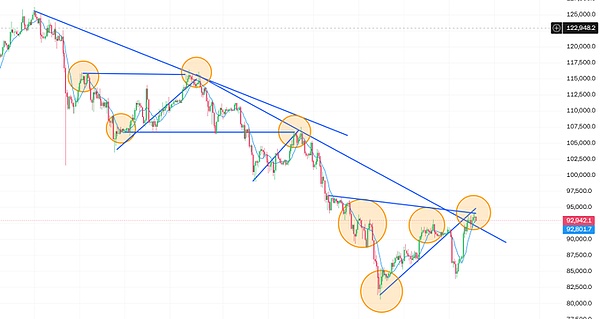
重点说说 BTC,这货最近在走 “三段式回踩反弹” 的路子,前两次都是跌到趋势线附近就反弹,这次会不会重演?

• 第一次跌完:反弹 12%,花了 10 天;

• 第二次跌完:反弹 10%,一周就到位;

• 第三次跌完:目前已经反弹 16%,耗时 12 天。

现在 BTC 还在前期 93000 附近的震荡区间晃悠,上方 96000 是套牢盘扎堆的筹码密集区。这波是跟着降息预期反弹,幅度已经不小了,机会虽有,但千万别脑子一热追高!

从清算地图看,96000 附近有不少做空清算需求,下方 8.8 万、9 万则有回踩需求。关键位向来都是磨磨蹭蹭才会突破,所以这些点位既是风险位,也是捡漏的好机会~
图像

ETH 疯狂暴走!反弹幅度是 BTC 的 5 倍?

要说这波反弹最猛的,还得是 ETH!BTC 才涨 1%,ETH 直接干涨 5%,简直是开了挂~

为啥 ETH 这么牛?三个核心原因:

1. 之前跌太狠了!高位下来跌了 46%,比 BTC 的 35% 惨多了,反弹需求拉满;

2. 技术升级发力!以太坊基金会确认 Fusaka 主网 12 月 3 日上线,L2 gas 费直接砍了 89%,用起来更便宜了;

3. 机构疯狂加仓!ETH ETF 12 月 1 日净流入 1.8 亿美元,把 11 月 16.4 亿的流出给扭回来了,现在机构总持仓超 130 亿,华尔街的钞能力果然顶~图像
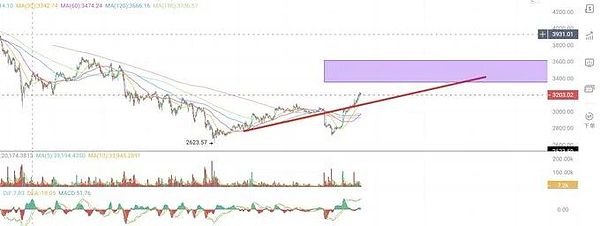
美联储降息倒计时 6 天!币圈生死战来了

距离美联储公布降息只剩 6 天,现在市场全在炒预期。BTC、ETH 都已经逼近大级别下降趋势线,这波要是能突破,直接开启牛市;要是突破失败,可能又要重回熊市深渊。

不过我个人更倾向于 “利多出尽是利空”,12 月 11-12 日可能会出现 “卖预期买事实” 的行情,大家要提前做好准备~免费近裙+QQ:3260353596

山寨币机会来了!三类币值得盯

之前被 BTC “吸血” 的山寨币,终于要迎来翻身机会了!我把它们分成三类,按需上车:

1. ETH、SOL:跟大盘节奏最同步,相当于加了杠杆的 BTC,波动大、性价比高,要是有独立行情还能自己飞;

2. 超跌山寨:之前跌得爹妈都不认识的,这波反弹大概率会补涨;

3. 妖币:10-30 天内就能走出主升浪,就看谁能挖到黑马~

几个重点币种小提醒

• SOL:前两晚猛拉,今天有点歇菜了。从 123 涨到 146.85,还没正经回踩,146.85 在日线布林上轨,不跌到 140 以下别补仓!150 是整数关口,大概率会回调 8-11 个点,这里能做空;站稳 141.85-144.25,才会冲 157。
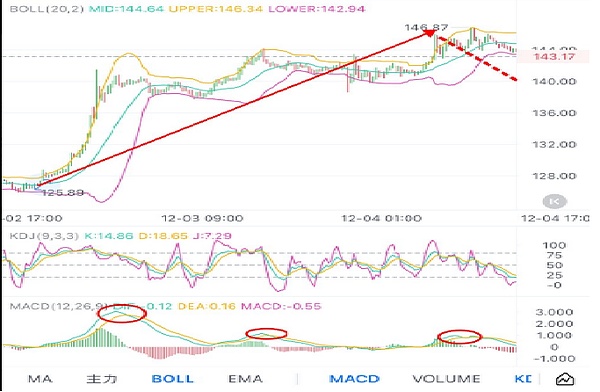
0?wx_fmt=png&from=appmsg

• ASTER:0.91 美元是铁底!过往四次跌到这附近都反弹了,项目方像是在死护这个价,可当参考。
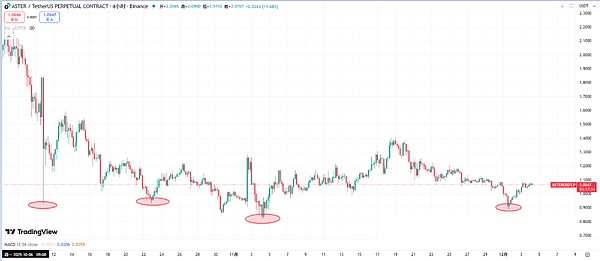
0?wx_fmt=png&from=appmsg

• BCH:早就调整完了,三重底形态,突破所有均线,MACD 上零轴,后续要冲 620 压力位,回调到 560 附近能抄底现货博反弹。
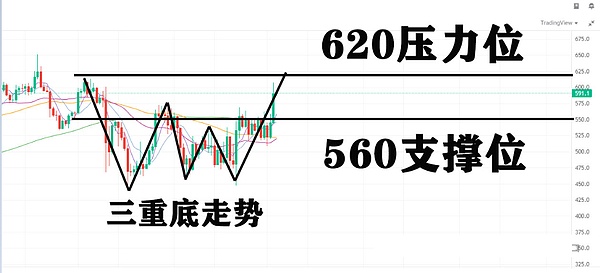
0?wx_fmt=png&from=appmsg

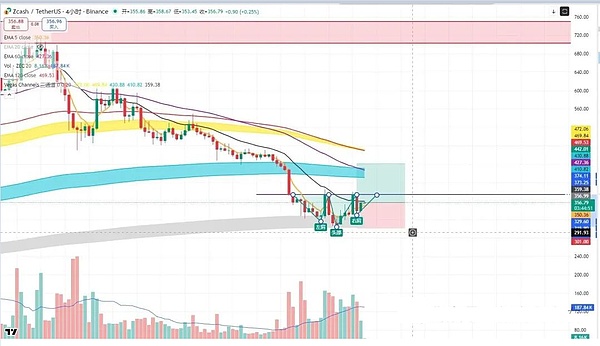
• ZEC:阶段性底部,可博弈头肩底形态或四小时 vegas 通道共振,1:1.5 的盈亏比,要不要博看你们自己~
0?wx_fmt=png&from=appmsg

我自己已经拿了 BTC 多单一周了,还在继续持有,ETH 打算到 3500 左右平多。大家手里的单子耐心点,别瞎操作~免费近裙+QQ:3260353596

Trending Cryptos

Related Reads

Tsinghua AI Mathematician Emerges: From Intuition to Theorem, Contributing to an 84-Page Quantum Algorithm Paper

Tsinghua University’s Intelligent Industry Research Institute (AIR) has developed an AI mathematician agent named AIM, designed not just to solve math problems but to actively participate in early-stage research. In a recent study, researchers collaborated with AIM to develop "Sign Embedding Quantum Algorithms," resulting in an 84-page paper on quantum algorithms for matrix equations and functions. The research began with a human researcher's intuition: can rational approximation serve as a design principle for quantum algorithms? AIM helped expand this idea into multiple candidate research directions. Human researchers then filtered and focused on the most promising path. AIM assisted in organizing theorems, generating proof drafts, and performing complexity analysis, while humans maintained oversight, auditing assumptions and refining derivations. This case illustrates a human-AI collaborative workflow: AI rapidly explores and expands research avenues, generates draft materials, and aids in checking derivations; human researchers provide critical judgment on direction, value, and validity. The process emphasizes "high-throughput candidate generation + human value gating + AI-assisted audit and repair + human final integration." The resulting quantum algorithm framework offers a unified approach to several matrix problems, advancing quantum linear algebra under more general conditions. This work suggests AI's role in theoretical research is evolving from task-specific assistance to supporting the entire research lifecycle—enhancing exploration and efficiency while keeping human expertise central to guiding inquiry and ensuring rigor. *Paper & System Links:* - AIM application report: https://arxiv.org/abs/2606.24899 - Quantum algorithm paper: https://arxiv.org/abs/2604.25333 - AIM repository: https://github.com/TheoryFoundry/AIMv2

marsbit9m ago

Tsinghua AI Mathematician Emerges: From Intuition to Theorem, Contributing to an 84-Page Quantum Algorithm Paper

marsbit9m ago

Short-Lived Meme Mania: Can It Be the Icebreaker for Robinhood's RWA Narrative?

Robinhood recently launched its own Layer 2 network, Robinhood Chain, built on Arbitrum and focusing on tokenized stocks, RWA, DeFi, and AI finance. Shortly after launch, a meme coin called CASHCAT, named after an early unused Robinhood brand, surged in popularity, achieving a market cap near $150 million and high daily trading volume. It gained traction through third-party DEXs and launchpads like Uniswap and Noxa.fun, bypassing Robinhood's official listing process. This highlights a key feature of the permissionless chain: even assets not officially approved can achieve significant liquidity and trading activity. While CASHCAT currently dominates the chain's meme coin sector, its high turnover indicates speculative trading. The rapid proliferation of new meme coins risks dispersing liquidity. Meanwhile, the chain's core RWA sector remains relatively small at $12.5 million. CEO Vlad Tenev has expressed that the chain is well-suited for both RWA and meme coins. In the optimistic scenario, meme-driven activity could bootstrap the chain's user base and liquidity for its long-term RWA vision. However, if the meme frenzy fades quickly, the RWA narrative may struggle to gain traction independently. The incident demonstrates that on a permissionless platform, the market itself can create major assets, offering Robinhood a potential new growth avenue beyond its core crypto business as it navigates the long-term development of the tokenized asset market.

Foresight News12m ago

Short-Lived Meme Mania: Can It Be the Icebreaker for Robinhood's RWA Narrative?

Foresight News12m ago

The Fall of Zapper: An Act of God or a Human Error?

The Fall of Zapper: A Post-Mortem of a DeFi Pioneer In July 2026, Zapper, a once-dominant DeFi portfolio tracker, announced its shutdown. Born in 2020 from a merger, Zapper capitalized on the DeFi Summer boom, reaching 2 million monthly users and processing over $13B in transactions, backed by $16.5M in funding from investors like Framework Ventures and Coinbase Ventures. Its core "Zap" feature simplified complex multi-step DeFi operations. Despite its early success, Zapper failed to build a sustainable business model. Revenue from DEX aggregation was minimal due to fierce competition, while maintaining its multi-chain data infrastructure was costly. Furthermore, the DeFi landscape shifted: capital consolidated around top protocols, reducing the need for complex portfolio tracking across numerous platforms. Zapper's user base and core demand eroded. The company attempted multiple pivots, including an NFT-based points system, a social app (Chainchat), and plans for a ZAP token protocol. However, these initiatives—often focused on creating new, speculative C端需求 rather than solving existing pain points—ultimately failed. Critics argue Zapper remained trapped in a "blockchain purist" mindset, prioritizing costly, non-revenue-generating features over its competitive DEX aggregator. Unlike competitor DeBank, which successfully pivoted to its Rabby Wallet, Zapper lacked a diversified revenue stream. Its closure highlights the peril for tooling projects that fail to adapt to market shifts and monetize effectively, serving as a cautionary tale for the industry.

Foresight News51m ago

The Fall of Zapper: An Act of God or a Human Error?

Foresight News51m ago

Trading

Spot

Hot Articles

What is $BITCOIN

DIGITAL GOLD ($BITCOIN): A Comprehensive Analysis Introduction to DIGITAL GOLD ($BITCOIN) DIGITAL GOLD ($BITCOIN) is a blockchain-based project operating on the Solana network, which aims to combine the characteristics of traditional precious metals with the innovation of decentralized technologies. While it shares a name with Bitcoin, often referred to as “digital gold” due to its perception as a store of value, DIGITAL GOLD is a separate token designed to create a unique ecosystem within the Web3 landscape. Its goal is to position itself as a viable alternative digital asset, although specifics regarding its applications and functionalities are still developing. What is DIGITAL GOLD ($BITCOIN)? DIGITAL GOLD ($BITCOIN) is a cryptocurrency token explicitly designed for use on the Solana blockchain. In contrast to Bitcoin, which provides a widely recognized value storage role, this token appears to focus on broader applications and characteristics. Notable aspects include: Blockchain Infrastructure: The token is built on the Solana blockchain, known for its capacity to handle high-speed and low-cost transactions. Supply Dynamics: DIGITAL GOLD has a maximum supply capped at 100 quadrillion tokens (100P $BITCOIN), although details regarding its circulating supply are currently undisclosed. Utility: While precise functionalities are not explicitly outlined, there are indications that the token could be utilized for various applications, potentially involving decentralized applications (dApps) or asset tokenization strategies. Who is the Creator of DIGITAL GOLD ($BITCOIN)? At present, the identity of the creators and development team behind DIGITAL GOLD ($BITCOIN) remains unknown. This situation is typical among many innovative projects within the blockchain space, particularly those aligning with decentralized finance and meme coin phenomena. While such anonymity may foster a community-driven culture, it intensifies concerns about governance and accountability. Who are the Investors of DIGITAL GOLD ($BITCOIN)? The available information indicates that DIGITAL GOLD ($BITCOIN) does not have any known institutional backers or prominent venture capital investments. The project seems to operate on a peer-to-peer model focused on community support and adoption rather than traditional funding routes. Its activity and liquidity are primarily situated on decentralized exchanges (DEXs), such as PumpSwap, rather than established centralized trading platforms, further highlighting its grassroots approach. How DIGITAL GOLD ($BITCOIN) Works The operational mechanics of DIGITAL GOLD ($BITCOIN) can be elaborated on based on its blockchain design and network attributes: Consensus Mechanism: By leveraging Solana’s unique proof-of-history (PoH) combined with a proof-of-stake (PoS) model, the project ensures efficient transaction validation contributing to the network's high performance. Tokenomics: While specific deflationary mechanisms have not been extensively detailed, the vast maximum token supply implies that it may cater to microtransactions or niche use cases that are still to be defined. Interoperability: There exists the potential for integration with Solana’s broader ecosystem, including various decentralized finance (DeFi) platforms. However, the details regarding specific integrations remain unspecified. Timeline of Key Events Here is a timeline that highlights significant milestones concerning DIGITAL GOLD ($BITCOIN): 2023: The initial deployment of the token occurs on the Solana blockchain, marked by its contract address. 2024: DIGITAL GOLD gains visibility as it becomes available for trading on decentralized exchanges like PumpSwap, allowing users to trade it against SOL. 2025: The project witnesses sporadic trading activity and potential interest in community-led engagements, although no noteworthy partnerships or technical advancements have been documented as of yet. Critical Analysis Strengths Scalability: The underlying Solana infrastructure supports high transaction volumes, which could enhance the utility of $BITCOIN in various transaction scenarios. Accessibility: The potential low trading price per token could attract retail investors, facilitating wider participation due to fractional ownership opportunities. Risks Lack of Transparency: The absence of publicly known backers, developers, or an audit process may yield skepticism regarding the project's sustainability and trustworthiness. Market Volatility: The trading activity is heavily reliant on speculative behavior, which can result in significant price volatility and uncertainty for investors. Conclusion DIGITAL GOLD ($BITCOIN) emerges as an intriguing yet ambiguous project within the rapidly evolving Solana ecosystem. While it attempts to leverage the “digital gold” narrative, its departure from Bitcoin's established role as a store of value underscores the need for a clearer differentiation of its intended utility and governance structure. Future acceptance and adoption will likely depend on addressing the current opacity and defining its operational and economic strategies more explicitly. Note: This report encompasses synthesised information available as of October 2023, and developments may have transpired beyond the research period.

699 Total ViewsPublished 2025.05.13Updated 2025.05.13

What is $BITCOIN

Discussions

Welcome to the HTX Community. Here, you can stay informed about the latest platform developments and gain access to professional market insights. Users' opinions on the price of BTC (BTC) are presented below.

活动图片