周一早盘跳水,加密市场因何再陷恐慌?

Foresight NewsPublished on 2025-12-01Last updated on 2025-12-01

Abstract

「1011 暴跌」以来,市场资金流入以及宏观不确定性,对加密市场产生严重负面影响。

撰文:1912212.eth,Foresight News

BTC 自 8.6 万美元缓慢升至 9.3 万美元后,市场还未暂歇。北京时间 12 月 1 日上午 8 时,BTC 在 1 小时内急跌 3.7%,从 9 万美元下探至 8.7 万美元下方。ETH 也从 3000 美元下落至 2800 美元附近,山寨币再遭普跌。

Coinglass 数据显示,过去 4 小时全网爆仓 4.34 亿美元,其中多单爆仓 4.23 亿美元。
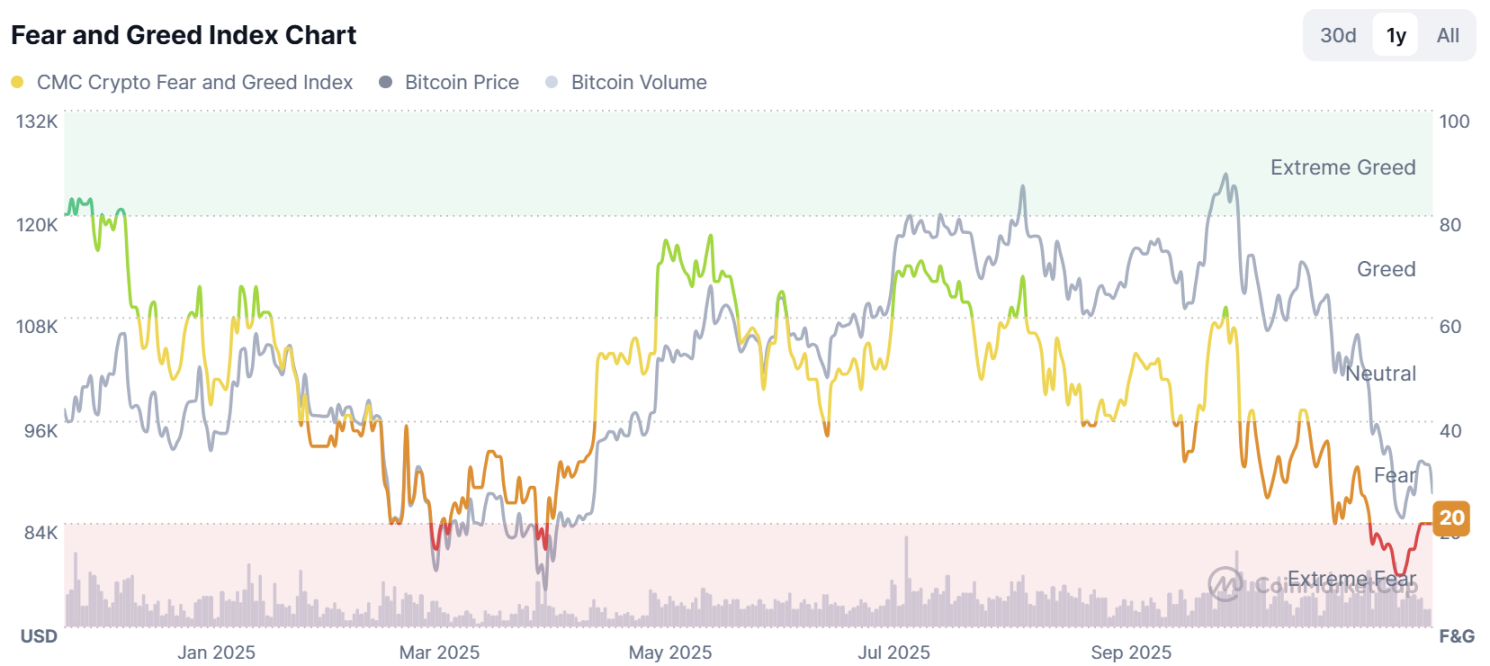
市场情绪再度陷入极度恐慌状态。本次,砸盘时间卡得相当精准。11 月月末最后一小时被硬生生砸成带超长上影线的实体大阴线,彻底摧毁了多头最后一点信心。月线一收阴,技术面直接宣告「牛市结构破坏」,所有周线、月线级别的多头排列或瓦解。

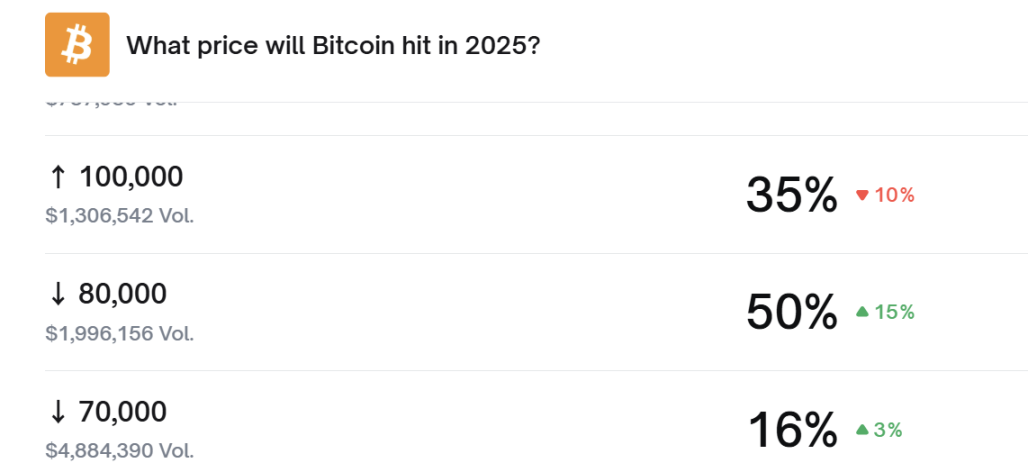
Polymarket 上市场押注 2025 年 BTC 反弹至 10 万美元的概率跌至 35%,而跌至 8 万美元的概率上涨 15% 至 50%。
本次真正的导火索其实不是美联储、不是特朗普政策,或是中国再度持续变严的监管。

11 月 29 日,中国人民银行召开打击虚拟货币交易炒作工作协调机制会议。公安部、中央网信办、中央金融办、最高人民法院、最高人民检察院、国家发展改革委、工业和信息化部、司法部、中国人民银行、国家市场监管总局、国家金融监管总局、中国证监会、国家外汇局有关负责人员出席会议。会议强调,虚拟货币不具有与法定货币等同的法律地位,不具有法偿性,不应且不能作为货币在市场上流通使用,虚拟货币相关业务活动属于非法金融活动。稳定币是虚拟货币的一种形式,目前无法有效满足客户身份识别、反洗钱等方面的要求,存在被用于洗钱、集资诈骗、违规跨境转移资金等非法活动的风险。

会议要求,各单位要坚持以习近平新时代中国特色社会主义思想为指导,全面落实党的二十大和二十届历次全会精神,把防控风险作为金融工作的永恒主题,继续坚持对虚拟货币的禁止性政策,持续打击虚拟货币相关非法金融活动。各单位要深化协同配合,完善监管政策和法律依据,聚焦信息流、资金流等重点环节,加强信息共享,进一步提升监测能力,严厉打击违法犯罪活动,保护人民群众财产安全,维护经济金融秩序稳定。

本次严厉打击涉及部门联合之广以及将稳定币归纳为虚拟货币一种形式并提示洗钱、诈骗等风险,无疑为本就岌岌可危的市场信心,再度泼了一盆冷水。

2017 年的 94 以及 2021 年 519 政策,均在短时间内造成加密市场大幅回撤。

市场从来不缺故事,这次的故事叫「中国最后一批资金强行离场」。故事讲完,就是漫长寒冬的开始。

不过也有观点指出,1011 暴跌以来,市场资金流入以及宏观不确定性,对加密市场产生严重负面影响。

Dragonfly 的普通合伙人 Rob Hadick 表示,这场由低流动性、糟糕的风险管理以及薄弱的预言机或杠杆机制引发的去杠杆事件造成了重大损失,并带来了巨大的不确定性。

Tribe Capital 的普通合伙人兼董事总经理 Boris Revsin 也持相同观点,称这是一场「杠杆清洗」,并在整个市场中产生了连锁反应。同时,宏观环境也变得不再友好:短期降息预期消退、通胀表现顽固、就业市场走弱、地缘政治风险上升、消费者压力上升。

Robot Ventures 的合伙人 Anirudh Pai 强调了对美国经济放缓的担忧。关键增长指标——包括花旗经济意外指数和 1 年期通胀互换(用于对冲通胀风险的衍生品)——已经开始走弱。Pai 表示,这一模式在以往的衰退担忧前也曾出现,推动了更广泛的风险回避情绪。

CMS Holdings 联合创始人 Dan Matuszewski 表示,除了被回购机制支撑的代币外,加密市场几乎没有「增量资金流入」,DAT(数字资产财库)公司除外。随着新需求枯竭、ETF 流入不再提供有效支撑,价格下跌更加迅速。
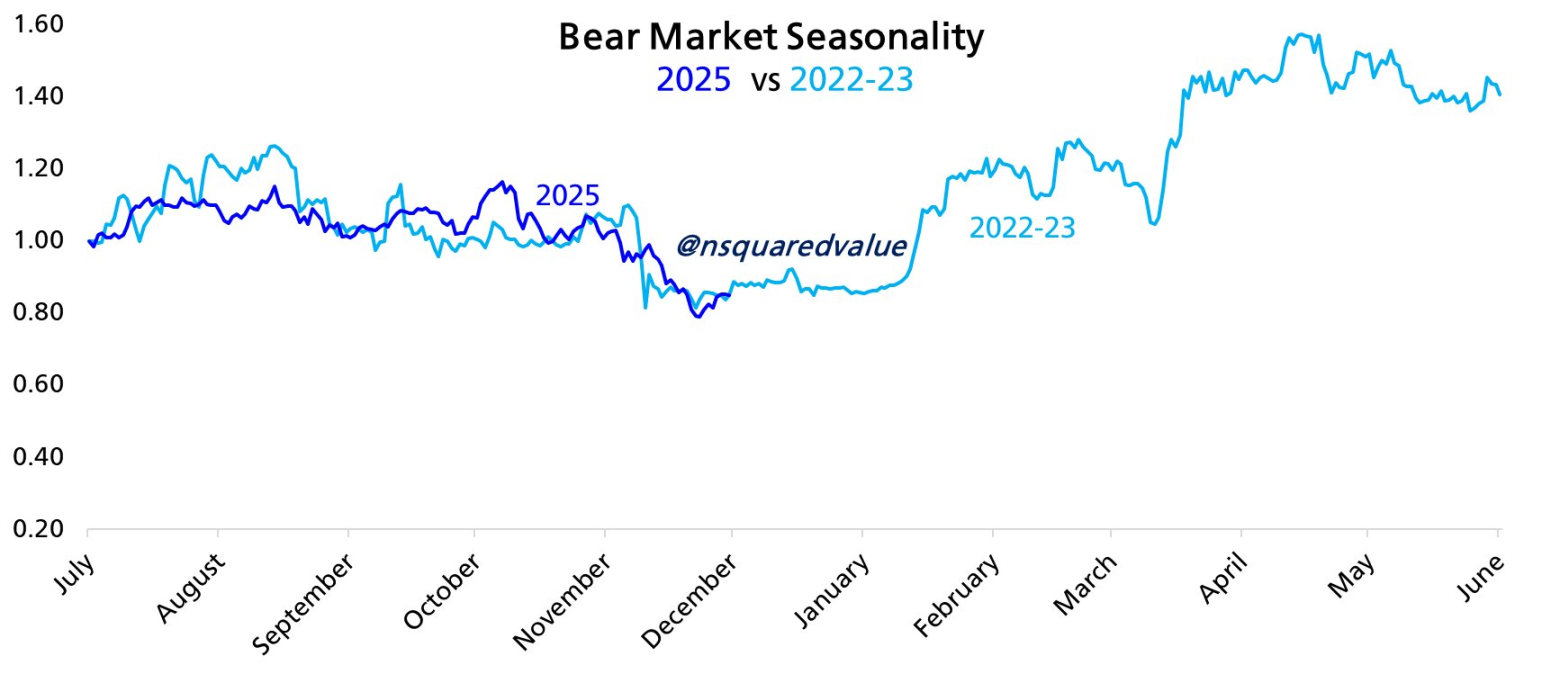
分析师 Timothy Peterson 表示,当前比特币走势与 2022 年熊市相似度极高,从日线和月线来看,今年与 2022 年比特币日线相关性为 80%,月线相关性则高达 98%。如果历史继续重演,比特币价格的真正回升可能要到明年第一季度才会发生。


Trending Cryptos

Related Reads

Goldman Sachs In-Depth Report: Who Will Be the Long-Term Winners in China's AI Large Model Industry?

Goldman Sachs Report: China's AI Models at an Inflection Point China's open-source/open-weight large language models (LLMs) have reached performance parity with top global proprietary models, according to a Goldman Sachs report. This is driven by architectural innovations and higher parameter efficiency, allowing Chinese models to achieve comparable capabilities at 2%-10% the parameter size and significantly lower cost. The market is evolving into a two-tiered structure: a high-end segment (e.g., GLM5.2, Qwen3.7 Max) with premium pricing and a low-end, price-sensitive segment for global SMEs and individual users. Key points: * **Cost & Performance:** Innovations like Mixture of Experts (MoE) enable high performance with smaller models. Projects like Meituan's LongCat 2.0, trained on domestic hardware, highlight progress in tech self-sufficiency. * **Open-Source Strategy:** Most Chinese players use open-source/open-weight models for flexibility and ecosystem growth. However, Goldman notes this may underreport actual deployment and revenue. A shift toward "open-weight + community license" models with revenue sharing (e.g., MiniMax) could improve monetization. * **Market Shift & Global Expansion:** Enterprise AI adoption is shifting from "token maximization" to "ROI-first." International expansion, especially in non-US markets, is a major growth driver. Chinese models are increasingly available on global platforms like AWS Bedrock and Microsoft Copilot. * **Competitive Landscape:** Using a framework based on pricing power, cost advantage, and financial strength, Goldman identifies **Zhipu AI and DeepSeek** as the strongest in foundational text models, and **ByteDance** as the leader in multimodal/video generation. The report maintains Buy ratings on MiniMax and Kuaishou. * **Market Growth:** China's AI model API and subscription revenue is projected to grow from an estimated ¥35 billion in 2026 to ¥879 billion by 2030.

marsbit15m ago

Goldman Sachs In-Depth Report: Who Will Be the Long-Term Winners in China's AI Large Model Industry?

marsbit15m ago

Goldman Sachs Deep Dive Report: Who Will Become the Long-Term Winners in China's AI Large Model Industry?

Goldman Sachs Report: Who Will Be the Long-Term Winners in China's AI Large Model Industry? China's AI large model sector is at a historic inflection point. Goldman Sachs argues that the intelligence of Chinese open-source/open-weight models is approaching top global proprietary models. Rapid adoption by domestic enterprises and global SMEs is creating a data flywheel effect that will further drive model iteration. The evolution is summarized as moving from "DeepSeek's cost-efficiency moment last year to GLM's model-intelligence moment this year." Chinese models achieve near-state-of-the-art performance at significantly lower cost, primarily due to architectural innovations like Mixture of Experts (MoE) and higher parameter efficiency. Models like DeepSeek V4 Pro (1.6T params), GLM5.2 (0.7T), and MiniMax M3 (0.4T) are much smaller than global leaders. Recent advancements in coding capability are attributed to better data curation and RLHF. Landmarks like Meituan's LongCat 2.0, trained fully on domestic AI chips, demonstrate progress in hardware stack independence. The market is forming a "two-tiered structure." The high-end tier (e.g., GLM5.2, Alibaba's Qwen3.7 Max) prices around $1 per million tokens, about 10-25% of US top models, with estimated inference gross margins of 10-20%. The low-end tier (priced as low as $0.06-$0.2 per million tokens) targets price-sensitive global SMEs and individuals. MiniMax derives 60-70% of revenue overseas. Goldman forecasts China's AI model API/subscription revenue to grow from an estimated RMB 35bn in 2026 to RMB 879bn by 2030. Most Chinese players adopt open-source/open-weight strategies for deployment flexibility and community feedback, though this limits monetization as deployments on third-party platforms (e.g., Alibaba Cloud) may not generate direct revenue. A shift towards "open-weight + community license" models with revenue-sharing agreements (like MiniMax's approach) could improve unit economics. International expansion, particularly in non-US markets, is the key growth driver. The global enterprise AI paradigm is shifting from "token maximization" to "ROI prioritization." Chinese models are already hosted on major global platforms like AWS Bedrock and are under consideration for integration into Microsoft Copilot. Using a competitive framework based on pricing power, cost advantage, and financial strength, Goldman identifies the strongest players: In foundational text models, Zhipu AI (initiated coverage) and DeepSeek lead. In multimodal/video generation, ByteDance's Seed is the frontrunner, with Kuaishou's Kling and MiniMax's Hailuo also well-positioned. Goldman maintains a Buy rating on MiniMax, citing its attractive valuation.

链捕手19m ago

Goldman Sachs Deep Dive Report: Who Will Become the Long-Term Winners in China's AI Large Model Industry?

链捕手19m ago

Is Ethereum Truly a "World Computer"?

Title: Is Ethereum Really a "World Computer"? Ethereum, envisioned as a "world computer" by its founder Vitalik Buterin, aims to be a decentralized platform for global applications. However, a recent analysis by Four Pillars raises questions about whether it is more accurately a "Western computer," based on the geographical distribution of its validators. Currently, the United States dominates with 38.19% of all validators, followed by Germany at 13.04%. Combined, these two countries account for over half of the network. In contrast, Asian representation is minimal, with Singapore holding only 3.15%. The concentration is partly due to affordable cloud hosting services like Hetzner and OVH in Europe and North America, as well as the prevalence of residential validators in the U.S., where individuals run nodes via home internet connections. When examining professionally operated validators, the distribution becomes more balanced. The U.S. share drops to 25.81%, while Asian countries like Singapore (7.28%), Hong Kong (6.44%), Japan (6.38%), and South Korea (4.59%) collectively approach the U.S. level. This shift reflects strategic deployments by institutions to meet regulatory requirements and reduce latency for local users. However, regions like South America, the Middle East, and Africa remain underrepresented. Ethereum's peer-to-peer network mechanisms, such as gossipsub, disadvantage areas with low node density, creating a feedback loop where delayed message propagation reduces validator performance and rewards. This imbalance challenges Ethereum's promises of censorship resistance and global accessibility. Despite these issues, opportunities exist for growth in underrepresented regions. As demand for localized staking infrastructure rises, early entrants in areas like the Middle East could establish dominant positions by offering compliant, low-latency solutions. The evolving validator landscape highlights both the structural challenges and the potential for Ethereum to move closer to its "world computer" ideal.

Foresight News2h ago

Is Ethereum Truly a "World Computer"?

Foresight News2h ago

Trading

Spot

Hot Articles

Discussions

Welcome to the HTX Community. Here, you can stay informed about the latest platform developments and gain access to professional market insights. Users' opinions on the price of ETH (ETH) are presented below.

活动图片