谁导演了今天的暴跌?日元套利交易崩盘,比特币成首个牺牲品

MarsBitPublished on 2025-11-30Last updated on 2026-07-10

Abstract

日元套利交易崩盘,比特币成首个牺牲品。

12 月 1 日,原本被寄予厚望的加密市场收官月,以一场惨烈的开门黑拉开了帷幕。


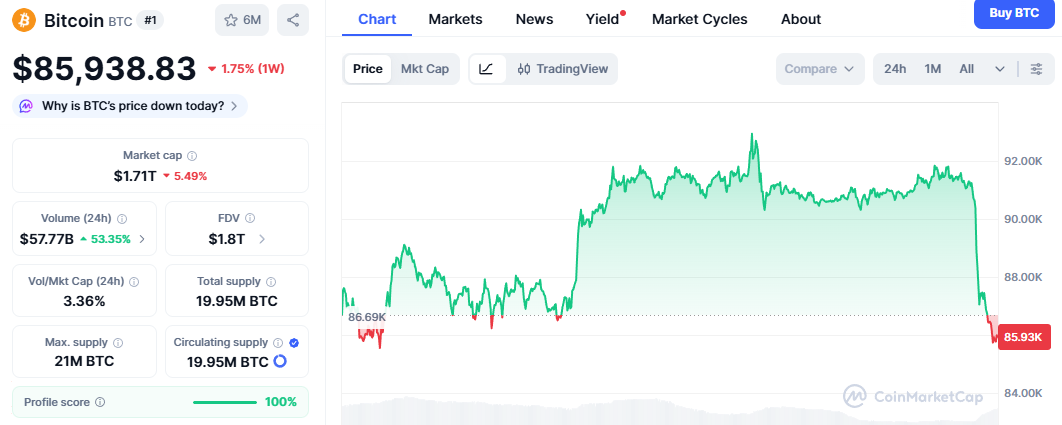
北京时间周日晚间,比特币从 90,000 美元上方毫无抵抗地跳水,一度触及 85,600 美元,单日跌幅超过 5%。山寨币市场更是血流成河,恐慌指数瞬间飙升。
日本央行


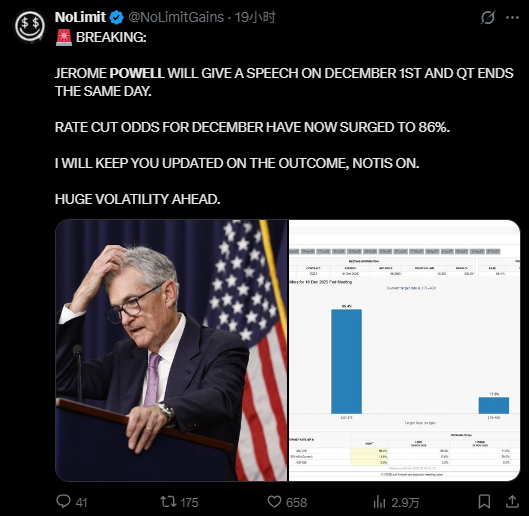
表面的导火索,是一则在社交媒体上疯狂传播的惊悚传闻:美联储主席鲍威尔将在周一晚宣布辞职。


但这只是表象。


在这个信息茧房里,交易员们被华盛顿的政治八卦吓破了胆,却忽视了真正致命的危险信号正从东京传来。这不仅是一次谣言引发的情绪宣泄,更是一场教科书级别的全球宏观去杠杆。


真正的做空力量,源于那个正在悄悄关上全球最大免费提款机大门的日本央行。


华盛顿的烟雾弹:脆弱市场的惊弓之鸟


首先,我们需要拆解这个导致市场崩盘的直接推手。


关于鲍威尔周一晚辞职的消息,目前来看是一个典型的 FUD 谣言。鲍威尔的任期要到 2026 年才结束,且根据官方日程,他确将在本周二发表公开讲话。一个即将发表常规讲话的主席,突袭式辞职的概率极低。
日本央行


但问题在于,为什么市场信了?


因为谣言的土壤是真实的。这个土壤就是特朗普 2.0 时代的央行政治博弈。


就在今晨,当选总统特朗普公开表示,他将很快宣布下一任美联储主席的提名人选。而目前呼声最高的,正是白宫前经济顾问、著名的鸽派人物凯文·哈塞特。


这在华尔街引发了一种深层的焦虑:影子美联储主席的叙事正在成真。


市场担心的不是鲍威尔主动辞职,而是担心他被政治压力架空或逼宫。如果哈塞特或者其他特朗普亲信被提前确立为继任者,那么鲍威尔在剩余任期内的政策话语权将大打折扣。
这种权力真空的恐惧,叠加周末的低流动性,让一个拙劣的谣言变成了做空者的核武器。

东京的真炸弹:17 年未见的超级收缩


如果说华盛顿的谣言是风动,那么东京的国债市场就是真正的幡动。


就在我们盯着推特刷鲍威尔消息的时候,日本金融市场正在发生一场静悄悄的海啸:日本 10 年期国债收益率飙升至 1.1% 附近,创下了自 2008 年以来的最高水平。


这不仅是一个数字,这是一个时代的终结。


1. 通胀压不住了 周末公布的数据显示,东京 11 月核心 CPI 同比上涨 2.8%,远超市场预期。这是日本央行最看重的先行指标。数据表明,日本的通胀已经从输入型转变为内生型,央行再也没有理由维持宽松。


2. 鹰派的最后通牒 尽管还有像中村丰明这样的鸽派在呼吁谨慎,但市场已经听到了更响亮的鹰派声音。市场目前押注 12 月 18 日至 19 日日本央行加息的概率已经飙升至 60% 以上。


这意味着,日本——这个全球唯一实行了数十年负利率和零利率的国家——正在被迫走向正常化。

深度解剖:日元套利交易的终结


很多加密投资者不理解,为什么远在东京的利率变动,能让比特币在一小时内暴跌 5000 美元?


这涉及到全球金融市场的底层架构——日元套利交易(Yen Carry Trade)。


为了讲清楚这个逻辑,我们可以用币圈熟悉的 DeFi 概念来做一个类比。
日本央行


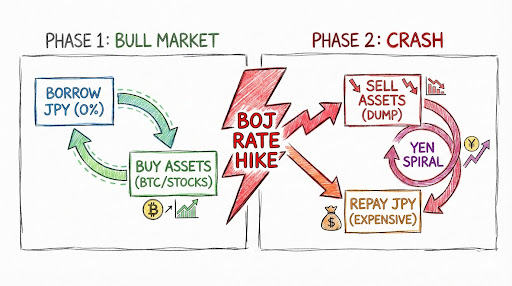
1. 日元是全球最大的稳定币借贷池 想象一下,有一个名为日本央行的 DeFi 协议。几十年来,它的借贷利率几乎都是 0%。 对于华尔街的对冲基金经理来说,最优策略就是最大化借贷。他们从这个协议里借出海量的日元,成本几乎为零,然后将其卖出换成美元。


2. 全球资产的杠杆底座 拿着换来的美元,这些巨鲸冲向了高收益资产:

  • 买美债,获取 5% 的无风险收益。
  • 买英伟达,享受 AI 泡沫的红利。
  • 买比特币,博取高波动性带来的高 Beta 收益。

这就是过去两年全球牛市的发动机:借日本的便宜钱,买美国的风险资产。这是一个规模高达数万亿美元的杠杆结构,比特币只是这个庞大资产组合中的一部分。


3. 现在的危机:协议提息了 现在,日本央行这个协议管理员突然发出信号:通胀太高,借贷利率要从 0% 提到 0.25% 甚至更高。


这就触发了连锁反应:

  • 成本飙升: 借钱的成本变高了,原本稳赚的利差变小了。
  • 汇率风险: 因为大家都急着买回日元还债,日元汇率开始升值。投资者借的时候汇率可能是 150,还的时候可能变成了 145,本金在汇率上就出现了亏损。
  • 强制平仓: 为了凑钱买日元还债,机构必须不计成本地卖出手里的资产——美债、科技股,以及流动性最好、24 小时交易的比特币

这就是今天暴跌的本质:全球资金正在被迫去杠杆。比特币作为风险资产的金丝雀,总是第一个对流动性收缩做出反应。

美联储降息能救命吗?87.6% 的乐观与现实的错位


面对日本的背刺,市场把最后的希望都寄托在了华尔街。


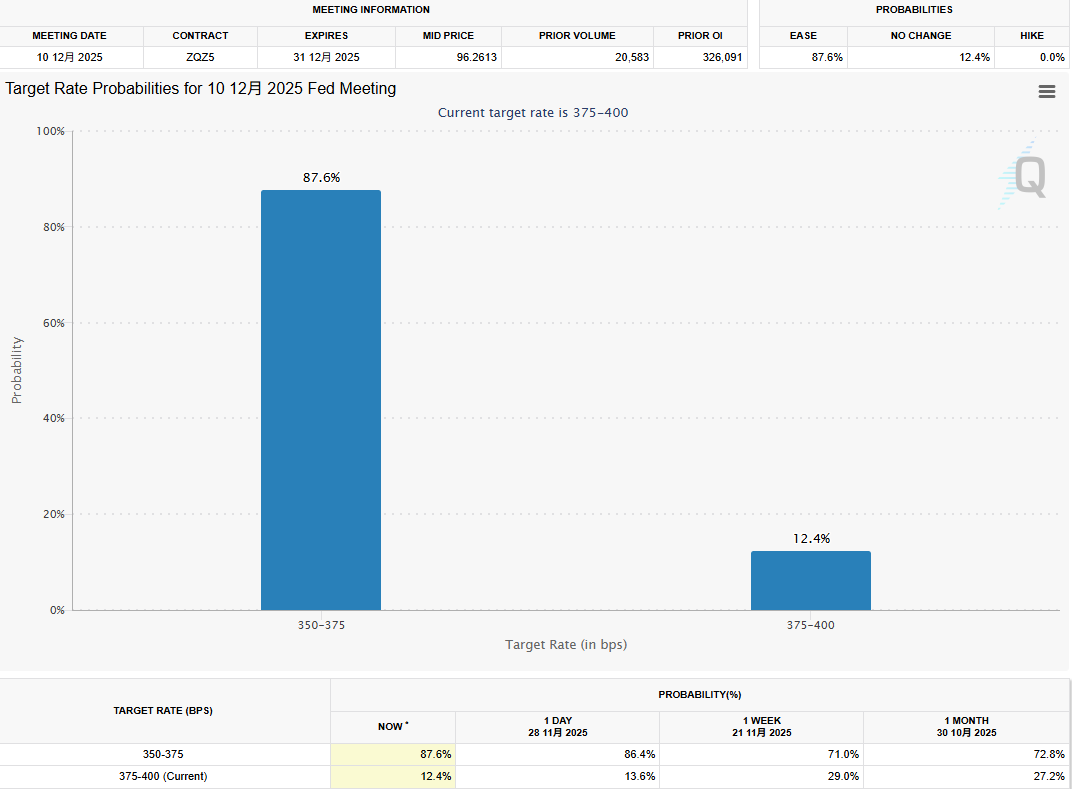
数据似乎支持这种乐观。根据最新的 CME 美联储观察工具(FedWatch Tool),市场押注 12 月 10 日降息 25 个基点的概率已飙升至 87.6%。华尔街几乎把所有的筹码都押在了“鲍威尔会降息救市”这张牌上,认为这能对冲日本的紧缩。
日本央行


但这种观点可能过于乐观,甚至可能是致命的误判。


1. 结构性力量大于周期性力量 美联储降息是周期性的调节,而日本加息是结构性的历史大逆转。 当日本养老金、寿险公司发现本土国债收益率已经接近 1.1% 时,他们会倾向于将资金从海外撤回日本。这种资金回流的力量是海啸级的,美联储降 25 个基点根本拦不住。


2. 利差双向收窄的绞杀 套利交易的核心是美日利差。

  • 如果美联储如期降息(87.6% 的概率),美元收益率下降。
  • 如果日本加息,日元成本上升。

结果是利差被双向挤压。这不仅不能挽救套利交易,反而会加速平仓进程。因为无风险套利的空间正在快速消失。
因此,哪怕美联储真的降息了,它也只能在短期内安抚情绪,却无法改变日元资金回流这个长期的、结构性的抽水机。

结语:12 月的宏观双杀


站在 12 月的起点,我们必须清醒地认识到,这个月不再是单纯的圣诞行情,而是一场严酷的宏观压力测试。


我们面临着两场大考:

  • 12 月 10 日: 美联储能否兑现那 87.6% 的降息预期,并在特朗普的政治阴影下保持独立?
  • 12 月 19 日: 日本央行是否会按下那个终结零利率时代的核按钮?

今天的暴跌,只是市场对这两场大考的一次预演。


对于加密投资者来说,现在的策略不应该是赌鲍威尔会不会辞职这种无聊的谣言,而是要死死盯住美元兑日元汇率和日本 10 年期国债收益率。


只要日元还在升值,只要日债收益率还在创新高,全球的去杠杆进程就没有结束。在这个巨大的宏观绞肉机面前,任何 K 线技术分析都显得苍白无力。


别接飞刀。等东京的风停了,再看华盛顿的云。

Trending Cryptos

Related Reads

After Aave's Exit and TVL's Sharp Fluctuation, Where Does MegaETH's Valuation Anchor Lie?

Following the withdrawal of Aave and a sharp drop in its Total Value Locked (TVL), the valuation of the high-performance DeFi blockchain MegaETH faces scrutiny. Once a highly anticipated project with a fully diluted valuation (FDV) reaching around $2 billion, MegaETH saw its TVL plummet from a May peak of $245 million to just over $30 million in July, a roughly 70% decline. Its native token, MEGA, currently trades around $0.048 with a market cap of approximately $54 million and an FDV of about $480 million. The report identifies a core vulnerability: MegaETH's TVL was heavily dependent on a single protocol, Aave V3, which at its peak contributed around 90% of the chain's TVL. A significant portion of this capital is attributed to leveraged yield-farming strategies involving stablecoins like USDe. When the profitability of these strategies diminished, capital rapidly exited, exposing the lack of diversified, sustainable activity. Three key mismatches between MegaETH's valuation and its fundamentals are highlighted: 1. **Valuation vs. Real Usage:** With an FDV of ~$4.8B but only ~$1M in annualized protocol revenue and ~2,600 daily active addresses, the valuation appears disconnected from current economic activity. 2. **Token Narrative vs. Ecosystem Reality:** Despite its DeFi narrative, nearly 80% of the chain's recent protocol revenue comes from a trading card game, Monster, not from core DeFi applications like Aave. The chain's native stablecoin, USDM, also shows low trading volume and a declining market cap. 3. **Short-Term Hype vs. Long-Term Delivery:** Initial hype from token generation, blue-chip integrations, and influencer support has faded. Major protocols like Uniswap now hold minimal TVL on the chain, indicating that early capital was largely transient and driven by incentives rather than organic demand. The situation reflects a broader market trend where investors are becoming less tolerant of valuations based on inflated TVL and narrative, demanding clearer evidence of sustainable transactions, revenue, and ecosystem development. While MEGA's price may experience short-term rebounds from market sentiment, a fundamental re-rating likely depends on the team's ability to convert its remaining resources into tangible, user-retaining applications and genuine ecosystem growth.

链捕手55m ago

After Aave's Exit and TVL's Sharp Fluctuation, Where Does MegaETH's Valuation Anchor Lie?

链捕手55m ago

Goldman Sachs In-Depth Report: Who Will Be the Long-Term Winners in China's AI Large Model Industry?

Goldman Sachs Report: China's AI Models at an Inflection Point China's open-source/open-weight large language models (LLMs) have reached performance parity with top global proprietary models, according to a Goldman Sachs report. This is driven by architectural innovations and higher parameter efficiency, allowing Chinese models to achieve comparable capabilities at 2%-10% the parameter size and significantly lower cost. The market is evolving into a two-tiered structure: a high-end segment (e.g., GLM5.2, Qwen3.7 Max) with premium pricing and a low-end, price-sensitive segment for global SMEs and individual users. Key points: * **Cost & Performance:** Innovations like Mixture of Experts (MoE) enable high performance with smaller models. Projects like Meituan's LongCat 2.0, trained on domestic hardware, highlight progress in tech self-sufficiency. * **Open-Source Strategy:** Most Chinese players use open-source/open-weight models for flexibility and ecosystem growth. However, Goldman notes this may underreport actual deployment and revenue. A shift toward "open-weight + community license" models with revenue sharing (e.g., MiniMax) could improve monetization. * **Market Shift & Global Expansion:** Enterprise AI adoption is shifting from "token maximization" to "ROI-first." International expansion, especially in non-US markets, is a major growth driver. Chinese models are increasingly available on global platforms like AWS Bedrock and Microsoft Copilot. * **Competitive Landscape:** Using a framework based on pricing power, cost advantage, and financial strength, Goldman identifies **Zhipu AI and DeepSeek** as the strongest in foundational text models, and **ByteDance** as the leader in multimodal/video generation. The report maintains Buy ratings on MiniMax and Kuaishou. * **Market Growth:** China's AI model API and subscription revenue is projected to grow from an estimated ¥35 billion in 2026 to ¥879 billion by 2030.

marsbit1h ago

Goldman Sachs In-Depth Report: Who Will Be the Long-Term Winners in China's AI Large Model Industry?

marsbit1h ago

Goldman Sachs Deep Dive Report: Who Will Become the Long-Term Winners in China's AI Large Model Industry?

Goldman Sachs Report: Who Will Be the Long-Term Winners in China's AI Large Model Industry? China's AI large model sector is at a historic inflection point. Goldman Sachs argues that the intelligence of Chinese open-source/open-weight models is approaching top global proprietary models. Rapid adoption by domestic enterprises and global SMEs is creating a data flywheel effect that will further drive model iteration. The evolution is summarized as moving from "DeepSeek's cost-efficiency moment last year to GLM's model-intelligence moment this year." Chinese models achieve near-state-of-the-art performance at significantly lower cost, primarily due to architectural innovations like Mixture of Experts (MoE) and higher parameter efficiency. Models like DeepSeek V4 Pro (1.6T params), GLM5.2 (0.7T), and MiniMax M3 (0.4T) are much smaller than global leaders. Recent advancements in coding capability are attributed to better data curation and RLHF. Landmarks like Meituan's LongCat 2.0, trained fully on domestic AI chips, demonstrate progress in hardware stack independence. The market is forming a "two-tiered structure." The high-end tier (e.g., GLM5.2, Alibaba's Qwen3.7 Max) prices around $1 per million tokens, about 10-25% of US top models, with estimated inference gross margins of 10-20%. The low-end tier (priced as low as $0.06-$0.2 per million tokens) targets price-sensitive global SMEs and individuals. MiniMax derives 60-70% of revenue overseas. Goldman forecasts China's AI model API/subscription revenue to grow from an estimated RMB 35bn in 2026 to RMB 879bn by 2030. Most Chinese players adopt open-source/open-weight strategies for deployment flexibility and community feedback, though this limits monetization as deployments on third-party platforms (e.g., Alibaba Cloud) may not generate direct revenue. A shift towards "open-weight + community license" models with revenue-sharing agreements (like MiniMax's approach) could improve unit economics. International expansion, particularly in non-US markets, is the key growth driver. The global enterprise AI paradigm is shifting from "token maximization" to "ROI prioritization." Chinese models are already hosted on major global platforms like AWS Bedrock and are under consideration for integration into Microsoft Copilot. Using a competitive framework based on pricing power, cost advantage, and financial strength, Goldman identifies the strongest players: In foundational text models, Zhipu AI (initiated coverage) and DeepSeek lead. In multimodal/video generation, ByteDance's Seed is the frontrunner, with Kuaishou's Kling and MiniMax's Hailuo also well-positioned. Goldman maintains a Buy rating on MiniMax, citing its attractive valuation.

链捕手1h ago

Goldman Sachs Deep Dive Report: Who Will Become the Long-Term Winners in China's AI Large Model Industry?

链捕手1h ago

Trading

Spot

Hot Articles

What is $BITCOIN

DIGITAL GOLD ($BITCOIN): A Comprehensive Analysis Introduction to DIGITAL GOLD ($BITCOIN) DIGITAL GOLD ($BITCOIN) is a blockchain-based project operating on the Solana network, which aims to combine the characteristics of traditional precious metals with the innovation of decentralized technologies. While it shares a name with Bitcoin, often referred to as “digital gold” due to its perception as a store of value, DIGITAL GOLD is a separate token designed to create a unique ecosystem within the Web3 landscape. Its goal is to position itself as a viable alternative digital asset, although specifics regarding its applications and functionalities are still developing. What is DIGITAL GOLD ($BITCOIN)? DIGITAL GOLD ($BITCOIN) is a cryptocurrency token explicitly designed for use on the Solana blockchain. In contrast to Bitcoin, which provides a widely recognized value storage role, this token appears to focus on broader applications and characteristics. Notable aspects include: Blockchain Infrastructure: The token is built on the Solana blockchain, known for its capacity to handle high-speed and low-cost transactions. Supply Dynamics: DIGITAL GOLD has a maximum supply capped at 100 quadrillion tokens (100P $BITCOIN), although details regarding its circulating supply are currently undisclosed. Utility: While precise functionalities are not explicitly outlined, there are indications that the token could be utilized for various applications, potentially involving decentralized applications (dApps) or asset tokenization strategies. Who is the Creator of DIGITAL GOLD ($BITCOIN)? At present, the identity of the creators and development team behind DIGITAL GOLD ($BITCOIN) remains unknown. This situation is typical among many innovative projects within the blockchain space, particularly those aligning with decentralized finance and meme coin phenomena. While such anonymity may foster a community-driven culture, it intensifies concerns about governance and accountability. Who are the Investors of DIGITAL GOLD ($BITCOIN)? The available information indicates that DIGITAL GOLD ($BITCOIN) does not have any known institutional backers or prominent venture capital investments. The project seems to operate on a peer-to-peer model focused on community support and adoption rather than traditional funding routes. Its activity and liquidity are primarily situated on decentralized exchanges (DEXs), such as PumpSwap, rather than established centralized trading platforms, further highlighting its grassroots approach. How DIGITAL GOLD ($BITCOIN) Works The operational mechanics of DIGITAL GOLD ($BITCOIN) can be elaborated on based on its blockchain design and network attributes: Consensus Mechanism: By leveraging Solana’s unique proof-of-history (PoH) combined with a proof-of-stake (PoS) model, the project ensures efficient transaction validation contributing to the network's high performance. Tokenomics: While specific deflationary mechanisms have not been extensively detailed, the vast maximum token supply implies that it may cater to microtransactions or niche use cases that are still to be defined. Interoperability: There exists the potential for integration with Solana’s broader ecosystem, including various decentralized finance (DeFi) platforms. However, the details regarding specific integrations remain unspecified. Timeline of Key Events Here is a timeline that highlights significant milestones concerning DIGITAL GOLD ($BITCOIN): 2023: The initial deployment of the token occurs on the Solana blockchain, marked by its contract address. 2024: DIGITAL GOLD gains visibility as it becomes available for trading on decentralized exchanges like PumpSwap, allowing users to trade it against SOL. 2025: The project witnesses sporadic trading activity and potential interest in community-led engagements, although no noteworthy partnerships or technical advancements have been documented as of yet. Critical Analysis Strengths Scalability: The underlying Solana infrastructure supports high transaction volumes, which could enhance the utility of $BITCOIN in various transaction scenarios. Accessibility: The potential low trading price per token could attract retail investors, facilitating wider participation due to fractional ownership opportunities. Risks Lack of Transparency: The absence of publicly known backers, developers, or an audit process may yield skepticism regarding the project's sustainability and trustworthiness. Market Volatility: The trading activity is heavily reliant on speculative behavior, which can result in significant price volatility and uncertainty for investors. Conclusion DIGITAL GOLD ($BITCOIN) emerges as an intriguing yet ambiguous project within the rapidly evolving Solana ecosystem. While it attempts to leverage the “digital gold” narrative, its departure from Bitcoin's established role as a store of value underscores the need for a clearer differentiation of its intended utility and governance structure. Future acceptance and adoption will likely depend on addressing the current opacity and defining its operational and economic strategies more explicitly. Note: This report encompasses synthesised information available as of October 2023, and developments may have transpired beyond the research period.

707 Total ViewsPublished 2025.05.13Updated 2025.05.13

What is $BITCOIN

Discussions

Welcome to the HTX Community. Here, you can stay informed about the latest platform developments and gain access to professional market insights. Users' opinions on the price of BTC (BTC) are presented below.

活动图片