Команда Aztec запустила приватный L2-протокол в мейннете Ethereum

cryptonews.ruPublished on 2025-01-19Last updated on 2025-11-20

Команда ориентированного на приватность L2-проекта Aztec Network объявила о запуске сети Ignition Chain в мейннете Ethereum. Разработчики назвали ее «первым полностью децентрализованным решением второго уровня».

BREAKING: Aztec just shipped the Ignition Chain, the first fully decentralized L2 on Ethereum.

This launches the decentralized consensus layer that powers the Aztec Network.https://t.co/nYyD7cykz2

🧵

— Aztec (@aztecnetwork) November 19, 2025

Производство блоков началось после того, как очередь из валидаторов достигла 500 участников. Развертыванию в основной сети предшествовал запуск публичного тестнета в мае.

Ignition Chain — основа для создания «приватного мирового компьютера», где можно создавать DeFi-приложения со сквозной конфиденциальностью. Технология использует доказательства с нулевым разглашением для решения проблемы прозрачности блокчейна, сохраняя возможность верификации данных.

На прошлой неделе стартовала регистрация на токенсейл нативного актива проекта — AZTEC. Токен используется для стейкинга, управления и выплаты вознаграждений за блоки. Для активации валидатору необходимо заблокировать 200 000 AZTEC.

На момент написания проект привлек около $2,7 млн от более чем 1960 участников кампании.
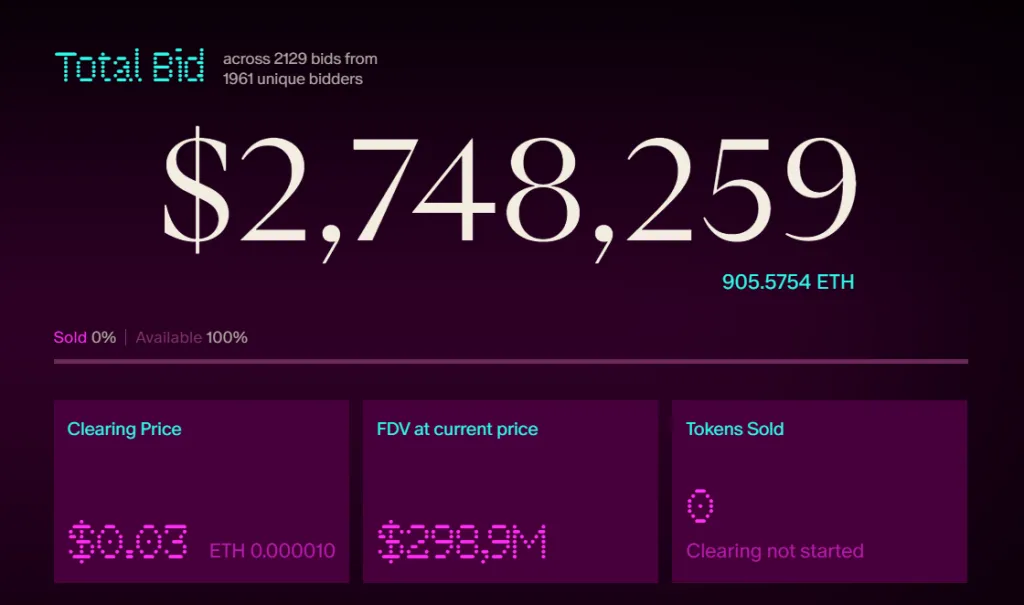
Источник: сайт Aztec.

Открытые торги начнутся 2 декабря.

Напомним, в 2023 году разработчики Aztec объявили о прекращении работы сети второго уровня Connect для масштабирования Ethereum.


Trending Cryptos

Related Reads

Claude Science Completes Two Years' Work in a Few Weeks, Is 10x Research Acceleration Really Here?

Claude Science, a new AI workbench from Anthropic, is being tested by scientists, reportedly accelerating specific research workflows by up to 10x. A neuro-scientist at the Allen Institute completed a lengthy literature review in weeks instead of nearly two years using the tool, which automates tasks like citation verification. The platform is an integrated environment for macOS and Linux, connecting to local or remote computing resources. It streamlines the fragmented research process—literature analysis, computation, visualization, and drafting—into a single, auditable workflow. A key feature is its emphasis on reproducibility: every chart generated includes the exact code, environment, and history used to create it. Claude Science uses a multi-agent system. A coordinator manages over 60 pre-configured skills for life sciences (genomics, proteomics, etc.) and can spawn specialized agents. A dedicated reviewer agent checks citations and calculations for accuracy, creating a form of internal AI peer review. The system operates with a human-in-the-loop, requiring user approval for major steps. Initial applications are in life sciences. Examples include target identification for biotech company Manifold Bio and germline variant analysis for glioma research at UCSF, completing analyses in roughly one-tenth the previous time. The approach contrasts with competitors: Google focuses on proprietary models like AlphaFold, while OpenAI is advancing models' scientific reasoning with benchmarks like GeneBench-Pro. Claude Science differentiates by automating and integrating the practical research pipeline, not just the model's intelligence, aiming to make AI-aided science more reproducible and integrated into daily lab work.

marsbit2m ago

Claude Science Completes Two Years' Work in a Few Weeks, Is 10x Research Acceleration Really Here?

marsbit2m ago

The Invisible Force in Bitcoin's Bear Market: Accelerating On-Chain Payments and Institutional Adoption

Amidst ongoing Bitcoin price volatility, the quiet acceleration of on-chain payments and tokenized trading holds significant importance for investors and policymakers, especially with legislation like the CLARITY Act on the horizon. Major traditional financial institutions adopting these technologies are driving crucial discussions on compliance, security, and transparency, which are vital for broader market adoption. Key developments are shaping this evolution. First, blockchain traceability is moving beyond a simple "public vs. private" debate. New frameworks aim to standardize how financial data from immutable ledgers is analyzed and interpreted, making it as crucial as standardized financial reporting for building institutional trust. Second, while traditional finance supports clear digital asset regulation, they emphasize that an asset's economic function should dictate its regulatory treatment, advocating for robust consumer protections over broad exemptions. Furthermore, the growth of on-chain deposits at regulated institutions signals a shift. Major banks are leveraging blockchain not to replace but to upgrade existing services—like deposits and cross-border settlements—with benefits like 24/7 operations and programmable treasury management. This trend focuses more on modernizing financial infrastructure than creating speculative assets. Despite market turbulence, these underlying advancements in on-chain infrastructure point toward a more robust foundation for the industry's future.

Foresight News50m ago

The Invisible Force in Bitcoin's Bear Market: Accelerating On-Chain Payments and Institutional Adoption

Foresight News50m ago

Trading

Spot

Hot Articles

Discussions

Welcome to the HTX Community. Here, you can stay informed about the latest platform developments and gain access to professional market insights. Users' opinions on the price of ETH (ETH) are presented below.

活动图片