Zcash rośnie, gdy reszta rynku tonie w czerwieni

bitcoinistPublished on 2025-11-18Last updated on 2025-11-19

Abstract

Mamy wieczór 18 listopada, a Zcash sięga właśnie 2275 zł. Przez niecałe dwa miesiące projekt urósł o 1000%, gdy szeroki...

Trusted Editorial content, reviewed by leading industry experts and seasoned editors. Ad Disclosure

Mamy wieczór 18 listopada, a Zcash sięga właśnie 2275 zł. Przez niecałe dwa miesiące projekt urósł o 1000%, gdy szeroki rynek krypt wciąż szuka stabilnego punktu odbicia w kryzysie.

Taka rozbieżność zawsze przyciąga uwagę traderów, szczególnie tych, którzy śledzą rotację kapitału w sektorach o podwyższonej zmienności. Nowy impuls na ZEC pojawił się w momencie, gdy dominujące projekty notowały wyraźne cofnięcia, co samo w sobie jest rzadkim sygnałem siły.

ZEC odbija, gdy sentyment pozostaje chłodny

Ostatnie dane rynkowe pokazują, że Zcash wystrzelił do najwyższych poziomów od czterech lat, aktualnie jego cena oscyluje wokół 2280 zł. Ostatni raz token osiągnął taką cenę w 2018 roku.

Według wykresu CoinMarketCap kurs ZEC osiągnął lokalny szczyt w trakcie turbulencji na rynku. Potwierdza to, że kapitał spekulacyjny szuka selektywnych okazji w projektach o wysokiej asymetrii.
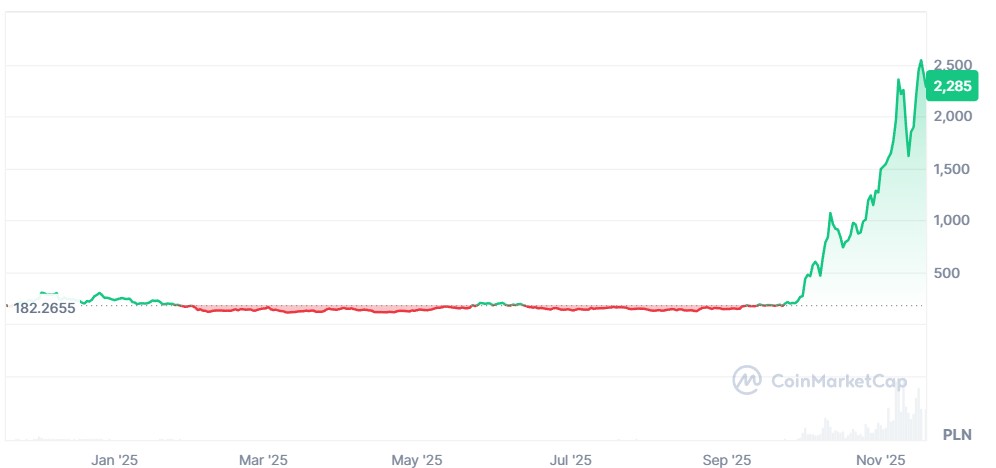
Zcash cena z 18 listopada 2025
Źródło: CoinMarketCap

Ta zmiana ma znaczenie dla inwestorów, bo wskazuje, że segment prywatności wciąż ma swoją niszę i potrafi bronić się w okresach podwyższonej niepewności.

Oczekiwania dotyczące rozwoju technologii prywatności znów stają się realnym tematem rozmów na rynku. Wzrost zainteresowania narzędziami chroniącymi tożsamość użytkowników nie jest nowy. Aktualny trend pokazuje jednak, że projekty takie jak ZEC nadal są postrzegane jako kryptowaluty, w które warto zainwestować w okresach dywersyfikacji, co pokazał 1000% wzrost w trakcie niespełna dwóch miesięcy.

Struktura rynku sprzyja aktywom defensywnym

Zachowanie Zcash w ostatnich tygodniach wpisuje się w klasyczny scenariusz rotacji. Kiedy główne indeksy krypto szukają fundamentu, część inwestorów przenosi kapitał do tokenów o bardziej stabilnych narracjach.

ZEC od lat utrzymuje reputację projektu, który oferuje użytkownikom zaawansowaną formę prywatności, a rynek często przypomina sobie o takich rozwiązaniach w momentach napięcia.

Skok ZEC zbiegł się z rosnącą aktywnością adresów oraz ożywieniem w wolumenie. Może być to sugestia, że nie jest to jedynie krótkotrwały zryw. Momentum nadal jest ostrożne, ale struktura ruchu wygląda bardziej jak początek nowej fali spekulacji, a nie przypadkowy wystrzał w trakcie chaosu. Według niektórych inwestorów z portalu X,  Zcash pod koniec roku, może przebić kwotę 3000 zł.

Prognozy ZEC na portalu X
Źródło: X

Narracja prywatności wraca do obiegu

W przestrzeni krypto regularnie pojawiają się fale dyskusji dotyczących prywatności. W momentach, gdy regulatorzy zacieśniają kontrolę, a dane użytkowników stają się coraz bardziej towarem, tokeny oparte na anonimowości odzyskują na znaczeniu.

Taki cykl widać właśnie teraz. ZEC korzysta z tego kontekstu, ponieważ od początku projektu funkcjonuje jako narzędzie, które daje użytkownikom pełną kontrolę nad tym, co udostępniają.

Niektóre tokeny mogą dynamicznie rosnąć mimo słabszych warunków makro. Zcash znakomicie wpisuje się w tę charakterystykę, bo jego wzrost nie wynika z impulsu zewnętrznego, lecz odnowionego zainteresowania fundamentalną funkcjonalnością.

Wybory inwestorów przesuwają się w stronę defensywnych trendów

Dla traderów śledzących rotacje ryzyka ZEC może służyć jako wskaźnik tego, gdzie na rynku pojawia się zysk za stabilniejszą narrację. W takich momentach wielu inwestorów przygląda się nie tylko aktualnym wystrzałom, ale też projektom we wczesnych fazach, które oferują przejrzystą tokenomikę i rozwijające się ekosystemy. Nie chodzi o wybór pomiędzy narracją prywatności a nowymi tokenami, lecz o rozsądne równoważenie portfela.

To właśnie tutaj pojawia się miejsce na wzmiankę o przedsprzedaży Best Wallet Token. Projekt przyciąga uwagę części rynku ze względu na narzędzia związane z zarządzaniem aktywami oraz transparentną dokumentację.

Jego przedsprzedaż zebrała ponad 17 milionów dolarów, co w obecnym klimacie świadczy o tym, że inwestorzy nadal są gotowi sfinansować produkty infrastrukturalne, jeśli ich koncepcja jest jasna. Wysokie nagrody za staking, które sięgają 76 procent, sugerują wczesny etap rozwoju z naciskiem na zachętę użytkowników, a nie gotowy model długoterminowy.

Cena tokena Best Wallet wynosząca 0.025965 dolara pozostaje niska jak na projekt infrastrukturalny, choć oczywiście nie stanowi to rekomendacji inwestycyjnej.

Informacje o BWT przypominają, że rynek szuka projektów, które mogą wzmacniać narzędzia do obsługi portfela w okresach większej zmienności. Część inwestorów traktuje takie inicjatywy jako wsparcie dla własnej strategii zarządzania kapitałem, niezależnie od tego, jak nabyć kryptowaluty i gdzie je później przechowywać.

ZEC jako barometr niepokoju

Wzrost ZEC zawsze można traktować jako pewnego rodzaju barometr napięcia na rynku. Choć prywatność nie jest tak modna jak narracje związane z AI, warstwami drugimi czy tokenizacją aktywów, to jej powroty bywają gwałtowne. Kiedy inwestorzy czują, że rynek nie daje stabilnych sygnałów, częściej sięgają po narzędzia, które zwiększają kontrolę nad własną aktywnością w sieci.

Aktualny trend nie wskazuje na euforię. Bardziej przypomina etap, w którym kapitał szuka kierunku i sprawdza, które projekty są w stanie utrzymać wartość w trudniejszym otoczeniu. Zcash rośnie w takich momentach dlatego, że jego narracja nie wymaga hype’u. Wystarczy kapitał, który szuka schronienia w aktywach z jasno określoną funkcją.

Rynek wciąż pozostaje w fazie podwyższonej zmienności, ale reakcja ZEC pokazuje, że segment prywatności znalazł chwilowe okno siły. Dla inwestorów to sygnał, że rotacje tematyczne nadal działają, a sektor kryptowalut oferuje unikalną możliwość obserwowania tych ruchów niemal w czasie rzeczywistym.

Editorial Process for bitcoinist is centered on delivering thoroughly researched, accurate, and unbiased content. We uphold strict sourcing standards, and each page undergoes diligent review by our team of top technology experts and seasoned editors. This process ensures the integrity, relevance, and value of our content for our readers.

Autor newsów i analiz w obszarze kryptowalut oraz technologii blockchain. Zainteresowanie światem cyfrowych aktywów połączył z pasją do sportu, dostrzegając wspólne wartości takie jak dynamika, rywalizacja i ciągły rozwój. Na co dzień śledzi trendy rynkowe, analizuje projekty z sektora Web3 i przybliża czytelnikom najnowsze wydarzenia ze świata kryptowalut.

Trending Cryptos

Related Reads

Upbit is Anxious: A Hasty Counterattack Aimed at Regaining Stablecoin Market Share

Title: Upbit's Rushed Counterattack to Reclaim Stablecoin Market Share Facing a dramatic shift in South Korea's stablecoin market, leading exchange Upbit launched a promotional campaign from July 26 to August 9, waiving the 0.05% trading fee for stablecoins paired with the Korean Won (KRW) and rapidly listing new stablecoins like RLUSD and USDG. This move is a direct response to its plummeting market share in this sector. Historically a duopoly with Bithumb, the market has been reshaped since October 2025 when Coinone permanently removed fees for USDC trading. By June 2026, Coinone led with 34.8% of stablecoin volume, followed by Bithumb (31.1%) and Upbit (30.1%). This contrasts sharply with the overall crypto market, where Upbit commands 60%. The data shows stablecoin demand is highly sensitive to fees, as users primarily buy them to transfer capital overseas for derivatives trading or forex arbitrage. South Korean exchanges have seen a net outflow of stablecoins for 18 consecutive months, totaling approximately 14.9 trillion KRW, underscoring their role as a cross-border capital conduit. Upbit's limited-time promotion initially boosted its daily stablecoin volume by 162%, but the surge was almost entirely in USDT (98.1% of volume). The newly listed stablecoins saw negligible, fleeting interest. Furthermore, the promotional effect quickly waned in the second week, with volume dropping 33% on weekdays. A concurrent weakening of the KRW also contributed to the trading spike, independent of the fee waiver. The analysis suggests that once the promotion ends, Upbit is unlikely to retain its temporary gains unless it matches Coinone's permanent zero-fee policy, forcing a choice between market share and fee revenue. Upbit's strategic push may be less about immediate profit and more about preparing for future regulatory shifts. With South Korea's *Digital Asset Basic Act* on the horizon, which will regulate KRW-backed stablecoins, and following Dunamu's (Upbit's parent) integration into Naver Financial to build a payment ecosystem, securing a dominant position in the dollar stablecoin distribution channel holds long-term strategic value. However, potential regulatory conflicts could prevent Upbit from listing a future Naver-issued KRW stablecoin, making the current fight for dollar stablecoin flow even more critical.

marsbit4h ago

Upbit is Anxious: A Hasty Counterattack Aimed at Regaining Stablecoin Market Share

marsbit4h ago

Michael Saylor Compares Bitcoin and Gold!

Michael Saylor, founder of MicroStrategy, argues that Bitcoin fundamentally changes how wealth is stored and transferred by transforming digital scarcity into economic value. He describes Bitcoin as the first digital monetary network, combining computers, digital networks, and cryptography. It digitizes monetary assets, allowing their supply to be controlled by public protocols rather than institutions, thus converting economic value into information transmissible over global networks. Comparing Bitcoin to gold, Saylor states that while increasing Bitcoin's supply is harder, its integration with software and transfer is easier. He highlights Bitcoin's proof-of-work mechanism, which ties it to the physical world by consuming real energy to secure the ledger, making past transactions immutable. This creates a shared security system involving miners, energy companies, and investors. Saylor suggests "digital monetary energy" is a more accurate term than "digital gold." He emphasizes that the Bitcoin network is an adaptive ecosystem of miners, nodes, developers, and users. Its core design is intentionally simple, focused on maintaining a secure ledger for scarce digital assets, with complex functionalities built in higher-layer applications. This architecture allows Bitcoin to serve as a foundation for transmitting value and fostering innovation in payments and financial services. Saylor notes Bitcoin's deeper impact lies in creating digital sovereignty, where private keys give individuals permissionless control over their economic power, with ownership verified mathematically, not by institutions. He concludes that while gold's physical scarcity makes it money, Bitcoin's digital scarcity does the same, characterizing Bitcoin as the monetary energy of the digital age.

cryptonews.ru5h ago

Michael Saylor Compares Bitcoin and Gold!

cryptonews.ru5h ago

Trading

Spot

Hot Articles

What is USDC(WORMHOLE)

USD Coin (Wormhole): A Comprehensive Overview Introduction In the rapidly evolving world of cryptocurrencies, USD Coin (Wormhole), referred to as $USDC(Wormhole), stands out as a pioneering solution within the DeFi (Decentralized Finance) landscape. Operating on several blockchain platforms, including Solana, USD Coin (Wormhole) is more than just a digital representation of the United States dollar. It embodies the innovative spirit of modern finance, enabling seamless cross-chain transactions and enhanced interoperability among diverse blockchain ecosystems through the advanced Wormhole protocol. What is USD Coin (Wormhole)? USD Coin (Wormhole) is a tokenized version of the US dollar designed to facilitate frictionless transactions across different blockchain networks. Its primary aim is to bolster liquidity and enhance the functionality of the DeFi ecosystem. By leveraging the Wormhole protocol, which establishes a robust cross-chain communication network, users can effortlessly transfer USDC tokens across various platforms. This cross-chain capability marks a significant advancement in cryptocurrency use, promoting a more interconnected and efficient ecosystem where assets can flow freely between different blockchains. The value proposition of USD Coin (Wormhole) lies not only in its stability, being pegged to the US dollar, but also in its ability to bridge gaps between disparate blockchain environments. This innovative approach fosters a greater level of participation among users and developers, paving the way for new and exciting applications within decentralized finance. Who is the creator of USD Coin (Wormhole)? The origins of USD Coin (Wormhole) are intricately tied to the Wormhole network, which was developed by Jump Crypto. While specific individual creators are not prominently documented, Jump Crypto is notable for its involvement in advancing blockchain technology and supporting its applications in finance. By creating the Wormhole network, Jump Crypto has played a vital role in promoting cross-chain asset transfers, enhancing the efficiency and diversity of cryptocurrency usage. Who are the investors of USD Coin (Wormhole)? The success of USD Coin (Wormhole) is supported by investments from several notable funds and organizations within the cryptocurrency realm. Key investors include: Coinbase Ventures: A prominent venture capital arm backed by one of the leading cryptocurrency exchanges in the industry, Coinbase Ventures provides essential capital and strategic support to promising blockchain projects. Arrington XRP Capital: Specializing in digital assets, Arrington XRP Capital recognizes the potential of innovative projects like USD Coin (Wormhole) and has invested accordingly to back its development. Jump Trading: As the parent organization of Jump Crypto, Jump Trading brings not only investment but a wealth of expertise in trading technology and market dynamics to bolster the Wormhole project. How Does USD Coin (Wormhole) Work? The operational framework of USD Coin (Wormhole) is intricately designed to facilitate effective cross-chain transactions, maximizing security and efficiency. Here’s a simplified overview of how it functions: Asset Locking: When a user wishes to transfer USDC from one blockchain to another, they first lock their tokens on the source blockchain. This process ensures that the assets are secure and are set to be either burned or moved later. Token Minting: After the tokens are locked, an equivalent amount of USDC is minted on the destination blockchain. This provides the user with access to their funds on a new platform, reflecting the flexibility that the Wormhole protocol enables. Cross-Chain Transfer: The Wormhole protocol efficiently facilitates the entire transfer process. It ensures that once the USDC is minted on the destination chain, the equivalent tokens are burned on the source chain. The result is a seamless transfer of value between two distinct blockchain environments. This cross-chain methodology ensures that transactions remain secure and transparent, significantly enhancing liquidity within the different DeFi ecosystems. Timeline of USD Coin (Wormhole) Understanding the evolution of USD Coin (Wormhole) provides vital context for its significance in the cryptocurrency arena. Here’s a timeline highlighting important milestones in the project’s history: 2021: The Wormhole project is launched, establishing a framework for cross-chain asset transfers and setting the stage for the development of USD Coin (Wormhole). 2022: The Wormhole network experiences a significant challenge with a security breach that results in a $325 million theft. However, the incident is later addressed and refunded by Jump Crypto, showcasing the project’s commitment to security and transparency. 2023: USD Coin (Wormhole) integrates with Circle’s Cross-Chain Transfer Protocol (CCTP), enhancing its capabilities for cross-chain transfers and further solidifying its place within the DeFi ecosystem. 2024: Ongoing development and expansion of the Wormhole network continue, aimed at increasing the utility and reach of USD Coin (Wormhole) as well as enhancing its operational framework. Key Features The success of USD Coin (Wormhole) can be attributed to several key features that differentiate it from other cryptocurrency offerings: Cross-Chain Interoperability At the core of USD Coin (Wormhole) is its ability to facilitate seamless transfers across multiple blockchain networks. This interoperability serves as a cornerstone for decentralized finance, allowing various platforms to interact with each other, thereby accelerating the evolution of financial services. Security Wormhole employs a well-designed Guardian Network comprised of node validators that ensure secure cross-chain transactions. This collective oversight minimizes the risk of fraud and provides users with confidence that their assets are protected during cross-chain transfers. Liquidity Enhancement By enabling USDC to circulate freely across different blockchains, USD Coin (Wormhole) enhances liquidity in the DeFi ecosystem. This increased liquidity can foster more efficient trading, contribute to better pricing strategies, and improve the overall market dynamics encompassing various digital assets. Conclusion USD Coin (Wormhole) is a pivotal innovation in the blockchain space, reinforcing the capabilities of decentralized finance (DeFi) and establishing a more connected financial ecosystem. With its robust framework for cross-chain transactions, security features, and strong backing from reputable investors, USD Coin (Wormhole) is positioned to play a key role in the future of cryptocurrency. As the digital finance landscape continues to evolve, USD Coin (Wormhole) not only embraces the future of interconnectivity among blockchain networks but also reaffirms the power of tokenization and blockchain technology in transforming how we perceive and utilize value in a digital world. By navigating the complexities of cross-chain functionality, it demonstrates a sophisticated approach to enabling financial inclusivity and innovation in the world of cryptocurrencies.

1.9k Total ViewsPublished 2024.04.01Updated 2024.12.03

What is USDC(WORMHOLE)

What is W$C

World$tateCoin ($W$C): A Comprehensive Exploration of the Emerging Cryptocurrency Project Introduction In the ever-evolving landscape of cryptocurrencies, World$tateCoin ($W$C) has emerged as a project that aims to harness the power of web3 technologies to create a distinctive digital ecosystem. As traditional models of online interaction undergo significant transformation, World$tateCoin seeks to establish itself in this budding third generation of the internet. This article will delve into the intricacies of World$tateCoin, providing an overview of the project, its objectives, and its potential impact on the web3 space. What is World$tateCoin ($W$C)? World$tateCoin ($W$C) is designed as a cryptocurrency that facilitates seamless transactions within a web3 environment. Aimed at creating a decentralized platform where users can interact with various web3 applications, $W$C intends to streamline user experience and enhance accessibility to digital services. While the project aspires to become an integral part of the web3 landscape, detailed insights into its specific objectives and use cases remain limited, raising questions regarding its potential role and utility in a rapidly advancing digital context. The essence of web3 revolves around decentralization and empowering users with greater control over their interactions online. World$tateCoin intends to align with these principles, although specific applications and functionalities of the currency are still under discussion within the community. Who is the Creator of World$tateCoin ($W$C)? In exploring the origins of World$tateCoin, information regarding its creator remains elusive. As of now, there is no publicly available data identifying the individuals or organizations behind the project. This obscurity may cast a shadow of uncertainty over the project’s credibility, but the commitment to innovation within the cryptocurrency framework could be a driving force for its adoption in the future. The lack of identifiable leadership may result in hurdles related to trust and transparency—elements that are crucial for establishing a strong community in the crypto space. Who are the Investors of World$tateCoin ($W$C)? Current research does not reveal any specific investors or backing organizations involved with World$tateCoin. It is not uncommon for emerging cryptocurrency projects to either attract discreet investments or operate in a minimalist financial structure during their initial phase. The ambiguity surrounding investment supports and funding methodologies could affect the project’s sustainability and growth prospects. When assessing new projects within the cryptocurrency domain, investors generally look for transparency regarding financial backing and support from established entities. The absence of this information might necessitate a cautious approach for potential users and stakeholders interested in the future of World$tateCoin. How Does World$tateCoin ($W$C) Work? The operational mechanics of World$tateCoin are grounded in the principles of decentralization, a hallmark of web3 technologies. By facilitating transactions directly between users without the intervention of intermediaries, $W$C is designed to enhance trust and efficiency. However, comprehensive documentation detailing the unique features and operational framework that distinguish World$tateCoin from other cryptocurrencies is markedly sparse. This lack of information complicates the understanding of how $W$C functions within the broader web3 ecosystem and what unique propositions it brings to users and developers alike. Nevertheless, the fundamental goal of allowing for decentralized transactions holds the promise of a more liberated financial landscape, should the project deliver on its aspirations of implementing robust mechanisms and user-friendly interfaces. Timeline of World$tateCoin ($W$C) Constructing a timeline that encapsulates the historical progression of World$tateCoin poses challenges due to an absence of significant documentation on key events and milestones. Nevertheless, an approximate sequence of hypothetical phases can be envisaged, constituting a path forward for the project: Initial Concept (Date Unknown): Conceptualization of the World$tateCoin framework in the broader context of web3 technologies. Development Phase (Date Unknown): Commencement of technical development and coding processes. Community Engagement (Date Unknown): Outreach to potential users and stakeholders to foster community interest in the project. Launch Target (Date Unknown): Announcing an expected launch date, contingent on the progress of development and testing phases. Due to the lack of substantiated dates and details surrounding these phases, stakeholders will need to remain vigilant and engaged with the project's communications for updates regarding its trajectory. Key Topics About World$tateCoin ($W$C) As the project unfolds, certain key subjects arise that embody the potential and aspirations of World$tateCoin: Decentralization: The core philosophy driving the project, aimed at fostering direct user interactions. Web3 Integration: The goal of mirroring web3 principles and enabling seamless user access to an array of digital services. Digital Currency: Positioned as a currency to facilitate internet-based transactions, World$tateCoin aims to inject additional liquidity into the web3 market. Challenge of Information Scarcity: The notable absence of detailed information regarding the project's foundations, creators, and operational methods, necessitating increased transparency from developers to build community trust. Conclusion World$tateCoin ($W$C) is positioned within an exciting yet uncertain terrain of cryptocurrency and web3 integration. While it aims to cultivate a decentralized environment, the limited availability of information regarding its creators, investors, and specific functionalities presents challenges for potential stakeholders and users. In the dynamic world of cryptocurrencies, transparency, engagement, and well-structured communication are vital for the success of projects such as World$tateCoin. As the landscape continues to evolve, stakeholders will be eager to see how the project can solidify its place within the web3 narrative and contribute to the ongoing transformation of the digital ecosystem.

1.5k Total ViewsPublished 2024.04.01Updated 2024.12.03

What is W$C

How to Buy W

Welcome to HTX.com! We've made purchasing Wormhole (W) simple and convenient. Follow our step-by-step guide to embark on your crypto journey.Step 1: Create Your HTX AccountUse your email or phone number to sign up for a free account on HTX. Experience a hassle-free registration journey and unlock all features.Get My AccountStep 2: Go to Buy Crypto and Choose Your Payment MethodCredit/Debit Card: Use your Visa or Mastercard to buy Wormhole (W) instantly.Balance: Use funds from your HTX account balance to trade seamlessly.Third Parties: We've added popular payment methods such as Google Pay and Apple Pay to enhance convenience.P2P: Trade directly with other users on HTX.Over-the-Counter (OTC): We offer tailor-made services and competitive exchange rates for traders.Step 3: Store Your Wormhole (W)After purchasing your Wormhole (W), store it in your HTX account. Alternatively, you can send it elsewhere via blockchain transfer or use it to trade other cryptocurrencies.Step 4: Trade Wormhole (W)Easily trade Wormhole (W) on HTX's spot market. Simply access your account, select your trading pair, execute your trades, and monitor in real-time. We offer a user-friendly experience for both beginners and seasoned traders.

6.7k Total ViewsPublished 2024.04.02Updated 2026.06.02

How to Buy W

Discussions

Welcome to the HTX Community. Here, you can stay informed about the latest platform developments and gain access to professional market insights. Users' opinions on the price of W (W) are presented below.

活动图片













