Ликвидации на $3 млрд. Какие риски несут Ethereum, Solana и Zcash

cryptonews.ruPublished on 2025-04-16Last updated on 2025-11-17

Рынок преодолел середину ноября, а общая капитализация альткоинов упала ниже $1 трлн. Способность этих активов к восстановлению на фоне крайне низких рыночных настроений может спровоцировать волатильность. Это, в свою очередь, грозит масштабными ликвидациями по ряду активов.

Рассмотрим, какие альткоины находятся в зоне риска и на какие факторы стоит обратить пристальное внимание.

1. Ethereum (ETH)

Карта ликвидаций Ethereum демонстрирует явный дисбаланс между потенциальными обьемами по длинным (Long) и коротким (Short) позициям. Трейдеры направляют больше капитала и кредитного плеча в короткие позиции. В результате они понесут более тяжелые убытки, если ETH восстановится на этой неделе.
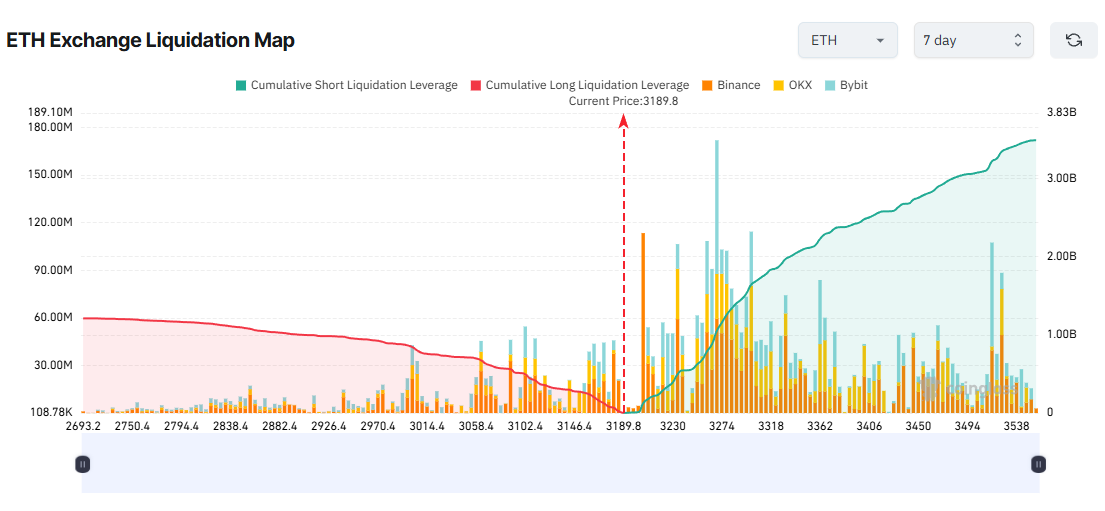
Карта ликвидаций на бирже ETH. Источник: Coinglass

В случае роста ETH выше $3500, может быть ликвидировано коротких позиций на сумму более $3 млрд. Напротив, если ETH упадет ниже $2700, ликвидации длинных позиций составят всего около $1.2 млрд.

У продавцов есть причины сохранять свои позиции. Отток средств из ETH ETF на прошлой неделе составил $728.3 млн. Кроме того, известный инвестор Артур Хейс недавно сообщал о продаже ETH.
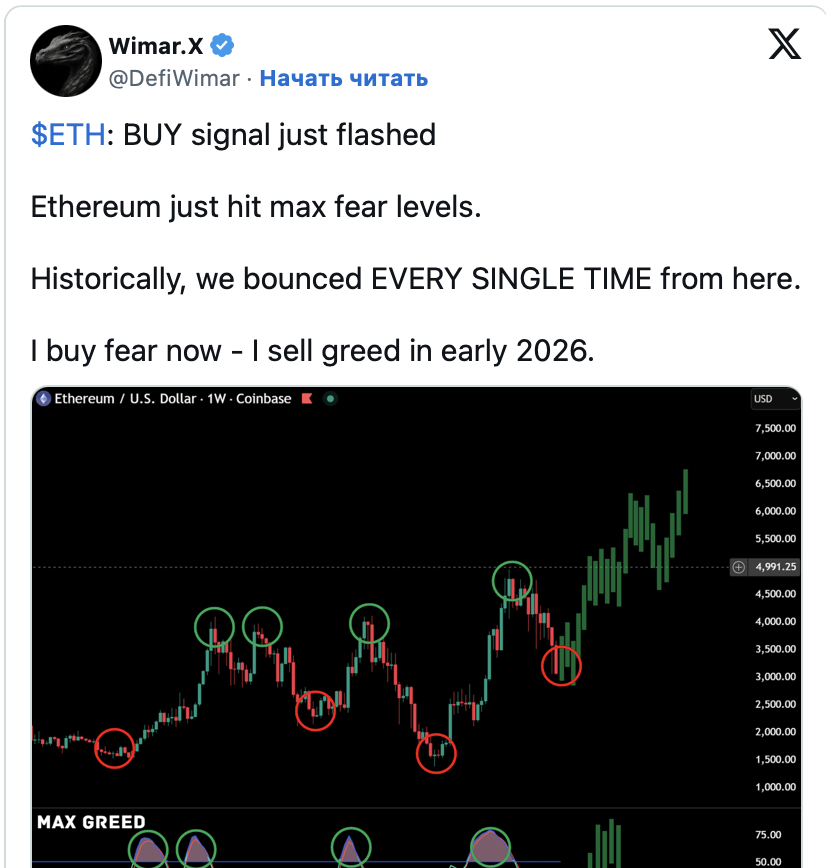
Однако с технической точки зрения ETH остается в основной зоне поддержки около $3100. Этот уровень способен спровоцировать сильное восстановление. Индикатор настроений для ETH также упал в зону «чрезвычайного страха». Исторически ETH часто демонстрировал резкий отскок из подобных состояний.

Поэтому восстановление ETH имеет под собой веские основания и может привести к значительным убыткам для «шорт»-трейдеров.

2. Solana (SOL)

Как и в случае с ETH, карта ликвидаций Solana также показывает сильный дисбаланс. В нем доминирует обьем коротких позиций.

Падение SOL ниже $150 в ноябре заставило многих краткосрочных трейдеров ожидать дальнейшего снижения к $100. Такую тактику демонстрируют не только розничные трейдеры, но и крупные держатели («киты»).

Однако данные по SOL ETF рисуют более позитивную картину. По информации SoSoValue, 14 ноября чистый приток в американские SOL ETF составил более $12 млн. Совокупный приток за прошлую неделю превысил $46 млн.
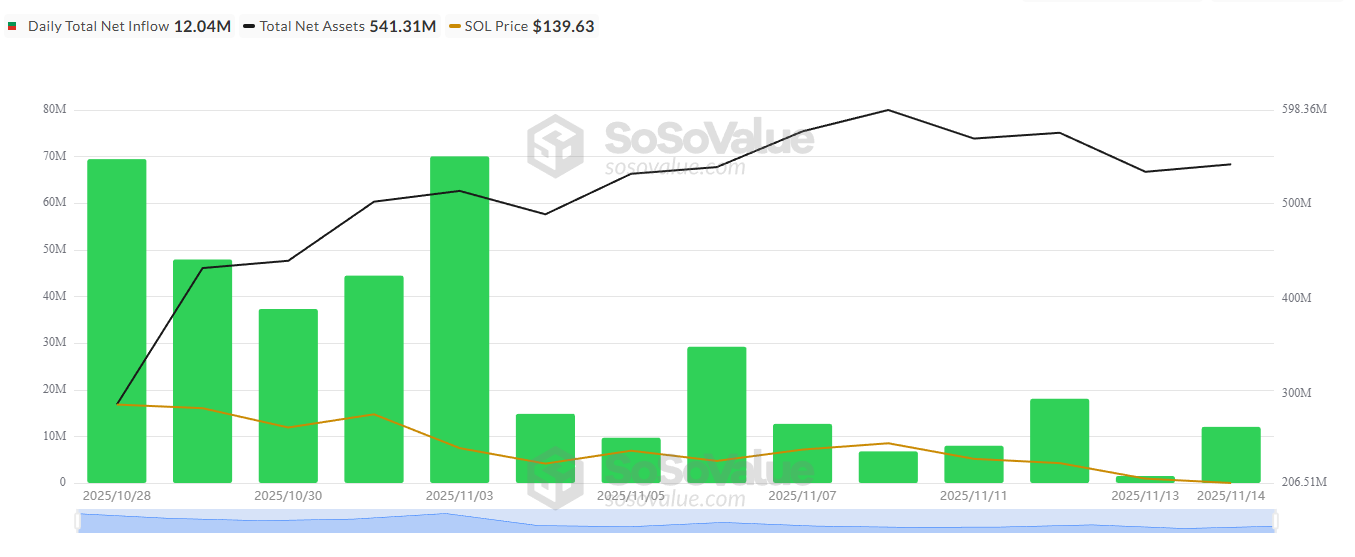
Ежедневный общий чистый приток средств в ETF SOL. Источник: SoSoValue
Ежедневный общий чистый приток в SOL ETF. Источник: SoSoValue.

В то же время спотовые ETF на биткоин и Ethereum показали отрицательные чистые потоки. Это дает SOL основание для отскока, поскольку инвесторы все еще демонстрируют высокий спрос на ETF.

Карта ликвидаций показывает, что если SOL поднимется до $156, обьем коротких ликвидаций может достичь почти $800 млн.
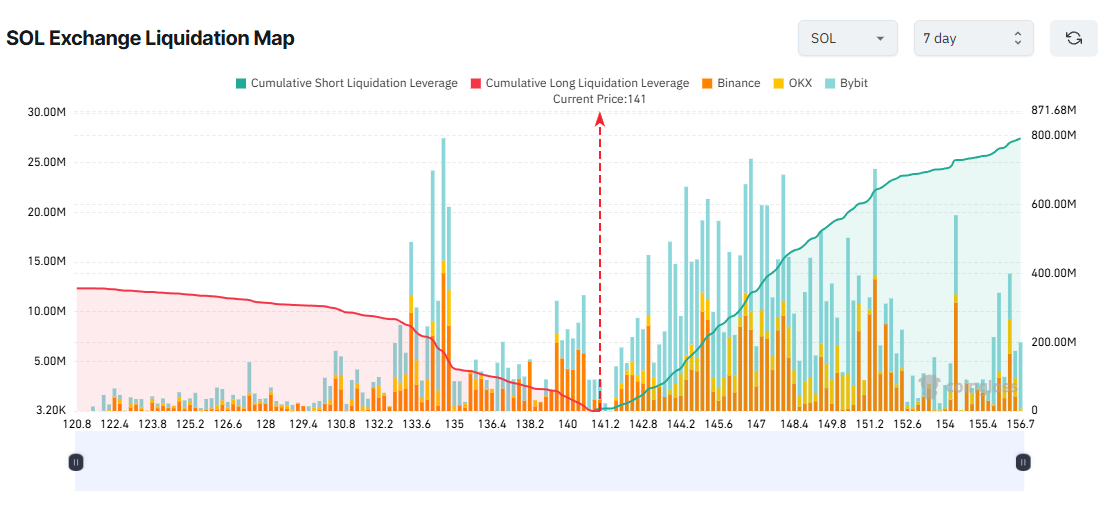
Карта ликвидаций биржи SOL. Источник: Coinglass

И наоборот, если SOL упадет до $120 на этой неделе, ликвидации длинных позиций могут составить около $350 млн.

3. Zcash (ZEC)

В отличие от ETH и SOL, карта ликвидаций ZEC показывает, что основной риск потенциальных потерь несут трейдеры с длинными позициями.

Краткосрочные трейдеры, по-видимому, уверены, что ZEC продолжит формировать более высокие максимумы в ноябре. У них есть основания для такого прогноза. Обьем ZEC, заблокированный в Zcash Shielded Pool, резко вырос в этом месяце. Кроме того, ряд экспертов по-прежнему ожидают, что ZEC потенциально достигнет $10 000.
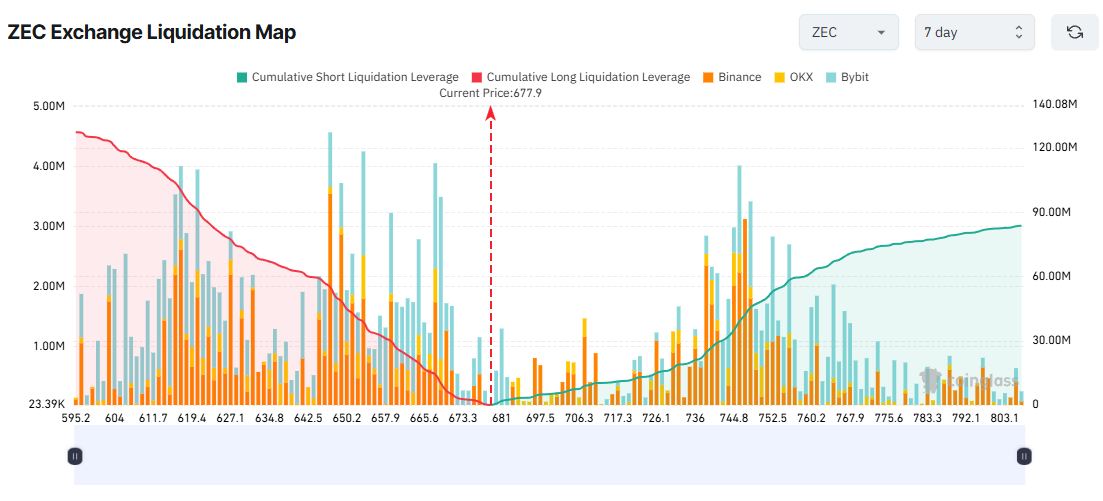
Карта ликвидации биржи ZEC. Источник: Coinglass

Тем не менее, ZEC столкнулся с неоднократными отторжениями вблизи уровня $700. Поэтому многие аналитики обеспокоены возможной коррекцией на этой неделе.

Если она произойдет и ZEC упадет ниже $600, ликвидации длинных позиций могут превысить $123 млн.

Более того, данные Coinglass показывают, что общий открытый интерес (ОИ) по ZEC достиг в ноябре исторического максимума в $1.38 млрд.

Это отражает высокий уровень использования кредитного плеча. Подобная ситуация увеличивает риск волатильных движений и масштабных ликвидаций.
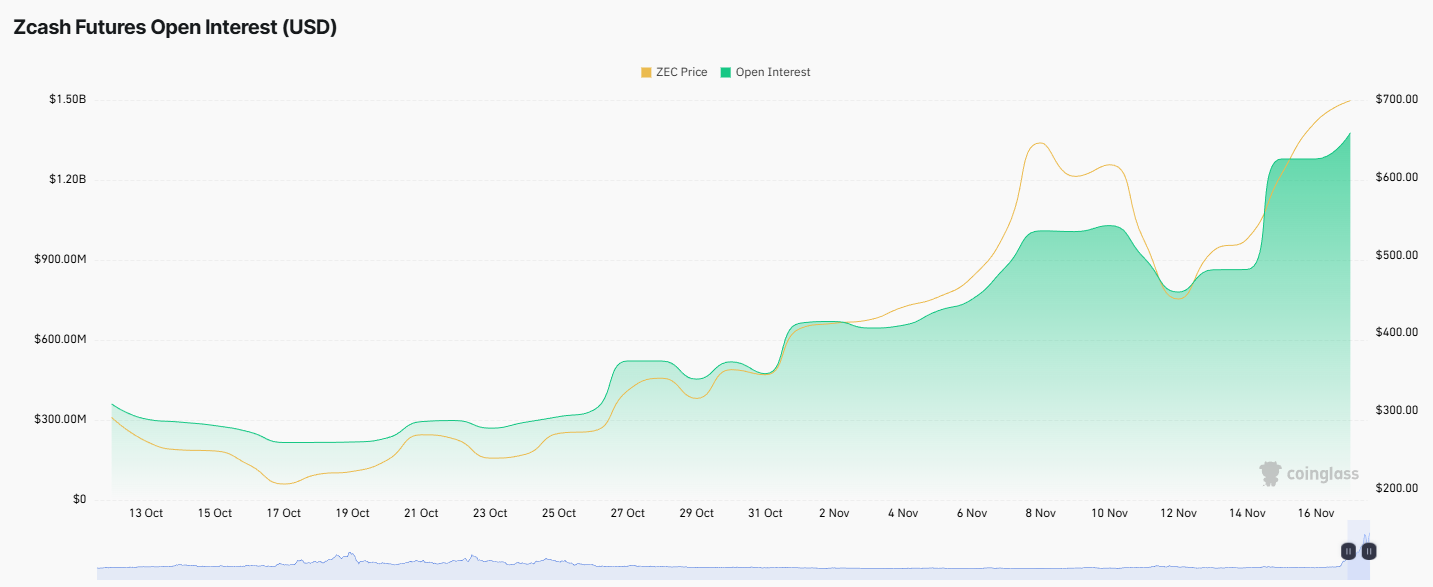
Открытый интерес по фьючерсам ZCash. Источник: Coinglass
Открытый интерес по фьючерсам ZCash. Источник: Coinglass.

Из-за этого удержание длинных позиций в ZEC может принести краткосрочную прибыль. Но без четких планов фиксации прибыли (take-profit) или ограничения убытков (stop-loss) эти позиции могут быстро столкнуться с давлением продаж.

The post Ликвидации на $3 млрд. Какие риски несут Ethereum, Solana и Zcash appeared first on BeInCrypto.


Trending Cryptos

Related Reads

Foundation Steps Back, Ethlabs Steps Forward: Ethereum Undergoes Its Largest Restructuring in History

On June 23rd, the Ethereum ecosystem witnessed two major shifts, signaling a significant governance realignment. First, former Ethereum Foundation researchers established Ethlabs, a new independent non-profit. Backed by major ETH holders like Bitmine and SharpLink, Ethlabs aims to address practical needs for institutional adoption, including faster settlement, native asset issuance, cross-chain transactions, and mainnet scaling. Secondly, the Ethereum Foundation announced a major restructuring, laying off 54 employees (20% of its staff) to become a leaner entity focused on protocol governance and maintenance rather than being the primary builder. This move represents a pivotal correction. Criticisms had mounted over the Foundation's perceived slowness, lack of clear strategy, and over-reliance on Vitalik Buterin's influence. Ethlabs emerges as a more execution-oriented, "industrialized" layer focused on market adoption—bridging the gap between research and real-world use. Notably, Vitalik Buterin is absent from its list of supporters, interpreted as an intentional step to avoid excessive personal endorsement and allow the organization to build independent credibility. The Ethereum Foundation's downsizing and redefinition mark a retreat from its former central coordinating role. It now aims to share the "privilege of stewarding Ethereum" with other emerging groups like Ethlabs, the Ethereum Applications Guild, and The Ethereum Economic Zone. Analysts frame this dual shift as the Foundation ensuring Ethereum remains "correct" (credibly neutral), while Ethlabs must prove it remains "effective" (competitive and attractive for capital and adoption). This addresses community "shareholder-like anxiety" about ETH's market performance. While risks exist—such as concerns over shifting from Foundation centrality to large-holder influence—the consensus is that the greater risk for Ethereum was inaction, caught between technical idealism and organizational inertia. These steps aim to create a more multi-stakeholder, execution-driven future for the network.

链捕手2h ago

Foundation Steps Back, Ethlabs Steps Forward: Ethereum Undergoes Its Largest Restructuring in History

链捕手2h ago

Second Half of U.S. Crypto Policy: The Clarity Act Aims for 60 Votes, CFTC's "One-Person Commission" Becomes Biggest Variable

In a pivotal year for US crypto policy, the "CLARITY Act" is advancing in the Senate but faces a high hurdle, needing 60 votes to pass. Key challenges include bridging partisan divides on ethics and swaying undecided Republican senators within a tight legislative calendar of only about 40 working days. The policy "second half" involves intense negotiations on a broader framework for Web3 and DeFi, including crypto tax reforms and the Blockchain Regulatory Certainty Act. A significant uncertainty is the understaffed CFTC, operating with four commissioner vacancies, which complicates regulatory clarity. Meanwhile, the departure of key "crypto champions"—SEC Commissioner Hester Peirce and Senator Cynthia Lummis—will impact ongoing policy efforts. Industry experts are cautiously optimistic but realistic. Sara K. Weed notes that while progress is being made, CLARITY is unlikely to pass this Congress, pushing agencies like the SEC and CFTC to provide more guidance. Sulolit Mukherjee suggests meaningful crypto tax legislation is more likely to be attached to larger must-pass bills. Rashan Colbert discusses the jurisdictional debate over prediction markets, emphasizing the need for a regulatory framework that fosters their development as financial tools rather than treating them broadly as gambling. The clock is ticking, but opportunities remain for substantive progress through continued bipartisan dialogue and pragmatic efforts.

marsbit5h ago

Second Half of U.S. Crypto Policy: The Clarity Act Aims for 60 Votes, CFTC's "One-Person Commission" Becomes Biggest Variable

marsbit5h ago

Research Report Analysis: Morgan Stanley Details SanDisk SNDK, The Truth About Cloud Data Center Pricing Power and AI Inference Benefits

Morgan Stanley raised its price target for SanDisk (SNDK) from $1100 to $1750 on June 22, maintaining an Overweight rating. The upgrade is driven by AI inference demand reshaping the NAND market, particularly for KV Cache and context window storage in cloud data centers. These cloud clients exhibit price inelasticity and sign long-term contracts, granting SanDisk significant pricing power. SanDisk's New Business Model (NBM) agreements, covering over one-third of FY27 bit shipments with 3-5 year terms and fixed price/price collar structures, are crucial. They are projected to sustain gross margins around 80% even at floor prices, providing a buffer against cyclical downturns. Morgan Stanley forecasts gross margins to surge from 30.3% in FY25 to 86.7% in FY27e. With NAND supply expected to remain tight into 2026/2027 and cloud/data centers becoming the largest end-market, SanDisk holds supply-side pricing power. The company targets 15-19% bit growth via technology transitions, not capacity expansion. Revenue is projected to grow ~6.6x from FY25 to FY27, with EPS rising from $2.74 to $14.73, driven by high-margin cloud business. Key upside catalysts include faster enterprise SSD adoption and edge AI growth. Downside risks involve slower industry growth, competitor capex increases, market share loss, and competition from Chinese players like YMTC. The investment thesis rests on AI-driven structural demand, NBM's margin protection, and sustained supply tightness. The $1750 target implies ~28x FY27e P/E.

marsbit6h ago

Research Report Analysis: Morgan Stanley Details SanDisk SNDK, The Truth About Cloud Data Center Pricing Power and AI Inference Benefits

marsbit6h ago

Trading

Spot
Futures

Hot Articles

Discussions

Welcome to the HTX Community. Here, you can stay informed about the latest platform developments and gain access to professional market insights. Users' opinions on the price of ETH (ETH) are presented below.

活动图片