Perché Bitcoin Hyper è uno dei presale crypto più discussi del 2025

bitcoinistPublished on 2025-11-14Last updated on 2025-11-14

Abstract

Bitcoinist descrive Bitcoin Hyper (token HYPER) come una delle presale più rilevanti nel panorama crypto del 2025, grazie al suo...

Trusted Editorial content, reviewed by leading industry experts and seasoned editors. Ad Disclosure

Bitcoinist descrive Bitcoin Hyper (token HYPER) come una delle presale più rilevanti nel panorama crypto del 2025, grazie al suo progetto di Layer 2 su Bitcoin. L’idea alla base è offrire una rete più veloce e programmabile (dApps, staking, trasferimenti) pur continuando a usare Bitcoin come livello di “settlement”, combinando sicurezza e scalabilità.

L’architettura tecnica di Bitcoin Hyper

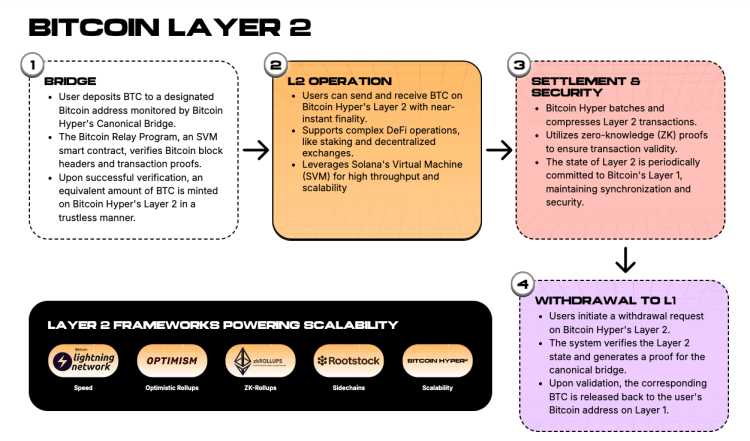
Secondo le specifiche, Bitcoin Hyper permette di depositare BTC in un indirizzo osservato, dopodiché un contratto su Solana Virtual Machine (SVM) verifica i relativi header o proof. Questo processo porta alla creazione dell’equivalente tokenizzato su Hyper, che può essere usato nella rete L2 per transazioni rapide, staking, scambi e applicazioni decentrate. Periodicamente, le transazioni vengono “ancorate” indietro su Bitcoin usando prove ZK (zero-knowledge), per garantire che il token L2 resti collegato al valore reale di BTC su L1.

Grazie a questo modello, il progetto punta a combinare l’affidabilità di Bitcoin con la velocità di altre blockchain più moderne, rendendo la rete adatta anche a pagamenti quotidiani e casi d’uso DeFi.

Raccolta fondi e struttura della prevendita

Durante la presale, Bitcoin Hyper ha raccolto cifre significative, con investitori che sembrano credere nella visione del progetto. I token HYPER sono offerti a un prezzo base, e chi partecipa può anche scegliere di mettere in staking parte dei suoi token durante la fase di presale. Questo staking offre rendimenti relativamente elevati, il che può risultare attraente per chi è disposto a bloccare risorse in vista del lancio.

Secondo l’analisi originale, l’operazione di presale non è guidata solo da hype: la domanda deriva anche da un interesse concreto per infrastrutture che migliorino l’esperienza d’uso di BTC e ne espandano le funzionalità. Questo mix di visione tecnica e appello retail spiega, secondo l’articolo, perché molti osservatori considerino Hyper una scommessa “infrastrutturale” piuttosto che una semplice altcoin speculativa.

Opportunità e punti di forza

Uno dei principali vantaggi di Bitcoin Hyper è la possibilità di utilizzare Bitcoin in modo più versatile: non solo come riserva di valore, ma per costruire applicazioni, movimentare fondi rapidamente e partecipare alla finanza decentralizzata. Se il progetto dovesse effettivamente realizzare bridge sicuri, esecuzione rapida su L2 e un ecosistema funzionante, potrebbe attirare sviluppatori interessati a creare dApp “Bitcoin-native” e utenti che vogliono trasferire o usare BTC più agilmente.

Inoltre, il fatto che parte del capitale arrivi da investitori retail e istituzionali suggerisce che il progetto non è visto solo come un gioco speculativo, ma come qualcosa con potenziale a lungo termine.
Rischi da considerare

Tuttavia, non mancano le incognite. Il successo di Bitcoin Hyper dipende fortemente dall’esecuzione tecnica: è necessario che il bridge funzioni in modo sicuro, che le validazioni ZK siano affidabili e che la rete L2 sia stabile e performante. Se qualcosa dovesse andare storto (bug, costi elevati, problemi di sicurezza), la proposta perderebbe molto del suo valore “pratico”.

Inoltre, il modello di staking e yield alto può nascondere rischi: rendimenti elevati nei progetti in presale non sono mai garantiti dopo il lancio, e possono diminuire man mano che la piattaforma matura o se non viene sostenuta da reale utilizzo o liquidità.

Infine, il fatto che si tratti ancora di un progetto L2 su Bitcoin implica una forte dipendenza dallo sviluppo futuro di entrambi gli strati: il fallimento su uno dei due fronti potrebbe compromettere l’intera proposta.

Conclusione

Bitcoin Hyper è presentato come un progetto ambizioso che cerca di risolvere alcune delle limitazioni storiche di Bitcoin: lentezza, costi alti e mancanza di programmabilità. La sua prevendita ha attirato interesse grazie a un modello che combina tecnologia avanzata con un’idea di lungo periodo, non solo speculazione.

Detto questo, è importante guardare al progetto con realismo: se la rete funziona come descritto, potrebbe avere un impatto significativo; ma gli ostacoli tecnici e i rischi restano. Chi è interessato dovrebbe fare la propria due diligence, valutare sia il potenziale che i rischi, e non considerarlo un “colpo sicuro”.

Editorial Process for bitcoinist is centered on delivering thoroughly researched, accurate, and unbiased content. We uphold strict sourcing standards, and each page undergoes diligent review by our team of top technology experts and seasoned editors. This process ensures the integrity, relevance, and value of our content for our readers.

Esperto di criptovalute e finanza, noto per la sua capacità di analizzare i mercati digitali con precisione e chiarezza. Con un background in economia e appassionato di tecnologia blockchain, ha scritto per numerose testate specializzate, fornendo approfondimenti su investimenti, strategie di trading e regolamentazioni del settore. Apprezzato per il suo stile diretto e informato, Orfeo Barone è una voce autorevole nel panorama della finanza digitale.

Trending Cryptos

Related Reads

Upbit is Anxious: A Hasty Counterattack Aimed at Regaining Stablecoin Market Share

Title: Upbit's Rushed Counterattack to Reclaim Stablecoin Market Share Facing a dramatic shift in South Korea's stablecoin market, leading exchange Upbit launched a promotional campaign from July 26 to August 9, waiving the 0.05% trading fee for stablecoins paired with the Korean Won (KRW) and rapidly listing new stablecoins like RLUSD and USDG. This move is a direct response to its plummeting market share in this sector. Historically a duopoly with Bithumb, the market has been reshaped since October 2025 when Coinone permanently removed fees for USDC trading. By June 2026, Coinone led with 34.8% of stablecoin volume, followed by Bithumb (31.1%) and Upbit (30.1%). This contrasts sharply with the overall crypto market, where Upbit commands 60%. The data shows stablecoin demand is highly sensitive to fees, as users primarily buy them to transfer capital overseas for derivatives trading or forex arbitrage. South Korean exchanges have seen a net outflow of stablecoins for 18 consecutive months, totaling approximately 14.9 trillion KRW, underscoring their role as a cross-border capital conduit. Upbit's limited-time promotion initially boosted its daily stablecoin volume by 162%, but the surge was almost entirely in USDT (98.1% of volume). The newly listed stablecoins saw negligible, fleeting interest. Furthermore, the promotional effect quickly waned in the second week, with volume dropping 33% on weekdays. A concurrent weakening of the KRW also contributed to the trading spike, independent of the fee waiver. The analysis suggests that once the promotion ends, Upbit is unlikely to retain its temporary gains unless it matches Coinone's permanent zero-fee policy, forcing a choice between market share and fee revenue. Upbit's strategic push may be less about immediate profit and more about preparing for future regulatory shifts. With South Korea's *Digital Asset Basic Act* on the horizon, which will regulate KRW-backed stablecoins, and following Dunamu's (Upbit's parent) integration into Naver Financial to build a payment ecosystem, securing a dominant position in the dollar stablecoin distribution channel holds long-term strategic value. However, potential regulatory conflicts could prevent Upbit from listing a future Naver-issued KRW stablecoin, making the current fight for dollar stablecoin flow even more critical.

marsbit8h ago

Upbit is Anxious: A Hasty Counterattack Aimed at Regaining Stablecoin Market Share

marsbit8h ago

Trading

Spot

Hot Articles

What is $BITCOIN

DIGITAL GOLD ($BITCOIN): A Comprehensive Analysis Introduction to DIGITAL GOLD ($BITCOIN) DIGITAL GOLD ($BITCOIN) is a blockchain-based project operating on the Solana network, which aims to combine the characteristics of traditional precious metals with the innovation of decentralized technologies. While it shares a name with Bitcoin, often referred to as “digital gold” due to its perception as a store of value, DIGITAL GOLD is a separate token designed to create a unique ecosystem within the Web3 landscape. Its goal is to position itself as a viable alternative digital asset, although specifics regarding its applications and functionalities are still developing. What is DIGITAL GOLD ($BITCOIN)? DIGITAL GOLD ($BITCOIN) is a cryptocurrency token explicitly designed for use on the Solana blockchain. In contrast to Bitcoin, which provides a widely recognized value storage role, this token appears to focus on broader applications and characteristics. Notable aspects include: Blockchain Infrastructure: The token is built on the Solana blockchain, known for its capacity to handle high-speed and low-cost transactions. Supply Dynamics: DIGITAL GOLD has a maximum supply capped at 100 quadrillion tokens (100P $BITCOIN), although details regarding its circulating supply are currently undisclosed. Utility: While precise functionalities are not explicitly outlined, there are indications that the token could be utilized for various applications, potentially involving decentralized applications (dApps) or asset tokenization strategies. Who is the Creator of DIGITAL GOLD ($BITCOIN)? At present, the identity of the creators and development team behind DIGITAL GOLD ($BITCOIN) remains unknown. This situation is typical among many innovative projects within the blockchain space, particularly those aligning with decentralized finance and meme coin phenomena. While such anonymity may foster a community-driven culture, it intensifies concerns about governance and accountability. Who are the Investors of DIGITAL GOLD ($BITCOIN)? The available information indicates that DIGITAL GOLD ($BITCOIN) does not have any known institutional backers or prominent venture capital investments. The project seems to operate on a peer-to-peer model focused on community support and adoption rather than traditional funding routes. Its activity and liquidity are primarily situated on decentralized exchanges (DEXs), such as PumpSwap, rather than established centralized trading platforms, further highlighting its grassroots approach. How DIGITAL GOLD ($BITCOIN) Works The operational mechanics of DIGITAL GOLD ($BITCOIN) can be elaborated on based on its blockchain design and network attributes: Consensus Mechanism: By leveraging Solana’s unique proof-of-history (PoH) combined with a proof-of-stake (PoS) model, the project ensures efficient transaction validation contributing to the network's high performance. Tokenomics: While specific deflationary mechanisms have not been extensively detailed, the vast maximum token supply implies that it may cater to microtransactions or niche use cases that are still to be defined. Interoperability: There exists the potential for integration with Solana’s broader ecosystem, including various decentralized finance (DeFi) platforms. However, the details regarding specific integrations remain unspecified. Timeline of Key Events Here is a timeline that highlights significant milestones concerning DIGITAL GOLD ($BITCOIN): 2023: The initial deployment of the token occurs on the Solana blockchain, marked by its contract address. 2024: DIGITAL GOLD gains visibility as it becomes available for trading on decentralized exchanges like PumpSwap, allowing users to trade it against SOL. 2025: The project witnesses sporadic trading activity and potential interest in community-led engagements, although no noteworthy partnerships or technical advancements have been documented as of yet. Critical Analysis Strengths Scalability: The underlying Solana infrastructure supports high transaction volumes, which could enhance the utility of $BITCOIN in various transaction scenarios. Accessibility: The potential low trading price per token could attract retail investors, facilitating wider participation due to fractional ownership opportunities. Risks Lack of Transparency: The absence of publicly known backers, developers, or an audit process may yield skepticism regarding the project's sustainability and trustworthiness. Market Volatility: The trading activity is heavily reliant on speculative behavior, which can result in significant price volatility and uncertainty for investors. Conclusion DIGITAL GOLD ($BITCOIN) emerges as an intriguing yet ambiguous project within the rapidly evolving Solana ecosystem. While it attempts to leverage the “digital gold” narrative, its departure from Bitcoin's established role as a store of value underscores the need for a clearer differentiation of its intended utility and governance structure. Future acceptance and adoption will likely depend on addressing the current opacity and defining its operational and economic strategies more explicitly. Note: This report encompasses synthesised information available as of October 2023, and developments may have transpired beyond the research period.

1.9k Total ViewsPublished 2025.05.13Updated 2025.05.13

What is $BITCOIN

Discussions

Welcome to the HTX Community. Here, you can stay informed about the latest platform developments and gain access to professional market insights. Users' opinions on the price of BTC (BTC) are presented below.

活动图片