CBDCs Aren’t Dead Yet—Major Central Banks Quietly Advance Initiatives Amid Stablecoin Dominance

ccn.comPublished on 2025-11-06Last updated on 2025-11-06

Key Takeaways
  • Around the world, CBDC projects have slowed in 2025.
  • However, central banks continue to make steady progress.
  • The Central Bank of West African States is the latest to confirm a CBDC pilot.

In 2025, stablecoins have largely stolen the limelight from Central Bank Digital Currencies (CBDCs).

However, around the world, central banks are quietly progressing with their various CBDC initiatives.

For instance, the Central Bank of West African States is preparing to launch its CBDC pilot in the new year.

Meanwhile, the Bank of England’s regular forums on the matter reveal steady progress on the digital pound.


Top Crypto Tax Accounting Software
Sponsored
Disclosure
We sometimes use affiliate links in our content, when clicking on those we might receive a commission at no extra cost to you. By using this website you agree to our terms and conditions and privacy policy.

CBDCs Sidelined By US Stablecoin Push

Not so long ago, CBDCs were at the heart of the conversation around digital money.

Starting around 2019, what had previously been a niche interest among payment nerds captured the public imagination.

In 2020, China’s e-CNY pilot garnered significant media attention.

When Nigeria’s central bank launched the eNaira a year later, the world watched closely to see how the first nationwide implementation of the concept would unfold.

By 2024, digital pounds, euros, and dollars seemed inevitable, with more than 90 central banks in the exploratory stage and 44 live pilots underway.

However, the U.S. election that year changed everything.

On the campaign trail, Donald Trump slammed CBDCs as a form of government surveillance and vowed to shut down the Fed’s digital dollar explorations.

True to his word, once he entered the White House, one of the first executive orders Trump signed explicitly prohibited the creation of a CBDC within the United States.

Subsequent efforts to enshrine a ban in the more enduring form of an Act of Congress are also underway, with the House passing the Anti-CBDC Surveillance State Act in July.

Washington’s stablecoin push serves as an important corollary to the anti-CBDC movement.

While both technologies address calls for currency digitization, stablecoins present a much more immediate reality.

Significant changes to a nation’s monetary base can take years to plan and implement.

By the time more central banks make their move, stablecoins worth trillions of dollars may already be in circulation.

Can Slow-and-Steady Win the Race?

With stablecoins dominating the global conversation, CBDC plans appeared to stall.

Although some central banks have moved them onto the back burner, they continue to make quiet progress.

In a sign that the movement is still alive, the Central Bank of West African States will start piloting a digital version of the West African CFA franc in the new year, Governor Jean-Claude Kassi Brou confirmed recently.

The announcement follows the launch of Uganda’s digital shilling pilot in October.

Meanwhile, minutes from the Bank of England’s CBDC task force reveal ongoing discussions on the finer details of implementation.

Central bankers’ enthusiasm isn’t always matched by political appetite. The same concerns that motivate Trump’s anti-CBDC agenda continue to fuel resistance elsewhere.

For instance, while the European Central Bank is pressing ahead with plans to launch a digital euro as early as 2029, lawmakers are less convinced.

Ongoing pilots and explorations don’t mean CBDCs are guaranteed.

While central banks around the world have been instructed to prepare the ground, ultimately, it will be politicians, not central bankers, who have the final say.


Trending Cryptos

Related Reads

Analyst Who Predicted Bitcoin's Major Drop in October Now Predicts What Could Happen Next

Sean Farrell, head of digital asset strategy at Fundstrat, analyzes the current uncertain and volatile crypto market. He notes that while traditional tech stocks hit record highs, lagging crypto assets have created market apathy, which could be an early sign of a bottom forming. Farrell's base case suggests Bitcoin and the broader crypto market may experience one final sharp decline before initiating a sustained upward trend. It remains unclear if this drop will form a new deep low or test recent lows. He points out that global liquidity conditions and rising US 10-year Treasury yields continue to pressure liquidity-sensitive assets like cryptocurrencies in the short term. Farrell states that the tech sector's growth is driven by significant corporate profit increases, whereas the crypto market hasn't yet received the necessary monetary and fiscal liquidity. Although high US Treasury issuance and rising long-term bond yields are pressuring the market, he predicts a potential shift within the next 3-6 months. After risk appetite diminishes due to high interest rates, liquidity-boosting measures from regulators or central banks could trigger a new bull market. Additionally, Farrell believes that if a new governance proposal aimed at reducing inflation on the Solana network is adopted, it would lessen sell-side pressure and could act as a significant catalyst for the token's price.

cryptonews.ru1h ago

Analyst Who Predicted Bitcoin's Major Drop in October Now Predicts What Could Happen Next

cryptonews.ru1h ago

Bitcoin Breaches $64,000 Mark Again as Short Sellers Lose $57.4 Million in Liquidations

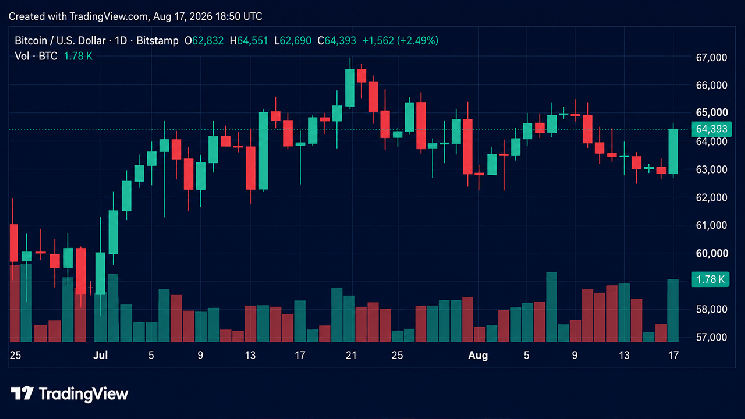
Bitcoin surged back above $64,000 on Monday, reversing a dip below $63,000 that had threatened to revisit mid-August lows. The rally coincided with an announcement from MicroStrategy stating it had neither bought nor sold any Bitcoin over the past week. After falling to a daily low near $62,653, Bitcoin sharply reversed course, climbing approximately $1,000 in six hours to reach a daily high above $64,375. By early afternoon EST, it was trading above $64,200, marking a nearly 2% daily gain and turning its weekly performance positive. The price movement triggered significant liquidations in the derivatives market, with leveraged short positions losing $57.4 million over 24 hours, contributing to total crypto market liquidations nearing $220 million. While MicroStrategy paused its Bitcoin purchases, it increased its cash reserves to $4.8 billion using part of the proceeds from a recent common stock sale. The funds were also used for share buybacks and preferred dividend payments. Analysts suggest this focus on balance sheet strength helps mitigate near-term liquidation pressure, especially as Bitcoin's price remains about 15% below MicroStrategy's average acquisition cost of $75,385. However, critics argue the capital allocation disproportionately benefits preferred shareholders (STRC) over common stockholders (MSTR) and sidelines the company's core growth strategy of aggressive Bitcoin accumulation. Bitcoin initially appeared to react positively to reports of a potential 60-day ceasefire extension between the U.S. and Iran, but the rally's momentum faded after Iranian officials denied the reports. Consequently, Bitcoin currently lacks a clear macroeconomic catalyst to sustain a decisive bullish breakout.

cryptonews.ru2h ago

Bitcoin Breaches $64,000 Mark Again as Short Sellers Lose $57.4 Million in Liquidations

cryptonews.ru2h ago

Trading

Spot

Hot Articles

How to Buy T

Welcome to HTX.com! We've made purchasing Threshold Network Token (T) simple and convenient. Follow our step-by-step guide to embark on your crypto journey.Step 1: Create Your HTX AccountUse your email or phone number to sign up for a free account on HTX. Experience a hassle-free registration journey and unlock all features.Get My AccountStep 2: Go to Buy Crypto and Choose Your Payment MethodCredit/Debit Card: Use your Visa or Mastercard to buy Threshold Network Token (T) instantly.Balance: Use funds from your HTX account balance to trade seamlessly.Third Parties: We've added popular payment methods such as Google Pay and Apple Pay to enhance convenience.P2P: Trade directly with other users on HTX.Over-the-Counter (OTC): We offer tailor-made services and competitive exchange rates for traders.Step 3: Store Your Threshold Network Token (T)After purchasing your Threshold Network Token (T), store it in your HTX account. Alternatively, you can send it elsewhere via blockchain transfer or use it to trade other cryptocurrencies.Step 4: Trade Threshold Network Token (T)Easily trade Threshold Network Token (T) on HTX's spot market. Simply access your account, select your trading pair, execute your trades, and monitor in real-time. We offer a user-friendly experience for both beginners and seasoned traders.

13.0k Total ViewsPublished 2024.03.29Updated 2026.06.02

How to Buy T

Discussions

Welcome to the HTX Community. Here, you can stay informed about the latest platform developments and gain access to professional market insights. Users' opinions on the price of T (T) are presented below.

活动图片