SharpLink Gaming пополняет казну Ethereum на $78 млн

cryptonews.ruPublished on 2025-07-26Last updated on 2025-10-27

Acryptoinvest.news: SharpLink Gaming снова в центре внимания: компания расширяет свою сокровищницу Ethereum на фоне возобновившегося оптимизма на рынке.

Компания SharpLink Gaming значительно увеличила свои активы в Ethereum, приобретя 19 271 ETH на сумму $78,3 млн, согласно данным, опубликованным Lookonchain. Эта покупка знаменует собой очередной шаг по накоплению активов компанией, занимающейся технологиями спортивных игр, после месячной паузы в покупках.

Покупка SharpLink увеличивает ее общие активы до примерно 859 853 ETH, что ставит компанию в один ряд с крупнейшими мировыми корпоративными держателями. По текущим ценам активы оцениваются более чем в 3,62 млрд долларов, что подтверждает уверенность компании в том, что Ethereum — это балансовый актив и долгосрочный стратегический резерв.

Компания, недавно объявившая о планах токенизации своих акций SBET, котирующихся на бирже Nasdaq, непосредственно на Ethereum в партнёрстве с Superstate, также создаёт инфраструктуру, выходящую за рамки пассивного владения. Эта токенизация свидетельствует о более глубокой интеграции с Ethereum и дополняет политику казначейства, ориентированную на программируемый, приносящий доход цифровой капитал.

По данным Strategic ETH Reserve, в настоящее время в корпоративных казначействах в общей сложности хранится 5,98 млн ETH стоимостью 25,18 млрд долларов США, что составляет почти 4,94% от общего объема предложения Ethereum.

На фоне роста цены Ethereum последняя покупка SharpLink произошла на фоне улучшения рыночных условий и возобновления интереса инвесторов.

Sharplink увеличивает стоимость Ethereum после прорыва ключевого сопротивления

Курс Ethereum торгуется на уровне $4238, увеличившись на 7,53% за последние 24 часа и на 4,61% за неделю. Вторая по капитализации криптовалюта восстанавливает позиции, утраченные в начале октября, и тестирует критический уровень сопротивления в районе $4250.

ETH демонстрирует рост после отскока от поддержки в районе $3750, демонстрируя уверенное восстановление, которое теперь приближает его к октябрьскому максимуму на $4734. Изменение импульса указывает на возобновление давления со стороны покупателей, при этом быки ожидают потенциального продолжения роста к верхним уровням этого диапазона.

С точки зрения быков, явный прорыв и закрытие выше $4253 может подтвердить краткосрочный прорыв, создав условия для движения к $4730–$4750, что соответствует предыдущему месячному максимуму. Индекс относительной силы (RSI) растёт, сигнализируя о нарастающем бычьем импульсе, который подтверждает потенциальное продолжение роста.

Однако, если цена не удержится выше $4200, это может спровоцировать откат, при этом нижняя поддержка находится в районе $3750. Закрытие ниже этого уровня, хотя и маловероятно, учитывая улучшение рыночных настроений, ослабит текущую ситуацию и откроет путь для дальнейшей коррекции к зоне $3600.

На данный момент технический прогноз ETH остаётся конструктивным. Стабильный объём торгов, продолжающаяся активность в казначействе Ethereum и усиливающаяся динамика указывают на восстановление рынка.


Trending Cryptos

Related Reads

South Korean Retail Investors 'Move from Seoul to Wall Street': Buying SK Hynix ADR, Betting on Triple-Leverage ETF

A surge of Korean retail investors is shifting funds from the volatile Seoul market to Wall Street, intensifying their bets on the AI theme through unconventional and high-risk instruments. Data shows Korean investors were net buyers of about $4.5 billion in US stocks in July, nearing a yearly peak. A notable trend is their purchase of approximately $840 million worth of SK Hynix American Depositary Receipts (ADRs), despite a significant 10% premium over the company's domestic shares, leading analysts to label the move as speculative and irrational. Simultaneously, Korean traders are heavily favoring leveraged ETFs. The triple-leveraged semiconductor ETF SOXL was the most-bought US product in July, with leveraged products occupying four of the top ten spots. Experts note that this shift in geography does not represent a diversification of risk; instead, investors are merely expressing the same concentrated bet on AI hardware through different, often riskier, US-listed vehicles. Analysts warn that while this capital inflow is unlikely to systemically impact the vast US institutional market, it risks creating localized distortions and amplifying volatility, particularly in the targeted sectors and instruments. The move follows a sharp correction in the Korean market, where high leverage in semiconductor stocks and related ETFs had previously led to significant losses, prompting this search for alternative avenues to chase the AI narrative.

marsbit14m ago

South Korean Retail Investors 'Move from Seoul to Wall Street': Buying SK Hynix ADR, Betting on Triple-Leverage ETF

marsbit14m ago

Bithumb's First Half Report: Net Loss Exceeds $76 Million, Where Did the Profits Go?

**Title: Bithumb H1 2026 Report: Net Loss Exceeds $76M – Where Did the Profits Go?** Despite a headline net loss of approximately 108.7 billion KRW (~$76.44 million) for the first half of 2026, a detailed breakdown reveals Bithumb's core exchange business remained profitable. The significant loss was primarily driven by two major non-operating items: substantial losses on the disposal and valuation of the company's own cryptocurrency holdings (net loss ~$48.21 million) and a sharp increase in litigation provisions (~$25.93 million), largely linked to a regulatory fine. Operating revenue fell 48.7% year-on-year to ~$119 million, almost entirely from transaction fees, as market activity cooled. While the company drastically cut marketing and subsidy expenses by ~70% to protect margins, more rigid costs like payment processing and salaries declined only modestly. This highlights the vulnerability of its highly fee-dependent revenue model in a down market. Total assets decreased by ~$584 million, but this was largely attributable to an ~86% drop in client KRW deposits. The market value of client crypto assets under custody also fell (~32.7%), partly influenced by declining cryptocurrency prices rather than solely client withdrawals. In summary, the report indicates underlying exchange profitability was eroded by significant crypto asset losses and mounting regulatory/legal costs, against a backdrop of declining trading revenue. Future focus should be on revenue recovery, managing crypto-related损益, and the ongoing impact of regulatory challenges.

marsbit33m ago

Bithumb's First Half Report: Net Loss Exceeds $76 Million, Where Did the Profits Go?

marsbit33m ago

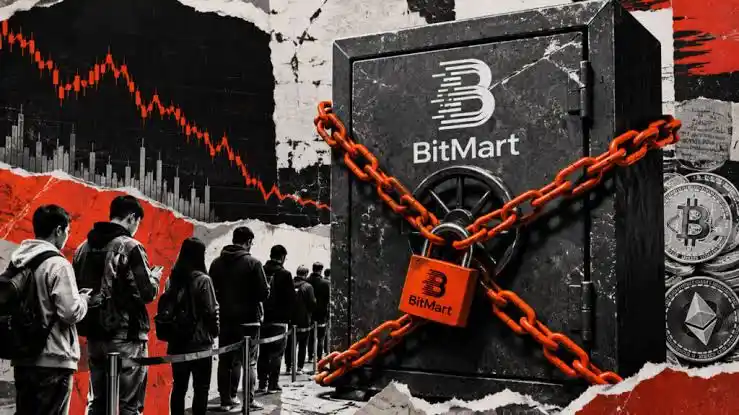
BitMart's Final 9 Days: A True Exchange Crisis Is Never About Shutting Down

BitMart's Final 9 Days: A True Exchange Crisis Is Not About Shutting Down On August 17, 2026, with just 9 days until BitMart's scheduled cessation of trading, the focus shifted from the platform's orderly closure to serious questions about user withdrawals, platform solvency, employee payments, and reserve transparency. Stakeholders, claiming to represent users and staff, publicly demanded asset/liability disclosures, explanations for withdrawal delays, a user repayment plan, and an independent audit, setting an August 19 deadline. While BitMart CEO Sheldon Lee denied allegations of insolvency or wrongdoing, the controversy highlighted a core vulnerability of centralized exchanges (CEXs). When an exchange announces its shutdown, normal user behavior changes dramatically, triggering a mass withdrawal event—the ultimate stress test for its liquidity and custodial integrity. The key question becomes not whether the platform has assets, but whether it holds sufficient *liquid* assets to cover all user liabilities on demand. The article argues that the trust placed in CEXs is based on the convenience they provide, abstracting users from direct control of their private keys. This trust is rarely questioned during normal operations but becomes critically exposed during a wind-down. The situation underscores the limitations of simple Proof of Reserves, which shows "what we have" but not the crucial "what we owe." True financial credibility requires transparent, auditable data on assets, liabilities, and segregated user funds. BitMart's situation reflects a broader, often overlooked issue in the crypto industry: while there is extensive focus on growth mechanisms for exchanges, there is little discussion or established protocol for a safe and transparent "exit mechanism." The final measure of an exchange's integrity, the article concludes, is not its user count or trading volume during a bull market, but its ability to ensure every last user can successfully withdraw their assets when the doors are closing. The outcome will be determined not by statements, but by whether the final user's funds securely leave the platform.

marsbit1h ago

BitMart's Final 9 Days: A True Exchange Crisis Is Never About Shutting Down

marsbit1h ago

Don't Speculate on 100x Coins, Just Bet on 'Cash Cows': Which Projects Are Worth Dollar-Cost Averaging in the Bear Market?

In a bearish crypto market, finding sustainable investments is more prudent than chasing speculative meme coins. This article analyzes projects generating consistent revenue, highlighting them as potential "cash cows" for long-term dollar-cost averaging (DCA). The top performers are "picks-and-shovels" plays. **Pump.fun**, a Solana-based meme coin launchpad, leads with $415.3M in monthly revenue, profiting from a 1.25% fee on token transactions. Despite market volatility, it has averaged tens of millions in monthly income in 2024. Perpetual DEX **Hyperliquid** stands out as a "bear market star," accumulating ~$352M in revenue over seven months. Its model funnels ~99% of fees into buying back and permanently burning its HYPE token. Established giants are also adapting. **Uniswap**, after enabling its fee switch, now earns protocol revenue (e.g., $5.6M recently), which is used to buy back and burn UNI, giving the token direct value accrual. Similarly, oracle provider **Chainlink** generates stable monthly revenue (~$4.57M recently) from its essential data, cross-chain, and automation services. Its new Payment Abstraction feature automatically converts service fees into LINK, accruing value in its treasury. The core thesis is clear: in a downturn, focus on projects with proven, resilient business models—those acting as essential infrastructure or capturing consistent transaction fees—rather than speculative narratives.

marsbit1h ago

Don't Speculate on 100x Coins, Just Bet on 'Cash Cows': Which Projects Are Worth Dollar-Cost Averaging in the Bear Market?

marsbit1h ago

Trading

Spot

Hot Articles

Discussions

Welcome to the HTX Community. Here, you can stay informed about the latest platform developments and gain access to professional market insights. Users' opinions on the price of ETH (ETH) are presented below.

活动图片