复盘150亿美元比特币大案,美国政府是如何拿到私钥的?

marsbitPublished on 2025-10-16Last updated on 2025-10-17

当一个“无法攻破”的数字堡垒,遇上决心敲门的国家机器,会发生什么?

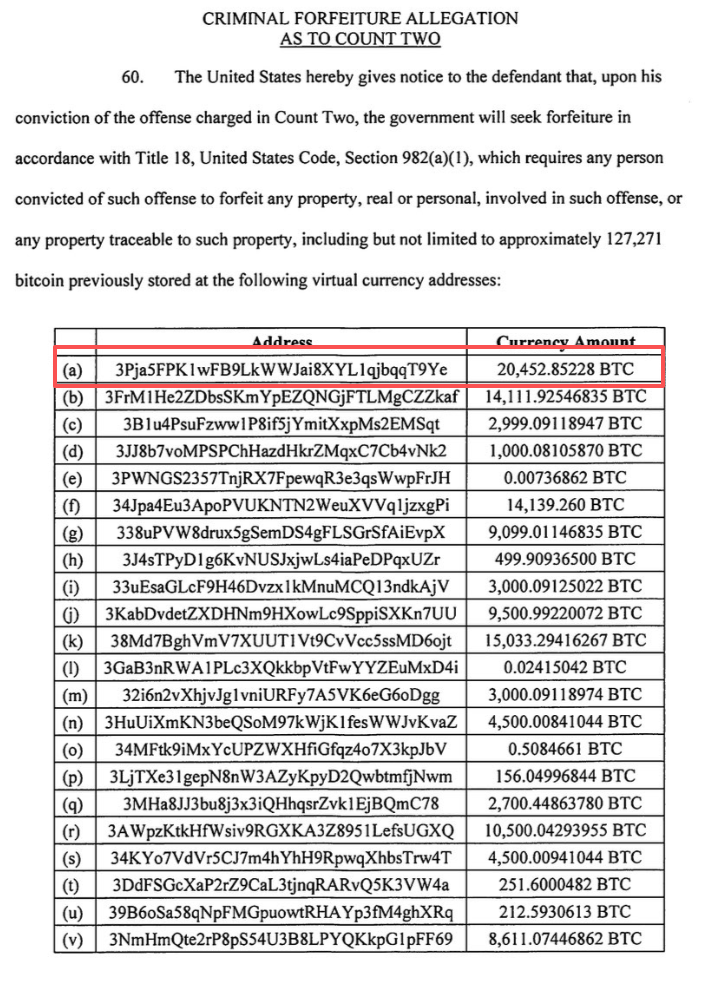
2025年10月,美国司法部的一纸公告,给全球所有比特币信徒带来了刺骨寒意。公告宣布成功查获价值150亿美元的比特币,这些资产全部来自一个由华人陈志(Chen Zhi)掌控的柬埔寨犯罪帝国。
美国司法部

美国司法部

这不是又一出现金或黄金被缴获的普通新闻。悖论在于:这批天文数字的比特币,据信存储在陈志本人控制私钥的个人冷钱包中——这是加密世界公认的、神圣不可侵犯的“自我托管”黄金标准。

“Not your keys, not your coins”(不是你的私钥,就不是你的币)——这句比特币世界的基石信条,在国家权力的长臂面前,似乎突然变得苍白无力。一个核心问题盘旋在每个持有者心头:如果连与世隔绝的冷钱包都能被强制没收,我们所信奉的金融主权,究竟还剩下什么?

许多人猜测,一定是出了内鬼,或是物理设备被缴获。但真相远比这更令人不安:政府很可能根本无需找到你,无需撬开你的保险箱,就凭空计算出了你的私钥。

综合社区里的各种信息和分析来看,情况似乎是这样的:政府并没有能力“攻破”比特币协议本身,这依然是安全的。但他们找到了一条新路径——从“人”和“有漏洞的代码”下手。他们手里的武器,其实是一套组合拳:用法律开路,用链上分析技术追踪,再配合各种手段拿到私钥。

原罪:那串“并不随机”的私钥

故事的一切,始于一家名为“路边矿池”(Lubian.com)的公司。

根据社区情报,Lubian 是一家由国人创办的比特币矿池,2019年崛起,凭借其算力实力和低廉手续费,一度跻身全球矿池排名前十。然而,为了节省给矿工批量转账时的交易费,Lubian 的开发者们犯下了一个致命的错误:他们没有使用行业标准的钱包软件,而是自己写了一套批量生成地址的程序。
美国司法部

他们的程序出了一个“荒唐”的问题:用于生成私钥的“随机数”,其实一点也不随机。

为了理解这一点,我们可以打个比方。一个真正安全的比特币私钥,好比一张拥有256个号码的超级彩票,每一个号码都是在0和1之间完全独立、随机摇出来的。想猜中这张彩票的完整号码,概率比大海捞针还低无数倍,是宇宙级别的不可能。

但Lubian的程序,就像一台坏掉的彩票机。它并没有在近乎无限的可能性里随机挑选号码,而是像卡壳了一样,总是打印出号码高度相似的彩票。比如,前224个号码永远都是固定的,只有最后32个号码在变。

黑客发现了这台彩票机的故障规律。他们不再需要去猜一个256位的天文数字,而只需要猜那最后32位的、可能性有限的号码组合。这一下,破解难度就从“神仙难办”变成了“凡人能解”。黑客轻松复制出了所有这台坏机器可能生成的私钥,然后把对应的钱包全部搬空。

Lubian 亲手埋下了这颗原子弹。


神秘黑客的“圣诞大劫案”

2020年12月28日,有人按下了引爆器。
美国司法部

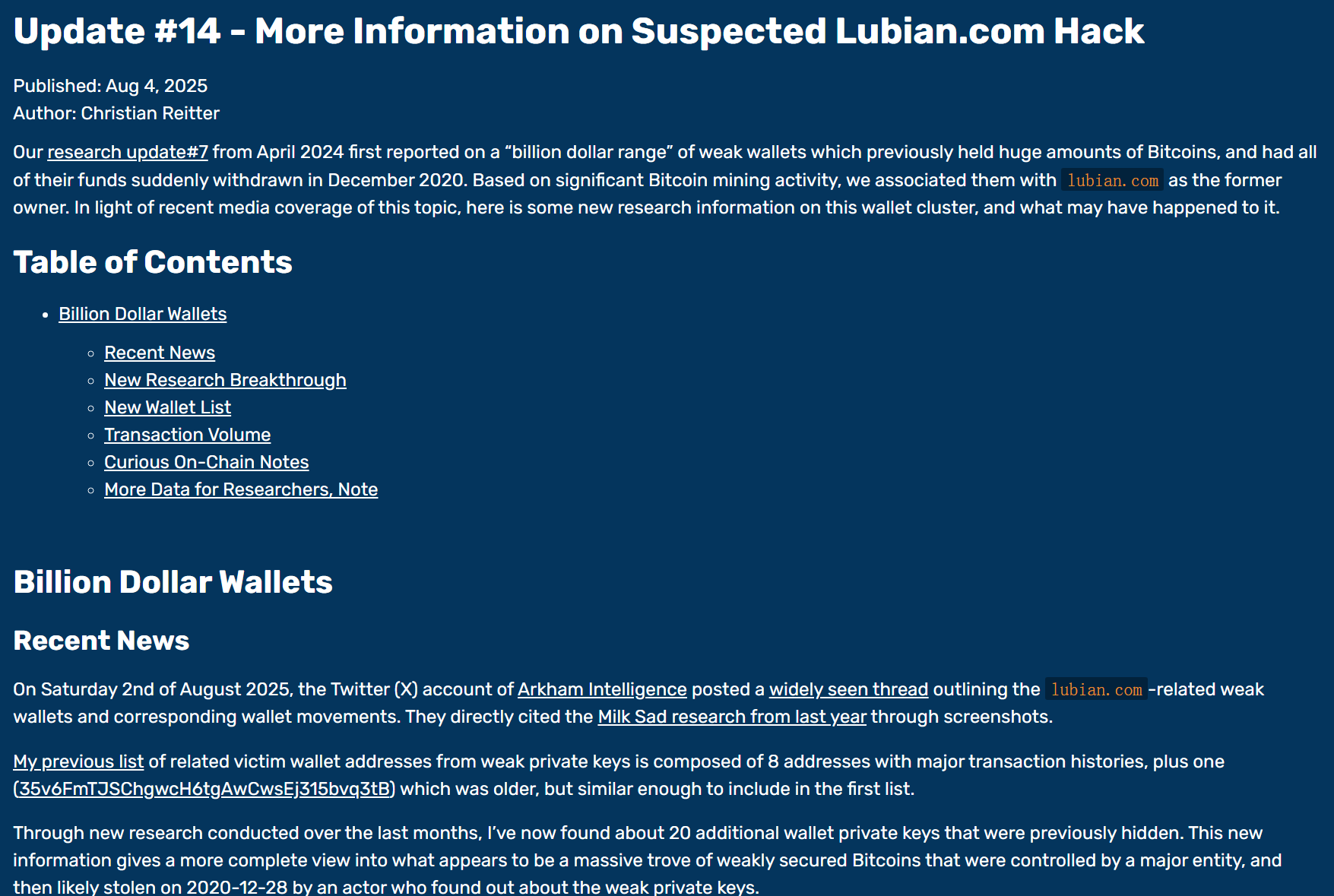
独立安全研究员 Christian Reitter 的报告证实,在这一天,一个或多个神秘行动者,显然也发现了Lubian的致命漏洞。在短短两个小时内,一场疯狂的资产大转移开始了。

  • 总计约136,951枚比特币(当时价值约37亿美元)从Lubian控制的数百个弱私钥地址中被席卷一空。
  • 行动者手法精准,似乎完全掌握了这些地址的私钥,像从自己的钱包里转账一样从容。
  • 其中约9,500枚比特币被转回了Lubian后来仍继续使用的地址,这意味着行动者可能并非想赶尽杀绝,或者这本身就是一场混乱的“白帽救援”与“黑帽攻击”的混合体。

Lubian 官方对此事讳莫如深,网站关闭,官方账号再未更新。他们似乎被打懵了。

更有戏剧性的是,在事发近两年后的2022年7月,有人开始在链上通过 OP_RETURN 功能给黑客地址广播喊话:

“MSG from LB. To the whitehat who is saving our asset, you can contact us through [email protected] to discuss the return of asset and your reward.”

“LB”显然是指Lubian。他们似乎仍寄希望于对方是一名“白帽黑客”,并试图通过“讨论资产返还和你的奖励”来挽回损失。但这封迟到的信,石沉大海。


美国政府的“螳螂捕蝉”

时间快进到2025年。故事的另一个主角——“太子”陈志和他背后的犯罪帝国进入了美国政府的视野。

检方文件描绘了一幅地狱般的景象:陈志的“太子集团”在东南亚运营着至少十个如同监狱的“诈骗园区”,囚禁着成千上万被虚假高薪工作诱骗而来的劳工。他们在这里遭受暴力和酷刑,被迫对全球民众实施臭名昭著的“杀猪盘”投资诈骗。这场被美国司法部定性为“人道主义灾难”的行动,为政府后续的跨国追捕提供了无懈可击的合法性。

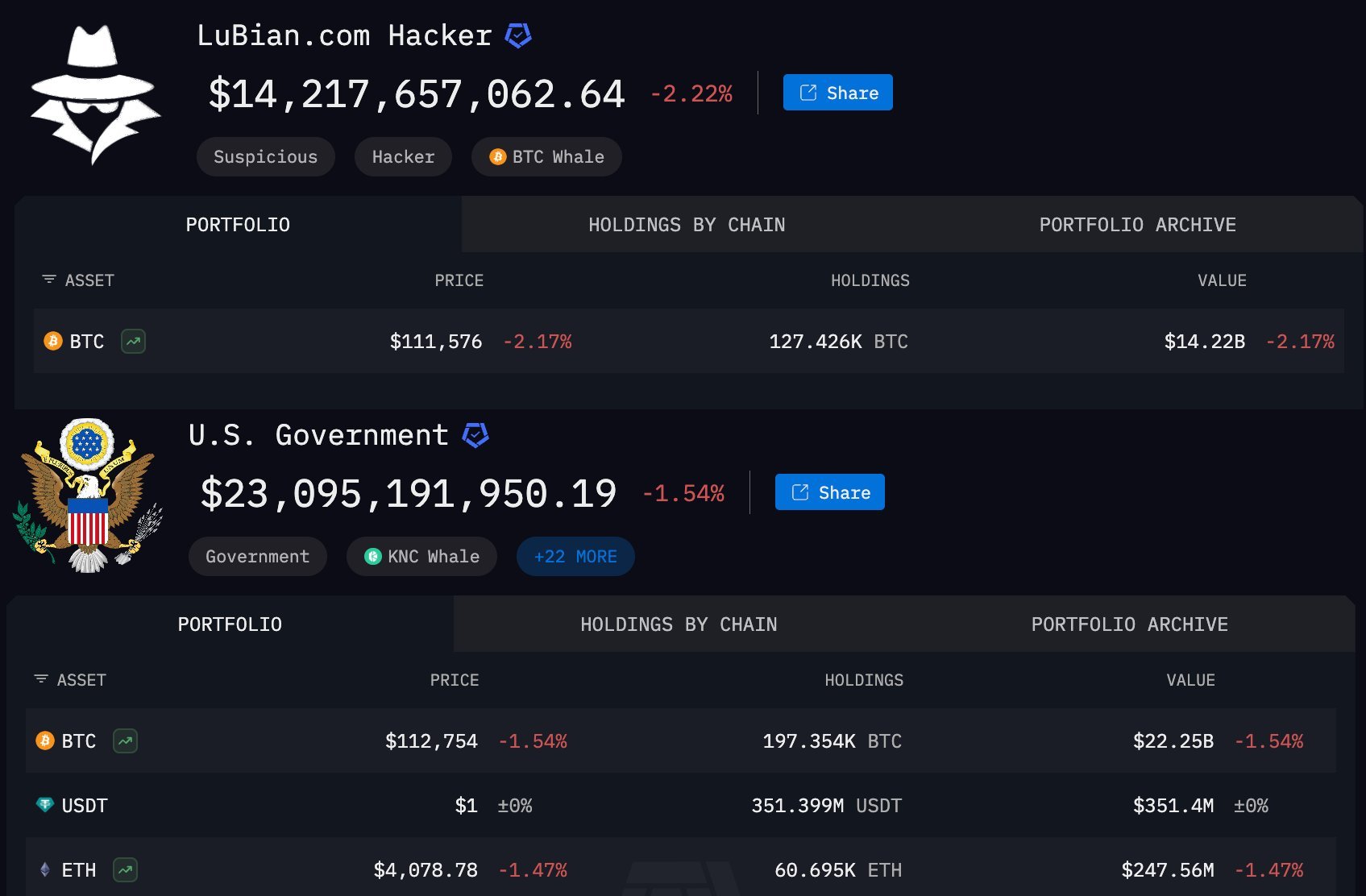
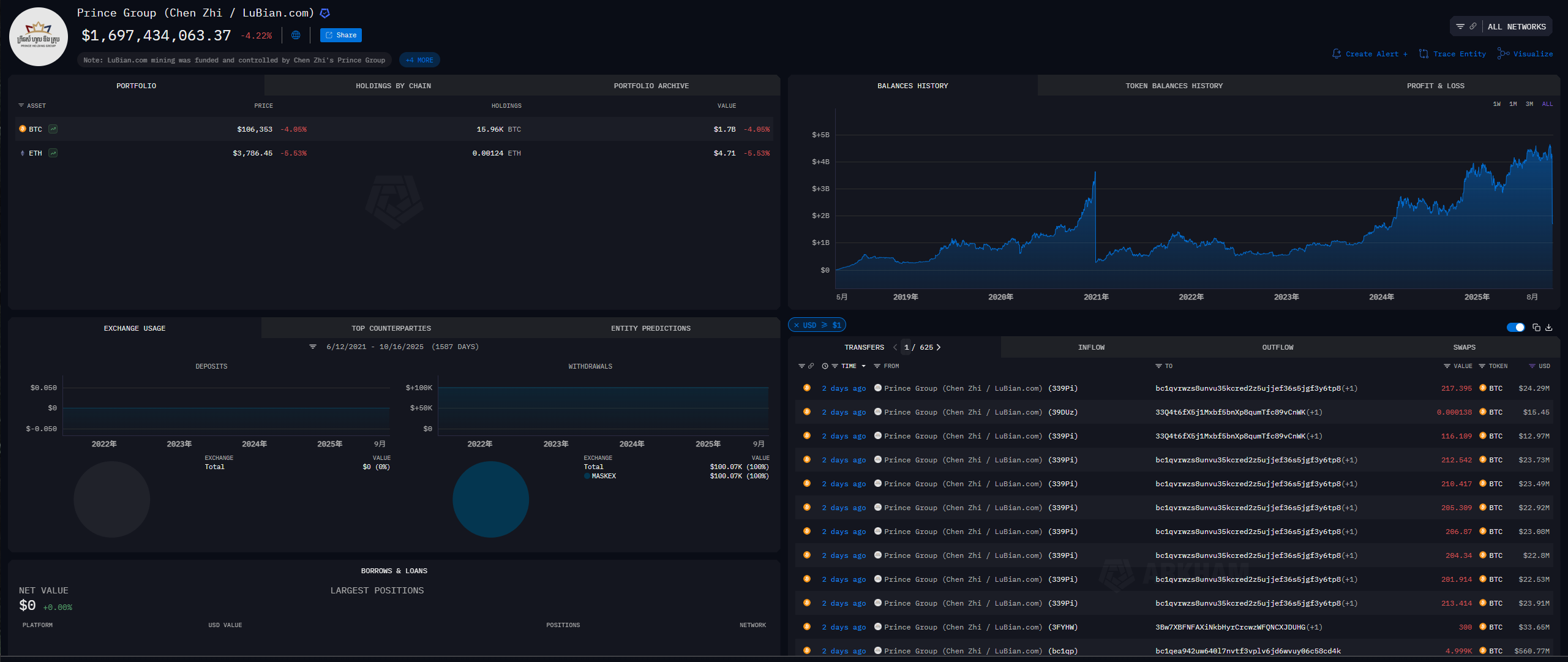
而调查发现,其天文数字的犯罪所得,正是通过已经“死亡”的Lubian矿池进行洗钱的——陈志正是Lubian的幕后控制者。根据最新情报,其财富规模远超想象,总持有量可能高达22万枚BTC。难怪自2017年熊市起,场外交易(OTC)市场一直流传着“太子是最大买家”的传说——他凭一己之力,撑起了漫长的熊市。

现在,美国政府手里的“三叉戟”终于有了用武之地。

法律之矛——锁定犯罪资产

陈志无可争议的“前置犯罪”,给了美国政府最强的法律武器。他们要追缴的不是普通资产,而是已被证实的、与大规模犯罪紧密关联的非法所得。在美国,《美国法典》等法规为没收犯罪财产提供了明确依据,强大的民事没收权力甚至允许在所有者被定罪前就对资产提起诉讼,大大降低了行动门槛。

技术之眼——在透明账本上锁定你

政府的目标,不再是Lubian那些早已空空如也的地址,而是追踪2020年那个神秘黑客转移走的13万多枚比特币的去向。借助Chainalysis等“数字猎犬”,调查人员在庞杂的区块链上,将这些被盗资金的流动路径与陈志的犯罪网络进行关联,最终证明了这笔钱的“赃款”属性。

行动之臂——从黑客手中夺取私钥

这是新的核心谜题:政府是如何从那个神秘黑客(或多个黑客)手中,拿到私钥的? 公开资料对此讳莫如深,这种模糊本身就是一种威慑。目前主要有几种推测:

  • 二次破解: 既然漏洞是公开的,美国政府完全有能力动用自己的国家级计算资源(数学家、黑客、超级计算机),像当年的黑客一样,再次独立地将私钥计算出来。
  • 黑客被捕: 美国政府可能通过技术追踪和传统侦查,成功定位并抓获了2020年的那个黑客,并通过司法交易,迫使其交出了私钥。
  • 主动投诚: 另一种可能性是,仍在逃亡的陈志,为求“断尾求生”,主动与美国政府达成秘密协议,交出由其网络控制的这笔资产,以换取某些妥协。
  • 传统渗透: 当然,也不能排除最传统的手段,例如犯罪集团内部的“内鬼”倒戈提供了情报。

无论如何,美国政府扮演了“螳螂捕蝉,黄雀在后”的角色。他们利用了黑客攻击留下的线索,最终将这笔本属于Lubian、后被黑客盗取、源头是犯罪所得的巨额资产,成功收归国有。


从拍卖槌到国家宝藏:美国的新国策

一个更深远的变化,发生在美国政府对待这些没收资产的态度上。

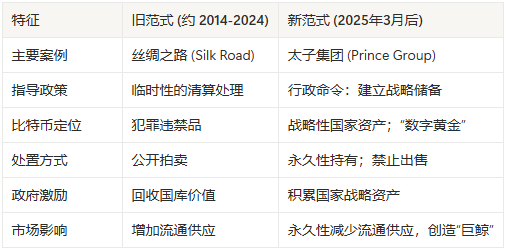
旧范式:丝绸之路拍卖会 在过去,以“丝绸之路”案为代表,美国法警局会通过公开拍卖,将被没收的比特币清算为美元。这更像是一种处置犯罪赃物的常规操作,政府是“卖家”。

新范式:战略比特币储备 2025年3月签署的一项行政命令,彻底改变了游戏规则。该命令宣布建立“战略比特币储备”,其核心原则惊人地明确:存入该储备的比特币“不得出售”,并将作为美国的战略资产(被类比为“数字黄金”)进行维护。
美国司法部

这项新政策,实质上将美国司法部、FBI等执法机构,转变成了世界上最高效、最合法的比特币“囤币工”。打击犯罪的核心任务,与增加国家储备的战略目标完美结合,形成了一个强大的正向反馈循环。


你的比特币危险吗?

回到所有玩家最关心的问题:“我需要担心自己的比特币吗?”

这起案件给出的答案是:你需要担心的,可能不是强大的政府,而是愚蠢的代码。

这场风暴的根源,是一个根据不完全统计,影响了超过22万个地址的、堪称史诗级的代码漏洞。更离谱的是,时至今日,依然有人在往这些早已被公开泄露的地址里转钱,你需要做的是检查你的地址是否受到影响,查询链接:https://git.distrust.co/milksad/data

这给我们普通玩家的启示是:

  • 你的第一道防线,是代码,不是保险箱。 你的安全感,不应来自你把助记词藏得多好,而应来自你确信生成这串助记词的软件绝对可靠。永远不要使用来路不明的、闭源的、或未经社区严格审计的钱包软件。
  • 政府的目标不是你。 对于绝大多数守法的普通人来说,几乎不需要担心。政府的打击目标画像非常清晰:是那些有严重“前置犯罪”(如大规模诈骗、贩毒、洗钱)的大型犯罪组织。没有这个基础,法律武器就无法启动。

不可逾越的红线,始终是“前置犯罪”。法治原则和《美国宪法第四修正案》(禁止无理搜查和扣押)依然是守法公民财产的最终保障。然而,真正的长期风险并非来自资产被任意扣押,而是来自“前置犯罪”定义的潜在扩张。然是真理,但它的前提是,你的私यो钥必须是一个真正意义上的私钥——一个通过足够强大的、经过验证的随机性生成的密码学产物。

这150亿美元的血案,为整个行业敲响了警钟:在黑暗森林般的加密世界里,任何微小的、自作聪明的代码捷径,都可能通向万劫不复的深渊。

Trending Cryptos

Related Reads

Upbit is Anxious: A Hasty Counterattack Aimed at Regaining Stablecoin Market Share

Title: Upbit's Rushed Counterattack to Reclaim Stablecoin Market Share Facing a dramatic shift in South Korea's stablecoin market, leading exchange Upbit launched a promotional campaign from July 26 to August 9, waiving the 0.05% trading fee for stablecoins paired with the Korean Won (KRW) and rapidly listing new stablecoins like RLUSD and USDG. This move is a direct response to its plummeting market share in this sector. Historically a duopoly with Bithumb, the market has been reshaped since October 2025 when Coinone permanently removed fees for USDC trading. By June 2026, Coinone led with 34.8% of stablecoin volume, followed by Bithumb (31.1%) and Upbit (30.1%). This contrasts sharply with the overall crypto market, where Upbit commands 60%. The data shows stablecoin demand is highly sensitive to fees, as users primarily buy them to transfer capital overseas for derivatives trading or forex arbitrage. South Korean exchanges have seen a net outflow of stablecoins for 18 consecutive months, totaling approximately 14.9 trillion KRW, underscoring their role as a cross-border capital conduit. Upbit's limited-time promotion initially boosted its daily stablecoin volume by 162%, but the surge was almost entirely in USDT (98.1% of volume). The newly listed stablecoins saw negligible, fleeting interest. Furthermore, the promotional effect quickly waned in the second week, with volume dropping 33% on weekdays. A concurrent weakening of the KRW also contributed to the trading spike, independent of the fee waiver. The analysis suggests that once the promotion ends, Upbit is unlikely to retain its temporary gains unless it matches Coinone's permanent zero-fee policy, forcing a choice between market share and fee revenue. Upbit's strategic push may be less about immediate profit and more about preparing for future regulatory shifts. With South Korea's *Digital Asset Basic Act* on the horizon, which will regulate KRW-backed stablecoins, and following Dunamu's (Upbit's parent) integration into Naver Financial to build a payment ecosystem, securing a dominant position in the dollar stablecoin distribution channel holds long-term strategic value. However, potential regulatory conflicts could prevent Upbit from listing a future Naver-issued KRW stablecoin, making the current fight for dollar stablecoin flow even more critical.

marsbit3h ago

Upbit is Anxious: A Hasty Counterattack Aimed at Regaining Stablecoin Market Share

marsbit3h ago

Michael Saylor Compares Bitcoin and Gold!

Michael Saylor, founder of MicroStrategy, argues that Bitcoin fundamentally changes how wealth is stored and transferred by transforming digital scarcity into economic value. He describes Bitcoin as the first digital monetary network, combining computers, digital networks, and cryptography. It digitizes monetary assets, allowing their supply to be controlled by public protocols rather than institutions, thus converting economic value into information transmissible over global networks. Comparing Bitcoin to gold, Saylor states that while increasing Bitcoin's supply is harder, its integration with software and transfer is easier. He highlights Bitcoin's proof-of-work mechanism, which ties it to the physical world by consuming real energy to secure the ledger, making past transactions immutable. This creates a shared security system involving miners, energy companies, and investors. Saylor suggests "digital monetary energy" is a more accurate term than "digital gold." He emphasizes that the Bitcoin network is an adaptive ecosystem of miners, nodes, developers, and users. Its core design is intentionally simple, focused on maintaining a secure ledger for scarce digital assets, with complex functionalities built in higher-layer applications. This architecture allows Bitcoin to serve as a foundation for transmitting value and fostering innovation in payments and financial services. Saylor notes Bitcoin's deeper impact lies in creating digital sovereignty, where private keys give individuals permissionless control over their economic power, with ownership verified mathematically, not by institutions. He concludes that while gold's physical scarcity makes it money, Bitcoin's digital scarcity does the same, characterizing Bitcoin as the monetary energy of the digital age.

cryptonews.ru4h ago

Michael Saylor Compares Bitcoin and Gold!

cryptonews.ru4h ago

Trading

Spot

Hot Articles

What is $BITCOIN

DIGITAL GOLD ($BITCOIN): A Comprehensive Analysis Introduction to DIGITAL GOLD ($BITCOIN) DIGITAL GOLD ($BITCOIN) is a blockchain-based project operating on the Solana network, which aims to combine the characteristics of traditional precious metals with the innovation of decentralized technologies. While it shares a name with Bitcoin, often referred to as “digital gold” due to its perception as a store of value, DIGITAL GOLD is a separate token designed to create a unique ecosystem within the Web3 landscape. Its goal is to position itself as a viable alternative digital asset, although specifics regarding its applications and functionalities are still developing. What is DIGITAL GOLD ($BITCOIN)? DIGITAL GOLD ($BITCOIN) is a cryptocurrency token explicitly designed for use on the Solana blockchain. In contrast to Bitcoin, which provides a widely recognized value storage role, this token appears to focus on broader applications and characteristics. Notable aspects include: Blockchain Infrastructure: The token is built on the Solana blockchain, known for its capacity to handle high-speed and low-cost transactions. Supply Dynamics: DIGITAL GOLD has a maximum supply capped at 100 quadrillion tokens (100P $BITCOIN), although details regarding its circulating supply are currently undisclosed. Utility: While precise functionalities are not explicitly outlined, there are indications that the token could be utilized for various applications, potentially involving decentralized applications (dApps) or asset tokenization strategies. Who is the Creator of DIGITAL GOLD ($BITCOIN)? At present, the identity of the creators and development team behind DIGITAL GOLD ($BITCOIN) remains unknown. This situation is typical among many innovative projects within the blockchain space, particularly those aligning with decentralized finance and meme coin phenomena. While such anonymity may foster a community-driven culture, it intensifies concerns about governance and accountability. Who are the Investors of DIGITAL GOLD ($BITCOIN)? The available information indicates that DIGITAL GOLD ($BITCOIN) does not have any known institutional backers or prominent venture capital investments. The project seems to operate on a peer-to-peer model focused on community support and adoption rather than traditional funding routes. Its activity and liquidity are primarily situated on decentralized exchanges (DEXs), such as PumpSwap, rather than established centralized trading platforms, further highlighting its grassroots approach. How DIGITAL GOLD ($BITCOIN) Works The operational mechanics of DIGITAL GOLD ($BITCOIN) can be elaborated on based on its blockchain design and network attributes: Consensus Mechanism: By leveraging Solana’s unique proof-of-history (PoH) combined with a proof-of-stake (PoS) model, the project ensures efficient transaction validation contributing to the network's high performance. Tokenomics: While specific deflationary mechanisms have not been extensively detailed, the vast maximum token supply implies that it may cater to microtransactions or niche use cases that are still to be defined. Interoperability: There exists the potential for integration with Solana’s broader ecosystem, including various decentralized finance (DeFi) platforms. However, the details regarding specific integrations remain unspecified. Timeline of Key Events Here is a timeline that highlights significant milestones concerning DIGITAL GOLD ($BITCOIN): 2023: The initial deployment of the token occurs on the Solana blockchain, marked by its contract address. 2024: DIGITAL GOLD gains visibility as it becomes available for trading on decentralized exchanges like PumpSwap, allowing users to trade it against SOL. 2025: The project witnesses sporadic trading activity and potential interest in community-led engagements, although no noteworthy partnerships or technical advancements have been documented as of yet. Critical Analysis Strengths Scalability: The underlying Solana infrastructure supports high transaction volumes, which could enhance the utility of $BITCOIN in various transaction scenarios. Accessibility: The potential low trading price per token could attract retail investors, facilitating wider participation due to fractional ownership opportunities. Risks Lack of Transparency: The absence of publicly known backers, developers, or an audit process may yield skepticism regarding the project's sustainability and trustworthiness. Market Volatility: The trading activity is heavily reliant on speculative behavior, which can result in significant price volatility and uncertainty for investors. Conclusion DIGITAL GOLD ($BITCOIN) emerges as an intriguing yet ambiguous project within the rapidly evolving Solana ecosystem. While it attempts to leverage the “digital gold” narrative, its departure from Bitcoin's established role as a store of value underscores the need for a clearer differentiation of its intended utility and governance structure. Future acceptance and adoption will likely depend on addressing the current opacity and defining its operational and economic strategies more explicitly. Note: This report encompasses synthesised information available as of October 2023, and developments may have transpired beyond the research period.

1.9k Total ViewsPublished 2025.05.13Updated 2025.05.13

What is $BITCOIN

Discussions

Welcome to the HTX Community. Here, you can stay informed about the latest platform developments and gain access to professional market insights. Users' opinions on the price of BTC (BTC) are presented below.

活动图片