极端行情下,为什么你的仓位会突然被强制平仓?

深潮Published on 2025-10-10Last updated on 2025-10-11

没有 BTC 的现金游戏,多空失衡时自动去杠杆机制出手。

作者:Doug Colkitt

编译:深潮TechFlow

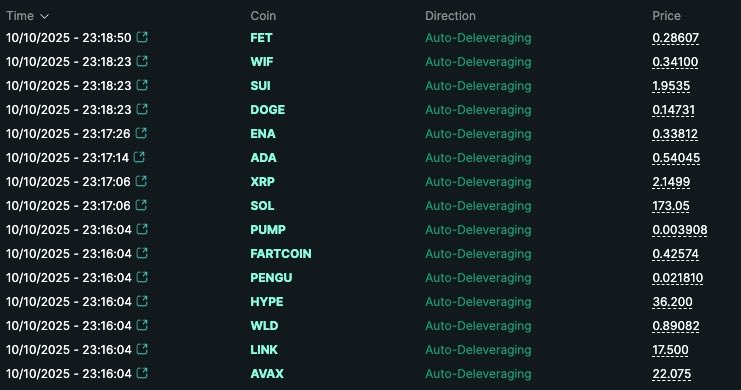
鉴于很多人醒来后发现自己的永续合约(perps)头寸被平仓,并疑惑“自动去杠杆化”(Auto-Deleveraging, ADL)是什么意思,这里为大家提供一个简明扼要的入门指南。

什么是 ADL?它如何运作?它为什么存在?
首先,我们需要从更宏观的角度来理解永续合约市场是什么以及它的功能。以 BTC 永续合约市场为例,有趣的是,在这个系统中实际上并不存在真正的 BTC。系统中只有一大堆闲置的现金。

永续合约市场(或者更广义上的任何衍生品市场)所做的事情就是在参与者之间分配这堆现金。它通过一套规则来运作,这些规则被设计用来在一个实际没有 BTC 的系统中创建类似 BTC 的合成工具。

最重要的一条规则是:市场中有多头(longs)和空头(shorts),而多头和空头的头寸必须完全平衡,否则系统无法正常运作。此外,多头和空头都需要将现金(以保证金的形式)投入这堆资金池中。

这堆资金会随着 BTC 价格的涨跌在参与者之间重新分配。
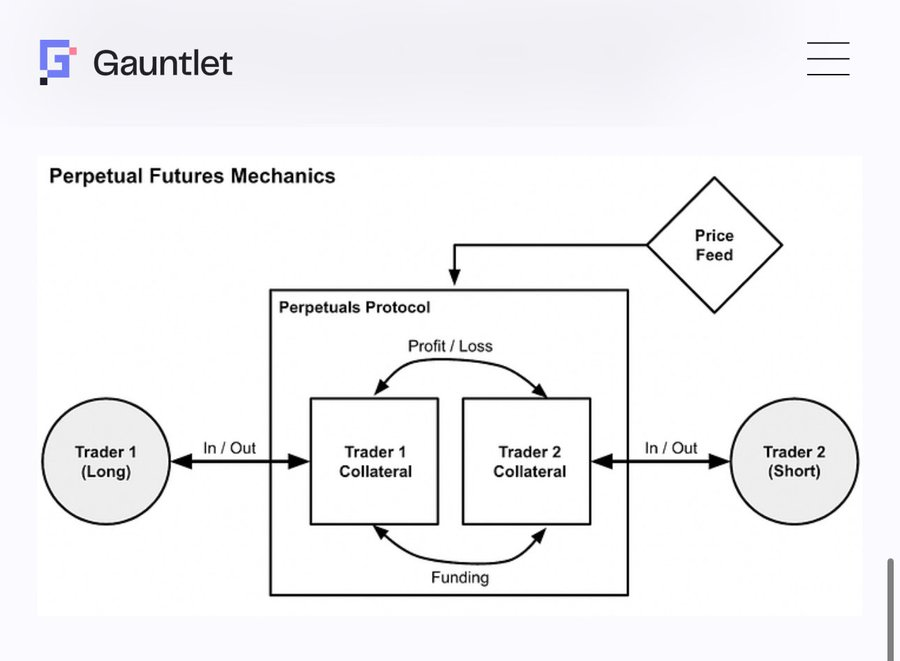
在这个过程中,当 BTC 的价格波动过大时,一些参与者会损失掉他们的全部资金。这时,他们会被强制退出(“清算”)。

请记住,多头只有在空头有资金可亏时才能盈利(反之亦然)。因此,当资金耗尽时,你就无法继续参与市场了。

而且,每一个空头都必须与一个有偿付能力的多头完全匹配。如果系统中的某个多头已经没有资金可亏损,那从定义上讲,这意味着另一边相应的空头也没有了可以获利的资金(反之亦然)。

因此,如果一个多头被清算,系统中必须发生以下两种情况之一:

A) 一个新的多头头寸进入系统,带来新的资金以补充资金池;

B) 对应的空头头寸被平仓,从而使系统重新达到平衡。

在理想情况下,这一切都可以通过正常的市场机制实现。只要能在公平市场价格下找到愿意的买家,就不需要强制任何人采取行动。在正常的清算操作中,这一过程通常是通过永续合约市场的普通订单簿完成的。

在一个健康且流动性充足的永续合约市场中,这种方式完全没有问题。被清算的多头头寸会被卖入订单簿,订单簿中的最佳买入报价会填补这个头寸,成为系统中的新多头,并带来新的资金来补充资金池。这样每个人都满意。

但有时订单簿中的流动性不足,或者至少没有足够的流动性以在不让原始头寸亏损超过其剩余资金的情况下完成交易。

这就会成为一个问题,因为这意味着资金池中没有足够的现金来满足其他参与者的需求。
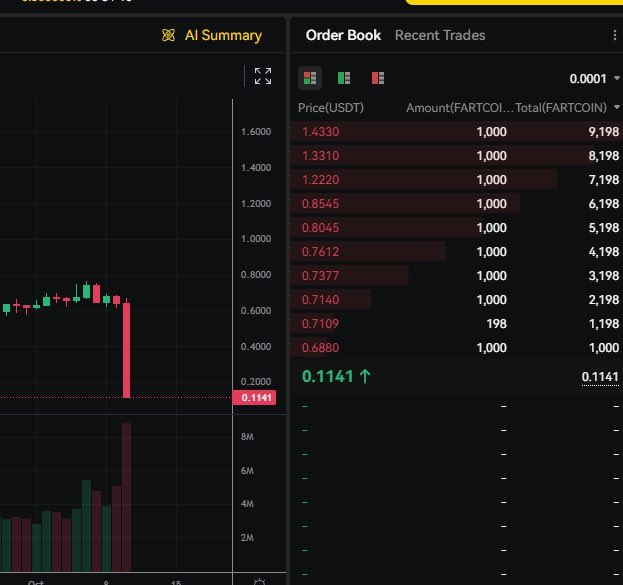
通常情况下,下一步的“救援机制”是由一个“保险库”或“保险基金”介入。保险库是由交易所支持的一个特殊的资金池,在发生极端流动性事件时,它会介入并吸收清算的另一方。

保险库从长期来看往往是相当有利可图的,因为它有机会以大幅折扣买入,并在价格剧烈波动时高价卖出。例如,Hyperliquid 的保险库今晚在一个小时内赚取了大约 4000 万美元。
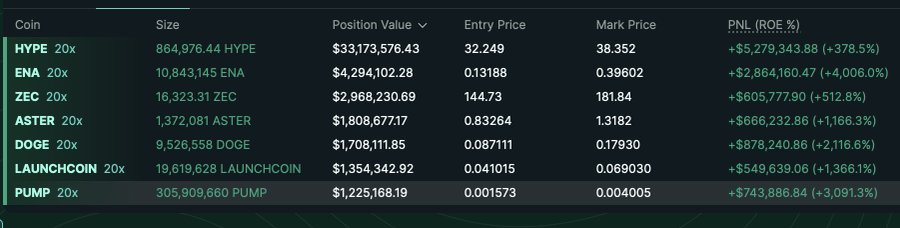
但保险库并不是魔法,它只是整个系统中的另一个参与者。和其他人一样,它需要将资金注入资金池,遵守相同的规则,而且它能够承担的风险和贡献的资本也是有限的。

因此,系统必须有一个最终的“救援步骤”。

这就是我们所说的“自动去杠杆化”(Auto-Deleveraging, ADL)。这是最后的手段,也是一个(希望)很少发生的情况,因为它涉及强制让人退出其头寸,而不是支付他们。这种情况发生得非常少,以至于即使是经验丰富的永续合约交易者通常也几乎没有注意到它的存在。

你可以将其想象成超额预订的航班。首先,航空公司会利用市场机制来解决超额问题,比如不断提高补偿金额以吸引乘客改签夜班航班。但如果最终没有人接受,就必须强制某些乘客下飞机。

如果多头资金耗尽,而没有人愿意进场接替他们的位置,那么系统别无选择,只能让至少部分空头离场并关闭他们的头寸。不同交易所选择平仓对象和平仓价格的流程差异很大。

通常情况下,ADL 系统会通过一个排名系统来选择需要被平仓的获利方头寸,依据的标准包括:1)盈利最多;2)杠杆倍数;3)头寸规模。换句话说,最大的、盈利最多的“鲸鱼”会最先被送回家。
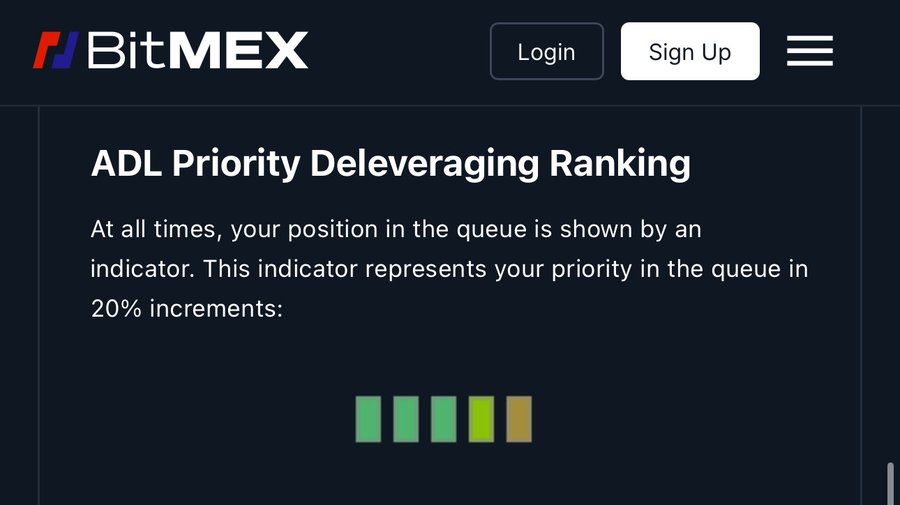
人们自然会对 ADL 感到不满,因为它看起来很不公平。你正处于盈利高峰时,却被强制退出了头寸。但在某种程度上,它的存在是必要的。再优秀的交易所也无法保证另一边会有无限的亏损者来填补资金池。

你可以将其想象成打德州扑克时的连胜局面。你进入赌场,击败了桌上的所有人;然后换到下一张桌子,再次击败所有人;接着又换下一张桌子。最终,赌场里其他人都用光了筹码。这就是 ADL 的本质。

永续合约市场的美妙之处在于,它们始终是零和游戏,因此整个系统在总体上永远不会资不抵债。

这里甚至不存在真正的 BTC 会贬值。只有一大堆无趣的现金。就像热力学定律一样,在整个系统中,价值既不会被创造,也不会被毁灭。

ADL 有点像电影《楚门的世界》的结局。永续合约市场构建了一个非常精美的模拟,仿佛是与现货市场挂钩的真实世界。

但归根结底,这一切都是虚拟的。大多数时候,我们不需要去想这个问题……但有时,我们会触碰到这个模拟的边界。

Related Reads

When Hyperliquid Steals Solana's 'Internet Capital Market' Script

The article "When Hyperliquid Steals Solana's 'Internet Capital Markets' Playbook" discusses Solana's struggles to maintain its "internet capital markets" narrative by 2026. Despite its initial success as a high-performance "Ethereum killer," SOL's price has underperformed, dropping significantly compared to other major cryptocurrencies. Solana's vision of a global, on-chain trading network for all assets is being challenged not primarily by Ethereum, but by Hyperliquid. Hyperliquid, evolving from a perpetual contracts platform into a dedicated financial infrastructure Layer 1, has become a major beneficiary of the shift of derivatives trading from centralized exchanges to on-chain. The article argues that for high-frequency financial trading, a specialized, performance-focused chain like Hyperliquid may be more suitable than a general-purpose ecosystem like Solana. Further compounding Solana's issues was a major $200+ million exploit on its key perpetual protocol, Drift, in April, which damaged market confidence. In response, Solana founder Anatoly Yakovenko heavily promoted the protocol Phoenix as a replacement, boosting its visibility but not its trading volume, which remains far behind leading platforms. Solana supporters have launched a public critique of Hyperliquid's decentralization, pointing to its limited validators and closed-source code. Critics, however, note Solana's own declining validator count and centralization metrics. This strategy has also caused internal friction, with developers of other Solana protocols expressing discontent over the foundation's perceived favoritism towards Phoenix. The conclusion is that Hyperliquid's rise represents a challenge to the "general-purpose blockchain" narrative, proving that the core of a capital market might be a specialized trading engine rather than a broad ecosystem. If Solana cannot regain dominance in derivatives, it risks remaining a "meme coin paradise" while its grand "internet capital markets" ambition slips away.

marsbit2h ago

When Hyperliquid Steals Solana's 'Internet Capital Market' Script

marsbit2h ago

Trading

Spot
Futures

Hot Articles

What is $BITCOIN

DIGITAL GOLD ($BITCOIN): A Comprehensive Analysis Introduction to DIGITAL GOLD ($BITCOIN) DIGITAL GOLD ($BITCOIN) is a blockchain-based project operating on the Solana network, which aims to combine the characteristics of traditional precious metals with the innovation of decentralized technologies. While it shares a name with Bitcoin, often referred to as “digital gold” due to its perception as a store of value, DIGITAL GOLD is a separate token designed to create a unique ecosystem within the Web3 landscape. Its goal is to position itself as a viable alternative digital asset, although specifics regarding its applications and functionalities are still developing. What is DIGITAL GOLD ($BITCOIN)? DIGITAL GOLD ($BITCOIN) is a cryptocurrency token explicitly designed for use on the Solana blockchain. In contrast to Bitcoin, which provides a widely recognized value storage role, this token appears to focus on broader applications and characteristics. Notable aspects include: Blockchain Infrastructure: The token is built on the Solana blockchain, known for its capacity to handle high-speed and low-cost transactions. Supply Dynamics: DIGITAL GOLD has a maximum supply capped at 100 quadrillion tokens (100P $BITCOIN), although details regarding its circulating supply are currently undisclosed. Utility: While precise functionalities are not explicitly outlined, there are indications that the token could be utilized for various applications, potentially involving decentralized applications (dApps) or asset tokenization strategies. Who is the Creator of DIGITAL GOLD ($BITCOIN)? At present, the identity of the creators and development team behind DIGITAL GOLD ($BITCOIN) remains unknown. This situation is typical among many innovative projects within the blockchain space, particularly those aligning with decentralized finance and meme coin phenomena. While such anonymity may foster a community-driven culture, it intensifies concerns about governance and accountability. Who are the Investors of DIGITAL GOLD ($BITCOIN)? The available information indicates that DIGITAL GOLD ($BITCOIN) does not have any known institutional backers or prominent venture capital investments. The project seems to operate on a peer-to-peer model focused on community support and adoption rather than traditional funding routes. Its activity and liquidity are primarily situated on decentralized exchanges (DEXs), such as PumpSwap, rather than established centralized trading platforms, further highlighting its grassroots approach. How DIGITAL GOLD ($BITCOIN) Works The operational mechanics of DIGITAL GOLD ($BITCOIN) can be elaborated on based on its blockchain design and network attributes: Consensus Mechanism: By leveraging Solana’s unique proof-of-history (PoH) combined with a proof-of-stake (PoS) model, the project ensures efficient transaction validation contributing to the network's high performance. Tokenomics: While specific deflationary mechanisms have not been extensively detailed, the vast maximum token supply implies that it may cater to microtransactions or niche use cases that are still to be defined. Interoperability: There exists the potential for integration with Solana’s broader ecosystem, including various decentralized finance (DeFi) platforms. However, the details regarding specific integrations remain unspecified. Timeline of Key Events Here is a timeline that highlights significant milestones concerning DIGITAL GOLD ($BITCOIN): 2023: The initial deployment of the token occurs on the Solana blockchain, marked by its contract address. 2024: DIGITAL GOLD gains visibility as it becomes available for trading on decentralized exchanges like PumpSwap, allowing users to trade it against SOL. 2025: The project witnesses sporadic trading activity and potential interest in community-led engagements, although no noteworthy partnerships or technical advancements have been documented as of yet. Critical Analysis Strengths Scalability: The underlying Solana infrastructure supports high transaction volumes, which could enhance the utility of $BITCOIN in various transaction scenarios. Accessibility: The potential low trading price per token could attract retail investors, facilitating wider participation due to fractional ownership opportunities. Risks Lack of Transparency: The absence of publicly known backers, developers, or an audit process may yield skepticism regarding the project's sustainability and trustworthiness. Market Volatility: The trading activity is heavily reliant on speculative behavior, which can result in significant price volatility and uncertainty for investors. Conclusion DIGITAL GOLD ($BITCOIN) emerges as an intriguing yet ambiguous project within the rapidly evolving Solana ecosystem. While it attempts to leverage the “digital gold” narrative, its departure from Bitcoin's established role as a store of value underscores the need for a clearer differentiation of its intended utility and governance structure. Future acceptance and adoption will likely depend on addressing the current opacity and defining its operational and economic strategies more explicitly. Note: This report encompasses synthesised information available as of October 2023, and developments may have transpired beyond the research period.

363 Total ViewsPublished 2025.05.13Updated 2025.05.13

What is $BITCOIN

Discussions

Welcome to the HTX Community. Here, you can stay informed about the latest platform developments and gain access to professional market insights. Users' opinions on the price of BTC (BTC) are presented below.

活动图片