Bank Of England Eyes Exemptions To Controversial Stablecoin Cap Proposal – Details

bitcoinistPublished on 2025-10-08Last updated on 2025-10-08

Abstract

The Bank of England (BOE) is reportedly softening its stance toward digital assets with a potential exemption to a controversial...

Trusted Editorial content, reviewed by leading industry experts and seasoned editors. Ad Disclosure

The Bank of England (BOE) is reportedly softening its stance toward digital assets with a potential exemption to a controversial policy that would establish stricter stablecoin rules for the UK market.

BOE Plans Stablecoin Cap Exemption

On Tuesday, Bloomberg reported that the Bank of England is planning to grant exemptions to businesses in the UK from its proposed limit on stablecoin ownership, according to people familiar with the matter.

The central bank aims to grant waivers to certain digital asset firms that need to hold large amounts of stablecoins, like crypto exchanges. Additionally, the BOE intends to allow firms to use stablecoins as a settlement asset in its experimental Digital Securities Sandbox.

The changes to the sandbox will initially permit firms to adopt regulated stablecoins tied to non-sterling currencies for settlement purposes. This would allow the BOE to observe use cases for these digital assets while it evaluates its approach in more detail, said Bloomberg sources.

As reported by Bitcoinist, the central bank is exploring the restriction of stablecoin ownership in the country, imposing a limit of £10,000 to £20,000 for individuals and £10 million for businesses on all systemic stablecoins.

Notably, the BOE’s plan would reassemble its proposed approach to the digital pound, which aimed to address financial stability risks that deposits could flow out of the banking system.

BOE executive director for financial market infrastructure, Sasha Mills, previously stated that the limits would “mitigate financial stability risks stemming from large and rapid outflows of deposits from the banking sector (…) and risks posed by newly recognised systemic payment systems as they are scaling up.”

Some crypto industry and payment groups heavily criticized the central bank’s plan, arguing that it would be detrimental to the pound and put the UK at a disadvantage against the US and the European Union (EU).

Simon Jennings, executive director of the UK Cryptoasset Business Council trade body, considers that “limits simply don’t work in practice.” He explained that “stablecoin issuers don’t have sight of who holds their tokens at any given time, so enforcing caps would require a costly, complex new system, such as digital IDs or constant co-ordination between wallets.”

A Softer Crypto Stance?

According to Bloomberg’s sources, the restrictions are expected to be included in a consultation paper that will be published by the end of the year. The BoE previously said its proposed cap could be “transitional” while the financial system adjusts to the growth of digital money.

The report also noted that the potential exemptions could be seen as a shift from Governor Andrew Bailey’s skeptical perspective. Bailey has previously warned that stablecoins threaten to destabilize the public’s trust in money.

In August, former Chancellor and member of Coinbase’s advisory council, George Osborne, criticized the Bailey and the government’s approach to the crypto industry, arguing that it risks being “left behind” during the second wave of digital assets if it doesn’t “catch up.”

Osborne stated that authorities cannot continue to wait and evaluate the development of a digital revolution “reminiscent of Nigel Lawson’s Big Bang in the 1980s” while other financial capitals adopt comprehensive legislative frameworks for crypto asset platforms.

Nonetheless, the BOE Governor has recently shared a softer approach, affirming that it would be “wrong to be against stablecoins as a matter of principle” and noting that they have the potential to drive “innovation in payments systems both at home and across borders.”
stablecoin, bitcoin, btc, btcusdt

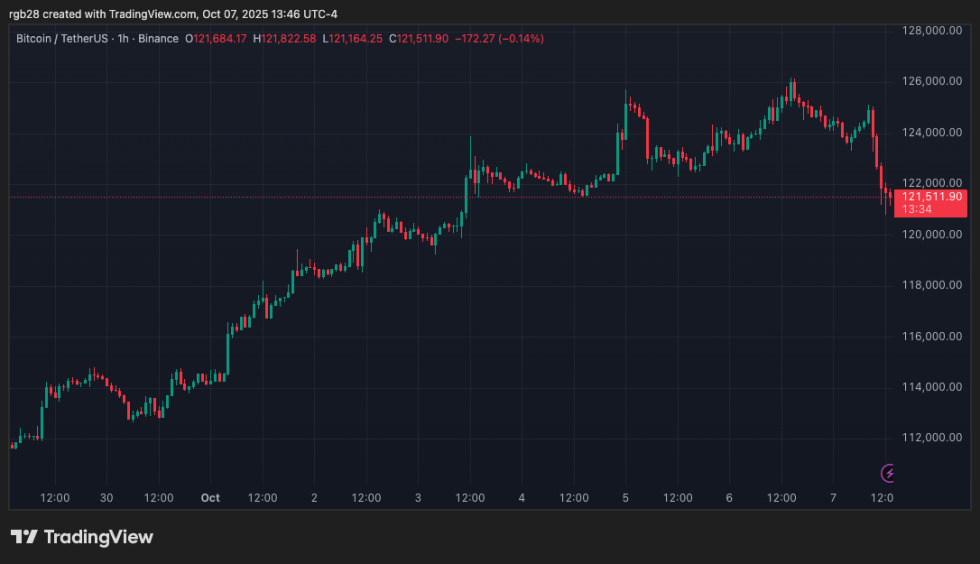
Bitcoin (BTC) trades at $121,511 in the one-week chart. Source: BTCUSDT on TradingView
Featured Image from Unsplash.com, Chart from TradingView.com
Editorial Process for bitcoinist is centered on delivering thoroughly researched, accurate, and unbiased content. We uphold strict sourcing standards, and each page undergoes diligent review by our team of top technology experts and seasoned editors. This process ensures the integrity, relevance, and value of our content for our readers.

Rubmar is a crypto enthusiast who likes learning and improving constantly. She enjoys reporting on the latest news and developments in the crypto industry. Rubmar also enjoys scrapbooking, crafting, simulation games, and watching football.

Trending Cryptos

Related Reads

Alexander Shokhin: Business Needs an Interest Rate Below 10% and the Dollar at 90-95 Rubles

Alexander Shokhin, head of the Russian Union of Industrialists and Entrepreneurs (RSPP), has advocated for potentially using "non-market" tools to keep the ruble within a target exchange rate corridor. This, he argues on August 21, would help avoid excessive volatility, though he called the topic a separate discussion. Shokhin had previously raised the idea of a currency corridor in late May, noting the ruble's current exchange rate is not fully market-driven due to a limited currency segment and reduced foreign currency demand. He stated that many business community colleagues propose fixing a corridor, even through non-market methods, to ensure predictability. The business community's key targets, as outlined by Shokhin in late December 2025, are a Central Bank key rate of 12%, inflation of 4–5%, and a US dollar exchange rate of 90–95 rubles by the end of 2026. A turning point for investment, he said, would be lowering the rate to 12% with 6% inflation, though truly comfortable business conditions would require a rate below 10%. He stressed the critical importance of currency predictability for corporate investment decisions. From a data analysis perspective, the idea of a ruble corridor is not new. A similar mechanism was used in Russia from 1995 to 1998, where the central bank held the dollar within fixed boundaries through regular interventions. This regime lasted three years before ending abruptly during the 1998 default, illustrating the fragility of rigid targets under external shocks. The macro-economic link is clear: stricter corridors require more reserves to defend against currency pressure. The key unresolved technical aspect is the specific sources and volume of such interventions given the current market's limited liquidity. Whether this discussion remains theoretical or leads to concrete corridor parameters will be seen in the coming months.

cryptonews.ru17m ago

Alexander Shokhin: Business Needs an Interest Rate Below 10% and the Dollar at 90-95 Rubles

cryptonews.ru17m ago

Trading

Spot

Hot Articles

What is $BANK

Bank AI: A Revolutionary Step in the Future of Banking Introduction In an era marked by rapid advancements in technology, Bank AI stands at the intersection of artificial intelligence (AI) and banking services. This innovative project seeks to redefine the financial landscape, enhancing operational efficiency, security measures, and customer experiences through the power of AI. As we embark on this exploration of Bank AI, we will delve into what the project entails, its operational dynamics, its historical context, and significant milestones. What is Bank AI? At its core, Bank AI represents a transformative initiative aimed at integrating artificial intelligence into various banking operations. This project harnesses the capabilities of AI to automate processes, improve risk management protocols, and enhance customer interaction through personalised services. The primary objectives of Bank AI include: Automation of Banking Functions: By leveraging AI technologies, Bank AI aims to automate routine tasks, reducing the burden on human resources and enhancing efficiency. Enhanced Risk Management: The project utilises AI algorithms to predict and identify risks, thereby fortifying security measures against fraud and other threats. Personalisation of Banking Services: Bank AI focuses on offering tailored financial products and services by analysing customer data and behaviours. Improving Customer Experience: The implementation of AI-driven solutions, such as chatbots and virtual assistants, aims to provide users with more human-like interactions, revolutionising the way customers engage with banks. With these goals, Bank AI positions itself as a crucial player in rendering banking more efficient, secure, and user-centric. Who is the Creator of Bank AI? Details regarding the creator of Bank AI remain unknown. As such, no specific individual or organisation has been identified in the available information. The anonymity surrounding the project's inception raises questions but does not detract from its ambitious vision and objectives. Who are the Investors of Bank AI? Similar to the project's creator, specific information regarding the investors or supporting organisations of Bank AI has not been disclosed. Without this information, it is challenging to outline the financial backing and institutional support that might be propelling the project forward. Nevertheless, the importance of having a robust investment foundation is pivotal for sustaining development in such an innovative field. How Does Bank AI Work? Bank AI operates on several innovative fronts, focusing on unique factors that differentiate it from traditional banking frameworks. Below are key operational features: Automation: By applying machine learning algorithms, Bank AI automates various manual processes within banks. This results in reduced operational costs and allows human workers to redirect their efforts towards more strategic activities. Advanced Risk Management: The integration of AI into risk management practices equips banks with tools to accurately predict potential threats such as fraud, ensuring that customer information and assets remain secure. Tailored Financial Recommendations: Through continuous learning from customer interactions, the AI systems develop a nuanced understanding of user needs, enabling them to offer tailored advice on financial decisions. Enhanced Customer Interactions: Utilizing chatbots and virtual assistants powered by AI, Bank AI enables a more engaging customer experience, allowing users to have their queries resolved quickly, thus reducing wait times and improving satisfaction levels. Together, these operational features position Bank AI as a pioneer in the banking sector, establishing new benchmarks for service delivery and operational excellence. Timeline of Bank AI Understanding the trajectory of Bank AI requires a look at its historical context. Below is a timeline highlighting important milestones and developments: Early 2010s: The conceptualisation of AI integration into banking services began to gain attention as banking institutions recognised the potential benefits. 2018: A marked increase in the implementation of AI technologies occurred when banks started using AI tools like chatbots for basic customer service and risk management systems for improved security handling. 2023: The sophistication of AI continued to advance, with generative AI being introduced for more complex tasks such as document processing and real-time investment analysis. This year marked a significant leap in the capabilities afforded to banks by AI technology. 2024-Current Status: As of this year, Bank AI is on an upward trajectory, with ongoing research and developments poised to further enhance capabilities in banking operations. Continued exploration of AI applications hints at exciting developments yet to come. Key Points About Bank AI Integration of AI in Banking: Bank AI focuses on adopting artificial intelligence to streamline banking processes and improve user experiences. Automation and Risk Management Focus: The project strongly emphasises these areas, aiming to shift the burden of routine tasks while enhancing security frameworks through predictive analytics. Personalised Banking Solutions: By harnessing customer data, Bank AI enables tailored banking services that cater to individual user needs. Commitment to Development: Bank AI remains committed to ongoing research and development efforts, ensuring its adaptability and ongoing relevance as technology continues to evolve. Conclusion In summary, Bank AI exemplifies a crucial step forward in the banking industry, leveraging artificial intelligence to reshape operational paradigms, enhance security, and promote customer satisfaction. Despite gaps in information surrounding the creator and investors, the clear objectives and functional mechanisms of Bank AI provide a strong foundation for its ongoing evolution. As AI technology continues to advance and merge with the banking sector, Bank AI is well-positioned to significantly impact the future of financial services, enhancing the way we understand and interact with banking.

411 Total ViewsPublished 2024.04.06Updated 2024.12.03

What is $BANK

Discussions

Welcome to the HTX Community. Here, you can stay informed about the latest platform developments and gain access to professional market insights. Users' opinions on the price of BANK (BANK) are presented below.

活动图片