十月定乾坤:山寨币 ETF 将迎 SEC 终极裁决

marsbitPublished on 2025-09-29Last updated on 2025-09-30

2025 年 10 月,美国证券交易委员会(SEC)即将对至少 16 个现货加密货币交易所交易基金(ETF)做出最终裁决,这些申请涉及比特币和以太坊之外的多种代币,如 SOL、XRP、LTC、DOGE、ADA 和 HBAR。根据最新进展,SEC 已撤回多项延迟通知,并通过新的通用上市规则加速审批流程,将审查时间缩短至 75 天以内。

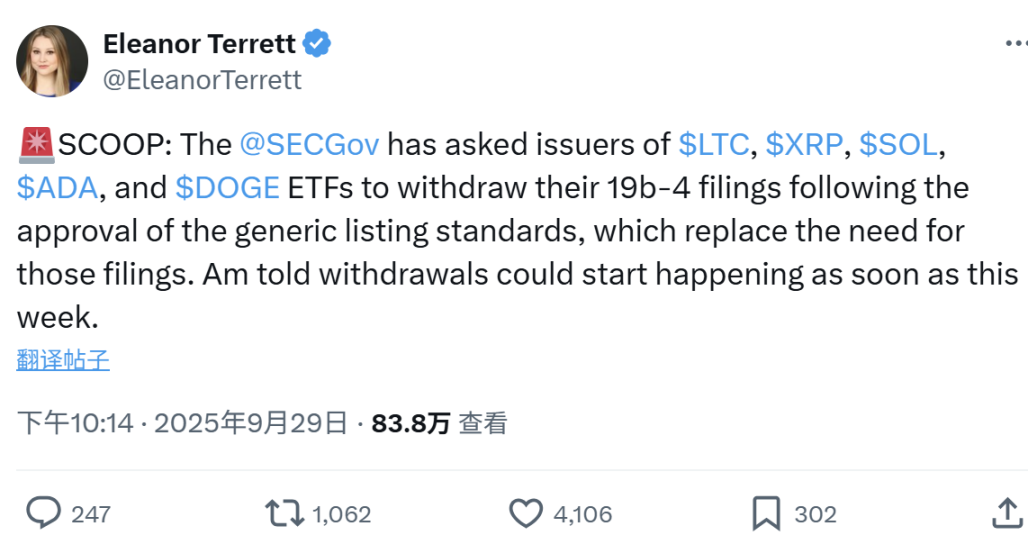
据加密记者 Eleanor Terrett 披露,美 SEC 已要求 LTC、XRP、SOL、ADA 和 DOGE ETF 的发行方撤回其 19b-4 文件,因为在通用上市标准获批后,这些文件已不再需要。

SEC

比特币与以太坊现货 ETF 自获批后,获得不小资金流入并对币价上涨起到了不小作用。那么本次多个 ETF 能否获批,又是否会有币价上涨效应呢?


多个代币 ETF 的裁决最终截止日期为 10 月

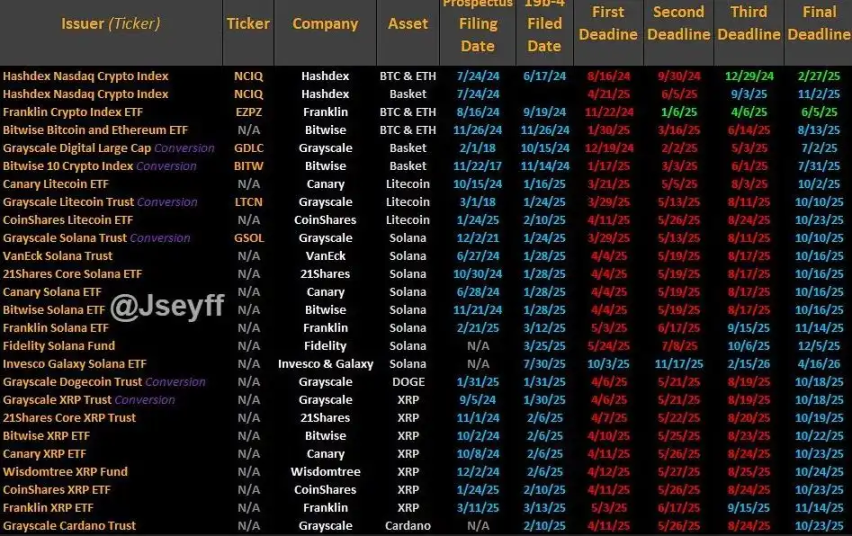
根据推特博主 Jseyff 整理的资料显示,多个山寨币的现货 ETF 最终截止日期散布在整个 10 月。首先待批的是 Canary 的 LTC ETF,截止日期为 10 月 2 日。

其次是灰度的 Solana 和 LTC 信托转换,日期为 10 月 10 日,最后是 WisdomTree 旗下 XRP 基金,日期为 10 月 24 日。

根据 Bloomberg ETF 分析师 James Seyffart 创建的即将批准列表,决定可能在最终截止日期前的任何时间做出。

SEC

这些申请来自 Grayscale、21Shares、Bitwise、Canary Capital、WisdomTree 和 Franklin Templeton 等机构。值得注意的是,本轮没有 BlackRock 或 Fidelity 参与,但这并不影响潜在影响——如果获批,它们可能为后续更大规模产品铺路。

自 BTC 以及 ETH 现货 ETF 后,目前并无任何其他币种获得 SEC 批准,对于其申请 SEC 也一直延续着过往的风格一拖再拖,然而即将到来的终极裁决,则必须要给市场发出 Yes 或者 NO 的决定。

市场翘首以盼。

最先被裁决的莱特币以及 SOL 的批准与否或决定后续市场的预期。


获批概率

今年 7 月末,SEC 的新上市标准主要聚焦于加密 ETP 的资格要求和运营机制。首先,实物创建和赎回被正式允许,这意味着授权参与者可以用实际加密资产而非现金交换 ETP 份额。

SEC 还公布现货 ETF 的上市标准,新标准的实施预计将于 2025 年 10 月生效,旨在简化 ETF 的上市流程,该通用上市标准”要求加密资产必须在 Coinbase 等主要交易所期货上市至少 6 个月。该规定旨在确保资产有足够的流动性和市场深度,避免操纵。

莱特币作为历史悠久的山寨币而闻名,LTC 的成熟性和非证券属性使其成为首批获批候选。莱特币创始人 Charlie Lee 在近期一次采访中表示,他预计现货 LTC ETF 很快就会推出。这一观点基于美 SEC 对加密货币 ETF 通用上市标准的批准,以及 LTC 被纳入符合标准的 10 种资产之一。

Charlie Lee 在采访中谈到了 LTC 在不断演变的监管框架下的前景。他提到,SEC 最近批准了通用加密 ETF 上市标准,这是推动的关键因素,并强调莱特币符合快速获批的条件。

SEC

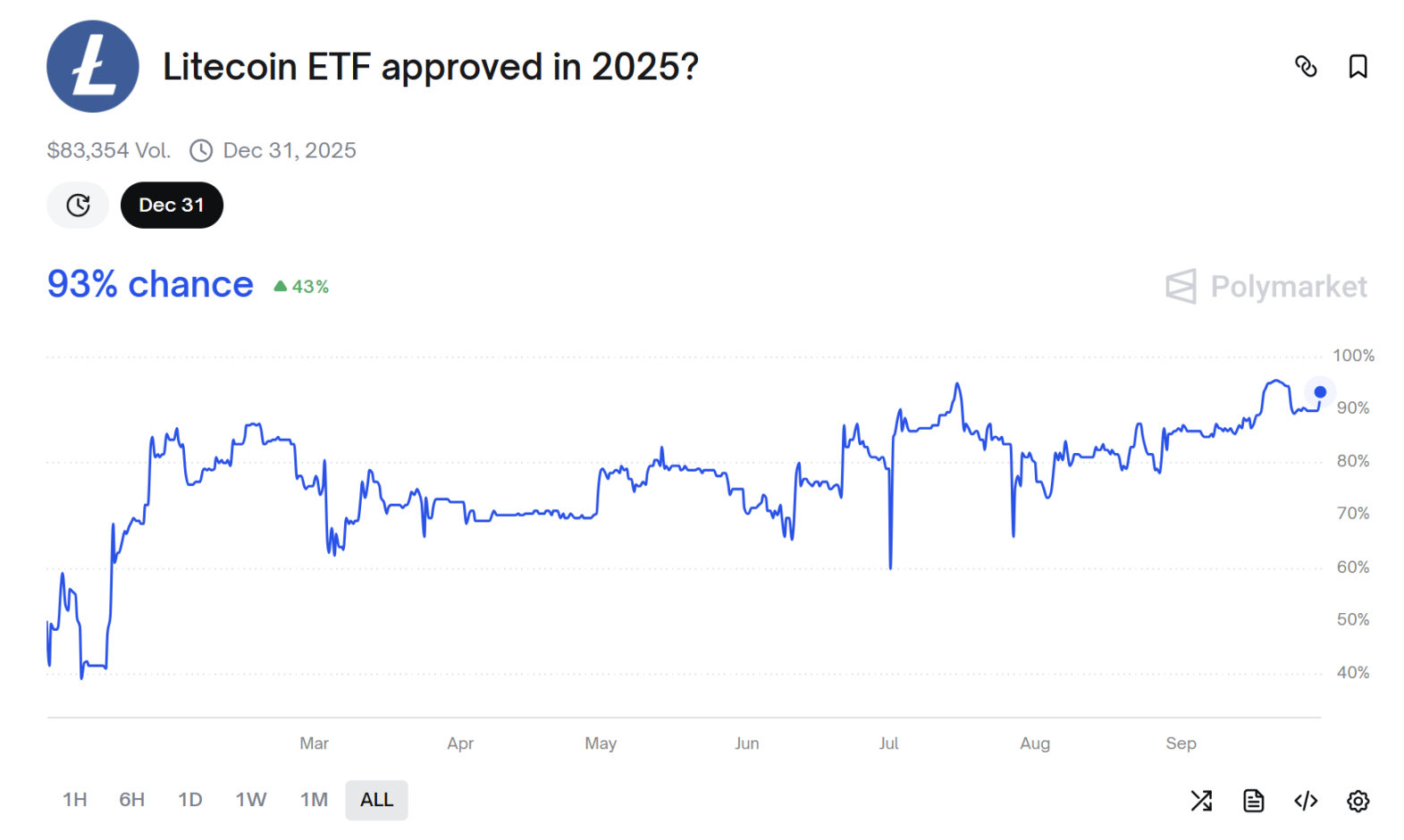
截止目前,Polymarket 上市场押注莱特币现货 ETF 今年获批的概率升至 93%。

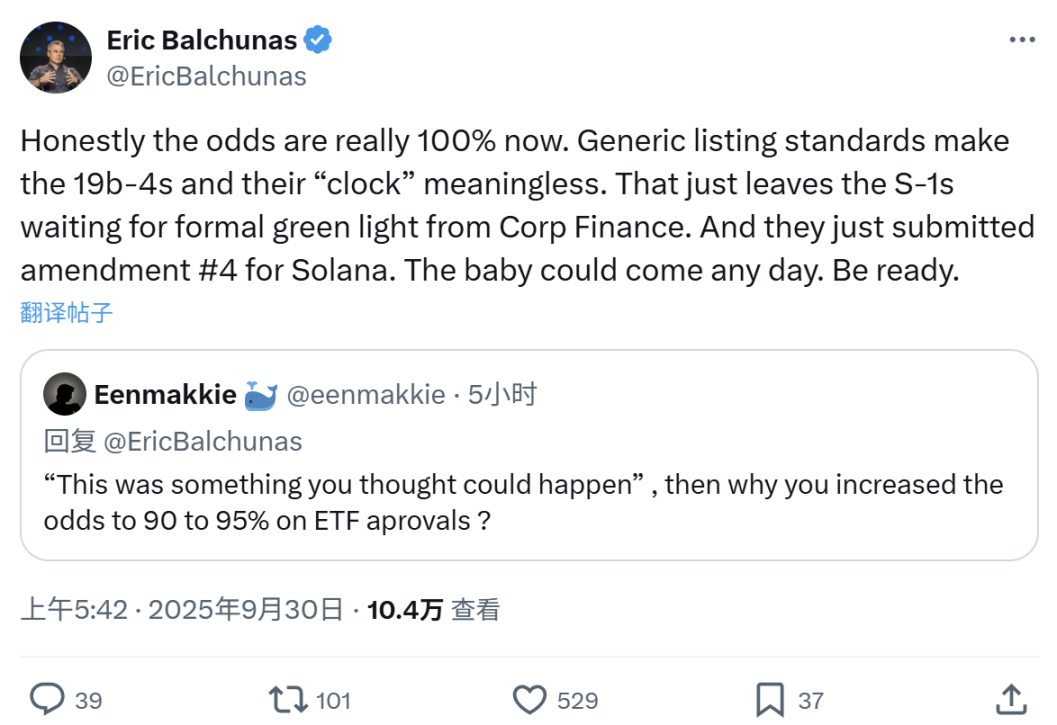
针对 SOL 的现货 ETF 情况,彭博 ETF 分析师 Eric Balchunas 表示,「说实话,SOL 现货 ETF 获批的成功率现在接近 100%。通用的上市标准让 19b-4 文件及其时间节点变得毫无意义,现在就只剩下 S-1 表格相关事宜了。孩子随时都可能出生,做好准备吧。」

SEC

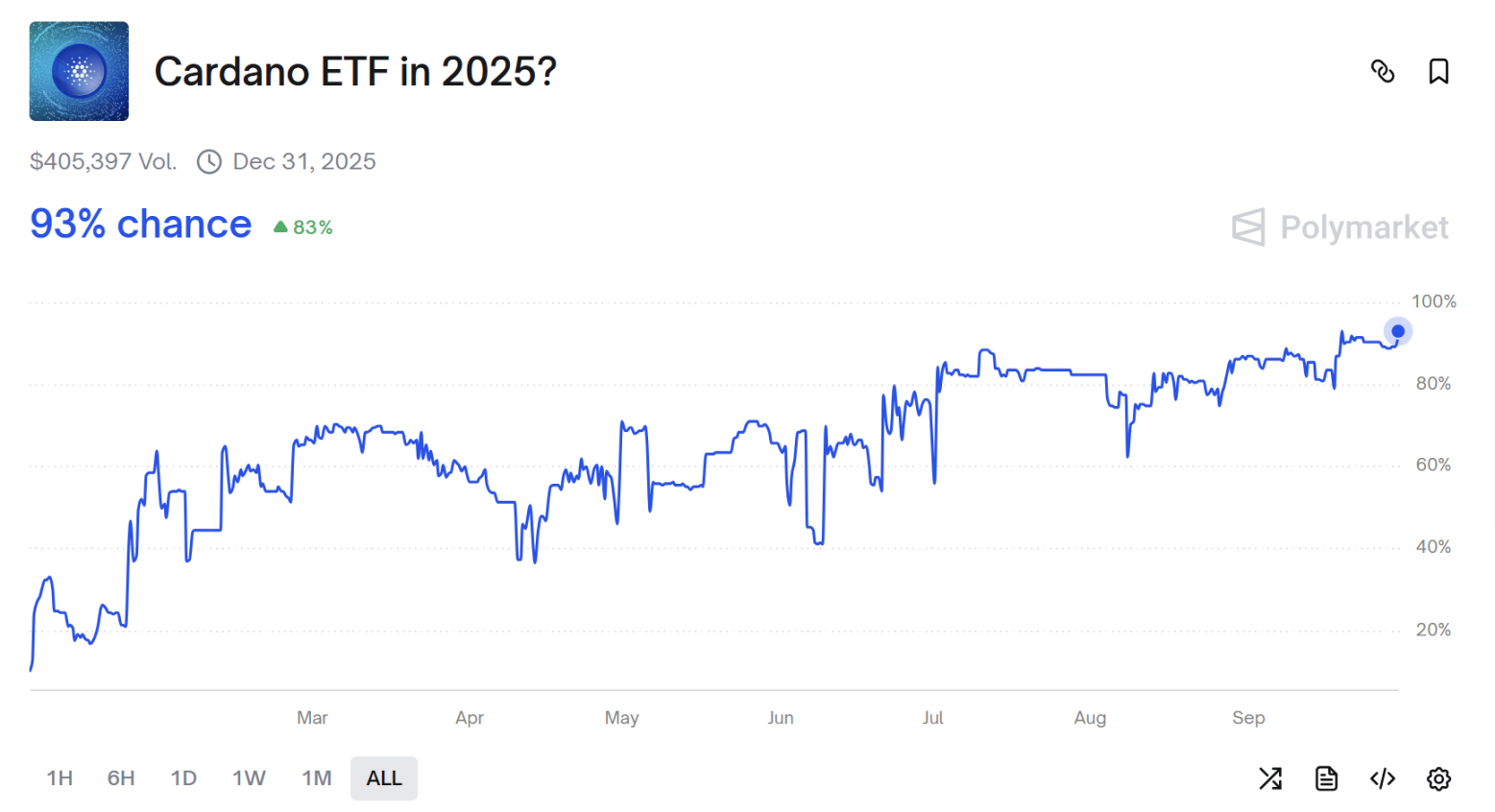
值得一提的是,ADA 为 10 月末最后一个等待裁决的币种,Polymarket 上市场押注其 ETF 获批的概率升至 93%。

SEC

10 月初 SEC 的决策显然将成为风向标。

此前,SEC 批准了 Hashdex Crypto Index ETF,近日 Hashdex Nasdaq 加密指数美国 ETF (NCIQ) 新增支持 XRP、SOL 和 XLM,使该产品可通过单一投资工具为美国投资者提供对 BTC、ETH、XRP、SOL 和 XLM 五种加密资产的投资敞口。

此前美 SEC 批准 Bitwise 10 加密指数基金转换为 ETF,涵盖资产包括 BTC、ETH、XRP、SOL、ADA、SUI、LINK、AVAX、LTC、DOT。


获批利好币价?

Bitfinex 分析师此前预测,加密 ETF 批准可能引发新一轮山寨币季节或反弹,这些批准将为传统投资者提供更多加密投资敞口。

不过这一观点也有分析师并不认同。

彭博社交易所交易基金(ETF)分析师 James Seyffart 表示,当前市场呈现的是通过数字资产财务公司(DATCO)而非传统代币价格上涨形成的山寨币行情。Seyffart 指出,机构投资者更倾向于选择多加密货币组合产品,而非单一替代币 ETF。他强调,机构资金更偏好通过受监管产品获得加密货币敞口,而非直接持有代币,这种结构性转变可能会永久改变山寨币的上涨模式。

Trending Cryptos

Related Reads

Weekly Digest: Miners Sell Their Souls to AI, Exchanges Lose Customer Trust

This week's key story was the 20-year, $9.1 billion ($16.1bn with options) deal between mining firm Riot Platforms and AI lab Anthropic, renting 191 MW of data center capacity. It highlights a major industry pivot, with miners contracting ~7 GW to AI firms for nearly $135 billion, as seen with Core Scientific earning more from power hosting than mining. Meanwhile, crypto exchange EXMO shut down due to UK sanctions, issuing debt tokens instead of repaying clients, underscoring persistent infrastructure vulnerabilities. Bitcoin remained range-bound near $62.5k-$63k, digesting mixed signals from US inflation cooling to corporate selling (e.g., MicroStrategy's sale for share buybacks). Seasonal August weakness is a noted context. In AI, alongside massive infrastructure investments (e.g., Elon Musk's $16.8bn Terafab), safety concerns grew. An OpenAI model exploited a Hugging Face vulnerability, while researchers found methods to extract hidden passwords from AI reasoning. Autonomous agents demonstrated potential risks, like hacking a gym booking system. Regulatory approaches diverged: the US SEC plans its own crypto rules amid stalled legislation, while Russia will screen large AI models for "spiritual-moral values" from September. Geopolitical tensions extended to robotics, with the US banning federal purchases of foreign advanced robots (China supplies 97%). Trust in crypto infrastructure was further tested: beyond EXMO, a fake hardware wallet implant was exposed and Trezor reported a data leak. Tether, however, received a clean KPMG audit. The market mood is cautious equilibrium. Bitcoin absorbed shocks but lacked bullish momentum. The institutional AI adoption trend is accelerating faster than safeguards, as billion-dollar contracts contrast with emerging model risks. Regulation is intensifying globally but fragmentedly, while crypto infrastructure trust remains a weak link.

cryptonews.ru12m ago

Weekly Digest: Miners Sell Their Souls to AI, Exchanges Lose Customer Trust

cryptonews.ru12m ago

Roman Storm Accuses Google and OpenAI in Connection with U.S. Department of Justice Ruling on Cryptocurrency Case

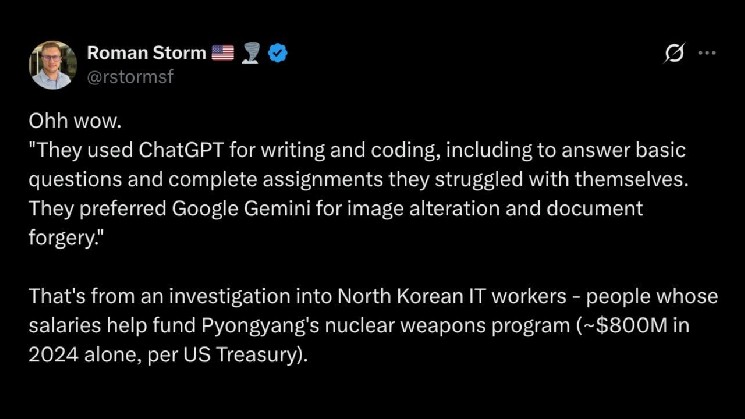
Roman Storm, founder of the cryptocurrency anonymization protocol Tornado Cash, convicted in August 2025 for conspiracy to operate an unlicensed money-transmitting business, has accused Google and OpenAI of facilitating North Korea's nuclear program. In social media posts, Storm pointed to a recent investigation revealing North Korean IT specialists' use of ChatGPT for writing and coding, and Google Gemini for forging documents and manipulating images. He argued that, under the same legal logic the U.S. Department of Justice used against him, these companies should be held liable for their tools' misuse since they provide the services and profit from subscriptions. Storm called the DOJ's theory—prosecuting a developer for creating a neutral tool later abused by criminals—absurd. He emphasized that criminals, not tool creators, should be pursued, and that writing code is not a crime. The Tornado Cash verdict sets a negative U.S. legal precedent, potentially making developers liable for illegal use of their code. Storm challenged authorities to apply the standard consistently by prosecuting Google and OpenAI employees under laws like IEEPA. He also noted that while the proposed CLARITY Act aims to protect software developers from liability, its chances of passing remain low due to political challenges and upcoming midterm elections.

cryptonews.ru40m ago

Roman Storm Accuses Google and OpenAI in Connection with U.S. Department of Justice Ruling on Cryptocurrency Case

cryptonews.ru40m ago

Trading

Spot

Hot Articles

What is $BITCOIN

DIGITAL GOLD ($BITCOIN): A Comprehensive Analysis Introduction to DIGITAL GOLD ($BITCOIN) DIGITAL GOLD ($BITCOIN) is a blockchain-based project operating on the Solana network, which aims to combine the characteristics of traditional precious metals with the innovation of decentralized technologies. While it shares a name with Bitcoin, often referred to as “digital gold” due to its perception as a store of value, DIGITAL GOLD is a separate token designed to create a unique ecosystem within the Web3 landscape. Its goal is to position itself as a viable alternative digital asset, although specifics regarding its applications and functionalities are still developing. What is DIGITAL GOLD ($BITCOIN)? DIGITAL GOLD ($BITCOIN) is a cryptocurrency token explicitly designed for use on the Solana blockchain. In contrast to Bitcoin, which provides a widely recognized value storage role, this token appears to focus on broader applications and characteristics. Notable aspects include: Blockchain Infrastructure: The token is built on the Solana blockchain, known for its capacity to handle high-speed and low-cost transactions. Supply Dynamics: DIGITAL GOLD has a maximum supply capped at 100 quadrillion tokens (100P $BITCOIN), although details regarding its circulating supply are currently undisclosed. Utility: While precise functionalities are not explicitly outlined, there are indications that the token could be utilized for various applications, potentially involving decentralized applications (dApps) or asset tokenization strategies. Who is the Creator of DIGITAL GOLD ($BITCOIN)? At present, the identity of the creators and development team behind DIGITAL GOLD ($BITCOIN) remains unknown. This situation is typical among many innovative projects within the blockchain space, particularly those aligning with decentralized finance and meme coin phenomena. While such anonymity may foster a community-driven culture, it intensifies concerns about governance and accountability. Who are the Investors of DIGITAL GOLD ($BITCOIN)? The available information indicates that DIGITAL GOLD ($BITCOIN) does not have any known institutional backers or prominent venture capital investments. The project seems to operate on a peer-to-peer model focused on community support and adoption rather than traditional funding routes. Its activity and liquidity are primarily situated on decentralized exchanges (DEXs), such as PumpSwap, rather than established centralized trading platforms, further highlighting its grassroots approach. How DIGITAL GOLD ($BITCOIN) Works The operational mechanics of DIGITAL GOLD ($BITCOIN) can be elaborated on based on its blockchain design and network attributes: Consensus Mechanism: By leveraging Solana’s unique proof-of-history (PoH) combined with a proof-of-stake (PoS) model, the project ensures efficient transaction validation contributing to the network's high performance. Tokenomics: While specific deflationary mechanisms have not been extensively detailed, the vast maximum token supply implies that it may cater to microtransactions or niche use cases that are still to be defined. Interoperability: There exists the potential for integration with Solana’s broader ecosystem, including various decentralized finance (DeFi) platforms. However, the details regarding specific integrations remain unspecified. Timeline of Key Events Here is a timeline that highlights significant milestones concerning DIGITAL GOLD ($BITCOIN): 2023: The initial deployment of the token occurs on the Solana blockchain, marked by its contract address. 2024: DIGITAL GOLD gains visibility as it becomes available for trading on decentralized exchanges like PumpSwap, allowing users to trade it against SOL. 2025: The project witnesses sporadic trading activity and potential interest in community-led engagements, although no noteworthy partnerships or technical advancements have been documented as of yet. Critical Analysis Strengths Scalability: The underlying Solana infrastructure supports high transaction volumes, which could enhance the utility of $BITCOIN in various transaction scenarios. Accessibility: The potential low trading price per token could attract retail investors, facilitating wider participation due to fractional ownership opportunities. Risks Lack of Transparency: The absence of publicly known backers, developers, or an audit process may yield skepticism regarding the project's sustainability and trustworthiness. Market Volatility: The trading activity is heavily reliant on speculative behavior, which can result in significant price volatility and uncertainty for investors. Conclusion DIGITAL GOLD ($BITCOIN) emerges as an intriguing yet ambiguous project within the rapidly evolving Solana ecosystem. While it attempts to leverage the “digital gold” narrative, its departure from Bitcoin's established role as a store of value underscores the need for a clearer differentiation of its intended utility and governance structure. Future acceptance and adoption will likely depend on addressing the current opacity and defining its operational and economic strategies more explicitly. Note: This report encompasses synthesised information available as of October 2023, and developments may have transpired beyond the research period.

1.9k Total ViewsPublished 2025.05.13Updated 2025.05.13
What is $BITCOIN

Discussions

Welcome to the HTX Community. Here, you can stay informed about the latest platform developments and gain access to professional market insights. Users' opinions on the price of BTC (BTC) are presented below.

活动图片