Bitcoin Hyper ($HYPER) Live News Today: Latest Insights for Bitcoin Maxis (September 26)

bitcoinistPublished on 2025-09-26Last updated on 2025-09-26

Abstract

Stay Ahead with Our Immediate Analysis of Today's Bitcoin & Bitcoin Hyper Insights Check out our Live Bitcoin Hyper Updates...

Trusted Editorial content, reviewed by leading industry experts and seasoned editors. Ad Disclosure

Stay Ahead with Our Immediate Analysis of Today’s Bitcoin & Bitcoin Hyper Insights

Check out our Live Bitcoin Hyper Updates for September 26, 2025!

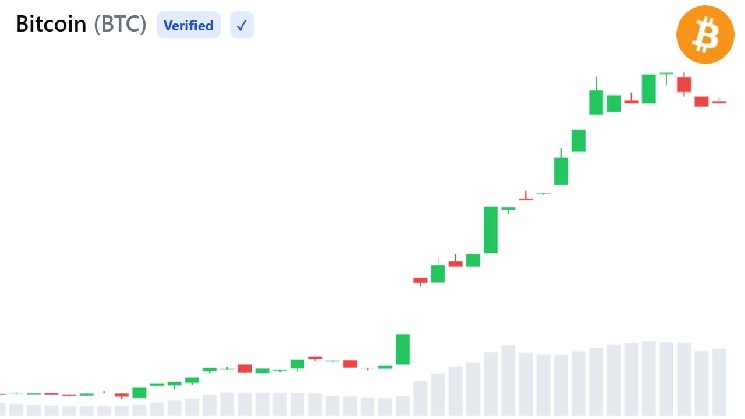
In 2010, Bitcoin was worth a few cents. One year later, it hit $20. In six years, it was $17,000, and now it’s sitting at over $100K, after hitting an ATH of $123K in July.

Historically, if you’d invested in Bitcoin at launch, you’d have an ROI of 188,643,000%. The likes of Mastercard, JP Morgan, and scores of S&P 500 companies are buying Bitcoin in droves. There’s never been anything like Bitcoin before, and investors are waking up to that reality.

However, Bitcoin is getting old for modern standards. No dApps, no smart contracts, and almost non-existent DeFi scalability. It needs an upgrade. And that’s what Bitcoin Hyper ($HYPER) is here to do with Layer-2 technology.

Click to learn more about Bitcoin Hyper

Bitcoin Hyper ($HYPER) is a crypto project planning to launch the fastest Layer-2 chain for Bitcoin. Its goal – to bring Bitcoin’s blockchain to modern standards. This means compatibility with dApps, smart contracts, and seamless DeFi programmability for developers.

The L2 will run on a Canonical Bridge, combined with the Solana Virtual Machine (SVM), for native compatibility with Solana. You’ll be able to build token programs, LP logic, oracles, games, NFT infrastructure, DAOs, and much more. All without reinventing the wheel.

To engage with the L2, you’ll deposit $BTC to a designated address monitored by the Canonical Bridge. The Relay Program verifies the details, and then mints an equivalent number of wrapped $BTC on the L2. You can also withdraw your original $BTC at any time.

If you’re looking for the newest insights on Bitcoin and Bitcoin Hyper, you’re in the right place.

We update this page regularly throughout the day with the latest insider insights for Bitcoin maxis and Bitcoin Hyper fans. Keep refreshing to stay ahead of the pack!

Disclaimer: No crypto investment comes without risk. Our content is for informational purposes, not financial advice. We may earn affiliate commissions at no extra cost to you.

HOW TO BUY $HYPER


Today’s Bitcoin Technical Analysis

A fresh wave of Trump tariffs has admittedly hurt Bitcoin, with the token closing nearly 4% down in yesterday’s trading and now struggling to find support at the $110K level.

Most notably, Bitcoin closed well below the 100 EMA yesterday – its second time doing so in just one month.

The last time, in late August, it managed to climb back above, but given this second break, there’s a higher likelihood we could see the digital gold trade lower and reach for the 200 EMA on the daily chart.
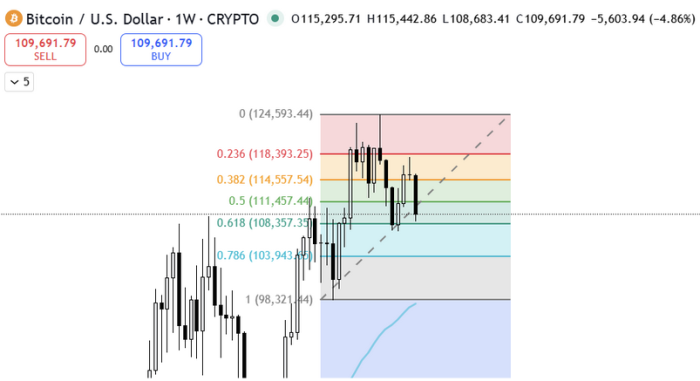
$BTC facing heavy sell-side pressure as it struggles to find support at the golden Fibonacci zone

On the weekly chart, however, things look brighter. Even after the recent fall, Bitcoin remains within the 0.5-0.618 Fibonacci retracement zone – often called the golden pocket – where rebounds during bull runs typically occur, and this seems to be the case here as well.

All in all, while the long-term outlook remains bullish, with Bitcoin holding firmly above long-period EMAs on the weekly and monthly charts, some turbulence can be expected in the coming weeks as the token battles macroeconomic pressure and regains momentum after what has already been a lengthy bull cycle.


Bitcoin Slips Under $109K as Buyers Pile In – Bitcoin Hyper Soars as a Top Crypto Pick

September 26, 2025 • 10:00 UTC

Bitcoin fell to a two-week low of $108,865 on September 25, intensifying selling pressure during the Asian trading session. Data shows a liquidation cluster between $111K and $107K, raising the risk of further decline if leveraged longs are liquidated.

Institutional-sized futures selling continues to outweigh retail spot buying, keeping volatility high.

Still, spot metrics reveal that buyers stepped in at the dips: the bid/ask ratio flipped back toward bulls as the price slipped from $111,200 to $110,553, confirmed by a surge in cumulative volume delta (CVD).

While spot demand remains smaller than futures-driven flows, this is the first bullish tilt since September 5–7, just before Bitcoin’s rally from $107,500 to $118,200.

Overall, downside risks remain, but dip buyers are cautiously re-entering the market. With buyers active, Bitcoin Hyper ($HYPER) is seizing the momentum, with its presale already raising $18.2M.

Learn how to buy Bitcoin Hyper here.


Bitcoin Dips Below $109K as $22B in $BTC Options Expire Today, Fueling Bitcoin Hyper’s $18M Presale

September 26, 2025 • 10:00 UTC

Bitcoin dipped to $108,859 yesterday, following an increase in bear activity linked to today’s $22B Bitcoin options reaching their expiration date.

This is Bitcoin’s lowest point over the last three weeks, with $275M in bull liquidations. Bears felt emboldened and targeted a $95,000-$110,000 price range by 8:00 AM UTC.

Bulls failing to reclaim the $110,000 level by then would translate into a $1B advantage for sell options.

Part of Bitcoin’s contraction links to concerns of a potential US government shutdown, triggered by Trump’s mass firings in the federal sphere, according to a memo.

Despite Bitcoin’s bearish performance, Bitcoin Hyper ($HYPER) holds strong after raising over $18.2M in presale so far.

Learn more about what Bitcoin Hyper ($HYPER) is right here.


Authored by Leah Waters, Bitcoinist — https://bitcoinist.com/bitcoin-hyper-live-news-september-26-2025/

Editorial Process for bitcoinist is centered on delivering thoroughly researched, accurate, and unbiased content. We uphold strict sourcing standards, and each page undergoes diligent review by our team of top technology experts and seasoned editors. This process ensures the integrity, relevance, and value of our content for our readers.

Leah is a British journalist with a BA in Journalism, Media, and Communications and nearly a decade of content writing experience. Over the last four years, her focus has primarily been on Web3 technologies, driven by her genuine enthusiasm for decentralization and the latest technological advancements. She has contributed to leading crypto and NFT publications – Cointelegraph, Coinbound, Crypto News, NFT Plazas, Bitcolumnist, Techreport, and NFT Lately – which has elevated her to a senior role in crypto journalism. Whether crafting breaking news or in-depth reviews, she strives to engage her readers with the latest insights and information. Her articles often span the hottest cryptos, exchanges, and evolving regulations. As part of her ploy to attract crypto newbies into Web3, she explains even the most complex topics in an easily understandable and engaging way. Further underscoring her dynamic journalism background, she has written for various sectors, including software testing (TEST Magazine), travel (Travel Off Path), and music (Mixmag). When she's not deep into a crypto rabbit hole, she's probably island-hopping (with the Galapagos and Hainan being her go-to's). Or perhaps sketching chalk pencil drawings while listening to the Pixies, her all-time favorite band.

Trending Cryptos

Related Reads

Foundation Steps Back, Ethlabs Steps Forward: Ethereum Undergoes Its Largest Restructuring in History

On June 23rd, the Ethereum ecosystem witnessed two major shifts, signaling a significant governance realignment. First, former Ethereum Foundation researchers established Ethlabs, a new independent non-profit. Backed by major ETH holders like Bitmine and SharpLink, Ethlabs aims to address practical needs for institutional adoption, including faster settlement, native asset issuance, cross-chain transactions, and mainnet scaling. Secondly, the Ethereum Foundation announced a major restructuring, laying off 54 employees (20% of its staff) to become a leaner entity focused on protocol governance and maintenance rather than being the primary builder. This move represents a pivotal correction. Criticisms had mounted over the Foundation's perceived slowness, lack of clear strategy, and over-reliance on Vitalik Buterin's influence. Ethlabs emerges as a more execution-oriented, "industrialized" layer focused on market adoption—bridging the gap between research and real-world use. Notably, Vitalik Buterin is absent from its list of supporters, interpreted as an intentional step to avoid excessive personal endorsement and allow the organization to build independent credibility. The Ethereum Foundation's downsizing and redefinition mark a retreat from its former central coordinating role. It now aims to share the "privilege of stewarding Ethereum" with other emerging groups like Ethlabs, the Ethereum Applications Guild, and The Ethereum Economic Zone. Analysts frame this dual shift as the Foundation ensuring Ethereum remains "correct" (credibly neutral), while Ethlabs must prove it remains "effective" (competitive and attractive for capital and adoption). This addresses community "shareholder-like anxiety" about ETH's market performance. While risks exist—such as concerns over shifting from Foundation centrality to large-holder influence—the consensus is that the greater risk for Ethereum was inaction, caught between technical idealism and organizational inertia. These steps aim to create a more multi-stakeholder, execution-driven future for the network.

链捕手4h ago

Foundation Steps Back, Ethlabs Steps Forward: Ethereum Undergoes Its Largest Restructuring in History

链捕手4h ago

Second Half of U.S. Crypto Policy: The Clarity Act Aims for 60 Votes, CFTC's "One-Person Commission" Becomes Biggest Variable

In a pivotal year for US crypto policy, the "CLARITY Act" is advancing in the Senate but faces a high hurdle, needing 60 votes to pass. Key challenges include bridging partisan divides on ethics and swaying undecided Republican senators within a tight legislative calendar of only about 40 working days. The policy "second half" involves intense negotiations on a broader framework for Web3 and DeFi, including crypto tax reforms and the Blockchain Regulatory Certainty Act. A significant uncertainty is the understaffed CFTC, operating with four commissioner vacancies, which complicates regulatory clarity. Meanwhile, the departure of key "crypto champions"—SEC Commissioner Hester Peirce and Senator Cynthia Lummis—will impact ongoing policy efforts. Industry experts are cautiously optimistic but realistic. Sara K. Weed notes that while progress is being made, CLARITY is unlikely to pass this Congress, pushing agencies like the SEC and CFTC to provide more guidance. Sulolit Mukherjee suggests meaningful crypto tax legislation is more likely to be attached to larger must-pass bills. Rashan Colbert discusses the jurisdictional debate over prediction markets, emphasizing the need for a regulatory framework that fosters their development as financial tools rather than treating them broadly as gambling. The clock is ticking, but opportunities remain for substantive progress through continued bipartisan dialogue and pragmatic efforts.

marsbit6h ago

Second Half of U.S. Crypto Policy: The Clarity Act Aims for 60 Votes, CFTC's "One-Person Commission" Becomes Biggest Variable

marsbit6h ago

Research Report Analysis: Morgan Stanley Details SanDisk SNDK, The Truth About Cloud Data Center Pricing Power and AI Inference Benefits

Morgan Stanley raised its price target for SanDisk (SNDK) from $1100 to $1750 on June 22, maintaining an Overweight rating. The upgrade is driven by AI inference demand reshaping the NAND market, particularly for KV Cache and context window storage in cloud data centers. These cloud clients exhibit price inelasticity and sign long-term contracts, granting SanDisk significant pricing power. SanDisk's New Business Model (NBM) agreements, covering over one-third of FY27 bit shipments with 3-5 year terms and fixed price/price collar structures, are crucial. They are projected to sustain gross margins around 80% even at floor prices, providing a buffer against cyclical downturns. Morgan Stanley forecasts gross margins to surge from 30.3% in FY25 to 86.7% in FY27e. With NAND supply expected to remain tight into 2026/2027 and cloud/data centers becoming the largest end-market, SanDisk holds supply-side pricing power. The company targets 15-19% bit growth via technology transitions, not capacity expansion. Revenue is projected to grow ~6.6x from FY25 to FY27, with EPS rising from $2.74 to $14.73, driven by high-margin cloud business. Key upside catalysts include faster enterprise SSD adoption and edge AI growth. Downside risks involve slower industry growth, competitor capex increases, market share loss, and competition from Chinese players like YMTC. The investment thesis rests on AI-driven structural demand, NBM's margin protection, and sustained supply tightness. The $1750 target implies ~28x FY27e P/E.

marsbit7h ago

Research Report Analysis: Morgan Stanley Details SanDisk SNDK, The Truth About Cloud Data Center Pricing Power and AI Inference Benefits

marsbit7h ago

Trading

Spot
Futures

Hot Articles

What is $BITCOIN

DIGITAL GOLD ($BITCOIN): A Comprehensive Analysis Introduction to DIGITAL GOLD ($BITCOIN) DIGITAL GOLD ($BITCOIN) is a blockchain-based project operating on the Solana network, which aims to combine the characteristics of traditional precious metals with the innovation of decentralized technologies. While it shares a name with Bitcoin, often referred to as “digital gold” due to its perception as a store of value, DIGITAL GOLD is a separate token designed to create a unique ecosystem within the Web3 landscape. Its goal is to position itself as a viable alternative digital asset, although specifics regarding its applications and functionalities are still developing. What is DIGITAL GOLD ($BITCOIN)? DIGITAL GOLD ($BITCOIN) is a cryptocurrency token explicitly designed for use on the Solana blockchain. In contrast to Bitcoin, which provides a widely recognized value storage role, this token appears to focus on broader applications and characteristics. Notable aspects include: Blockchain Infrastructure: The token is built on the Solana blockchain, known for its capacity to handle high-speed and low-cost transactions. Supply Dynamics: DIGITAL GOLD has a maximum supply capped at 100 quadrillion tokens (100P $BITCOIN), although details regarding its circulating supply are currently undisclosed. Utility: While precise functionalities are not explicitly outlined, there are indications that the token could be utilized for various applications, potentially involving decentralized applications (dApps) or asset tokenization strategies. Who is the Creator of DIGITAL GOLD ($BITCOIN)? At present, the identity of the creators and development team behind DIGITAL GOLD ($BITCOIN) remains unknown. This situation is typical among many innovative projects within the blockchain space, particularly those aligning with decentralized finance and meme coin phenomena. While such anonymity may foster a community-driven culture, it intensifies concerns about governance and accountability. Who are the Investors of DIGITAL GOLD ($BITCOIN)? The available information indicates that DIGITAL GOLD ($BITCOIN) does not have any known institutional backers or prominent venture capital investments. The project seems to operate on a peer-to-peer model focused on community support and adoption rather than traditional funding routes. Its activity and liquidity are primarily situated on decentralized exchanges (DEXs), such as PumpSwap, rather than established centralized trading platforms, further highlighting its grassroots approach. How DIGITAL GOLD ($BITCOIN) Works The operational mechanics of DIGITAL GOLD ($BITCOIN) can be elaborated on based on its blockchain design and network attributes: Consensus Mechanism: By leveraging Solana’s unique proof-of-history (PoH) combined with a proof-of-stake (PoS) model, the project ensures efficient transaction validation contributing to the network's high performance. Tokenomics: While specific deflationary mechanisms have not been extensively detailed, the vast maximum token supply implies that it may cater to microtransactions or niche use cases that are still to be defined. Interoperability: There exists the potential for integration with Solana’s broader ecosystem, including various decentralized finance (DeFi) platforms. However, the details regarding specific integrations remain unspecified. Timeline of Key Events Here is a timeline that highlights significant milestones concerning DIGITAL GOLD ($BITCOIN): 2023: The initial deployment of the token occurs on the Solana blockchain, marked by its contract address. 2024: DIGITAL GOLD gains visibility as it becomes available for trading on decentralized exchanges like PumpSwap, allowing users to trade it against SOL. 2025: The project witnesses sporadic trading activity and potential interest in community-led engagements, although no noteworthy partnerships or technical advancements have been documented as of yet. Critical Analysis Strengths Scalability: The underlying Solana infrastructure supports high transaction volumes, which could enhance the utility of $BITCOIN in various transaction scenarios. Accessibility: The potential low trading price per token could attract retail investors, facilitating wider participation due to fractional ownership opportunities. Risks Lack of Transparency: The absence of publicly known backers, developers, or an audit process may yield skepticism regarding the project's sustainability and trustworthiness. Market Volatility: The trading activity is heavily reliant on speculative behavior, which can result in significant price volatility and uncertainty for investors. Conclusion DIGITAL GOLD ($BITCOIN) emerges as an intriguing yet ambiguous project within the rapidly evolving Solana ecosystem. While it attempts to leverage the “digital gold” narrative, its departure from Bitcoin's established role as a store of value underscores the need for a clearer differentiation of its intended utility and governance structure. Future acceptance and adoption will likely depend on addressing the current opacity and defining its operational and economic strategies more explicitly. Note: This report encompasses synthesised information available as of October 2023, and developments may have transpired beyond the research period.

433 Total ViewsPublished 2025.05.13Updated 2025.05.13

What is $BITCOIN

Discussions

Welcome to the HTX Community. Here, you can stay informed about the latest platform developments and gain access to professional market insights. Users' opinions on the price of BTC (BTC) are presented below.

活动图片