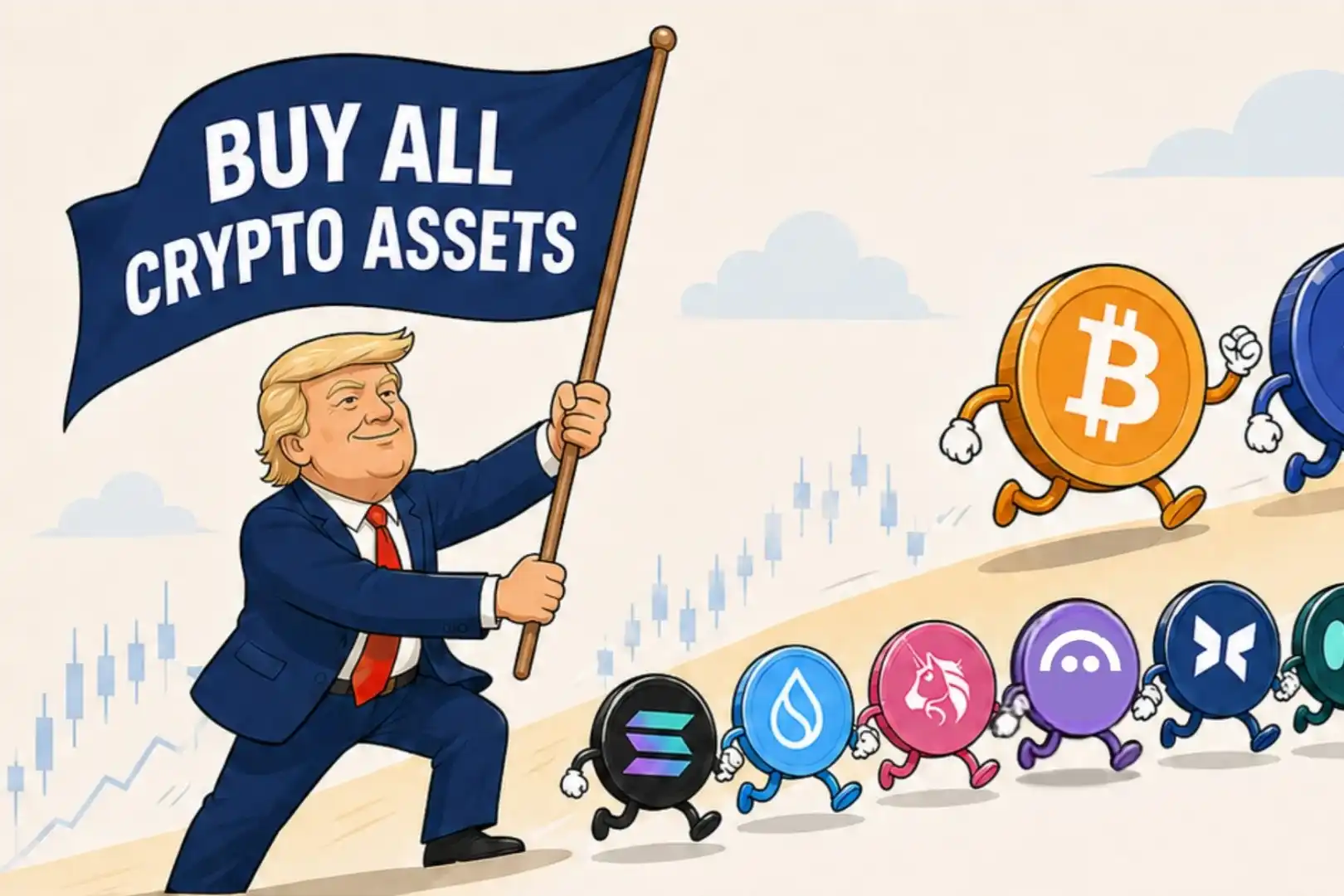
Биткоин, Ethereum и альткоины упали в цене после неожиданного роста ВВП США

cryptonews.ruPublished on 2025-04-25Last updated on 2025-09-26

Криптовалютный рынок занял оборонительную позицию, пока трейдеры оценивали «ястребиные» макроэкономические данные и падение криптовалютных акций.

Настроения ухудшились после пересмотра данных по ВВП США, и инвесторы пересмотрели свои ожидания в отношении снижения процентной ставки ФРС. Биткоин и основные альткоины упали в цене из-за опасений по поводу «липких» процентных ставок и снижения склонности к риску.

Недавнее падение цен стало кульминацией нестабильной недели, но для многих это скорее тактическое отступление, чем полноценная капитуляция.

На фоне растущего числа ликвидаций и давления на лидеров рынка все внимание приковано к экономическим показателям за следующую неделю, чтобы понять, сможет ли криптовалюта восстановить свои позиции.

Объем ликвидаций на криптовалютном рынке достиг 1,1 млрд долларов

Биткоин, лидер рынка, упал ниже 111 000 долларов и на момент публикации торгуется чуть выше 108 000 долларов, что является самым низким показателем за сентябрь.

Объём торгов вырос, когда на биржи поступили заявки на продажу. Сейчас рыночная капитализация составляет 2,17 триллиона долларов, а ежедневный оборот превышает 75,54 миллиарда долларов.

Ethereum показал худшие результаты, потеряв 8 % за день, поскольку соотношение ETH/BTC отыграло весь летний рост.

Цена Solana, которая ранее была фаворитом на фоне разговоров о корпоративном внедрении, за последние 24 часа упала ещё на 6 % и теперь почти на 20 % ниже, чем в начале недели.

DOGE последовал за остальными, не в силах избавиться от настроений, связанных с отказом от риска. XRP, тем временем, повторил падение сектора, поскольку надежды на отскок, вызванный повышением ставок, угасли.

Согласно данным CoinGlass, эта синхронная распродажа привела к ликвидации позиций с кредитным плечом на сумму более 1,1 миллиарда долларов, при этом принудительное закрытие длинных позиций по ETH составило почти 400 миллионов долларов.

Несмотря на распродажу, объёмы торгов остаются высокими, поскольку как спекулянты, так и долгосрочные инвесторы готовятся к предстоящим месяцам.

Пересмотр ВВП взбудоражил рынок криптовалют; ставки на снижение ставки ФРС упали

Неожиданное изменение данных по ВВП в четверг вызвало колебания на макроэкономическом рынке, и криптовалютный сектор оказался в центре внимания.

Во втором квартале экономика США выросла на 3,8 %, что значительно превзошло ожидания. В результате доходность казначейских облигаций достигла трёхнедельного максимума, а ставки на скорое снижение процентных ставок снизились.

Сильнее всего пострадал биткоин, который упал до $109 000 и достиг минимума почти за месяц.

Потери Ethereum усугубились из-за того, что инвесторы отказались от альткоинов с высокой бета-версией. Акции компаний, связанных с криптовалютами, таких как MicroStrategy (MSTR), крупнейшего корпоративного держателя BTC, упали на 4,5 %, а Coinbase (COIN) — на 4,1 %.

Майнеры пострадали ещё сильнее: акции Cipher Mining (CIFR) упали на 9,4 %, несмотря на позитивные новости, а акции HIVE, Bitdeer и Bitfarms подешевели на 6–8 % каждая.

Эмитент стейблкоинов Circle (CRCL) и Galaxy Digital (GLXY) продолжили общеотраслевое снижение. В августе объёмы торгов резко выросли, спотовые и деривативные активы достигли годового максимума в 9,72 триллиона долларов, а биржа Gate увеличила свою долю на рынке.

Но количество ликвидаций продолжало расти, поскольку в ходе последнего спада были закрыты длинные позиции с использованием кредитного плеча, и сейчас криптовалютные акции находятся на многомесячных минимумах.

Все внимание приковано к публикации данных в пятницу и комментариям ФРС на следующей неделе, чтобы понять, получат ли пострадавшие рисковые активы поддержку или им стоит готовиться к очередному витку турбулентности.


Trending Cryptos

Related Reads

Soaring Export Data for Memory Chips, Market Is Redefining the Valuation Anchor for Memory Stocks

Korean storage export data for the first 20 days of June shows substantial year-on-year increases in both value and price-per-kilogram for categories like DRAM, NAND, and SSDs. This signals a potential shift beyond simple demand recovery, indicating rising prices and a product mix shift towards higher-value items, possibly influenced by AI infrastructure needs. A key point is that the surge in price-per-kilogram is not simply a uniform chip price hike. It reflects a combination of actual price increases and, more importantly, an export structure increasingly dominated by high-value-density products like HBM (High-Bandwidth Memory) and advanced DRAM, which are critical for AI servers. This suggests AI-driven demand may be spilling over from just HBM into broader memory markets. SK Hynix stands to benefit directly due to its leading HBM position. For Samsung and Micron, the implication is potential for greater margin elasticity if the tightness in high-end memory spreads to enterprise SSD and NAND prices. However, the storage sector remains cyclical. Risks include supply expansion, inventory changes, and potential slowdowns in broader AI capital expenditure. Ultimately, while the strong export data supports upward revisions for storage company earnings and fuels discussion of an "AI infrastructure bottleneck premium," a definitive valuation shift from a cyclical to a structural story depends on upcoming quarterly reports. Investors need confirmation from SK Hynix, Samsung, and Micron that improvements in average selling prices, product mix, and, crucially,毛利率 are sustained over multiple quarters.

marsbit38m ago

Soaring Export Data for Memory Chips, Market Is Redefining the Valuation Anchor for Memory Stocks

marsbit38m ago

Why Does SpaceX Have Such a High Valuation Ceiling? The Answer Lies in Musk's Business Blueprint

SpaceX achieved a record-breaking IPO on June 12, 2026, with its market cap surging past $2.1 trillion. This valuation reflects its central role within Elon Musk's expansive, interconnected technological ecosystem. The article details how four core components form a synergistic closed-loop system: 1) **The "Brain" (xAI & Orbital Compute):** xAI provides AI models and massive ground/space-based supercomputing for simulation and decision-making across the system. 2) **The "Neural Logistics Core" (Starlink & Starship):** Starlink's low-latency satellite network enables global data transmission, while Starship's low-cost, reusable launch capacity aims to make large-scale space deployment economically viable. 3) **The "Physical Body" (Tesla & Optimus):** Tesla's manufacturing prowess and energy products support hardware production and power, pivoting toward mass-producing the Optimus humanoid robot for terrestrial and potential space-based labor. 4) **The "Human Interface" (Neuralink & X):** Neuralink seeks direct brain-computer communication, and the X platform provides real-time societal data. Together, these elements create three reinforcing "flywheels": manufacturing/logistics, data-driven iteration, and energy/compute/network synergy. This integrated approach promises lower costs, faster innovation cycles, and potential infrastructure-as-a-service offerings. However, it also concentrates technical, regulatory, and corporate governance risks. Ultimately, SpaceX's high valuation stems from its position as the indispensable infrastructural backbone—handling space transport, global communications, and future orbital computing—tying together Musk's entire vision for a self-reinforcing technological empire.

marsbit43m ago

Why Does SpaceX Have Such a High Valuation Ceiling? The Answer Lies in Musk's Business Blueprint

marsbit43m ago

Snap, Unprofitable for Nine Years, and a Decade-Long AR Obsession Without Return

Snap's AR Obsession: A Decade of Betting Against the Odds On June 16, Snap CEO Evan Spiegel unveiled the new AR glasses, Specs, priced at $2,195, causing the company's stock (SNAP) to plummet nearly 10%. The launch was met with intense criticism online, with investors questioning why a consistently unprofitable company would stake its future on an expensive product its core young user base can't afford. Snapchat, known for pioneering features like ephemeral Stories and popular AR lenses (like the iconic dog filter), has a history of innovation often copied by rivals like Instagram and Meta. Despite this, it has struggled to translate first-mover advantage into commercial success. Since its 2017 IPO, Snap has reported annual net losses, with a Q1 2026 loss of $89 million. Its stock is down 94% from its 2021 peak, hampered by iOS privacy changes, competition, and a young demographic less attractive to major advertisers. In this challenging context, Spiegel is doubling down on AR. He calls 2026 a "crucible moment," having recently laid off 16% of staff while reportedly investing over $3.5 billion cumulatively in its AR glasses line over nearly a decade. The new Specs represent a significant leap from the 2016 camera-focused Spectacles, offering true AR overlays, gesture control, and standalone operation. However, at $2,195, it faces tough comparisons. While more advanced than Meta's $799 Ray-Ban smart glasses, critics point to its heavier weight, short battery life, and features largely replicable by a smartphone. Facing pressure from investors to cut losses on the Specs project, Spiegel has refused, framing it as essential to Snap's long-term vision. The company finds itself in a paradoxical position: cutting costs while heavily funding a decade-long, unproven bet. Some see Specs as an awkward but necessary step in AR's evolution, akin to early mobile phones. Whether Spiegel is a visionary outlier or a gambler destined to fail remains an open question, highlighting the tension between long-term ambition and short-term market demands.

marsbit1h ago

Snap, Unprofitable for Nine Years, and a Decade-Long AR Obsession Without Return

marsbit1h ago

Annualized Revenue Exceeds $20 Billion, Kalshi Aims to Become the First Prediction Platform IPO?

Kalshi, a leading U.S. prediction markets platform, is reportedly in early, informal discussions for an Initial Public Offering (IPO). The company's annualized revenue now exceeds $2 billion, fueled by its dominance of over 90% of the domestic prediction market activity. This growth stems from a surge in trading volume—reaching a total of $52.7 billion—and an increase in fee rates, largely driven by sports event contracts like the NBA playoffs and the 2026 FIFA World Cup. Monthly active users are approximately 2 million. Kalshi recently raised $1 billion in a funding round led by Coatue Management, valuing the company at $22 billion. It has also expanded its offerings to include Bitcoin perpetual contracts and plans to launch a dedicated trading platform, Kalshi Pro. However, Kalshi's path to an IPO faces significant regulatory hurdles. The core risk involves jurisdictional conflicts, as multiple U.S. states are challenging its operations under local gambling laws. For instance, Arizona has filed criminal charges against the platform, while states like Kentucky have filed lawsuits. Kalshi and the Commodity Futures Trading Commission (CFTC) argue that its event contracts fall under exclusive federal jurisdiction as "swaps." The outcomes of these ongoing legal battles could critically impact Kalshi's core revenue and its IPO timeline. Analysts suggest that while an IPO could theoretically occur by late 2026, a more likely timeframe is late 2027 or 2028, contingent on resolving legal issues and favorable market conditions. If successful, its fundraising could significantly exceed $1 billion, given its current valuation and revenue multiple.

Foresight News1h ago

Annualized Revenue Exceeds $20 Billion, Kalshi Aims to Become the First Prediction Platform IPO?

Foresight News1h ago

Trading

Spot
Futures

Hot Articles

Discussions

Welcome to the HTX Community. Here, you can stay informed about the latest platform developments and gain access to professional market insights. Users' opinions on the price of ETH (ETH) are presented below.

活动图片