Uptober 效应:比特币下跌至11 万美元,真的是为了达到 16 万美元吗?

marsbitPublished on 2025-09-22Last updated on 2025-09-22

要点摘要

比特币跌到 11 万美元是投降吗?

这次下跌更像是一次杠杆清洗,HODLer 稳住了,而过度暴露的多头被挤出了场。

“Uptober 效应”还能再现吗?

是的,比特币 9 月的疲弱走势与历史一致。Uptober 平均涨幅为 +21.89%,资金流动与流动性扫单暗示 Q4 有望反弹至 16 万美元。

投资者的耐心似乎正在消耗殆尽。

在一周的停顿后,比特币 [BTC] 未能守住 11.5 万美元,未能开启新一轮的价格探索。2.17% 的日内回调将价格拖至近两周低点,市场明显出现 FUD(恐惧、不确定、怀疑)迹象。

此外,BTC 的未平仓合约(OI)在短短三天内减少了逾 30 亿美元,将 9 月的投资回报率压缩至 4.38%。

但随着清洗打击过度杠杆的多头,这是否只是一次有意设计的回调?

Uptober 效应对交易员心理的影响

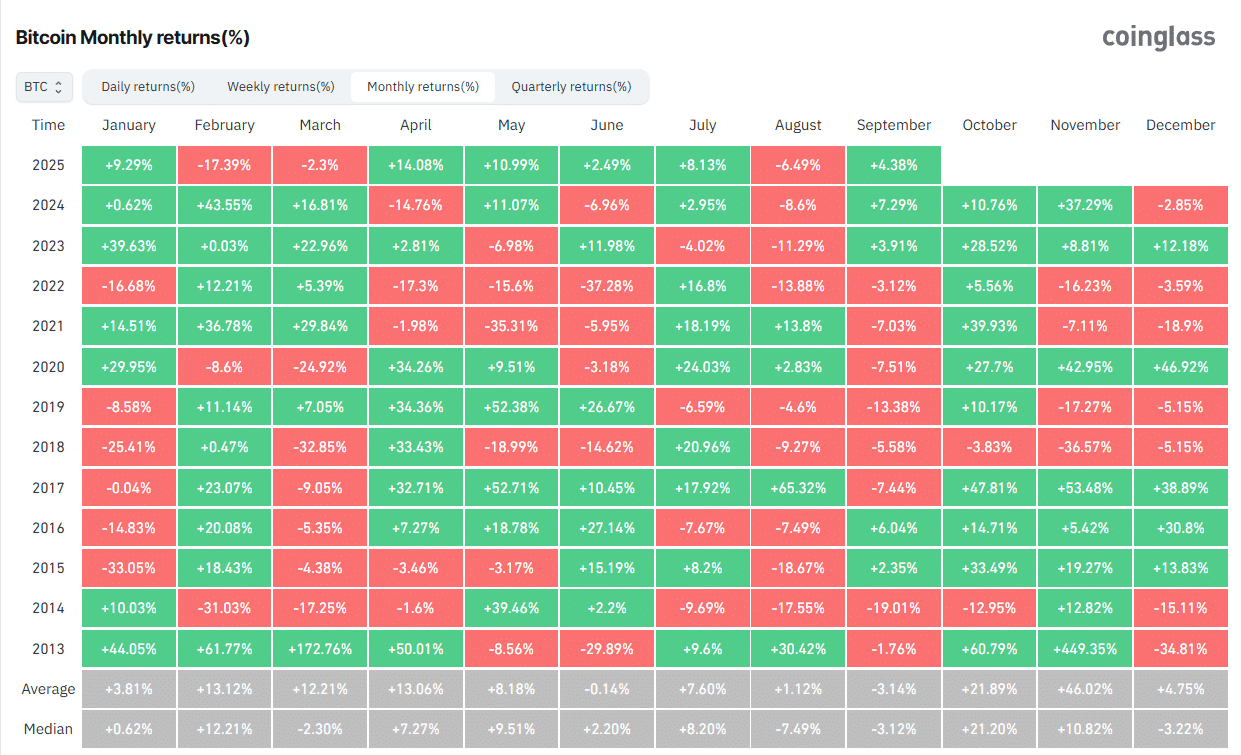
比特币的历史周期显示出清晰的价格行为模式。
HODLer

Source: CoinGlass

9 月往往下跌,平均 -3.14%,成为 BTC 历史上最弱的月份。

但 10 月则逆转情绪,平均涨幅 21.89%,而自 2013 年以来,Q4 累计涨幅达 85.42%。

这种模式被称为 “Uptober 效应”,在过去两个周期(2023 和 2024 年)中,在疲弱或下跌的 9 月之后带来了近 50% 的涨幅。值得注意的是,资金流显示交易员正在押注这种走势再度上演。

美联储预期偏向鸽派
HODLer

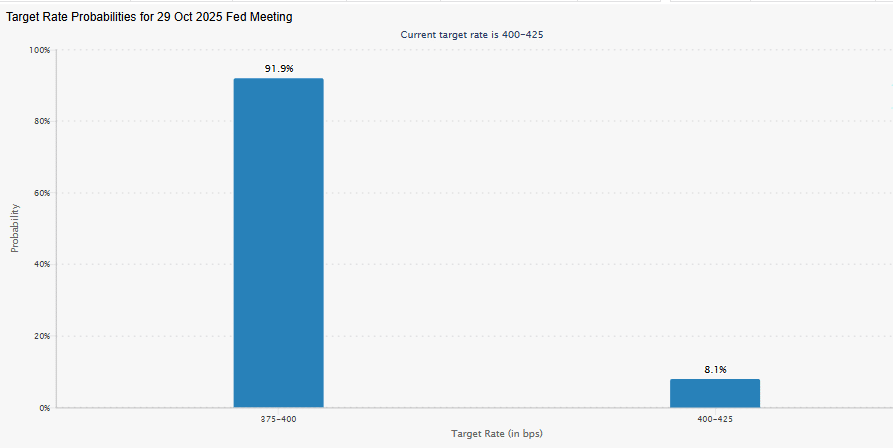
Source: CME Fed Tool

宏观方面,市场定位偏向看涨。

CME FedWatch 数据显示,10 月 29 日 FOMC 会议上有 91.9% 的概率会降息 25 个基点,将目标利率降至 375–400 个基点。与上周相比,降息预期的概率上升了 17.6%。

在这种情况下,BTC 的 9 月疲弱看起来像是典型的季节性清洗。

上周的 25 个基点降息几乎没有带来显著变化,这暗示美联储可能需要一次完整的 50 个基点降息,才能触发更强的风险偏好资金流入。

比特币流动性扫单引发“有意设计回调”的猜测

链上资金流显示,比特币 HODLer 依然坚守。

即使 BTC 较 12.4 万美元的历史高点低了 11.3%,净已实现盈亏(NRPL)也未转为负值。被套持有者依然坚守,显示他们对下一波上涨抱有信念。

与此同时,实现利润被压缩,显示“有浮盈”的持有人避免了获利了结。

这与 2024 年 9 月形成了关键差异,当时短期持有者的未实现盈亏(STH NUPL)转负,发出的是弱手投降的信号。
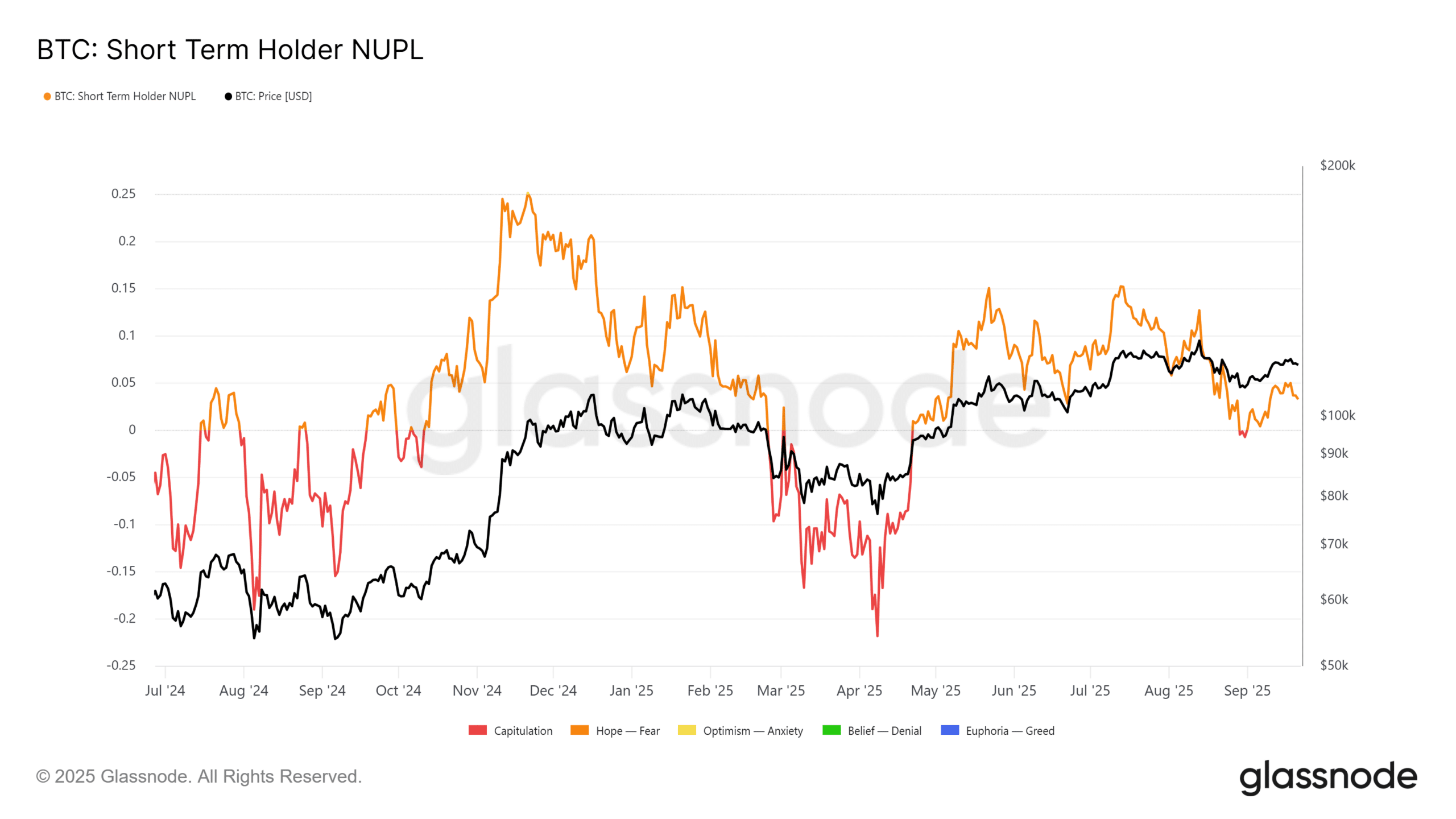
HODLer

Source: Glassnode

简而言之,交易员正在顺应 Uptober 心理。

与此同时,BTC 在 11.4 万美元位置扫过了一个长期多头流动性簇,叠加了逾 6000 万美元的多头杠杆,触发了 24 小时内 3% 的回调。这是一次典型的清洗,而不是弱手投降。

因此,在 HODLer 坚守 FUD、过度暴露的多头被挤出、且 10 月作为历史拐点的背景下,比特币跌至 11 万美元更像是为年底反弹至 16 万美元铺垫。

Related Reads

Data Theft at Will! Major Vulnerability Exposed in This Popular AI Programming Tool

A critical vulnerability in Anthropic's Claude Code AI programming tool allowed attackers to bypass its network sandbox for over five months, enabling potential data exfiltration. Independent researcher Aonan Guan discovered a second complete bypass exploiting a null-byte injection in the SOCKS5 proxy. This flaw, present since the sandbox's launch in October 2025, let processes inside the sandbox access any host, contrary to user-configured domain whitelists. The attack chain involved manipulating hostnames (e.g., `attacker.com\x00.google.com`). JavaScript's `endsWith()` check would pass `.google.com`, while the underlying C `getaddrinfo()` function would only parse `attacker.com` due to the null byte, creating a parser discrepancy. Combined with a previously disclosed prompt injection method, this could leak API keys, credentials, and internal data. Anthropic silently fixed the issue in April 2026 without a security advisory, CVE, or user notification. The researcher noted that Claude Code itself confirmed the vulnerability's severity when tested. This incident highlights broader industry issues, as similar vulnerabilities found in Google's Gemini CLI and GitHub's Copilot Agent also lacked public disclosures. The report criticizes the false sense of security created by a broken sandbox and emphasizes the need for defense-in-depth and transparency in AI tool security.

marsbit34m ago

Data Theft at Will! Major Vulnerability Exposed in This Popular AI Programming Tool

marsbit34m ago

Under the squeeze between giants Tether and Circle, how can foreign exchange stablecoins break through?

In the face of dominance by Tether (USDT) and Circle (USDC), new entrants in the stablecoin space face significant challenges competing directly, especially in the foreign exchange (FX) market. A more viable and efficient path forward is the adoption of synthetic foreign exchange (Forex) built atop existing USD stablecoin rails. The rise of stablecoin neo-banks represents the next major growth area for mass crypto adoption, with FX becoming a core component. However, replicating the vast liquidity, distribution channels, and network effects of USDT/USDC is extremely difficult for new FX stablecoin issuers. The total market cap of all FX stablecoins is a fraction (roughly 1/700th) of USD stablecoins, leading to issues like poor liquidity, peg instability, limited acceptance, and complex compliance hurdles. Instead of issuing spot FX stablecoins, the article advocates for a model inspired by traditional finance's non-deliverable forwards (NDFs). Users would continue to hold underlying USDT/USDC, while their account balances are displayed and economically settled in their preferred local currency through MtM (Mark-to-Market) NDF structures. This approach leverages the deep liquidity and infrastructure of USD stablecoins while providing synthetic forex exposure. Key advantages include strong peg stability via oracles, retained access to USD stablecoin yields and liquidity, high capital efficiency, and easy scalability to new currencies. Primary use cases for this on-chain NDF forex include: 1. Neo-banks, custodians, and wallets offering multi-currency accounts to attract international users and increase deposits. 2. Forex carry trade strategies, potentially offering more stable and scalable yields compared to crypto-native products like Ethena. 3. Global corporate payments, allowing businesses to receive payments in local currencies while hedging forex risk on-chain, similar to services offered by Stripe in traditional finance. This synthetic forex model presents a pragmatic solution to overcome the network effects of incumbents and unlock the next wave of stablecoin utility for global consumers and businesses.

marsbit1h ago

Under the squeeze between giants Tether and Circle, how can foreign exchange stablecoins break through?

marsbit1h ago

Trading

Spot
Futures

Hot Articles

What is $BITCOIN

DIGITAL GOLD ($BITCOIN): A Comprehensive Analysis Introduction to DIGITAL GOLD ($BITCOIN) DIGITAL GOLD ($BITCOIN) is a blockchain-based project operating on the Solana network, which aims to combine the characteristics of traditional precious metals with the innovation of decentralized technologies. While it shares a name with Bitcoin, often referred to as “digital gold” due to its perception as a store of value, DIGITAL GOLD is a separate token designed to create a unique ecosystem within the Web3 landscape. Its goal is to position itself as a viable alternative digital asset, although specifics regarding its applications and functionalities are still developing. What is DIGITAL GOLD ($BITCOIN)? DIGITAL GOLD ($BITCOIN) is a cryptocurrency token explicitly designed for use on the Solana blockchain. In contrast to Bitcoin, which provides a widely recognized value storage role, this token appears to focus on broader applications and characteristics. Notable aspects include: Blockchain Infrastructure: The token is built on the Solana blockchain, known for its capacity to handle high-speed and low-cost transactions. Supply Dynamics: DIGITAL GOLD has a maximum supply capped at 100 quadrillion tokens (100P $BITCOIN), although details regarding its circulating supply are currently undisclosed. Utility: While precise functionalities are not explicitly outlined, there are indications that the token could be utilized for various applications, potentially involving decentralized applications (dApps) or asset tokenization strategies. Who is the Creator of DIGITAL GOLD ($BITCOIN)? At present, the identity of the creators and development team behind DIGITAL GOLD ($BITCOIN) remains unknown. This situation is typical among many innovative projects within the blockchain space, particularly those aligning with decentralized finance and meme coin phenomena. While such anonymity may foster a community-driven culture, it intensifies concerns about governance and accountability. Who are the Investors of DIGITAL GOLD ($BITCOIN)? The available information indicates that DIGITAL GOLD ($BITCOIN) does not have any known institutional backers or prominent venture capital investments. The project seems to operate on a peer-to-peer model focused on community support and adoption rather than traditional funding routes. Its activity and liquidity are primarily situated on decentralized exchanges (DEXs), such as PumpSwap, rather than established centralized trading platforms, further highlighting its grassroots approach. How DIGITAL GOLD ($BITCOIN) Works The operational mechanics of DIGITAL GOLD ($BITCOIN) can be elaborated on based on its blockchain design and network attributes: Consensus Mechanism: By leveraging Solana’s unique proof-of-history (PoH) combined with a proof-of-stake (PoS) model, the project ensures efficient transaction validation contributing to the network's high performance. Tokenomics: While specific deflationary mechanisms have not been extensively detailed, the vast maximum token supply implies that it may cater to microtransactions or niche use cases that are still to be defined. Interoperability: There exists the potential for integration with Solana’s broader ecosystem, including various decentralized finance (DeFi) platforms. However, the details regarding specific integrations remain unspecified. Timeline of Key Events Here is a timeline that highlights significant milestones concerning DIGITAL GOLD ($BITCOIN): 2023: The initial deployment of the token occurs on the Solana blockchain, marked by its contract address. 2024: DIGITAL GOLD gains visibility as it becomes available for trading on decentralized exchanges like PumpSwap, allowing users to trade it against SOL. 2025: The project witnesses sporadic trading activity and potential interest in community-led engagements, although no noteworthy partnerships or technical advancements have been documented as of yet. Critical Analysis Strengths Scalability: The underlying Solana infrastructure supports high transaction volumes, which could enhance the utility of $BITCOIN in various transaction scenarios. Accessibility: The potential low trading price per token could attract retail investors, facilitating wider participation due to fractional ownership opportunities. Risks Lack of Transparency: The absence of publicly known backers, developers, or an audit process may yield skepticism regarding the project's sustainability and trustworthiness. Market Volatility: The trading activity is heavily reliant on speculative behavior, which can result in significant price volatility and uncertainty for investors. Conclusion DIGITAL GOLD ($BITCOIN) emerges as an intriguing yet ambiguous project within the rapidly evolving Solana ecosystem. While it attempts to leverage the “digital gold” narrative, its departure from Bitcoin's established role as a store of value underscores the need for a clearer differentiation of its intended utility and governance structure. Future acceptance and adoption will likely depend on addressing the current opacity and defining its operational and economic strategies more explicitly. Note: This report encompasses synthesised information available as of October 2023, and developments may have transpired beyond the research period.

363 Total ViewsPublished 2025.05.13Updated 2025.05.13

What is $BITCOIN

Discussions

Welcome to the HTX Community. Here, you can stay informed about the latest platform developments and gain access to professional market insights. Users' opinions on the price of BTC (BTC) are presented below.

活动图片