Ethereum ETFs Register $557 Million Inflows As BlackRock Leads The Charge

bitcoinistPublished on 2025-09-21Last updated on 2025-09-21

Abstract

According to data from SoSoValue, the Ethereum spot ETFs saw another strong week of bullish trading activity in the third...

Trusted Editorial content, reviewed by leading industry experts and seasoned editors. Ad Disclosure

According to data from SoSoValue, the Ethereum spot ETFs saw another strong week of bullish trading activity in the third week of September, recording $556.92 million in net inflows. While the figure is slightly below the $637.79 million inflows registered during the second week, the performance underscores sustained investor appetite for Ethereum exposure through regulated institutional vehicles.

Despite the rocky start to the month, marked by $787.74 million in net outflows during the first week of September, Ethereum ETFs have now swung back into positive territory, with a cumulative September net deposit of $406.97 million.

BlackRock Dominates ETF Flows Again

In analyzing the Ethereum ETFs’ performance for the last week, BlackRock’s iShares Ethereum Trust (ETHA) continues to establish itself as the dominant player, after recording an impressive $513.01 million in net inflows, i.e, more than 92% of total ETH ETF inflows. With this momentum, BlackRock’s ETHA now holds $13.40 billion in cumulative inflows and $17.09 billion in net assets under management (AUM), reinforcing its position as the clear market leader.

In usual fashion, other funds lagged well behind in comparison. Grayscale’s Ethereum Mini Trust (ETH) posted a distant second with $17.99 million in net inflows, followed by Fidelity’s FETH with $15.18 million. Other ETFs with significant traction included Grayscale’s legacy ETHE trust, which added $13.60 million, and Bitwise’s ETHW, which attracted $7.52 million.

However, not all funds shared in the positive momentum as VanEck’s ETHV lost $8.16 million while Invesco’s QETH saw a minor $1.73 million in outflows, highlighting uneven performance across the sector. Taken together, all Ethereum ETFs now report $29.64 billion in total net assets, supported by $13.29 billion in cumulative inflows.

The latest numbers demonstrate that despite volatility in ETH spot prices and mixed performance among smaller ETFs, overall institutional demand for Ethereum remains robust. With BlackRock’s ETHA capturing the lion’s share of flows, its performance will likely remain a bellwether for the sector. If sustained, these inflows would continue to position Ethereum ETFs as a central driver of Ethereum’s institutional adoption heading into 2026.

Related Reading: Stocks Over Spot: The Case For Buying Bitcoin Treasury Companies Instead Of BTC

Bitcoin ETFs Record $887 Million

Meanwhile, Bitcoin ETFs also saw remarkable momentum in the third week of September, recording $886.65 million in net inflows, to push the monthly total to $3.48 billion. Similar to its Ethereum ETF counterpart, BlackRock’s iShares Bitcoin Trust (IBIT) dominated the market once again, leading with $866.84 million in aggregate inflows.

At the time of writing, total net assets across all Bitcoin ETFs now stand at $152.31 billion, representing 6.63% of Bitcoin’s total market capitalization. Meanwhile, cumulative inflows have reached $57.72 billion.

Ethereum
ETH trading at $4,477 on the daily chart | Source: ETHUSDT chart on Tradingview.com
Featured image from IQ.Wiki, chart from Tradingview
Editorial Process for bitcoinist is centered on delivering thoroughly researched, accurate, and unbiased content. We uphold strict sourcing standards, and each page undergoes diligent review by our team of top technology experts and seasoned editors. This process ensures the integrity, relevance, and value of our content for our readers.

Semilore Faleti works as a crypto-journalist at Bitconist, providing the latest updates on blockchain developments, crypto regulations, and the DeFi ecosystem. He is a strong crypto enthusiast passionate about covering the growing footprint of blockchain technology in the financial world.

Trending Cryptos

Related Reads

You'll Be Surprised How Much WeChat's Architecture Differs from Telegram's

An article compares the core architectural philosophies of WeChat and Telegram, highlighting fundamental differences in data storage, monetization, and developer ecosystems. **Data Storage:** Telegram offers unlimited, synchronized cloud storage for seamless access across all devices. In contrast, WeChat stores chat history locally on each device, requiring a manual migration process for transfer and tethering desktop sessions to an active smartphone. **Features & Ecosystem:** Telegram's open Bot API allows for easy, free bot creation, while WeChat's massive ecosystem of over 4.8 million "mini-programs" operates within a closed, curated, and more regulated platform. Commenting also differs: Telegram uses integrated discussion threads for channels, whereas WeChat relies on pre-moderated comments for official accounts and separate chats for interaction. **File Sharing & Payments:** Telegram supports large file transfers (up to 4GB for Premium), while WeChat limits most files to 200MB. A key divergence is in payments: WeChat Pay is deeply integrated into daily life and commerce in China, whereas Telegram lacks a comparable built-in fiat payment system, focusing instead on third-party bots and crypto. **Analysis:** The comparison reveals two distinct models: WeChat is a tightly integrated, closed ecosystem deeply embedded in the real economy, while Telegram prioritizes open protocols, flexible data handling, and low barriers for developers. An added perspective notes that WeChat's fusion of messaging and payments in a single interface without end-to-end encryption for chats potentially broadens the attack surface, raising security questions as more functions converge.

cryptonews.ru1h ago

You'll Be Surprised How Much WeChat's Architecture Differs from Telegram's

cryptonews.ru1h ago

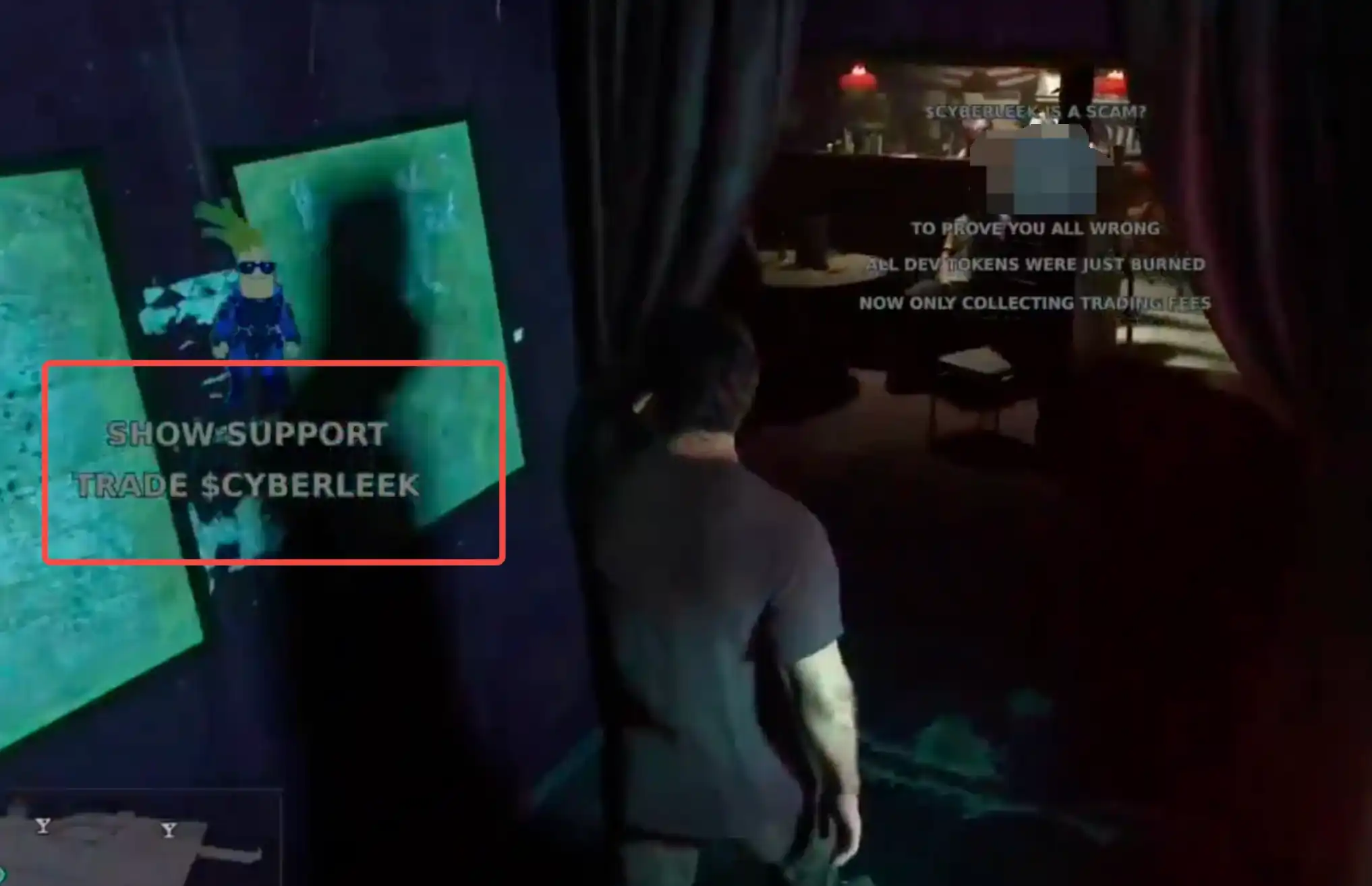
Hacker Leaks GTA6 and Launches a Token: Leaked Videos Become Ad Space for $CYBERLEEK, Must Buy Tokens to Vote for Next Clip

A hacker group called "CyberLeek" has leaked gameplay footage of the highly anticipated video game *GTA 6*, which is slated for release in 2026. Simultaneously, the group launched a meme token, $CYBERLEEK, on Solana. The leaks, which include maps and gameplay clips, are heavily watermarked with advertisements urging viewers to buy the token. Investigations of blockchain data reveal that the token was created and funded from a single wallet approximately eight hours before the first leak was released, suggesting a coordinated plan. The group has implemented a voting system where token holders can "vote" for the next type of content to be leaked by sending $CYBERLEEK tokens to a designated wallet—a process that permanently transfers the tokens to the hackers. This creates a self-sustaining cycle where interest in the leaks drives token purchases. Financially, the operation involved minimal upfront costs (less than $3,500 in out-of-pocket expenses) but generated significant revenue. On its first day, the token saw $15 million in trading volume, netting the creators an estimated $30,000 from transaction fees alone. While the group later burned a large portion of its developer-held tokens (worth over $1 million) to build trust, the fee-generating mechanism remains intact. The game's publisher, Take-Two Interactive, has initiated legal proceedings to identify the hackers. Despite this, the case demonstrates a new model where leaked intellectual property is used as leverage to promote and profit from a cryptocurrency, with meme token markets serving as an additional revenue stream.

marsbit3h ago

Hacker Leaks GTA6 and Launches a Token: Leaked Videos Become Ad Space for $CYBERLEEK, Must Buy Tokens to Vote for Next Clip

marsbit3h ago

Trading

Spot

Hot Articles

Discussions

Welcome to the HTX Community. Here, you can stay informed about the latest platform developments and gain access to professional market insights. Users' opinions on the price of ETH (ETH) are presented below.

活动图片