XRP巨鲸即将苏醒2025年10月冲击20美元迎来历史性暴涨

金色财经Published on 2025-09-16Last updated on 2025-09-16

图片

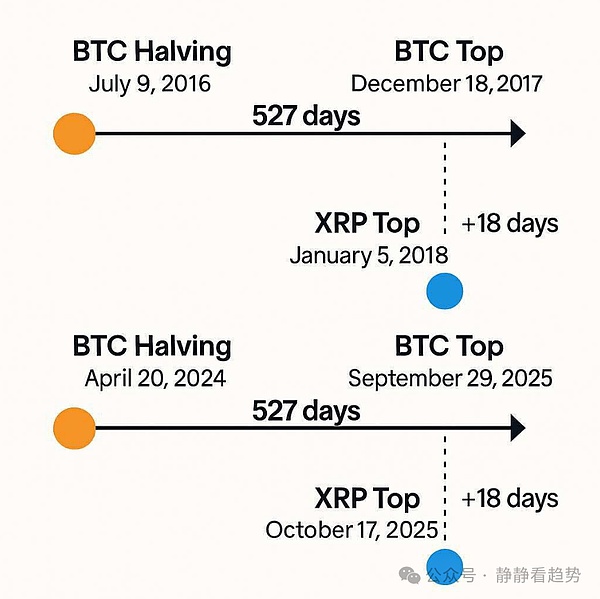
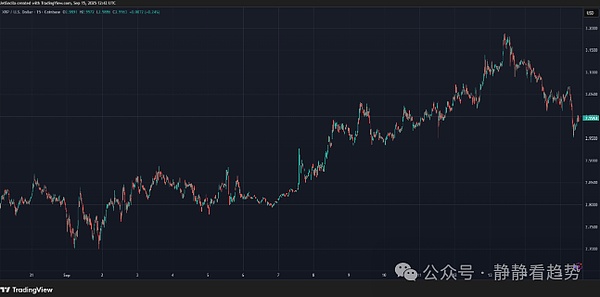
XRP 的交易价格接近 3 美元,最近几个交易日一直难以维持这一水平。一位市场分析师表示,如果比特币减半周期模式重演,XRP 的价格可能会大幅上涨,并可能在 2025 年 10 月 17 日达到 20 美元以上的周期峰值。她认为,这一时间线与之前的减半周期以及之前出现过的短暂滞后现象相关。

减半日期及后续举措

据报道,加密货币专家戴安娜指出,2016-2017年的周期就是最明显的例子。比特币在2016年7月9日减半,并在525天后的2017年12月18日达到19,000美元以上的峰值。

她指出,XRP 随后在 2018 年 1 月 5 日达到 3.31 美元的高点,大约比比特币的峰值晚了 18 天。这个顺序——先是比特币,然后是 XRP——是她论点的核心。

XRP 会涨到 15-20 美元吗?历史告诉我们,2025 年 10 月就是这个日期 

历史、数学和 SEC 压制的结束都指向一个窗口:2025 年 10 月中旬。

这可能是 XRP 迄今为止最猛烈的一次上涨——让我们来分析一下。

— 戴安娜(@InvestWithD)2025年9月4日

图片

失去动力,法律压力

这种模式在下一个周期中并没有延续。比特币在2020年5月11日减半,并在约545天后的2021年11月10日触及69,000美元附近的峰值。

XRP 并没有复制这一走势。报告显示,在法律压力和交易所下架限制了 XRP 的走势后,XRP 在 2021 年 4 月触及 1.95 美元,比比特币的峰值早了几个月。Diana 将这一事件描述为 XRP 的“迷失周期”。

图片

监管清晰度和产品增长

据报道,2023 年 7 月的一项法庭判决认定 XRP 过去的大部分销售不再被贴上证券的标签,此后围绕 XRP 的法律阴云有所缓解。

美国交易所已恢复上市,Ripple 也一直在开发RLUSD等产品和新的支付通道。Diana 表示,这些进展,加上多支 ETF 的申请,将提升 XRP 此次上市的几率。

她提出了三种价格情景:如果比特币的势头温和,则价格将温和上涨至 5 至 7 美元;假设 ETF 流入和用例更强大,则价格基本在 10 至 15 美元之间;如果出现大量机构流动性,XRP 将出现爆发性反弹,突破 20 美元大关。

XRP 预测分歧:12.25 美元目标价 vs. 温和增长前景

与此同时,渣打银行的 Geoff Kendrick 预计 XRP 的涨势将持续,并表示该代币可能在国际金融中发挥更大的作用。

他还指出,未来的XRP ETF将成为吸引更多投资者的催化剂。肯德里克将XRP的目标价定为2029年的12.25美元,这意味着其价格将从目前的2.95美元上涨300%以上,年化回报率约为43%。

然而,这种观点并非普遍适用。晨星分析师预测,到2034年,加密货币市场的整体年增长率将接近10%,与历史股市表现一致。

Trending Cryptos

Related Reads

Farewell to Crash-Style Plunges: An In-Depth Review of the Crypto Lending and Futures Markets in Q2 2026

This report analyzes the Q2 2026 crypto lending and derivatives market, highlighting a continuation of controlled deleveraging. Unlike the 2022 crash, where loan volumes plummeted 55% in a single quarter, the current downturn is characterized by a gradual, stepwise decline across CeFi, DeFi, and crypto-collateralized CDP stablecoins, with Q2 seeing a total reduction of $113.3 billion (-16.78%) to $561.6 billion. DeFi lending saw the sharpest quarterly drop (-27.61%), while CeFi borrowing declined more moderately (-9.62%). For the first time since Q3 2023, CeFi outstanding loans surpassed DeFi. Corporate digital asset treasury (DAT) debt also decreased by $15 billion, largely due to a debt buyback by Strategy Inc. Futures open interest (OI) saw a modest 3.08% quarterly decline to $1032 billion, with notable divergence: Bitcoin OI fell 6.24%, while Ethereum OI dropped 26.31%. Both rebounded in July. A deep dive into Aave V3 revealed high leverage, particularly within "e-mode" loans, which are heavily concentrated on Ethereum staking/restaking tokens, with debt-weighted health factors near liquidation thresholds. The report concludes that the market is undergoing a healthier, managed deleveraging cycle driven by voluntary risk reduction rather than forced liquidations or counterparty failures, suggesting increased resilience against a repeat of the 2022 cascade. Early Q3 2026 data indicates potential stabilization in futures OI and DeFi lending volumes.

marsbit6m ago

Farewell to Crash-Style Plunges: An In-Depth Review of the Crypto Lending and Futures Markets in Q2 2026

marsbit6m ago

Crypto Funding Halves in Q1, Why Is Stablecoin Payment Still Attracting Money Against the Trend?

Crypto venture capital funding fell roughly 50% quarter-over-quarter in Q1 2026, yet the stablecoin payments sector was a notable exception, continuing to secure significant funding rounds. This shift signals that capital is moving away from speculative "token narratives" toward companies generating real revenue, as stablecoins evolve from a trading tool into payment infrastructure. Despite the overall funding slowdown, companies like Rain, OpenFX, and RedotPay completed major raises, focusing on areas such as card issuance, cross-border payments, and banking connectivity. Investors are attracted to the sector's potential to address long-standing inefficiencies in traditional cross-border payments through 24/7 settlement and clearer revenue models like transaction fees and FX spreads. However, the momentum may be overstated. On-chain stablecoin transaction volume does not equate to real-world payments for goods and services, and funding is concentrated in a few leading firms with reported volumes and customers. Key challenges remain, including compliance, fiat on/off-ramps, local banking relationships, and the risk of core services becoming commoditized. Looking ahead, capital is likely to flow into areas like cross-border B2B payments, bank-to-stablecoin connectivity, stablecoin-linked cards, multi-chain payment orchestration, and payments for AI agents. Ultimately, the investor interest reflects a bet on the necessary infrastructure to integrate stablecoins into the traditional financial system, with future valuations hinging on demonstrable payment volume, real revenue, and profitable market expansion.

marsbit41m ago

Crypto Funding Halves in Q1, Why Is Stablecoin Payment Still Attracting Money Against the Trend?

marsbit41m ago

South Korean Retail Investors 'Move from Seoul to Wall Street': Buying SK Hynix ADR, Betting on Triple-Leverage ETF

A surge of Korean retail investors is shifting funds from the volatile Seoul market to Wall Street, intensifying their bets on the AI theme through unconventional and high-risk instruments. Data shows Korean investors were net buyers of about $4.5 billion in US stocks in July, nearing a yearly peak. A notable trend is their purchase of approximately $840 million worth of SK Hynix American Depositary Receipts (ADRs), despite a significant 10% premium over the company's domestic shares, leading analysts to label the move as speculative and irrational. Simultaneously, Korean traders are heavily favoring leveraged ETFs. The triple-leveraged semiconductor ETF SOXL was the most-bought US product in July, with leveraged products occupying four of the top ten spots. Experts note that this shift in geography does not represent a diversification of risk; instead, investors are merely expressing the same concentrated bet on AI hardware through different, often riskier, US-listed vehicles. Analysts warn that while this capital inflow is unlikely to systemically impact the vast US institutional market, it risks creating localized distortions and amplifying volatility, particularly in the targeted sectors and instruments. The move follows a sharp correction in the Korean market, where high leverage in semiconductor stocks and related ETFs had previously led to significant losses, prompting this search for alternative avenues to chase the AI narrative.

marsbit1h ago

South Korean Retail Investors 'Move from Seoul to Wall Street': Buying SK Hynix ADR, Betting on Triple-Leverage ETF

marsbit1h ago

Bithumb's First Half Report: Net Loss Exceeds $76 Million, Where Did the Profits Go?

**Title: Bithumb H1 2026 Report: Net Loss Exceeds $76M – Where Did the Profits Go?** Despite a headline net loss of approximately 108.7 billion KRW (~$76.44 million) for the first half of 2026, a detailed breakdown reveals Bithumb's core exchange business remained profitable. The significant loss was primarily driven by two major non-operating items: substantial losses on the disposal and valuation of the company's own cryptocurrency holdings (net loss ~$48.21 million) and a sharp increase in litigation provisions (~$25.93 million), largely linked to a regulatory fine. Operating revenue fell 48.7% year-on-year to ~$119 million, almost entirely from transaction fees, as market activity cooled. While the company drastically cut marketing and subsidy expenses by ~70% to protect margins, more rigid costs like payment processing and salaries declined only modestly. This highlights the vulnerability of its highly fee-dependent revenue model in a down market. Total assets decreased by ~$584 million, but this was largely attributable to an ~86% drop in client KRW deposits. The market value of client crypto assets under custody also fell (~32.7%), partly influenced by declining cryptocurrency prices rather than solely client withdrawals. In summary, the report indicates underlying exchange profitability was eroded by significant crypto asset losses and mounting regulatory/legal costs, against a backdrop of declining trading revenue. Future focus should be on revenue recovery, managing crypto-related损益, and the ongoing impact of regulatory challenges.

marsbit1h ago

Bithumb's First Half Report: Net Loss Exceeds $76 Million, Where Did the Profits Go?

marsbit1h ago

Trading

Spot

Hot Articles

What is XRP 2.0

XRP 2.0: A New Frontier in the Cryptocurrency Landscape Introduction to XRP 2.0 In the ever-evolving realm of cryptocurrency, new projects continuously emerge, vying for attention and adoption. One such promising initiative is XRP 2.0, a novel cryptocurrency project designed to leverage advanced blockchain technology and robust encryption methodologies. While the name draws parallels with Ripple’s XRP, it’s crucial to note that XRP 2.0 operates independently, focusing on enhancing transaction security, privacy, and scalability. As the digital financial landscape increasingly embraces decentralized solutions, XRP 2.0 aims to contribute meaningfully to web3 and the overall expansion of crypto projects. What is XRP 2.0? At its core, XRP 2.0 is a cryptocurrency project that aims to create a secure and decentralized digital currency ecosystem. Its foundational technology integrates sophisticated blockchain principles with cutting-edge encryption techniques. The overarching goal of XRP 2.0 is to establish itself as a reliable and efficient platform enabling swift transaction execution while prioritizing enhanced privacy protections for its users. The project is promoted as a solution to many limitations faced by existing cryptocurrencies, proposing a system that can handle a higher volume of transactions with improved speed and privacy. This versatility positions XRP 2.0 as a significant contender in a marketplace riddled with various digital currencies. Who is the Creator of XRP 2.0? The identity of the creator behind XRP 2.0 has been flagged as ‘Wilbur.’ However, comprehensive details regarding Wilbur or their associated entity remain elusive. The anonymity of many cryptocurrency creators is not an uncommon phenomenon in the industry, often designed to maintain a degree of privacy and security. Who are the Investors of XRP 2.0? As of now, specific information related to the investment foundations or organizations supporting XRP 2.0 is not publicly available. In the cryptocurrency sector, the backing by reputed investors can significantly influence a project's credibility and success, yet the transparency regarding the financial supporters of XRP 2.0 has not been established. How Does XRP 2.0 Work? XRP 2.0 stands out by employing a combination of blockchain technology and advanced encryption algorithms that ensures secure and decentralized transactions. Its innovative structure includes unique features designed to foster user engagement and broaden functionalities beyond conventional cryptocurrency transactions. Among these features, XRP 2.0 incorporates AI-powered capabilities, such as text-to-image and text-to-speech functionalities. These additions are designed to enhance the interactive experience for users, promoting broader applicability across various sectors. By bridging technological advancements with user-centered design, XRP 2.0 aims to capture the attention of a diverse range of individuals and enterprises looking to integrate cryptocurrency solutions into their operational frameworks. Timeline of XRP 2.0 Understanding XRP 2.0 requires examining the milestones that have defined its journey thus far: July 23, 2023: XRP 2.0 is introduced as a novel cryptocurrency project, aiming to revolutionize secure and decentralized transaction capabilities in the blockchain domain. September 8, 2023: The launching of another project, XRP20, occurs, marking the emergence of an ERC-20 token on the Ethereum blockchain that remains unrelated to XRP 2.0. November 13, 2023: The XRP Ledger undergoes a significant update with the release of rippled server software version 2.0.0. It is essential to note that this development is disconnected from the XRP 2.0 cryptocurrency project. Key Points About XRP 2.0 To distill the essence of XRP 2.0, several critical factors emerge: Unique Features: The inclusion of features like AI-powered text-to-image and text-to-speech further diversifies the potential applications of XRP 2.0. Blockchain Technology: The framework utilizes advanced blockchain mechanisms and encryption protocols, ensuring a secure and decentralized environment for transactions. Scalability and Privacy: XRP 2.0 prioritizes enhanced privacy protections in transaction processes and the scalability necessary to accommodate a growing user base. No Affiliation with Ripple: Importantly, despite its name, XRP 2.0 does not have any allegiance or collaboration with Ripple’s XRP, distinguishing its operational framework and objectives within the cryptocurrency ecosystem. Conclusion XRP 2.0 represents an ambitious venture into the cryptocurrency sphere, aiming to offer a combination of security, privacy, and efficiency in digital transactions. By integrating sophisticated technologies and user-friendly features, the project sets out to broaden the horizons of what cryptocurrency can achieve in today's digital economy. While the anonymity of its creator and lack of disclosed investors might raise questions for some, XRP 2.0's focus on advanced functionalities and decentralisation enhances its appeal amidst an increasingly crowded crypto market. As the cryptocurrency landscape continues to evolve, XRP 2.0 may yet emerge as a pivotal player in the expansion of secure and scalable blockchain solutions.

1.5k Total ViewsPublished 2024.04.01Updated 2024.12.03

What is XRP 2.0

Discussions

Welcome to the HTX Community. Here, you can stay informed about the latest platform developments and gain access to professional market insights. Users' opinions on the price of XRP (XRP) are presented below.

活动图片