После обновления минимальная комиссия за ретрансляцию в Bitcoin Core снизилась на 90 %

cryptonews.ruPublished on 2025-09-15Last updated on 2025-09-15

Bitcoin Core снизил стандартную комиссию для транзакций на 90% — это одно из самых значительных изменений за последние годы, направленное на снижение стоимости переводов в сети Биткоин.

В обновлении Bitcoin Core 29.1, выпущенном 4 сентября, минимальная комиссия за ретрансляцию по умолчанию снижена с 1 сатоши за виртуальный байт (sat/vB) до 0,1 sat/vB. Это снижение на 90%. Комиссия рассчитывается как произведение размера транзакции в vB на ставку в сатоши.

Хотя каждый оператор узла может самостоятельно настраивать этот параметр, большинство, как ожидается, сохранят значение по умолчанию. Узлы, как правило, игнорируют транзакции с комиссией ниже установленного ими порога.

Решение о снижении было принято разработчиками 15 августа в ответ на значительный рост цены Биткоина за последнее десятилетие. Изначально минимальная комиссия служила защитой от DoS-атак, но в условиях высокой цены BTC её снижение стало экономически обоснованным.

Постепенное внедрение

Согласно данным BitRef, более 72,5% узлов (18 811) используют Bitcoin Core, а почти 27,25% — его форк Bitcoin Knots, ориентированный на больший контроль пользователей. Только 571 узел (менее 2,3% сети) уже работает на версии 29.1 с новой комиссией.

Bitcoin Knots 29.1, хотя и основан на Core 29.1, не перенял новые настройки по умолчанию, сохранив прежний порог в 1 sat/vB. Это означает, что новая политика будет применяться постепенно, по мере обновления узлов.

Реакция сообщества

Разработчик Bitcoin Core Глория Чжао пояснила, что изменение также связано с тем, что транзакции с комиссией ниже старого лимита всё равно включались в блоки. Это создавало проблемы с синхронизацией, так как узлы с разными настройками могли некорректно обрабатывать такие блоки.

Сервис Mempool.space поддержал снижение, заявив в июле: «0,1 sat/vB — это новые 1 sat/vB», и рекомендовал пользователям не переплачивать за место в блокчейне.


Trending Cryptos

Related Reads

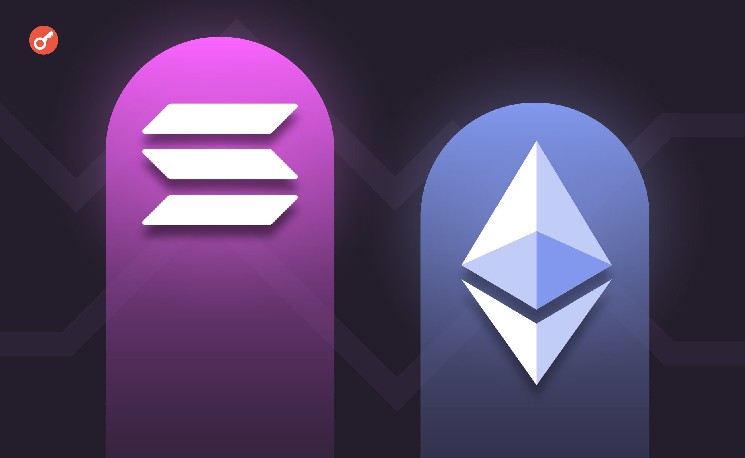
Grayscale Forecasts Increase in Scarcity for Ethereum and Solana

Grayscale Research predicts that Ethereum (ETH) and Solana (SOL) could become scarcer assets due to proposed tokenomics changes in their respective blockchains. According to analyst Zach Pandl, both networks are considering protocol adjustments that would reduce the annual issuance rate of their native tokens. The report compares projected annual supply inflation over the next five years, estimating it could fall to around 0.4% for Ethereum and 1.1% for Solana by 2031, lower than gold's estimated 1.8% annual supply growth. Pandl notes that while the changes are still under community discussion, Solana's proposals have broader support and a higher chance of implementation. Reduced inflation would directly impact network stakers, as their rewards are funded by new token issuance. While stakers would receive fewer new tokens, the potential scarcity could support the market price of ETH and SOL. Non-staking holders could benefit directly from the decreased supply. For Ethereum, the debate on scarcity includes proposals like EIP-8363, which would burn a portion of staking rewards. Pandl concludes that the proposed changes would increase the scarcity of both assets and could create upward pressure on their prices. The analysis also notes Solana's ongoing infrastructure development, including the Alpenglow upgrade to speed up transaction finalization and significant growth in its tokenized asset ecosystem.

cryptonews.ru3h ago

Grayscale Forecasts Increase in Scarcity for Ethereum and Solana

cryptonews.ru3h ago

Trading

Spot

Hot Articles

What is $BITCOIN

DIGITAL GOLD ($BITCOIN): A Comprehensive Analysis Introduction to DIGITAL GOLD ($BITCOIN) DIGITAL GOLD ($BITCOIN) is a blockchain-based project operating on the Solana network, which aims to combine the characteristics of traditional precious metals with the innovation of decentralized technologies. While it shares a name with Bitcoin, often referred to as “digital gold” due to its perception as a store of value, DIGITAL GOLD is a separate token designed to create a unique ecosystem within the Web3 landscape. Its goal is to position itself as a viable alternative digital asset, although specifics regarding its applications and functionalities are still developing. What is DIGITAL GOLD ($BITCOIN)? DIGITAL GOLD ($BITCOIN) is a cryptocurrency token explicitly designed for use on the Solana blockchain. In contrast to Bitcoin, which provides a widely recognized value storage role, this token appears to focus on broader applications and characteristics. Notable aspects include: Blockchain Infrastructure: The token is built on the Solana blockchain, known for its capacity to handle high-speed and low-cost transactions. Supply Dynamics: DIGITAL GOLD has a maximum supply capped at 100 quadrillion tokens (100P $BITCOIN), although details regarding its circulating supply are currently undisclosed. Utility: While precise functionalities are not explicitly outlined, there are indications that the token could be utilized for various applications, potentially involving decentralized applications (dApps) or asset tokenization strategies. Who is the Creator of DIGITAL GOLD ($BITCOIN)? At present, the identity of the creators and development team behind DIGITAL GOLD ($BITCOIN) remains unknown. This situation is typical among many innovative projects within the blockchain space, particularly those aligning with decentralized finance and meme coin phenomena. While such anonymity may foster a community-driven culture, it intensifies concerns about governance and accountability. Who are the Investors of DIGITAL GOLD ($BITCOIN)? The available information indicates that DIGITAL GOLD ($BITCOIN) does not have any known institutional backers or prominent venture capital investments. The project seems to operate on a peer-to-peer model focused on community support and adoption rather than traditional funding routes. Its activity and liquidity are primarily situated on decentralized exchanges (DEXs), such as PumpSwap, rather than established centralized trading platforms, further highlighting its grassroots approach. How DIGITAL GOLD ($BITCOIN) Works The operational mechanics of DIGITAL GOLD ($BITCOIN) can be elaborated on based on its blockchain design and network attributes: Consensus Mechanism: By leveraging Solana’s unique proof-of-history (PoH) combined with a proof-of-stake (PoS) model, the project ensures efficient transaction validation contributing to the network's high performance. Tokenomics: While specific deflationary mechanisms have not been extensively detailed, the vast maximum token supply implies that it may cater to microtransactions or niche use cases that are still to be defined. Interoperability: There exists the potential for integration with Solana’s broader ecosystem, including various decentralized finance (DeFi) platforms. However, the details regarding specific integrations remain unspecified. Timeline of Key Events Here is a timeline that highlights significant milestones concerning DIGITAL GOLD ($BITCOIN): 2023: The initial deployment of the token occurs on the Solana blockchain, marked by its contract address. 2024: DIGITAL GOLD gains visibility as it becomes available for trading on decentralized exchanges like PumpSwap, allowing users to trade it against SOL. 2025: The project witnesses sporadic trading activity and potential interest in community-led engagements, although no noteworthy partnerships or technical advancements have been documented as of yet. Critical Analysis Strengths Scalability: The underlying Solana infrastructure supports high transaction volumes, which could enhance the utility of $BITCOIN in various transaction scenarios. Accessibility: The potential low trading price per token could attract retail investors, facilitating wider participation due to fractional ownership opportunities. Risks Lack of Transparency: The absence of publicly known backers, developers, or an audit process may yield skepticism regarding the project's sustainability and trustworthiness. Market Volatility: The trading activity is heavily reliant on speculative behavior, which can result in significant price volatility and uncertainty for investors. Conclusion DIGITAL GOLD ($BITCOIN) emerges as an intriguing yet ambiguous project within the rapidly evolving Solana ecosystem. While it attempts to leverage the “digital gold” narrative, its departure from Bitcoin's established role as a store of value underscores the need for a clearer differentiation of its intended utility and governance structure. Future acceptance and adoption will likely depend on addressing the current opacity and defining its operational and economic strategies more explicitly. Note: This report encompasses synthesised information available as of October 2023, and developments may have transpired beyond the research period.

1.9k Total ViewsPublished 2025.05.13Updated 2025.05.13

What is $BITCOIN

Discussions

Welcome to the HTX Community. Here, you can stay informed about the latest platform developments and gain access to professional market insights. Users' opinions on the price of BTC (BTC) are presented below.

活动图片