CPI在前,降息在后:比特币能否一路高歌?

Foresight NewsPublished on 2025-09-11Last updated on 2026-05-25

Abstract

美 SEC 主席:我们必须承认,加密货币的时代已经到来!

撰文:angelilu,Foresight News

9 月 10 日晚,美国证券交易委员会(SEC)主席 Paul Atkins 站在经济合作与发展组织(OECD)圆桌会议的讲台上,面对来自 38 个国家的财经领导人掷地有声地宣告:「我们必须承认,加密货币的时代已经到来!」这一表态立即点燃了市场情绪,加密市场应声上涨。

受此利好消息影响,BTC 价格突破 114,000 美元,24 小时涨幅超 2%,截;ETH 突破 4450 美元,涨幅达 3.9%。且在此之前,加密市场已连续四日上涨,BNB 突破 900 美元达历史新高,SOL 时隔 6 个月重回 220 美元。

合约数据方面,据 Coinglass 数据显示,过去 24 小时全网未平仓合约爆仓超 2.62 亿美元,其中多单爆仓超 1.06 亿美元,空单爆仓超 1.5 亿美元。

SEC 主席讲话重点

Paul Atkins 在演讲中明确宣布 SEC 监管方向的重大转变:「长期以来,SEC 一直利用其调查、传票和执法权力来颠覆加密货币行业。这种做法不仅无效,而且有害;它将就业、创新和资本推向海外。美国企业家首当其冲,被迫投入巨资建立法律辩护,而不是发展企业。这段历史已成为过去。」

SEC 主席在 38 个国家参与的国际峰会上介绍了美 SEC 名为「Project Crypto」的全面计划,旨在改革现有监管框架:

明确代币法律地位:「大多数加密代币并非证券,我们会明确界定这些界限」;

推动链上融资创新:「我们必须确保企业家能够在链上筹集资金,而不会面临无休止的法律不确定性」;

支持「超级应用」交易平台:允许平台在单一监管框架下提供交易、借贷和质押服务;

推动市场全面上链:现代化证券规则,使市场能够链上化。

Atkins 特别强调,监管机构应提供「保护投资者所需的最低有效监管剂量,不能更多」,避免用重复规则过度负担企业家。

Atkins 在演讲中还赞扬了欧盟的加密资产市场(MiCA)监管框架,称其为「全面的数字资产制度」,并表示美国可以从中学习。他呼吁国际合作以「促进更具创新性的市场」。

美国宏观经济数据助推市场乐观情绪

市场情绪同样受到美国宏观经济数据的提振:

昨夜,9 月 10 日晚,美国公布 PPI 数据,8 月 PPI 环比意外下降 0.1%(预期为上升 0.3%),为美联储下周降息决定增添新的支撑因素,其中 PPI 环比四个月来首次转负,目前市场普遍预计降息 25 个基点,少数押注降息 50 个基点。

此外,9 月 9 日,美国政府公布就业人数的大幅下修,截至今年 3 月的一年间,就业人数被大幅下调 91.1 万,远超市场预期的 68.2 万。这是自 2000 年以来的最大下修幅度,相当于每月平均少增加近 7.6 万个岗位,占总劳动力的 0.6%。这一修正反映出劳动力市场疲软,加剧了对美国经济健康状况的担忧,也为美联储降息提供了更多压力。

市场怎么看

对于当前市场状况,大多数交易员表现出乐观态度。

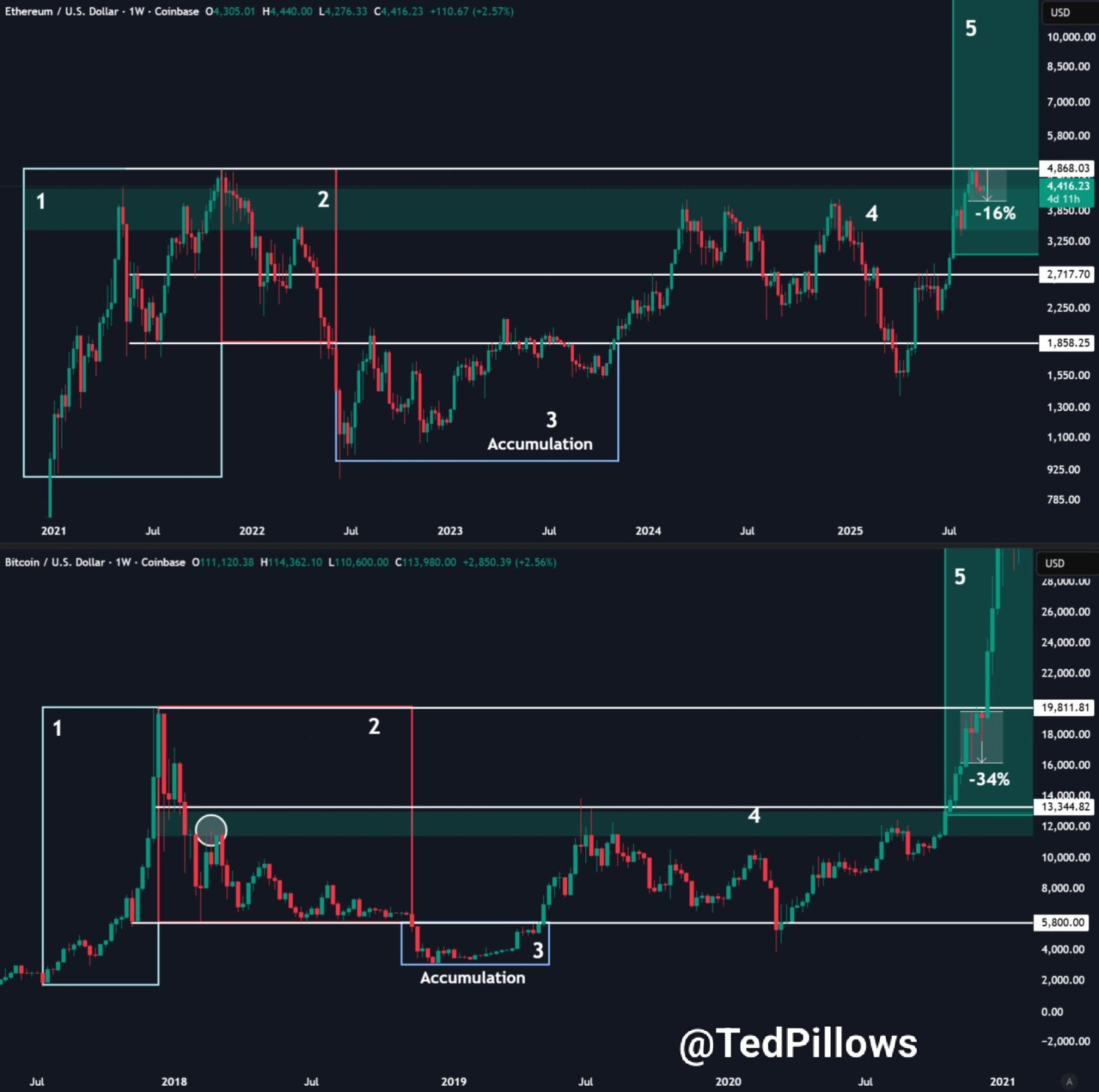
MEXC 合伙人 Ted 发文称,ETH 正好反映了 BTC 在 2020-2021 年周期的表示,若是以 3-4 个月的时间范围看来,以太坊的价格将达到 8000 至 10,000 美元左右。但短期内,价格有可能下跌。
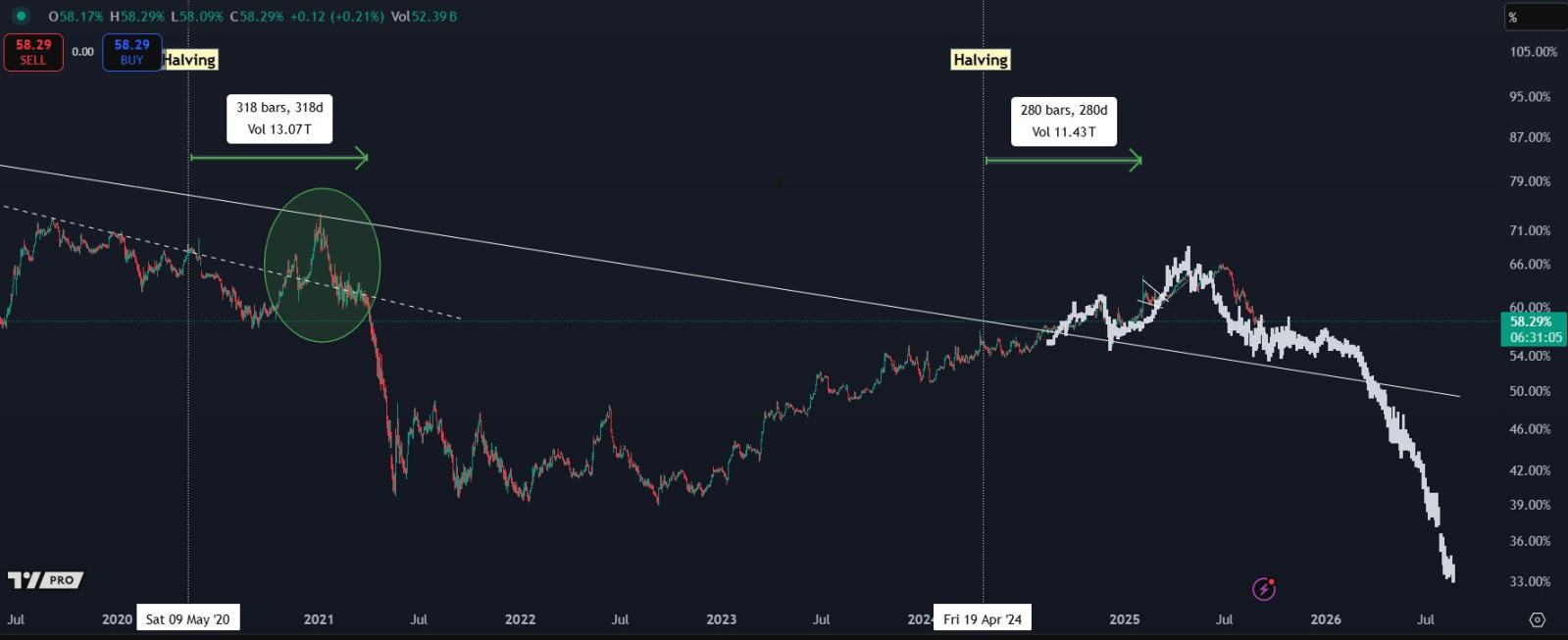
CryptoKaleo 表示,比特币主导地位图到目前为止表现相当不错,山寨季即将到来。
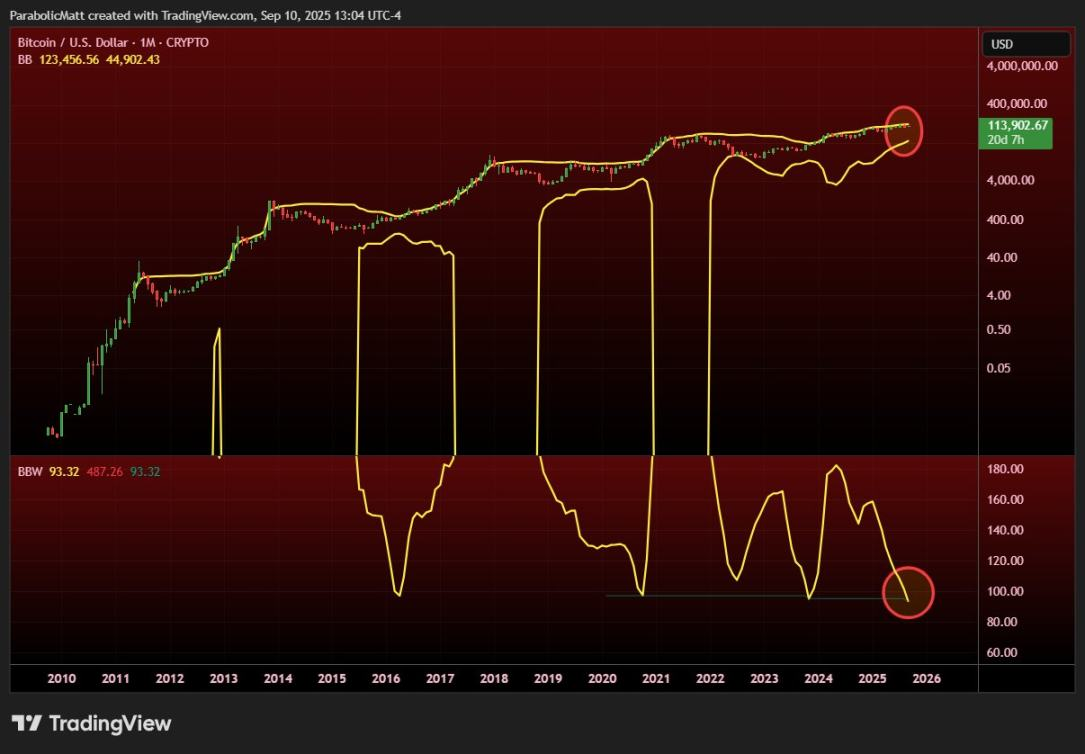
交易员 Matthew Hyland 表示,「BTC 月度布林带处于 BTC 整个历史上最极端的水平,15 年来最大规模的挤压。」
后市关键时间点

投资者需密切关注即将到来的几个关键时间点:

9 月 11 日 CPI 数据发布:此前三次 CPI 数据发布均导致比特币价格出现 9%-11% 的下跌,此次数据将是市场短期走势的重要指标。虽然市场普遍预计 CPI 数据将「火热」,但华尔街分析师认为,就业市场疲软已成为决定美联储政策的核心变量,CPI 数据不太可能改变 9 月降息的预期。

9 月 17 日 FOMC 会议:美联储货币政策会议将是决定市场中期走势的关键事件。目前市场已经完全消化了 25 个基点的降息预期,关注点将集中在美联储对未来降息路径的表态上。有分析师预计,BTC 在 FOMC 会议前可能继续反弹至最高不超过 117,000 美元一线。

年底前降息路径:除 9 月外,市场预计美联储可能在 10 月和 12 月采取更多降息行动。随着降息周期开启,资本流动性有望增强,进一步推动加密资产价格上行。

Related Reads

DeFi Has Reached Its Most Dangerous Moment: The Real Vulnerabilities Are Not in the Code

DeFi in Peril: The Real Vulnerability Isn't in the Code April 2026 marked a paradigm shift in DeFi security, with over $625 million lost across 30 incidents—the worst month in crypto history by event count. Crucially, none of the major exploits (Drift Protocol: $285M, KelpDAO: $292M, Wasabi Protocol: $4.5M) resulted from smart contract vulnerabilities. Instead, failures occurred in the operational "plumbing": social engineering to compromise multi-signature councils, a single-point-of-failure 1-of-1 bridge validator, and stolen admin private keys. These events expose a fundamental misalignment: the industry's security model has long focused on code audits, while the actual attack surface has shifted to privileged access points and off-chain infrastructure. The article introduces the term "OpenFi" to describe this reality: permissionless, on-chain, yet operationally dependent on trusted third parties (admins, validators, oracles) at key junctures. The KelpDAO exploit vividly demonstrated asymmetric "contagion risk." A configuration error in a smaller protocol triggered a panic, causing approximately $13.2 billion in outflows from larger, unaffected protocols like Aave within 48 hours, as users fled uncertain collateral. The core dilemma is the double-edged sword of centralization. Operational levers like emergency councils (e.g., Arbitrum freezing stolen funds post-KelpDAO) enable crisis response but also create catastrophic attack surfaces if compromised (e.g., Drift). The path forward demands radical honesty: protocols must clearly disclose their trust assumptions, operational levers, and failure modes. The industry must treat operational security (key management, configurations, incident response) with the same rigor as code security. Survival depends on building systems whose risks can be understood, priced, and insured, moving beyond the outdated "code is law" mantra to a mature model of disclosed and managed trust.

链捕手2h ago

DeFi Has Reached Its Most Dangerous Moment: The Real Vulnerabilities Are Not in the Code

链捕手2h ago

Vitalik's Article Emphasizes Ethereum Must Be 'Amazing', But Foundation Is Not the Center

Vitalik Buterin has published a lengthy response to recent community criticism directed at the Ethereum Foundation (EF). Acknowledging a sense of "unease," he addresses concerns about the EF's strategic direction, its perceived disconnect from ETH's price performance, and calls for its reduced central role. Vitalik rejects the notion that the EF should be the central governing body of Ethereum, framing it instead as one "node with a clear mandate" among many within the ecosystem. He highlights the EF's limited ETH holdings (≈0.16% of supply) compared to other blockchain foundations and states it will no longer sell significant amounts of ETH. Its future focus will be on long-term, critical projects that align with Ethereum's core values of censorship-resistance and decentralization, which might not otherwise happen. A core argument is that Ethereum must be "amazing," but not by merely chasing higher transaction speeds at the cost of decentralization. He proposes focusing on the "CROPS" dimensions: creating a Cryptographically provable, Reliable, Open, Private, and Secure network. This includes pursuing goals like a formally verifiable, bug-free Ethereum client and minimizing protocol-level reliance on intermediaries. The article concludes by noting that while Vitalik clarifies the EF's refocused role, he does not directly address community suggestions for creating a new organization explicitly aligned with ETH's economic interests. This "alignment gap" is presented as a key challenge for Ethereum's future.

链捕手2h ago

Vitalik's Article Emphasizes Ethereum Must Be 'Amazing', But Foundation Is Not the Center

链捕手2h ago

Galxe: How a Quest Platform Evolved into Web3's Growth Infrastructure

Galxe, once perceived as a simple Web3 quest platform, has evolved into a core growth infrastructure within the Web3 ecosystem. It addresses a fundamental Web3 growth dilemma: the lack of a mature, systematic user acquisition and retention system akin to Web2's advertising and analytics platforms. While users complete quests (social tasks, on-chain interactions) for rewards, Galxe's true innovation lies in transforming these fragmented, one-off actions into lasting, verifiable identity credentials. This process of *behavioral assetization* creates a persistent record of a user's activities across projects and chains. For users, their wallet accumulates a valuable history that can unlock future access and rewards, fostering a "profile-building" mentality. For projects, Galxe provides a pre-screened user pool with rich behavioral data, enabling targeted outreach to users based on their specific on-chain history and community engagement. Galxe employs a gamefied growth path, guiding users from low-friction social tasks into deeper, valuable on-chain interactions through a structured progression of quests. This solves the incentive-behavior mismatch common in Web3, filtering users by their willingness to engage. Beyond quests, products like Passport (identity verification) and Starboard (community analytics) position Galxe as a comprehensive growth operating system. The platform's defensible advantage is its self-reinforcing data and network flywheel: more projects attract more users, enriching behavioral data; richer data enables better user targeting, attracting more projects. Ultimately, Galxe is shifting Web3's growth logic from short-term "reward-driven" traffic towards a long-term "identity-driven" relationship model, where a user's accumulated on-chain履历 becomes a core asset.

marsbit2h ago

Galxe: How a Quest Platform Evolved into Web3's Growth Infrastructure

marsbit2h ago

Trading

Spot
Futures

Hot Articles

What is $BITCOIN

DIGITAL GOLD ($BITCOIN): A Comprehensive Analysis Introduction to DIGITAL GOLD ($BITCOIN) DIGITAL GOLD ($BITCOIN) is a blockchain-based project operating on the Solana network, which aims to combine the characteristics of traditional precious metals with the innovation of decentralized technologies. While it shares a name with Bitcoin, often referred to as “digital gold” due to its perception as a store of value, DIGITAL GOLD is a separate token designed to create a unique ecosystem within the Web3 landscape. Its goal is to position itself as a viable alternative digital asset, although specifics regarding its applications and functionalities are still developing. What is DIGITAL GOLD ($BITCOIN)? DIGITAL GOLD ($BITCOIN) is a cryptocurrency token explicitly designed for use on the Solana blockchain. In contrast to Bitcoin, which provides a widely recognized value storage role, this token appears to focus on broader applications and characteristics. Notable aspects include: Blockchain Infrastructure: The token is built on the Solana blockchain, known for its capacity to handle high-speed and low-cost transactions. Supply Dynamics: DIGITAL GOLD has a maximum supply capped at 100 quadrillion tokens (100P $BITCOIN), although details regarding its circulating supply are currently undisclosed. Utility: While precise functionalities are not explicitly outlined, there are indications that the token could be utilized for various applications, potentially involving decentralized applications (dApps) or asset tokenization strategies. Who is the Creator of DIGITAL GOLD ($BITCOIN)? At present, the identity of the creators and development team behind DIGITAL GOLD ($BITCOIN) remains unknown. This situation is typical among many innovative projects within the blockchain space, particularly those aligning with decentralized finance and meme coin phenomena. While such anonymity may foster a community-driven culture, it intensifies concerns about governance and accountability. Who are the Investors of DIGITAL GOLD ($BITCOIN)? The available information indicates that DIGITAL GOLD ($BITCOIN) does not have any known institutional backers or prominent venture capital investments. The project seems to operate on a peer-to-peer model focused on community support and adoption rather than traditional funding routes. Its activity and liquidity are primarily situated on decentralized exchanges (DEXs), such as PumpSwap, rather than established centralized trading platforms, further highlighting its grassroots approach. How DIGITAL GOLD ($BITCOIN) Works The operational mechanics of DIGITAL GOLD ($BITCOIN) can be elaborated on based on its blockchain design and network attributes: Consensus Mechanism: By leveraging Solana’s unique proof-of-history (PoH) combined with a proof-of-stake (PoS) model, the project ensures efficient transaction validation contributing to the network's high performance. Tokenomics: While specific deflationary mechanisms have not been extensively detailed, the vast maximum token supply implies that it may cater to microtransactions or niche use cases that are still to be defined. Interoperability: There exists the potential for integration with Solana’s broader ecosystem, including various decentralized finance (DeFi) platforms. However, the details regarding specific integrations remain unspecified. Timeline of Key Events Here is a timeline that highlights significant milestones concerning DIGITAL GOLD ($BITCOIN): 2023: The initial deployment of the token occurs on the Solana blockchain, marked by its contract address. 2024: DIGITAL GOLD gains visibility as it becomes available for trading on decentralized exchanges like PumpSwap, allowing users to trade it against SOL. 2025: The project witnesses sporadic trading activity and potential interest in community-led engagements, although no noteworthy partnerships or technical advancements have been documented as of yet. Critical Analysis Strengths Scalability: The underlying Solana infrastructure supports high transaction volumes, which could enhance the utility of $BITCOIN in various transaction scenarios. Accessibility: The potential low trading price per token could attract retail investors, facilitating wider participation due to fractional ownership opportunities. Risks Lack of Transparency: The absence of publicly known backers, developers, or an audit process may yield skepticism regarding the project's sustainability and trustworthiness. Market Volatility: The trading activity is heavily reliant on speculative behavior, which can result in significant price volatility and uncertainty for investors. Conclusion DIGITAL GOLD ($BITCOIN) emerges as an intriguing yet ambiguous project within the rapidly evolving Solana ecosystem. While it attempts to leverage the “digital gold” narrative, its departure from Bitcoin's established role as a store of value underscores the need for a clearer differentiation of its intended utility and governance structure. Future acceptance and adoption will likely depend on addressing the current opacity and defining its operational and economic strategies more explicitly. Note: This report encompasses synthesised information available as of October 2023, and developments may have transpired beyond the research period.

363 Total ViewsPublished 2025.05.13Updated 2025.05.13

What is $BITCOIN

Discussions

Welcome to the HTX Community. Here, you can stay informed about the latest platform developments and gain access to professional market insights. Users' opinions on the price of BTC (BTC) are presented below.

活动图片