最大链上牛市蓄势待发?你准备好了吗

marsbitPublished on 2025-09-08Last updated on 2025-09-09

你来得正是时候,赶上了加密领域有史以来最大的链上牛市。在这篇文章中,我将解析它即将如何、为何以及何时发生,并回答每个人都应该问的问题。

主流币与链上

就从比特币开始吧,其他所有加密货币都不值一提。在我写下这句话时,比特币的交易价格为11.1万美元。就短期持仓而言,这里的风险回报比并不吸引人。当然,从长远来看,发展路径是显而易见的。

"作为加密小白,最快暴露自己外行的方法之一就是问:今天比特币暴涨的原因是什么。它通往百万美元的道路是命中注定的,在任何时候都不需要原因。"——Degenspartan

在特朗普担任总统期间,就连他的儿子们都曾抛出过15万美元的价格目标。合理,但说实话:1.5-2倍的收益对我来说还不够。

比特币

这仅仅只是开始

链上现状

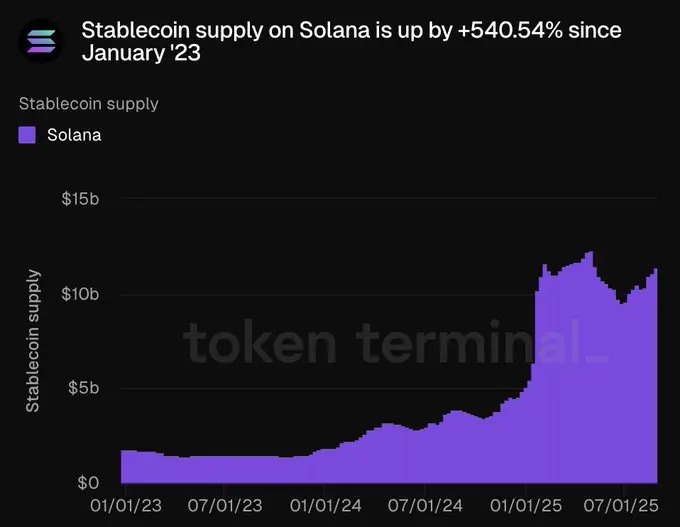
以太坊和Solana上的稳定币指标均创下历史新高。这很可能是加密财库的第一波资本正在链上部署。随着主流币价格逼近历史最高点,对稳定币的需求也随之增加。

然而,加密社区的氛围却如同熊市巅峰。加密推特上充斥着从过气外汇课程推销员转行的Meme币交易者,以及那些运营着只有12个用户的传统金融"创业达人"。

为什么?
比特币

稳定币看起来表现不错

特朗普打破周期

特朗普的总统任期打破了传统的四年减半周期。比特币现已深度融入华尔街,可以说贝莱德集团已接管主导地位。当前的核心问题是,比特币究竟会像是避险资产(黄金)还是杠杆化的纳斯达克替代品?

市场叙事已被充分计价,甚至过度计价。眼下唯一真正重要的:流动性的流入与流出。

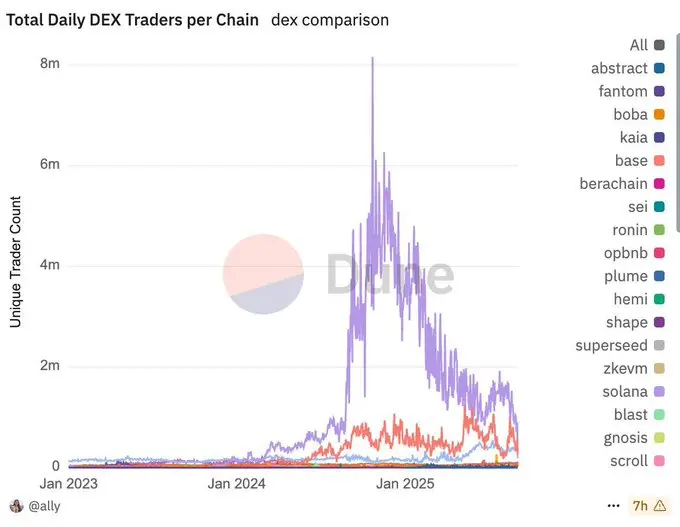
链上交易比以往任何时候都更艰难,特朗普Meme币的推出标志着上一轮行情的顶峰。此后众多Meme币纷纷归零,虽然玩家间博弈仍在继续,但链上数据不会说谎。
比特币

底部确认?

元叙事正在酝酿

目前我们正处于叙事空窗期。缺乏流动性,没有明确的主线。三大叙事正在接受考验:

1.信心资产

Meme币正升级为公司模式,社群“宗教化”化转向创收业务。门槛已抬高:仅靠搞笑不再够用。未来将由资本加持的Meme、叙事团队加上现有加密社群。一场真正的社群战争即将来临。

2.创作者资本市场

Pumpfun及类似平台正将Meme文化与流媒体相融合。这种模式尚处早期,或许还为时过早,早期阶段往往意味着最大程度地变现。但若能持续发展,或将彻底改变创作者经济获取流动性的方式。

3.DeFi

深受量化交易者喜爱,却被投机客嗤之以鼻。随着传统金融对收益的追求,它将迎来爆发式增长,但真正的投机机会其实另有所在。某些项目(如PENDLE)可能表现亮眼,但DeFi的本质更像是基础设施而非投机狂热。

比特币

抱歉,兄弟

真正的催化剂:监管

在人工智能时代,真正重要的催化剂是那些市场无法即时定价的因素:不确定的时间点和情绪化行为,而当下最大的催化剂?当属监管政策。

听说过《Clarity法案》吗?

这项美国法案将界定数字资产何时属于证券(SEC管辖)或大宗商品(CFTC管辖),为区块链制定成熟度框架,并为稳定币和DeFi创建量身定制的规则。该法案已于2025年7月在众议院通过,目前等待参议院投票,预计将于2025年底或2026年初颁布生效。

这意味着什么?

资金,数以十亿计,甚至可能是万亿计,终于获得了链上部署的框架。传统市场已经枯竭。风险资本需要新的归宿,加密货币将成为不二之选。

比特币

多到爆炸

链上元叙事

忘掉ICM这个词吧,这个品牌已经名誉扫地。不妨称之为链上元叙事。万物的代币化:房地产、人工智能项目、初创企业,所有项目都将通过meme代币进行链上募资。快速、去中心化、限制最少。

这不是是否会发生的问题,而是何时发生,以及规模有多大的问题。传统金融与加密货币的融合是不可避免的。

这场游戏该怎么玩?

主流策略总在更迭,而你的优势在于把握时机、分散投资并严守纪律。

分散投资于具有文化底蕴和叙事优势的实力团队。

请注意:今天有效的方法,明天未必有效。

留有流动资金。没有流动资金,你将可能会错过最大收益。

现在还早,泡沫尚未开始。当牛市来临时,其规模将比2017年的ICO狂潮甚至互联网泡沫更甚。高波动性、无休止的代币发行和荒谬的资本流入。

但请小心,你们大多数人已经破产或在走霉运。不要过早挥霍一空,以后的机会将会多到你们应付不过来。

比特币

迟钝但绝不能过于迟钝

最后

请做好准备,你们一生中最狂野的链上旅程即将开始!

兄弟们稳住,资金已部署!

Related Reads

To Those Ordinary People Who Haven't Invested in AI: You Think You're Late, You're Just Lacking Your Own Worldview

**Summary:** The article argues that ordinary investors feeling FOMO over missing the AI investment boom lack not timing, but their own independent worldview. Most people chase "what to buy" based on others' opinions (FOMO, envy) rather than fundamental analysis. This leads to costly mistakes: not knowing when to exit winning trades or cut losses on losing ones. The core solution is to develop a personal, long-term (5-10 year) worldview about societal shifts and technological bottlenecks. For most, building this from scratch (Path A) is too demanding. A practical alternative (Path B) is to follow the **capital expenditures (capex)** and strategic investments of visionary leaders, as their money reveals true conviction more reliably than their words. Five key figures to track for different AI perspectives are highlighted: Jensen Huang (NVIDIA, infrastructure), Elon Musk (Tesla/SpaceX/xAI, capex signals), Sam Altman (OpenAI, commercialization, but beware hype), Dario Amodei (Anthropic, technical/safety focus), and Liang Wenfeng (DeepSeek, efficiency/anti-consensus view). The article details how to read capex signals from hyperscalers' financial reports, NVIDIA's revenue breakdown, and strategic investments. It maps the complete AI产业链 (supply chain) from raw materials/energy to models/applications, explaining value flow and inter-dependencies (e.g., how a model release triggers demand across chips, memory, and optics). Finally, it provides an action plan: secure personal finances first, allocate a limited portfolio percentage (max 25%) to the theme, prefer broad ETFs (like QQQ), use dollar-cost averaging over 6-12 months, and write down strict investment rules beforehand to combat emotional errors during market volatility. The conclusion is that a stable, personally-held worldview enables disciplined, long-term investment far more than chasing short-term trends.

marsbit52m ago

To Those Ordinary People Who Haven't Invested in AI: You Think You're Late, You're Just Lacking Your Own Worldview

marsbit52m ago

Microsoft Halts Vibe Coding: "Burning Tokens" Is Now More Expensive Than Employees

Microsoft has halted the widespread internal use of Claude Code, withdrawing licenses from most employees by the end of its fiscal year, June 30, 2026. This reversal comes just six months after actively promoting the AI coding tool to boost productivity via "vibe coding"—where developers describe intent in natural language and let the LLM generate code. The core issue isn't the tool's effectiveness; internal reports suggest employees preferred Claude Code over Microsoft's own Copilot CLI. The problem is financial: the "copilot mode" adds a variable, consumption-based token cost on top of existing employee salaries without a proportional revenue increase. As usage grew, the token bills became unsustainable, leading to what sources describe as a cost-structure failure. Similar overruns have been reported at other firms like Uber. The article contrasts this with the approach of AI-native startups, exemplified by Y Combinator's philosophy. Here, high token consumption is strategic—it replaces, rather than supplements, human labor. Startups operate with tiny teams where AI agents handle work previously done by many, making the high token bill financially viable as it offsets much larger personnel costs. The conclusion is that "vibe coding" isn't dead, but its economics fail within traditional corporate structures that treat AI as a productivity add-on for existing staff. Success requires a foundational shift to an AI-native organization, where processes are built to be "legible to AI," and the company's core knowledge and assets reside in documented, AI-accessible systems rather than solely in employees' minds. The future divide will be between companies that merely add AI tools and those that redesign their organizations around them.

marsbit1h ago

Microsoft Halts Vibe Coding: "Burning Tokens" Is Now More Expensive Than Employees

marsbit1h ago

Trading

Spot
Futures

Hot Articles

What is $BITCOIN

DIGITAL GOLD ($BITCOIN): A Comprehensive Analysis Introduction to DIGITAL GOLD ($BITCOIN) DIGITAL GOLD ($BITCOIN) is a blockchain-based project operating on the Solana network, which aims to combine the characteristics of traditional precious metals with the innovation of decentralized technologies. While it shares a name with Bitcoin, often referred to as “digital gold” due to its perception as a store of value, DIGITAL GOLD is a separate token designed to create a unique ecosystem within the Web3 landscape. Its goal is to position itself as a viable alternative digital asset, although specifics regarding its applications and functionalities are still developing. What is DIGITAL GOLD ($BITCOIN)? DIGITAL GOLD ($BITCOIN) is a cryptocurrency token explicitly designed for use on the Solana blockchain. In contrast to Bitcoin, which provides a widely recognized value storage role, this token appears to focus on broader applications and characteristics. Notable aspects include: Blockchain Infrastructure: The token is built on the Solana blockchain, known for its capacity to handle high-speed and low-cost transactions. Supply Dynamics: DIGITAL GOLD has a maximum supply capped at 100 quadrillion tokens (100P $BITCOIN), although details regarding its circulating supply are currently undisclosed. Utility: While precise functionalities are not explicitly outlined, there are indications that the token could be utilized for various applications, potentially involving decentralized applications (dApps) or asset tokenization strategies. Who is the Creator of DIGITAL GOLD ($BITCOIN)? At present, the identity of the creators and development team behind DIGITAL GOLD ($BITCOIN) remains unknown. This situation is typical among many innovative projects within the blockchain space, particularly those aligning with decentralized finance and meme coin phenomena. While such anonymity may foster a community-driven culture, it intensifies concerns about governance and accountability. Who are the Investors of DIGITAL GOLD ($BITCOIN)? The available information indicates that DIGITAL GOLD ($BITCOIN) does not have any known institutional backers or prominent venture capital investments. The project seems to operate on a peer-to-peer model focused on community support and adoption rather than traditional funding routes. Its activity and liquidity are primarily situated on decentralized exchanges (DEXs), such as PumpSwap, rather than established centralized trading platforms, further highlighting its grassroots approach. How DIGITAL GOLD ($BITCOIN) Works The operational mechanics of DIGITAL GOLD ($BITCOIN) can be elaborated on based on its blockchain design and network attributes: Consensus Mechanism: By leveraging Solana’s unique proof-of-history (PoH) combined with a proof-of-stake (PoS) model, the project ensures efficient transaction validation contributing to the network's high performance. Tokenomics: While specific deflationary mechanisms have not been extensively detailed, the vast maximum token supply implies that it may cater to microtransactions or niche use cases that are still to be defined. Interoperability: There exists the potential for integration with Solana’s broader ecosystem, including various decentralized finance (DeFi) platforms. However, the details regarding specific integrations remain unspecified. Timeline of Key Events Here is a timeline that highlights significant milestones concerning DIGITAL GOLD ($BITCOIN): 2023: The initial deployment of the token occurs on the Solana blockchain, marked by its contract address. 2024: DIGITAL GOLD gains visibility as it becomes available for trading on decentralized exchanges like PumpSwap, allowing users to trade it against SOL. 2025: The project witnesses sporadic trading activity and potential interest in community-led engagements, although no noteworthy partnerships or technical advancements have been documented as of yet. Critical Analysis Strengths Scalability: The underlying Solana infrastructure supports high transaction volumes, which could enhance the utility of $BITCOIN in various transaction scenarios. Accessibility: The potential low trading price per token could attract retail investors, facilitating wider participation due to fractional ownership opportunities. Risks Lack of Transparency: The absence of publicly known backers, developers, or an audit process may yield skepticism regarding the project's sustainability and trustworthiness. Market Volatility: The trading activity is heavily reliant on speculative behavior, which can result in significant price volatility and uncertainty for investors. Conclusion DIGITAL GOLD ($BITCOIN) emerges as an intriguing yet ambiguous project within the rapidly evolving Solana ecosystem. While it attempts to leverage the “digital gold” narrative, its departure from Bitcoin's established role as a store of value underscores the need for a clearer differentiation of its intended utility and governance structure. Future acceptance and adoption will likely depend on addressing the current opacity and defining its operational and economic strategies more explicitly. Note: This report encompasses synthesised information available as of October 2023, and developments may have transpired beyond the research period.

363 Total ViewsPublished 2025.05.13Updated 2025.05.13

What is $BITCOIN

Discussions

Welcome to the HTX Community. Here, you can stay informed about the latest platform developments and gain access to professional market insights. Users' opinions on the price of BTC (BTC) are presented below.

活动图片