Bank Of England Governor Shares ‘Multi-Money’ Vision Ahead Of Stablecoin Plan Consultation

bitcoinistPublished on 2025-09-05Last updated on 2025-09-05

Abstract

Bank of England (BoE) Deputy Governor for Financial Stability has shared her vision for a “multi-money” system that includes stablecoins...

Trusted Editorial content, reviewed by leading industry experts and seasoned editors. Ad Disclosure

Bank of England (BoE) Deputy Governor for Financial Stability has shared her vision for a “multi-money” system that includes stablecoins and other traditional assets in the UK ahead of the upcoming consultation on its crypto policy proposals.

BoE Eyes ‘Multi-Money’ System With Stablecoins

On Wednesday, Bank of England Deputy Governor Sarah Breeden affirmed that the central bank must keep up with the global developments as innovative technology paves new ways of making pavements.

In a conference in London, Breeden detailed her vision for a system where multiple forms of money, including traditional and tokenized commercial bank deposits, stablecoins, and central bank money, are freely interchangeable, “with technology driving faster, cheaper, and more innovative payments for the benefit of business, households, and users of financial markets; and – critically – with the whole system underpinned by trust in money itself.”

To achieve this, the deputy governor outlined that the BoE must provide the necessary underlying infrastructure, deliver proper regulatory frameworks, and establish an overall strategy to facilitate innovation and economic growth while protecting financial stability.

She emphasized the need for a robust regulatory framework that enables innovation to thrive, as appropriate risk management will support broader adoption and the sector’s development. However, Breeden noted that designing those regulatory regimes in a fast-moving world isn’t an easy task, forcing officials to be open to “learning as we go.”

According to Bloomberg, the deputy governor also stated that UK officials have “an eye” on US regulation following the enactment of the Guiding and Establishing National Innovation for US Stablecoins (GENIUS) Act in July.

“US dollar stable coins will have an influence all around the world,” she affirmed, adding that it is “absolutely essential that we produce a regime that supports the issuance of sterling stablecoins.”

She noted that “stablecoins, for a long time the preserve of crypto markets, are beginning to go ‘mainstream’. Given they are an existing form of ‘digitally native’ money, their safe adoption could unlock faster, cheaper settlement for cross-border transactions as well as supporting trading of tokenised securities.”

Crypto Regime Consultation In Q4

During her speech, Breeden highlighted that the UK “set out the necessary legislation for a regulatory regime for stablecoins in 2023,” while the BoE and the Financial Conduct Authority (FCA) have been engaging with the industry to develop more detailed rules of that regime.

Notably, the FCA has been working to establish a more comprehensive regulatory framework for digital assets starting next year, releasing a Discussion Paper on the features of the upcoming crypto regime as part of its crypto roadmap.

The HM Treasury has also published a draft of proposed provisions to establish a complete regime for cryptocurrencies, which are expected to set clear transparency, consumer protection, and operational resilience standards.

Nonetheless, the UK’s former Chancellor of the Exchequer, George Osborne, has criticized the government’s approach, affirming that they must “catch up” or risk being “left behind” during the second crypto wave.

As reported by Bitcoinist, Osborne slammed Chancellor Rachel Reeves and Bank of England governor Andrew Bailey’s crypto strategy, noting that, some of the proposed rules, including requiring sterling stablecoins to be backed only by central bank reserves, guarantee that the UK doesn’t lead the sector, as major financial players will continue to innovate “regardless of the Bank of England’s stance.”

Nonetheless, BoE’s deputy governor affirmed that the central bank has been listening to feedback on its proposals for a regulatory regime for systemic stablecoins, like allowing the digital assets to hold a portion of their backing assets in a subset of high-quality liquid assets (HQLA), such as short-dated government securities.

This change aims to address feedback that the initial approach “would not support the predominant business model amongst stablecoin issuers, which relies on income from backing assets.”

Breeden added that the BoE will set out some of the reviewed proposals for consultation later this year before finishing its regime.
stablecoin, btc, btcusdt, bitcoin

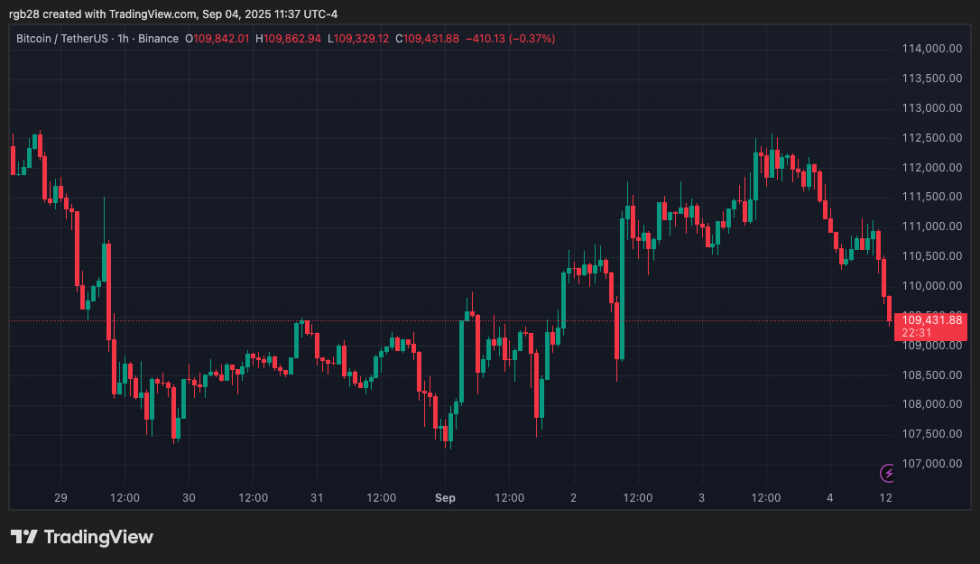
Bitcoin (BTC) trades at $109,431 in the one-week chart. Source: BTCUSDT on TradingView
Featured Image from Unsplash.com, Chart from TradingView.com
Editorial Process for bitcoinist is centered on delivering thoroughly researched, accurate, and unbiased content. We uphold strict sourcing standards, and each page undergoes diligent review by our team of top technology experts and seasoned editors. This process ensures the integrity, relevance, and value of our content for our readers.

Rubmar is a crypto enthusiast who likes learning and improving constantly. She enjoys reporting on the latest news and developments in the crypto industry. Rubmar also enjoys scrapbooking, crafting, simulation games, and watching football.

Trending Cryptos

Related Reads

SpaceX Faces Heavy Selling After IPO Followed by Massive Bond Issue 'Angers' the Market

Following a record-breaking IPO, SpaceX's massive $25 billion bond issuance faced fierce selling pressure in the secondary market. The aggressive financing pace of the long-unprofitable rocket and AI company quickly backfired, eroding investor confidence and causing its bond spreads to widen sharply, nearing speculative-grade ("junk") levels. Within 48 hours of pricing, SpaceX's bonds plummeted. The 10-year bond yield rose to nearly 6%, with its spread over US Treasuries widening to over 160 basis points (bps). Longer-dated bonds saw spreads surge to 193 bps and 201 bps, significantly worse than the average spread for BB-rated junk bonds at 167 bps. This rapid deterioration shocked fixed-income traders. Initial strong demand, with nearly $90 billion in orders, was driven largely by short-term speculative "fast money" rather than traditional buy-and-hold investors. When these funds sought quick profits, heavy selling ensued. Analysts describe a "perfect storm" caused by SpaceX's post-IPO market cap decline, technical selling pressure from the enlarged deal size, and investor uncertainty in pricing its unique risk profile. The core concern for bond investors is SpaceX's fundamentals: while it reported $18.7 billion in 2025 revenue, it posted a net loss of $4.9 billion. Creditors focus on actual cash flow for debt repayment, not future growth expectations tied to AI. Heavy reliance on CEO Elon Musk's leadership and weak corporate governance were also cited as key credit weaknesses. The selloff highlights broader systemic risks as tech giants embark on a massive debt spree to fund AI projects. AI-related debt issuance has soared 357% year-to-date. This supply surge is increasing sector leverage and putting pressure on credit spreads across the market, potentially threatening the tech capital expenditure cycle if the pace continues.

marsbit1h ago

SpaceX Faces Heavy Selling After IPO Followed by Massive Bond Issue 'Angers' the Market

marsbit1h ago

Trading

Spot

Hot Articles

What is $BANK

Bank AI: A Revolutionary Step in the Future of Banking Introduction In an era marked by rapid advancements in technology, Bank AI stands at the intersection of artificial intelligence (AI) and banking services. This innovative project seeks to redefine the financial landscape, enhancing operational efficiency, security measures, and customer experiences through the power of AI. As we embark on this exploration of Bank AI, we will delve into what the project entails, its operational dynamics, its historical context, and significant milestones. What is Bank AI? At its core, Bank AI represents a transformative initiative aimed at integrating artificial intelligence into various banking operations. This project harnesses the capabilities of AI to automate processes, improve risk management protocols, and enhance customer interaction through personalised services. The primary objectives of Bank AI include: Automation of Banking Functions: By leveraging AI technologies, Bank AI aims to automate routine tasks, reducing the burden on human resources and enhancing efficiency. Enhanced Risk Management: The project utilises AI algorithms to predict and identify risks, thereby fortifying security measures against fraud and other threats. Personalisation of Banking Services: Bank AI focuses on offering tailored financial products and services by analysing customer data and behaviours. Improving Customer Experience: The implementation of AI-driven solutions, such as chatbots and virtual assistants, aims to provide users with more human-like interactions, revolutionising the way customers engage with banks. With these goals, Bank AI positions itself as a crucial player in rendering banking more efficient, secure, and user-centric. Who is the Creator of Bank AI? Details regarding the creator of Bank AI remain unknown. As such, no specific individual or organisation has been identified in the available information. The anonymity surrounding the project's inception raises questions but does not detract from its ambitious vision and objectives. Who are the Investors of Bank AI? Similar to the project's creator, specific information regarding the investors or supporting organisations of Bank AI has not been disclosed. Without this information, it is challenging to outline the financial backing and institutional support that might be propelling the project forward. Nevertheless, the importance of having a robust investment foundation is pivotal for sustaining development in such an innovative field. How Does Bank AI Work? Bank AI operates on several innovative fronts, focusing on unique factors that differentiate it from traditional banking frameworks. Below are key operational features: Automation: By applying machine learning algorithms, Bank AI automates various manual processes within banks. This results in reduced operational costs and allows human workers to redirect their efforts towards more strategic activities. Advanced Risk Management: The integration of AI into risk management practices equips banks with tools to accurately predict potential threats such as fraud, ensuring that customer information and assets remain secure. Tailored Financial Recommendations: Through continuous learning from customer interactions, the AI systems develop a nuanced understanding of user needs, enabling them to offer tailored advice on financial decisions. Enhanced Customer Interactions: Utilizing chatbots and virtual assistants powered by AI, Bank AI enables a more engaging customer experience, allowing users to have their queries resolved quickly, thus reducing wait times and improving satisfaction levels. Together, these operational features position Bank AI as a pioneer in the banking sector, establishing new benchmarks for service delivery and operational excellence. Timeline of Bank AI Understanding the trajectory of Bank AI requires a look at its historical context. Below is a timeline highlighting important milestones and developments: Early 2010s: The conceptualisation of AI integration into banking services began to gain attention as banking institutions recognised the potential benefits. 2018: A marked increase in the implementation of AI technologies occurred when banks started using AI tools like chatbots for basic customer service and risk management systems for improved security handling. 2023: The sophistication of AI continued to advance, with generative AI being introduced for more complex tasks such as document processing and real-time investment analysis. This year marked a significant leap in the capabilities afforded to banks by AI technology. 2024-Current Status: As of this year, Bank AI is on an upward trajectory, with ongoing research and developments poised to further enhance capabilities in banking operations. Continued exploration of AI applications hints at exciting developments yet to come. Key Points About Bank AI Integration of AI in Banking: Bank AI focuses on adopting artificial intelligence to streamline banking processes and improve user experiences. Automation and Risk Management Focus: The project strongly emphasises these areas, aiming to shift the burden of routine tasks while enhancing security frameworks through predictive analytics. Personalised Banking Solutions: By harnessing customer data, Bank AI enables tailored banking services that cater to individual user needs. Commitment to Development: Bank AI remains committed to ongoing research and development efforts, ensuring its adaptability and ongoing relevance as technology continues to evolve. Conclusion In summary, Bank AI exemplifies a crucial step forward in the banking industry, leveraging artificial intelligence to reshape operational paradigms, enhance security, and promote customer satisfaction. Despite gaps in information surrounding the creator and investors, the clear objectives and functional mechanisms of Bank AI provide a strong foundation for its ongoing evolution. As AI technology continues to advance and merge with the banking sector, Bank AI is well-positioned to significantly impact the future of financial services, enhancing the way we understand and interact with banking.

167 Total ViewsPublished 2024.04.06Updated 2024.12.03

What is $BANK

Discussions

Welcome to the HTX Community. Here, you can stay informed about the latest platform developments and gain access to professional market insights. Users' opinions on the price of BANK (BANK) are presented below.

活动图片