比特币冲高回落1.11万成关键支撑 ETH能否续涨 SOL多空分水岭临近9月赛道资金去向揭晓

金色财经Published on 2025-09-04Last updated on 2025-09-04

比特币昨日最高112575,最低110528,波动2047个点。以太坊昨日最高4490最低4283,波动207个点。没有只涨不跌,也没有只跌不涨,今日行情出现小幅回落,也并非坏事。有利消化获利盘,稳固底部结构,为后续上涨打基础。直接拉涨无回调易后劲不足,不利反弹延续。

BTC

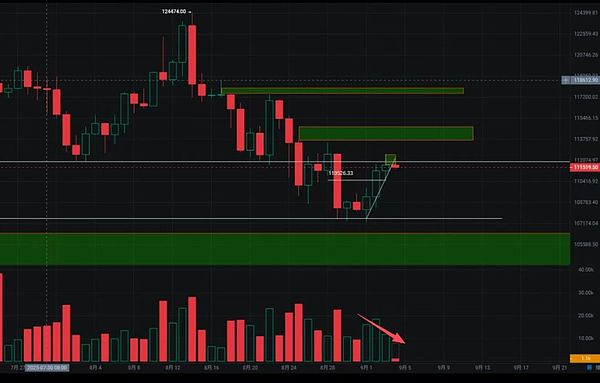
比特币连续涨了3天,从1072-1104拉了将近5个点,也差不多该回调一下了,所以这波触顶回落大家不要慌。既然1135冲不上去,那日线级别就不是反转多,但上升趋势线未破,并不意味着马上要做空。
0?wx_fmt=jpeg&from=appmsg

四小时级别保持“低点抬升、高点创新”的格局,卖压略增但多头仍强,短线或箱体回调。因为一小时级别的上升结构依旧有效,没有形成明确的顶部形态。叠加今日是消息日,行情可能上下插针,贸然做空风险较高。

要是跌破1102(日线级别的反弹就BBQ了)注意再次探底风险,做单思路还是低多为主!
0?wx_fmt=jpeg&from=appmsg

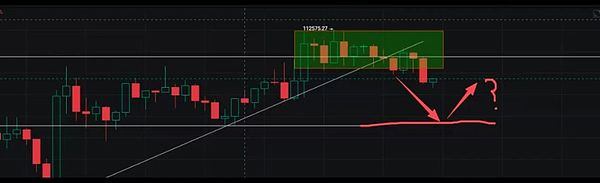
策略:今日关注111100位置,4小时级别守住则小级别回调后仍上涨,压力位112470-113450-114490。若跌破111100,4小时级别回调,支撑位110210-109150-108345。

ETH

昨日以太坊上涨,焦点是 “马云或涉足以太坊投资” 的传闻,但更深层是其基本面价值渐获主流资本认可;此外,云锋金融等相关标的同步大涨,也印证了资金对这一方向的关注。

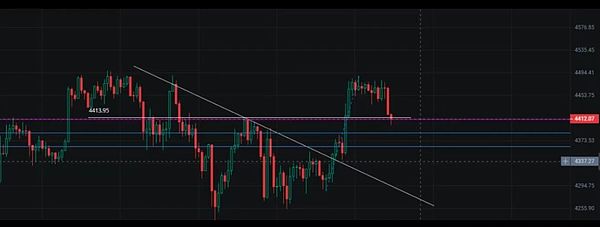
从技术面看(此前已提示)昨晚ETH突破第一压力位后顶部横盘,精准触及4385支撑后反弹,且收在前高上即算有效突破。虽然短线随BTC调整,但原阻力位已变支撑。
0?wx_fmt=jpeg&from=appmsg

策略:今日关注4430,站稳则1-2小时回调结束,行情续涨,压力位4480-4510-4535。若未站稳4430,恐再下跌,支撑位4385-4340-4300。

Solana迎强阻力,多头压力加大 

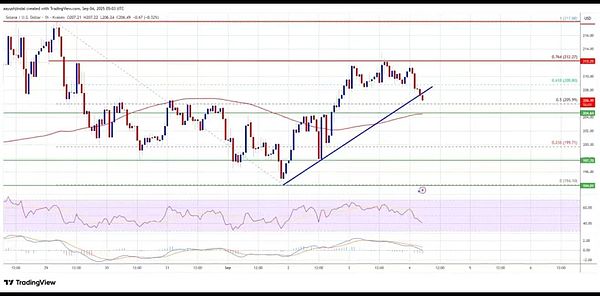
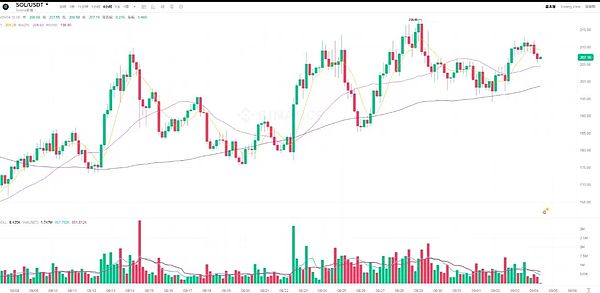
相比BTC和ETH,Solana的走势显得更为曲折。从194美元低点开始,SOL展开了一波反弹,后价格回升至212美元附近,面临显著阻力。技术面显示,SOL已成功突破200美元和202美元的重要关口,但在212美元附近遭遇空头活跃,多头动能稍显不足。
0?wx_fmt=jpeg&from=appmsg

小时图上,SOL曾突破看涨趋势线,支撑位在207美元附近,但MACD显示上涨动能有所减弱,RSI也低于50,说明短期内仍存在调整压力。若SOL未能突破212美元阻力位,下方200美元、195美元甚至184美元都可能成为支撑位,市场多空博弈仍在加剧。

另一方面,如果SOL成功站上218美元阻力位,下一轮上涨有望延伸至232美元,甚至更高,形成短期上涨趋势。换句话说,SOL目前正处于关键分水岭,多空双方的博弈将决定其短期命运。
0?wx_fmt=jpeg&from=appmsg

波动与机遇并存

整体来看,比特币、以太坊和Solana的走势似乎在暗示同一个信息:市场情绪高涨,但风险同样存在。BTC和ETH未平仓合约接近历史高位,表明资金涌入热烈,这通常会催化价格上涨;而Solana在200美元附近的支撑与212美元的阻力形成明显分界线,短期内可能出现震荡。

对于交易者来说,这种高波动性是机会也是挑战。历史表明,当未平仓合约创高位后,往往会经历短期盘整——这既可能是抄底的机会,也可能是被套的风险同样,Solana若能突破阻力并稳住关键支撑,或许会迎来下一轮上涨行情。

  • 公链赛道

    :公链是生态底层基础设施,尤其是新兴公链凭借创新技术与设计满足市场新需求,如 S、TON 或受资金关注;

  • AI + 区块链赛道

    :人工智能与区块链结合为加密市场带来新价值叙事与应用前景,WLD 或有机会;

  • 以太坊 L2 / 扩容赛道

    :龙头 ARB 受益于以太坊生态活跃度回升与链上交易量增加,二层网络的估值逻辑被重新激活。L2 能解决以太坊拥堵问题,降低交易成本、提升交易速度,满足用户对低手续费、高吞吐量的需求,也是各类新协议的首发阵地,生态稳健且叙事具长线属性,易吸引资金流入。


Related Reads

From Issuer to Infrastructure Owner: Circle's Arc Strategy and the Fatal Gap in the GENIUS Act

Circle raised $222 million for its proprietary Layer-1 blockchain, Arc, positioning itself not just as a stablecoin issuer but as the owner of the settlement infrastructure USDC relies on. This move, backed by investors like BlackRock and Apollo, highlights a significant structural conflict unaddressed by the GENIUS Act of 2025. While the act focuses on stablecoin reserves and issuer oversight, it remains silent on the market structure implications of an issuer controlling the underlying network—a scenario akin to a currency issuer also owning the payment rails. Traditionally, financial regulations separate issuers from settlement infrastructure to ensure neutrality. With Arc, Circle gains control over transaction ordering, fees, and network rules, potentially favoring USDC over competitors. The article argues that this creates a permanent structural temptation, even if no abuse occurs. The solution lies in applying established market infrastructure principles: mandating neutral transaction ordering, transparent fee schedules, and governance separated from Circle’s commercial interests. The current pre-mainnet phase offers a critical window for regulators to establish these rules before Arc becomes entrenched. Once operational, enforcing changes would be costly and disruptive. The core question remains: should a regulated stablecoin issuer be allowed to own the settlement network its competitors must use? The GENIUS Act doesn’t answer this, but Circle’s Arc strategy makes it urgent.

marsbit5m ago

From Issuer to Infrastructure Owner: Circle's Arc Strategy and the Fatal Gap in the GENIUS Act

marsbit5m ago

What Are the Key Variables Determining the AI Bull Market?

Title: What Determines the AI Bull Market? Key Variables Revealed Despite rising oil prices above $100/barrel, persistent inflation, and fragile Fed rate cut expectations—a traditionally hostile environment for high-valuation tech stocks—the AI sector continues to drive the market to new highs. According to analysts, the current AI boom is in a phase of "rational fervor": while bubbles exist, they are not yet out of control. The crucial shift is the emergence of Agentic AI, which is evolving from an assisting tool (Copilot) to an autonomous execution tool (Autopilot), creating a clearer commercial path from investment to revenue. This shift accelerates Token consumption and inference computing demand while boosting revenue forecasts for leading firms. The market is now rewarding capital expenditure as it transforms from a burden into a competitive moat, supporting hardware chains like GPUs, optical modules, and storage. However, valuations have already priced in growth expectations for 2027-2028. The forward P/E ratio for the "Magnificent Seven" tech giants is about 35x, compared to 25x for the rest of the S&P 500. This premium implies AI adoption must occur 5 to 8 times faster than past technological revolutions—a scenario with little room for error. The sustainability of the AI bull market hinges on three key variables: 1. **Short-term liquidity shocks**: Risks include sustained high oil prices, resurgent inflation, rising interest rates, and potential unwinding of the yen carry trade. The critical question is whether the upward revision speed of Annual Recurring Revenue (ARR) can outpace the rise in interest rates. 2. **Mid-term industry realization**: Can the actual pace of AI adoption and commercialization match the current lofty valuations? Historically, general-purpose technology revolutions follow a non-linear path with periods of acceleration and deceleration. 3. **Long-term structural constraints**: These include energy and power grid limitations, employment displacement and consumer purchasing power, social acceptance and potential backlash, and potential hardware technology breakthroughs that could disrupt current supply chains. While the long-term prospects for AI remain optimistic with potential for significant productivity gains, the stock market's pricing depends not just on the vision but on the actual speed of realization amid these growing constraints. The direction is clear, but the pace of execution will determine whether the bubble remains controlled or spirals out of control.

marsbit5m ago

What Are the Key Variables Determining the AI Bull Market?

marsbit5m ago

The AI Industrial Revolution: Where Are We Now?

This article explores the current stage of the AI industrial revolution, arguing we are still merely attaching new tools to old workflows rather than fundamentally redesigning production. The author compares this to the early Industrial Revolution, where factories simply replaced waterwheels with steam engines without changing their core structure. Similarly, today we embed AI chat windows into existing software but leave organizational processes unchanged. While massive investment floods into AI infrastructure (data centers, chips), akin to railway manias of the past, the real transformation lies in "dismantling the old workshop"—reorganizing companies around AI. Examples include Notion's use of hundreds of AI Agents and Y Combinator's experiments with self-improving AI systems that operate autonomously. The author notes a critical gap: while China has vast AI user growth, few companies have rebuilt core workflows. AI is beginning to impact entry-level jobs, and early adopters are gaining a compounding advantage. The conclusion is that the pivotal moment will not be the invention of better models, but when organizations decide to tear down old structures and rebuild around AI, shifting the bottleneck from human coordination to computing power. The future workplace and job titles are yet to be defined, but the imperative is to move away from legacy processes and position oneself where the new "railway" is being built.

marsbit38m ago

The AI Industrial Revolution: Where Are We Now?

marsbit38m ago

Morning Post | Hyperliquid Launches Off-chain Event Prediction Market Contract; Strategy Completes $1.5 Billion Debt Buyback; Kelp DAO Announces rsETH Fully Restored

Crypto Market Digest (May 27, 2026) Ondo Finance's founder Nathan Allman has passed away, with President Ian De Bode taking over as CEO. In regulatory news, Hong Kong authorities concluded a consultation on virtual asset service provider licensing, aiming to align rules with traditional finance. Kelp DAO announced its rsETH token has fully recovered five weeks after a $293 million hack by Lazarus Group, though the incident caused significant damage to DeFi lending protocols like Aave. Key industry developments include Hyperliquid launching off-chain event prediction market contracts, and the CME introducing futures for Avalanche and Sui. A report highlights the rise of AI Agent payments, with over $73 million settled on-chain in a year, predominantly using USDC. Meanwhile, blockchain detective ZachXBT exposed market manipulation involving several BSC tokens. In investment news, a firm referred to as "Strategy" completed a $1.5 billion debt buyback. Political contributions from the crypto sector for the 2026 U.S. elections have surpassed $500 million, heavily favoring Republican candidates. BitMEX founder Arthur Hayes revealed Zcash is his second-largest holding, citing the growing necessity for monetary privacy. The digest concludes with trending memecoins on Ethereum, Solana, and Base networks, and highlights in-depth articles covering the impending SpaceX IPO, Polymarket's regulatory challenges, and an analysis of the on-chain treasury landscape.

链捕手38m ago

Morning Post | Hyperliquid Launches Off-chain Event Prediction Market Contract; Strategy Completes $1.5 Billion Debt Buyback; Kelp DAO Announces rsETH Fully Restored

链捕手38m ago

Trading

Spot
Futures

Hot Articles

What is $BITCOIN

DIGITAL GOLD ($BITCOIN): A Comprehensive Analysis Introduction to DIGITAL GOLD ($BITCOIN) DIGITAL GOLD ($BITCOIN) is a blockchain-based project operating on the Solana network, which aims to combine the characteristics of traditional precious metals with the innovation of decentralized technologies. While it shares a name with Bitcoin, often referred to as “digital gold” due to its perception as a store of value, DIGITAL GOLD is a separate token designed to create a unique ecosystem within the Web3 landscape. Its goal is to position itself as a viable alternative digital asset, although specifics regarding its applications and functionalities are still developing. What is DIGITAL GOLD ($BITCOIN)? DIGITAL GOLD ($BITCOIN) is a cryptocurrency token explicitly designed for use on the Solana blockchain. In contrast to Bitcoin, which provides a widely recognized value storage role, this token appears to focus on broader applications and characteristics. Notable aspects include: Blockchain Infrastructure: The token is built on the Solana blockchain, known for its capacity to handle high-speed and low-cost transactions. Supply Dynamics: DIGITAL GOLD has a maximum supply capped at 100 quadrillion tokens (100P $BITCOIN), although details regarding its circulating supply are currently undisclosed. Utility: While precise functionalities are not explicitly outlined, there are indications that the token could be utilized for various applications, potentially involving decentralized applications (dApps) or asset tokenization strategies. Who is the Creator of DIGITAL GOLD ($BITCOIN)? At present, the identity of the creators and development team behind DIGITAL GOLD ($BITCOIN) remains unknown. This situation is typical among many innovative projects within the blockchain space, particularly those aligning with decentralized finance and meme coin phenomena. While such anonymity may foster a community-driven culture, it intensifies concerns about governance and accountability. Who are the Investors of DIGITAL GOLD ($BITCOIN)? The available information indicates that DIGITAL GOLD ($BITCOIN) does not have any known institutional backers or prominent venture capital investments. The project seems to operate on a peer-to-peer model focused on community support and adoption rather than traditional funding routes. Its activity and liquidity are primarily situated on decentralized exchanges (DEXs), such as PumpSwap, rather than established centralized trading platforms, further highlighting its grassroots approach. How DIGITAL GOLD ($BITCOIN) Works The operational mechanics of DIGITAL GOLD ($BITCOIN) can be elaborated on based on its blockchain design and network attributes: Consensus Mechanism: By leveraging Solana’s unique proof-of-history (PoH) combined with a proof-of-stake (PoS) model, the project ensures efficient transaction validation contributing to the network's high performance. Tokenomics: While specific deflationary mechanisms have not been extensively detailed, the vast maximum token supply implies that it may cater to microtransactions or niche use cases that are still to be defined. Interoperability: There exists the potential for integration with Solana’s broader ecosystem, including various decentralized finance (DeFi) platforms. However, the details regarding specific integrations remain unspecified. Timeline of Key Events Here is a timeline that highlights significant milestones concerning DIGITAL GOLD ($BITCOIN): 2023: The initial deployment of the token occurs on the Solana blockchain, marked by its contract address. 2024: DIGITAL GOLD gains visibility as it becomes available for trading on decentralized exchanges like PumpSwap, allowing users to trade it against SOL. 2025: The project witnesses sporadic trading activity and potential interest in community-led engagements, although no noteworthy partnerships or technical advancements have been documented as of yet. Critical Analysis Strengths Scalability: The underlying Solana infrastructure supports high transaction volumes, which could enhance the utility of $BITCOIN in various transaction scenarios. Accessibility: The potential low trading price per token could attract retail investors, facilitating wider participation due to fractional ownership opportunities. Risks Lack of Transparency: The absence of publicly known backers, developers, or an audit process may yield skepticism regarding the project's sustainability and trustworthiness. Market Volatility: The trading activity is heavily reliant on speculative behavior, which can result in significant price volatility and uncertainty for investors. Conclusion DIGITAL GOLD ($BITCOIN) emerges as an intriguing yet ambiguous project within the rapidly evolving Solana ecosystem. While it attempts to leverage the “digital gold” narrative, its departure from Bitcoin's established role as a store of value underscores the need for a clearer differentiation of its intended utility and governance structure. Future acceptance and adoption will likely depend on addressing the current opacity and defining its operational and economic strategies more explicitly. Note: This report encompasses synthesised information available as of October 2023, and developments may have transpired beyond the research period.

363 Total ViewsPublished 2025.05.13Updated 2025.05.13

What is $BITCOIN

Discussions

Welcome to the HTX Community. Here, you can stay informed about the latest platform developments and gain access to professional market insights. Users' opinions on the price of BTC (BTC) are presented below.

活动图片