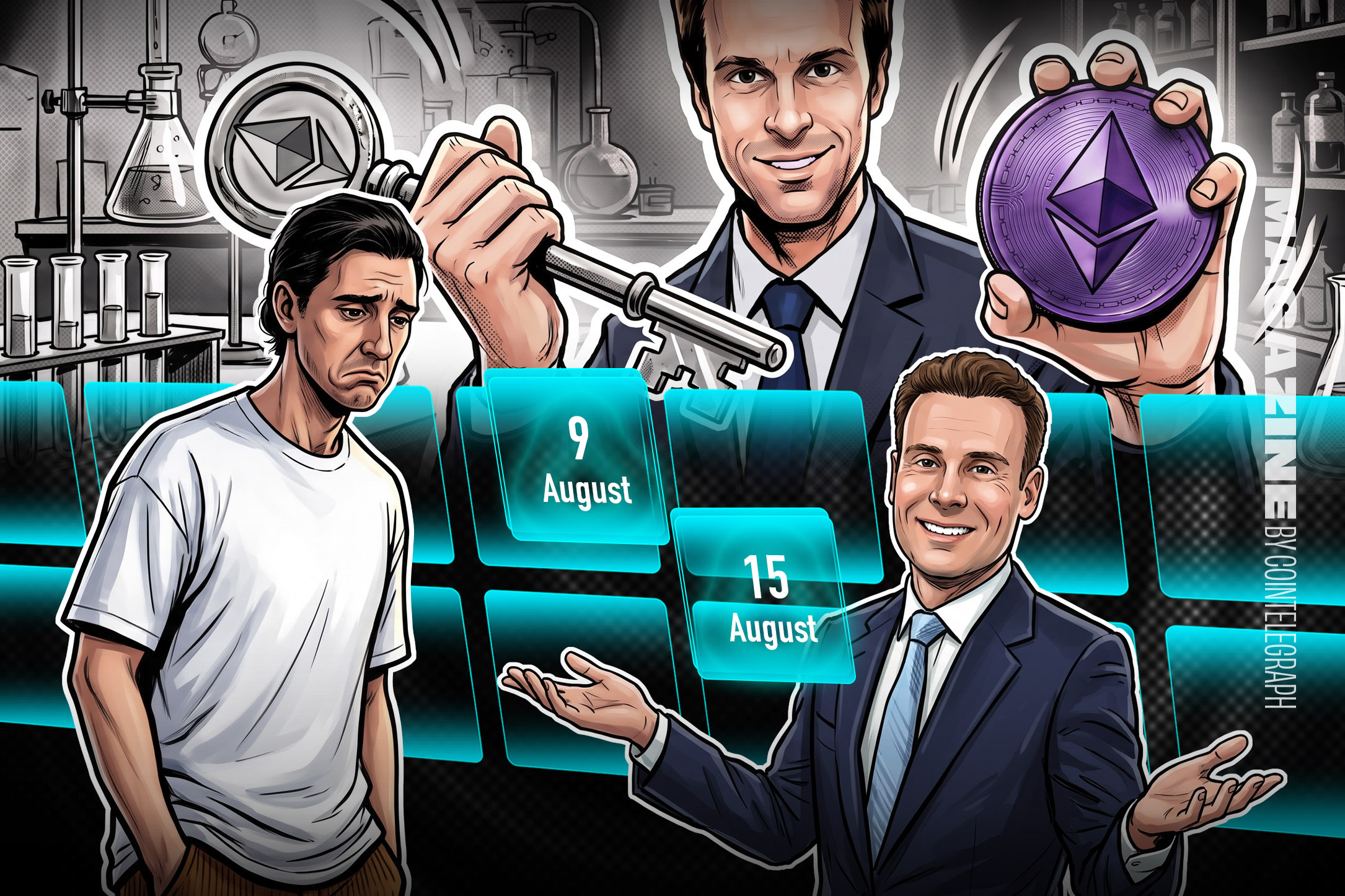
CryptoQuant: Ethereum может обогнать Bitcoin по темпам роста

cryptonews.ruPublished on 2025-08-13Last updated on 2025-08-25

Ethereum с начала года демонстрирует более уверенный рост в сравнении с Bitcoin. Основными фактором развития такой ситуации выступили увеличение открытого интереса на CME, приток институционального капитала и внедрение обновлений. В отличие от биткоина, динамика эфира поддерживается как техническими показателями, так и расширяющейся экосистемой разработчиков. Многие аналитики считают, что в обозримой перспективе ведущий альткоин без особых проблем достигнет области $7500.

По данным CryptoQuant, открытый интерес к Ethereum-деривативам на CME растет заметно быстрее, чем у Bitcoin. Это указывает на возобновление активности профессиональных игроков и возвращение ликвидности на фондовый рынок. Эксперты считают, что это расхождение демонстрирует более сильную институциональную поддержку именно главного альткоина.

Ethereum укрепляет позиции и за счет технологической дорожной карты. Обновления протокола и решения для масштабирования повышают эффективность сети. При этом рост числа разработчиков стимулирует развитие профильных приложений и DeFi-сектора. В отличие от Bitcoin, который воспринимается преимущественно в качестве средства накопления, Ethereum становится платформой для внедрения инноваций и интеграции смарт-контрактов. Это делает его привлекательным как для розничных, так институциональных инвесторов.

Еще один фактор уверенного роста — структура распределения спроса. Активность розничных инвесторов остается умеренной, что снижает общую волатильность. В таких условиях именно институциональные участники рынка формируют основной вектор движения цены.

Таким образом сочетание институциональной поддержки, роста открытого интереса и внедрение технологических улучшений формирует благоприятную среду для укрепления Ethereum в среднесрочной перспективе.

Trending Cryptos

Related Reads

Claude's Watermark Has Been Cracked, Gaining 11k Stars, But Installation Is Refused

The article discusses the controversy surrounding Anthropic's implementation of a hidden watermark in all text generated by its AI, Claude. This policy, based on Google DeepMind's SynthID-Text technique, embeds a statistical signature by making inconsequential word choices. The watermark applies globally, even to human-written text lightly edited by Claude, sparking user backlash over issues of ownership and the creation of an "AI content second-class citizen" status. In response, an open-source tool called "watermarks-remover" (originally "remove-claude-marks") was released on GitHub, quickly gaining 11k stars. It works on three levels: removing invisible Unicode characters, using an agent to rewrite text and break statistical patterns, and stripping metadata from various file formats. Notably, Claude itself refused to install this removal tool as an Agent Skill, a task ultimately completed by another AI model, GLM 5.2. The article points out the irony that the removal code may have been written by Claude. The piece frames this as an ongoing battle between watermarking for traceability against misinformation and the desire for unmarked, owned content from paying users. It questions the practicality of mandatory technical markings when AI-generated text becomes indistinguishable from human writing, suggesting the open-source community's rapid development of countermeasures will continually outpace regulatory efforts.

marsbit48m ago

Claude's Watermark Has Been Cracked, Gaining 11k Stars, But Installation Is Refused

marsbit48m ago

SafePal Leaks Data of Nearly 40,000 Hardware Wallet Buyers: Private Keys Intact, Yet Danger Moves Closer to the Physical

Hardware wallet manufacturer SafePal has disclosed a data breach affecting approximately 39,798 customers who placed orders between March 2025 and April 2026. The leak exposed personal information including names, email addresses, phone numbers, physical delivery addresses, and purchase records. The company confirmed that private keys, recovery phrases, wallet passwords, and financial details were not compromised, as the cold storage systems operate in an isolated environment separate from the e-commerce servers. However, the breach poses significant risks beyond digital theft. Attackers now possess a high-value list of confirmed hardware wallet owners, effectively marking them as likely holders of substantial cryptocurrency. This enables highly targeted social engineering attacks, such as phishing emails referencing real order details, fake hardware deliveries, or phone scams impersonating SafePal support. The company has already identified and taken down over 30 related phishing sites. A critical aspect of the incident is the delayed disclosure timeline. SafePal acknowledged receiving initial user reports of phishing attempts in May but treated them as isolated. A full investigation began in July, with a public announcement not made until August, leaving users exposed for approximately three months. Furthermore, a configuration error prevented a data-purge routine from deleting old order information as intended, potentially increasing the scope of the leaked data. The incident highlights a structural paradox in the hardware wallet industry: while the devices are designed to secure private keys offline, the necessary e-commerce process collects sensitive personal data that, if leaked, makes the user a target. This mirrors a similar breach suffered by Ledger in 2020. Affected users are advised to be extremely vigilant. They should verify if they are impacted via SafePal's dedicated page, treat all unsolicited communications (emails, calls, physical mail) referencing SafePal as suspicious, and never share recovery phrases. Users who may have entered sensitive information on a phishing site must create a new wallet immediately. The breach underscores that in cryptocurrency security, the most vulnerable link is often the human user, not the cryptographic technology.

marsbit1h ago

SafePal Leaks Data of Nearly 40,000 Hardware Wallet Buyers: Private Keys Intact, Yet Danger Moves Closer to the Physical

marsbit1h ago

30 Years After Being Crushed by AI, People Have Fallen Back in Love with Chess

On May 11, 1997, IBM's "Deep Blue" defeated chess champion Garry Kasparov, marking the first time a machine triumphed in a top-level intellectual game. The narrative of human defeat by AI seemed cemented when AlphaGo beat Lee Sedol in Go in 2016, a game once considered AI's final frontier. Yet, nearly 30 years after AI's dominance began, chess is experiencing unprecedented popularity. Chess.com boasts over 250 million registered users and 10 million daily active players. Its CEO, Erik Allebest, attributes this resurgence to several waves: the pandemic, the Netflix series *The Queen's Gambit*, and viral AI chess bots like "Mittens" on social media. Crucially, each surge left a permanently higher user base. The key insight is that AI liberated the game. When machines unequivocally became the best, the pressure to "win" as the ultimate human was removed. Chess returned to its core: the intrinsic joy of play—the thrill of a tactical combo, the tension of a time scramble, the curiosity of post-game analysis. AI, now serving as an always-available coach and anti-cheat tool, became infrastructure that enhanced rather than killed the experience. In contrast, Go, deeply rooted in East Asian elite culture and often pursued for mastery and status, suffered a "collapse of meaning" at the professional level after AlphaGo. Players began mimicking AI moves, erasing distinctive styles and narrative. While some Go players gained fame as online personalities, it didn't translate to widespread engagement with the game itself. The divergence highlights a fundamental question in the age of AI: is the motivation for an activity about *winning* or *playing*? Activities where the process itself is the reward, like chess, can thrive when the pressure of being the best is gone. AI may rightly take over tasks done purely for outcome, but it cannot replace the human experience of simply enjoying the game.

marsbit1h ago

30 Years After Being Crushed by AI, People Have Fallen Back in Love with Chess

marsbit1h ago

Exiting Top Ten Shareholders of Kweichow Moutai, 'Long-term Capital' Portfolio Adjustments Revealed: National Social Security Fund Enters 12 New Stocks, Invests in Hard Tech Mthreads

With the ongoing release of semi-annual reports, the second-quarter investment moves of long-term institutional investors like the National Social Security Fund (NSSF) and insurance capital are becoming clear. Central Huijin Asset Management and China Securities Finance Corp., often referred to as the "national team," are no longer among the top ten shareholders of Kweichow Moutai. Data shows that as of August 14th, the NSSF held positions in 33 A-share companies, with a total portfolio value exceeding 11 billion yuan. It added 12 new stocks in Q2, spanning sectors like chemicals, food & beverage, and semiconductors. The NSSF maintains its stable investment style, favoring companies with solid performance and attractive valuations. Apart from exiting Moutai, Huijin and China Securities Finance also left the top ten shareholder lists of companies like Ping An Bank and Dahua Technology. Insurance capital heavily invested in 41 companies in Q2, with a total holding value over 26 billion yuan. They showed a continued preference for cyclical sectors like non-ferrous metals and chemicals, as well as high-dividend-yield stocks. Analysts note that these long-term funds act as market stabilizers and investment bellwethers. Their presence is reshaping the market ecology, steering focus towards fundamental corporate value and away from speculative trading. A notable move was the NSSF's new investment in Moore Threads, a loss-making but leading domestic GPU design company listed on the STAR Market, indicating interest in hard technology sectors. Looking ahead, analysts expect long-term capital to continue a dual-strategy: maintaining a foundation in high-dividend-value stocks while gradually increasing exposure to growth areas aligned with industrial upgrading, such as advanced manufacturing and tech self-sufficiency. The market's recovery is seen as gaining a firmer footing after recent adjustments.

marsbit1h ago

Exiting Top Ten Shareholders of Kweichow Moutai, 'Long-term Capital' Portfolio Adjustments Revealed: National Social Security Fund Enters 12 New Stocks, Invests in Hard Tech Mthreads

marsbit1h ago

Data of 54,000 wallet users leaked, Clarity odds just 10%: Hodler’s Digest, Aug. 16

Galaxy Digital has slashed the odds of the CLARITY Act passing in 2026 from 75% to just 10%, citing limited Senate session days. If it fails, the SEC and CFTC plan to issue their own crypto rules, though an SEC meeting was abruptly cancelled. High-profile meetings at the White House are planned to discuss the bill. Amid growing hack fears, crypto companies are urging AI labs to grant developers early access to advanced AI models for cybersecurity, following a $116M Coldcard wallet theft. Data breaches at Trezor and SafePal have exposed over 54,000 users' personal information. The CFTC is clashing with states over regulating prediction markets like Kalshi, ordering it to ignore a New York restraining order to maintain a national market, while a Washington state judge ruled against it. The Ethereum Foundation is revising its post-quantum plan, moving away from the Poseidon hash function, and scoping its next major upgrade, Hegotá, for next year. Tether received its first full clean audit opinion from KPMG, showing reserves exceeding liabilities by $6.814 billion. Marketwise, major cryptos saw weekly declines. Predictions include a possible Bitcoin bottom in October, while analysts dispute the feasibility of BTC reaching $1M by 2030. Glassnode notes Bitcoin is in its longest capitulation phase since FTX's collapse. Three men were charged for an alleged Bitcoin kidnapping plot in Missouri.

cointelegraph2h ago

Data of 54,000 wallet users leaked, Clarity odds just 10%: Hodler’s Digest, Aug. 16

cointelegraph2h ago

Trading

Spot

Hot Articles

What is $BITCOIN

DIGITAL GOLD ($BITCOIN): A Comprehensive Analysis Introduction to DIGITAL GOLD ($BITCOIN) DIGITAL GOLD ($BITCOIN) is a blockchain-based project operating on the Solana network, which aims to combine the characteristics of traditional precious metals with the innovation of decentralized technologies. While it shares a name with Bitcoin, often referred to as “digital gold” due to its perception as a store of value, DIGITAL GOLD is a separate token designed to create a unique ecosystem within the Web3 landscape. Its goal is to position itself as a viable alternative digital asset, although specifics regarding its applications and functionalities are still developing. What is DIGITAL GOLD ($BITCOIN)? DIGITAL GOLD ($BITCOIN) is a cryptocurrency token explicitly designed for use on the Solana blockchain. In contrast to Bitcoin, which provides a widely recognized value storage role, this token appears to focus on broader applications and characteristics. Notable aspects include: Blockchain Infrastructure: The token is built on the Solana blockchain, known for its capacity to handle high-speed and low-cost transactions. Supply Dynamics: DIGITAL GOLD has a maximum supply capped at 100 quadrillion tokens (100P $BITCOIN), although details regarding its circulating supply are currently undisclosed. Utility: While precise functionalities are not explicitly outlined, there are indications that the token could be utilized for various applications, potentially involving decentralized applications (dApps) or asset tokenization strategies. Who is the Creator of DIGITAL GOLD ($BITCOIN)? At present, the identity of the creators and development team behind DIGITAL GOLD ($BITCOIN) remains unknown. This situation is typical among many innovative projects within the blockchain space, particularly those aligning with decentralized finance and meme coin phenomena. While such anonymity may foster a community-driven culture, it intensifies concerns about governance and accountability. Who are the Investors of DIGITAL GOLD ($BITCOIN)? The available information indicates that DIGITAL GOLD ($BITCOIN) does not have any known institutional backers or prominent venture capital investments. The project seems to operate on a peer-to-peer model focused on community support and adoption rather than traditional funding routes. Its activity and liquidity are primarily situated on decentralized exchanges (DEXs), such as PumpSwap, rather than established centralized trading platforms, further highlighting its grassroots approach. How DIGITAL GOLD ($BITCOIN) Works The operational mechanics of DIGITAL GOLD ($BITCOIN) can be elaborated on based on its blockchain design and network attributes: Consensus Mechanism: By leveraging Solana’s unique proof-of-history (PoH) combined with a proof-of-stake (PoS) model, the project ensures efficient transaction validation contributing to the network's high performance. Tokenomics: While specific deflationary mechanisms have not been extensively detailed, the vast maximum token supply implies that it may cater to microtransactions or niche use cases that are still to be defined. Interoperability: There exists the potential for integration with Solana’s broader ecosystem, including various decentralized finance (DeFi) platforms. However, the details regarding specific integrations remain unspecified. Timeline of Key Events Here is a timeline that highlights significant milestones concerning DIGITAL GOLD ($BITCOIN): 2023: The initial deployment of the token occurs on the Solana blockchain, marked by its contract address. 2024: DIGITAL GOLD gains visibility as it becomes available for trading on decentralized exchanges like PumpSwap, allowing users to trade it against SOL. 2025: The project witnesses sporadic trading activity and potential interest in community-led engagements, although no noteworthy partnerships or technical advancements have been documented as of yet. Critical Analysis Strengths Scalability: The underlying Solana infrastructure supports high transaction volumes, which could enhance the utility of $BITCOIN in various transaction scenarios. Accessibility: The potential low trading price per token could attract retail investors, facilitating wider participation due to fractional ownership opportunities. Risks Lack of Transparency: The absence of publicly known backers, developers, or an audit process may yield skepticism regarding the project's sustainability and trustworthiness. Market Volatility: The trading activity is heavily reliant on speculative behavior, which can result in significant price volatility and uncertainty for investors. Conclusion DIGITAL GOLD ($BITCOIN) emerges as an intriguing yet ambiguous project within the rapidly evolving Solana ecosystem. While it attempts to leverage the “digital gold” narrative, its departure from Bitcoin's established role as a store of value underscores the need for a clearer differentiation of its intended utility and governance structure. Future acceptance and adoption will likely depend on addressing the current opacity and defining its operational and economic strategies more explicitly. Note: This report encompasses synthesised information available as of October 2023, and developments may have transpired beyond the research period.

1.9k Total ViewsPublished 2025.05.13Updated 2025.05.13

What is $BITCOIN

Discussions

Welcome to the HTX Community. Here, you can stay informed about the latest platform developments and gain access to professional market insights. Users' opinions on the price of BTC (BTC) are presented below.

活动图片