降息预期太乐观了?美国“粘性通胀”正在重新加速

华尔街见闻Published on 2025-08-18Last updated on 2025-08-18

Abstract

目前市场对7月CPI报告的解读相对乐观。但摩根大通表示,多项替代通胀指标显示,通胀不仅未能继续下行,核心通胀的粘性部分正重新加速,且其坚挺程度还有相当部分与关税无关。除非经济陷入衰退,否则通胀的持续坚挺将不支持美联储采取更激进的宽松政策。

摩根大通警告,美国通胀正呈现出比预期更加顽固的态势,多项替代通胀指标均表明去通胀进程已经停滞,核心通胀的粘性部分正重新加速,这一趋势可能限制美联储进一步激进降息的空间。

目前市场对7月CPI报告的解读相对乐观,但摩根大通表示,包括削减均值和中位数通胀在内的多项基础通胀指标显示,通胀不仅未能继续下行,核心通胀的粘性成份正重新加速,且其坚挺程度还有相当部分与关税无关。这意味着通胀可能在高于美联储目标的水平上保持粘性。

分析师Michael Hanson警告,虽然联邦公开市场委员会(FOMC)目前专注于管理劳动力市场下行风险,但通胀偏离其目标的程度明显更大。除非经济陷入衰退,否则通胀的持续坚挺将不支持美联储采取更激进的宽松政策。

替代通胀指标发出警告信号

美联储对潜在持续高于目标通胀的担忧似乎并非空穴来风。

根据亚特兰大联储的统计拆分,传统核心CPI组成部分中(粘性+灵活),粘性组件继续略高于疫情前平均水平,并在近期有所加速。
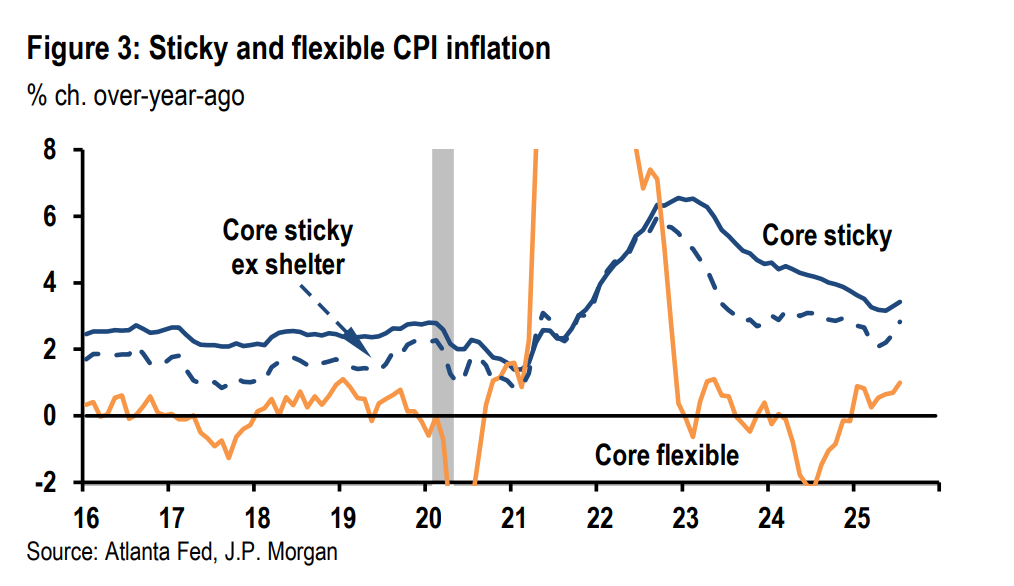
基础数据显示,虽然波动较大的灵活组件在今年早些时候飙升后,已在三个月年化基础上重新回到负值区间,但粘性组件近月来重新加速。

历史上,粘性组件往往以服务业为主导,这种坚挺程度是在关税商品压力之外的额外因素。

摩根大通认为,克利夫兰联储的削减均值和中位数通胀指标为投资者提供了比传统排除法更可靠的通胀趋势判断。

最新数据显示,削减均值通胀在疫情前平均为2.1%,目前已从4月3.0%的低点反弹至7月的3.2%。中位数通胀的表现更加令人担忧,从疫情前的2.6%平均水平跃升至当前的3.6%。
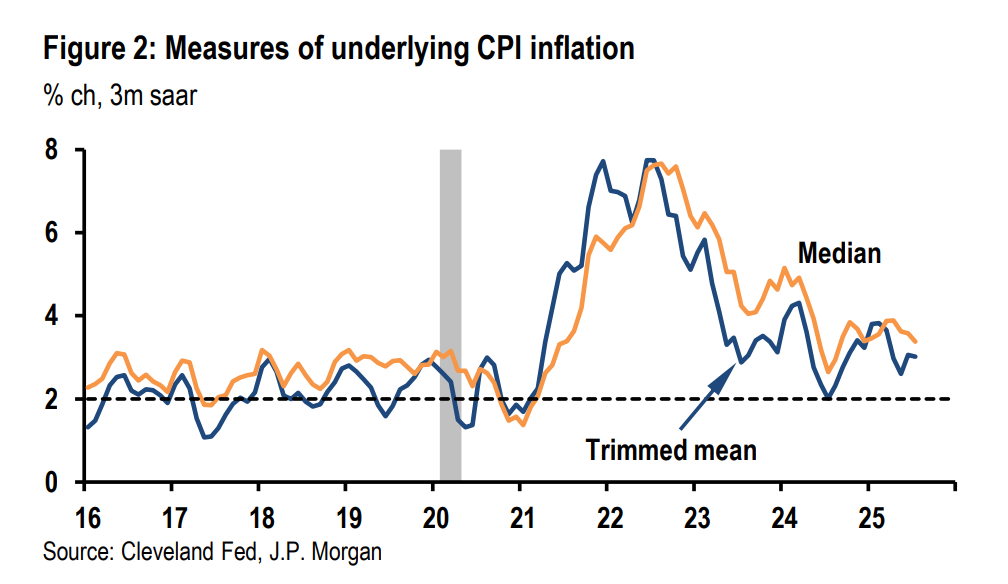
这些指标通过算法剔除每次CPI发布中的极端值,专注于价格变动分布的中间部分。削减均值排除了价格变动最高和最低的8%,而中位数则代表了CPI各项价格变动的精确中点。

从三个月年化增长率来看,削减均值基本持平,中位数近月来实际上有所缓解。但两个系列的运行速度仍保持在3%以上,相对于历史水平和美联储2%的通胀目标都偏高。随着关税传导效应变得更加普遍,这一趋势可能再次走高。

货币政策前景面临挑战

分析师认为,当前的通胀格局为美联储货币政策决策带来了复杂挑战。

多项替代核心指标表明——通胀仍远高于美联储2%的目标,并可能继续走高。这种在非关税部门的通胀坚挺尤其值得关注,因为它指向通胀可能在令人不安的高位保持持续。

摩根大通分析认为,除非出现经济衰退,否则通胀可能在不支持美联储更激进宽松政策的水平上保持粘性。

这一判断为当前市场对美联储快速降息的预期蒙上了阴影,投资者可能需要重新评估货币政策正常化的时间表和幅度。

Trending Cryptos

Related Reads

RWA Tokenization Enters the Next Phase: What is the Truly Time-Consuming Advantage to Build?

The article argues that as tokenization frameworks for Real-World Assets (RWA) mature, the ability to issue assets is becoming less of a competitive advantage. The focus is shifting to what happens *after* issuance: which RWA operations can build enduring trust, maintain stable operations, and remain integrated into the financial ecosystem over the long term. The piece introduces the concept of a **Reserve Layer**—infrastructure that connects tokenized assets to the necessary verification, liquidity, and operational systems for on-chain finance. For an asset to serve as a reliable reserve (e.g., short-term U.S. Treasuries, gold), it needs predictable value, standardized features, deep markets, and observable pricing. However, the true, hard-to-replicate advantage lies not just in the underlying asset but in the **operational track record** built over time. This includes consistent reserve management, independent audits, successful redemptions, maintained liquidity, and protocol integrations. Each successful operation adds evidence, creating a reinforcing cycle: more evidence builds stronger institutional confidence, leading to wider distribution, deeper liquidity, and more use cases as collateral. The article presents a framework combining two dimensions: an asset's suitability as a reserve and the issuer's operational capability. The most sustainable model combines **high-quality reserve assets with strong, long-term operational discipline**. A critical blind spot is an asset with high reserve suitability (like gold) issued by an entity with a limited operational track record; the quality of the infrastructure is separate from the quality of the asset itself. In conclusion, the next phase of RWA will be defined by participants who can pair appropriate reserve assets with the operational rigor to support them through market cycles, thereby transforming tokenized RWAs into durable financial infrastructure.

marsbit6m ago

RWA Tokenization Enters the Next Phase: What is the Truly Time-Consuming Advantage to Build?

marsbit6m ago

Claude Code Easily Compromised with Just a Fake Tool

Researchers have demonstrated a novel attack, dubbed ToolLeak, that can easily compromise AI coding assistants like Claude Code. The method exploits a "mode gap" by stealing the system prompts (instructions) not through direct chat queries, but by tricking the model into leaking them as parameters during tool calls. This extracted information is then used to craft a "two-channel prompt injection" attack. Attackers register a malicious tool with a description formatted to mimic legitimate instructions, prompting the AI agent to call it. The tool's return value then instructs the agent to execute a malicious command (e.g., `curl | bash`), achieving Remote Code Execution (RCE). In tests against six major AI programming tools (Cursor, Claude Code, Copilot, Windsurf, Cline, Trae) using older versions, all were fully compromised, with attack success rates reaching up to 1.0. Notably, Claude Code's secondary guard model (Haiku) was overridden by the main model (Sonnet), which had been manipulated by the injected instructions. Newer versions show improved defenses. Claude Code and Cursor implemented mitigations like "progressive tool description exposure," reducing RCE success to 0 and 0.3 respectively in some configurations. However, tools like Cline, Windsurf, and Trae paired with certain models remained fully vulnerable. The research underscores that architectural isolation is crucial for defense, as long as tool return values can ambiguously function as both data and executable instructions, the threat of tool hijacking persists. The paper "TIPExploit: Tool-Invocation Prompt Extraction and Exploitation in AI Coding Agents" has been accepted at ISSTA 2026.

marsbit9m ago

Claude Code Easily Compromised with Just a Fake Tool

marsbit9m ago

Trading

Spot

Hot Articles

Discussions

Welcome to the HTX Community. Here, you can stay informed about the latest platform developments and gain access to professional market insights. Users' opinions on the price of ETH (ETH) are presented below.

活动图片