Pendle 新产品,利好 ENA?

marsbitPublished on 2025-08-12Last updated on 2025-08-13

PENDLE 近期币价强势,创出近 7 月新高。除 Pendle V2 本身的基本面外,团队打磨两年最新推出的产品 Boros 被市场视为下一个增长爆点。

Boros 使得交易者可以做多或做空资金费率,笔者认为除充当投机工具外,它更是潜在的「对冲神器」,Ethena 和 Neutrl 等三方协议都将从中获益。

换言之,Pendle 新产品,将利好 ENA。要讲明白其中的前因后果,我们首先要明白,资金费率是什么?

资金费率

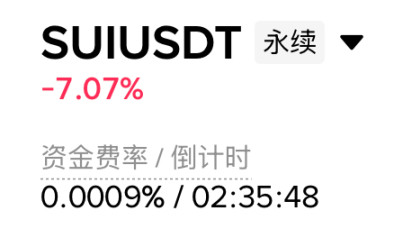
资金费在永续合约交易中产生,目的是使合约价格与现货价格之间不出现较大价差。当做多者多于做空者时,合约的价格大于现货价格,此刻资金费率为正,做多者需要每隔固定时间支付一次资金费给做空者(通常是 1 ~ 8 小时)。反之当做空者多于做多者时,做空者将支付资金费用给做多者。

PENDLE


资金费率能反映市场情绪,例如当资金费率为负时(即做空需要支付费用给做多方)反映出市场普遍看空后市。值得注意的是,当市场情绪中立时,资金费率为正,因为做多者总是多于做空者


Ethena 的机制和痛点

Ethena 的合成美元稳定币的主要收益来源就是「资金费套利」。例如,Ethena 将部分用户存入的稳定币购买为 ETH 并质押,然后在交易所中开出等额的做空仓位。 这样,现货和合约盈亏相互抵消,实现风险中立(盈利与价格波动无关)。

在上面的例子中,现货 ETH 仓位可以赚取年化约 3% 的质押收益,而在中立或看涨情绪中,做空的合约仓位将持续赚取做多方支付的资金费。依仗这两部分的收益叠加,Ethena 的 sUSDe 在长线慢牛的 2024 年交出了全年收益超 10% 的答卷,综合风险后的收益颇具吸引力。

PENDLE


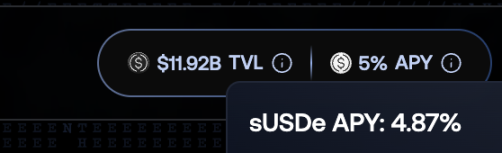
这种模式的问题也很明显,如果市场走熊,做空者需支付资金费,Ethena 将因亏损不得不停止上述策略,撤回资金转而部署至 Sky 等更保险但收益也更低的协议中。如半个月前 sUSDe 的 APY 为 12%,受上周行情回撤影响,APY 下降至 5% 以下。

如果能在资金费率高位时做空资金费率,将资金费率「套保」,在对冲策略上再加一层对冲,Ethena 的高 APY 得以被「锁定」,痛点被迎刃而解。

可以做空资金费率,这不就是 Boros 吗?


Boros 玩法

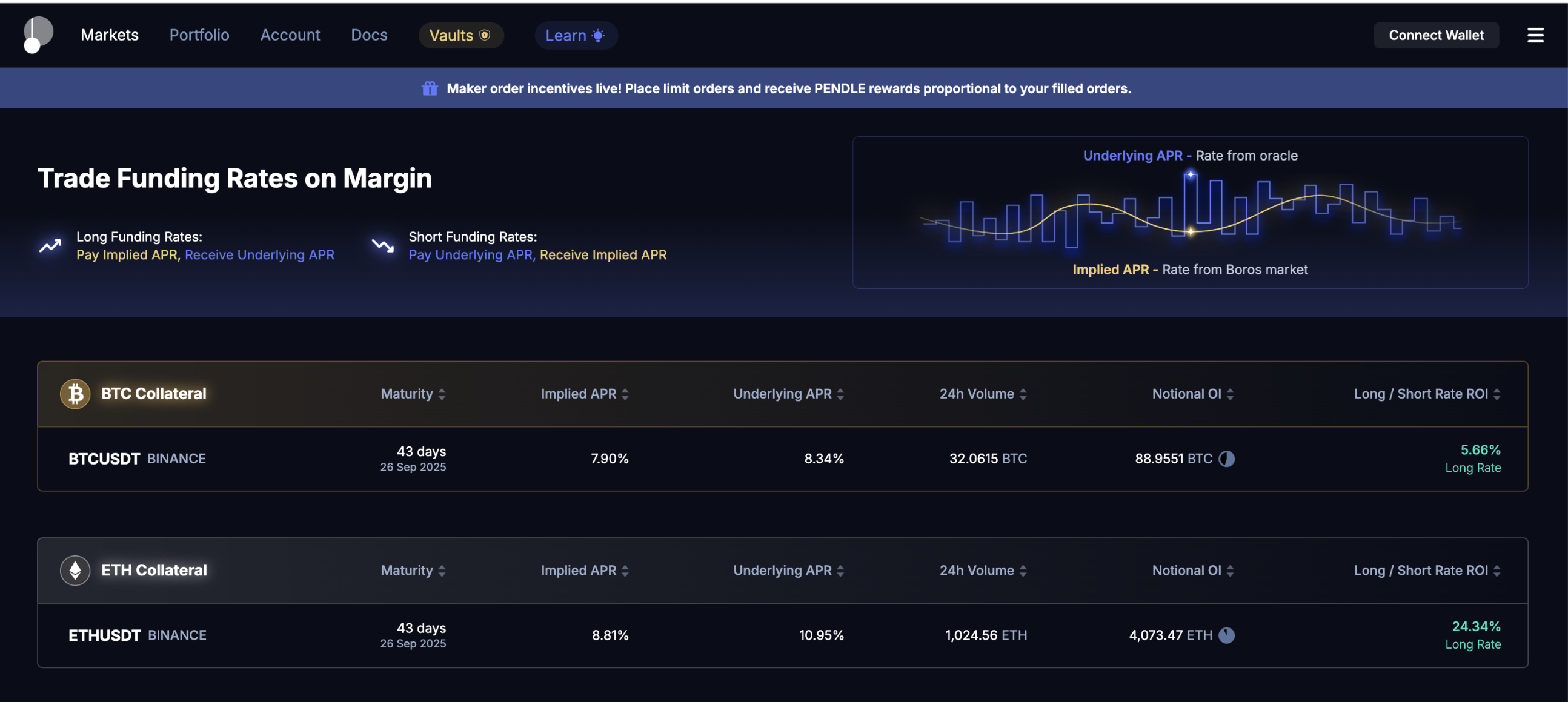
Boros 将单位底层资产在交易所永续合约中某期限内将会产生的资金费抽象为 Yield Unit(简称 YU),用户认为资金费率将上升就做多 YUs,认为资金费率将下降就做空 YUs,开仓需要存入抵押品,逻辑非常简单。

PENDLE


这里引入几个概念。把所交易资金费率的当下市场定价称为 Implied APR 隐含年化费率,资金费率的实际年化值称为 Underlying APR,那么做多 YUs 其实就是选择在接下来的期限内,按照买入时的 Implied APR 支付对应 YU 的固定资金费率,获得按照随时变化的 Underlying APR 产生的实际资金费,做空 YUs 则恰好相反。

所以 Ethena 完全可以在资金费率处在相对高点时,做空其策略空单对应仓位的 YU,锁定满意的资金费收入。

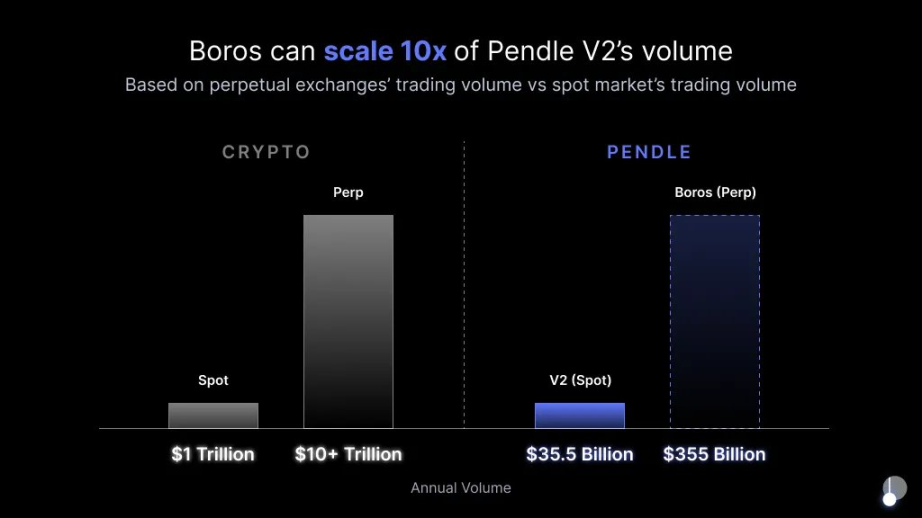
Boros 在推出后数据斐然,上线首日就实现了 1500 万美元的未平仓位,3600 万美元名义交易量的亮眼成绩。Pendle 团队也对它的发展潜力寄予厚望,认为其有望实现当前旗舰产品 Pendle V2 10 倍的交易量,因为在加密市场中,永续合约的交易量已是现货交易量的 10 倍以上,而 Pendle V2 和 Boros 也属于现货和合约的对应关系。

PENDLE


Neutrl,另一个客户

Boros 对资费的做空功能让它成为「对冲神器」,除 Ethena 外,那还有哪些协议可能会为它买单?

我们再举一个例子,Neutrl。Neutrl 也是一个合成美元稳定币协议,目前处于封闭测试阶段,总锁仓价值已超过 5000 万美元。它的收益模型是:通过 OTC 折价购买到锁仓的代币,再做空等量代币进行套保,从而实现 OTC 折扣套利。

Neutrl 最大的风险之一就是资金费率的不可控,极端行情下的极端费率可能会造成亏损。Boros 在此处又找到了它的 PMF(产品市场契合点)。


Boros 目前的局限

Boros 刚上线,处于极早期,有着很多局限。上述很多理论上的用例都还只是畅想,有待 Boros 不断进步来让这些「客户」变为现实。

首先是体量问题。Ethena 的做空体量超几十亿美元,是优质的潜在客户,但 Boros 的资费永续市场是否能创造足够的流动性来吃下这块业务还有待观察。

其次是支持的资产数量问题,Boros 当前只支持 BTC 和 ETH 的资费。Ethena 只做大资产,但想要把 Neutrl 转变为客户,就需要支持更多的「VC」币,并做好相对冷门资产的流动性支持。


结语

刚上线的 Boros 固然有许多局限,但它背后的设计已经为我们带来了海量的用例想象空间。哪里有机会,哪里就会有交易量;哪里有交易量,哪里就会有费用。

Pendle 新产品,利好 ENA。当它与三方协议产生协同效应,带来海量的交易量时,协议费用也将涌向 Pendle。Pendle 新产品,正寻求成为新的 DeFi 基础设施,利好各大相关协议,最终将利好 PENDLE 代币。


Related Reads

Review of Cathie Wood's Masterstroke Operation on Circle

A Recap of Cathie Wood's Masterful Trading in Circle's IPO This article analyzes the strategic moves made by ARK Invest's Cathie Wood around the IPO of Circle (CRCL). Despite her typical long-term, narrative-driven investment style, Wood executed a textbook "buy low, sell high" trade. Wood secured a core position of approximately 4.49 million shares at the $31 IPO price. The stock debuted at $69, surged to a high of $299 in June 2025 fueled by stablecoin regulatory news (the GENIUS Act), and then entered a prolonged decline. During this rally, ARK systematically sold around 1.7 million shares at an average price near $210, driven partly by internal fund rebalancing rules triggered by the stock's soaring weight. This move locked in substantial profits. As the stock later fell due to lockup expirations, new share issuance, and interest rate concerns—even dipping below $50—Wood began repurchasing shares. Starting in November 2025 around $86, she continued buying on the way down, eventually rebuilding her position to roughly the original size by Q1 2026. Key takeaways include: 1) Having a strong, independent long-term thesis (viewing Circle as critical digital dollar infrastructure). 2) Trading in tranches instead of trying to time exact tops or bottoms. 3) Maintaining strict position-sizing discipline, using rules to force profit-taking and preserve buying power. For most retail investors, chasing the dramatic "pop" at open is dangerous, as the subsequent 83% drawdown showed. Wood's success hinged on pre-IPO access, a clear investment thesis, and disciplined execution.

marsbit59m ago

Review of Cathie Wood's Masterstroke Operation on Circle

marsbit59m ago

Sharplink CEO: Ethereum's Future is Unfolding Now

In an article titled "Sharplink CEO: Ethereum's Future is Unfolding," Joseph Chalom, a former BlackRock executive and current Sharplink CEO, argues that the current debates surrounding the Ethereum Foundation (EF) and ETH price miss the bigger picture. He asserts that Ethereum's long-term institutional adoption is secured by its foundational strengths: trust, security, and liquidity. Chalom highlights Ethereum's dominance in settling stablecoin value, tokenizing real-world assets (RWA), and facilitating high-value DeFi transactions as evidence of its winning position. He defends the Ethereum Foundation's focus on rigorous protocol development and a decade-long track record of major upgrades (The Merge, EIP-1559, Dencun, etc.), viewing its upcoming technical roadmap as the most ambitious in the industry. Contrary to critics, Chalom posits that Ethereum's decentralization and reliable neutrality are core strengths for institutional adoption, not weaknesses, as they prevent control by any single entity. Drawing a parallel to Amazon's early days, he suggests that ETH's intrinsic value is tied to the expansion of its network, which is poised for a step-change in transaction volume across stablecoins, RWAs, DeFi, and agentic finance. Chalom advocates for a "be greedy when others are fearful" approach, citing historical examples from Warren Buffett and his own experience at BlackRock during the crypto winter. He concludes that while the EF should remain focused on core protocol attributes (CROPS: Censorship Resistance, Capture Resistance, Open Source, Privacy, Security), there is a leadership gap in market outreach. Chalom calls for ecosystem participants, including Sharplink and other key players, to become more vocal advocates to support the coming institutional adoption supercycle, asserting that "Ethereum's future is unfolding now."

marsbit59m ago

Sharplink CEO: Ethereum's Future is Unfolding Now

marsbit59m ago

6 Questions to Understand the Business Trends of AI

The AI industry has entered its "summer" phase, according to a six-dimensional scoring framework assessing its development cycle. Each dimension—narrative vs. delivery, system connectivity, delivery capability, ROI rationalization, common industry trends, and capital environment—scores 1 point, totaling 6 points. This places the industry firmly in summer (5-7 points), characterized by a coexistence of grand promises and tangible deliverables, with increasing pressure to demonstrate value and profitability. Key signals mark this shift. ByteDance's Doubao launched paid subscriptions, while OpenAI introduced an advertising platform. These moves are driven by dual forces: immense cost pressures from scaling user bases and massive compute requirements, and the maturation of commercial opportunities. Major players like Anthropic report explosive growth, highlighting AI's transition into core productivity infrastructure. For businesses, the path forward involves three strategic steps. First, identify a small, high-impact use case to quickly demonstrate a closed-loop value proposition, such as automating customer service or content generation. Second, systematically replicate successful pilots across the organization by standardizing processes, building shared AI capabilities, and aligning talent, incentives, and leadership. Finally, move beyond simply adding AI to existing workflows and undertake systemic reconstruction—redesigning processes for parallel AI-human collaboration, implementing real-time dashboards, and establishing automated trigger chains. The era where storytelling alone secured funding is over. The focus has shifted to delivering measurable efficiency gains, cost savings, and new revenue streams, as evidenced by real-world implementations in companies like Semir, Anta, and Midea. Success now depends on starting with a focused proof point, scaling it organization-wide, and ultimately allowing AI to redefine operational paradigms.

marsbit7h ago

6 Questions to Understand the Business Trends of AI

marsbit7h ago

Trading

Spot
Futures

Hot Articles

How to Buy ENA

Welcome to HTX.com! We've made purchasing Ethena (ENA) simple and convenient. Follow our step-by-step guide to embark on your crypto journey.Step 1: Create Your HTX AccountUse your email or phone number to sign up for a free account on HTX. Experience a hassle-free registration journey and unlock all features.Get My AccountStep 2: Go to Buy Crypto and Choose Your Payment MethodCredit/Debit Card: Use your Visa or Mastercard to buy Ethena (ENA) instantly.Balance: Use funds from your HTX account balance to trade seamlessly.Third Parties: We've added popular payment methods such as Google Pay and Apple Pay to enhance convenience.P2P: Trade directly with other users on HTX.Over-the-Counter (OTC): We offer tailor-made services and competitive exchange rates for traders.Step 3: Store Your Ethena (ENA)After purchasing your Ethena (ENA), store it in your HTX account. Alternatively, you can send it elsewhere via blockchain transfer or use it to trade other cryptocurrencies.Step 4: Trade Ethena (ENA)Easily trade Ethena (ENA) on HTX's spot market. Simply access your account, select your trading pair, execute your trades, and monitor in real-time. We offer a user-friendly experience for both beginners and seasoned traders.

4.0k Total ViewsPublished 2024.04.03Updated 2026.03.18

How to Buy ENA

Ethena: Building a New Era of Web3‑Native Digital Dollars

Ethena is an Ethereum‑based synthetic dollar protocol that delivers crypto‑native monetary solutions, including USDe, a synthetic dollar, and sUSDe, a globally accessible U.S. dollar savings asset.

53.1k Total ViewsPublished 2026.03.16Updated 2026.03.16

Ethena: Building a New Era of Web3‑Native Digital Dollars

Discussions

Welcome to the HTX Community. Here, you can stay informed about the latest platform developments and gain access to professional market insights. Users' opinions on the price of ENA (ENA) are presented below.

活动图片