Основатель обвалившего крипторынок в 2022 году проекта Terra признал вину

RBK-cryptoPublished on 2025-08-12Last updated on 2025-08-12

По совокупности обвинений До Квону грозит до 12 лет заключения, часть из которых он может отбыть в США, а затем — в Южной Корее

Основатель Terraform Labs До Квон признал себя виновным в сговоре с целью совершения мошенничества и в мошенничестве с использованием электронных средств. Признание состоялось 12 августа, спустя три года после обрушения экосистемы Terra/Luna и стейблкоина UST. Изначально он не признавал вину.

На пике весной 2022 года разработанный Terraform Labs токен LUNA входил в десятку крупнейших криптоактивов с капитализацией более $40 млрд. Его рост был тесно связан с популярностью стейблкоина UST и платформы Anchor, которая предлагала доходность до 20% годовых за размещение средств. Однако в мае, после потери UST привязки к доллару, механизм стабилизации дал сбой. LUNA начал стремительно дешеветь, попав в спираль гиперинфляции и всего за несколько дней токен потерял более 99% стоимости и обесценился до долей цента.

Разбор Terra LUNA: от взлета до краха

По разным оценкам, совокупные потери криптосообщества достигли $40–60 млрд. Убытки понесли не только держатели токенов, но и пользователи платформ, работавших на базе Terra. Крупнейшей из них был Anchor, чья многомиллионная пользовательская база после краха экосистемы фактически лишилась доступа к средствам.

Телеграм-канал «РБК-Крипто» — подпишитесь и будьте в курсе самых главных и актуальных новостей о криптовалюте.

Присоединяйтесь к форуму «РБК-Крипто» в Telegram для обсуждения новостей и тенденций криптомира.

Обвал спровоцировал цепную реакцию по всему крипторынку — цены упали и началась целая волна банкротств. Среди пострадавших оказались хедж-фонд Three Arrows Capital (3AC) и цифровые банки Celsius и Voyager Digital, а также ряд децентрализованных протоколов, интегрированных с экосистемой Terra. Судебные разбирательства по делам некоторых из них продолжаются до сих пор.

Все эти события стали одним из самых масштабных кризисов в истории криптовалют. Квон был задержан в Черногории и экстрадирован в США в 2024 году.

Крах крипторынка, потерянные миллиарды и экстрадиция. Кто такой До Квон

Квон заявил в суде, что «сознательно участвовал в схеме обмана и действительно ввел в заблуждение» покупателей UST. Он признал, что с 2018 по 2022 год вместе с другими лицами распространял ложную информацию, в том числе о факторах, обеспечивающих привязку UST к доллару в 2021 году, и использовал международные переводы для реализации схемы.

По соглашению со следствием, Квон согласился выплатить до $19 млн, передать часть имущества и не оспаривать факты, изложенные в обвинительном заключении. Минюст США рекомендовал ограничить срок заключения 12 годами и пообещал поддержать запрос на перевод в Южную Корею после отбытия половины срока. По словам адвоката, Квону также грозят отдельные обвинения на родине.

Криптотрейдеры Polymarket поставили $1 млн на встречу Путина и Трампа

Uniswap оформит DAO как юрлицо. Что это значит для держателей токена UNI

В космос за биткоины. Blue Origin Безоса начала принимать криптовалюты

Trending Cryptos

Related Reads

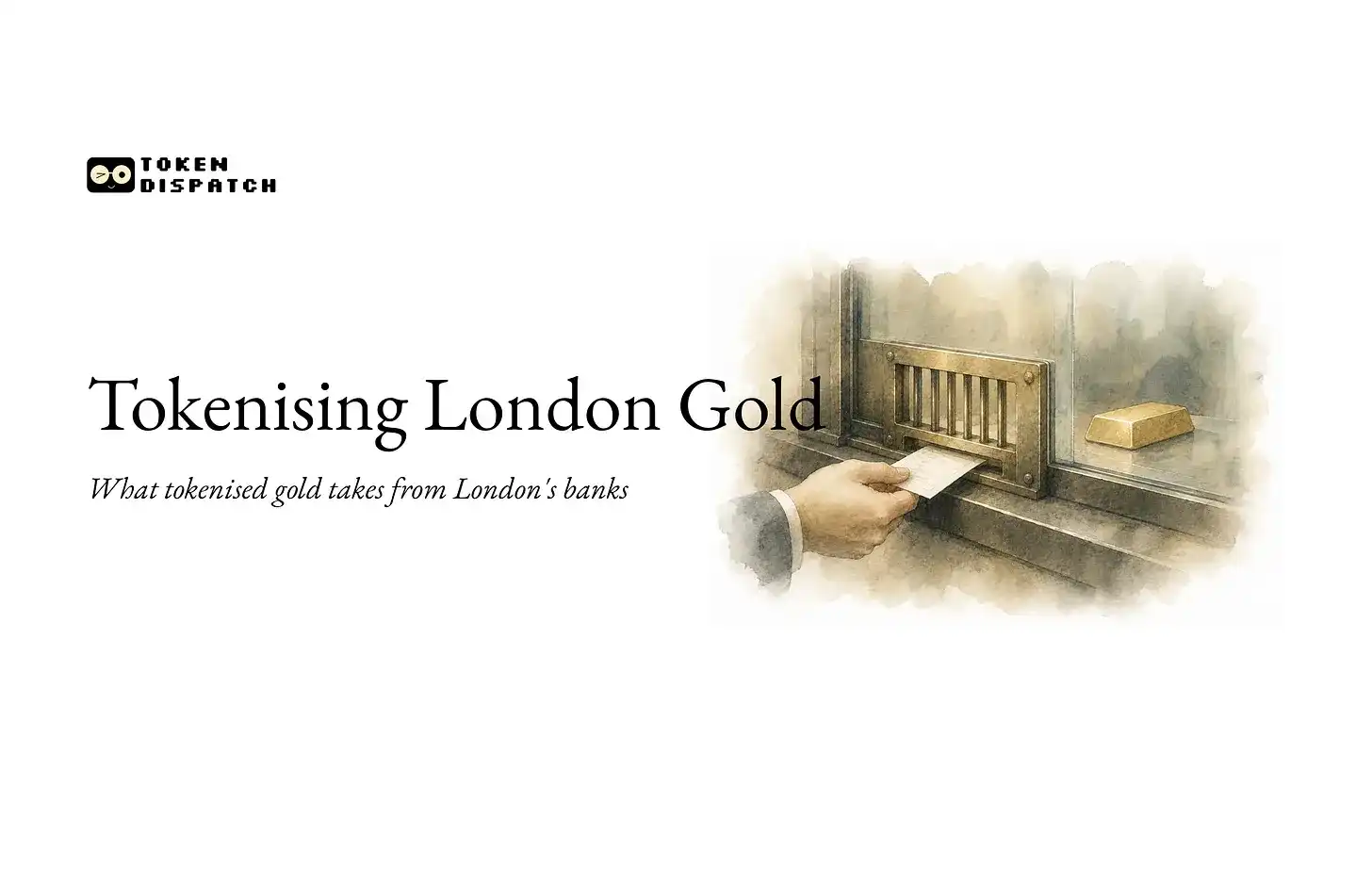
The Tokenization of Gold: A Financial Revolution Driven by Regulation

The Tokenization of Gold: A Regulation-Driven Financial Revolution In early 2025, anticipation of US tariffs triggered a rush to withdraw physical gold from the Bank of England, exposing the friction in London's $1.2 trillion gold market. While daily trading of $737 billion occurs via ownership certificates without moving bullion, demand for physical metal revealed a pricing split based on deliverability. This article explores why the UK's Financial Conduct Authority (FCA) is developing rules for tokenized gold, focusing regulation squarely on the ledger system. London's gold market, cleared by four major banks, performs four key functions: physical storage, quality verification, ownership registration, and credit provision. Tokenization excels at the third—offering cheap, precise ownership records—but fundamentally challenges the fourth by potentially rendering banks' credit intermediation obsolete. Currently, most gold is held in "unallocated" accounts, where investors are unsecured creditors of banks, trading speed for credit risk. Tokenized gold combines the instant transfer of unallocated accounts with the direct ownership claim of allocated bullion, eliminating bank risk. The FCA is prioritizing its use as collateral, where speed is critical, unlocking this vast pool of currently illiquid assets for margin calls. This shift is partly driven by post-2008 banking regulations like Basel III's Net Stable Funding Ratio, which penalized banks for holding unallocated gold. The push now comes from the清算 banks themselves, like HSBC, which have launched proprietary tokenization systems. The crucial regulatory decision will be whether these tokens are allowed to circulate outside their creators' closed ecosystems. True adoption will be visible in LBMA data: high overall trading volume paired with a decline in settlements through the traditional central ledger, as transactions move to instant blockchain transfers. Ultimately, tokenization doesn't replace the physical vaults, security, and assayers but could elevate their importance, shifting their revenue to standardized service fees. The revolution lies not in moving the gold, but in reinventing how its ownership is recorded and transferred.

marsbit3m ago

The Tokenization of Gold: A Financial Revolution Driven by Regulation

marsbit3m ago

Yield Leverage and Liquidity Leverage: The STONKBROKER Mechanism is Very Suitable for the RWA Scenario

The article argues that the STONKBROKER mechanism is highly suitable for Real-World Asset (RWA) tokenization scenarios due to its two key leverages: **Profit Leverage** and **Liquidity Leverage**. **Profit Leverage:** Traditional RWA models simply tie tokens to real-world asset yields. STONKBROKER's model is more engaging by allowing NFT holders to earn not only the underlying real-world cash flows but also additional yields generated from the on-chain system's own operations and transaction activity (like fees and slippage). This creates a dual income stream. **Liquidity Leverage:** Standard RWA asset bundles often suffer from poor liquidity. STONKBROKER's mechanism, which allows fixed-ratio swapping between NFTs and a platform's fungible token (and vice versa), solves this. It provides real-time market pricing and flexible exit options for each "RWA asset" NFT by unifying NFT liquidity with ERC-20 token liquidity via an AMM pool. This enhances capital efficiency and attracts more trading activity. The article further speculates on applying this model to broader RWAs (e.g., real estate, bonds). The core idea is to create a more dynamic, liquid, and profitable ecosystem where ordinary users can participate, combining real-world yields with the speculative and transactional energy of a crypto-native system. The author mentions being inspired by the launch of a project called @TheCardWall, which tokenizes high-grade physical trading cards.

marsbit23m ago

Yield Leverage and Liquidity Leverage: The STONKBROKER Mechanism is Very Suitable for the RWA Scenario

marsbit23m ago

Deciphering TapeOut: A Child Built a CPU On-Chain

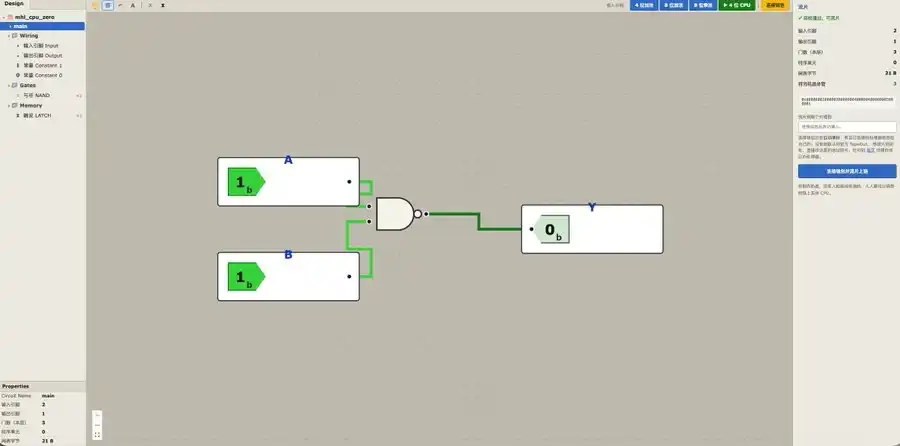
**Title: Understanding TapeOut: A Kid Built a CPU On-Chain** **Summary:** The article explores a remarkable experiment where a young developer named Blonskr has used blockchain technology to build a functional, on-chain CPU. Named "Behemoth," this CPU is based on the 1971 Intel 4004 processor specification. It runs on the BNB Chain, uses block production as its clock (running at a glacial 2.22 Hz), and is perhaps the slowest CPU in existence, yet it represents a novel and intriguing concept in the on-chain space. The core concept is the TapeOut protocol, named after the final "tape out" stage in semiconductor manufacturing. It treats the blockchain as a silicon wafer, with tokens representing fundamental logic components. The protocol's atomic unit is an ERC-1155 token representing a single NAND gate, the fundamental building block of digital logic. Users can visually design circuits on a "canvas," connecting these logic tokens. Once a design is finalized, the underlying tokens are burned, and an ERC-721 NFT representing the permanent, immutable circuit is minted. Blonskr used 2,300 such tokenized NAND gates to construct the Behemoth CPU. Key features of this and any TapeOut circuit include **permanent operation** (running as long as the chain exists), **free, permissionless evaluation** (anyone can query it without gas), and **safe composability** (circuits cannot call external contracts or modify state, making them inherently safe to use). This enables a new form of open, collaborative hardware design, where anyone can build upon and integrate components created by others. While highly niche, TapeOut reimagines the foundations of computation using blockchain's properties of permanence and openness. It pushes the boundaries of what can be built on-chain, potentially enabling future applications like custom mining circuits or decentralized, specialized processors. The experiment demonstrates an exciting combination of extreme technical vision and creative curiosity.

marsbit57m ago

Deciphering TapeOut: A Child Built a CPU On-Chain

marsbit57m ago

Novig Sues Wisconsin as Sports Prediction Market Dispute Heats Up

Novig, a sports event prediction market operator, has filed a lawsuit against Wisconsin's attorney general. The legal dispute centers on whether prediction markets fall under federal derivatives regulations or state gambling laws. The lawsuit, filed in a U.S. district court, seeks a declaratory judgment after Novig began offering event contracts to Wisconsin residents. This case is part of a broader conflict. In April, Wisconsin sued other prediction market platforms like Kalshi and Polymarket, alleging their sports-related contracts violate state gambling laws. Novig argues its contracts are "swaps" regulated exclusively by the federal Commodity Futures Trading Commission (CFTC), under the Commodity Exchange Act. Wisconsin contends they are sports betting. Federal courts have issued conflicting rulings on similar cases, creating legal uncertainty. The outcome is significant as prediction markets are a fast-growing sector, with trading volume reaching $9.5 billion on a single day in August. These markets are also increasingly intertwined with cryptocurrency infrastructure. Simultaneously, Novig is pursuing a nationwide legal strategy, having filed similar lawsuits in four other states. The company also recently secured a marketing partnership with the New York Mets, marking the first such deal with an MLB team. The Wisconsin case's resolution will influence whether prediction markets can operate as national financial products or remain constrained by individual state laws.

cryptonews.ru1h ago

Novig Sues Wisconsin as Sports Prediction Market Dispute Heats Up

cryptonews.ru1h ago

Держатели XRP могут торговать опционами на платформе Derive, используя FXRP в качестве залога

XRP holders can now trade options on the Derive platform using FXRP as collateral, as announced by Flare on August 12. This integration allows users to open positions from self-custody wallets while the underlying XRP backing the FXRP remains on the XRP Ledger. According to DeFi analyst Will Procheska, this provides XRP's dedicated holder base with a permissionless options market for generating yield or hedging. Derive's platform combines protocol-level settlements with an order book managed by Derive Trading Co., enabling users to retain asset control while professional market-makers provide liquidity. XRP options on Derive are cash-settled in USDC, so profits or obligations adjust the trader's USDC balance without transferring XRP or FXRP. The platform's portfolio margin system assesses overall account risk but may still trigger liquidations if margin levels fall below requirements. The launch expands Flare's XRPFi ecosystem. FXRP, introduced via the FAssets system in September 2025, creates an on-chain representation of XRP for use in smart contracts. It has since been integrated into spot trading and, more recently, permissionless lending markets on Morpho. This addition of options on Derive offers XRP holders hedging and premium-earning capabilities comparable to other major assets. While regulated XRP options debuted on CME Group in October 2025, Derive provides a decentralized alternative with USDC settlement and direct wallet access. The platform also supports perpetual futures, offering further trading strategies. Flare and Derive are exploring automated "strategy vaults" to simplify yield-generating options approaches for users.

cryptonews.ru1h ago

Держатели XRP могут торговать опционами на платформе Derive, используя FXRP в качестве залога

cryptonews.ru1h ago

Trading

Spot

Hot Articles

How to Buy LUNA

Welcome to HTX.com! We've made purchasing Terra (LUNA) simple and convenient. Follow our step-by-step guide to embark on your crypto journey.Step 1: Create Your HTX AccountUse your email or phone number to sign up for a free account on HTX. Experience a hassle-free registration journey and unlock all features.Get My AccountStep 2: Go to Buy Crypto and Choose Your Payment MethodCredit/Debit Card: Use your Visa or Mastercard to buy Terra (LUNA) instantly.Balance: Use funds from your HTX account balance to trade seamlessly.Third Parties: We've added popular payment methods such as Google Pay and Apple Pay to enhance convenience.P2P: Trade directly with other users on HTX.Over-the-Counter (OTC): We offer tailor-made services and competitive exchange rates for traders.Step 3: Store Your Terra (LUNA)After purchasing your Terra (LUNA), store it in your HTX account. Alternatively, you can send it elsewhere via blockchain transfer or use it to trade other cryptocurrencies.Step 4: Trade Terra (LUNA)Easily trade Terra (LUNA) on HTX's spot market. Simply access your account, select your trading pair, execute your trades, and monitor in real-time. We offer a user-friendly experience for both beginners and seasoned traders.

5.7k Total ViewsPublished 2024.03.29Updated 2026.06.02

How to Buy LUNA

What is $LUNA

Luna28 ($$LUNA): A Moon-Inspired Crypto Venture Introduction In the ever-evolving world of cryptocurrencies, innovation is key. Luna28 stands out as a project that not only embraces technology but also intertwines it with the mystique of cosmic cycles. Inspired by the moon's 28-day cycle, Luna28 ($$LUNA) aims to create a unique and engaging experience for its community, merging the concepts of tokenomics and lunar-themed non-fungible tokens (NFTs). At its core, this project employs a distinctive token burn mechanism aligned with lunar and solar eclipses, setting a new precedent in the crypto space. What is Luna28? Luna28 is a token-based cryptocurrency project built on the Ethereum blockchain. It seeks to offer its users a blend of cosmic engagement through a series of innovative features. Key to its identity is the launch of lunar-themed NFTs which enhance community interaction while celebrating the moon's cultural significance. The project aims to create a deeper connection between its community members and the cosmos. This connection is facilitated through a carefully crafted ecosystem that leverages lunar themes, token burns, and dynamic activities associated with celestial events. The goal is not just about enhancing token value but fostering a sense of belonging and enjoyment within the community. Creator of Luna28 The details surrounding the creator of Luna28 remain largely unknown. This lack of information has led to an air of mystery around the project, further adding to its uniqueness. The anonymous nature of its creation reflects a broader trend within the crypto industry, where the focus is often on the project and its community rather than individual profiles. Investors of Luna28 Currently, there is no publicly available information regarding the specific investment foundations or organizations that support Luna28. This aspect may indicate a grassroots initiative where the community plays a vital role in the project's development and growth. The absence of prominent investors can sometimes create a more decentralized and independent project, allowing for organic community engagement and involvement. How Does Luna28 Work? One of the most compelling aspects of Luna28 is how it operates, particularly its unique features that set it apart from other cryptocurrency projects. 1. Lunar and Solar Eclipse Token Burns Luna28 incorporates a special token burn mechanism, which involves periodically burning a portion of its token supply during lunar and solar eclipses. This approach not only creates excitement around celestial events but also works on the fundamental principle of increasing scarcity. By reducing the overall token supply through burns, the remaining tokens have the potential for increased value, benefiting all holders. 2. Tokenomics The economic structure of Luna28 is crafted to ensure sustainability and growth. Each transaction incurs a 4.4% tax: 2% contributes to the Moon Cycle Fund, which is burned every 28 days during the full moon. The remaining 2.4% is earmarked for development and marketing, facilitating the project’s expansion and continuous improvement. This tax structure establishes a steady flow of funding while maintaining a deflationary approach that can enhance the token's value proposition. 3. 100% Burned Liquidity Security and trust are paramount in any cryptocurrency project. Luna28 addresses these concerns by locking its liquidity pool tokens in a burn wallet. This ensures that liquidity is permanently secured, fostering confidence within the community as they engage with the platform. 4. NFT Drops Further enhancing community engagement, Luna28 plans to release lunar-themed NFTs. These digital collectibles not only serve as a source of fun and creativity but also offer users unique assets tied to the larger lunar theme. The introduction of NFTs reflects a growing trend in the crypto space, blending traditional forms of artistic expression with innovative technology. 5. Hyper Deflationary Token Luna28 is classified as a hyper deflationary token, emphasizing its commitment to a declining token supply through systematic burns. This design encourages long-term holding, as community members anticipate potential value growth driven by scarcity. 6. First Buyer Incentive In a bid to promote active participation, Luna28 offers a unique first buyer incentive. After each celestial burn event, the first participant in the market is rewarded with 10% of the tokens burned during that event. This encourages immediate engagement and interest surrounding each significant celestial phenomenon. 7. Sustainable Tax Structure The project's tax model is specifically designed to encourage sustainable growth, balancing the need for ongoing project development with the goal of enhancing token value. This innovative tax structure serves the dual purpose of supporting the community's interests while maintaining a healthy ecosystem for the project. Timeline of Luna28 A well-charted timeline helps in understanding the progression and milestones of Luna28. Here’s a synopsis of important events in the project’s history: Stealth Launch: The project entered the crypto arena under a stealth launch, garnering significant community interest and posting a remarkable 1792% increase from its initial listing. This initial surge indicated strong community reception and a solid foundation for future growth. Token Burns: Committing to its unique approach, Luna28 plans to burn 28% of its token supply over a three-year period, timed specifically during lunar and solar eclipses. Community members eagerly await their opportunities to participate in these events. Community Involvement: Emphasizing transparency and the importance of community feedback, Luna28 plans to notify its users in advance about upcoming token burn events. This engagement approach encourages active participation, fostering a strong sense of community. Key Features Luna28's distinctive features bolster its appeal within the cryptocurrency sector: Hyper Deflationary Nature: The project's focus on hyper deflationary mechanics enables a strategic reduction in supply, aiming for enhanced value retention. Incentives for Early Engagement: The project rewards early participants with direct benefits, which cultivates a proactive community eager to contribute. Commitment to Community Development: The sustainable tax model not only ensures the project's growth but also actively involves the community in shaping its future direction. Conclusion Luna28 represents a unique fusion of technology, community engagement, and celestial inspiration in the cryptocurrency landscape. By integrating innovative mechanisms such as token burns during astrological events and creating engaging lunar-themed NFTs, the project distinguishes itself as a trailblazer within its niche. As a community-driven endeavor, Luna28 promises to deliver not just another cryptocurrency but an experience that marries elements of cosmic fascination with blockchain technology. With its innovative features and strong emphasis on community involvement, Luna28 has the potential to create a lasting impact in the world of digital currencies. The connection it forges between its users and the universe represents not only a creative endeavor but also a brilliantly calculated business strategy poised for growth. As we observe the evolution of Luna28, it is evident that it is more than just a token; it is a concept that encourages its community to look up at the cosmos and ponder their place within it, all while navigating the exciting world of cryptocurrency. The future for Luna28 looks bright and full of potential, eagerly awaiting its next lunar cycle.

1.3k Total ViewsPublished 2024.04.01Updated 2024.12.03

What is $LUNA

What is TERRA

Exploring the Terra Ecosystem: A Comprehensive Overview Introduction In the ever-evolving landscape of blockchain technology and cryptocurrency, the Terra Ecosystem has emerged as an ambitious project designed to facilitate a decentralized financial system. This innovative platform focuses on creating stable and scalable algorithmic stablecoins, aimed at driving the widespread adoption of cryptocurrencies. In this article, we will delve into the foundational aspects of the Terra Ecosystem, exploring its operational mechanisms, its creators, investors, notable components, and the timeline of its development. What is the Terra Ecosystem? Founded in 2018, the Terra Ecosystem is a layer-one blockchain designed to provide an efficient and reliable payment platform. The core mission of Terra is to create a preferred form of money that is not only decentralized but also practical for everyday use. At the heart of the ecosystem is its native algorithmic stablecoin, TerraUSD (UST), which is pegged to the US dollar using an innovative algorithmic mechanism. This unique approach addresses a common concern in the cryptocurrency space: the volatility that often accompanies digital assets. The Terra Ecosystem aims to enhance the usability of cryptocurrencies by creating an environment where digital currencies function similarly to traditional currencies. By being user-friendly and stable, Terra sets out to attract users outside of the crypto community, ultimately fostering mass adoption. The Creators of the Terra Ecosystem The Terra Ecosystem emerged under the guidance of its co-founders Daniel Shin and Do Kwon. Both individuals, with a wealth of experience in entrepreneurship and technology, launched Terraform Labs to spearhead this groundbreaking project. Daniel Shin, a prominent figure in the South Korean tech landscape, has co-founded multiple tech companies, while Do Kwon has an extensive background in computer science and engineering. Their partnership is pivotal in steering the development and growth trajectory of the Terra Ecosystem. Investors in the Terra Ecosystem While detailed information about specific investors remains limited, it is widely acknowledged that Terraform Labs has garnered substantial financial support from a variety of angel investors and venture capital firms. This backing provides the necessary resources for the ongoing development and expansion of the Terra Ecosystem. The emphasis on acquiring diversified investment sources reflects the strong belief in the project's potential within the cryptocurrency community. How Does the Terra Ecosystem Work? At the core of the Terra Ecosystem's functionality lies its innovative proof-of-stake (PoS) consensus mechanism. This allows holders of the LUNA token, the native currency of the ecosystem, to participate in the governance and operation of the network. The dual-token structure differentiates Terra from many other projects, with LUNA serving both as a stake for validators and as a governance token. The mechanism operates in a distinctive way, whereby the supply of LUNA backs the stablecoin UST. If the demand for UST increases, the algorithm automatically adjusts the supply of LUNA to maintain the stability of UST at its dollar peg. Users are enabled to exchange 1 UST for an equivalent value in LUNA, ensuring that fluctuations in demand do not affect the peg. This innovative approach enables the Terra Ecosystem to maintain price stability, one of its primary goals. Timeline of the Terra Ecosystem The development journey of the Terra Ecosystem has been marked by significant milestones: 2018: Establishment of Terraform Labs by Daniel Shin and Do Kwon, laying the groundwork for the Terra Ecosystem. April 2019: The initial release of the Terra blockchain, initiating its journey into the broader cryptocurrency landscape. 2021: Terra experiences remarkable growth as its total value locked (TVL) reaches new heights, positioning it as a dominant player in decentralized finance (DeFi). May 2022: A turbulent period arises as the Terra blockchain is temporarily halted following the collapse of UST and LUNA, leading to a significant impact on market perception and capitalization. January 2024: Terraform Labs files for bankruptcy, marking another critical event in the project's history, sparking discussions on the sustainability and future of the ecosystem. Key Components of the Terra Ecosystem A variety of features contribute to the unique functionality of the Terra Ecosystem: Core Functionality The Terra Ecosystem includes essential functionalities such as managing transaction fees, monitoring price fluctuations, and maintaining historical balances of transactions, all of which are crucial for ensuring user experience and operational integrity. Applications One of the flagship features of the Terra Ecosystem is its diverse array of applications. This includes: Anchor Protocol: A money market protocol that provides high stablecoin yields and tokenized stakes for users seeking to maximize returns on their investments. Mirroring Technology: Enabling users to create assets that mirror real-world assets and trades, allowing for broader use cases and applications. Chai: A payment platform designed to facilitate everyday transactions using Terra's stablecoin technology. Swaps and Exchanges The ecosystem provides functionality for seamless asset exchanges. Notable features include native swapping capabilities and platforms such as Terraswap, allowing users to exchange Terra assets efficiently while benefiting from competitive rates. Governance Governance plays a critical role in the decentralized nature of the Terra Ecosystem. Token holders use their LUNA tokens to propose changes or vote on proposals that affect the network, ensuring collective decision-making and community involvement in the ecosystem's evolution. Notable Projects in the Terra Ecosystem Beyond the core functionalities, the Terra Ecosystem is also home to notable projects that further augment its capabilities: Terraswap: This decentralized exchange (DEX) emerged to facilitate easy swapping of Terra assets, thus promoting a vibrant trading environment within the ecosystem. Astroport: Another DEX known for its high total value locked, Astroport enhances trading opportunities and liquidity provision for users. Loop Markets: This integrated exchange hub offers users a range of trading tools and services, significantly contributing to the user experience across the Terra platform. Conclusion The Terra Ecosystem stands as a significant player within the blockchain and cryptocurrency domains, aiming to create a stable and scalable financial platform designed for widespread cryptocurrency adoption. Although the ecosystem faced dramatic challenges, notably the collapse of its stablecoin UST and the LUNA token, it continues to adapt and evolve in the face of adversity. As the project navigates its future, it remains committed to its foundational vision of building practical products accessible to a broader audience, thereby reinforcing the potential of decentralized finance. The Terra Ecosystem, with its robust features and innovative approach, holds promise as it seeks to redefine the landscape of digital currency use, remaining a focal point for enthusiasts and investors alike in the ongoing evolution of blockchain technology.

1.7k Total ViewsPublished 2024.12.17Updated 2024.12.17

What is TERRA

Discussions

Welcome to the HTX Community. Here, you can stay informed about the latest platform developments and gain access to professional market insights. Users' opinions on the price of LUNA (LUNA) are presented below.

活动图片