L2-сеть Base впервые превзошла Solana по запущенным токенам

cryptonews.ruPublished on 2025-08-22Last updated on 2025-08-22

Поддерживаемая Coinbase L2-сеть Base опередила Solana по количеству созданных за день токенов. Впервые это произошло 27 июля, сообщает The Block.

Тогда в Base появилась 54 341 новая монета, а в Solana — 25 460. В прошлом месяце количество ежедневных запусков в сети второго уровня выросло с 6649 до более чем 50 000. Основным драйвером роста стала интеграция децентрализованных сетей Zora и Farcaster в Base App.

Zora превращает каждый из Farcaster пост в ERC-20 токен с ликвидностью в Uniswap. Авторы получают 1% от торговых сборов в ZORA. Web3-соцсеть усиливает вовлеченность пользователей за счет распространения токенизированного контента.

По состоянию на 2 августа на Zora пришлось 64,6% от общего числа запусков в сетях Base и Solana. В тот день на платформе было создано 39 778 новых монет, в то время как на Pump.fun и LetsBonk — лишь 15 132.

Zora на Base превзошла Pump.fun и LetsBonk по объему выпуска мем-коинов

Падение активности на Solana

Торговая активность на ведущих площадках в экосистеме Solana снижается с начала августа. Если в июле на Pump.fun торговали 346 000 пользователей, а объем составлял $337 млн, то к моменту написания показатели снизились до 129 000 и $150 млн соответственно.

Аналогичную динамику показала платформа LetsBonk. Количество активных трейдеров увеличилось с 208 000 до 260 000, но объем торгов упал с $518 млн до $242 млн.
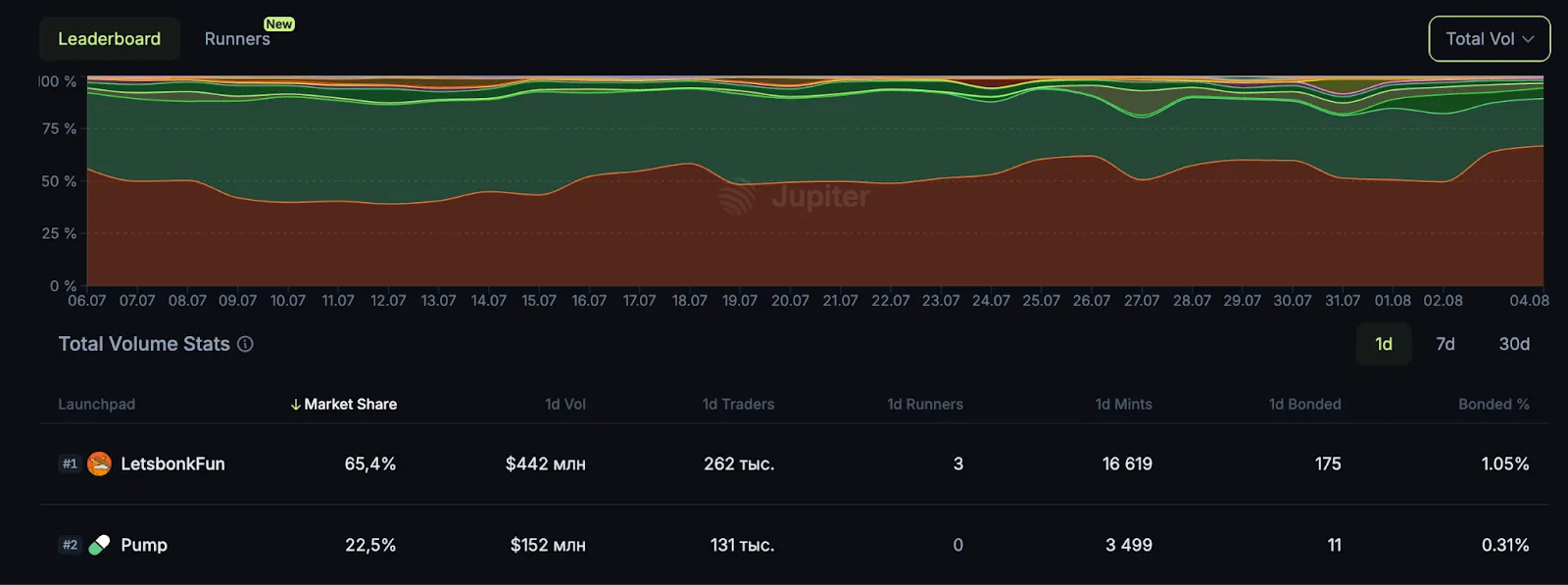
Источник: Jupiter.

Согласно DeFi Llama, Pump.fun также столкнулась со снижением доходов. По итогам июля показатель площадки составил $24,96 млн, что на 80% ниже январского пика в $130 млн.
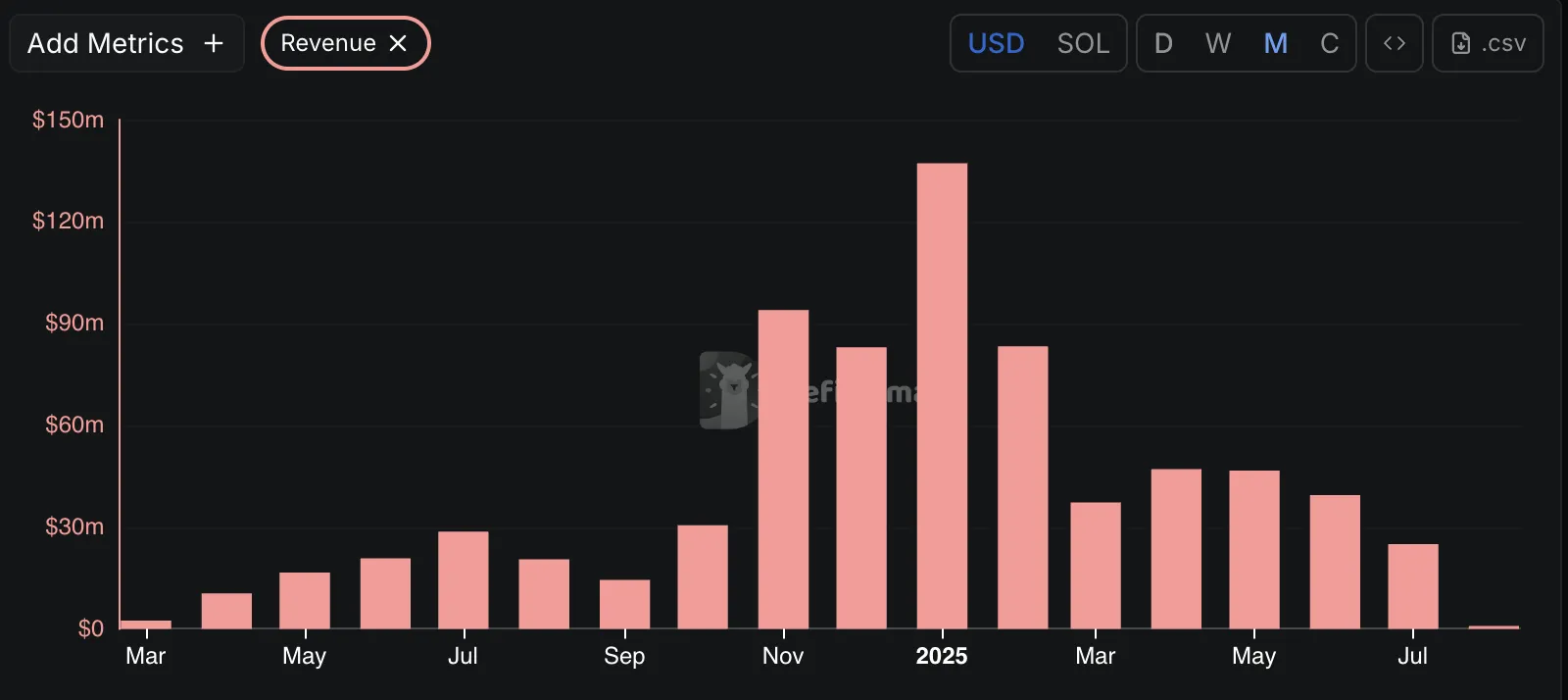
Источник: DeFi Llama.

Снижение активности связано с динамикой всего рынка мем-коинов. По данным CoinMarketCap, только за последнюю неделю его капитализация снизилась на 15%, до $70,8 млрд. За тот же период объем торгов в секторе упал на 53% — до $5,4 млрд.
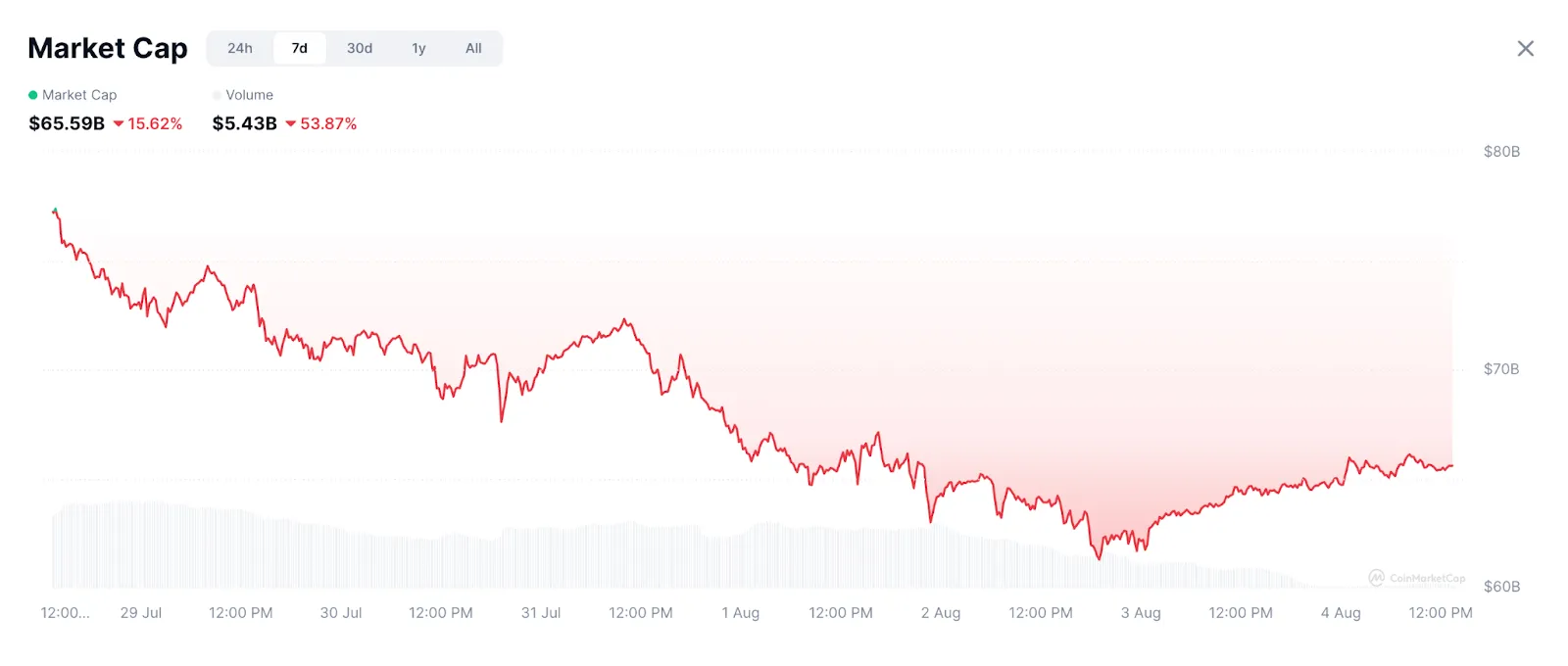
Источник: CoinMarketCap.

Напомним, в июле сооснователь Solana Анатолий Яковенко назвал мем-коины и NFT «цифровым мусором».


Trending Cryptos

Related Reads

Upbit is Anxious: A Hasty Counterattack Aimed at Regaining Stablecoin Market Share

Title: Upbit's Rushed Counterattack to Reclaim Stablecoin Market Share Facing a dramatic shift in South Korea's stablecoin market, leading exchange Upbit launched a promotional campaign from July 26 to August 9, waiving the 0.05% trading fee for stablecoins paired with the Korean Won (KRW) and rapidly listing new stablecoins like RLUSD and USDG. This move is a direct response to its plummeting market share in this sector. Historically a duopoly with Bithumb, the market has been reshaped since October 2025 when Coinone permanently removed fees for USDC trading. By June 2026, Coinone led with 34.8% of stablecoin volume, followed by Bithumb (31.1%) and Upbit (30.1%). This contrasts sharply with the overall crypto market, where Upbit commands 60%. The data shows stablecoin demand is highly sensitive to fees, as users primarily buy them to transfer capital overseas for derivatives trading or forex arbitrage. South Korean exchanges have seen a net outflow of stablecoins for 18 consecutive months, totaling approximately 14.9 trillion KRW, underscoring their role as a cross-border capital conduit. Upbit's limited-time promotion initially boosted its daily stablecoin volume by 162%, but the surge was almost entirely in USDT (98.1% of volume). The newly listed stablecoins saw negligible, fleeting interest. Furthermore, the promotional effect quickly waned in the second week, with volume dropping 33% on weekdays. A concurrent weakening of the KRW also contributed to the trading spike, independent of the fee waiver. The analysis suggests that once the promotion ends, Upbit is unlikely to retain its temporary gains unless it matches Coinone's permanent zero-fee policy, forcing a choice between market share and fee revenue. Upbit's strategic push may be less about immediate profit and more about preparing for future regulatory shifts. With South Korea's *Digital Asset Basic Act* on the horizon, which will regulate KRW-backed stablecoins, and following Dunamu's (Upbit's parent) integration into Naver Financial to build a payment ecosystem, securing a dominant position in the dollar stablecoin distribution channel holds long-term strategic value. However, potential regulatory conflicts could prevent Upbit from listing a future Naver-issued KRW stablecoin, making the current fight for dollar stablecoin flow even more critical.

marsbit5h ago

Upbit is Anxious: A Hasty Counterattack Aimed at Regaining Stablecoin Market Share

marsbit5h ago

Michael Saylor Compares Bitcoin and Gold!

Michael Saylor, founder of MicroStrategy, argues that Bitcoin fundamentally changes how wealth is stored and transferred by transforming digital scarcity into economic value. He describes Bitcoin as the first digital monetary network, combining computers, digital networks, and cryptography. It digitizes monetary assets, allowing their supply to be controlled by public protocols rather than institutions, thus converting economic value into information transmissible over global networks. Comparing Bitcoin to gold, Saylor states that while increasing Bitcoin's supply is harder, its integration with software and transfer is easier. He highlights Bitcoin's proof-of-work mechanism, which ties it to the physical world by consuming real energy to secure the ledger, making past transactions immutable. This creates a shared security system involving miners, energy companies, and investors. Saylor suggests "digital monetary energy" is a more accurate term than "digital gold." He emphasizes that the Bitcoin network is an adaptive ecosystem of miners, nodes, developers, and users. Its core design is intentionally simple, focused on maintaining a secure ledger for scarce digital assets, with complex functionalities built in higher-layer applications. This architecture allows Bitcoin to serve as a foundation for transmitting value and fostering innovation in payments and financial services. Saylor notes Bitcoin's deeper impact lies in creating digital sovereignty, where private keys give individuals permissionless control over their economic power, with ownership verified mathematically, not by institutions. He concludes that while gold's physical scarcity makes it money, Bitcoin's digital scarcity does the same, characterizing Bitcoin as the monetary energy of the digital age.

cryptonews.ru6h ago

Michael Saylor Compares Bitcoin and Gold!

cryptonews.ru6h ago

Trading

Spot

Hot Articles

Discussions

Welcome to the HTX Community. Here, you can stay informed about the latest platform developments and gain access to professional market insights. Users' opinions on the price of SOL (SOL) are presented below.

活动图片