史上最大BTC盗窃案曝光:尘封5年,涉案金额达145亿美元

Odaily星球日报Published on 2025-08-04Last updated on 2025-08-04

原文作者:Arkham

编译 | Odaily 星球日报(@OdailyChina

译者 | Wenser(@wenser2010

编者按:在加密货币市场处于震荡下行的当下,链上数据平台 Arkham 昨日发布了一篇长文揭露了一起堪称“史上最大 BTC 盗窃案”的黑客事件,涉事平台为 BTC 知名矿池 LuBian。该平台一度控制比特币网络总算力资源的 6%,却在 2020 年 12 月遭遇超 12.7万枚 BTC被盗,目前该笔资金价值约 145 亿美元。Odaily星球日报将于本文对这场尘封近 5 年的黑客事件予以整理,供读者参考。

史上最大BTC盗窃案:超12.7万枚BTC,现价值145亿美元

日前,链上数据平台 Arkham 发文披露,“史上最大的 BTC 盗窃案”已浮出水面——涉事平台为 LuBian 矿池。

据了解,该矿池主要挖矿设备部署于中国和伊朗境内。根据链上数据分析,2020 年 12 月,LuBian 矿池中的 127,426 枚 BTC被盗,该笔资产当时价值 35 亿美元,现在价值约 145 亿美元。 截止发稿前,LuBian 和此次盗窃案中的黑客均未公开承认此次黑客攻击。
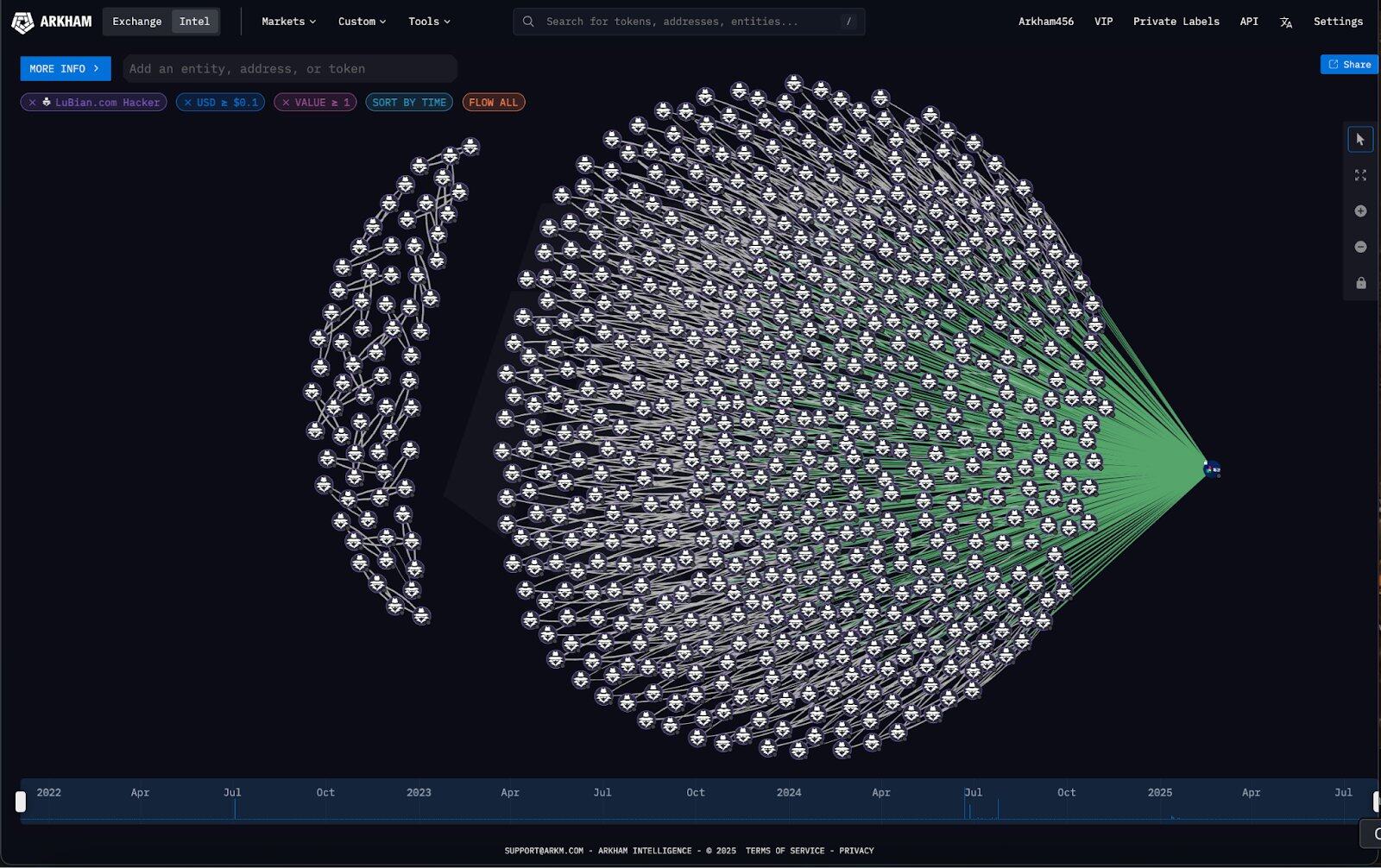
链上数据分析图示

“LuBian BTC被盗案”详情如下:

2020 年,作为世界上最大的 BTC 矿池之一,LuBian 正式开始运营,有消息称该矿池由中国矿工创立并管理,为私有矿池。根据 Glassnode 数据,该矿池于 2020 年 3 月开始挖矿;BTC.com 显示 Lubian 矿池首次于在 2020 年 4 月产出区块。截至 2020 年 5 月,其几乎控制了比特币网络总算力资源的 6%。 但自 2021年2月28日 672,636 区块之后,该矿池的挖矿行为就此结束。
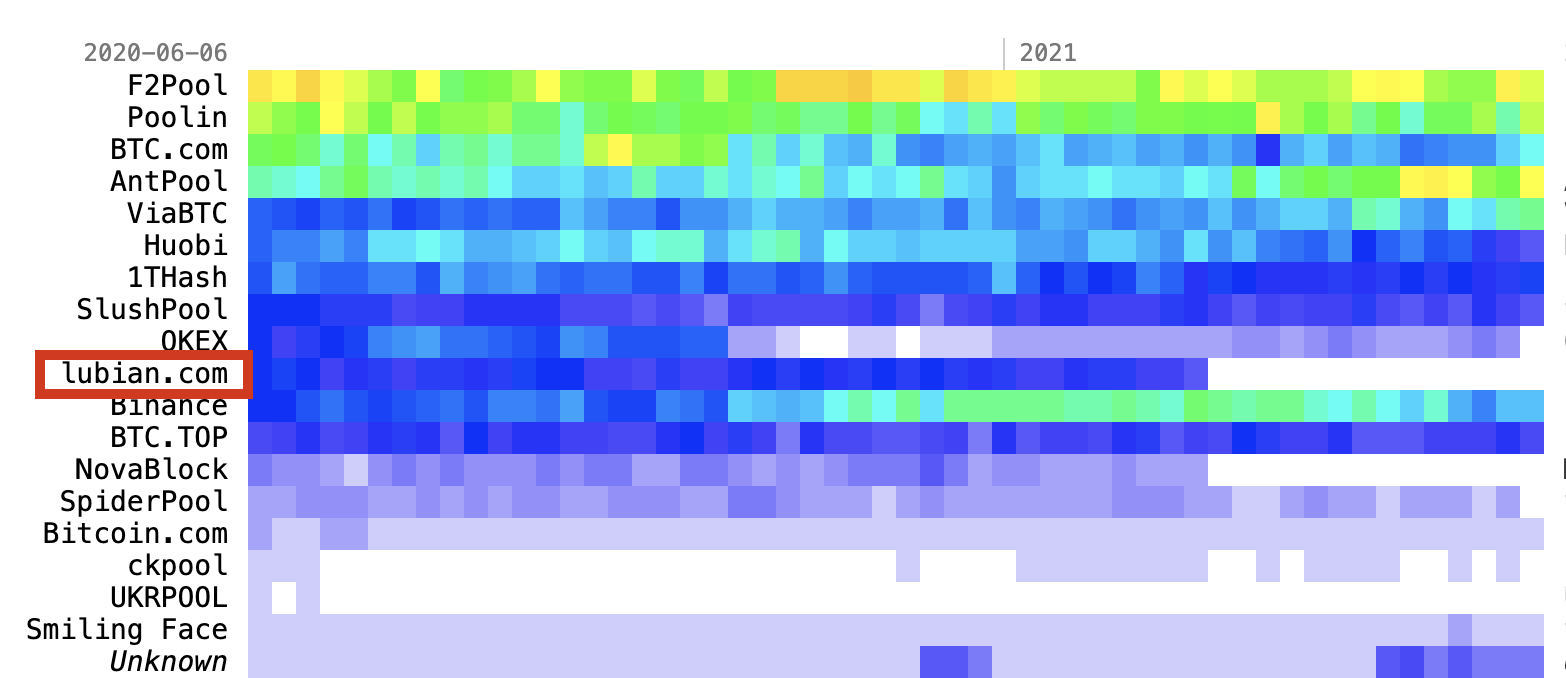
LuBian矿池排名一度位列行业前10
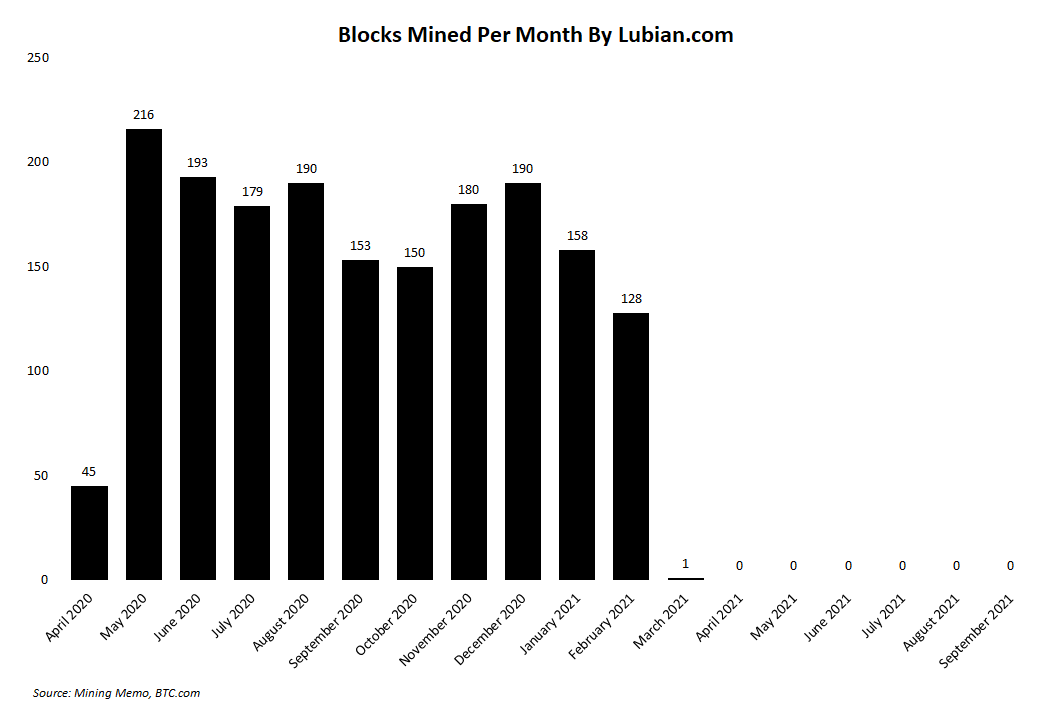
Lubian.com 每月挖掘的区块数量

2020 年 12 月 28 日,LuBian 矿池首次遭到黑客攻击,矿池内超过 90%的比特币被盗。

2020年12 月 29 日,大约价值 600 万美元的比特币和 USDT 再次从归属于 Lubian 的某比特币 Omni 层上活跃地址被盗。

2020年12月31 号,LuBian 将剩余资金转入了其他钱包。
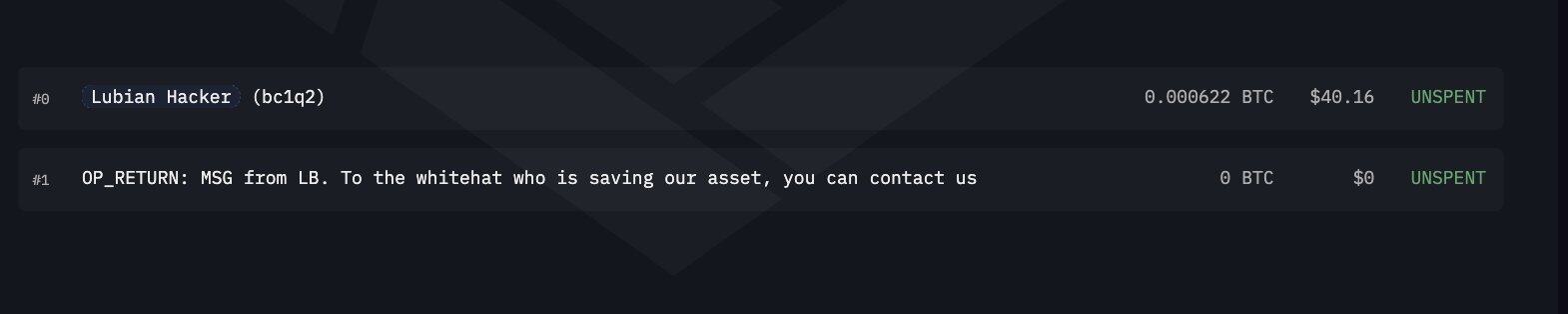
LuBian发给黑客的链上留言

根据屏幕截图可以看到,所有黑客地址都收到了来自LuBian 方面的 OP_RETURN 链上消息,恳求黑客退还被盗资金。

据链上信息,LuBian 通过 1516 笔交易、花费了 1.4 枚 BTC 来发送这些消息,这一现象表明,这些链上留言信息并非其他黑客通过暴力破解私钥而进行的信息伪造(Odaily星球日报注:毕竟,很少有人会发送这么多的消息以及花费如此高昂的成本进行链上沟通,除非被逼无奈)

现有信息显示,LuBian 矿池或许使用了一个容易遭到暴力破解攻击的算法来生成其私钥,而这一点成为了遭到黑客利用攻击的漏洞。

链上信息显示,LuBian 矿池相关地址仍持有 11,886 枚 BTC,目前价值 13.6 亿美元。
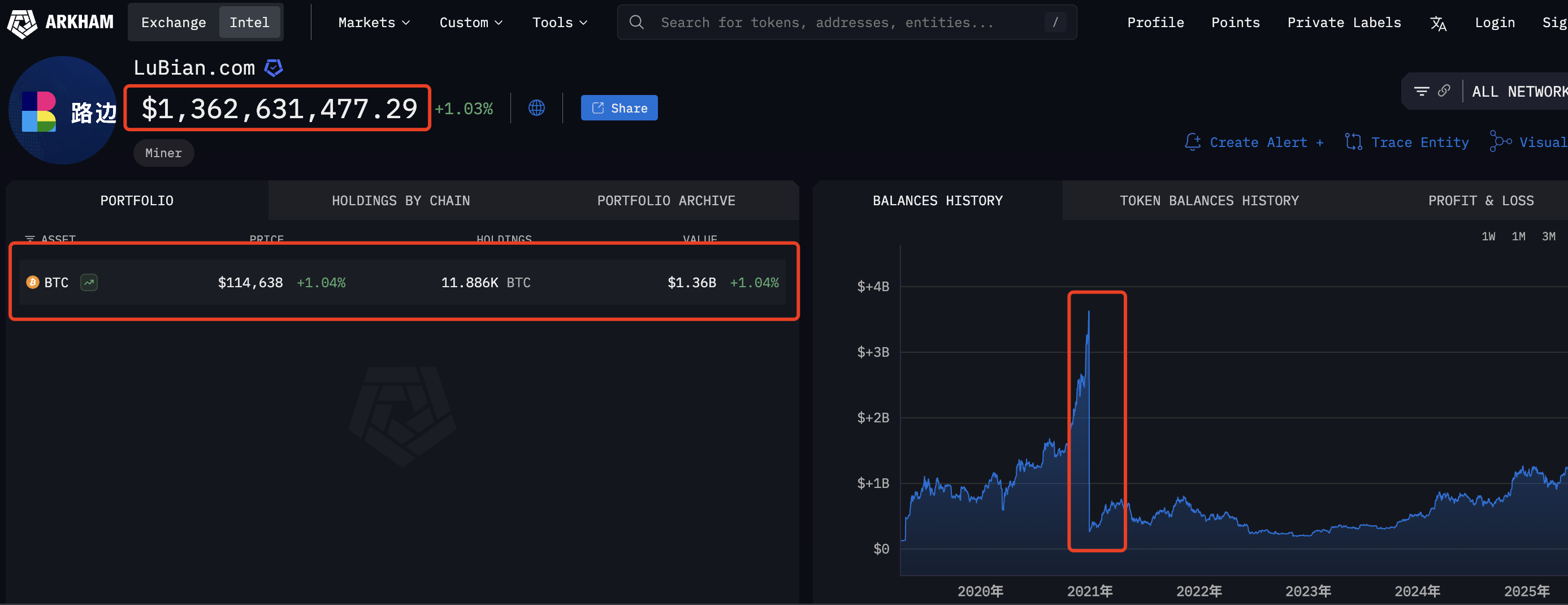
LuBian 地址资产信息

另外一边,链上信息显示,LuBian 盗窃案中的黑客仍持有盗窃所得的 BTC,其最后一次链上活动为 2024 年 7 月进行的一次钱包归集。
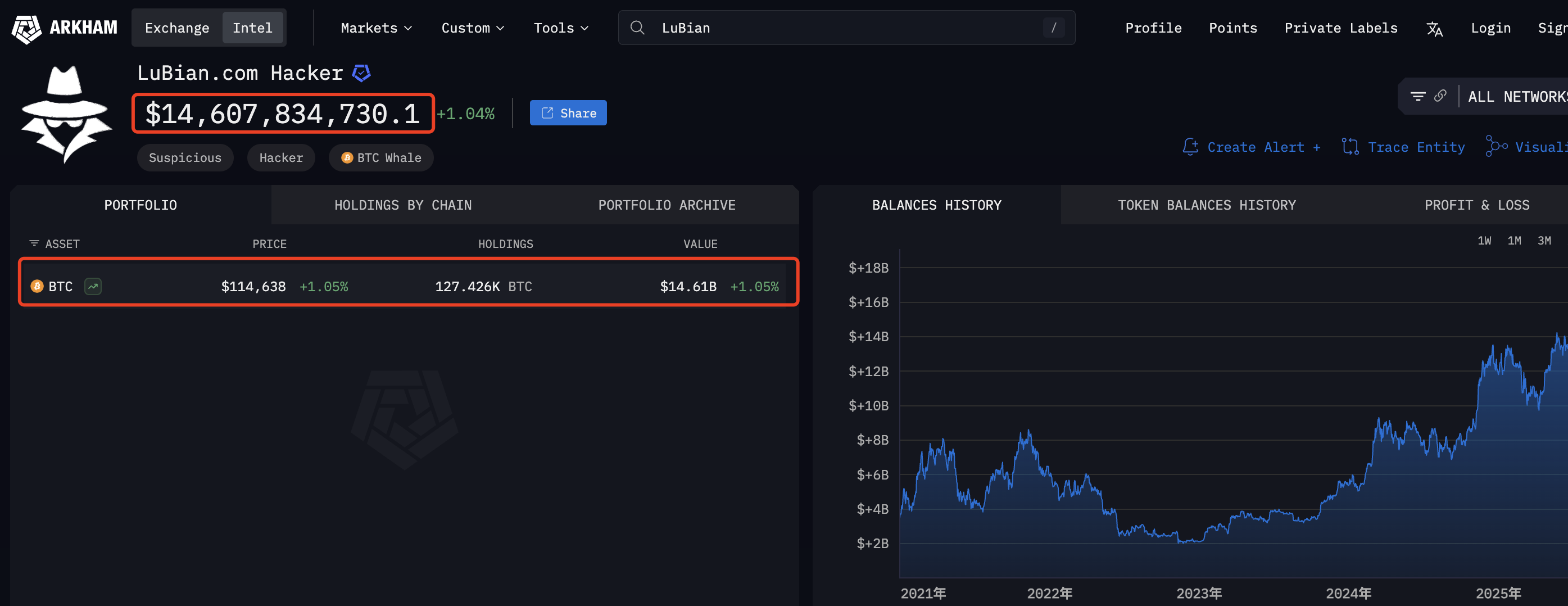
LuBian 黑客地址资产信息

彼时,LuBian 被盗资产价值高达 35 亿美元,为有史以来规模最大的黑客盗窃安全事件。

由于自 2020 年以来比特币价格持续上涨,LuBian 被盗的 12.74万枚 BTC 当前价值约为 145 亿美元。该笔资产使得 LuBian 黑客由此成为 Arkham 平台统计数据中比特币第 13 大持仓个人,甚至超过了当年的 Mt. Gox 被盗案中的黑客。

另外,根据 Compass Minging 网站文章信息LuBian 矿池疑似已品牌升级为 Roadside Mining。而在 2020 年 5 月至 2021 年 2 月期间,LuBian 矿池的挖矿运营业务似乎处于全速运转状态,平均每月区块挖掘量高达 174 个。其在近一年的挖矿中累计获得超 16,200 枚 BTC,在2021年4 月的价格高点时,这些BTC的资产价值超过 10 亿美元。

而如今,曾经的头部矿池已经停止运转,只留下这段尘封5年的“史上最大 BTC 盗窃案”的历史,让人不胜唏嘘。

Related Reads

SpaceX, OpenAI, Anthropic: The Three AI Giants Racing for IPO, Which One Is Worth Betting On?

SpaceX, OpenAI, and Anthropic are poised for historic IPOs within weeks, potentially raising a combined $180 billion—a sum exceeding the entire internet bubble's fundraising. The hosts of the Limitless Podcast argue this isn't just individual company financing but an unprecedented capital concentration for AI infrastructure, driven by an insatiable need for compute, data centers, power, and chips. SpaceX's IPO is notable for reportedly changing market index rules to allow faster inclusion, potentially funneling trillions in passive retirement funds into its stock, despite its unproven space-based data center business model. In contrast, Anthropic demonstrates explosive growth, with ARR reportedly hitting $45 billion and approaching profitability, fueled by strong enterprise adoption of products like Claude Code. Google's separate $80 billion raise highlights the immense capital pressure, even for giants. The discussion acknowledges bubble risks but leans optimistic. The hosts contend the massive spending is building essential physical infrastructure for the next technological era. A key bottleneck isn't capital but the real-world limits of chip manufacturing and construction speed. As long as demand for AI compute outstrips supply, this investment cycle represents a foundational build-out rather than a purely financial bubble. All three companies are seen as foundational bets on the future, with Anthropic often cited as the most immediately compelling due to its proven revenue trajectory.

marsbit2h ago

SpaceX, OpenAI, Anthropic: The Three AI Giants Racing for IPO, Which One Is Worth Betting On?

marsbit2h ago

From 'Old Guys' to 'New Favorites': How AI Is Revaluing Old Infrastructure from Dell to Nokia?

From "Vintage Tech" to "New AI Darlings": How AI Revalues Old Infrastructure One year ago, tech giants like Dell, Nokia, Cisco, and Western Data were seen as slow-growth, low-valuation stories, far from the AI spotlight dominated by players like Nvidia. Now, these legacy tech stocks are gaining market attention, sparking debate on whether this is genuine industry revaluation or a temporary narrative. As AI moves from model parameters to real-world data centers, the market is recognizing companies with proven delivery and infrastructure capabilities. This shift marks a change in the AI investment thesis: from pure model and GPU focus to the complex systems engineering required for deployment. Companies like Dell, HPE, and Corning are being revalued not for being "sexy" AI innovators, but for their decades of accumulated expertise in supply chains, enterprise delivery, and infrastructure—assets that have become critical in the AI buildout phase. The revaluation is unfolding across three key infrastructure lines: 1. **Servers & System Integration:** Dell and HPE are emerging as crucial system integrators or "general contractors" for AI data centers, translating GPU orders into complete, deployable server racks integrated with power, cooling, and networking. 2. **Networking & Connectivity:** AI's scale demands robust high-speed connections. Corning (fiber optics), Nokia (AI-RAN, 6G), and Cisco (data center switches) are gaining importance for enabling efficient data transfer within and between AI clusters. 3. **Storage:** Beyond high-speed memory (HBM/DRAM), the AI data explosion is driving demand for high-capacity hard drives (HDDs) from companies like Western Digital and Seagate to handle training data, logs, and cold storage cost-effectively. For this revaluation to be substantive and not just a narrative, three criteria are key: 1) Concrete AI-related order and revenue growth (e.g., Dell's AI server sales), 2) Upward revisions to company financial guidance, and 3) Sustainable improvements in profit quality, not just top-line revenue spikes. In essence, AI's transition to a real construction phase is re-pricing "old assets" against "new demand." The opportunity, however, is selective. Only those legacy firms that are demonstrably integrated into the capital expenditure chains of data center and enterprise AI deployment are likely to experience a true "logic re-rating" rather than just a temporary valuation bounce.

marsbit2h ago

From 'Old Guys' to 'New Favorites': How AI Is Revaluing Old Infrastructure from Dell to Nokia?

marsbit2h ago

Trading

Spot
Futures

Hot Articles

What is $BITCOIN

DIGITAL GOLD ($BITCOIN): A Comprehensive Analysis Introduction to DIGITAL GOLD ($BITCOIN) DIGITAL GOLD ($BITCOIN) is a blockchain-based project operating on the Solana network, which aims to combine the characteristics of traditional precious metals with the innovation of decentralized technologies. While it shares a name with Bitcoin, often referred to as “digital gold” due to its perception as a store of value, DIGITAL GOLD is a separate token designed to create a unique ecosystem within the Web3 landscape. Its goal is to position itself as a viable alternative digital asset, although specifics regarding its applications and functionalities are still developing. What is DIGITAL GOLD ($BITCOIN)? DIGITAL GOLD ($BITCOIN) is a cryptocurrency token explicitly designed for use on the Solana blockchain. In contrast to Bitcoin, which provides a widely recognized value storage role, this token appears to focus on broader applications and characteristics. Notable aspects include: Blockchain Infrastructure: The token is built on the Solana blockchain, known for its capacity to handle high-speed and low-cost transactions. Supply Dynamics: DIGITAL GOLD has a maximum supply capped at 100 quadrillion tokens (100P $BITCOIN), although details regarding its circulating supply are currently undisclosed. Utility: While precise functionalities are not explicitly outlined, there are indications that the token could be utilized for various applications, potentially involving decentralized applications (dApps) or asset tokenization strategies. Who is the Creator of DIGITAL GOLD ($BITCOIN)? At present, the identity of the creators and development team behind DIGITAL GOLD ($BITCOIN) remains unknown. This situation is typical among many innovative projects within the blockchain space, particularly those aligning with decentralized finance and meme coin phenomena. While such anonymity may foster a community-driven culture, it intensifies concerns about governance and accountability. Who are the Investors of DIGITAL GOLD ($BITCOIN)? The available information indicates that DIGITAL GOLD ($BITCOIN) does not have any known institutional backers or prominent venture capital investments. The project seems to operate on a peer-to-peer model focused on community support and adoption rather than traditional funding routes. Its activity and liquidity are primarily situated on decentralized exchanges (DEXs), such as PumpSwap, rather than established centralized trading platforms, further highlighting its grassroots approach. How DIGITAL GOLD ($BITCOIN) Works The operational mechanics of DIGITAL GOLD ($BITCOIN) can be elaborated on based on its blockchain design and network attributes: Consensus Mechanism: By leveraging Solana’s unique proof-of-history (PoH) combined with a proof-of-stake (PoS) model, the project ensures efficient transaction validation contributing to the network's high performance. Tokenomics: While specific deflationary mechanisms have not been extensively detailed, the vast maximum token supply implies that it may cater to microtransactions or niche use cases that are still to be defined. Interoperability: There exists the potential for integration with Solana’s broader ecosystem, including various decentralized finance (DeFi) platforms. However, the details regarding specific integrations remain unspecified. Timeline of Key Events Here is a timeline that highlights significant milestones concerning DIGITAL GOLD ($BITCOIN): 2023: The initial deployment of the token occurs on the Solana blockchain, marked by its contract address. 2024: DIGITAL GOLD gains visibility as it becomes available for trading on decentralized exchanges like PumpSwap, allowing users to trade it against SOL. 2025: The project witnesses sporadic trading activity and potential interest in community-led engagements, although no noteworthy partnerships or technical advancements have been documented as of yet. Critical Analysis Strengths Scalability: The underlying Solana infrastructure supports high transaction volumes, which could enhance the utility of $BITCOIN in various transaction scenarios. Accessibility: The potential low trading price per token could attract retail investors, facilitating wider participation due to fractional ownership opportunities. Risks Lack of Transparency: The absence of publicly known backers, developers, or an audit process may yield skepticism regarding the project's sustainability and trustworthiness. Market Volatility: The trading activity is heavily reliant on speculative behavior, which can result in significant price volatility and uncertainty for investors. Conclusion DIGITAL GOLD ($BITCOIN) emerges as an intriguing yet ambiguous project within the rapidly evolving Solana ecosystem. While it attempts to leverage the “digital gold” narrative, its departure from Bitcoin's established role as a store of value underscores the need for a clearer differentiation of its intended utility and governance structure. Future acceptance and adoption will likely depend on addressing the current opacity and defining its operational and economic strategies more explicitly. Note: This report encompasses synthesised information available as of October 2023, and developments may have transpired beyond the research period.

363 Total ViewsPublished 2025.05.13Updated 2025.05.13

What is $BITCOIN

Discussions

Welcome to the HTX Community. Here, you can stay informed about the latest platform developments and gain access to professional market insights. Users' opinions on the price of BTC (BTC) are presented below.

活动图片